Tag: Telecom Service Provider

  • Bharti Airtel hikes mobile tariffs effective 26 November

    Bharti Airtel hikes mobile tariffs effective 26 November

    Mumbai: Bharti Airtel has announced its new mobile tariffs that will come into effect from 26 November. The telecom service provider has hiked its tariffs by 20-25 per cent across its offerings.

    The company in a statement said, “Airtel has always maintained that the mobile average revenue per user (ARPU) needs to be at Rs 200 and ultimately at Rs 300, so as to provide a reasonable return on capital that allows for a financially healthy business model.”

    “We also believe that this level of ARPU will enable the substantial investments required in networks and spectrum. Even more important, this will give Airtel the elbow room to roll out 5G in India,” it added.  

    In August, Bharti Airtel chairman Sunil Mittal has expressed his concern that the telco business in India is unsustainable at the current ARPUs. He observed that Indians were consuming on average 16 Gb of wireless data per month yet revenue realisation of telcos per Gb of data remains very low.

  • TRAI issues recommendations on cloud services

    TRAI issues recommendations on cloud services

    KOLKATA: Following a multistage consultation process, the Telecom Regulatory Authority of India (TRAI) has released recommendations on cloud services.

    The regulatory body issued a consultation paper on 23 October 2019 inviting inputs on the number of industry bodies, requirements for any CSP to become a member of an industry body, membership fee, governance structure and initial seeding of the industry body, etc. for comments and counter comments from stakeholders. Subsequently, an Open House Discussion (OHD) was held on 28 February 2020 at Delhi, where stakeholders participated and deliberated on the issues.

    Read more coverage on TRAI

    The salient features of the recommendations are:

    . Initiating a light-touch regulatory framework by setting up an industry body through a three-step process: enrollment of CSPs operating in India; formation of an ad hoc body to frame broad rules, organizational structure, election procedure, etc.; and the election of office-bearers to take over it’s functioning as a regular industry-led body.

    . Industry body to be registered under the Societies Registration Act, 1860, and to be formed using the approach followed for the formation of the M2M body by DoT.

    .  Scope of Cloud Service Providers, initially, to be limited to cloud service providers of Infrastructure as a Service (laaS) and Platform as a Service (PaaS) who are providing services in India.

    . Telecom Service Providers not to be allowed to share infrastructure and platforms related to Telegraph with a Cloud Service Provider (CSP] who is not a member of CSPs’ industry body registered with DoT.

    . The industry body so created to review its experience and further deliberate upon the need to form multiple bodies for different purposes, such as to address requirements of different market segments. DoT may require this review after two years of commencement of the functioning. of the first industry body, or such time as it considers appropriate.

  • TRAI recommendations on OTT communication regulation likely by February end

    TRAI recommendations on OTT communication regulation likely by February end

    MUMBAI: Towards the end of 2018, Telecom Regulatory Authority of India(TRAI) published a recommendation paper on OTT communication services, requesting feedback from all stakeholders. On Monday, the regulator confirmed that its recommendations on the issue would be made public by the end of next month.

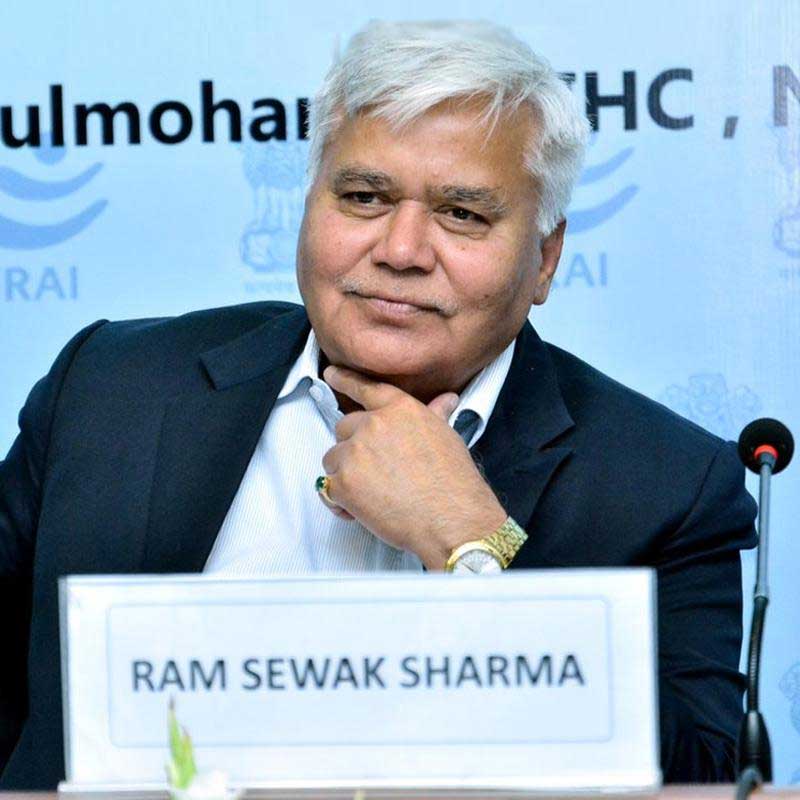
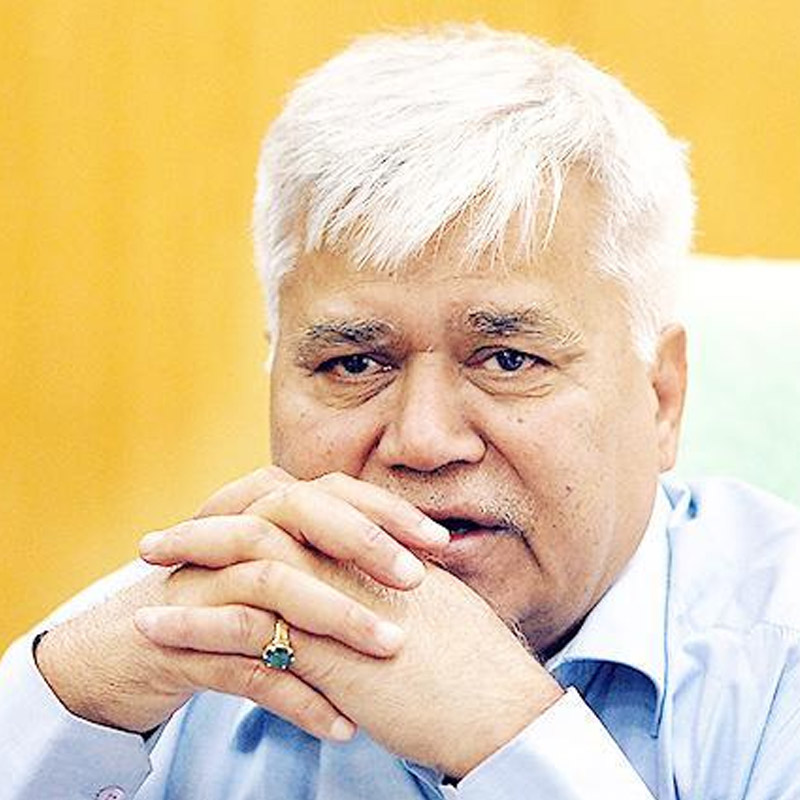
    "We will be organising open house discussions soon. And hopefully, by the end of the next month, we should be able to come up with recommendations," TRAI Chairman R S Sharma was quoted as saying by news agency PTI.

    In November last year, the TRAI released a consultation paper focusing on apps such as Whatsapp, Facebook, Google Duo among others, offering calling and messaging services similar to telecom service providers along with their basic functions. TRAI also sought public opinion on whether OTT applications should fall under the same regulatory ambit as telecom operators.

    The Cellular Operators’ Association of India (COAI) is of the opinion that OTT players should be licensed by introducing ‘OTT Communication Authorization’ under the unified licence. 

    According to COAI, players in the telecom industry invest in licence fee, spectrum, telecom equipment and security apparatus. Hence, similar voice, video and data services without regulatory cost make for a non-level playing field.

    However, the Internet and Mobile Association of India (IAMAI) and the Broadband India Forum (BIF) have stood against the position by telecom operators. According to IAMAI, telecommunication regulations should not be automatically extended to online applications because of the fundamental “technical and business differences” between traditional services and apps.

    “OTT providers offer an array of different services that are accessed by users through the data services provided by TSPs (telecom service providers). Thus, the services provided by TSPs, while they enable access to OTT services, are fundamentally different,” BIF said in its written response to TRAI

  • TRAI extends deadline for comments on OTT consultation paper

    TRAI extends deadline for comments on OTT consultation paper

    MUMBAI: India’s telecom and broadcast regulator TRAI released a new consultation paper last month on OTT services seeking to expand the definition of the sector and also the regulator’s jurisdiction over a sector till now “unregulated”. The deadline for receiving comments on the consultation paper has been extended up to 7 January 2019 and counter comments by 21 January.

    Earlier dates for the comments and counter comments on the issues raised by the paper were 10 December and 24 December respectively. As TRAI said in a release, the deadline has been extended on request from the stakeholders.

    “Would inter-operability among OTT services and also inter-operatability of their services with TSPs services promote competition and benefit the users? What measures may be taken, if any, to promote such competition? Please justify your answer with reasons.” Questions like these in the paper hint that the government and the regulator are looking at regulations for the OTT services that would include both audio and video services.

    Earlier, the authority issued a consultation paper on  Regulatory Framework for Over-the-top (OTT) services on the 27 March 2015, which also included questions on the principles of net neutrality, the reasonableness of traffic management practices, non-price based discrimination of services and transparency requirements. Due to a large number of issues and their complexity, it became difficult to deliberate upon and conclude all of them together. Therefore, the authority decided to deal with related issues in separate parts, keeping a focus on a core set of issues each time.

  • TRAI releases paper on OTT expanding its definition

    TRAI releases paper on OTT expanding its definition

    MUMBAI: India’s telecom and broadcast regulator TRAI today released another consultation paper on OTT services seeking to expand the definition of the sector and also the regulator’s jurisdiction over a sector hitherto “unregulated”.

    “Would inter-operability among OTT services and also inter-operatability of their services with TSPs services promote competition and benefit the users? What measures may be taken, if any, to promote such competition? Please justify your answer with reasons.” Questions like these in the paper hint that the government and the regulator are looking at regulations for the OTT services that would include both audio and video services.

    Earlier,    the    Authority  issued   a   consultation   paper  on    Regulatory Framework for  Over-the-top (OTT) services on  the   27th of  March, 2015, which also included questions  on  the   principles of  net neutrality, reasonableness of traffic management practices, non-price based discrimination  of  services and  transparency  requirements.  Due to the large  number   of   issues  and  their  complexity, it   became   difficult  to deliberate upon and  conclude all  of  them  together. Therefore, Authority decided to  deal with related issues in  separate parts, keeping focus on  a core  set  of issues  each time. Accordingly, the  following actions have been taken:

    a. The  Authority issued regulations on  Prohibition of Discriminatory Tariffs for  Data Services Regulations,  2016.

    b. Recommendations on provisioning of free data given to Government on  19th December  2016,

    c. Recommendations on  Net  Neutrality to  Government on   Nov  28,

    2017.

    d. Recommendations on privacy, security, and data ownership issues in the telecom sector submitted to Government on  July 16,  2018.

    3.     Questions relating to the potential market failures in each segment, the appropriate tools to address those failures and the costs and benefits of any possible regulatory interventions have also been investigated.

    4.  Keeping in  v1ew the fast evolving nature of the  sector,  it is also considered useful to   examine  OTI related aspects, after taking into account the changes that have taken place since March, 2015.

    5.  The objective of  this Consultation Paper is to  analyse and discuss the  implications of  the  growth of  OTis;  the  relationship between OTI players and TSPs; the similarity, if any, between services provided by  the TSPs and  OTI  players;  changes  that  may be   required in the current regulatory framework to  govern these entities; and the manner in  which such changes should be  effected . While preparing this consultation paper, information collected by    the   Authority in response to previous consultations has also been used. It  may also be   noted that current consultation is not intended  to  revisit regulations  or   recommendations given  by the  Authority earlier on  OTI, which had broader implications and were  therefore concluded first following due consultation and diligence.

    6.  Comments on the issues raised in the consultation paper are invited from the stakeholders by  10.12.2018 and counter comments, if any,  by 24.12.2018. 

  • TRAI: Give 100 MB a month free data to rural area subs

    TRAI: Give 100 MB a month free data to rural area subs

    NEW DELHI: India’s telecoms and broadcast carriage regulator Telecom Regulatory Authority of India (TRAI) has recommended to the government to provide limited free data to rural subscribers as part of efforts to boost e-payments and digital economy.

    “In order to bridge the affordability gap for the persons residing in rural areas and to support government’s efforts towards cashless economy by incentivising digital means, the Authority recommends that a scheme under which a reasonable amount of data, say 100 MB per month, may be made available to rural subscribers for free,” TRAI said in a set of recommendations on Monday on `Encouraging Data Usage in Rural Areas Through Provisioning of Free Data’.

    TRAI further stated that greater broadband access, particularly for large parts of the rural population can be the force to drive integration of the “unconnected and the underserved in economy”, thereby helping to enhance the overall value of the network.

    “Greater broadband access has the power to augment productivity of the agricultural sector as well as small enterprises, facilitate easier and more efficient participation of the rural population in governance, generate new employment opportunities and enable a host of services like e-commerce, e-learning, e-banking etc. As an increasing number of government services are also being electronically delivered, expanding rural Internet access has become a matter of urgency and is essential in fulfilling the vision of Digital India,” TRAI said.

    The regulator further suggested that the cost of implementation of the scheme may be met from the fund that telecom operators contribute to spread telecom connectivity in rural areas or known as USOF.

    TRAI also suggested that to increase participation of other entities for incentivizing free data, there is a need to introduce third party (aggregator) to facilitate schemes that are TSPs or telecom service provider agnostic and non-discriminatory in their implementation and that this scheme for free data must not involve any arrangement between the TSP and the aggregator/content provider and should not be designed to circumvent TRAI directives banning discriminatory tariffs for data.

    As part of the process, TRAI has suggested that the aggregators will need to register with Department of Telecoms (DoT); the registrant must be a company registered under Indian Companies Act, 1956; the validity of registration shall be for five years; the registrant shall not either directly or indirectly assign or transfer the registration in any manner whatsoever to a third party either in whole or in part.

  • TRAI: Give 100 MB a month free data to rural area subs

    TRAI: Give 100 MB a month free data to rural area subs

    NEW DELHI: India’s telecoms and broadcast carriage regulator Telecom Regulatory Authority of India (TRAI) has recommended to the government to provide limited free data to rural subscribers as part of efforts to boost e-payments and digital economy.

    “In order to bridge the affordability gap for the persons residing in rural areas and to support government’s efforts towards cashless economy by incentivising digital means, the Authority recommends that a scheme under which a reasonable amount of data, say 100 MB per month, may be made available to rural subscribers for free,” TRAI said in a set of recommendations on Monday on `Encouraging Data Usage in Rural Areas Through Provisioning of Free Data’.

    TRAI further stated that greater broadband access, particularly for large parts of the rural population can be the force to drive integration of the “unconnected and the underserved in economy”, thereby helping to enhance the overall value of the network.

    “Greater broadband access has the power to augment productivity of the agricultural sector as well as small enterprises, facilitate easier and more efficient participation of the rural population in governance, generate new employment opportunities and enable a host of services like e-commerce, e-learning, e-banking etc. As an increasing number of government services are also being electronically delivered, expanding rural Internet access has become a matter of urgency and is essential in fulfilling the vision of Digital India,” TRAI said.

    The regulator further suggested that the cost of implementation of the scheme may be met from the fund that telecom operators contribute to spread telecom connectivity in rural areas or known as USOF.

    TRAI also suggested that to increase participation of other entities for incentivizing free data, there is a need to introduce third party (aggregator) to facilitate schemes that are TSPs or telecom service provider agnostic and non-discriminatory in their implementation and that this scheme for free data must not involve any arrangement between the TSP and the aggregator/content provider and should not be designed to circumvent TRAI directives banning discriminatory tariffs for data.

    As part of the process, TRAI has suggested that the aggregators will need to register with Department of Telecoms (DoT); the registrant must be a company registered under Indian Companies Act, 1956; the validity of registration shall be for five years; the registrant shall not either directly or indirectly assign or transfer the registration in any manner whatsoever to a third party either in whole or in part.