Tag: Telecom Regulatory Authority of India

  • TRAI releases consultation paper on platform services by DTH operators

    TRAI releases consultation paper on platform services by DTH operators

    MUMBAI: The Telecom Regulatory Authority of India (TRAI) has issued a consultation paper on platform services (PS) offered by DTH operators. The authority has invited comments from stakeholders by 27 September 2019.

    The consultation paper has been released with an aim to address the issues related to platform services (PS) and to come up with a regulatory framework for it.

    TRAI has received a reference from the Ministry of Information & Broadcasting (MIB) dated 2 July 2019 wherein the authority has been requested to give its considered recommendations related to platform services with reference to DTH guidelines. Some of its discussion points are listed here. DTH operators offering platform service channels have to ensure that the same content is not shared with any other DPO. The one-time registration fee to be enhanced to Rs 1 lakh per PS channel as against Rs 1000 per PS channel recommended earlier by the authority. The maximum number of PS channels that a DTH operator can offer and platform service could be sequenced separately from the regular channels.

    “India has a large base of pay TV subscribers. Predominantly, the pay TV services are being delivered through cable TV and direct to home (DTH) systems. Other modes of TV broadcasting such as internet protocol TV (IPTV), head-end in the sky (HITS) have minuscule subscriber base as compared to the cable TV and DTH systems. All TV channel distribution platform operators (DPOs), i.e. MSOs, DTH and HITS operators, operate certain kind of programming services which are specific to each platform and are not obtained from broadcasters. All these platform-specific services being offered by DPOs but not obtained from broadcasters have been referred to as platform services,” explained TRAI in its release.

    It further said, “DPOs use PS to offer innovative services and product differentiation. It also acts as a unique selling proposition (USP) for DPOs and also helps them in meeting the specific needs of their subscribers.”

    “Unlike private satellite TV channels, which are permitted and regulated under the uplinking/ downlinking guidelines of MIB, Platform services (PS) is not subject to any specific regulations or guidelines as of now,” said TRAI in its consultation paper.

    Earlier, the authority in its recommendations on a regulatory framework for platform services dated 19 November 2014 had, inter alia recommended that the definition of PS shall be “Platform services (PS) are programs transmitted by Distribution Platform Operators (DPOs) exclusively to their own subscribers and does not include Doordarshan channels and registered TV channels. PS shall not include foreign TV channels that are not registered in India.”
  • Ad agencies expect reallocation of budgets post TRAI tariff order implementation

    Ad agencies expect reallocation of budgets post TRAI tariff order implementation

    MUMBAI: Since the Telecom Regulatory Authority of India (TRAI) has announced its new tariff order, making it mandatory for TV channels to keep a transparent display of the rates of its channels and bouquets and providing the viewers the liberty to pay only for those channels that they want to see, there has been quite a turmoil in the worlds of those associated with the industry.

    While channels, MSOs, and LCOs are busy ensuring a smooth transition to the new regime, the advertising world is looking at a cloudy sky that only offers a lot of uncertainty towards the impact of this order on their planning.

    Speaking about the same at a recent press meet, Mindshare chief operating officer, South Asia Amin Lakhani had said, “As an industry, we have seen a lot of volatility and uncertainty in the past 4-5 years. This is also an interesting one.” He added that the industry will have to follow a wait and watch approach to see the impact of the new order on the advertising world. But he was also certain that people will not change their habit of watching TV.

    Indiantelevision.com talked to some more industry insiders to understand what the new order will mean for TV, digital and the advertising world.

    Mindshare chief digital officer South Asia Vinod Thadani reflected same thoughts as Amin and said, “Any call on the way the TRAI order will impact TV viewership would be too early. The various scenarios are yet to play out and once there is clarity on the impact on TV distribution and viewership, we will be able to take any calls on its impact on digital.”

    Isobar group MD-South Asia Shamsuddin Jasani on the other hand was sure that this new order is going to help the advertisers as they will now have a better idea of which channels are popular and thus, where to invest.

    He said, “I don’t think it will impact the ad-spends on TV drastically but will lead to re-allocation of fund by the advertisers. Now, we have an even better data of premium channels and we can thus improve the way we spend.”

    Shamsuddin is of the view that OTT might gain because of the order, “With OTT, you can track the number of users from day one. So, if advertisers use the right science (to understand these numbers), it will definitely help OTT players.”

    Update Advertising MD Sharad Alwe affirmed that the new TRAI tariff order is definitely going to impact the viewership of pay channels. He said, “The TRAI ruling will perforce make the viewer carefully select his pay channels of choice (appointment viewing) and create or select his package so that his cable subscription does not go higher than what he was paying currently. On certain channels, where he watches programming based on specific events, be it sports or reality shows, he may buy these channels only during that specific period. FTA channels & MSO/LCO based cable channels with better and relatable content will attract higher viewership.”

    But he doesn’t see this affecting the ad spends made by the brands on any of these TV channels. “These changes will impact channel rates but we do not see any negative impact on ad spends,” he says adding, “OTT offerings of the various media networks like Hotstar, SonyLiv, ZEE5, Voot might see an uptake for their selective content.”

    Mobclixs Technologies founder and CEO Dushyant Jani was very positive about the new regime making the entire broadcast framework transparent and fair. He said, “I think 50 per cent of the viewers watch not more than 30 channels but they are sold a bundled pack of 300 channels, which cost roughly between Rs 250 and Rs 450 depending on whether it is a cable connection or DTH service. When consumers select their channels, the ones that don’t meet their expectations get dropped out in the process.”

    Talking about its impact on advertising, Dushyant contended, “The drop in channels will impact the advertising revenue. For advertisers, it is wise to bet on the popular channels and obviously, the lesser popular channels will lose big on advertising revenue. However, the impact on the advertisers due to this will still be much higher as they need to cater to and capitalise on the top-selling channels but may not have enough time to plan their advertising budget.”

    Bijoor Consults Inc founder and brand guru Harish Bijoor feels that the new tariff regime is definitely a ‘jolt’ point for TV as well as the advertising industry. According to him while there are differentiated views on what impact this whole scenario will have on TV ad spends, one thing is certain that OTT is surely going to benefit in the long run.

  • Nov 2017: Wireline internet bleeds subscribers

    Nov 2017: Wireline internet bleeds subscribers

    BENGALURU: Mukesh Ambani’s Reliance Infocomm Limited (Jio) closed the month of November 2017 (Nov-17, month ended 30 November 2017) with 152.08 million wireless broadband subscribers having added 6.12 million subscribers (grown by 4.19 percent). As per Telecom Regulatory Authority of India (TRAI) data, the number of wireline broadband internet subscribers in India has declined 0.13 million from 17.98 million in Oct-17 to 17.85 million in Nov-17. This decline in wireline broadband internet subscribers is more than the 0.06 million decline in Oct-17 and the decline of 0.07 million subscribers in Sep-17.

    Overall broadband internet service providers

    The top five service providers constituted 92.92 percent market share of the total broadband subscribers (wired, mobile wireless, fixed wireless) at the end of Nov-17. These service providers were Jio (152.08 million), Bharti Airtel (69.38 million), Vodafone (50.16 million), Idea Cellular (32.90 million) and Bharat Sanchar Nigam Limited or BSNL (21.37 million).

    Wireless broadband internet service providers

    The fastest growth rate in mobile wireless internet subscribers was by Idea Cellular – its subscriber base increased by 6.03 percent (grew 1.87 million) in Nov-17. Jio had the second fastest growth as per the numbers mentioned above followed by Bharti Airtel Limited that grew 3.77 percent (added 2.44 million subscribers) in Nov-17, followed by Vodafone India. Vodafone’s wireless internet subscribers grew 3.59 percent or by 1.74 million. With the exit of Reliance Infocomm due to restructuring, BSNL entered the top five wireless broadband internet list in Nov-17. The public sector telecom player had 11.94 million broadband internet subscribers at the end of Nov-17.

    Top five wireline broadband internet service providers

    As on 30 November 2017, the top five Wired Broadband Service providers were BSNL (9.43 million), Airtel (2.14 million), Atria Convergence Technologies or ACT(1.27 million), Mahanagar Telecom Nigam Limited or MTNL (0.94 million) and Hathway Cable & Datacom (0.69 million). Airtel, ACT and Hathway gained 0.01 million subscribers each in Nov-17, while the public sector BSNL and MTNL lost 0.05 million and 0.2 million subscribers respectively.

    Overall, the combined subscriber base of the top five wireline broadband internet service providers lost 0.04 million subscribers in Nov-15. This means that the rest of the players besides the top five players lost another 0.09 million subscribers.

    Other broadband internet service providers

    MSOs and cable video service providers (LCOs) also provide wired broadband internet services in the country. These cable service providers have a number of subsidiaries and alliances, hence broadband numbers are split as applicable. The consolidated subscription numbers of these entities could be larger than the numbers of some of the wired internet services providers mentioned above. However, it must be noted that some of these MSOs and LCOs could have lost subscribers in November 2017, considering the fact that the top five wired broadband internet services providers have lost only 0.04 million of the 0.13 million wireline internet subscribers in November 2017.

    Notes: (1) TRAI reports indicate data in millions of numbers up to 2 decimal places. Hence it is assumed in this report that a figure of 0.51 million (5.1 lakh) subscribers for You BB for Dec-2015 would be granular to the nearest 10,000. While percentages have been mentioned up to two decimal places, the accuracy may vary, depending upon the exact number.

    Also Read:

    Jio continues leading broadband subs addition while wireline internet loses subs in Oct

    Wireline broadband subs base falls, overall broadband subs base grows

    Aug-17:Jio leads broadband subscriber growth, BSNL leads wireline subscriber decline

  • Jio continues leading broadband subs addition while wireline internet loses subs in Oct

    Jio continues leading broadband subs addition while wireline internet loses subs in Oct

    BENGALURU: Mukesh Dhirubhai Ambani’s Reliance Infocomm Limited (Jio) closed the month with 145.96 million wireless broadband subscribers having added 7.34 million subscribers during October 2017. Since 1 January 2017, the new telecom behemoth has added 129.91 million subscribers between 1 January 2017 and 31 October 2017 according to data released by the Telecom Regulatory Authority of India (Trai). In terms of growth, however, Jio had to accede to third place–it grew by 5.30 percent as compared to 7.69 percent growth by the Sunil Mittal-led Bharti Airtel Limited and 5.31 percent growth by Vodafone in October 2017.

    India’s wireline broadband internet subscriber base has been declining over the past few months. Overall, the number of wired broadband internet subscriber base declined by 0.33 percent month-on-month in October 2017 to 17.98 million from 18.04 million. Among the top-five wired broadband service providers, the three private players gained subscribers while the public sector service providers lost them.

    Overall broadband internet service providers

    The top-five service providers (across wired, mobile wireless and fixed wireless, such as Wi-fi, Wi-Max, point-to-point, radio, and V-Sat) constituted 92.17 percent share of the total broadband subscribers at the end of October 2017. These service providers were Jio (145.96 million), Bharti Airtel (66.92 million), Vodafone (48.42 million), Idea Cellular (31.03 million), and BSNL (21.21 million).

    Top-five wireless broadband internet service providers

    In October 2017, the wireless broadband internet subscriber base in India grew by 15.34 million. Jio numbers have been mentioned above. Airtel reported the second largest addition of wireless subscribers in the month with 4.63 million additions to reach a subscriber base of 64.8 million. Vodafone added 2.44 million subscribers in the month under review and reached a subscriber base of 48.41 million followed by Idea Cellular which added 1.42 million subscribers with a subscriber base of 31.03 million as on 31 October. Anil Dhirubhai Ambani-led Reliance Communications Limited (RCom) had a stable wireless broadband subscriber base in October 2017 of 8.98 million.

    According to Trai data, as on 31 October 2017, the top-five wireless broadband service providers were Jio (145.96 million), Bharti Airtel (64.80 million), Vodafone (48.41 million), Idea Cellular (31.03 million), and Reliance Communications (8.98 million).

    Top-five wireline broadband internet service providers

    As on 31 October 2017, the top-five wired broadband service providers were BSNL (9.48 million), Airtel (2.13 million), Atria Convergence Technologies or ACT(1.26 million), MTNL (0.94 million), and Hathway Cable & Datacom (0.68 million). As mentioned above, Airtel, ACT and Hathway gained 0.01 million, 0.02 million and 0.01 million subscribers, respectively, in October 2017 while BSNL and MTNL lost 0.06 million and 0.1 million subscribers, respectively.

    Other broadband internet service providers

    MSOs and (LCOs) or cable video service providers also offer wired broadband internet services in the country. These cable service providers have a number of subsidiaries and alliances, hence broadband numbers are split as applicable. The consolidated subscription numbers of these entities could be larger than the numbers of some of the wired internet services providers mentioned above. However, it must be noted that some of these MSOs and LCOs could have lost subscribers in October 2017 considering that the top-five wired broadband internet services providers have lost only 0.03 million of the 0.06 million wireline internet subscribers in during the month.

  • Broadband: Jio leads wireless; Hathway enters top-five list

    Broadband: Jio leads wireless; Hathway enters top-five list

    BENGALURU: Mukesh Ambani’s Reliance Jio Infocomm Limited (Jio) continued expanding its subscriber base one year after launch as per Telecom Regulatory Authority of India (TRAI) data for September 2017 (Sep-17, as on 30 September 2017, month under review). The wireless broadband internet subscriber base in India grew by 8.41 million to which Jio added 70 percent or 5.94 million subscribers during the month.

    The heavily indebted Anil Ambani-led Reliance Communications Limited (RCom), which will shut voice call services from 1 December 2017, continued to lose wireless broadband internet subscribers in Sep-17. RCom lost 1.89 million subscribers during the period under review.

    In the meantime, the wireline broadband internet subscriber base in the country continued the decline that commenced in July-17. Wireline broadband internet subscriber base in India fell by 0.106 million in September 2017 to 18.04 million from 18.11 million at the end of August 2017.

    Hathway Cable and Datacom Limited (Hathway) entered the list of top five wireline broadband internet service providers in the country at fifth place with an internet subscriber base of 0.67 million. It displaced You Broadband which had a subscriber base of 0.66 million as on 31 August 2017.

    Among the top five wireline broadband services providers in the country from the August 2017 list, only Bharati Airtel (Airtel) which is ranked second added 0.01 million subscribers to reach wireline internet subscriber bases of 2.12 million. The third largest wireline internet player in India and probably the largest private sector player in South India- Atria Convergence Technologies (ACT) reported no change in its August 2017 internet subscriber base of 1.24 million.

    The fall in wireline internet subscribers was once again led by the public sector government telecom companies – Bharat Sanchar Nigam Limited (BSNL) and Mahanagar Telecom Nigam Limited (MTNL). The former lost 0.06 million subscribers, while the latter lost 0.01 million in September 2017. The largest wireline internet player in terms of subscribers, BSNL, closed September 2017 with a wireline internet subscriber base of 9.54 million, while its smaller public sector peer closed the month with a subscriber base of 0.95 million. MTNL is the fourth largest wireline internet services provider in the country in terms of subscriber base.

    Overall broadband internet service providers

    The top five broadband service providers (wireless and wireline) constituted 91.64 percent market share of the total broadband subscribers at the end of Sep-17. These service providers were Jio (138.62 million), Airtel (62.29 million), Vodafone (45.98 million), Idea Cellular (29.61 million) and BSNL (21.24 million).

    Top five wireless broadband internet service providers

    As on 30 September 2017, the top five wireless broadband service providers were Jio (138.62 million), Airtel (60.17 million), Vodafone (45.97 million), Idea Cellular (29.61 million) and Reliance Communications (8.98 million).

    After Jio, Vodafone added the second largest number of wireless subscribers – 2.42 million or 28.5 percent of the total subscribers added in September 2017. Airtel added 21.4 million or the third largest number of wireless subscribers (25.2 percent while Idea cellular added 0.15 million wireless internet subscribers.

    Other broadband internet service providers

    Multi-system operators (MSOs) and local cable operators (LCOs) or cable video service providers also provide wired broadband internet services in the country. These cable service providers have a number of subsidiaries and alliances, hence broadband numbers are split as applicable. The consolidated subscription numbers of these entities could be larger than the numbers of some of the wired internet services providers mentioned above. However, it must be noted that some of these MSOs and LCOs could have lost subscribers in September 2017, considering the fact that the top five wired broadband internet services providers have lost only 0.05 million of the 0.106 million wireline internet subscribers in September 2017.

  • Aug-17:Jio leads broadband subscriber growth, BSNL leads wireline subscriber decline

    Aug-17:Jio leads broadband subscriber growth, BSNL leads wireline subscriber decline

    BENGALURU: India’s broadband subscriber base grew 1.81 percent in the month of August 2017 (Aug-17) by 5.61 million to 316.48 million from 310.87 million at the end of July 2017 (Jul-17). The growth was led by the Mukesh Ambani-led unstoppable juggernaut Reliance Jio Infocomm Limited (Jio), which added 4.1 million new subscribers in August 2017 to take its subscriber base to a staggering 132.68 million. At the same time, the government’s Bharat Sanchar Nigam Limited (BSNL) reported a loss of 60,000 wireline internet subscribers – to take its wireline subscriber base to 9.60 million from 9.66 million in the previous month. Overall, wireless subscriber numbers grew, while wireline and fixed wireless subscriber numbers continued to decline in Aug-17 as compared to the numbers reported for Jul-17.

    As per data published by the Telecom Regulatory Authority of India (TRAI), the top  five  service  broadband internet service providers  (across all platforms – wireless, wireline, fixed wireless (Wi-Fi, Wi-Max, Point-to- Point Radio & VSAT) constituted 90.85 percent market  share  of  the  total  broadband  subscribers  at  the  end  of  Aug-17. These  service  providers  were  Jio (132.68  million),  Bharti  Airtel  (60.14  million), Vodafone (43.56 million), Idea Cellular (29.46 million) and BSNL  (21.69 million).

    Wireless Broadband Internet Subscribers

    As mentioned above, Jio still continued to lead growth in wireless broadband internet subscribers in the country eleven months after its commercial launch on 5 September 2016. Jio has added 60.52 million subscribers in calendar year 2017 (CY-17) until Aug-17.

    The top five wireless broadband service providers were Jio (132.68 million), Bharti Airtel (58.03 million), Vodafone (43.55 million), Idea Cellular (29.46 million) and Reliance Communications (10.87 million).

    Wired Broadband Internet Subscribers

    The top five wired broadband srvice providers were BSNL (9.60 million), Bharti Airtel (2.11 million), Atria Convergence Technologies or ACT (1.24 million), MTNL (0.96 million) and You Broadband (0.66 million).

    ACT Broadband, probably the largest private wired internet service player in South India, continued to lead subscriber acquisitions in calendar year 2017 (CY-17, since 31 December 2016 or Dec-16) to Aug-17 with the addition of about 0.12 million broadband internet subscribers. Airtel has added around 70,000 wireline broadband internet service providers in CY-17 until Aug-17.

    As per TRAI data, the broadband wireline subscriber base in India declined in Aug-17 to 18.10 million from 18.40 million in Jul-17. Among the top five wireline broadband internet services providers in the country, BSNL and MTNL lost 60,000 and 10,000 subscribers respectively in the month of Aug-17. Airtel, the second largest wireline broadband internet player and ACT, reported a gain of 10,000 subscribers each and You Broadband reported a steady subscriber base of 0.66 million. This implies that the other wireline broadband internet service providers in the country besides those mentioned above gained 0.2 million subscribers in the month of Aug-17. Amongst the other wireline broadband internet service providers are multi-system operators and local cable operators that provide internet services through their video cables using technology that includes various versions of DOCSIS technology.

  • MIB asks Arasu: Give proof of analogue switch-off

    MIB asks Arasu: Give proof of analogue switch-off

    NEW DELHI: The Tamil Nadu Arasu Cable TV Corporation (TACTV), which had early this month claimed to have gone digital, has been asked to “confirm that you have already switched off analogue signals and are carrying only digital encrypted signals on your cable TV network.”

    In a letter to TACTV despatched late in the evening yesterday, the state-owned multi-system operator (Arasu) was told to reply within 10 days of issuance of the letter, “failing which your registration is likely to be suspended/revoked.”

    Copies of the letter have been sent to the police commissioner in Chennai, the secretary in the Telecom Regulatory Authority of India (TRAI), and the principal secretary in the Tamil Nadu IT Department.

    The letter sent by the under-secretary Anil Kumar in the Digital Addressable Service (DAS) section in the ministry of information and broadcasting said, “Since the date for TACTV to switch over to digital cable service in the state of Tamil Nadu is already over, you are directed to confirm that you have already switched off analogue signals.”

    By the letter of 17 April 2017, the current letter noted, the ministry had granted provisional MSO registration to TACTV to provide cable TV network services with digital addressable system in Tamil Nadu with the condition that it will switch over to digital TV within three months, failing which its registration is likely to be suspended/revoked.

    Thereafter, following a request received from the Tamil Nadu state government seeking a three-month extension, one month extension up to 17 August 2017 was granted.

    TACTV had, on 1 September, announced the launch of its digital operations with the inauguration of upgraded MPEG 4 control room and distribution of free set top boxes to subscribers.

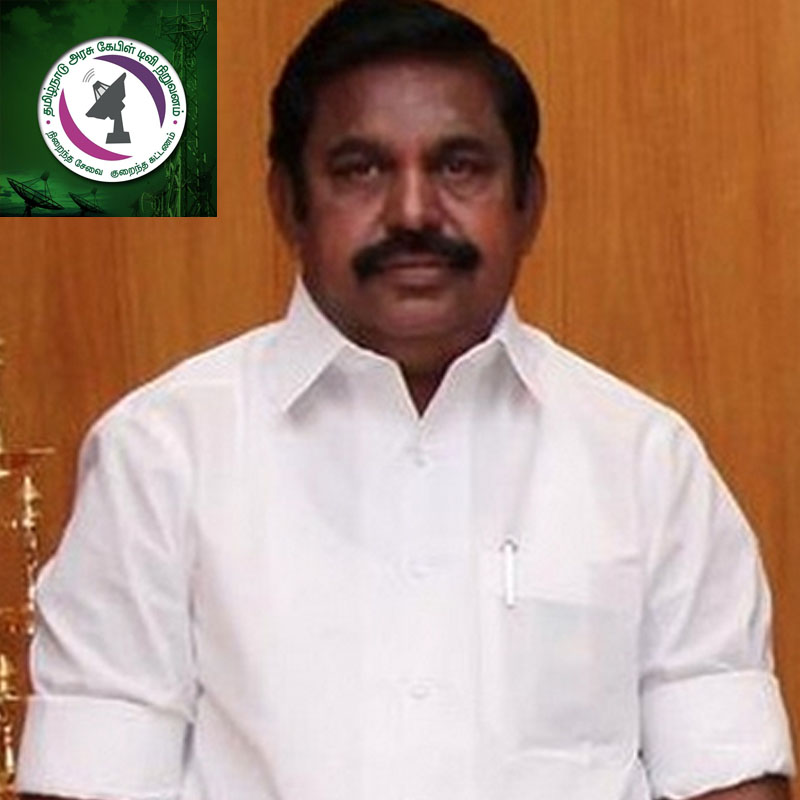
    Tamil Nadu chief minister Edappadi K. Palaniswami launched DAS at Nungambakkam in Chennai. Minister for information technology M Manikandan and the chief secretary Girija Vaidyanathan were also present.

    The distribution of free STBs was a promise made in the last AIADMK party manifesto by the late chief minister J Jayalalithaa. Around seven million Arasu subscribers reportedly got access to 180 channels in digital quality at a monthly subscription of Rs 125.

    The STBs were to be distributed to users through local cable operators who could charge a one-time activation fee of Rs 200. The distribution of free STBs was scheduled to be completed in three months, an official release had stated.

    Meanwhile, the government was yet to take a final decision on repeated reports by TRAI that states, political parties, and religious groups should not be permitted in broadcasting or distribution sectors.

    ALSO READ :

    Arasu gets a month’s extension to go digital

    Arasu to formally launch DAS in Chennai on Sept. 1

    Delayed Arasu DAS starts, 7 mn subs to get 180 channels in Rs 125


  • Delayed Arasu DAS starts, 7 mn subs to get 180 channels in Rs 125

    Delayed Arasu DAS starts, 7 mn subs to get 180 channels in Rs 125

    NEW DELHI: The Tamil Nadu Arasu Cable TV Corporation (TACTV)’s digital operations  (DAS) were launched on 1 September with the inauguration of upgraded MPEG 4 control room and distribution of free set-top boxes. Around seven million Arasu subscribers will now have access to 180 channels in digital quality at a monthly subscription of Rs 125. The STBs will be distributed among users through local cable operators who can charge a one-time activation fee of Rs 200. The distribution of free STBs will be completed in three months, an official release said.

    Tamil Nadu chief minister Edappadi K. Palaniswami formally launched the digital addressable system (DAS) at Nungambakkam in Chennai. Minister for information technology M Manikandan and chief secretary Girija Vaidyanathan were also present.

    The distribution of free STBs was a promise made in the last AIADMK party manifesto by the late chief minister J Jayalalithaa.

    The Centre had in April this year given a provisional MSO licence to Arasu on the condition that it had adopts DAS within three months.

    Taking the ground that it had failed to get an adequate number of digital set-top boxes, TACTV had sought extension for three months beyond mid-July, but the Centre had only agreed to one month — till 17 August. Consequently, TACTV has been asked to complete the digitisation process by 17 August 2017 failing which the provisional the “registration may be suspended/revoked.”

    Its present application seeking a further extension is still pending with the information and broadcasting ministry.

    Four monthly packages have been offered to subscribers, including paid and free-to air channels: 180 channels for Rs 125, 230 channels for Rs 175, 260 for Rs 225, and 300 for Rs 275. The subscription fee is exclusive of 18 per cent GST.

    According to government advertisements in the local media, STBs come with a three-year warranty and TACTV is the only state-owned undertaking in India to offer STBs at no cost. TACTV is aiming at six million standard definition (SD) STBs and one million high definition (HD) STBs.

    “The proposed TV services (300 channels to start and to be expanded to 500) will be in MPEG 4 Standard definition and 30 Television services in HD (MPEG4) and 20 FM Audio services with provision to add more SD & HD Channels in the near future,” according to the tender document issued in May this year when seeking STBs.

    It also said the system will ultimately aim to broadcast 500 TV channels, including 50 HD channels and 20 FM audio Channels. The initial subscriber base is expected to be over 7 million.

    Meanwhile, the central government is still to take a final decision on repeated recommendations by the Telecom Regulatory Authority of India that states the political parties, and religious groups should not be permitted in broadcasting or distribution sectors.

    ALSO READ :

    Arasu gets a month’s extension to go digital

    Arasu to formally launch DAS in Chennai on Sept. 1

  • Arasu seeks more time to go digital as it waits for STBs

    NEW DELHI: Even as the deadline for it to go digital concludes tomorrow, the Tamil Nadu Arasu Cable TV Corporation has sought more time from the Information and Broadcasting Ministry.

    The Ministry had given the state-owned multi-system operator three months to switch off analogue and later extended this till 17 August 2017.

    TACTV sources told indiantelevision.com that orders had been placed for an adequate number of digital set top boxes but these had still not been received.

    Simultaneously, the sources said they had sought time from the Tamil Nadu Chief Minister for launch of digital signals.

    The Principal Secretary to the state Government had sought thee months extension from 17 July but the centre agreed to give only one more month in a letter sent to TACTV dated 21 June 2017.

    Consequently, TACTV had been asked to complete the digitization process by 17 August 2017 failing which the provisional ‘registration may be suspended/revoked.’

    Copies of the letter were sent to the Principal Secretary of the Tamil Nadu IT Department, the Telecom Regulatory Authority of India, and the Commissioner/Superintendent of Police in Chennai.  

    Meanwhile, TRAI Chairman R S Sharma had said that as the Authority’s recommendations for not permitting state governments, political parties or religious groups into broadcasting or its distribution was still ‘under consideration’, it could only wait and watch.

    Meanwhile while the Punjab government has also expressed a desire to enter distribution, the Telengana government wants satellite transpoders for TV channels it wants to launch.

    Also read:

    TRAI’s final recommendations on net neutrality likely by September

    TRAI keeping watch over Arasu, TN MSO extends digital hardware bids deadline

  • June: Jio & ACT lead wireless, wired broadband subs growth

    BENGALURU:MukeshAmbani’s Reliance Jio juggernaut continued leading growth in wireless broadband internet in the country nine months after its commercial launch on 5 September 2016. Jio has added 51.2 million subscribers in calendar year 2017 (CY-17) until 30 June 2017 (Jun-17) At the same time, ACT Broadband, probably the largest private wired internet service player in South India, continued to lead subscriber acquisitions in CY-17 with the addition of about  100,000 (0.1 million) broadband internet subscribers until Jun-17.

    Wireless broadband numbers grew 9.14 million or 3.35 percent month-on-month (m-o-m) in Jun-17 to 281.99 million from 272.85 million in May-17 according to Telecom Regulatory Authority of India (TRAI) data for the month of June 2017. Jio’s subscriber base grew by 13.68 percent in Jun-17.The top 5 wireless broadband service providers were Reliance JioInfocomm Ltd (123.36 million), Bharti Airtel (53.25 million), Vodafone (41.13 million), Idea Cellular (26.37 million) and Reliance Communications (13.54 million). Please refer to the figure below:

    public://1111111111111111_1.jpg

    The figure below shows the m-o-m subscriber base growth of the top 5 service providers in India.

    public://22222222222222_2.jpg

    Top five broadband internet service providers constituted 89.08 percent market share of the total broadband subscribers at the end of Jun-17. The subscriber base of these service providers was Reliance JioInfocom Ltd (123.36 million), Bharti Airtel (55.34 million), Vodafone (41.14 million), Idea Cellular (26.37 million) and BSNL (21.76 million).

    In the case of wired broadband subscribers, the all India subscriber base grew by 0.19 million or by 1.04 percent in CY-17 – from 18.14 million on 1 January 2017 to 18.33 million as on 30 June 2017.

    As on 30 June 2017, the top five Wired Broadband Service providers were BSNL (9.73 million), Bharti Airtel (2.1 million), Atria Convergence Technologies (1.22 million), MTNL (0.98 million) and You Broadband (0.65 million). Among the top 5 wired broadband internet service providers the government run providers – Bharat Sanchar Nigam Limited (BSNL) and Mahanagar Telecom Nigam Limited (MTNL) lost subscribers, Airtel saw an increase of 10,000 subscribers, while ACT and You Broadband both gained subscribers in June 17 as compared to May 17. Please refer to the figure below.

    public://3333333333333333333333.jpg

    It must be noted thatTRAI reports indicate data in millions of numbers up to 2 decimal places. Hence it is assumed in this report that a figure of 0.51 million (5.1 lakh) subscribers for You BB for Dec-2015 would be granular to the nearest 10,000. While percentages have been mentioned up to two decimal places, the accuracy may vary, depending upon the exact number.

    Multi-system operators (MSOs’) and Local cable operators (LCOs’) or cable video service providers also provide broadband internet services in the country. These cable service providers have a number of subsidiaries and alliances, hence broadband numbers are split as applicable. The consolidated subscription numbers of these entities could be larger than the numbers of some of the wired internet services providers mentioned above.

    ALSO READ ;

    ACT still leads in wired sub addition, Idea & BSNL lose wireless subs

    ACT to invest Rs 7 bn in wireline infra, Rs 1 bn for Delhi

    Jio juggernaut rolls on, wired segment wobbles

    TRAI may invite ideas to boost b’cast & tele-products manufacturing