Tag: Telecom Regulatory Authority of India

  • Around 100,000 gram panchayats to be connected through Optic Fibre by March: Sinha

    Around 100,000 gram panchayats to be connected through Optic Fibre by March: Sinha

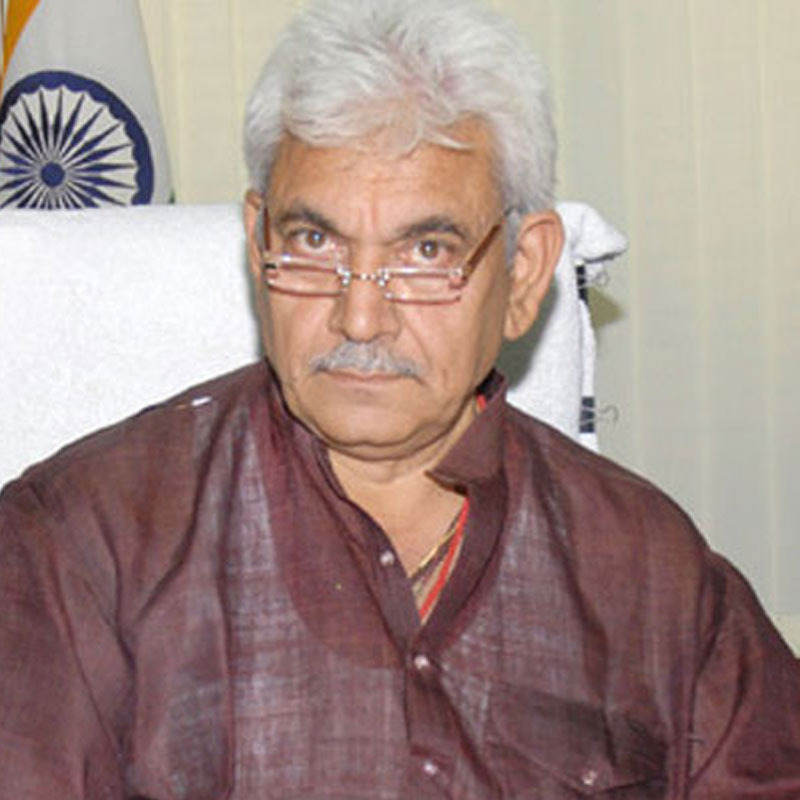
    NEW DELHI: Around 100,000 Gram Panchayats (GPs) will be connected through Optical Fibre Cable (OFC) to set up a network infrastructure to serve the rural masses by March next year, Communications Minister Manoj Sinha said today.

    He called for holistic planning rather than piecemeal approach to achieve the vision of Digital India.

    Inaugurating a seminar organized by National Institute of Communication Finance on “ICT emerging technologies & USOF for Digital India” here, the Minister said there was need for innovation in this sector as India cannot afford to emulate the Developed economies due to limited resources.

    He said if India will lag in catching up with emerging technologies in the coming 15 to 20 years, the very existence of the country will be at stake. He exhorted officials and other stakeholders to “Walk the Talk” for achieving the Prime Minister’s vision of Transforming India through Digital Revolution. He said it is a bounden duty to digitally empower the huge chunk of population particularly in rural areas who are still deprived of the IT revolution and said the Government alone cannot do this.

    He said there is need for finding appropriate technologies for the deprived sections of society, whether it is by way network infrastructure or digital highway.

    Telecom Secretary J S Deepak said the Finance Ministry is very conservative in allocation of funds under USOF (Universal Service Obligation Fund). He said despite Rs 70,000 crore being available under USOF, allocation of work is less than 40 per cent.

    However, he admitted that the execution of digital infrastructure projects particularly in rural areas needs to be speeded up. Deepak also announced that Rs 10,000 Crore will be spent in 2016-17, which is the highest in the history of USOF.

    Telecom Regulatory Authority of India Chairman R S Sharma said Public-Private Partnership is definitely the best mode for transforming India into Digitally Empowered Society and Knowledge Economy.

    He said when mobile telephony made its foray into India, there were twenty million fixed telephone lines and the number remains the same even today even though the mobile subscribers have crossed the 1000 million mark.

    He cautioned that the era of voice has been replaced by data and if India will lag behind in building the Digital Highway in a time bound manner, there will be problems of traffic Jam.

    The two-day long seminar will deliberate on the topics like changing role of USOF, regulatory issues and its future perspective, challenges of consolidation in digital Indian initiatives, Bharat Net and road ahead, broadband proliferation by telecom service providers, unlicensed spectrum for Wi-Fi etc.
  • Around 100,000 gram panchayats to be connected through Optic Fibre by March: Sinha

    Around 100,000 gram panchayats to be connected through Optic Fibre by March: Sinha

    NEW DELHI: Around 100,000 Gram Panchayats (GPs) will be connected through Optical Fibre Cable (OFC) to set up a network infrastructure to serve the rural masses by March next year, Communications Minister Manoj Sinha said today.

    He called for holistic planning rather than piecemeal approach to achieve the vision of Digital India.

    Inaugurating a seminar organized by National Institute of Communication Finance on “ICT emerging technologies & USOF for Digital India” here, the Minister said there was need for innovation in this sector as India cannot afford to emulate the Developed economies due to limited resources.

    He said if India will lag in catching up with emerging technologies in the coming 15 to 20 years, the very existence of the country will be at stake. He exhorted officials and other stakeholders to “Walk the Talk” for achieving the Prime Minister’s vision of Transforming India through Digital Revolution. He said it is a bounden duty to digitally empower the huge chunk of population particularly in rural areas who are still deprived of the IT revolution and said the Government alone cannot do this.

    He said there is need for finding appropriate technologies for the deprived sections of society, whether it is by way network infrastructure or digital highway.

    Telecom Secretary J S Deepak said the Finance Ministry is very conservative in allocation of funds under USOF (Universal Service Obligation Fund). He said despite Rs 70,000 crore being available under USOF, allocation of work is less than 40 per cent.

    However, he admitted that the execution of digital infrastructure projects particularly in rural areas needs to be speeded up. Deepak also announced that Rs 10,000 Crore will be spent in 2016-17, which is the highest in the history of USOF.

    Telecom Regulatory Authority of India Chairman R S Sharma said Public-Private Partnership is definitely the best mode for transforming India into Digitally Empowered Society and Knowledge Economy.

    He said when mobile telephony made its foray into India, there were twenty million fixed telephone lines and the number remains the same even today even though the mobile subscribers have crossed the 1000 million mark.

    He cautioned that the era of voice has been replaced by data and if India will lag behind in building the Digital Highway in a time bound manner, there will be problems of traffic Jam.

    The two-day long seminar will deliberate on the topics like changing role of USOF, regulatory issues and its future perspective, challenges of consolidation in digital Indian initiatives, Bharat Net and road ahead, broadband proliferation by telecom service providers, unlicensed spectrum for Wi-Fi etc.
  • TRAI-COAI spar on interconnect charges consultation paper

    TRAI-COAI spar on interconnect charges consultation paper

    MUMBAI: Telco watchdog  the Telecom Regulatory Authority of India (TRAI) has garbaged allegations by the Cellular Operators Associaiton of India (COAI) that its latest consultation paper on call connect charges was “unfair” on incumbent operators and favouring newer entrants. TRAI chairman RS Sharma told PTI that the allegations against the regulator are “baseless.”

    TRAI maintained that it will continue to work according to its mandate. “Trai will continue to work in the areas in which it is mandated to work…We will continue to perform functions assigned in the Trai Act, with regard to consumer protection, Quality of Service, encouraging competition, fair play and growth of industry,” Sharma said.

    COAI had questioned the regulator’s urgency in initiating the process of  reviewing interconnect charges – paid by one operator to another for connecting calls, which the association claimed “favours new entrants.” TRAI  said it had undertaken this review in the backdrop of 4G and internet telephony changing the way consumers communicate.
    Currently, termination charges for a mobile to mobile local and national long distance call is pegged at 14 paise per minute while the termination charges for international incoming call to wireless and wired line stands at 53 paise per minute.

    Trai had sought fresh views on whether this should be continued or whether a new way of computing could be considered which is Bill and Keep (BAK) – to maximize consumer welfare, adoption of more efficient technologies and growth of the telecom sector. Under the BAK method, each telco bills its own subscribers for outgoing traffic that it sends to the  other interconnecting network and keeps the revenue received from its subscribers.

    COAI has finger pointed at the regulator’s suggestion, saying it essentially favours new operators as they would  not have to pass any payments to existing older operators, while the latter would end up incurring costs. “This is a misguided effort from the TRAI that will help new entrants at the cost of the incumbent. We are extremely disturbed by this, this further tilts the level playing field,” COAI director general Rajan Matthews had stated yesterday.

    This is not the first time that India’s private sector telecom operators have tried to put pressure on the regulator.
    Even in the case of net neutrality and zero-rating plans of telecom operators, the telcos had termed certain orders of TRAI without any basis that did not give the telcos a level playing field against new technologies (OTT services like WhatsApp, Skype, etc) and their backers.

    Matthews told PTI that his association   had sought a meeting with the telecom minister and secretary “so that the matter can be debated in a transparent manner.”

    The Mukesh Ambani-led Reliance Industries Ltd, which has a pan-India licence for providing telecom services by a subsidiary company under Reliance Jio brand name, is slated to launch its services formally later this year. Reliance Jio is also slated to offer its consumers hi-speed 4G broadband services on low-priced Lyf handsets at  monthly subscription rates, telecoms observer opine, that are likely to start a blood-bath in the telecoms sector.

    RIL also controls the Network18 media group, founded by Raghav Bahl, which owns several TV channels and online and digital properties.

    In recent times, incumbent telecoms operators have been severely criticised within and outside the government for the low quality of services and rampant call-drops that TRAI had tried to rectify by proposing fines to benefit consumers.

    This move and other such regulatory initiatives too were criticised by telecos and various telecom industry bodies like COAI and Broadband India Forum.

    Interestingly, Reliance Jio  is also a member of COAI, though, according to media reports, its position on the present round of TRAI bashing by telcos is not known and unclear.

    ALSO READ:

    BIF bats for OTT regulations & level-playing field for all in Net Neutrality debate

  • TRAI-COAI spar on interconnect charges consultation paper

    TRAI-COAI spar on interconnect charges consultation paper

    MUMBAI: Telco watchdog  the Telecom Regulatory Authority of India (TRAI) has garbaged allegations by the Cellular Operators Associaiton of India (COAI) that its latest consultation paper on call connect charges was “unfair” on incumbent operators and favouring newer entrants. TRAI chairman RS Sharma told PTI that the allegations against the regulator are “baseless.”

    TRAI maintained that it will continue to work according to its mandate. “Trai will continue to work in the areas in which it is mandated to work…We will continue to perform functions assigned in the Trai Act, with regard to consumer protection, Quality of Service, encouraging competition, fair play and growth of industry,” Sharma said.

    COAI had questioned the regulator’s urgency in initiating the process of  reviewing interconnect charges – paid by one operator to another for connecting calls, which the association claimed “favours new entrants.” TRAI  said it had undertaken this review in the backdrop of 4G and internet telephony changing the way consumers communicate.
    Currently, termination charges for a mobile to mobile local and national long distance call is pegged at 14 paise per minute while the termination charges for international incoming call to wireless and wired line stands at 53 paise per minute.

    Trai had sought fresh views on whether this should be continued or whether a new way of computing could be considered which is Bill and Keep (BAK) – to maximize consumer welfare, adoption of more efficient technologies and growth of the telecom sector. Under the BAK method, each telco bills its own subscribers for outgoing traffic that it sends to the  other interconnecting network and keeps the revenue received from its subscribers.

    COAI has finger pointed at the regulator’s suggestion, saying it essentially favours new operators as they would  not have to pass any payments to existing older operators, while the latter would end up incurring costs. “This is a misguided effort from the TRAI that will help new entrants at the cost of the incumbent. We are extremely disturbed by this, this further tilts the level playing field,” COAI director general Rajan Matthews had stated yesterday.

    This is not the first time that India’s private sector telecom operators have tried to put pressure on the regulator.
    Even in the case of net neutrality and zero-rating plans of telecom operators, the telcos had termed certain orders of TRAI without any basis that did not give the telcos a level playing field against new technologies (OTT services like WhatsApp, Skype, etc) and their backers.

    Matthews told PTI that his association   had sought a meeting with the telecom minister and secretary “so that the matter can be debated in a transparent manner.”

    The Mukesh Ambani-led Reliance Industries Ltd, which has a pan-India licence for providing telecom services by a subsidiary company under Reliance Jio brand name, is slated to launch its services formally later this year. Reliance Jio is also slated to offer its consumers hi-speed 4G broadband services on low-priced Lyf handsets at  monthly subscription rates, telecoms observer opine, that are likely to start a blood-bath in the telecoms sector.

    RIL also controls the Network18 media group, founded by Raghav Bahl, which owns several TV channels and online and digital properties.

    In recent times, incumbent telecoms operators have been severely criticised within and outside the government for the low quality of services and rampant call-drops that TRAI had tried to rectify by proposing fines to benefit consumers.

    This move and other such regulatory initiatives too were criticised by telecos and various telecom industry bodies like COAI and Broadband India Forum.

    Interestingly, Reliance Jio  is also a member of COAI, though, according to media reports, its position on the present round of TRAI bashing by telcos is not known and unclear.

    ALSO READ:

    BIF bats for OTT regulations & level-playing field for all in Net Neutrality debate

  • DTH channels being launched by September to impart education: Javadekar

    DTH channels being launched by September to impart education: Javadekar

    NEW DELHI: Even as there is little possibility of Gyan Darshan getting revived on the television screen, 32 Direct to Home (DTH) Television Channels are to be used for providing high quality educational content to all teachers, students and citizens across the country interested in lifelong learning.

    The 32 channels are proposed to be launched before September 2016. Initially the programmes will be in English but with the passage of time the programmes will be launched in regional languages as well.

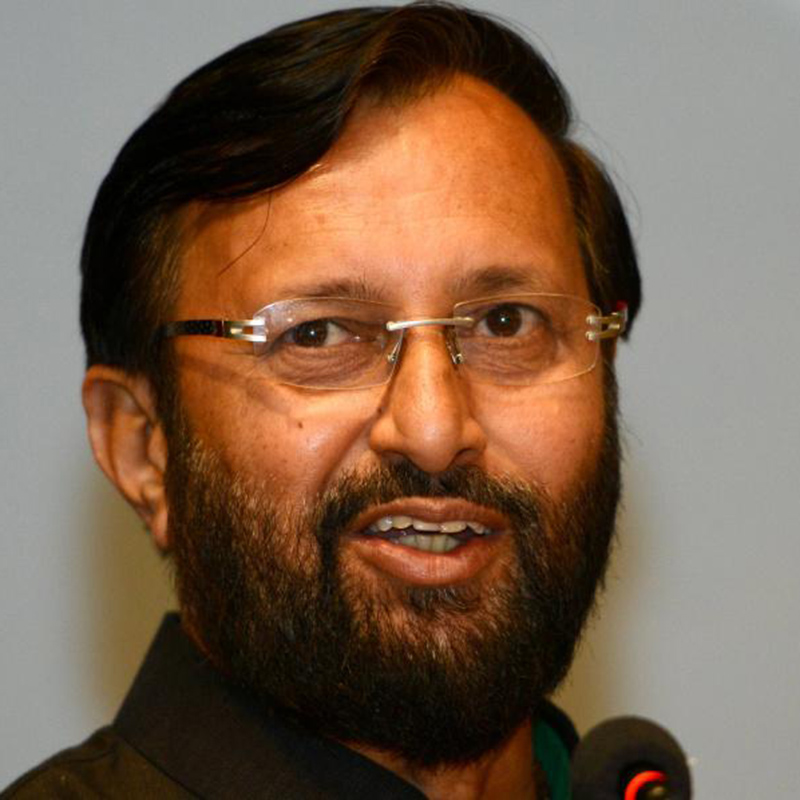
    Human Resource Development Minister Prakash Javadekar told the Lok Sabha today that the Government has approved a project to launch the ‘SWAYAM Prabha.’ There will be new content of four hours every day, which would be telecast six times a day allowing the student to choose the time of his/her convenience.

    The main features of SWAYAM Prabha would be curriculum based course contents covering diverse disciplines such as arts, science, commerce, performing arts, social sciences and humanities subjects, engineering, technology, law, medicine, agriculture etc.

    It would also cover all level of education: School education, undergraduate, postgraduate, engineering, out of school children, vocational courses and teacher training.

    Gyan Darshan and Gyan Vani had been stopped on Doordarshan and All India Radio respectively when the Indira Gandhi National Open University failed to clear huge dues to the pubcaster for these channels.

    However, these channels were later launched on the web, which was felt to be a bad alternative as the majority did not have access to internet.

    IGNOU owed more than Rs 21.6 crore to All India Radio when it was shut on 30 September after the university failed to pay the outstanding dues for three years (for their 37 stations).

    Gyan Darshan had been stopped even earlier in the beginning of 2014. It was also learnt byindiantelevision.com that IGNOU had applied to WPC for a licence to run television channels, but had been refused by the Department of Telecom which had told them that only Doordarshan can apply for such a channel. DD had refused to apply for the channel on behalf of IGNOU in view of the report by the Telecom Regulatory Authority of India which bars allotment of licences to government bodies to start their own channels.

  • DTH channels being launched by September to impart education: Javadekar

    DTH channels being launched by September to impart education: Javadekar

    NEW DELHI: Even as there is little possibility of Gyan Darshan getting revived on the television screen, 32 Direct to Home (DTH) Television Channels are to be used for providing high quality educational content to all teachers, students and citizens across the country interested in lifelong learning.

    The 32 channels are proposed to be launched before September 2016. Initially the programmes will be in English but with the passage of time the programmes will be launched in regional languages as well.

    Human Resource Development Minister Prakash Javadekar told the Lok Sabha today that the Government has approved a project to launch the ‘SWAYAM Prabha.’ There will be new content of four hours every day, which would be telecast six times a day allowing the student to choose the time of his/her convenience.

    The main features of SWAYAM Prabha would be curriculum based course contents covering diverse disciplines such as arts, science, commerce, performing arts, social sciences and humanities subjects, engineering, technology, law, medicine, agriculture etc.

    It would also cover all level of education: School education, undergraduate, postgraduate, engineering, out of school children, vocational courses and teacher training.

    Gyan Darshan and Gyan Vani had been stopped on Doordarshan and All India Radio respectively when the Indira Gandhi National Open University failed to clear huge dues to the pubcaster for these channels.

    However, these channels were later launched on the web, which was felt to be a bad alternative as the majority did not have access to internet.

    IGNOU owed more than Rs 21.6 crore to All India Radio when it was shut on 30 September after the university failed to pay the outstanding dues for three years (for their 37 stations).

    Gyan Darshan had been stopped even earlier in the beginning of 2014. It was also learnt byindiantelevision.com that IGNOU had applied to WPC for a licence to run television channels, but had been refused by the Department of Telecom which had told them that only Doordarshan can apply for such a channel. DD had refused to apply for the channel on behalf of IGNOU in view of the report by the Telecom Regulatory Authority of India which bars allotment of licences to government bodies to start their own channels.

  • Open House on Interconnect agreements aims at expediting framework

    Open House on Interconnect agreements aims at expediting framework

    NEW DELHI: Picking up momentum even as the deadline for the final phase of digital addressable system is less than six month away, an Open House discussion is being held on the Telecom Regulatory Authority of India’s consultation paper on Interconnection framework for Broadcasting TV Services distributed through DAS.

    This meeting, being held in Delhi on 13 July, comes just over a month after an earlier meeting on Register of Interconnection Agreements dated26May, which had thrown up diverse opinions and led to extension of the date for receiving comments of stakeholders to 10 June on its Consultation Paper.

    In the paper issued on 4 May on Interconnection framework for Broadcasting TV Services, TRAI noted that the exceptional growth of the number of TV channels combined with the inherent limitations of analogue cable TV systems had posed several challenges, mainly due to capacity constraints and non-addressable nature of the network. The evolution of technology paved way for bringing about digitization with addressability in the cable TV sector. For implementation of digital addressable systems in the cable TV sector, the Central Government notified the Cable Television Networks (Amendment) Rules 2012 on 28 April 2012. Immediately after the notification of the Cable TV Rules 2012, the Authority notified the Telecommunication (Broadcasting and Cable Services) Interconnection (Digital Addressable Cable Television Systems) Regulations 2012 on 30th April 2012.

    These regulations are specifically applicable for DAS whereas the Interconnection Regulations 2004 were applicable for non-addressable cable TV systems and also for other addressable systems such as DTH, HITS and IPTV. The basic features of the Interconnection Regulations 2012 are similar to the basic features of the Interconnection Regulations 2004.

    With implementations of DAS, there has been a marked increase in the number of subscribers receiving TV channels through addressable platforms. The number of subscribers being served by the DTH services has also gone up significantly. HITS platforms are also expected to make fast penetration in making available digital broadcasting TV services in the country. Now majority of the subscribers in India are receiving TV signals through digital addressable systems.

    TRAI said the interconnection regulations ought to evolve to keep pace with new developments in the sector, while sustaining the fundamental underlying principles of non-discrimination and level playing field. The commercial parameters for revenue share between service providers primarily depend upon the number of subscribers subscribing to channels/ bouquets. The numbers of subscribers in each type of addressable platform are verifiable. To ensure non-discrimination and level playing field amongst the distributors using different digital addressable systems such as DTH, IPTV, HITS, and DAS, it would be in the fitness of things that all these service providers are regulated using the common regulatory framework.

    Therefore, the consultation paper was aimed at providing a regulatory framework for interconnection that ensures a level playing field to all types of DAS systems. The consultation paper also discussed issues that the Authority noticed and plausible ways of dealing with those issues in respect of digital addressable systems. The review of the existing regulatory framework is being done with the objective of fostering competition, increase trust amongst service providers, ease of doing business, reduce disputes, improve transparency and efficiency, promote sustainable, orderly growth and effective choice to consumers.

  • Open House on Interconnect agreements aims at expediting framework

    Open House on Interconnect agreements aims at expediting framework

    NEW DELHI: Picking up momentum even as the deadline for the final phase of digital addressable system is less than six month away, an Open House discussion is being held on the Telecom Regulatory Authority of India’s consultation paper on Interconnection framework for Broadcasting TV Services distributed through DAS.

    This meeting, being held in Delhi on 13 July, comes just over a month after an earlier meeting on Register of Interconnection Agreements dated26May, which had thrown up diverse opinions and led to extension of the date for receiving comments of stakeholders to 10 June on its Consultation Paper.

    In the paper issued on 4 May on Interconnection framework for Broadcasting TV Services, TRAI noted that the exceptional growth of the number of TV channels combined with the inherent limitations of analogue cable TV systems had posed several challenges, mainly due to capacity constraints and non-addressable nature of the network. The evolution of technology paved way for bringing about digitization with addressability in the cable TV sector. For implementation of digital addressable systems in the cable TV sector, the Central Government notified the Cable Television Networks (Amendment) Rules 2012 on 28 April 2012. Immediately after the notification of the Cable TV Rules 2012, the Authority notified the Telecommunication (Broadcasting and Cable Services) Interconnection (Digital Addressable Cable Television Systems) Regulations 2012 on 30th April 2012.

    These regulations are specifically applicable for DAS whereas the Interconnection Regulations 2004 were applicable for non-addressable cable TV systems and also for other addressable systems such as DTH, HITS and IPTV. The basic features of the Interconnection Regulations 2012 are similar to the basic features of the Interconnection Regulations 2004.

    With implementations of DAS, there has been a marked increase in the number of subscribers receiving TV channels through addressable platforms. The number of subscribers being served by the DTH services has also gone up significantly. HITS platforms are also expected to make fast penetration in making available digital broadcasting TV services in the country. Now majority of the subscribers in India are receiving TV signals through digital addressable systems.

    TRAI said the interconnection regulations ought to evolve to keep pace with new developments in the sector, while sustaining the fundamental underlying principles of non-discrimination and level playing field. The commercial parameters for revenue share between service providers primarily depend upon the number of subscribers subscribing to channels/ bouquets. The numbers of subscribers in each type of addressable platform are verifiable. To ensure non-discrimination and level playing field amongst the distributors using different digital addressable systems such as DTH, IPTV, HITS, and DAS, it would be in the fitness of things that all these service providers are regulated using the common regulatory framework.

    Therefore, the consultation paper was aimed at providing a regulatory framework for interconnection that ensures a level playing field to all types of DAS systems. The consultation paper also discussed issues that the Authority noticed and plausible ways of dealing with those issues in respect of digital addressable systems. The review of the existing regulatory framework is being done with the objective of fostering competition, increase trust amongst service providers, ease of doing business, reduce disputes, improve transparency and efficiency, promote sustainable, orderly growth and effective choice to consumers.

  • TRAI’s Consultation Paper on VoIP can affect mobile TV, IPTV

    TRAI’s Consultation Paper on VoIP can affect mobile TV, IPTV

    NEW DELHI: Noting that unified IP based backbone and the benefits associated with the converged telecom access scenario has enabled service providers to launch more and more converged services such as Internet Telephony, IPTV, Mobile TV etc., the Telecom Regulatory Authority of India has sought to know the format of voice over internet telephony (VoIP) in India.

    In a Consultation Paper on Internet Telephony, TRAI has also pointed out that use of Internet Protocol (IP)-based networks, including the Internet, continues to grow around the world due to the multitude of applications it supports and particularly due to VoIP. IP-based networks are capable of providing real-time services such as voice and video telephony as well as non real-time services such as email and are driven by faster Internet connections, widespread take-up in broadband and the emergence of new technologies.

    The terms ‘IP Telephony’, ‘VoIP’, Internet Telephony and other variants often generates confusion as there are many different definitions used by various organizations. Some use them interchangeably while others give them distinct definitions. Further confusion is caused by using the terms to refer to both the IP-based technologies and the services that are enabled by these technologies.

    Convergence is primarily driven by increasing processing power, high capacity memory storage devices, reduced price, lesser power requirement and miniaturization of the devices. High-speed data transfer is now possible which is necessary for delivering innovative and advanced multimedia applications.

    Recent trends indicate that Telecom operators are adopting converged platforms to deliver multimedia rich applications containing voice, video and data. The separation of service provisioning and its management from the underlying network infrastructure in packet based networks is further increasing the acceptability of IP based Networks. It is now possible to separate provision of service contents, configuration and modification of service attributes regardless of the network catering such service. There has been enough evidence to suggest that in future IP networks will play much important role and may ultimately encourage migration of conventional networks towards Next Generation Networks or an All IP Network.

    In view of this, the Regulator has posed around fifteen questions asking stakeholders to send in their comments by 21 July 2016 and counter-comments by 4 August 2016.

    The regulator wants to know what should the additional entry fee, Performance Bank Guarantee (PBG) and Financial Bank Guarantee (FBG) for Internet Service providers be if they are also allowed to provide unrestricted Internet Telephony.

    It says the point of Interconnection for Circuit switched Network for various types of calls is well defined, and should the same be continued for Internet Telephony calls or there is need to change Point of Interconnection for Internet Telephony calls.

    TRAI has asked whether accessing of telecom services of the TSP by the subscriber through public Internet (internet access of any other TSP) can be construed as extension of fixed line or mobile services of the TSP.

    It wants to know whether the present ceiling of transit charge needs to be reviewed or it can be continued at the same level.

    The regulation has asked what the termination charge should be when call is terminating into Internet telephony network and whether an Internet telephony subscriber be able to initiate or receive calls from outside the SDCA, or service area, or the country through the public Internet thus providing limited or full mobility to such subscriber.

    Should the last mile for an Internet telephony subscriber be the public Internet irrespective of where the subscriber is currently located as long as the PSTN leg abides by all the interconnection rules and regulations concerning NLDO and ILDO, asks TRAI.

    It wants to understand the framework if number portability is allowed for Internet Telephony numbers.

    In case it is not possible to provide Emergency services through Internet Telephony, will it be enough to inform limitation of Internet Telephony calls in advance to the consumers, asks TRAI.

    Since the 1960’s when digital voice communication first emerged, the Public Switched Telephone Network (PSTN) has been supported worldwide as the primary means of voice communication. The PSTN is a connection-oriented, circuit-switched network in which a dedicated channel (or circuit) is established for the duration of a communication. Originally transmitting only analogue signals, the PSTN ultimately switched to digital communication, which offered solutions to the attenuation, noise and interference problems inherent in the analogue system. The modern PSTN uses Pulse Code Modulation (PCM) to convert all analogue signals into digital transmissions at the originating network and reverses the processes in the receiving network.

  • TRAI’s Consultation Paper on VoIP can affect mobile TV, IPTV

    TRAI’s Consultation Paper on VoIP can affect mobile TV, IPTV

    NEW DELHI: Noting that unified IP based backbone and the benefits associated with the converged telecom access scenario has enabled service providers to launch more and more converged services such as Internet Telephony, IPTV, Mobile TV etc., the Telecom Regulatory Authority of India has sought to know the format of voice over internet telephony (VoIP) in India.

    In a Consultation Paper on Internet Telephony, TRAI has also pointed out that use of Internet Protocol (IP)-based networks, including the Internet, continues to grow around the world due to the multitude of applications it supports and particularly due to VoIP. IP-based networks are capable of providing real-time services such as voice and video telephony as well as non real-time services such as email and are driven by faster Internet connections, widespread take-up in broadband and the emergence of new technologies.

    The terms ‘IP Telephony’, ‘VoIP’, Internet Telephony and other variants often generates confusion as there are many different definitions used by various organizations. Some use them interchangeably while others give them distinct definitions. Further confusion is caused by using the terms to refer to both the IP-based technologies and the services that are enabled by these technologies.

    Convergence is primarily driven by increasing processing power, high capacity memory storage devices, reduced price, lesser power requirement and miniaturization of the devices. High-speed data transfer is now possible which is necessary for delivering innovative and advanced multimedia applications.

    Recent trends indicate that Telecom operators are adopting converged platforms to deliver multimedia rich applications containing voice, video and data. The separation of service provisioning and its management from the underlying network infrastructure in packet based networks is further increasing the acceptability of IP based Networks. It is now possible to separate provision of service contents, configuration and modification of service attributes regardless of the network catering such service. There has been enough evidence to suggest that in future IP networks will play much important role and may ultimately encourage migration of conventional networks towards Next Generation Networks or an All IP Network.

    In view of this, the Regulator has posed around fifteen questions asking stakeholders to send in their comments by 21 July 2016 and counter-comments by 4 August 2016.

    The regulator wants to know what should the additional entry fee, Performance Bank Guarantee (PBG) and Financial Bank Guarantee (FBG) for Internet Service providers be if they are also allowed to provide unrestricted Internet Telephony.

    It says the point of Interconnection for Circuit switched Network for various types of calls is well defined, and should the same be continued for Internet Telephony calls or there is need to change Point of Interconnection for Internet Telephony calls.

    TRAI has asked whether accessing of telecom services of the TSP by the subscriber through public Internet (internet access of any other TSP) can be construed as extension of fixed line or mobile services of the TSP.

    It wants to know whether the present ceiling of transit charge needs to be reviewed or it can be continued at the same level.

    The regulation has asked what the termination charge should be when call is terminating into Internet telephony network and whether an Internet telephony subscriber be able to initiate or receive calls from outside the SDCA, or service area, or the country through the public Internet thus providing limited or full mobility to such subscriber.

    Should the last mile for an Internet telephony subscriber be the public Internet irrespective of where the subscriber is currently located as long as the PSTN leg abides by all the interconnection rules and regulations concerning NLDO and ILDO, asks TRAI.

    It wants to understand the framework if number portability is allowed for Internet Telephony numbers.

    In case it is not possible to provide Emergency services through Internet Telephony, will it be enough to inform limitation of Internet Telephony calls in advance to the consumers, asks TRAI.

    Since the 1960’s when digital voice communication first emerged, the Public Switched Telephone Network (PSTN) has been supported worldwide as the primary means of voice communication. The PSTN is a connection-oriented, circuit-switched network in which a dedicated channel (or circuit) is established for the duration of a communication. Originally transmitting only analogue signals, the PSTN ultimately switched to digital communication, which offered solutions to the attenuation, noise and interference problems inherent in the analogue system. The modern PSTN uses Pulse Code Modulation (PCM) to convert all analogue signals into digital transmissions at the originating network and reverses the processes in the receiving network.