Tag: Telecom Regulatory Authority of India

  • The TRAI broadcasting & cable tariff order simplified

    The TRAI broadcasting & cable tariff order simplified

    MUMBAI: The industry could not have asked for a better Dusshera gift. On the eve of 11 October 2016, India’s telecom and TV distribution regulator  The Telecom Regulatory Authority of India (TRAI) announced two draft legislations  – The Telecommunication (Broadcasting and Cable Services) (Eighth) (Addressable Systems) Tariff Order, 2016 and Standards of Quality of Service and Consumer Protection (Digital Addressable Systems) Regulations, 2016 – that definitely look like progressing the stuck-in-quicksand-of-uncertainty broadcast TV and cable TV sector. More than that, they could possibly inject a modicum of organization, professionalism and structure to an otherwise disorganized-free-for-all TV distribution business.

    The first of the draft legislation attempts to put in place a pricing framework for the heavily conflicted cable TV distribution sector. The second seeks to upgrade the quality of services that MSOs, cable TV operators provide to the consumers. Both have been much-awaited pieces of legislation.

    The third which seeks to iron out the much-maligned and disputed subscription revenue stream that flows between broadcasters, MSOs, cable TV operators and consumers is expected to be announced soon.

    Let’s look at the pricing draft whose purpose TRAI says is to ensure:

    –       transparency, non-discrimination, non-exclusivity for all stakeholders in value chain
    –       affordable TV services for customers
    –       adequate choice to consumers
    –       balance the commercial interests of broadcasters and distributors of television  channels to enable the distributors of television channels to recover their network cost and the broadcasters to recover their content cost.

    The TRAI wants the new Tariff Order or the MRP pricing regime to become effective from 1 April 2017.In the new scheme, the authority has in detail defined the role of  broadcasters, LCOs and MSOs or HITS operators. This is an attempt to simplify the order for everyone to be able to understand it.

    The role of the broadcaster

    Under this, broadcasters will have to first declare their channels as a pay channel or a free to air channel, on an a  la carte basis, and in one of the following seven genres: devotional, general entertainment, infotainment, kids, movies, news and current affairs and sports. The TRAI has defined a ceiling on the maximum retail price (MRP) for each of the genres: devotional (Rs 3), general entertainment (Rs 12), infotainment (Rs 9), kids (Rs 7), movies (Rs 10), news and current affairs (Rs 5) and sports (Rs 19).

    Each pay channel has to have a MRP  that can vary depending on the region, but which cannot be changed before the expiry of six months of it being declared. These rates will be platform agnostic – that is, uniform across the platforms (cable TV, DTH, HITS and IPTV) across a relevant geographical market, and will have to be declared on each broadcaster’s website and be transparently available to the TRAI, TV distributors and consumers.

    The pay channels of a network or its subsidiary or holding company or subsidiary of the holding company can be packaged into a bouquet. This can be done while taking the precaution that the bouquet’s MRP is not less than 85 per cent of the sum of the MRPs of the a la carte pay channels forming a part of the bouquet. Similar conditions of holding prices for six months and in geographical areas also apply to bouquets.

    The TRAI has introduced a category called a premium channel. Broadcasters are free to notify any channel as premium channel in their reference interconnect order (RIO). There shall be no price cap on maximum retail price notified by broadcasters for customers. For HD channels, the regulatory authority has, however, stated the price cannot be more than three times the MRP of the corresponding channel transmitted in SD. For those HD channels that do not have a corresponding SD channel, the benchmark will be the ceiling on the MRP of the genre it is in. These independent HD channels will have a price ceiling of three times the ceiling of the MRP of the genre.

    As far as pay per view or VOD goes, the TRAI says it will bring it under its purview at a later date as these services are in their infancy in India and have minimal adoption.

    The television distributor’s role

    On the television distributor side, the TRAI has made them responsible to provide all channels on a la carte basis and it has also  proposed to formalize  a minimum subscription fee of Rs 130 per month per set top box from a subscriber for 100 SD channels.  Now if an HD channel is included in this, it will be equal to 2 SD channels.

    The TRAI has stated that TV distributors cannot change the bouquets formed by broadcasters or its price, but they can form bouquets themselves of pay channels of different broadcasters provided that their price is not less than 85 per cent of the sum of the MRPs of the pay channels forming part of the bouquet. Free to air, HD and SD variants of the same channel and premium channels are not permitted to be included in these bouquets.

    The authority says that the composition of the 100 channel basic tier should be left to the subscriber’s volition. It can consist of FTA, pay, premium channels, broadcast bouquets or even television distributor package bouquets. But it has to have the government mandated channels and at least five channels of each of the seven genres. If the subscriber opts for pay TV or premium or HD channels or broadcast or TV distributor bouquets, he will have to pay the retail price for these separately.

    Subscribers wanting channels beyond the basic tier can opt for other channels by paying the TV distributor Rs 20 – excluding taxes-  for each slab of 25 channels and the broadcaster the MRP of each channel.

    The TV distributors also have another responsibility. The electronic programming guide on the network must display the details of all channels and their MRP genre wise for easy navigation. Broadcasters who are relying on TV distributors to collect and remit the pay channel revenues will provide a 20 per cent distribution fee to them, which the latter can share with the LCOs who are actually doing the collection. Additionally, TV channels can also offer a maximum 15 per cent MRP discount to TV distributors to encourage them. Parameters for discounts will be disclosed by broadcasters in the RIOs that will be transparent and uniform for all distributors of television channels.
     

  • The TRAI broadcasting & cable tariff order simplified

    The TRAI broadcasting & cable tariff order simplified

    MUMBAI: The industry could not have asked for a better Dusshera gift. On the eve of 11 October 2016, India’s telecom and TV distribution regulator  The Telecom Regulatory Authority of India (TRAI) announced two draft legislations  – The Telecommunication (Broadcasting and Cable Services) (Eighth) (Addressable Systems) Tariff Order, 2016 and Standards of Quality of Service and Consumer Protection (Digital Addressable Systems) Regulations, 2016 – that definitely look like progressing the stuck-in-quicksand-of-uncertainty broadcast TV and cable TV sector. More than that, they could possibly inject a modicum of organization, professionalism and structure to an otherwise disorganized-free-for-all TV distribution business.

    The first of the draft legislation attempts to put in place a pricing framework for the heavily conflicted cable TV distribution sector. The second seeks to upgrade the quality of services that MSOs, cable TV operators provide to the consumers. Both have been much-awaited pieces of legislation.

    The third which seeks to iron out the much-maligned and disputed subscription revenue stream that flows between broadcasters, MSOs, cable TV operators and consumers is expected to be announced soon.

    Let’s look at the pricing draft whose purpose TRAI says is to ensure:

    –       transparency, non-discrimination, non-exclusivity for all stakeholders in value chain
    –       affordable TV services for customers
    –       adequate choice to consumers
    –       balance the commercial interests of broadcasters and distributors of television  channels to enable the distributors of television channels to recover their network cost and the broadcasters to recover their content cost.

    The TRAI wants the new Tariff Order or the MRP pricing regime to become effective from 1 April 2017.In the new scheme, the authority has in detail defined the role of  broadcasters, LCOs and MSOs or HITS operators. This is an attempt to simplify the order for everyone to be able to understand it.

    The role of the broadcaster

    Under this, broadcasters will have to first declare their channels as a pay channel or a free to air channel, on an a  la carte basis, and in one of the following seven genres: devotional, general entertainment, infotainment, kids, movies, news and current affairs and sports. The TRAI has defined a ceiling on the maximum retail price (MRP) for each of the genres: devotional (Rs 3), general entertainment (Rs 12), infotainment (Rs 9), kids (Rs 7), movies (Rs 10), news and current affairs (Rs 5) and sports (Rs 19).

    Each pay channel has to have a MRP  that can vary depending on the region, but which cannot be changed before the expiry of six months of it being declared. These rates will be platform agnostic – that is, uniform across the platforms (cable TV, DTH, HITS and IPTV) across a relevant geographical market, and will have to be declared on each broadcaster’s website and be transparently available to the TRAI, TV distributors and consumers.

    The pay channels of a network or its subsidiary or holding company or subsidiary of the holding company can be packaged into a bouquet. This can be done while taking the precaution that the bouquet’s MRP is not less than 85 per cent of the sum of the MRPs of the a la carte pay channels forming a part of the bouquet. Similar conditions of holding prices for six months and in geographical areas also apply to bouquets.

    The TRAI has introduced a category called a premium channel. Broadcasters are free to notify any channel as premium channel in their reference interconnect order (RIO). There shall be no price cap on maximum retail price notified by broadcasters for customers. For HD channels, the regulatory authority has, however, stated the price cannot be more than three times the MRP of the corresponding channel transmitted in SD. For those HD channels that do not have a corresponding SD channel, the benchmark will be the ceiling on the MRP of the genre it is in. These independent HD channels will have a price ceiling of three times the ceiling of the MRP of the genre.

    As far as pay per view or VOD goes, the TRAI says it will bring it under its purview at a later date as these services are in their infancy in India and have minimal adoption.

    The television distributor’s role

    On the television distributor side, the TRAI has made them responsible to provide all channels on a la carte basis and it has also  proposed to formalize  a minimum subscription fee of Rs 130 per month per set top box from a subscriber for 100 SD channels.  Now if an HD channel is included in this, it will be equal to 2 SD channels.

    The TRAI has stated that TV distributors cannot change the bouquets formed by broadcasters or its price, but they can form bouquets themselves of pay channels of different broadcasters provided that their price is not less than 85 per cent of the sum of the MRPs of the pay channels forming part of the bouquet. Free to air, HD and SD variants of the same channel and premium channels are not permitted to be included in these bouquets.

    The authority says that the composition of the 100 channel basic tier should be left to the subscriber’s volition. It can consist of FTA, pay, premium channels, broadcast bouquets or even television distributor package bouquets. But it has to have the government mandated channels and at least five channels of each of the seven genres. If the subscriber opts for pay TV or premium or HD channels or broadcast or TV distributor bouquets, he will have to pay the retail price for these separately.

    Subscribers wanting channels beyond the basic tier can opt for other channels by paying the TV distributor Rs 20 – excluding taxes-  for each slab of 25 channels and the broadcaster the MRP of each channel.

    The TV distributors also have another responsibility. The electronic programming guide on the network must display the details of all channels and their MRP genre wise for easy navigation. Broadcasters who are relying on TV distributors to collect and remit the pay channel revenues will provide a 20 per cent distribution fee to them, which the latter can share with the LCOs who are actually doing the collection. Additionally, TV channels can also offer a maximum 15 per cent MRP discount to TV distributors to encourage them. Parameters for discounts will be disclosed by broadcasters in the RIOs that will be transparent and uniform for all distributors of television channels.


  • Jul-16: Airtel takes lead in wireline broadband subs additions in CY-16

    Jul-16: Airtel takes lead in wireline broadband subs additions in CY-16

    BENGALURU: There’s action in the broadband space – both wireless and wired. Indian telecom major and DTH player Bharti Airtel Limited (Airtel) has been on a net add spree in July 2016, overaking MSO and wireline broadband services player Atria Convergence Technologies Pvt Ltd (ACT) in wireline subscriber additions in the  calendar year 2016 (CY-16) up to now. This is according to telecom subscription data released by Telecom Regulatory Authority of India (TRAI) for the period ended 31 July 2016 (July-16).

    The data, released on 7 October 2016, reveals that Airtel had added 2.1 lakh net broadband wireline subscribers as compared to 1.9 lakh net subscribers added by ACT since 31 December 2015 (Dec-15, or 1 January 2016). Until Jun-16, ACT lead in net subscriber additions in CY-16.

    Among the five top wireline broadband internet players in India, the public sector telecom player Bharat Sanchar Nigam Limited (BSNL) lead by far with 98.6 lakh total number of wireline broadband subscribers. However, BSNL has seen its broadband subscriber base shrink by 60,000 in CY-16.

    The largest private sector wireline broadband internet services player Airtel had 18.8 lakh subscribers as on 31 July 2016, followed by another public sector player, Mahanagar Telephone Nigam Limited (MTNL), with 10.8 lakh subscribers. Not far behind was ACT with 10.5 lakh subscribers, followed by You Broadband (You BB) with 5.6 lakh subscribers. MTNL has also seen a reduction of 40,000 subscribers in CY-16, while You BB has seen its wireline broadband subscriber base increase by 60,000 during the same period. Please refer to Fig 1 below for wireline subscriber data in CY-16.

    Among these top five, only BSNL and Airtel could be termed as national players at present. BSNL, Airtel and MTNL also provide wireline telephony voice and data and mobile services while Airtel also has a direct to home (DTH) segment. ACT started off as an MSO with operations concentrated in a few major cities and towns located mainly in South India. It started internet services (ACT Broadband) a little later and has grown its broadband internet subscriber base over time thorough organic growth as well as through acquisitions to the extent that it is quite likely the biggest private wireline broadband player in South India. You BB offers broadband operations in a few cities in Maharashtra, Gujarat, the NCR region, Andhra Pradesh and Karnataka.
    public://trai-f1.jpg

    In CY-16, the all-India wireline subscriber base has increased by 9.8 lakh, with the top five players contributing 3.6 lakh subscribers or a little more than a third at 36.73 percent. The subscriber share of the top five wireline broadband internet players has declined from 85.28 percent (142.8 lakh) as on Dec-15 to 82.56 percent (144.4 lakh) as on Jul-16. Please refer to Fig 2 for the month-on-month change in wired broadband internet subscribers during CY-16.
    public://trai-f2.jpg

    Other wireline broadband players in India

    MSOs in India have started providing internet services on the back of their television cable networks using DOCSIS technology. In general, they have started reporting double digit year-over-year (y-o-y) increase in internet subscribers and revenue. The television cable players see broadband services improving their average revenue per user (ARPU) numbers.

    Three of the major MSOs and a regional MSO, Hathway, Siti Cable, Den Networks and Ortel Communications, respectively whose financial results are available in the public, domain have been showing steady growth in their broadband segment over the past few quarters.

    Overall broadband subscriber numbers for July 2016

    Overall, as per the data received by TRAI from the service providers, the number of broadband subscribers (including wireless, mobile, dongles) remained stagnant at159.80 million (15.980 crore)  at the end of both Jun-16 and Jul-16.

    Wireless broadband subscriber numbers that use mobiles and dongles for internet access have increased month-on-month by 4.92 per cent to 148.93 million (14.893 crore) in July-16 from 141.94 million (14.194 crore) in June-16. Fixed wireless subscribers that access the internet through Wi-Fi, Wi-Max, point-to-point radio and VSAT have declined 1.06 percent in July-16 to to 0.54 million (5.4 lakh) from 0.55 million (5.5 lakh) June-16.

    The top five service providers constituted 84.83 percent market share of the total broadband subscribers at the end of July-16. These service providers were Bharti Airtel (44.41 million or 4.441 crore), Vodafone (33.6 million or 3.36 crore), Idea Cellular (28.19 million 2.819 crore), BSNL (20.92 million 2.092 crore) and Anil Ambani-owned Reliance Communications (14.74 million 1.474 crore).

    Decline in telephone subscribers in July 2016

    It must, however, be noted that the number of telephone subscribers in India declined from 1,059.86 million (105.986 crore) at the end of June-16 to 1,058.85 million (105.885 crore) at the end of July-16, thereby showing a monthly decline rate of 0.10 percent.

    The urban subscription increased from 609.45 million (60.945 crore) at the end of June-16 to 610.22 million (61.022 crore) at the end of July-16 whereas the rural subscription declined from 450.41 million (45.041 crore) to 448.63 million (44.863 crore) during the same period.

    The monthly growth rates of urban and rural subscription were 0.13 percent and -0.40 per cent, respectively during the month of July-16.

    The overall tele-density in India declined from 83.20 at the end of June- 16 to 83.04 at the end of Jul-16. The urban tele-density declined from 153.22 at the end of June-16 to 153.18 at the end of July-16, and the rural tele-density also declined from 51.41 during the same period. The share of urban subscribers and rural subscribers in total number of telephone subscribers at the end of July-16 was 57.63 per cent and 42.37 per cent, respectively.

    TRAI’s definition of broadband is internet download speeds greater than or equal to 512 Kpbs.


  • Jul-16: Airtel takes lead in wireline broadband subs additions in CY-16

    Jul-16: Airtel takes lead in wireline broadband subs additions in CY-16

    BENGALURU: There’s action in the broadband space – both wireless and wired. Indian telecom major and DTH player Bharti Airtel Limited (Airtel) has been on a net add spree in July 2016, overaking MSO and wireline broadband services player Atria Convergence Technologies Pvt Ltd (ACT) in wireline subscriber additions in the  calendar year 2016 (CY-16) up to now. This is according to telecom subscription data released by Telecom Regulatory Authority of India (TRAI) for the period ended 31 July 2016 (July-16).

    The data, released on 7 October 2016, reveals that Airtel had added 2.1 lakh net broadband wireline subscribers as compared to 1.9 lakh net subscribers added by ACT since 31 December 2015 (Dec-15, or 1 January 2016). Until Jun-16, ACT lead in net subscriber additions in CY-16.

    Among the five top wireline broadband internet players in India, the public sector telecom player Bharat Sanchar Nigam Limited (BSNL) lead by far with 98.6 lakh total number of wireline broadband subscribers. However, BSNL has seen its broadband subscriber base shrink by 60,000 in CY-16.

    The largest private sector wireline broadband internet services player Airtel had 18.8 lakh subscribers as on 31 July 2016, followed by another public sector player, Mahanagar Telephone Nigam Limited (MTNL), with 10.8 lakh subscribers. Not far behind was ACT with 10.5 lakh subscribers, followed by You Broadband (You BB) with 5.6 lakh subscribers. MTNL has also seen a reduction of 40,000 subscribers in CY-16, while You BB has seen its wireline broadband subscriber base increase by 60,000 during the same period. Please refer to Fig 1 below for wireline subscriber data in CY-16.

    Among these top five, only BSNL and Airtel could be termed as national players at present. BSNL, Airtel and MTNL also provide wireline telephony voice and data and mobile services while Airtel also has a direct to home (DTH) segment. ACT started off as an MSO with operations concentrated in a few major cities and towns located mainly in South India. It started internet services (ACT Broadband) a little later and has grown its broadband internet subscriber base over time thorough organic growth as well as through acquisitions to the extent that it is quite likely the biggest private wireline broadband player in South India. You BB offers broadband operations in a few cities in Maharashtra, Gujarat, the NCR region, Andhra Pradesh and Karnataka.
    public://trai-f1.jpg

    In CY-16, the all-India wireline subscriber base has increased by 9.8 lakh, with the top five players contributing 3.6 lakh subscribers or a little more than a third at 36.73 percent. The subscriber share of the top five wireline broadband internet players has declined from 85.28 percent (142.8 lakh) as on Dec-15 to 82.56 percent (144.4 lakh) as on Jul-16. Please refer to Fig 2 for the month-on-month change in wired broadband internet subscribers during CY-16.
    public://trai-f2.jpg

    Other wireline broadband players in India

    MSOs in India have started providing internet services on the back of their television cable networks using DOCSIS technology. In general, they have started reporting double digit year-over-year (y-o-y) increase in internet subscribers and revenue. The television cable players see broadband services improving their average revenue per user (ARPU) numbers.

    Three of the major MSOs and a regional MSO, Hathway, Siti Cable, Den Networks and Ortel Communications, respectively whose financial results are available in the public, domain have been showing steady growth in their broadband segment over the past few quarters.

    Overall broadband subscriber numbers for July 2016

    Overall, as per the data received by TRAI from the service providers, the number of broadband subscribers (including wireless, mobile, dongles) remained stagnant at159.80 million (15.980 crore)  at the end of both Jun-16 and Jul-16.

    Wireless broadband subscriber numbers that use mobiles and dongles for internet access have increased month-on-month by 4.92 per cent to 148.93 million (14.893 crore) in July-16 from 141.94 million (14.194 crore) in June-16. Fixed wireless subscribers that access the internet through Wi-Fi, Wi-Max, point-to-point radio and VSAT have declined 1.06 percent in July-16 to to 0.54 million (5.4 lakh) from 0.55 million (5.5 lakh) June-16.

    The top five service providers constituted 84.83 percent market share of the total broadband subscribers at the end of July-16. These service providers were Bharti Airtel (44.41 million or 4.441 crore), Vodafone (33.6 million or 3.36 crore), Idea Cellular (28.19 million 2.819 crore), BSNL (20.92 million 2.092 crore) and Anil Ambani-owned Reliance Communications (14.74 million 1.474 crore).

    Decline in telephone subscribers in July 2016

    It must, however, be noted that the number of telephone subscribers in India declined from 1,059.86 million (105.986 crore) at the end of June-16 to 1,058.85 million (105.885 crore) at the end of July-16, thereby showing a monthly decline rate of 0.10 percent.

    The urban subscription increased from 609.45 million (60.945 crore) at the end of June-16 to 610.22 million (61.022 crore) at the end of July-16 whereas the rural subscription declined from 450.41 million (45.041 crore) to 448.63 million (44.863 crore) during the same period.

    The monthly growth rates of urban and rural subscription were 0.13 percent and -0.40 per cent, respectively during the month of July-16.

    The overall tele-density in India declined from 83.20 at the end of June- 16 to 83.04 at the end of Jul-16. The urban tele-density declined from 153.22 at the end of June-16 to 153.18 at the end of July-16, and the rural tele-density also declined from 51.41 during the same period. The share of urban subscribers and rural subscribers in total number of telephone subscribers at the end of July-16 was 57.63 per cent and 42.37 per cent, respectively.

    TRAI’s definition of broadband is internet download speeds greater than or equal to 512 Kpbs.


  • Opening DTT to private sector; discussion planned

    Opening DTT to private sector; discussion planned

    NEW DELHI: An open house discussion will be held on 19 October 2016 on a Consultation Paper on “Opening Up Digital Terrestrial Transmission.” The OHD will be held in the PHD Chamber near Sirifort Auditorium at 10.00 am.

    The Paper by the Telecom Regulatory Authority of India was issued on 24 June 2016, about a year after Prasar Bharati – which is the only terrestrial broadcaster in the country – unanimously recommended that DTT should be opened up to the private channels. Apart from Prasar Bharati, several private channels have already responded to the paper, which was followed by a linked paper on sharing infrastructure issued on 21 September 2016.

    In its response to the DTT paper, the pubcaster said even as it supports the move, it feels that the potential of available distribution options need to be critically analysed to fulfill their requirements (for example coverage, capacity, reception mode, and type of service etc).

    The public broadcaster has also said that the terrestrial broadcast platform will be relevant in the long term if its usage offers veritable benefits to the broadcasters, the audiences and the society as a whole. Even in countries where cable, satellite or broadband hold a significant market share, terrestrial broadcasting is usually regarded as an essential, flexible and reliable way of delivering broadcast content to a mass audience.

    In its response to 11 questions asked by TRAI in its Consultation Paper on ‘Issues related to Digital Terrestrial Broadcasting in India,’ the pubcaster says that the terrestrial platform must be digital to remain viable in the long term.

    Prasar Bharati CEO Jawhar Sircar, who had told indiantelevision.com in an interview earlier that it had cleared DTT for the private sector more than a year ago, said at the recent Indian Digital Operators Summit (IDOS) that it was willing to give its infrastructure to the private TV and radio channels.

    Also read:

    http://www.indiantelevision.com/television/tv-channels/terrestrial/idos-2016-prasar-bharati-could-share-infra-with-private-players-sircar-161001

    http://www.indiantelevision.com/videos/event-coverage/one-on-one-discussion-with-jawhar-sircar-ceo-prasar-bharati-161004


  • Opening DTT to private sector; discussion planned

    Opening DTT to private sector; discussion planned

    NEW DELHI: An open house discussion will be held on 19 October 2016 on a Consultation Paper on “Opening Up Digital Terrestrial Transmission.” The OHD will be held in the PHD Chamber near Sirifort Auditorium at 10.00 am.

    The Paper by the Telecom Regulatory Authority of India was issued on 24 June 2016, about a year after Prasar Bharati – which is the only terrestrial broadcaster in the country – unanimously recommended that DTT should be opened up to the private channels. Apart from Prasar Bharati, several private channels have already responded to the paper, which was followed by a linked paper on sharing infrastructure issued on 21 September 2016.

    In its response to the DTT paper, the pubcaster said even as it supports the move, it feels that the potential of available distribution options need to be critically analysed to fulfill their requirements (for example coverage, capacity, reception mode, and type of service etc).

    The public broadcaster has also said that the terrestrial broadcast platform will be relevant in the long term if its usage offers veritable benefits to the broadcasters, the audiences and the society as a whole. Even in countries where cable, satellite or broadband hold a significant market share, terrestrial broadcasting is usually regarded as an essential, flexible and reliable way of delivering broadcast content to a mass audience.

    In its response to 11 questions asked by TRAI in its Consultation Paper on ‘Issues related to Digital Terrestrial Broadcasting in India,’ the pubcaster says that the terrestrial platform must be digital to remain viable in the long term.

    Prasar Bharati CEO Jawhar Sircar, who had told indiantelevision.com in an interview earlier that it had cleared DTT for the private sector more than a year ago, said at the recent Indian Digital Operators Summit (IDOS) that it was willing to give its infrastructure to the private TV and radio channels.

    Also read:

    http://www.indiantelevision.com/television/tv-channels/terrestrial/idos-2016-prasar-bharati-could-share-infra-with-private-players-sircar-161001

    http://www.indiantelevision.com/videos/event-coverage/one-on-one-discussion-with-jawhar-sircar-ceo-prasar-bharati-161004


  • Vibrant Indian policy-making will ensure non-discrimination: Netflix APAC MD

    Vibrant Indian policy-making will ensure non-discrimination: Netflix APAC MD

    NEW DELHI: Netflix is not only upbeat on the Indian market, but feels the vibrancy in policy-making process here will ensure non-discriminatory access to the Internet for all.

    Pointing out that India is a place where many innovations are being witnessed, Netflix APAC managing director Yu-Chuang Kuek said that regulatory organisations (like TRAI) should take a wholistic view on issues like net neutrality and nuance the policies in such a way so as “not to stifle innovations.”

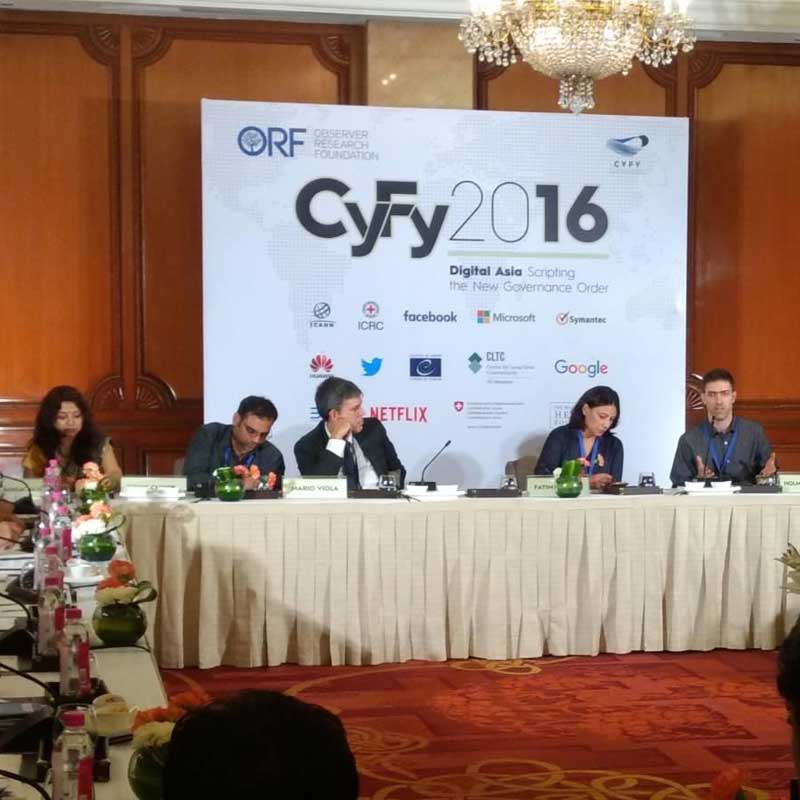
    Speaking as a panellist at a session on `The Future of Entertainment’ at ORF-organised `CyFy 2016: Digital Asia Scripting the New Governance Order’ here on Thursday, Kuek suggested Indian policy-makers should flesh out a policy after looking at all issues.

    Telecom Regulatory Authority of India (TRAI), the broadcast and telecoms regulator, is in the process of coming out with a set of guidelines for OTT services and net neutrality issue after lengthy debates with stakeholders. A section of the entertainment and telecoms industry in India has been lobbying hard to regulate mushrooming OTT services that have been claiming a growing subscriber base despite challenges of inadequate bandwidth and high cost of data.

    As to whether challenges of possible over-regulation (by TRAI), slow internet speed and high cost of data could pose a problem for the growth of OTT services like Netflix in India, Kuek emphasised that he’s much “heartened” by the ongoing “vibrant discussion” on net neutrality.

    He, along with another panellists, went on to clarify that regulations need to be “principled and technology-based” without “overreaching” as restrictive regulations were not good for the industry as a whole.

    Holding forth on Asian and global trends, the Singapore-based Kuek said that “entertainment and video consumption online is irreversible” and it becomes the “first point of contact for Internet adoption.” He added: “There has been an annual growth of 22 per cent in data consumption in Asia.”

    According to another panellist, Santa Clara University Associate Professor of Communication Rohit Chopra, the lines between entertainment and news have blurred (in the US) and the second wave of Internet has caused India to “jumpstart” to this trend.

  • Vibrant Indian policy-making will ensure non-discrimination: Netflix APAC MD

    Vibrant Indian policy-making will ensure non-discrimination: Netflix APAC MD

    NEW DELHI: Netflix is not only upbeat on the Indian market, but feels the vibrancy in policy-making process here will ensure non-discriminatory access to the Internet for all.

    Pointing out that India is a place where many innovations are being witnessed, Netflix APAC managing director Yu-Chuang Kuek said that regulatory organisations (like TRAI) should take a wholistic view on issues like net neutrality and nuance the policies in such a way so as “not to stifle innovations.”

    Speaking as a panellist at a session on `The Future of Entertainment’ at ORF-organised `CyFy 2016: Digital Asia Scripting the New Governance Order’ here on Thursday, Kuek suggested Indian policy-makers should flesh out a policy after looking at all issues.

    Telecom Regulatory Authority of India (TRAI), the broadcast and telecoms regulator, is in the process of coming out with a set of guidelines for OTT services and net neutrality issue after lengthy debates with stakeholders. A section of the entertainment and telecoms industry in India has been lobbying hard to regulate mushrooming OTT services that have been claiming a growing subscriber base despite challenges of inadequate bandwidth and high cost of data.

    As to whether challenges of possible over-regulation (by TRAI), slow internet speed and high cost of data could pose a problem for the growth of OTT services like Netflix in India, Kuek emphasised that he’s much “heartened” by the ongoing “vibrant discussion” on net neutrality.

    He, along with another panellists, went on to clarify that regulations need to be “principled and technology-based” without “overreaching” as restrictive regulations were not good for the industry as a whole.

    Holding forth on Asian and global trends, the Singapore-based Kuek said that “entertainment and video consumption online is irreversible” and it becomes the “first point of contact for Internet adoption.” He added: “There has been an annual growth of 22 per cent in data consumption in Asia.”

    According to another panellist, Santa Clara University Associate Professor of Communication Rohit Chopra, the lines between entertainment and news have blurred (in the US) and the second wave of Internet has caused India to “jumpstart” to this trend.

  • MIB, TRAI to examine DAS Phase III interconnect issues

    MIB, TRAI to examine DAS Phase III interconnect issues

    NEW DELHI: Multi-system operators and local cable operators were yesterday assured by senior officials of the Ministry of Information and Broadcasting (MIB) and the Telecom Regulatory Authority of India  (TRAI) that contentious issues relating to interconnect agreements of Phase III of digitisation would be resolved.

    In a meeting held under the chairmanship of MIB additional secretary Jayashree Mukherjee, the MSOs and LCOs presented problems being faced by them.

    Primarily, the issues arise in the areas switching from analogue to digital addressable system and where the MSOs and LCOs have to sign fresh interconnect agreements with broadcasters.

    In the last meeting of the DAS Task Force on 31 August 2016, it was stated that the broadcasters should request the MSOs with whom they have interconnect agreements but who have not applied for MSO registration whether they were interested to work as an MSO in DAS-notified area failing which they would not be able to act as an MSO after the cut-off date.

    MIB was told that there are around 6,000 MSOs operating in the country, but only about 1,300 had applied for the MSO registration.

    The Indian Broadcasting Foundation (IBF) representative was requested to ensure that similar action is taken by all members of the organisation and also that a list of member-boradcasters with their e-mail addresses is sent so that MIB  could also write to them.

    ALSO READ:

    What really happened at the 16th DAS Task Force meeting

    TRAI may moot MRP for bouquet TV channels; no price cap on unbundled premium products

  • MIB, TRAI to examine DAS Phase III interconnect issues

    MIB, TRAI to examine DAS Phase III interconnect issues

    NEW DELHI: Multi-system operators and local cable operators were yesterday assured by senior officials of the Ministry of Information and Broadcasting (MIB) and the Telecom Regulatory Authority of India  (TRAI) that contentious issues relating to interconnect agreements of Phase III of digitisation would be resolved.

    In a meeting held under the chairmanship of MIB additional secretary Jayashree Mukherjee, the MSOs and LCOs presented problems being faced by them.

    Primarily, the issues arise in the areas switching from analogue to digital addressable system and where the MSOs and LCOs have to sign fresh interconnect agreements with broadcasters.

    In the last meeting of the DAS Task Force on 31 August 2016, it was stated that the broadcasters should request the MSOs with whom they have interconnect agreements but who have not applied for MSO registration whether they were interested to work as an MSO in DAS-notified area failing which they would not be able to act as an MSO after the cut-off date.

    MIB was told that there are around 6,000 MSOs operating in the country, but only about 1,300 had applied for the MSO registration.

    The Indian Broadcasting Foundation (IBF) representative was requested to ensure that similar action is taken by all members of the organisation and also that a list of member-boradcasters with their e-mail addresses is sent so that MIB  could also write to them.

    ALSO READ:

    What really happened at the 16th DAS Task Force meeting

    TRAI may moot MRP for bouquet TV channels; no price cap on unbundled premium products