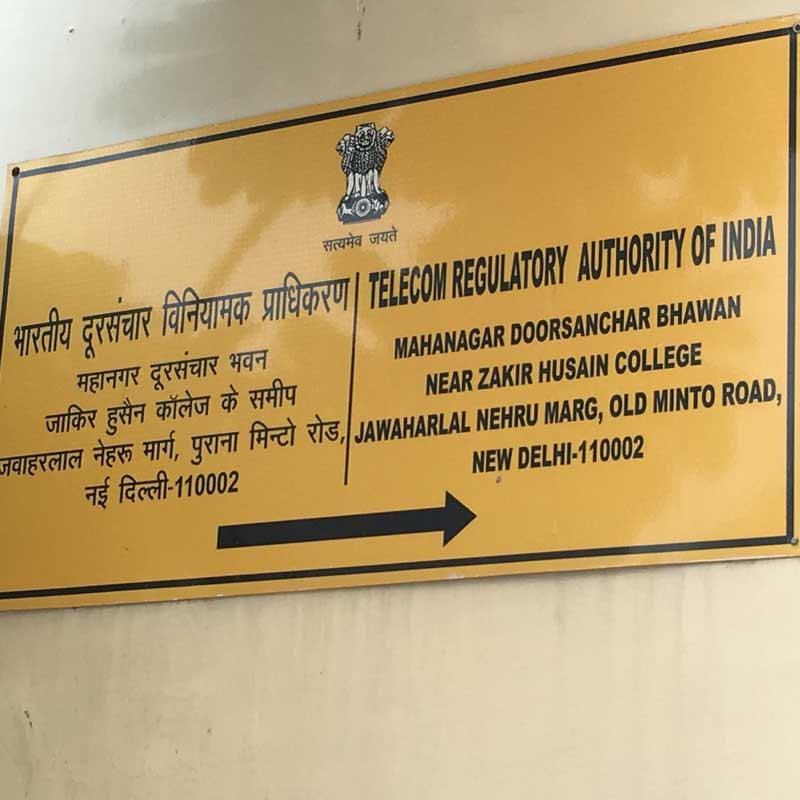
Tag: Telecom Regulatory Authority of India

  • TRAI wants reduction of import duty on Wi-fi equipment to help growth

    NEW DELHI: The import duty applicable upon Wi-Fi access point equipment should be revisited in coordination with the Commerce Ministry so that the cost of providing Wi-Fi service in the country leading to proliferation of broadband services can come down, the Telecom Regulatory Authority of India has said.

    It also said that the Department of Telecom should issue a clarification in respect of Clause (1)(xxii) of the UL VNO Guidelines, specifically clarifying that there is no exclusivity requirement upon UL VNO licensees for internet services, that is, a UL VNO can patent multiple NSO for providing internet service.

    In its Recommendations on “Proliferation of Broadband through Public Wi-Fi Networks”, TRAI said a new framework should be put in place for setting up of Public Data Offices (PDOs). Under this framework, PDOs in agreement with Public Data Office Aggregators (PDOAs) should be allowed to provide public Wi-Fi services. This will not only increase the number of public hotspots but also make internet service more affordable in the country.

    It said the existing requirement of authentication through OTP for each instance of access may be done away with. Authentication through eKYC, eCAF and other electronic modes should be allowed for the purposes of KYC obligations by PDOAs. This would enable PDOAs to obtain eKYC information and automatically authenticate the user device based on parameters such as the device’s MAC ID or through a mobile APP, which will store data required for authentication of the subscriber.

    In consultation with the security agencies, the DoT may consider authentication by MAC ID of the device or through a mobile APP which stores eKYC data of the subscriber and automatically authenticates the subscriber.

    PDOAs may be allowed to provide public Wi-Fi services without obtaining any specific license for the purpose. However, they would be subject to specific registration requirements (prescribed by the DoT) which will include obligations to ensure that e-KYC, authentication and record-keeping requirements (for customers, devices and PDOs enlisted with the PDOAs) are fulfilled by the PDOAs. This will encourage village level entrepreneurship and provide strong employment opportunities, especially in rural areas.

    PDOAs should be allowed to enter into agreements with third party application/service providers for the purposes of managing authentication and payment processes. Appropriate guidelines may be issued to ensure that customer consent is obtained, and other issues surrounding privacy and protection of sensitive personal information are addressed. This will encourage innovation in authentication and payment processes resulting in ease in access of the Wi-Fi services.

    TRAI said it was of the view that implementation of the recommendations will lead to introduction of a new set of small players in the Wi-Fi service provisioning space, who will be able to contribute in a big way in making broadband available to the masses.

    The Authority had suo-moto issued a Consultation Paper on “Proliferation of Broadband through Public Wi-Fi Networks” on 13 July 2016 to explore the regulatory and commercial constraints that potentially hinder the growth of scalable and ubiquitous Wi-Fi in the country. This included a review of any potential licensing restrictions, measures required to facilitate interoperability between Wi-Fi networks, possible de-licensing of additional bandwidths for the purposes of expediting the deployment of public Wi-Fi, and several demand-side issues such as roaming capabilities, authentication and payment processes, that potentially hinder the uptake of public Wi-Fi.

    While the comments and counter-comments received from the stakeholders were placed on the TRAI website, a workshop on public Wi-Fi networks was conducted in collaboration with the International Institute of Information Technology (lilT), Bangalore, on 28 September 2016.

    The purpose of this workshop was to explore various models of public Wi-Fi that could address the resource gap in terms of delivering public Wi-Fi in remote areas. Based on the discussions held at the workshop, the Authority released a Consultation Note on “Model for Nationwide Interoperable and Scalable Public Wi-Fi Networks” on 15 November 2016. The Consultation Note attempted to explore the roles of different stakeholders in the Public Wi-Fi network value chain and build an ecosystem for promoting scalable and sustainable partnerships for large scale nation wide deployment; and explore viable models that could be adopted towards rapidly deploying affordable and interoperable public Wi­ Fi networks. The comments received from the stakeholders were placed on the TRAI’s website. An Open House Discussion (OHD) with stakeholders was also organized on 9 January 2017 at New Delhi.

    The detailed recommendations are on trai.gov.in

  • DEN is focused on upping subscription revenue & be future-ready: SN Sharma

    In the Indian broadcast and cable industry, SN Sharma is regarded as a sharp planner, quick on the uptake and a `yaron ka yaar’ (a true friend). However, as with any successful corporate exec, Sharma too has had his share of critics throwing allegations; most of them have not stuck, though. Otherwise, DEN Networks Ltd promoter Sameer Manchanda, known for his sharp understanding of human nature and a tough taskmaster, wouldn’t have got Sharma back for a second stint as a CEO to spruce up a company that had been performing below expectations on various counts.

    At the helm at DEN at an exciting phase of evolution of Indian cable sector, Sharma has got his work cut out — reduce the losses, wherever they are, and use his wide influence and network amongst the cable operators to sign up with the MSO. No wonder, his return to DEN from Reliance Jio last year, reportedly, convinced various cable operators to host few parties as they think `acche din’ (good days) are finally here. However, a small slip on Sharma’s part can shatter these high expectations of his employers and cable fraternity.  

    In a conversation with Indiantelevision.com’s Consulting Editor Anjan Mitra, Sharma holds forth on an array of subjects from reasons behind renewed focus on core business of the company, shedding loss-making investments, the way Indian landscape is changing with digitization, company’s insistence on cable subscription collections and getting future-ready. Edited excerpts from the interview.

    How would you view the cable industry at present in India?

    The cable industry in India has evolved over the years, but I would say it took some definite shape 2012 onwards in two ways. Till 2012 it was all analog though there were some attempts to bring about CAS (conditional access system) in the past, which just did not take off. So the analog regime continued till 2012 without any subscription revenue being captured by MSOs before that.  If at all something was being collected, it was in the range of Rs. 5 per subscriber. Various constituents of distribution networks — MSOs, LCOs, broadcasters and subscribers — were playing their own games. MSOs managed to survive those turbulent days because of the carriage fee charged from broadcasters. Part of that carriage money went back to broadcasters as subscription charges of their TV channels and, in the end, a broadcaster kept majority of the subscription revenue collected from subscribers. To add to the industry’s woes, the technology available was basic and there were no ways available, or being deployed, to get a count of the subscriber base or churn.

    Come 2012 and three metros matured quite ably into digital markets. People saw some change happening as the legacy businesses signaled evolution. With the sunset dates being announced by the government and regulator, there was a new hope that change is ultimately here and the industry will have to adapt itself.

    Q: What did this great hope for change bring about and what were the failures?

    Based on the hope that the Indian broadcast and cable industry was finally undergoing a major change towards digital that would bring about transparency in the whole eco-system, investors supported MSOs with their investments. The MSOs, in turn, invested in the digital cable infrastructure, building it up from the scratch literally, along with deployment of digital set-top-boxes. But in their hurry to capture subscribers, which was based on the presumption that subscription revenue will flow in, majority of the boxes were subsidized that ultimately went to add to the losses for MSOs.

    MSOs simply failed to monetize the digital structure despite investing in it, while monetization of the analog areas too dipped. Reason being legacy business models pushed back at changes that were sought to be brought about. Broadcasters, though, were smarter. Sensing that subscription revenues will be upped that can get them a bigger share of the revenue pie, excel sheets were spruced and changed accordingly to hike channel tariffs. However, the change being hoped for was not adequate. It’s difficult to change an existing system, especially so in India. It’s a human tendency. It took even the MSOs and LCOs some time to fully comprehend the new digital structure,including things like SMS, CAS and other technologies employed. Making the LCOs understand that a new structure will benefit them also and they too needed to change was a bigger challenge. Still, things started to look up by early to middle of 2016 when we at DEN took the initiative to start pushing the subscription (collection) process.

    Q: You mean though green shoots of changes were seen since 2012, things on the ground changed faster from last year?

    The period 2013-2016 did see some changes on the ground too and it would be wrong on my part not to admit them. For example, efforts made in Phase I cities yielded dividends. In some parts of these cities, MSOs did manage to get a share of Rs. 100/subscriber/month. However, phase 2 and 3 were struggling and we could only manage Rs. 35 and Rs. 20 per subscriber, per month, respectively.

    What’s the big attitudinal change that DEN undertook when it realized subscription collection could be upped?

    I don’t know whether it’s an attitudinal change or not, but our new resolve made more business sense. We took the initiative of announcing that whosoever wanted to do business with us had to adhere to our applicable subscription charges. When I rejoined DEN mid 2016, mandate given to me was simple: push for hike in subscription revenue collection from the ground. I had open sessions with all our business associates in a transparent manner and conveyed to them clearly where and what we have invested and what were our expectations from associates. We got support from our associates on the concept that we were selling them.

    Apart from the requirements of the organization, there were compelling reasons too for getting in place a structure quickly and focus on subscription revenue. Delivery technologies were changing fast and there were pressures from DTH operators. These platforms were aggressively selling to consumers their services at rates that were very competitive.  Broadcasters, on the other hand, were demanding a bigger share of the revenue pie. Now, all these pressures were not only visible on the ground, but were being felt by LCOs too. All these factors put together, along with support coming in from TRAI that helped with small tweaks in regulations (like swapping of boxes) in 2016, also made the LCOs understand the importance of getting a proper structure in place. When I re-joined, I ensured that all agreements with LCOs and our business associates were put in place in a transparent and orderly manner.

    If you were asked to encapsulate DEN’s message to all business associates, what would that be?

    We gave a message to business associates, distributors, LCOs and JV partners that had four components. First, the need of the hour was to survive and catch up with companies’ bottomlines. Second, there was a present and clear competition from newer technologies. Third,  DTH players were certainly making concerted efforts to snare more subscribers as they had the advantage of starting from a digital base, unlike cable TV that is trying to make the switchover from analog to digital. And last, there was a need to upgrade technology and infrastructure and, for doing that, financial investments were necessary.

    Not that these factors were invisible to our business associates. It’s a basic lethargy to change and lack of proper understanding of the importance of the change needed that kept LCOs from undertaking business restructuring. Unless transparency is brought about in the eco-system, future investments will not be available and unless that happens to grow the business in a modern world, LCOs and MSOs would find it difficult to survive. As an MSO, we have got the boxes seeded and it won’t be out of place to demand a fair share of the revenues collected.

    How successful has been DEN in these new initiatives aimed at business restructuring?

    In a six-month journey, in phase 1 areas where ARPU is Rs 100, DEN is able to capture Rs. 125 per subscriber; phase II ARPU has increased from Rs. 45-65 to between Rs. 90-100; phase 3 subscription has risen from Rs. 30-40 to Rs. 65-75. In phase IV where the digitisation process started this year, we have crossed an ARPU of Rs.35-40 per subscriber per month already. Future path is now chalked out as TRAI and broadcasters too are not distinguishing whether the content is being shown in urban centres or semi-urban areas as far as tariff structures are concerned. LCOs and subscribers in all phases have realised that MSOs cannot keep on subsidising the content for LCOs and consumers.

    Earlier, MSOs was getting close to 10 per cent of subscription revenue collected from the ground. But then TRAI in a fair manner handed out a formula based on which every stakeholder was to get a share from the subscription revenue pie. I believe if you follow regulations, life would be simpler. DEN signs inter-connect agreements with all its partners and if there are defaults, then signals are switched off. The seriousness of our intent is loud and clear — if you sign up, we’d do business; if you don’t sign up with us, we would switch off DEN’s signals. Such a stand has resulted in DEN collecting close to 40-45 per cent of the consumer subscription revenue now.

    If LCOs, associates and consumers understand the gravity of the change taking place, why differences amongst stakeholders persist and there’s a resistance to TRAI’s tariff guidelines?

    The biggest change is the consumer who has realized that if good services are to be had, then there’s a price attached to availing those. Kudos to the regulator too that it has kept modifying its regulations from time to time as per the need of the day. In an analog regime, it set out guidelines suited for that phase. When digitization rollout started happening, TRAI was aware there would be phases of overlap of analog and digital during transition. After completion of three phases of DAS, the regulator came out with a comprehensive tariff and inter-connect structures for a digital era, which was challenged in the court. I would say the regulator has done a great job. Sooner or later stakeholders will adjust to each other’s needs because a clear road map has been etched out by the regulator.

    (This interview was taken before Supreme Court recently allowed TRAI to announce its tariff, interconnect and QoS guidelines, even while a case questioning TRAI’s power to regulate tariff issues relating to copyrights and IPR is pending final disposal at Madras High Court)

    As a big MSOs, what are DEN’s views on TRAI’s suggested regulations on tariff, inter connections and quality of services?

    We are very much excited with this revised proposed tariffs and I would say the guidelines are well drafted.  Some stakeholders may ask for some tweaks, but on a broader perspective the guidelines point to the right directions. For example, for the first time TRAI has not only given importance and value to distribution pipes that MSOs own, but has clearly spelt out what needs to be paid for using these distribution pipes. This is a big transformation as, till now, MSOs were the only ones making investments and attempting to bring about transparency in the eco-system. As increasing value-added services (VAS) are delivered via this pipe, the importance of it would be further highlighted.

    What would be the areas of push for DEN in phase 3 and 4 of digitisation?

    In phase I and II areas, DEN has five million boxes seeded in the market, while our share in phase III areas is another five million boxes. Our total universe is approximately 13 million, including some phase IV areas. But out of that total universe, a portion is still analog, while the total number of digital boxes is a shade over 10 million. So our present focus would be to take care of the analog boxes that are already in our kitty as subscribers, while aggressively adding more in the remaining period of last phase.  

    Apart from the boxes, I reiterate, overall focus of DEN is increasing subscription revenue collection from the ground in a transparent manner, taking the share that’s due to us. This focus has resulted in LCOs too hiking their subscription rates within the regulatory framework. This is also a change as LCOs earlier in a monopolistic regime, never had to market their services, which they are doing now after regulatory pushes and visible changes in consumer consumption pattern. Today’s consumer of video is savvy, both from the point of regulations and technology available to them like mobile devises at affordable prices. Today, a customer even from smaller towns and cities is willing to pay for the experience as he values the experience. If the experience and service is good, a customer doesn’t mind paying. Adoption of new technology of cable TV will be faster if consumers are properly and extensively educated, along with effective marketing of services.

    Would MSOs be able to charge consumers Rs. 500 per month, at par with OTT services, after digitization is complete; at least in phase I and II areas?

    Consumers in phase I and II areas definitely have higher purchasing power than others, but you have to appreciate that the increase in ARPUs in these two phase-areas is also because work has been continuing over several years. Still, to answer your question, I don’t see MSOs charging Rs. 500 per month for their services immediately. However, with HD services, over a period of one year the charges may rise to Rs. 400 per month. But then LCOs too need to bring in more HD boxes.

    Q: Would you agree with visionary Subhash Chandra when he recently told cable ops they were not keeping pace with consumer behavioural changes globally and the boxes presently being deployed were very basic and tech is changing faster than business models are made?

    Of course yes. Subhashji sees the future much before others do and he’s correct in highlighting such global trends. At DEN, we are very conscious of technological changes coming in to our life and are ensuring that we keep pace with the times. Keeping these global trends in mind, we recently announced a new HD service subscription. It is consumer and LCO friendly and in next six months, DEN will push HD boxes extensively. The HD box is feature-rich and would help us in increasing subscription too.

    Our HD box features include HDTV /SDTV MPEG-4 H.264 AVC & MPEG 2 decoding; SD video up scaling to HD resolution via HDMI port, improving picture quality; SPDIF output to connect external HI-FI system or home theater for Dolby pass-through; USB 2.0 for external PVR/recording function by connecting USB pen drive as low as 4GB or USB HDD up to 1 TB and audio, video and photo play back via USB drive. Additional features (Wi-Fi and Bluetooth) related to two- way functionality are under development and would be available in a month’s time. This will help to use mobile handset as STB remote with an application and enabling interactive applications like You Tube, etc.

    Then DEN is also working on a hybrid open STB where the features likely to include STB acting as home gateway for video services in the homes with an Android Open Service Platform (AOSP) and DVB-C support; enhanced 2D & 3D graphics support with latest open GL ES 2.0 / 3.0 to support high quality games; USB 3.0 to connect external HDD to enable high speed data transfer for recording and playback and integrated Bluetooth and Wi-Fi to support two-way communication.

    We aim to seed in the market at least one million HD boxes over the next 12 months. I was surprised to get feedbacks from consumers and partner LCOs after touring small towns. There’s a fairly good demand for HD boxes in such places too. And, sitting in metros, we used to think consumers in small towns of India would not be able to afford HD boxes, which are certainly costlier than the normal boxes given to them earlier.

    Any plans for 4K boxes?

    We do plan to launch 4k boxes over the next six months as per evolving technologies and global trends very much visible in markets like the US and Europe. Such boxes would be rich in features like digital video recorder, in-built apps and go a long way in changing consumer experience. Though, we do foresee inadequate supply of 4K programming, consumer behaviour is changing and, according to our assessment, there would be a sizable number of buyers for high-end boxes, including HD, if properly marketed to consumers.

    DEN launched its broadband services with much fanfare, but losses have increased. Would you continue with it?

    We have already broken even in our broadband business as of Q3 of FY 2017. Our YTD Q3 losses are at Rs. 110 million vs. Rs. 650 million in the previous full year. We have done some experimentation in Delhi and Kanpur and not only do we plan to continue with the service, but expand it too. We plan to launch our broadband services in 15 to 20 new small towns over the next six to nine months as overall capex on rollout and subscribers is dropping. With an ARPU of Rs. 750 per month per subscriber in Delhi, we see that there would be demand for such a quality service. We plan to target smaller towns in phase II and III areas of digitization. The broadband EBITDA broke even for Q3 FY’17 despite the freebie blitz unveiled by some telcos.

    (According to data available, DEN added 20k broadband subscribers in Q3 FY’17 with the total subscriber base being 159,000; the figure for homes-passed standing at 864,000. While the year-on-year growth for broadband business was 82 per cent as on Q3, the total revenue and ARPU for the quarter were Rs 210 million and Rs 752, respectively.)

    Does DEN own OFC or leases it from associates?

    Our ownership of optic fiber is a combination of several methods. DEN itself owns several thousand kms of fiber, while we also lease from others in an attempt to future-ready our delivery pipes. Then we also use telcos’ fiber to deliver our services employing an IP technology. Our and our associates’ fiber pipes are now almost 300 to 500 meters away from each home of our direct and indirect subscriber.  That is how close we are to our consumer and, with time, we’d like to move closer. As technology marches on, a cost-value analysis will permit us to be as near as 200 meters of the last mile, which can be coax cable too. But I must insist that Indian cable distribution after digital rollout started is undergoing a huge transformation and is, exceptions notwithstanding, now ready to adopt all the future technologies, including providing high-speed broadband and other VAS, which are now surfacing globally.

    Another of DEN’s new initiative is to join the already crowding space of OTT services.  What are the reasons for doing so when bigger players are searching for revenue models?

    OTT is an additional service that can be delivered over the delivery pipe that also will supply hi-speed broadband. We are not looking at OTT space from the perspective of additional revenue. This service is to give comprehensive experience to our existing consumers as of now and highlight the fact that DEN is available to them on the go, apart from at home and work place. We currently have almost 130-140 live channels, 10,000 hours of quality video content and approximately 2,000 movie titles. Our overall approach is to be future-ready and establish consumer loyalty for DEN services. The OTT service and the app can be upgraded with new features and TV channels. However, we are not looking at getting into production of original content for the OTT service.

    How is DEN utilizing the funds from investors, both foreign and domestic?

    A major part of the investments have been in the cable business. As monetization of the company’s businesses happen, especially with digital rollout, there has been a reinforcement of confidence of investors. In the last couple of quarters, the increase in subscription revenue has not only made our investors look positive, but we also see movements in investment community that is looking at this sector in a positive way.

    Is DEN looking to raise additional funding to fund growth in areas like media and sports?

    DEN has invested in media and non-media ventures, but we are evaluating some of the investments at this point of time. Let me first clarify, DEN as a corporate entity has not made any investment in (Arnab Goswami’s) Republic TV. We invested in domestic football league and in a JV with Snapdeal for a home shopping channel. However, our experiences now tell us that we should focus on our core business, which is cable TV distribution. We have conveyed to the Board of Directors that we are actively exploring suitable exit modes involving both these investments. As we are left with only 20 per cent stake in the football venture, no cost accrues to us.

    How would you describe DEN’s bottomline?

    It is a healthy and growing bottomline.  Our consolidated 9-month EBITDA for the current financial year stands at Rs 870 million positive vs. the EBITDA loss of Rs. 1070 million during the same period in the previous year. As of now, cable business has grown well and turned around.  Last year, the losses were heavy because of our other loss-making businesses like broadband and investments in ventures like football and TV shopping channel. With football (investments) been dribbled away and broadband segment stabilizing, I would hope to close the FY 2016-17 (ending March 31,2017) on a high, though it may not be big. The journey from here should be smooth — minor negatives because of initial losses earlier, notwithstanding — and our renewed focus on core business of cable TV distribution with an agenda to correcting the subscription revenues should help.

    (According to figures available with investors, DEN’s digital subscribers contributed Rs. 10.2 crore or Rs 102 million in Q3 of FY 2016-17 to the overall quarterly revenue kitty. Cable subscriptions registered a growth of 15 per cent quarter-on-quarter. Not only DAS phase 1 EBITDA stood at 30+ per cent, DAS phase 3’s monetisation was Rs. 65, inclusive of taxes, as on December ’16.)

    Q: What is your medium to long to term vision for DEN?

    I would like to convert 50 per cent of my SD box consumers into HD subs in five years’ time, while I would like to convert at least 10 per cent of the SD boxes into HD over the next 12-15 months. These conversions will also help in upping subscription revenue collections.  In five years’ time, I would also like to have one million 4K boxes seeded in consumer homes and be elated to have a total subscriber base of 20 million.
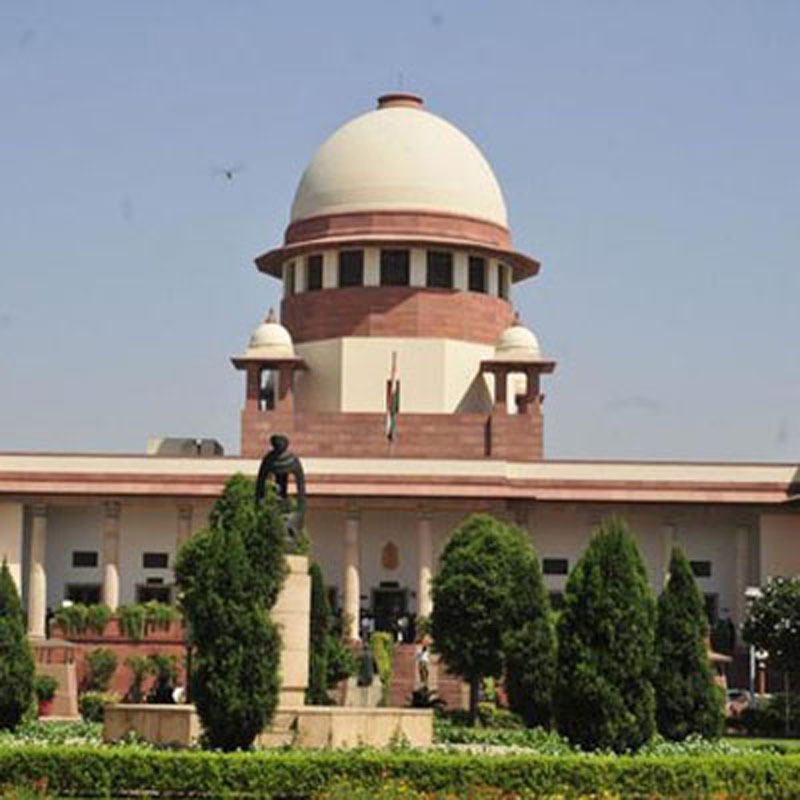
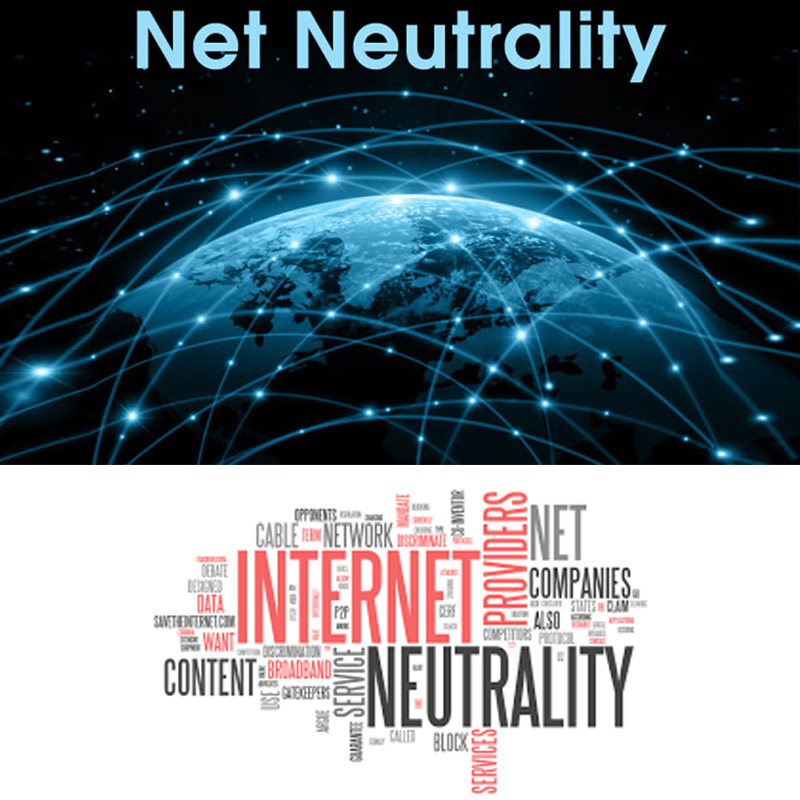
     

  • TRAI jurisdiction: Madras HC yes to MSOs as interveners, no as impleaders

    NEW DELHI/MUMBAI: The Madras High Court yesterday gave concession to the MSOs allowing them to intervene on matters of law under consideration. But, the court refused to let them implead, via AIDCF, in a case filed by broadcasters (content generators) challenging whether regulator TRAI can have jurisdiction over commercial issues relating to copyright of content.

    Both sides — petitioners Star TV and Vijay TV and All India Digital Cable Federation (AIDCF) — viewed the court stand as a moral victory.

    Star TV and Vijay TV had moved the Madras High Court pleading that Telecom Regulatory Authority of India (TRAI), India’s broadcast carriage and telecoms regulator, didn’t have jurisdiction to issue guidelines that had a bearing on tariff of content, both TV and film, especially if such issues were also governed under the copyright law.

    In an official statement, AIDCF said the court was “pleased to permit AIDCF to participate in the proceedings as (an) intervener” allowing it to “file all relevant material, make oral submissions and file written submissions in the main writ petition.”

    The AIDCF statement, quoting organisation president and Hathway video division CEO TS Panesar, said, “We are delighted to note the decision of the Madras High Court in recognising us as an important stakeholder in this matter.”

    A source close to the petitioners, however, described the court’s decision as “disallowing” MSOs to directly implead in the main writ petition, the same way as it had not allowed Indian Broadcasting Foundation (IBF) to implead itself in the case. “AIDCF can only intervene on the main matters of law under consideration, which is whether TRAI has jurisdiction over copyright issues relating to content,” the source opined.

    TRAI, which has been trying to bring about semblance of order in the broadcast and cable sector in India via various guidelines, could not be reached for comments by indiantelevision.com till the time of writing this report. However, TRAI chairman RS Sharma had told indiantelevision.com in an year-end interview in December 2016 that the regulator’s main aim behind issuing draft guidelines relating to broadcast and cable tariff, quality of service and interconnection was to reduce litigation amongst stakeholders and create a broad playing arena for all players, including the consumers.

    Industry sources had indicated that the MSOs had moved the court as they apprehended viewpoints of distribution platforms of TV services in India, notably the MSOs, may not be heard; especially when they have views that don’t converge with those of the petitioners on all aspects of the petition.

    However, there is lack of clarity on the status of the petition filed by Videocon D2H, a distribution platform, to get impleaded in the aforementioned case being heard by Madras HC. The matter is listed for another round of hearing 7 March, 2017.

    Incidentally, the Supreme Court, petitioned by TRAI, had refused to intervene in the case being heard by Madras HC and had stated in its last hearing few days back that it would wait for the outcome at the high court, listing TRAI appeal for a March-end hearing.

    ALSO READ:

    SC keeps TRAI request on tariff pending till Madras HC completes hearing

    TRAI jurisdiction: IBF plea dismissed, AIDCF impleadment decision on 22 Feb

    MSOs join issues with TRAI tariff plea at Madras HC

    Tariff order: Don’t notify without SC nod, TRAI told; Madras HC case to continue

  • TRAI to review telecoms tariff structure

    NEW DELHI: Changing telecom landscape and increasing convergence happening between telecoms and broadcast services have made Telecom Regulatory Authority of India (TRAI) initiate a fresh consultation process regarding telecoms tariff structures.

    The consultation paper put out by TRAI late last week, while highlighting dealing with “emergent issues and challenges”, said the re-assessment becomes necessary to take care of regulatory principles of tariff issues like “transparency, promotional offers, disclosures and non discrimination, adherence to the principle of non-predatory pricing, meaning of predatory pricing, relevant market (and) assessment of dominant position.”

    “The consultation process aims to bring about greater clarity in interpretation of various regulatory principles set out in the TTO (Telecommunication Tariff Order, 1999) in consonance with the best global practices,” the TRAI paper said.

    Of late various telcos have been opposing and criticising TRAI’s inaction in dealing effectively with predatory pricing and offers, especially a comparative newcomer, Reliance Jio. An extension till March 31, 2017 to Jio’s free data offer to its consumers and targets has been the cause of heartburn in the telecom industry.

    According to a news report in Mint newspaper, Market leader Bharti Airtel Ltd has moved the Telecom Disputes Settlement and Appellate Tribunal (TDSAT), raising questions about the validity of the extension of Reliance Jio free offers till March 2017 and accusing TRAI of inaction against Jio.

    While the regulator in the past has justified its actions on the Jio free offer fracas, in its latest consultation paper it explained the need to go in for a fresh assessment of the tariff structures of telecoms service providers: “Despite the amendments made to the TTO and other regulations issued to factor in various market developments, a need has been felt to undertake a comprehensive review of the TTO framework, albeit in a phased manner, starting with a discussion on the core regulatory principles enshrined in the TTO…The consultation is in line with the decision taken in the meeting held with the CEOs of the TSPs (telecoms service providers) on 6 January 2017 to discuss the annual calendar of activities of TRAI for the year 2017, which, inter-a/ia, included developing a new framework for tariffs in evolving telecommunication sector and on which there was a consensus.”

  • Supreme Court flags privacy issues regarding WhatsApp, FB

    Supreme Court flags privacy issues regarding WhatsApp, FB

    NEW DELHI: The Supreme Court on Monday sought the central government’s response on a plea seeking to put in place regulation to protect the privacy of the messages of WhatsApp and Facebook users.

    The court also issued notices to the Telecom Regulatory Authority of India (TRAI), online messaging service WhatsApp and the social networking site Facebook, according to a report filed by news agency IANS.

    Petitioners Karmanya Singh Sareen and Shreya Singhal contended that under the new policy of WhatsApp, the online messaging service could access, read, share and use the contents for commercial purposes. A bench of Chief Justice Jagdish Singh Khehar and Justice D.Y. Chandrachud said, “It is a private person extending a private service. You take it or leave it — that is your right.”

    Appearing for the petitioners, senior counsel Harish Salve told the court that it was the duty of the government to protect people’s rights under Articles 19 and 21 of the Constitution and safeguard their privacy.
    As he urged the court to intervene in the matter as new policy of WhatsApp affected the privacy of the people using the site, the bench observed whenever the messaging service will change their conditions, they will give a notice to its users, IANS reported.

    Telling the court that private communication between two persons had to be protected, Salve said that TRAI was not doing anything about it and government was under duty to regulate the online messaging site and the social networking site. The court was told that TRAI has inserted a condition, which says that if you intercept a call without government permission, you would be prosecuted.

    Sareen and Singhal have challenged Delhi High Court’s September 23, 2016 order by which it had allowed WhatsApp to roll out its new privacy policy but said it cannot share data of its users collected up to September 25, 2016 with Facebook or any other related company.

    The High Court had further directed that WhatsApp would completely delete all data of users who chooses to opt out of the instant messaging app after the coming into force of its new privacy policy. While allowing WhatsApp to roll out its new privacy policy, it had said: “We have taken note of the fact that under the privacy policy of WhatsApp, the users are given an option to delete their WhatsApp account at any time, in which event, the information of the users would be deleted from the servers of WhatsApp. We are, therefore, of the view that it is always open to the existing users of WhatsApp, who do not want their information to be shared with Facebook, to opt for deletion of their account.”

    The High Court had also asked the Centre to consider if instant messaging app WhatsApp and social networking site could be brought under the statutory regulatory framework.

    TRAI is undertaking a consultation process, at the moment, to decide on Net Neutrality, which will at one point of time will also take into account services like WhatsApp, FB Messenger and other similar services offered by Indian companies too.

  • Supreme Court flags privacy issues regarding WhatsApp, FB

    Supreme Court flags privacy issues regarding WhatsApp, FB

    NEW DELHI: The Supreme Court on Monday sought the central government’s response on a plea seeking to put in place regulation to protect the privacy of the messages of WhatsApp and Facebook users.

    The court also issued notices to the Telecom Regulatory Authority of India (TRAI), online messaging service WhatsApp and the social networking site Facebook, according to a report filed by news agency IANS.

    Petitioners Karmanya Singh Sareen and Shreya Singhal contended that under the new policy of WhatsApp, the online messaging service could access, read, share and use the contents for commercial purposes. A bench of Chief Justice Jagdish Singh Khehar and Justice D.Y. Chandrachud said, “It is a private person extending a private service. You take it or leave it — that is your right.”

    Appearing for the petitioners, senior counsel Harish Salve told the court that it was the duty of the government to protect people’s rights under Articles 19 and 21 of the Constitution and safeguard their privacy.
    As he urged the court to intervene in the matter as new policy of WhatsApp affected the privacy of the people using the site, the bench observed whenever the messaging service will change their conditions, they will give a notice to its users, IANS reported.

    Telling the court that private communication between two persons had to be protected, Salve said that TRAI was not doing anything about it and government was under duty to regulate the online messaging site and the social networking site. The court was told that TRAI has inserted a condition, which says that if you intercept a call without government permission, you would be prosecuted.

    Sareen and Singhal have challenged Delhi High Court’s September 23, 2016 order by which it had allowed WhatsApp to roll out its new privacy policy but said it cannot share data of its users collected up to September 25, 2016 with Facebook or any other related company.

    The High Court had further directed that WhatsApp would completely delete all data of users who chooses to opt out of the instant messaging app after the coming into force of its new privacy policy. While allowing WhatsApp to roll out its new privacy policy, it had said: “We have taken note of the fact that under the privacy policy of WhatsApp, the users are given an option to delete their WhatsApp account at any time, in which event, the information of the users would be deleted from the servers of WhatsApp. We are, therefore, of the view that it is always open to the existing users of WhatsApp, who do not want their information to be shared with Facebook, to opt for deletion of their account.”

    The High Court had also asked the Centre to consider if instant messaging app WhatsApp and social networking site could be brought under the statutory regulatory framework.

    TRAI is undertaking a consultation process, at the moment, to decide on Net Neutrality, which will at one point of time will also take into account services like WhatsApp, FB Messenger and other similar services offered by Indian companies too.

  • TRAI issues fresh paper seeking views on Net Neutrality definition

    TRAI issues fresh paper seeking views on Net Neutrality definition

    NEW DELHI: India’s telecoms regulator Telecom Regulatory Authority of India (TRAI) yesterday floated another consultation paper on Net Neutrality (NN) seeking to establish a framework that allows Internet users the `freedom of expression’ and non discriminatory access to the Net.

    In the discussion paper, TRAI stated having identified the India-specific context, the next challenge is to examine what should be the country’s policy response on issues relating to any form of discriminatory treatment in the provision of access to the Internet and seeks views on framing a regulatory framework that would ensure that access to content on the internet is neither ‘blocked’, ‘throttled’ nor ‘preferentially treated’ by ISPs and telecom service providers (TSPs).

    “The idea of equal or nondiscriminatory treatment of traffic that flows on the Internet resonates in the NN principles adopted by various jurisdictions, although the term itself does not necessary feature in their regulatory instruments. The EU regulations, for instance, create ‘common rules to safeguard equal and nondiscriminatory treatment of traffic’ without expressly using the term NN. Given that key terms such as `equal treatment’ are still contested, many have urged against a rigid definition of NN. This was also the view expressed by the DoT (Department of Telecoms) committee in its report where it stated that ‘the crux of the matter is that we need not hard code the definition of Net Neutrality but assimilate the core principles of Net Neutrality and shape the actions around them’,” TRAI said in the consultation paper.

    The issue of Net Neutrality has been occupying Indian mind space for the last 13 months with pro and anti neutrality views floating around without actually addressing the issue that is also a topic of debate in developed markets like the US, Europe and in Asia. TRAI, which has dealt with the issue in a piecemeal fashion (zero rating plans), for example, earlier in 2016, refers to US regulator FCC stand on the issue in its present paper. However, with a new government led by President-elect Trump to take over later this month, even FCC stand may change on the issue of Net Neutrality.

    Some of the questions raised by TRAI in its present 60+ pages paper on Net Neutrality include the following:

    # How should “Internet traffic” and providers of “Internet services” be un-derstood in the NN context?

    # Should certain types of specialised services, enterprise solutions, Inter¬net of Things, etc be excluded from its scope?

    How should such terms be defined?

    # How should services provided by content delivery networks and direct interconnection arrangements be treated?

    # In the Indian context, which of the following regulatory approaches would
    be preferable?

    # Whether and how should different categories of traffic be objectively defined from a technical point of view for this purpose?

    # Should application-specific discrimination within a category of traffic be viewed more strictly than discrimination between categories?

    # How should preferential treatment of particular content, activated by a users choice and without any arrangement between a telecom service provider and content provider be treated?

    The paper, however, does seem to highlight that telecom service providers have to deploy certain traffic management practices to ensure that the wireless networks are able to maintain a certain quality of standards. Hence, it also attempts to establish the framework for what it calls “reasonable traffic management practices” to ensure the wireless networks do not get choked or congested, Economic Times reported yesterday evening on its website.

    All stakeholders will have to give in their responses by February 28, 2017after which the telecom regulator will deliberate upon the responses and make its final recommendations to the government.

    ALSO READ

    “There would be a lot on TRAI’s plate in 2017” – RS Sharma

    Free data, net neutrality: Discussion on TRAI paper to be held

    Net Neutrality: Reactions from the consumers provide deep insights

    Net Neutrality: TRAI receives a million mails, Indians awaits judgment day

  • TRAI issues fresh paper seeking views on Net Neutrality definition

    TRAI issues fresh paper seeking views on Net Neutrality definition

    NEW DELHI: India’s telecoms regulator Telecom Regulatory Authority of India (TRAI) yesterday floated another consultation paper on Net Neutrality (NN) seeking to establish a framework that allows Internet users the `freedom of expression’ and non discriminatory access to the Net.

    In the discussion paper, TRAI stated having identified the India-specific context, the next challenge is to examine what should be the country’s policy response on issues relating to any form of discriminatory treatment in the provision of access to the Internet and seeks views on framing a regulatory framework that would ensure that access to content on the internet is neither ‘blocked’, ‘throttled’ nor ‘preferentially treated’ by ISPs and telecom service providers (TSPs).

    “The idea of equal or nondiscriminatory treatment of traffic that flows on the Internet resonates in the NN principles adopted by various jurisdictions, although the term itself does not necessary feature in their regulatory instruments. The EU regulations, for instance, create ‘common rules to safeguard equal and nondiscriminatory treatment of traffic’ without expressly using the term NN. Given that key terms such as `equal treatment’ are still contested, many have urged against a rigid definition of NN. This was also the view expressed by the DoT (Department of Telecoms) committee in its report where it stated that ‘the crux of the matter is that we need not hard code the definition of Net Neutrality but assimilate the core principles of Net Neutrality and shape the actions around them’,” TRAI said in the consultation paper.

    The issue of Net Neutrality has been occupying Indian mind space for the last 13 months with pro and anti neutrality views floating around without actually addressing the issue that is also a topic of debate in developed markets like the US, Europe and in Asia. TRAI, which has dealt with the issue in a piecemeal fashion (zero rating plans), for example, earlier in 2016, refers to US regulator FCC stand on the issue in its present paper. However, with a new government led by President-elect Trump to take over later this month, even FCC stand may change on the issue of Net Neutrality.

    Some of the questions raised by TRAI in its present 60+ pages paper on Net Neutrality include the following:

    # How should “Internet traffic” and providers of “Internet services” be un-derstood in the NN context?

    # Should certain types of specialised services, enterprise solutions, Inter¬net of Things, etc be excluded from its scope?

    How should such terms be defined?

    # How should services provided by content delivery networks and direct interconnection arrangements be treated?

    # In the Indian context, which of the following regulatory approaches would
    be preferable?

    # Whether and how should different categories of traffic be objectively defined from a technical point of view for this purpose?

    # Should application-specific discrimination within a category of traffic be viewed more strictly than discrimination between categories?

    # How should preferential treatment of particular content, activated by a users choice and without any arrangement between a telecom service provider and content provider be treated?

    The paper, however, does seem to highlight that telecom service providers have to deploy certain traffic management practices to ensure that the wireless networks are able to maintain a certain quality of standards. Hence, it also attempts to establish the framework for what it calls “reasonable traffic management practices” to ensure the wireless networks do not get choked or congested, Economic Times reported yesterday evening on its website.

    All stakeholders will have to give in their responses by February 28, 2017after which the telecom regulator will deliberate upon the responses and make its final recommendations to the government.

    ALSO READ

    “There would be a lot on TRAI’s plate in 2017” – RS Sharma

    Free data, net neutrality: Discussion on TRAI paper to be held

    Net Neutrality: Reactions from the consumers provide deep insights

    Net Neutrality: TRAI receives a million mails, Indians awaits judgment day

  • Wi-fi proliferation: Discussion postponed to 28 Dec

    Wi-fi proliferation: Discussion postponed to 28 Dec

    NEW DELHI: The open house discussion by the Telecom Regulatory Authority of India in the capital on its consultation paper on “Proliferation of Broadband through Public Wi-Fi Networks” has been postponed to 28 December 2016 at the India Habitat Centre.

    Earlier, the discussion was slated for 20 December on the paper issued on 13 July this year in view of the importance attached to public Wi-Fi systems.

    The issuance of this paper was followed by reactions and then a workshop in Bengaluru.

    Through a set of 12 questions, the Authority had sought to get the opinion of stakeholders including internet and telecom service providers on how best Wi-fi (an acronym for Wireless Fidelity) can grow in the country.

    Later, on 16 November, TRAI issued a second paper on model for nation-wide interoperable and scalable wi-fi networks.This had posed six questions.

    Earlier, TRAI had said it realised the importance of public Wi-Fi networks as complementary to existing landline and cellular mobile infrastructure in improving broadband penetration and adoption of Digital India.

    Also read:  Public Wi-Fi: TRAI plans to evolve model, releases paper

    Wi-fi proliferation: Discussion on 20 Dec

  • Wi-fi proliferation: Discussion postponed to 28 Dec

    Wi-fi proliferation: Discussion postponed to 28 Dec

    NEW DELHI: The open house discussion by the Telecom Regulatory Authority of India in the capital on its consultation paper on “Proliferation of Broadband through Public Wi-Fi Networks” has been postponed to 28 December 2016 at the India Habitat Centre.

    Earlier, the discussion was slated for 20 December on the paper issued on 13 July this year in view of the importance attached to public Wi-Fi systems.

    The issuance of this paper was followed by reactions and then a workshop in Bengaluru.

    Through a set of 12 questions, the Authority had sought to get the opinion of stakeholders including internet and telecom service providers on how best Wi-fi (an acronym for Wireless Fidelity) can grow in the country.

    Later, on 16 November, TRAI issued a second paper on model for nation-wide interoperable and scalable wi-fi networks.This had posed six questions.

    Earlier, TRAI had said it realised the importance of public Wi-Fi networks as complementary to existing landline and cellular mobile infrastructure in improving broadband penetration and adoption of Digital India.

    Also read:  Public Wi-Fi: TRAI plans to evolve model, releases paper

    Wi-fi proliferation: Discussion on 20 Dec