Tag: Telecom Regulatory Authority of India

  • TRAI gives logo designers more time to make their mark

    TRAI gives logo designers more time to make their mark

    MUMBAI: Looks like creativity just got an extension. The Telecom Regulatory Authority of India (TRAI) has decided to give designers a little more breathing room for its logo design competition for India’s digital connectivity rating framework.

    Originally slated to close on 5 November 2025, the submission deadline has now been extended by 10 days, with entries accepted until 15 November 2025.

    The competition, announced on 16 October 2025, invites designers from across India to create the official logo for the new national rating framework that aims to measure and promote digital connectivity standards across the country.

    The extension follows multiple requests from participants seeking additional time to refine their designs, a sign that the competition has sparked keen interest among India’s creative community.

    So, for those still sketching, shaping, and shading their ideas, there’s a little extra time to draw inspiration, and perhaps draw the winning design that could become the face of India’s digital future.
     

  • India’s TV distributors scramble to meet year-end audit deadline

    India’s TV distributors scramble to meet year-end audit deadline

    NEW DELHI: India’s television distribution platforms will have to race against the clock. The Telecom Regulatory Authority of India (TRAI) has fired a warning shot at cable, DTH and IPTV operators who haven’t completed their mandatory annual audits for 2025—and the deadline is looming.

    In a notice dated 31 October, joint adviser Sapna Sharma laid down the law: get audited by 31 December or face financial penalties. The warning follows a regulatory review that found many distribution platform operators have simply skipped their legally required system audits this year.

    The interconnection regulations, first notified in March 2017 and amended six times since, are crystal clear. Every TV distributor must audit their systems once per calendar year using an empanelled auditor or the state-run Broadcast Engineering Consultants India Ltd. Miss that deadline and the financial disincentives kick in automatically.

    The regulator’s patience appears to be wearing thin. Multi-system operators, IPTV platforms, direct-to-home services and headend-in-the-sky operators have just two months to sort themselves out. The audit process isn’t quick either—it must include a final report from the auditor, meaning operators who dawdle now risk running out of time altogether.

    The message from TRAI is unambiguous: comply or pay up. With 2025 ticking away, India’s TV distributors have nowhere left to hide.

  • TRAI rings the spam alarm as digital consent and 1600-series plans take charge

    TRAI rings the spam alarm as digital consent and 1600-series plans take charge

    MUMBAI: Spam beware, India’s digital regulators are tightening the screws. The Telecom Regulatory Authority of India (TRAI) convened the 9th Joint Committee of Regulators (JCoR) at its New Delhi headquarters on October 16, 2025, marking another decisive step towards a safer, cleaner digital ecosystem.

    The high-level meet brought together representatives from the Reserve Bank of India (RBI), Securities and Exchange Board of India (SEBI), Pension Fund Regulatory and Development Authority (PFRDA), and the Ministry of Electronics and Information Technology (MeitY), alongside officials from the Department of Telecommunications (DoT), Ministry of Home Affairs (MHA), Ministry of Consumer Affairs (MoCA), and the National Payments Corporation of India (NPCI). Industry heavyweights including Google, Meta, GSMA, and COAI were also present to discuss collective measures against spam and cyber fraud.

    Central to the deliberations was the progress of the Digital Consent Acquisition pilot, currently underway at 11 banks under joint supervision by TRAI and RBI. On track for completion by February 2026, the pilot aims to ensure consumers have greater control over consent for commercial communications, a key tool in fighting spam.

    Meanwhile, TRAI pushed ahead with plans to fully adopt the 1600-series numbering system for banking, financial services, and insurance (BFSI) communications, with a phased sunset timeline agreed in collaboration with sector regulators. The committee also flagged the need for flexibility for small-scale businesses, with TRAI set to issue guidance soon.

    Other significant outcomes included mandatory whitelisting of all URLs, OTT links, APKs, and callback numbers used in SMS communications. This initiative, paired with a crackdown on shortened links and blacklisting errant entities, aims to curb fraudulent messaging at scale. The committee also discussed enhanced PE-end security measures, including real-time credential validation and CAPTCHA enforcement for OTP systems, to bolster trust and safeguard users’ digital interactions.

    TRAI chairman Anil Kumar Lahoti highlighted the importance of collaboration. “In a digitally connected economy, cooperation among regulators for digital services, financial services, consumer protection, and law enforcement is paramount. The JCoR continues to be a crucial platform for ensuring orderly digital connectivity and cracking down on spam and cyber fraud. Today’s decisions underscore our shared commitment to a secure and transparent digital communication ecosystem,” he said.

    The committee’s discussions also reflected an emphasis on public deterrence, with plans for TSPs and TRAI to publish blacklisted entities involved in spamming activities. Such transparency is expected to reinforce compliance while warning potential violators.

    By combining regulatory oversight, technological interventions, and industry collaboration, TRAI and its partners aim to transform India’s digital messaging landscape making spam less profitable, fraud less frequent, and user trust more robust. With these initiatives, the 9th JCoR meeting set a precedent for proactive governance in India’s rapidly evolving digital communication space.

  • India’s news industry is eating itself, warns veteran publisher

    India’s news industry is eating itself, warns veteran publisher

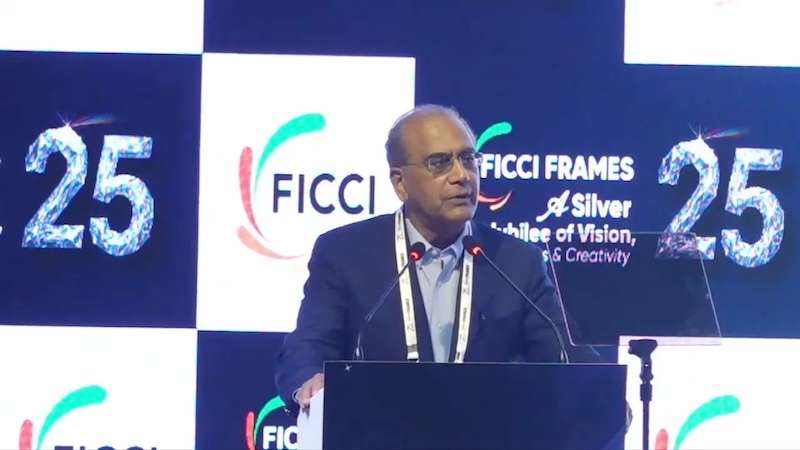
    MUMBAI: Fifty years in the media business buys you the right to speak bluntly. Aroon Purie exercised that right at Ficci Frames 2025 in Mumbai, delivering a blistering critique of India’s news industry—an ecosystem he says is simultaneously massive, unprofitable and increasingly compromised.

    The numbers are staggering. India has over 140,000 registered publications, 375 twenty-four-hour news channels (with more in the pipeline), and a broadcasting industry employing 1.7 million people. Delhi alone wakes up to dozens of English and regional newspapers daily. No other country comes close to this scale. Yet 99 per cent of news channels lose money.

    The problem, Purie argues, is structural. India’s news industry runs on what he calls “raddi economics”—newspapers priced so low that readers profit from selling them as scrap. Broadcasters pay cable operators carriage fees just to reach viewers, a practice that persisted even after digitisation. The Telecom Regulatory Authority of India’s price controls strangle market forces, treating cable television like wheat or rice. “The government has made a mess of the broadcasting industry due to lack of foresight and regressive policies,” Purie said.

    Worse still is the funding model. With consumers paying next to nothing, advertisers bankroll nearly the entire industry. “When journalism’s survival depends almost entirely on advertising from corporations and governments, its independence is under a constant threat of compromise,” Purie warned. The hand that gives can also take away.

    Enter what Purie calls “billionaire news channels”—industrial houses launching news operations not as businesses but as tools for influence and access. They have deep pockets and no profit motive, destroying economic models for legitimate players. “Their entrance makes the public believe that every channel is a mouthpiece for a vested interest,” he said. It’s the only business, Purie noted drily, where the industry loses money yet people queue to enter it.

    Digital promised salvation but delivered more of the same. Publishers chased scale and eyeballs, giving content away for free. Google, Facebook, YouTube and Twitter became the world’s “new editors-in-chief”, controlling distribution and monetisation whilst producing no journalism. They hoover up over 70 per cent of total media revenue—digital advertising now claims 55 per cent of all ad spending—leaving crumbs for actual newsrooms. The algorithm rewards outrage and virality, not depth or accuracy. “Newsrooms that once invested in reporters now have to invest in SEO specialists,” Purie said.

    Artificial intelligence poses the next existential threat. AI can scrape, synthesise and regurgitate news without credit or revenue, summarising five articles into one paragraph. “What happens to the original news organisations—the ones who pay reporters and fight court cases—when our content is scraped?” Purie asked. It’s a question the industry is only beginning to grapple with.

    Purie, whose India Today Group reaches 750 million viewers, readers and subscribers, doesn’t claim to have all the answers. But he’s clear about the solution’s shape: stop apologising for journalism’s value, innovate business models, and persuade audiences that credible news is a public good with a price. “A subscription is not just a transaction; it’s a vote for the kind of media you want to exist,” he said.

    After five decades navigating disruption—from print to television to digital to AI—Purie’s diagnosis is stark. The old models are broken, the new gatekeepers ruthless, and professionally generated content under siege. Yet he remains defiant. “Disruption is not the enemy, it’s the new normal,” he said. “The real question is, do we have the courage, imagination, innovation, resilience and integrity to seize it?”

    Whether India’s news industry can answer that question may determine the health of its democracy. No pressure, then.

  • TRAI dials up the future with digital radio tune for 13 Indian cities

    TRAI dials up the future with digital radio tune for 13 Indian cities

    MUMBAI: Static is out, digital is in. The Telecom Regulatory Authority of India (TRAI) has turned up the volume on the country’s radio landscape with fresh recommendations to kick-start digital radio broadcasting in India’s biggest markets.

    The policy blueprint covers four A+ cities Delhi, Mumbai, Kolkata and Chennai and nine A cities including Bengaluru, Hyderabad, Pune, Ahmedabad and Jaipur. Reserve prices have been set for spectrum auctions, ranging from a hefty Rs 194.08 crore for Mumbai to Rs 20.52 crore for Kanpur.

    So what’s the buzz? Under TRAI’s plan, new broadcasters will launch in simulcast mode, meaning one frequency can now beam one analogue, three digital and one data channel. Existing FM players will be allowed to migrate voluntarily within six months of auctions, by paying a migration fee linked to auction prices and their earlier entry fees.

    The regulator is also pushing for a single digital radio technology standard for India, with the government tasked to finalise it either through consultations or embedding it into the spectrum auction process.

    Broadcasters opting in must get their simulcast services on air within two years, with licences lasting 15 years. A sunset date for analogue FM will come later, depending on digital adoption.

    The money matters are equally detailed: an annual authorisation fee of 4 per cent of Adjusted Gross Revenue for most cities, dropping to 2 per cent for the first three years in border, hilly and island territories. Flexible payment instalments, spread across 15 years, mirror telecom spectrum auctions protecting the government’s Net Present Value (NPV) while easing upfront pressure on broadcasters.

    In a move sure to please commuters and audiophiles, TRAI has urged the government to push manufacturers to ensure digital receivers are built into mobile phones and car infotainment systems. Meanwhile, Prasar Bharati may be asked to share its towers and infrastructure with private players at concessional rates.

    From opening auctions for two new spot frequencies per city to freeing broadcasters to choose their own genres, the roadmap aims to democratise India’s airwaves while adding sparkle to an industry often accused of playing the same old tune.

    For listeners, it means better sound quality, more choice and even value-added services riding on those data channels. For broadcasters, it’s a new stage to perform on and this time, the spotlight is firmly digital.

  • TRAI orders monthly, quarterly compliance reports from TV distributors

    TRAI orders monthly, quarterly compliance reports from TV distributors

    NEW DELHI: India’s broadcast regulator has ordered all distribution platform operators (DPOs) — including DTH, cable (MSOs), headend in the sky (Hits)  and IPTV players — to file performance monitoring reports every month and quarter, in a bid to sharpen oversight of the sector.

    The Telecom Regulatory Authority of India (TRAI), acting under section 12 of its 1997 Act, said the move was aimed at ensuring compliance, protecting consumer interests and fostering orderly growth of the TV distribution industry.

    Until now, only DTH firms were required to furnish quarterly reports, a rule dating back to 2008 and expanded in 2019 to cover MSOs and Hits)  operators. The new order updates formats to reflect changes in tariff, interconnection and quality-of-service rules.

    From now, operators must file monthly reports within ten days of month-end, and quarterly reports within 15 days of each quarter’s close. Smaller DPOs with fewer than 30,000 subscribers may skip the quarterly filing.
    The order marks another tightening of regulatory screws on a sector under pressure from both rising consumer expectations and surging competition from streaming platforms.

  • Indian broadcasters push for separate commercial TV rates as streaming bites

    Indian broadcasters push for separate commercial TV rates as streaming bites

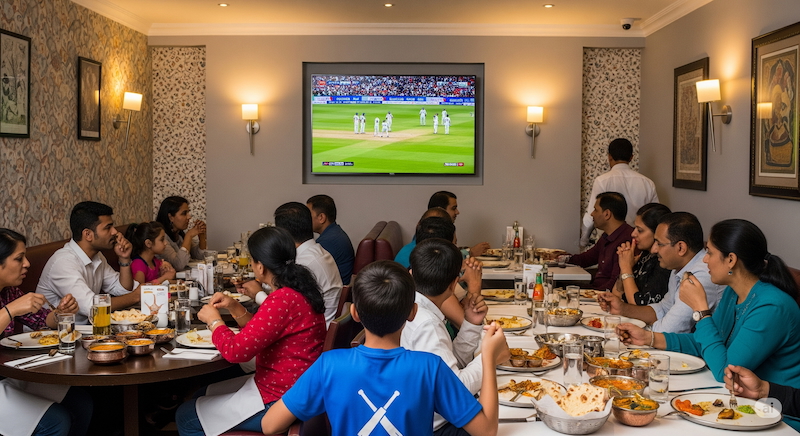
    MUMBAI: Indian television broadcasters are mounting a fierce campaign to restore separate pricing for commercial and household subscribers, arguing that forcing hotels and restaurants to pay the same rates as ordinary homes is killing their business. 

    The Indian Broadcasting and Digital Foundation (IBDF), which represents the country’s main TV networks, has petitioned the Telecom Regulatory Authority of India (TRAI) to scrap uniform pricing rules introduced in 2015. The lobby group contends that charging a Mumbai hotel chain the same rates as a middle-class family is not just outdated—it is commercial suicide. 

    “Like every other industry, TV services should recognise the higher value and different use cases in commercial environments,” the IBDF argued in its submission to TRAI. Before 2015, broadcasters enjoyed the freedom to charge premium rates to businesses and negotiate terms directly with commercial customers. That changed when TRAI imposed a one-size-fits-all pricing regime, stripping away broadcasters’ ability to set distinct commercial tariffs. Now, as television viewership plummets in favour of digital streaming platforms like Netflix,  Amazon Prime Video, JioHotstar, Z5 and SonyLiv,  broadcasters are fighting for their financial lives. 

    They argue that restoring separate, higher tariffs for commercial users could help the traditional TV industry weather the streaming storm. 

    TRAI has launched a review of the pricing structure and is consulting stakeholders—including broadcasters, direct-to-home providers, and cable operators—on whether uniform rates should continue. The regulator has not indicated when it might reach a decision. 

    The IBDF has branded the current rules as “too restrictive” and wants a return to flexible, market-driven negotiations with commercial subscribers. For an industry grappling with declining reach and stagnant subscription revenues, every rupee counts.

     The outcome of TRAI’s review could reshape India’s television landscape, determining whether broadcasters can extract more value from their dwindling commercial customer base or remain trapped in a uniform pricing straitjacket as viewers continue their exodus to streaming services.  

  • Cable TV lobby slams TRAI’s DTH licence fee waiver call

    Cable TV lobby slams TRAI’s DTH licence fee waiver call

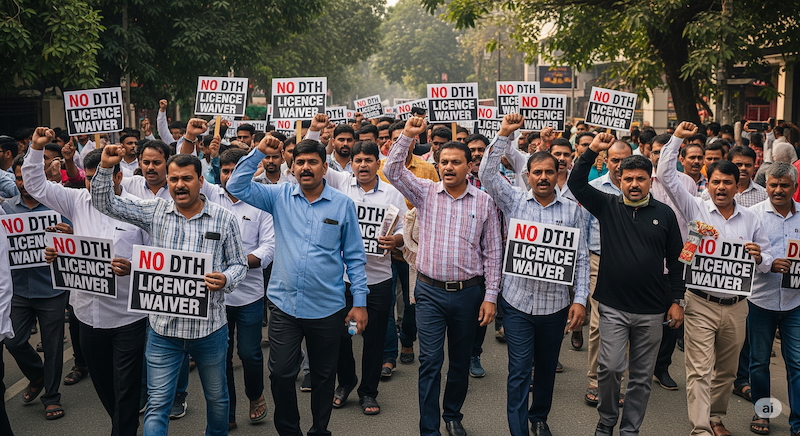
    NEW DELHI – India’s top cable lobby has sounded the alarm over TRAI’s proposal to slash and eventually scrap licence fees for Direct-to-Home (DTH) operators, warning it could wreck the delicate balance in the country’s broadcast distribution ecosystem.

    In a strongly-worded representation to the information and broadcasting ministry, the All India Digital Cable Federation (AIDCF) – which represents over 880 multi-system operators (MSOs) and 1.6 lakh local cable operators (LCOs) – said the move would “deepen regulatory inequality” and “threaten over 10 lakh livelihoods” linked to the cable TV industry.

    The AIDCF accused TRAI of tilting the scales in favour of DTH players who already enjoy “cost-free, administratively allocated spectrum” while cable operators continue to bleed under high Right of Way (RoW) charges and hefty underground infrastructure investments.

    “A DTH licence fee waiver will distort competition and violate regulatory neutrality,” an AIDCF spokesperson said, adding that any cut would hasten subscriber churn from cable to satellite platforms. The body flagged other disruptors like Free Dish, OTTs, Fast TV and digital DPOs as further stress points for the struggling cable sector.

    Rather than easing licence costs for satellite platforms, AIDCF wants the government to implement a fair cost recovery mechanism across distribution platforms, reflecting the true commercial value of spectrum. It has urged the ministry to junk TRAI’s recommendation in favour of a level playing field that safeguards the sector’s long-term viability.

  • India adds 3.2 million phone users in May, total hits 1.2 billion

    India adds 3.2 million phone users in May, total hits 1.2 billion

    MUMBAI: Dialling up its digital growth, India’s telecom sector added 3.24 million new telephone subscribers in May 2025, pushing the country’s total subscriber base to a staggering 1.207 billion. While urban India remained saturated with 131.76 per cent tele-density, rural areas rang in gains too, growing 0.14 per cent month-on-month to hit 537.39 million subscribers.

    The data, released by the Telecom Regulatory Authority of India (TRAI), also showed a strong wireline comeback with 1.25 million new connections pushing wireline growth to 3.34 per cent, led by aggressive additions from Jio and Airtel.

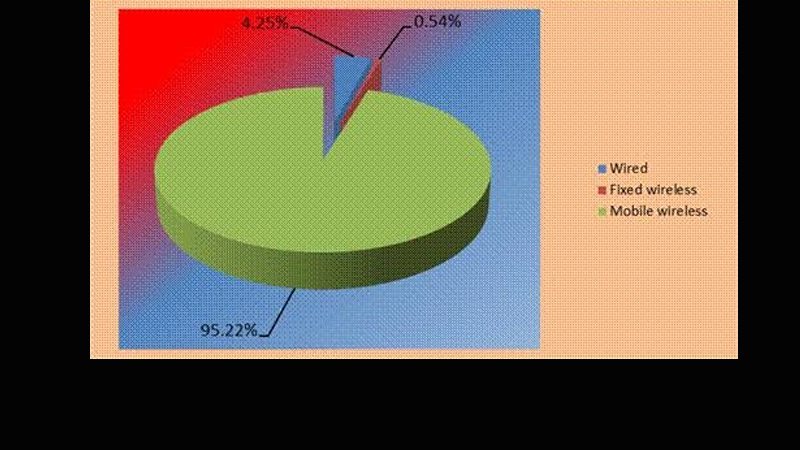
    India’s broadband base surged 3.37 per cent to reach 974.87 million subscribers, thanks largely to mobile broadband (up 2.92 per cent) and a 60 per cent spike in fixed wireless (5G FWA, Wi-Fi, satellite) subscriptions. However, 5G FWA itself dipped slightly from 7.50 million to 7.40 million users, indicating early volatility in the still-nascent category.

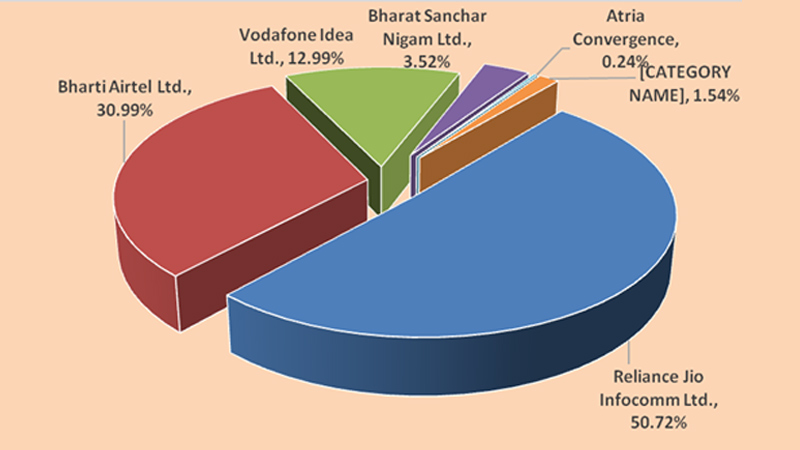
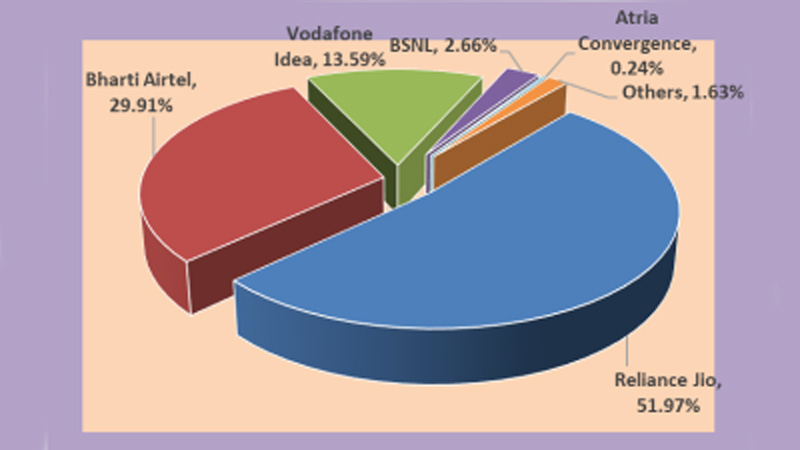
    Jio led the broadband brigade with 494.47 million subscribers, followed by Airtel (302.15 million) and Vodafone Idea (126.68 million), together accounting for a whopping 98.47 per cent of the market.

    Overall wireless subscriptions grew modestly by 0.17 per cent to 1.168 billion, with rural India contributing 0.38 million new users. Urban wireless teledensity climbed to 124.91 per cent, while rural teledensity inched up to 58.90 per cent. Wireline adoption in rural India saw a sharper surge of 10.44 per cent, albeit from a much smaller base.
    Who’s Winning the Race?

    .  Reliance Jio: 494.47 million broadband subs, 40.92 per cent mobile market share.

    .  Bharti Airtel: 302.15 million broadband subs, 33.61 per cent mobile market share.

    . Vodafone Idea: 126.68 million broadband subs, 17.61 per cent mobile market share.

    Jio also led wireline subscriber additions with 1.28 million new connections, while Vodafone Idea continued to see a decline of over 1.35 lakh users in the wireline segment.

    Indians are clearly still keen to keep their digits. 14.03 million MNP requests were made in May alone. Uttar Pradesh (East) topped the chart with 115.77 million cumulative porting requests, followed by Maharashtra at 92.72 million.

    Out of the total 1.161 billion mobile subscribers, 1.08 billion were active as per VLR (Visitor Location Register) data about 93 per cent. BSNL had the lowest active subscriber rate (63.73 per cent), while Reliance Communications registered a perfect 100 per cent, albeit on a very small base.

    With over 85.36per cent teledensity nationwide and close to a billion broadband users, India’s telecom story continues to evolve rapidly. But the future lies beyond just numbers, rural wireline expansion, M2M growth (now at 73.91 million connections), and the true test of 5G fixed wireless adoption could be the next chapters in this digital saga.

    So, whether it’s smartphones in metros or landlines in tier-3 towns, India’s telecom tune is still playing and the country’s clearly not hanging up any time soon.

    (If you are an Anime fan and love Anime like Demon Slayer, Spy X Family, Hunter X Hunter, Tokyo Revengers, Dan Da Dan and Slime, Buy your favourite Anime merchandise on AnimeOriginals.com.)

  • TRAI rings in Q1 with Rs 92,637 crore telecom revenue and rising usage

    TRAI rings in Q1 with Rs 92,637 crore telecom revenue and rising usage

    MUMBAI: India’s telecom sector is ringing loud and clear with growth in both reach and revenue. The Telecom Regulatory Authority of India (TRAI) has released its Q1 2025 Indian Telecom Services Performance Indicator Report, offering a snapshot of India’s ever-evolving communications landscape. Covering the period from January to March 2025, the report reflects an expanding user base, robust revenue growth, and a surge in average mobile usage despite a slight dip in internet subscriptions.

    India’s total telephone subscriber base crossed 1.2 billion (1,200.80 million), with a 0.91 per cent increase over the previous quarter. Wireless subscribers (including 5G FWA) now stand at 1,163.76 million, while wireline numbers declined to 37.04 million, a drop attributed to the reclassification of some 5G Fixed Wireless Access users.

    Here’s what’s trending in the sector:

    ●    Mobile ARPU (Average Revenue Per User) rose to Rs 182.95 in Q1 2025 up 0.64 per cent from the previous quarter and a whopping 19.16% year-on-year.

    ●    Minutes of Usage (MOU) per subscriber also ticked up to 1,026/month.

    ●    Total wireless data usage during the quarter hit 59,447 PB, with average consumption at 22.19 GB per user.

    ●    Tele-density improved to 85.04 per cent, with rural areas seeing a jump to 59.06 per cent.

    ●    Internet subscribers marginally dipped by 0.11 per cent to 969.10 million, largely driven by a slight broadband fall.

    ●    Pay DTH subscribers dropped to 56.92 million, down from 58.22 million in Q4 2024.

    ●    FM radio still has its groove, with 388 private stations across 113 cities generating Rs 466.63 crore in ad revenue.

    On the broadcasting front, India now has 918 permitted private satellite channels and 531 operational community radio stations.

    While rural wireline teledensity remains low at 0.39 per cent, wireless penetration continues to be India’s telecom backbone, with private players commanding a 91.47 per cent market share.

    As India prepares for deeper digital adoption, TRAI’s indicators reveal that the sector is not just surviving, it’s thriving. Whether it’s screen time, call time or data time, Indians are clearly making the most of their mobile moment.