Tag: Telecom Commission

  • NDCP 2018, net neutrality rules cleared by Telecom Commission

    NDCP 2018, net neutrality rules cleared by Telecom Commission

    NEW DELHI: India’s Telecom Commission, the second highest decision-making body regarding telecom policies, yesterday late evening approved the National Digital Communication Policy 2018 and also net neutrality rules, which bar service providers from discriminating against internet content and services by blocking, throttling or granting them higher speed access.

    Some mission critical applications or services like remote surgery and autonomous cars will, however, be kept out of the purview of net neutrality framework.

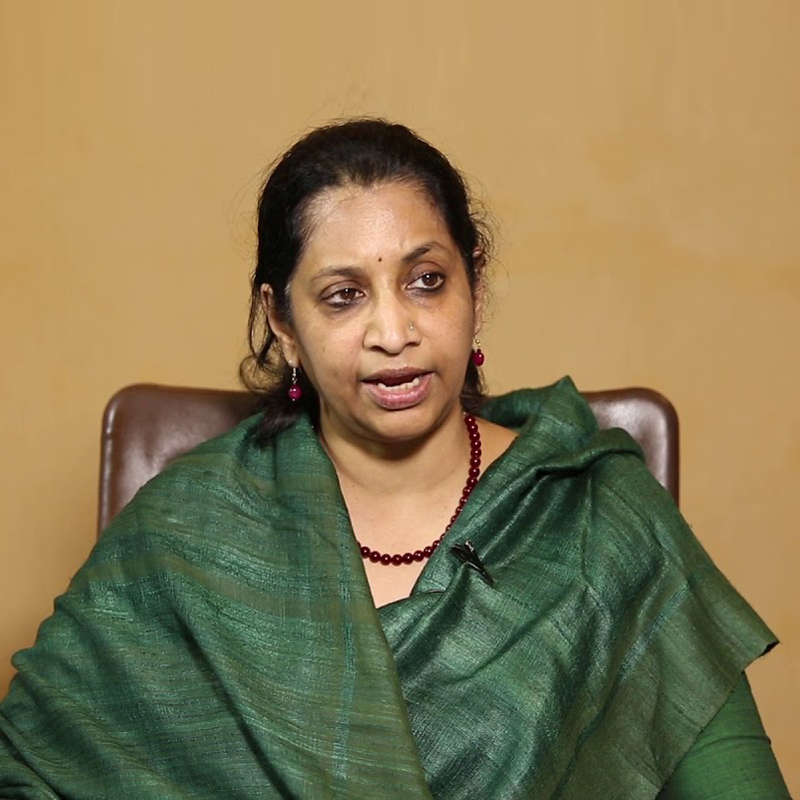
    “The Telecom Commission approved net neutrality as recommended by TRAI…some critical services will be kept out of its purview,” Telecom Commission Chairman and Secretary Department of Telecoms Aruna Sundararajan told reporters here, according to a Press Trust of India report.

    The Telecom Regulatory Authority of India (TRAI) had recommended restrictions on service providers from entering into agreements which lead to discriminatory treatment of content on the internet. It had also favoured tweaking of licensing norms of players to ensure “explicit restrictions” on discrimination in internet access, based on content.

    The Department of Telecom will set-up a multi-stakeholder body for monitoring and enforcement of net neutrality comprising government representatives, internet of things providers, telecom operators, civil society members and consumer organisations. DoT will seek recommendations from TRAI on traffic management for critical services.

    The Commission also approved the new telecom policy — rechristened National Digital Communications Policy (NDCP) 2018 — for seeking approval of the Union Cabinet, Sundararajan was quoted by the PTI report as saying.

    “Everybody in the meeting said that digital infrastructure is even more important than physical infrastructure for India… CEO of Niti Ayog [Amitabh Kant] said that for…districts, we must ensure digital infrastructure is provided at the earliest. Therefore, India must have ease of doing business and enabling policy environment,” Sundararajan said.

    The NDCP, which looks at having more synergies amongst various government organisations and ministries, aims to attract $100 billion investments, 400,0000 new jobs, 50 megabits per second broadband access to every citizen in the digital communications sector by 2022 with the help of reforms.

    A government official, who was part of the meeting, was quoted by PTI as saying that the Telecom Commission has approved installation of around 12.5 lakh Wi-Fi hotspots in all gram panchayats (village administrations) with viability gap funding of around Rs 60,000 million by December 2018.

    Under the Wi-Fi project all police stations, post offices, primary health centres, schools will be connected with Wi-Fi by December 2018 and there will be a couple of  additional hotspots that will be available for round the clock public access.

    The PTI report added that the commission has also approved avoidance of double tax on virtual network operators (VNOs) who provide retail services of telecom operators.

    According to the proposal approved, VNOs will be required to pay levies based on their adjusted gross revenue earned from any value addition that they will be do over the top of service they will buy from telecom operators for selling it to end consumers.

    Earlier, telecom minister Manoj Sinha had said that his department looks to get approval of the Cabinet for NDCP 2018 by July-end.

  • M&A Guidelines to be finalised by EGoM later this month

    M&A Guidelines to be finalised by EGoM later this month

    NEW DELHI: The much-awaited Merger and Acquisition (M&A) Guidelines has got further delayed and now the Empowered Group of Ministers (EGoM) on Telecom is expected to discuss it on 22 November.


    The GoM will also study the roadmap for the third round of spectrum auction. “Besides auction related matters, the department of telecom will place before them the M&A guidelines as recommended by the Telecom Commission,” a Telecom Ministry official said.


    Inter-ministerial panel Telecom Commission has suggested about 25 per cent higher base price compared to the amount recommended by sectoral regulator Telecom Regulatory Authority of India (TRAI) for radio waves used for mobile phone services for the proposed auction.


    The Telecom Commission had only forwarded its view on two sets of airwaves used by GSM players like Airtel, Vodafone and Idea Cellular.


    The official said DoT has written today to TRAI to suggest a base price for CDMA spectrum used by players like Sistema Shyam Teleservices, Tata Teleservices and Reliance Communications in 15 days.

    TRAI had recommended against auction of CDMA spectrum at present and suggested studying whether a part of these airwaves can be used for extended GSM services.


    The official said DoT is working on other details for auction of all three sets of spectrum in third round which is expected to start in January.


    Telecom Commission has recommended to allow companies to acquire another operator in a manner that market share of the resultant entity does not exceed 50 per cent.


    EGoM will have to decide on spectrum related issues that entity formed as result of consolidation of companies should be allowed to keep.


  • Reserve price of spectrum expected to be lower for December auction, indicates Sibal

    Reserve price of spectrum expected to be lower for December auction, indicates Sibal

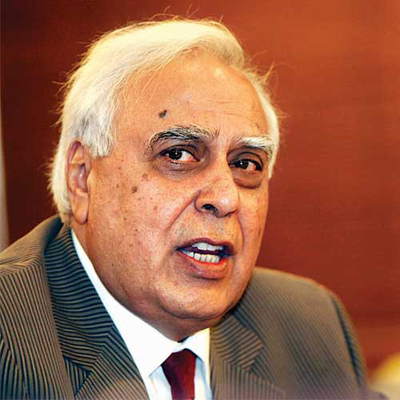
    NEW DELHI: The reserve price for the next round of spectrum auction slated for December will be lower than last time, Communications and Information and Technology Minister Kapil Sibal has indicated.

    Sibal said this in a video message on the occasion of re-branding of the Cellular Operators Association of India.

    “What will be set for floor price on which telecom operators will bid will be, I think, relatively lower for them to make competitive bids,” he said.

    However, he said this would be finally decided by the inter-ministerial panel of the Telecom Commission. The Ministry will then send its views to the Empowered Group of Ministers, which will forward its recommendations to the Cabinet for the final decision.

    Meanwhile, a separate Inter-Ministerial Committee formed for overseeing auction modalities has tentatively set 7-8 January 2014 to start the auctions.

    The Telecom Regulatory Authority of India (TRAI) had recommended nearly 62 per cent reduction in base price of premium 2G spectrum and up to 37 per cent in case of radio waves freed from the cancellation of 122 licences, compared to the amount fixed for previous auction.

    The Telecom Commission has sought clarity on explanations given by TRAI to lower reserve price and the next meeting of the Commission is scheduled for 29 October.

    However, COAI is still not satisfied with the pricing. “India has become a case of limited spectrum quantum availability and high reserve price per MHz of spectrum,” COAI chairman and Idea Cellular MD Himanshu Kapania said.

    He said that based on the April-June quarter revenues, the Indian mobile industry has grown to an estimated Rs 1,60,000 core or $ 27 billion.

    “But the nation remains a global pygmy in revenue terms – a meager 2.3 per cent of estimated the global telecom revenue of $ 1.16 trillion. This is because Indian operators have sacrificed short term gains by offering among the lowest global tariffs,” Kapania added.

    He said the internet penetration in India is still at an abysmal low level of just 4.9 per cent, against China’s 17.2 per cent, Singapore’s 123.3 per cent, Japan’s 113.1 per cent, and the US’ 74.7 per cent, according to an ITU report in 2012.

  • Trai takes on new member

    Trai takes on new member

    NEW DELHI: RN Prabhakar, who retired from the Indian Telecommunication Service a year ago, has joined as a whole-time member of the Telecom Regulatory Authority of India today.

    His last posting before retiring in January last year was as Advisor (Production) and Ex-officio Additional Secretary in the Department of Telecommunications. He also looked after the charge of the Member (Production), Telecom Commission.

    Prabhakar has about 36 years of technical, administrative and financial experience in the telecom sector and has held various posts in the DoT. He has also served on the Boards of BSNL and Instrumentation Ltd Kota.

    He has participated in several international seminars and workshops and has presented technical papers related to network security, regulation and public policy etc. He was deputed for a period of three years to Nigeria for imparting training to their telecom officers.