Tag: Tele-Wise Tamil

  • Video and Broadband Summit 2019 to discuss way forward with NTO & changing digital landscape

    Video and Broadband Summit 2019 to discuss way forward with NTO & changing digital landscape

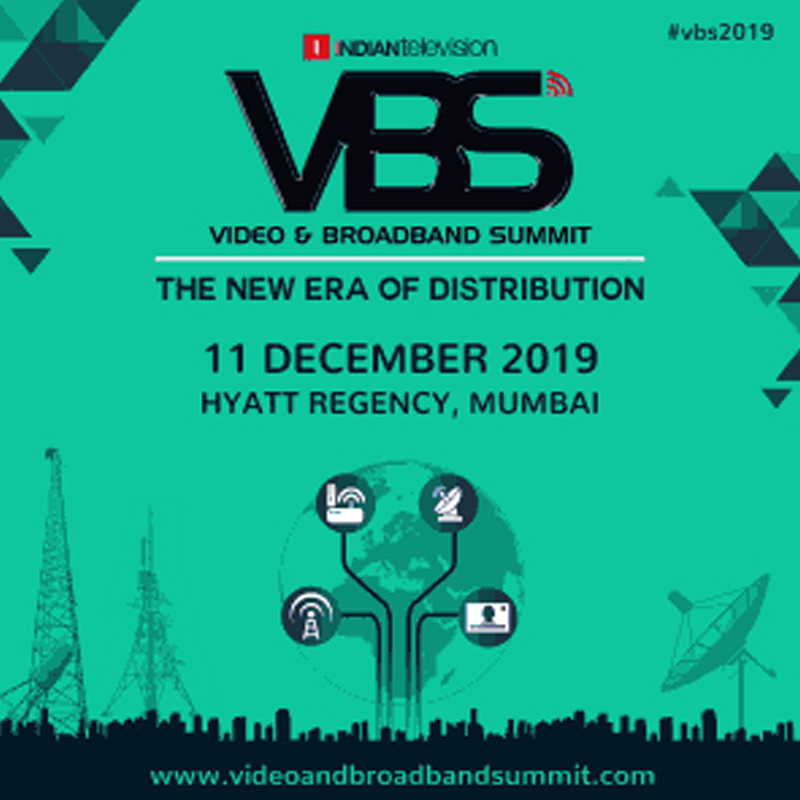
    MUMBAI: How is the new tariff order (NTO) impacting the broadcast and video distribution landscape in India? How can broadcast networks effectively partner with LCOs and MSOs to successfully navigate the post-NTO environment? These are some of the key themes which will be discussed at the Video and Broadband Summit 2019.

    Running in its sixteenth year, the summit will be held in Mumbai on 11 December and will bring together stalwarts from television broadcasting, internet and distribution sectors under one roof to discuss and deliberate key issues facing the sector and recognise the accomplishments of key stakeholders.

    Over the last one-and-a-half-decades, VBS (earlier IDOS) has grown to become India's definitive Pay-TV and video distribution get together. However, this year’s summit is critical given that 2019 has witnessed some of the most fundamental changes in the pay TV and broadcast industry.

    While, on the one side TV networks, LCOs, MSOs and DTH players are still adjusting to the fundamental changes introduced by the NTO – described by many as the most significant reform in broadcast TV in decades – on the other, India has seen exponential growth of OTT players. Together, these changes will fundamentally alter how Indians consume entertainment in the years to come.

    If these changes were not enough in themselves, the telecom and internet distribution sectors are also undergoing fundamental changes. While, the entry of Reliance Jio Fibre has not proved to be the ultimate disruptor industry experts were expecting it to be, the recent Supreme Court ruling on the AGR (adjusted gross revenue) issue, asking telecom companies to pay Rs 92,000 crore has considerably dampened the industry sentiment and can negatively affect their ability to raise funds for broadband, network expansion and digital India.

    Not surprisingly, since the Supreme Court ruling, all major telecom operators in India, ranging from Airtel, Vodafone Idea and Reliance have announced mobile tariff charge hikes by as much as 20 per cent. Given that Airtel and Reliance are also deeply entrenched in providing broadband services, any tariff hike can impact broadband penetration as well.

    The delegate profile for this year’s VBS is a reflection of the concerns facing the industry. As many as 60 per cent of the participants in this year’s VBS will be LCOs, MSOs and distributors, while 15 per cent delegates will be coming from broadcast networks including Star India – also a summit partner. Significantly, 25 per cent of the delegates this year will come from telecom, broadband, technology and data platforms. Without doubt, apart from getting the industry perspective on various issues ailing the industry as well as future opportunities, the summit will also provide an excellent opportunity for networking between the various stakeholders in the media and entertainment industry.

    Some of the key sessions in the summit will be:

    • Free To Air: The roadmap ahead
    • NTO: The future roadmap; TRAI consultation paper and how will the amendments to the existing tariffs play out?
    • Transforming the sector to fuel growth: What are the key issues facing the sector? How can more transparency and discipline be injected into it?
    • The distribution challenge: How are distribution companies innovating to stay ahead of the curve? What measures are they adopting to counter relentless disruption?
    • Internet: The changing role in video distribution
    • Role of the LCO: How has the role of the LCO changed under the new regulatory framework and its significance going forward? 
    • The advertisers’ view: Advertisers’’ view on dynamic Pay-TV landscape and how AdEx is likely to fare going forward with more changes anticipated to the NTO.

    To discuss all these relevant issues, the summit has also lined up a distinguished panel of more than two dozen speakers. Among them are:

    The VBS summit is an initiative of Indiantelevision.com. Started in 2000 by media and television analyst Anil Wanvari, Indiantelevision.com is the first online information and interactive service focusing on the Indian television and media business. Indiantelevision.com organises close to a dozen events every year, among them are The Indian Telly Awards, Tele-Wise Tamil, Media HR Summit, Brandvid Awards, Vidnet, The Indian Telly Technical Awards, and The Content Hub.
     

  • Tamil Nadu’s retail brands weigh in on television as a marketing medium

    Tamil Nadu’s retail brands weigh in on television as a marketing medium

    MUMBAI: Tamil GECs should include subtitles in their shows to increase stickiness and drive more brands to advertise on them, was the conclusion of the very insightful ‘Retail Therapy’ session at the recently concluded Tele-Wise Tamil conclave by Indiantelevision.com. The panel was discussing the role of retail advertisers in the Tamil market and how broadcasters can get them to advertise more on television.

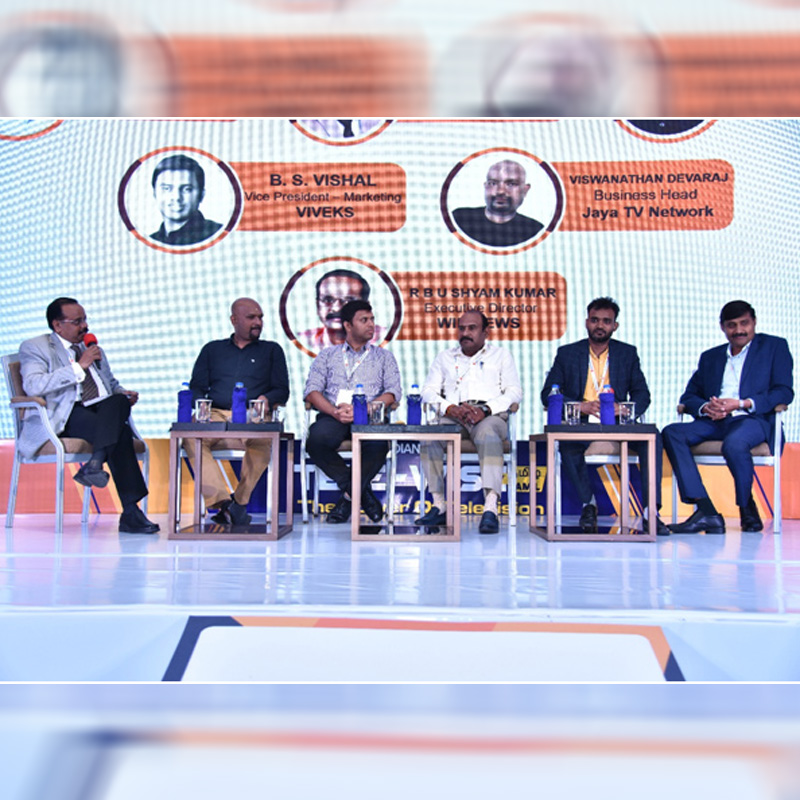
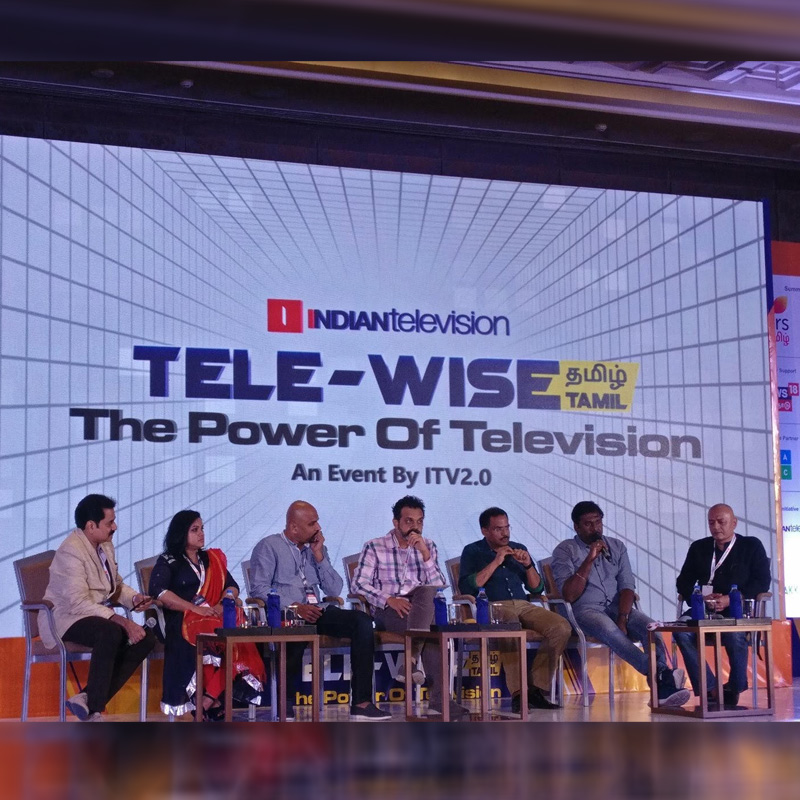
    Part of the panel were SRM University head of marketing & media Chaitanya Gurijala, Challenge Advertising founder and CEO R. Sakthivel, Kalimark Group joint managing director J. Ramesh, Viveks vice-president marketing B.S. Vishal, and Jaya TV Network business head Viswanathan Devaraj. The session was moderated by Win News executive director, Cornerstone founder president, and Puthiyathalaimurai Group former CEO R.B.U. Shyam Kumar.

    The two broadcasters on dais, Devaraj and Kumar, discussed how important subtitling can be in not only driving more viewers to regional channels but also greater advertising revenues. However, they insisted that it has to be evaluated on a cost-benefit model before implementation.

    Kumar noted, “I am sure moving hyperlocal, particularly in the GEC segment, will drive a lot of brands because coming from a news channel, I have seen those 4-5 aston bands that we run get a lot of stickiness to our programmes. Even GEC segment can try subtitles as an option to break the ongoing rules and get more traction. Forget about advertising, first of all, it will increase the viewer base to a great extent.”

    Devaraj said, “I agree that stickiness to a content increases when there are subtitles on it. In Singapore, if they have a Tamil movie playing, they post subtitles in four different languages, including Tamil language. But when we look at, say Vijay TV, that goes on air in Singapore doesn’t have subtitles in all languages because it is a costly affair.”

    To this, Indiantelevision.com founder, CEO, and editor-in-chief Anil Wanvari added that it takes approximately between 12-15 thousand rupees to add subtitles in a half hour episode.

    Kumar claimed that if GECs can monetise that additional cost to the production of an episode of a TV show, which he assumed to be close to Rs 1.50 lakh for an half hour run, broadcasters will be equally interested in drawing new audiences.

    Devaraj added that this will require a deep analysis based on the cost effectiveness.

    The panel also discussed a lot of other interesting topics related to retail advertising in Tamil Nadu market. While Gurijala and Vishal reinstated the fact that print advertising is working for them to a great extent, Sakthivel and Ramesh vouched for the need advertise on TV to increase the user base.

    Gurijala said, “I am huge fan of television but for education as a medium, print gives us an edge that we need to survive. There is a belief that parents are looking for education institutes that are more subtle. And subtlety has been the mantra that some of the biggest universities across the globe have followed and are following to build their ads.”

    He acknowledged that a few universities like Amity and Lovely Professional are turning the narrative to the other side and investing big in TV but he insisted that advertising on television is only good for getting a sudden spike in the visibility.

    Vishal shared that Viveks have been investing in print since the day they started in 1965. 

    “Back then, the competition was very less and everything that started was on print. Also, I would say that word-of-mouth was a strong medium. I would say, till date, we are known by the trust (that people have in us), and that has given us a strong foothold. I am spending close to 80-85 per cent of my budget on print”

    He added, “TVCs are only for a brand recall purpose. But there are national players like Reliance and Croma, who are now spread across Tamil Nadu. For them, I believe, TV TVCs get more leverage than they do for players like us.”

    Ramesh shared that television helped his Kalimark Group to a great extent. “When we started in 1916, for the initial few years, we used only paintings to promote our drinks. Later, I am very proud to say, TV helped us greatly in our brand journey. People in Tamil Nadu are very sensitive and they believe what they see. So, TVCs help us in getting their attention. I am spending 75 per cent of my budgets on TV.”

    He also shared that the brand initially had a rule that it will not engage with any celebrity to promote its products, but they revoked it with changing times.

    Sakthivel also mentioned that TV is the dominating medium in Tamil Nadu. He said, “As an advertising agency that handles a lot of retail clients, I believe that Tamil Nadu is still a television market. To give you an example, 18 years back, my first client was a computer institute who was advertising just on print, spending somewhere around Rs 4-5 lakh rupees for a month-long campaign. We helped him go to television with the same budget, did a TVC with a popular TV star of that time and placed it on 3 GECs. Within 3-4 years, the institute grew from 10 centres to 350 centres.”

    He added that while digital is soon catching up with television, advertisers can focus on creating a mix for both the media but only digital will not be able to drive growth. 

  • Agencies should add news genre to regular planning: Network18’s Karan Abhishek Singh

    Agencies should add news genre to regular planning: Network18’s Karan Abhishek Singh

    MUMBAI: The news genre should be included by agencies for its impact as a full planning platform and not just an add-on. This was the view echoed by News18 Network CEO-languages Karan Abhishek Singh at Tele-Wise Tamil 2019 organised by Indiantelevision.com on 6 August 2019.

    At the event, Singh spoke on the relevance of the news genre in the Tamil Nadu market which is dominated by GECs and movies. He said that news as a genre has grown fastest in the past one year.

    Mapping the growth of regional news channel in the state, Singh urged advertising agencies to add the news genre to their regular planning. He explained that in the last one year the peaks in news are significantly higher from the demise of Tamil Nadu former CM M Karunanidhi to cyclone Gaja to the national election to Article 370. The peak has been breached around 18 to 19 times. “These are the big event days which create an impact on the viewers and the advertisers. Two or three impacts in a month is an opportunity for the advertisers,” he said.

    The top categories on news channels are largely retail outlets. Apart from male-targeted products, news genre is delivering to response-driven categories like retail, film, real estate etc. and these categories have been using the genre consistently. The genre also has the potential to drive long term brand imagery for brands- auto, travel and tourism and insurance.

    He also mentioned that auto categories have started advertising on regional channels. Travel and tourism has also become a critical mass category on news. “So the news genre on its own needs to be looked at very differently and not just a frequency builder as part of an advertising campaign because it is the platform that delivers impact consistently month after month,” he said.

    Singh believes that news is the fastest growing genre in the country and a large part of this is because of regional news channels. “The genre is growing largely across regional channels and partly in Hindi but not so much in English which was the traditional forte of news consumption,” he said.

    “In regional space, the south market is extremely news intensive. When it comes to news consumption, Tamil Nadu out-consumes some of the states by as much as 2:1 ratio,” he said.

    Within the South, the interesting part is that Tamil Nadu has very unique pattern of consuming news. The Tamil Nadu audience watches more news in the early morning. About 55-56 per cent of the day’s viewership comes from the time band of 6 am to 2 pm. “Tamil Nadu news has given a completely new definition to news primetime. There is no other market which has this kind of pattern,” opined Singh.

    Singh also said, “At overall TV level, Tamil Nadu is one of the largest viewership markets in the country based on the component of early morning and mid-day news viewership and traditional primetime viewership on GECs and movies. And with every spike in the news cycle, the overall TV viewership increases. News is consistently among the top three genres in the state and continuously reducing the gap with the second genre i.e. movies.”

    Singh concluded, “A few years ago, the reach of news was 52 – 53 per cent and today news reaches 70 per cent of the viewership on a weekly basis. The news genre is rapidly growing in Tamil Nadu because of its sticky content. Regional news channels have the opportunities to build and by this I don’t mean by sensationalising the news but going deeper into what matters in that particular region. We need to engineer the revise brain drain from the larger national platform into the regional platform.”

  • Tamil TV faces the challenge of attracting younger audiences

    Tamil TV faces the challenge of attracting younger audiences

    MUMBAI: TV viewership is growing in the regional market and TV broadcasters do not fear the OTT threat. Instead, regional players are looking at attracting younger audiences to television. Tele-Wise Tamil 2019, which was organised by Indiatelevision.com on 6 August 2019, gave the industry a platform to discuss the issues faced in the regional market.

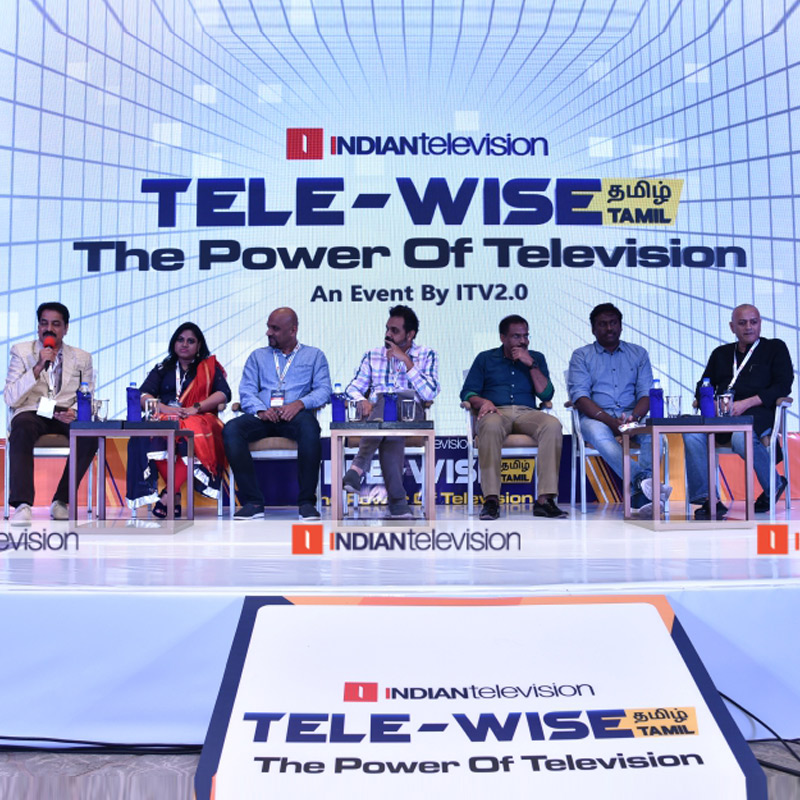
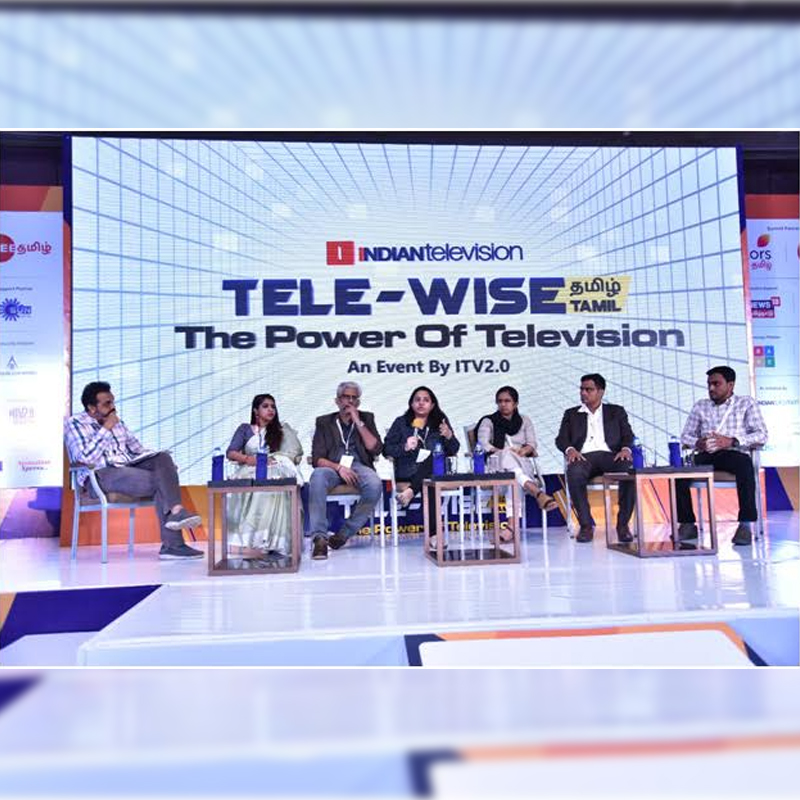
    The event witnessed a panel discussion on ‘Changing face of TV’ moderated by Horse Pictures partner and YuppTV former head Vijay Adhiraj with the panel as Colors Tamil business head Anup Chandrasekharan, Sun Life content acquisition and Sun TV Network Ltd Kids Entertainment Kavitha Jaubin, Trend Loud CEO Chidambaram Natesan, Star Network deputy business head for Vijay TV Balachandran Ratnavel, Bodhitree Multimedia Pvt Ltd co-founder and director Mautik Tolia, and Polimer TV strategic advisor and consultant Suresh Iyer were the panelists.

    The panelists discussed evolving content trends and challenges faced by the industry in attracting younger audiences in the regional space and the importance of weekly ratings in creating content.

    Adhiraj began the discussion by understanding how content creators decide what kind of content will work. To which Natesan replied, “Content has always being a priority to us. What makes us decide what kind of content work well for us is basically to understand what the need of the hour is. We go by the data and data makes us change our decision every day. We decide content based on the power of engagement.”

    On understanding the audience's need, Tolia commented, “Over the last one and a half years, especially with my company, we have broken our company into three verticals, one with Hindi GEC content, another with digital web content and one with regional content. That’s what makes the job of a content creator more complex. The digital market itself has very different kind of audiences; there is Netlfix audience, catch-up TV audience. There is a different scale of digital model which has started operating. We need to be very clear about who is our audience.”

    Ratnavel believes that TV and OTT share same universe so there is no need to come up with separate kind of content for both the platform. He said, “BARC data gives very different picture on television. TV is growing and in Tamil Nadu TV viewership has grown 10 to 15 per cent Y-o-Y. The time spent has substantially grown, it is beyond the national average which means there is a huge appetite for TV in Tamil Nadu. There is no need to change the kind of content for digital and television because the people on both the platforms are same.”

    “I would say 80 per cent of the content has succeeded by default not by design. For a content to succeed, there are three key stakeholders- content creator, marketer and advertiser. They are all inter-linked with each other,” Iyer opined.

    Sharing his view on whether metric defines the content, Chandrasekharan said, “In our business we are not governed by the metrics that keep popping-up every week. We focus on trying to create a clutter breaker, how do we make it relatable and how do we ensure that every day people come and consumer our content.”

    He further said, “There is a great amount of experimentation that happens with content in Tamil Nadu and content keeps evolving. There are three stages in which the content is designed i.e. to get a content that will attract the audiences; second is liking the content and third is addiction which makes one to follow the content.”

    Speaking about Sun Life, Jaubin said, “I strongly believe that today the viewers are no more massive viewers instead they are the co-creators through their feedback. They want to be active and social media is highly interactive because of the fact that they have been given the space to be active 24/7. So we thought of creating something for a younger demographic but it is not out of the box, it includes family audiences as well.”

    “We need to be continuously in touch with them. When we know to meet our consumer then we understand better about the exact filter that we need to apply to our content. Staying in constant touch with our audiences, speaking to them and understand their life and daily routine actually helps us to create most of the contents especially on TV,” said Ratnavel.

    Chandrasekharan said, “If we specifically take Tamil Nadu into consideration, if we decode the kind of content Sun TV was offering was largely family drama, Vijay TV was largely into romantic kind of content, Zee Tamil brought in romance and family. The content offering in Tamil Nadu has evolved from within the family to the outer circle of the family. In the next two years, the kind of content offering would be not just around the mother and daughter but around the outer world of the family like neighbours and society. The average consumer is also getting exposed to different kinds of content, so their expectations are also pretty high.”

    Jaubin also expressed the need to take technology like AI and augmented reality into account so that the broadcasters start producing some of the best formats on TV.

    Speaking on the challenges, Tolia said, “Nowadays Facebook and Hotstar have become our competitors as the women are spending more time on social media platforms. That is the major challenge for Hindi GEC and regional market has still not faced it because we are growing but the challenge is going to be on how to attract the younger audiences to TV who are engaging themselves in very different kinds of entertainment. That is something we really need to look into.”

  • Vikatan Group’s B Srinivasan on TV-OTT dynamics, air time barter model, first digital-only daily soap

    Vikatan Group’s B Srinivasan on TV-OTT dynamics, air time barter model, first digital-only daily soap

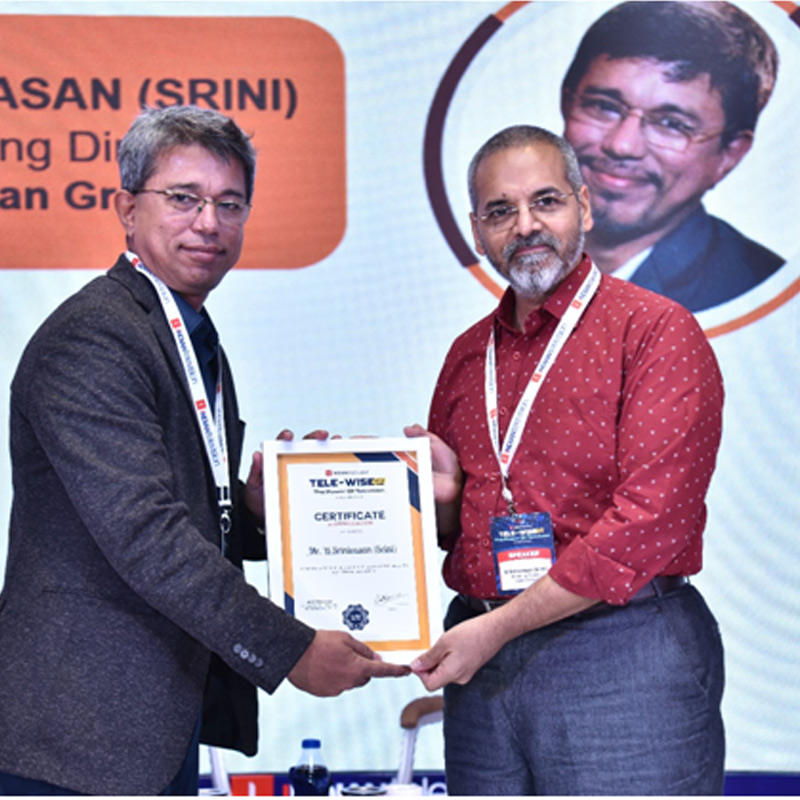
    MUMBAI: Tele-Wise Tamil witnessed a one–on-one conversation between Vikatan Group managing director B Srinivasan and Indiantelevision.com founder, CEO and editor-in-chief Anil Wanvari which brought out interesting facts on the journey of Vikatan Group. The duo also discussed the company’s road ahead in the Tamil market.

    The group creates content for various streams from television to YouTube and has its own YouTube channel with 10 million subscribers. The company is also looking forward to cater to the audiences in Tamil Nadu through OTT platform.

    Taking the audience through the journey of Vikatan Group, Srinivasan said, “It has been 29 years since I joined. After the launch of Sun TV it took us around five years to gain the courage that we had lost in 1993. That time I decided at least to produce if I am unable to start a satellite channel. We were having our own fiction and that was the bread and butter of Ananda Vikatan. We have had the best creators working for us so we thought it was a natural extension to enter into production. We started in 1998 with a weekly serial called Akshaya.”

    “We had an interesting journey; we consistently worked with some of the best channels in the industry. Daily soap is not easy to come by, it is tough to bring out the cassette at the end of the day and since the last three years it has become six days a week. 26 episodes a month is not a joke,” he commented.

    Talking on the presence of Vikatan’s content on digital platform, Srinivasan said, “Since 2011 we are on YouTube as well. Today across fiction and non-fiction we have around 10 million subscribers on our YouTube platform. We crossed 150 million views last month. Today we got into a place where we can produce content beyond television. We are in talks with a couple of OTT players and trying to understand how it works since it is nothing like television.”

    Wanvari mentioned that apart from Doordarshan and Sun TV, most producers operate on a commission model, then why did they choose the air time barter model. “In 1998, Sun was the dominant player in the television market and it had air time commission model, they did not have commissioning model at that time. That gave us one of the biggest advantages of creative independence and I can guarantee that none of the producers today have that. Creative independence is cherished a lot by our creators today,” replied Srinivasan.

    Tamil TV is under-indexed compared to the share of viewing it gets, sharing his views on the impact of the same on Vikatan Group, Srinivasan said, “The market is rough but we have been having an amazing relationship with our advertising clients and they know us from different days. There is a trust that we have been able to build in the market.”

    He further said, “Because of the market dynamics we have not been able to make money always but we have been able to supplement our presence through YouTube.”

    Wanvari also inquired whether Vikatan Group would be opened to get commissioned from the broadcaster. To which Srinivasan replied, “I would rather get commissioned in the OTT space than on the television because our product will make lot of money with the kind of IPs we have.”

    Going further he said, “The OTT space is completely different. On television, the investment that is required in a single episode can run into almost Rs 1 crore. So, that is something that we wouldn’t want to go ahead with.”

    The group also shared his plan to produce the first digital daily soap for YouTube. Srinivasan said, “We have been fortunate enough to be the first producer commissioned by YouTube to produce the first digital daily soap and that’s likely to come out in the next few months.”

    “There are going to be digital avatars of the characters. There will also be digital interaction which will lead to the storytelling and those will lead to the social interaction. That’s how the story will pan out. It’s a 120-episode series which will air from Monday to Friday,” explained Srinivasan.

    If the show does well then it would be the first daily soap which will be told exclusively on YouTube. Srinivasan is hoping to get the interest of advertisers on the same and also plans to come back with seasons of the show.

  • Tamil Nadu viewers glued to TV; digital catching up fast

    Tamil Nadu viewers glued to TV; digital catching up fast

    MUMBAI: The advertising and marketing industry at the first edition of Tele-Wise Tamil urged the industry to look at TV and digital as two wheels rotating around one axis. They emphasised that the growth of television in any market can’t be calculated without considering that though being invented as isolated units, TV and digital have merged into one big medium now, because of technological advancements.

    Lowe Lintas regional creative officer Kapil Mishra said, “Whenever you ask someone to imagine a television, they either think of a box or a flat-screen on a TV unit. But TV is not just the hardware; it is also its software. Technology has separated these two and has liberated the software. Now, television is everywhere; on your phones, laptops, and your tablets.”

    He continued by saying that this segregation of TV software and hardware has greatly impacted the TV-viewing culture in every market. He insisted that now marketers and advertisers have more opportunities to harness this medium to reach their audience.

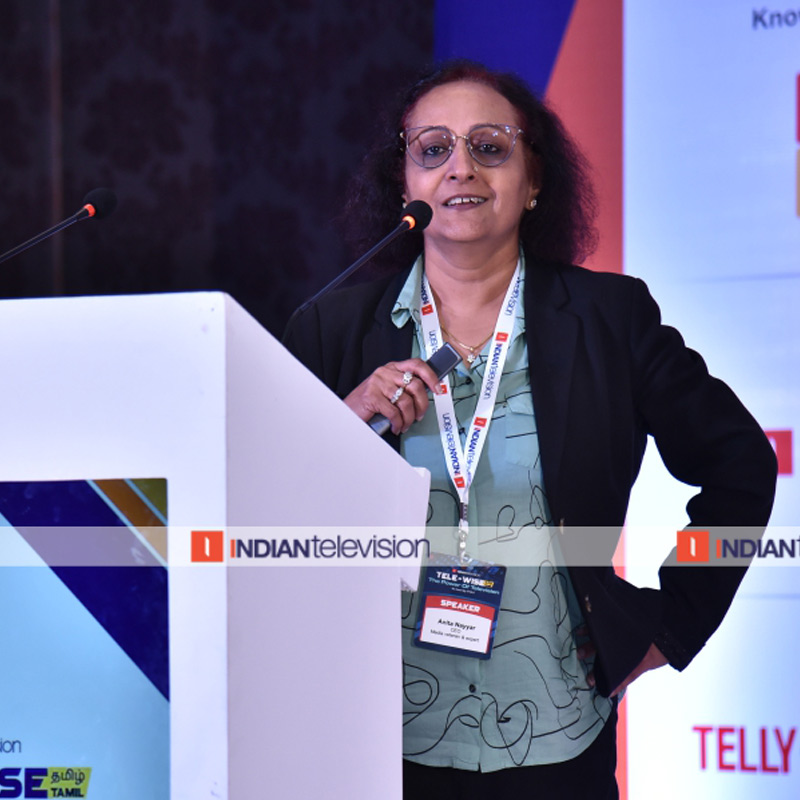
    Havas Media Group CEO India & Southeast Asia Anita Nayyar shared similar thoughts as she mentioned that one can’t neglect the role of digital in driving the growth of television medium. “When we think of TV, we should think audio-visual. The content is becoming screen-agnostic now.”

    Elaborating more on the potential that the Tamil Nadu market has for digital and TV media, Nayyar noted, “Tamil happens to be the third-largest content language being consumed online. 42 per cent of the population in Tamil Nadu has internet and mobiles. 42 Tamil channels have crossed more than 1 million followers on YouTube. Sun NXT today is talking about 1 crore installs of its app. In fact, Tamil originals are working great on other OTT platforms like Netflix, Amazon Prime, and Hotstar as well. Mobile definitely is the next most important device in one’s hand for content consumption.”

    Nayyar, however, also insisted that growth of alternate screens won’t perish the TV in its original form in Tamil Nadu or India.

    She highlighted that while the TV viewership in the country grew by 13 per cent in the last year, in Tamil Nadu this number was 14 per cent. She added that in South India, Tamil Nadu noted the second-highest time spent on television at 215 minutes a day vis-a-vis 245 minutes of Andhra Pradesh.

    Shedding some more light on the TV-viewing patterns in the state, Nayyar said, “Tamil Nadu is completely hooked to television. They prefer entertainment over any other genre. At prime time, 73 per cent of viewership is for GECs, which actually falls to an all-day average of 65 per cent. Tamil GEC is at 55.5 per cent in terms of genre preference, and the top shows are recording up to 23.4 TVRs, which are unheard in today’s time. People also prefer to watch movie channels during prime time. News and music viewership is quite low in the night time but they are most preferred in the morning.

    Tele-Wise Tamil was the inaugural edition of Indiantelevision.com’s Tele-Wise series that aims to look into the opportunities that regional markets have for broadcasters, advertisers, marketers, and other related shareholders. The event was concluded in Tamil Nadu recently with a number of industry veterans and experts in presence.

  • Only 3% of brands in Tamil Nadu advertise on both TV and digital

    Only 3% of brands in Tamil Nadu advertise on both TV and digital

    MUMBAI: Marketers advocated for the need to create ads simultaneously for television as well as digital to penetrate deeper in regional markets like Tamil Nadu, at the recently concluded Tele-Wise Tamil 2019. The event was organised by Indiantelevision.com to acknowledge the vast pool of opportunities Tamil television has for brands and advertisers in Chennai on 6 August.

    On the panel were Lodestar UM EVP Laya Menon, Matrimony.com AGM marketing communications Akhil Jain, Paytm Travel GM brand marketing Bhushan Walzade, TAM Media Research VP Tam Axis Vinita Shah, TVS Auto Assist India head marketing Mahima Singh, and Wavemaker general manager Rajendra J Prasad. It was moderated by Bodhitree Multimedia co-founder & Director Mautik Tolia.

    Speaking on the panel, discussing the might of the Tamil market for national and regional advertisers, Menon said, “Hetero-TV consumption is a trend not just in Tamil Nadu but also other South Indian markets. Thus, to optimise the reach of any campaign, we have seen while the reach tends to start with TV, the digital medium adds anywhere between 7-10 per cent to it. And this is just the AV medium I am talking about. To top that, we have other layers like social media platforms. The fact is that the market is now screen-agnostic. TV sells the opportunity and the added advantage comes from online content that has to be fairly customised for the market on a language-basis, which adds a significant amount of measurable reach.”

    Jain, who admitted spending around 80 per cent of his ad spends on TV, shared the example of his own brand as he elaborated more on the concept. He said that he has seen campaigns that run both on TV and digital performing better than the ones that ran just on the latter.

    He said, “I believe that there is a huge synergy between digital and television. As you know, ours is a digital-first platform. With our marketing communications, we ask people to download our app. Now, there is this two-screen theory, which says that even while people are watching TV, they have their phones with them. So, whenever our ad pops up on TV, and the person is using the phone, we serve them the communication on digital medium too, for example, on Facebook.”

    Jain added that it increases the rate of conversion for their app, adding more users. He mentioned that he has observed a positive blip in the number of registrations on the app when the ad is running simultaneously on both platforms.

    Walzade shared similar thoughts as he noted, “I think that the digital medium is growing very fast now. It makes it very important for us to 360-degree campaigns. At Paytm, especially with our travel business, we don’t only put TVCs on national and regional TV, but are also going big on social media.”

    Speaking about the Tamil Nadu market, Walzade added that the state is in top 3 when it comes to internet penetration and the literacy rate is also quite high there. The acceptance of new technologies there is leading to the thriving of e-commerce industry and it really helps us in investing in media and reaching to consumers.

    However, Shah noted that despite there being a great understanding of the need to advertise on multiple platforms only 2.5-3 per cent of advertisers in Tamil Nadu advertise on both TV and digital. She urged the community to recognise this big gap in the synergy between TV and digital and try to fill it.

    Another insight that came out through the session was the importance of creating content in simple and relatable language for the regional audience. The speakers insisted that national advertisers create simultaneous campaigns for the regional markets to assure better results for their campaigns.

    Singh said, “One’s approach should be really regional when it comes to connecting with the regional audience. National advertisers should look at creating content that is more local and is closer to the audience.”

    She also emphasised the need to understand the audience’s AV-viewing patterns and recognise at what time they are accessing content on what platform for better targeting. Prasad seconded her thoughts as he advocated for the creation of customised and bespoke brand codes for each region.

  • BARC India data shows how Tamil Nadu leads regional TV viewership, content and advertising trends

    BARC India data shows how Tamil Nadu leads regional TV viewership, content and advertising trends

    MUMBAI: The inaugural edition of Tele-Wise Tamil saw BARC India COO Romil Ramgarhia share some interesting numbers related to TV consumption, viewership, advertisement and average time spent (ATS) in Tamil Nadu (TN). He also gave an understanding of trends and behavioural patterns of different genres in the dominant regional market.

    Ramgarhia began his session by explaining how demographically TN is different from other states in India. The state is dominated by 53 per cent of women viewers. 34 per cent of all India population belongs to NCCS AB home but Tamil Nadu has 47 per cent of NCCS AB home. In spite of smaller family size, Tamil Nadu’s TV consumption is high. Ramgarhia informed that NCCS A home consumes more TV in the state.

    While total TV consumption in India per week is about 1000 billion viewing minutes, TN itself gets 110 billion viewing minutes.

    “Over the last two years, overall TV consumption in India has gone up by 21 per cent largely aided by digitisation that happened in the state a little later compared to others states. Despite NTO coming in, the market was resilient and though it had some dent it bounced back much faster compared to other states that we have witnessed,” said Ramgarhia.

    He added, “Generally, the overall consumption of TV in India goes up by 15 per cent in the third quarter but in Tamil Nadu the consumption in that quarter went up to 20 per cent. This year we are hoping to see the same trend compared to 2018-19.”

    Around 9 per cent of the population resides in Tamil Nadu and it contributes 12 per cent of total TV viewership. Tamil Nadu is the only state in the South which has a higher viewership from urban areas. The state has 55 per cent viewership from urban areas and 45 per cent from rural. Telangana has 57 per cent of viewership from rural and 23 per cent from urban. Karnataka has 52 per cent of rural and 48 per cent of urban viewership. Kerala has 50 – 50 per cent of rural and urban viewership.

    Overall in India, the daily TV consumption is about 3 hours 37 minutes whereas Tamil Nadu sees more than 4 hours a day with 74.8 per cent daily tune-ins. Almost 94.2 per cent of the people consume TV at least once in a week and 75 per cent of them consume every day. “It is one of the largest time-spent markets across India,” said Ramgarhia.

    Going further, Ramgarhia explained that viewership in the state also shoots up when there are big events. The state consumed around 8 hours of content on the day of former chief minister Karunanidhi’s demise.

    GEC contributes 63 per cent of total TV consumption in the TN market. Speaking on the primetime, Ramgarhia highlighted that there is no prime time. “The top three Tamil channels have 42 original fictions and 15 non-fictional shows which means the state produces 52 original content in a week whereas the top 3 Hindi GECs have an average of 43 original shows. The market sees a lot of focus on producing more and more content which is also consumed in non-prime time as well," he said

    The data also revealed that the overall TV penetration was high in South and Tamil Nadu had seen 97.5 per cent TV penetration whereas Karnataka had 96.1 per cent TV penetration, Telangana had recorded 94.3 per cent and Kerala has 92.8 per cent.

    TRAI’s new tariff order (NTO) came in force in week 6 of 2019. 43 per cent of TV viewers in TN were consuming all four channels before NTO and now it is down to 35 per cent. There was a drop in reach from 75 per cent to 71 per cent. Pay Tamil GECs went down from 70 to 65. The reach was impacted by five per cent for pay channels post NTO implementation. But ATS went up by 6 per cent from the previous year. “People shift their consumption basket to their choice of channel. Rather than spending time across all the GECs, they just choose a different consumption basket,” said Ramgarhia.

    Throwing some light on the advertising trends in Tamil Nadu, Ramgarhia said, “After Hindi GEC, South GEC is the second largest segment for advertisers as it contributes 31 per cent to total TV viewership. If there are 500 categories in India, roughly 12 per cent of all categories are present in TN. From 11,000 advertisers in India, 15 per cent advertise in TN. If there are 19,000 to 20,000 brands in India roughly 13 per cent of the brands advertise in TN."

  • Tele-Wise Tamil’s inaugural edition advocates greater involvement of national advertisers in regional markets

    Tele-Wise Tamil’s inaugural edition advocates greater involvement of national advertisers in regional markets

    CHENNAI: Indiantelevision.com hosted the inaugural edition of Tele-Wise Tamil, yesterday in Chennai, with the aim of propelling the power of television in one of India’s biggest regional markets. The event offered a platform to stakeholders in the state’s TV industry to understand, analyse, and find potential solutions to issues faced by broadcasters and advertisers in the state.

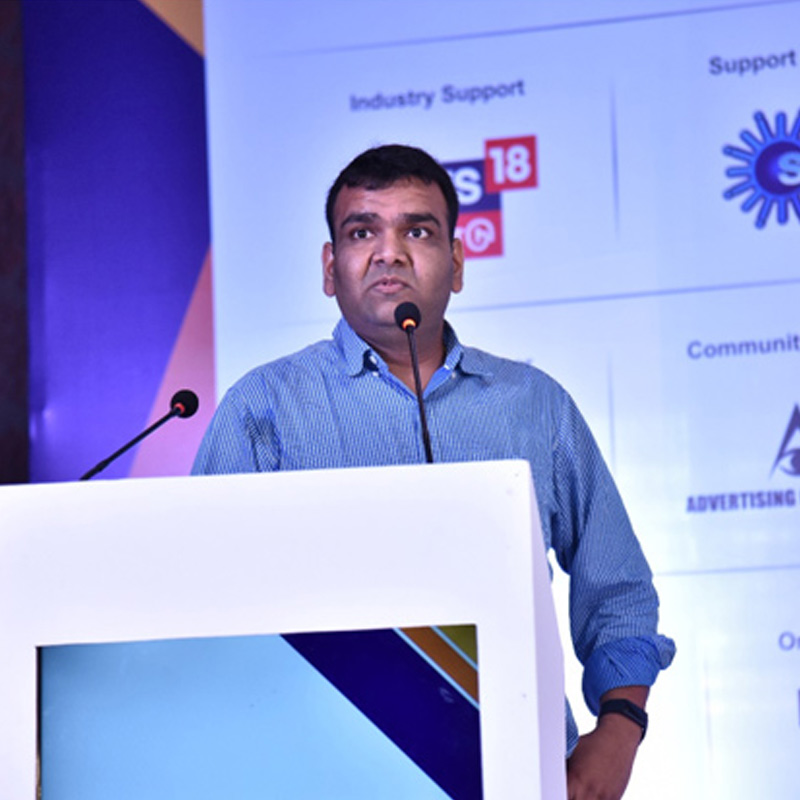
    The day-long conference was opened by Indiantelevision.com founder, CEO, and editor-in-chief Anil Wanvari with a welcome speech. Addressing the gathering inclusive of some of the top names from the media and advertising industry from the regional as well as the Tamil market, Wanvari noted that Tamil Nadu is a very vibrant market with a lot of local talent. “They are diverse and open to looking outward,” he said.

    The proceedings of the day began with a presentation by BARC India chief operating officer Romil Ramgarhia who presented a report on the TV-viewing pattern and trends in Tamil Nadu market, which is unique in its viewing pattern and demographics.

    Sharing some interesting numbers around the TV viewership in the state, Ramgarhia noted that 75 per cent of people watch television daily in Tamil Nadu, dominated by 53 per cent women. He added that roughly 15 per cent of all advertisers in India are currently advertising in Tamil Nadu.

    The next item on the agenda was a fireside chat between Zee Entertainment Enterprises Ltd EVP and cluster head—south businesses Siju Prabhakaran and Indiantelevision.com founder, CEO, and editor-in-chief Anil Wanvari.

    The duo discussed the role Tamil Nadu TV market can play for advertisers. Highlighting the sheer opportunity that Tamil Nadu TV space is for advertisers, Prabhakaran said, "Tamil Nadu is the only market that has a high point in every quarter—be it Tamil New Year, or Diwali, or Pongal. National advertisers haven't been able to understand this phenomenon."

    Prabhakaran also emphasised on the need of good young writers to join the TV industry. He said "There is a need for young writers and technicians to come to TV. This is the issue throughout the country that they get enamoured by films and OTT. The onus is on broadcasters to make TV a more attractive medium for them.”

    The chat was followed by the first panel discussion of the day themed ‘Gauging the Might of Market’ between TVS Auto Assist (India) Ltd head marketing Mahima Singh, Wavemaker general manager Rajendra J Prasad, TAM Media Research VP TAM Axis Vinita Shah, Lodestar UM EVP Laya Menon, Paytm Travel GM brand marketing Bhushan Walzade, and Matrimony.com AGM marketing communication India & International Akhil Jain. The panel was moderated by Bodhitree Multimedia Pvt Ltd co-founder and director Mautik Tolia.

    The panel discussed some important topics including the potency of the Tamil Nadu advertising market, and how to get the attention of the screen-agnostic market. The panel unanimously agreed that there is a pertinent requirement for advertisers to create content in the regional language to connect with the people in the state as Tamil Nadu has a lot of potential.

    Elaborating more on the importance of content in regional languages, Menon quipped that national advertisers are very well aware of the fact that to maintain a relationship with the audience they have to go vernacular. “Gone are the days when it was a revelation for national advertisers that they need to bond with these audience using their languages. They now understand that the audience here is culturally-bonded.”

    Walzade added that it is critical for any business to connect with the tier 2 and tier 3 towns as they can contribute massively to the brand growth. He noted that along with language, brands can also work on introducing regional faces as brand ambassadors.

    Speaking about the growth potential that the Tamil Nadu market has, Prasad said, “We rank second in terms of the GDP in India despite being the 6th largest when it comes to population. It proves that Tamil Nadu has a lot of growth potential for not only regional but also national advertisers.”

    Shah noted that in the past five years, Tamil Nadu market has seen an exponential growth brought in by the growing number of GECs and by the top 10 advertisers in the country. However, there is a big gap that needs to be fixed between the viewership and advertising revenue that can be generated.

    Discussing the ways to attract the attention of a screen-agnostic audience to TV, Singh shared that marketers face a lot of challenge to achieve this. She said that the right strategy can be to communicate in a simpler format and in languages that audiences can connect to.

    Jain vouched for the need to maintain a balanced TV plus digital approach to target the consumers. Citing his own example, Jain mentioned that the digital-only approach has once failed for Matrimony.com and he thus maintains the mixed-media approach of marketing despite being a digital-first brand.

    Shah added that only 2.3-3 per cent of advertisers are doing TV and digital advertising, both, and asked the house to put some more thought in the matter for the industry to grow further. 
    After the session, Lowe Lintas regional creative officer Kapil Mishra took center-stage to discuss how marketers can harness the power of TV.

    He said that people should start looking at TV as a software and not the hardware which is a box or flat screen on the wall. “Technology has separated the software of TV from its hardware, changing the whole culture around it and liberating TV as a medium.”

    Bringing his own answer to the looming question of which half of the advertiser’s money gets wasted, Mishra noted that the investments in TV ads don’t get desired return when brands try to be rational and try to say a lot about themselves. “The audience doesn’t want to hear that. They want entertainment. Power of TV lies in emotions.”

    Following Mishra, an elaborate panel took center stage to discuss the ‘Changing Face of Tamil TV’. On the dais were Colors Tamil business head Anup Chandrasekharan, Sun Life content acquisition and Sun TV Network Ltd Kids Entertainment Kavitha Jaubin, Trend Loud CEO Chidambaram Natesan, Star Network deputy business head for Vijay TV Balachandran Ratnavel, Bodhitree Multimedia Pvt Ltd co-founder and director Mautik Tolia, and Polimer TV strategic advisor and consultant Suresh Iyer. The session was moderated by Horse Pictures partner and YuppTV former head Vijay Adhiraj.

    The panel discussed the need for engaging content in regional languages and the challenge that the industry faces in order to attract the younger audience.

    Natesan said that TV-viewing has been under immense change in the past 4-5 years. “Audiences are now very clear what they want to watch. There are no group viewings and more personalised experiences.”

    Speaking on how to keep this changing audience hooked, Ratnavel shared, “If you know who your target audience is and you are sharp in identifying them, you have to stay constantly in touch with them. When you meet your consumers regularly, you know the right filters you need to put on your content.”

    Adding to this, Chandrasekharan said that the content that Tamil TV is offering is evolving with time. “The content Sun TV was offering was largely family dramas, Vijay TV was into romance. ZEE brought that romance in the family. Now that family has expanded within the outer circles as well. In coming times, the content will be more to do with things around family, like complexities in the society.”

    Iyer focused on advertising more. He said, “The content should drive the TG first. Then, at the end of the day, you will survive if you aggregate all the numbers and then give it to relevant advertisers. Platform can be anything.”

    Tolia added that industry will also have to be cognizant of the fact that it is going to get really tough to gain the attention of the younger audience and should work in getting them to watch their content.

    The next event was a fireside chat between Vikatan Group MD B Srinivasan and Anil Wanvari.

    Srinivasan mentioned that he would rather like to get commissioned on OTT space than TV. He also announced that he will soon be launching the first digital daily soap on YouTube. "We will be launching the first digital daily soap soon. It will be 120 episodes and will be aired on YouTube from Monday to Friday. We are hoping the advertisers come on board. If the first 120 episodes are successful, we are also planning to come up with the second season,” he said.

    Havas Group India CEO and media veteran & expert, Anita Nayyar was the next speaker on stage who in detail discussed with the room the concept of ‘Digi-Wise’ through an interesting presentation. She shared that in order to understand TV growth, one should not ignore the role of digital in it.

    Next was a presentation by Kalimark Group joint managing director J Ramesh who shared a brief history of the brand with the room. 
    The next panel discussion happened between SRM University head of marketing and media Chaitanya Gurijala, Challenge advertising founder and CEO R Sakthivel, Kalimark Group JMD J Ramesh, Viveks VP marketing BS Vishal, and Jaya TV Network business head Viswanathan Devraj, on the topic of ‘Retail Therapy’. The session was moderated by WIN News ED, Cornerstone founder president and Puthiya Thalaimurai Group former CEO RBU Shyam Kumar.

    The panel discussed how broadcasters can get retail advertisers on their platform and how the former can leverage the power of the latter.

    While Gurijala mentioned that he has got his main focus on print advertising, J Ramesh noted that around 75 per cent of his ad share goes to television.

    Sakthivel shared that for Tamil TV, almost 20 per cent of ad revenues come from movies, with producers spending as much as Rs 1.75 crore for a two-week campaign.

    BS Vishal added another interesting dimension to the discussion as he noted that the brand shops are struggling to survive in the online as well as the offline world and it is quite difficult for them to get younger consumers to their doors.

    Devaraj shared that as a broadcaster, he is depending on digital to drive retail advertisers to television.

    The panel also discussed the viability of subtitling Tamil content in various languages to get more people to watch their offerings.

    The day was concluded by a presentation by News18 Network CEO-languages Karan Abhishek Singh who spoke on the relevance of news genre in the Tamil Nadu market. He said that news as a genre has grown fastest in the past one year on the growth of regional news.

    The conference concluded as an insightful event that shed some light on the evolving television industry of Tamil Nadu and also presented solutions to some of the problems that it is facing on its way to becoming the dominant force within the country. 
     

  • COLORS Tamil signs up as summit partner for Indiantelevision.com’s Tele-Wise Tamil

    COLORS Tamil signs up as summit partner for Indiantelevision.com’s Tele-Wise Tamil

    MUMBAI: Viacom18’s regional GEC, Colors Tamil, has associated with Indiantelevision.com as  summit partner for its event Tele-Wise Tamil. This day long summit aims to take a deep dive into various perspectives from national and regional broadcasters, media agencies and content creators.  Tele-Wise’s first leg will take place on 6 August at the ITC Grand Chola in Chennai.

    While Tamil Nadu boasts of a vibrant TV ecosystem, industry watchers are convinced there is scope to push the envelope on content, advertising and distribution fronts.With ‘Power of Television’ as its theme, the objective of Tele-Wise Tamil is to bring together industry stakeholders to understand and find potential solutions to issues faced by broadcasters &advertisers in the state.

    The state has over 35 channels offering Rs 11.6 crore seconds of advertisement annually; the Tamil TV boasts of Rs 2,000 crore-plus potential. For perspective, that is nearly 10 percent of India’s total TV ad spend coming from just one state.

    Having launched Colors Tamil just over a year ago, the channel has carved out a unique place for itself in this highly competitive market. The rapid progress made by Colors Tamil is largely due to its slate of progressive content and production value as one of the key differentiators.

    “The Tamil television industry is at the threshold of change and positive engagement amongst stakeholders will only helpits growth potential. The inaugural edition of indiantelevision.com’s Tele-Wise Tamil promises to deliver great value in terms of insightful panel discussions and powerful debates.”, said Ravish Kumar, Head of Regional TV Network, Viacom18.

    The summit will bring together some of the finest minds in the ecosystem leveraging the bright spots of the Tamil market and highlighting the areas that need fine-tuning. With one-on-one chats, panel discussions and presentations dissecting all the important factors at play in the state, concerning broadcasting business, Tele-Wise Tamil, promises to enlighten its audience with insights on what drives national & local advertisers along with views from some of India’s biggest broadcasters.

    Among the key speakers at the summit will be Colors Tamil Business Head Anup Chandrasekharan, ZEEL EVP and Cluster Head South Business Siju Prabhakaran, News18 Network CEO – languages Karan Abhishek Singh, BARC India COO RomilRamgarhia, Vikatan Group MD B Srinivasan among others.

    Tele-Wise Tamil will also witness India’s leading brands like Paytm, TVS Auto, and Bharat Matrimony among others being represented by their custodians.