Tag: Tele-Wise

  • Telewise Bangla: Why West Bengal’s local brands prefer TV as a medium

    KOLKATA: Behemoths like Hindustan Unilever, Godrej, Procter & Gamble, and others of their ilk, may be lording it over product categories nationally, but in regional markets, they more often than not come up against sprightly, nimble, scrappy local players who give them more than a run for their money.  Not only for space in shop shelves but even as far as media spends on TV, print and digital are concerned. The scenario is no different in west Bengal.

    The sentiment and proclivity of local entrepreneur-led brands to use TV as a communication medium and brand builder was the topic of discussion in a virtual session ‘New Bastions of Growth’ at indiantelevision.com’s  Tele-wise Bangla- the Power of Television summit.  Prestige Ice Creams (owner of Rollick) managing director Gaurav Khemani, Ajanta Shoe, managing director Sagnik Banik, Keya Seth Aromatherapy founder Keya Seth, Initiative Media executive vice president Mahesh Motwani got into conversation with Indiantelevision.com founder, CEO & editor-in-chief Anil Wanvari and senior reporter Gargi Sarkar to give their perspectives.

    Khemani, who took over the company five years ago, is a big believer in television as a medium. The company that was growing 23 per cent year-on-year pre-pandemic started expanding the moment it went on TV, albeit improving product quality and distribution also played important roles, he said. Even this year, Rollick launched a campaign in February which ran till March. As Khemani shared, the campaign led to sales reaching levels never reached before in March.

    “The reach of TV is far ahead in Bengal, compared to print or any other medium. If you take TV, you can get around 75-80 per cent reach, whereas for print it is 30-35 per cent at best. If you look at the rural segment, print almost does not reach there,” Motwani stated, noting that Bengal is almost 68 per cent rural.

    However, the reach of digital still stands at around 50 per cent at best in urban areas of West Bengal. While everyone gets excited about digital, TV is extremely important for any advertiser in the state. Moreover, the brands need to plump for Bengali  TV channels which have the highest reach amongst TV viewers,  Motwani added. For premium programmes like SaReGaMaPa, Dadagiri, advertisers start booking slots way ahead.

    Ajanta Shoes’ Banik said it has only been two years since it signed Sourav Ganguly as a  brand ambassador for its sports shoes  as it pivots the company towards being a complete footwear provider from being a manufacturer of slippers alone. And its constant bombardment of the TVC with Ganguly and his dog on Bengali TV channels, has seen its sports shoes kick in sales of Rs 20 crore, Banik claimed. He added that there is no doubt that  TV is important to reach the masses but digital plays a role in  showcasing the technology that goes into the making of a sports shoe.

    Keya Seth Aromatherapy takes a different marketing tack.  Rather than jumping on to celebrity endorsements, the beauty brand’s founder Keya Seth and her daughter are  the faces in its promotions. The company was compelled to pull back media spends since filming stopped in March 2020. Seth explained that the company was compelled to do so as Keya Seth Aromatherapy used to produce a half-an hour programme for TV rather than buying spots.

    For the past year, it has not opened the lock it has put on its media spend chest  as yet. According to Seth, that has not had much of an impact on its growth with sales rising four-five per cent in the past one year. She asserted that she might opt for ad spends again, but the focus would be on digital.

    One of the major issues that some of the local brands are facing is being “outbid” by national advertisers, Seth highlighted. Earlier, regional channels used to treat local and national clients  differently. Some local brands used to spend even Rs 25-30 crore in a year for TV advertising, she noted. And the sales team would stand by them and give them enough priority. But now TV channels are selling slots to any brand which  is willing to fork out more.

     Hence, many of the local brands are not being able to match up their ad budgets with larger brands and gradually shifting to digital. Most of the local brands ink year long deals while many of the national brands just spend for a few premium properties, for a limited period of one -two months. Seth noted that the TV channels are on the verge of losing those long-term investments of local clients prioritising short-term  gains from national brands. While Seth is still keen on coming back to TV, she is of the view that the channels will have to look at how they can add more value.

    According to Motwani, most clients in Bengal work closely with agencies on their branding and media strategies, with owners getting on top of even negotiating ad rates. ”Sometimes, because of their relationships, the entrepreneurs get a better buy,” he said. “If the clients don’t feel like they are getting the right rate, they hold back their TVCs. Their thinking is that if they accept a higher quote, it will become the benchmark for future deals.”

    What about local Bengal brands spreading their wings nationally? Ajanta Shoes has already started moving beyond the eastern market to enter Punjab, Rajasthan, Uttar Pradesh. Keya Seth Aromatherapy already has a  presence in  Delhi, Jharkhand, Tripura, Assam, Jaipur, Bangladesh, Nepal. As Bengali consumers across the world have emotional attachment to homegrown brands, the beauty brand has some customers in the US and  London too.

    Banik stated that he will depend largely on TV to popularise his brand in new states to which it is spreading out. And he will go for a mix of both regional channels there as well as those with a national footprint. But the weightage will be more towards regional channels.

    However, Khemani pointed out that he would rather concentrate on building Rollick in east India for now. “Covid has given us opportunities to think through new opportunities. Pre-covid, I was interested in going national straightway. At this point of time, we want to stay in the east at least for three years and  take a leadership position here,” he said.

    Motwani in closing pointed out that West Bengal has oodles of entrepreneurial spirit pointing to brands like ITC, Gestetner, tea companies, plywood producers like Century and Green Ply which have come to define and dominate product categories. “They are ambitious and they are great believers of TV as a brand building medium,” he said. “Both locally and nationwide. And that will stand TV in good stead.”

  • Tamil Nadu’s retail brands weigh in on television as a marketing medium

    Tamil Nadu’s retail brands weigh in on television as a marketing medium

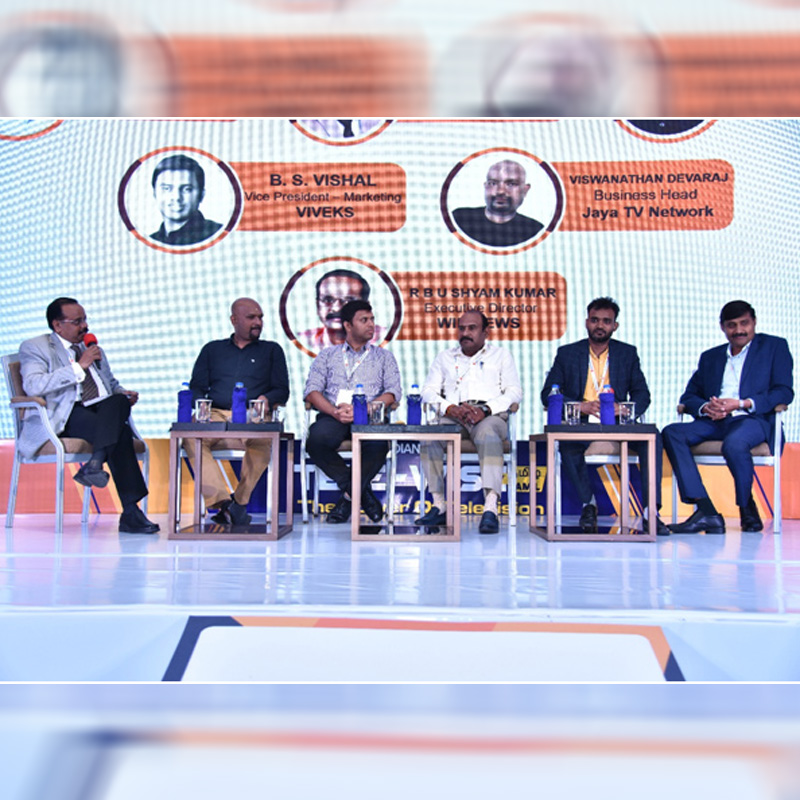
    MUMBAI: Tamil GECs should include subtitles in their shows to increase stickiness and drive more brands to advertise on them, was the conclusion of the very insightful ‘Retail Therapy’ session at the recently concluded Tele-Wise Tamil conclave by Indiantelevision.com. The panel was discussing the role of retail advertisers in the Tamil market and how broadcasters can get them to advertise more on television.

    Part of the panel were SRM University head of marketing & media Chaitanya Gurijala, Challenge Advertising founder and CEO R. Sakthivel, Kalimark Group joint managing director J. Ramesh, Viveks vice-president marketing B.S. Vishal, and Jaya TV Network business head Viswanathan Devaraj. The session was moderated by Win News executive director, Cornerstone founder president, and Puthiyathalaimurai Group former CEO R.B.U. Shyam Kumar.

    The two broadcasters on dais, Devaraj and Kumar, discussed how important subtitling can be in not only driving more viewers to regional channels but also greater advertising revenues. However, they insisted that it has to be evaluated on a cost-benefit model before implementation.

    Kumar noted, “I am sure moving hyperlocal, particularly in the GEC segment, will drive a lot of brands because coming from a news channel, I have seen those 4-5 aston bands that we run get a lot of stickiness to our programmes. Even GEC segment can try subtitles as an option to break the ongoing rules and get more traction. Forget about advertising, first of all, it will increase the viewer base to a great extent.”

    Devaraj said, “I agree that stickiness to a content increases when there are subtitles on it. In Singapore, if they have a Tamil movie playing, they post subtitles in four different languages, including Tamil language. But when we look at, say Vijay TV, that goes on air in Singapore doesn’t have subtitles in all languages because it is a costly affair.”

    To this, Indiantelevision.com founder, CEO, and editor-in-chief Anil Wanvari added that it takes approximately between 12-15 thousand rupees to add subtitles in a half hour episode.

    Kumar claimed that if GECs can monetise that additional cost to the production of an episode of a TV show, which he assumed to be close to Rs 1.50 lakh for an half hour run, broadcasters will be equally interested in drawing new audiences.

    Devaraj added that this will require a deep analysis based on the cost effectiveness.

    The panel also discussed a lot of other interesting topics related to retail advertising in Tamil Nadu market. While Gurijala and Vishal reinstated the fact that print advertising is working for them to a great extent, Sakthivel and Ramesh vouched for the need advertise on TV to increase the user base.

    Gurijala said, “I am huge fan of television but for education as a medium, print gives us an edge that we need to survive. There is a belief that parents are looking for education institutes that are more subtle. And subtlety has been the mantra that some of the biggest universities across the globe have followed and are following to build their ads.”

    He acknowledged that a few universities like Amity and Lovely Professional are turning the narrative to the other side and investing big in TV but he insisted that advertising on television is only good for getting a sudden spike in the visibility.

    Vishal shared that Viveks have been investing in print since the day they started in 1965. 

    “Back then, the competition was very less and everything that started was on print. Also, I would say that word-of-mouth was a strong medium. I would say, till date, we are known by the trust (that people have in us), and that has given us a strong foothold. I am spending close to 80-85 per cent of my budget on print”

    He added, “TVCs are only for a brand recall purpose. But there are national players like Reliance and Croma, who are now spread across Tamil Nadu. For them, I believe, TV TVCs get more leverage than they do for players like us.”

    Ramesh shared that television helped his Kalimark Group to a great extent. “When we started in 1916, for the initial few years, we used only paintings to promote our drinks. Later, I am very proud to say, TV helped us greatly in our brand journey. People in Tamil Nadu are very sensitive and they believe what they see. So, TVCs help us in getting their attention. I am spending 75 per cent of my budgets on TV.”

    He also shared that the brand initially had a rule that it will not engage with any celebrity to promote its products, but they revoked it with changing times.

    Sakthivel also mentioned that TV is the dominating medium in Tamil Nadu. He said, “As an advertising agency that handles a lot of retail clients, I believe that Tamil Nadu is still a television market. To give you an example, 18 years back, my first client was a computer institute who was advertising just on print, spending somewhere around Rs 4-5 lakh rupees for a month-long campaign. We helped him go to television with the same budget, did a TVC with a popular TV star of that time and placed it on 3 GECs. Within 3-4 years, the institute grew from 10 centres to 350 centres.”

    He added that while digital is soon catching up with television, advertisers can focus on creating a mix for both the media but only digital will not be able to drive growth. 

  • Tamil Nadu viewers glued to TV; digital catching up fast

    Tamil Nadu viewers glued to TV; digital catching up fast

    MUMBAI: The advertising and marketing industry at the first edition of Tele-Wise Tamil urged the industry to look at TV and digital as two wheels rotating around one axis. They emphasised that the growth of television in any market can’t be calculated without considering that though being invented as isolated units, TV and digital have merged into one big medium now, because of technological advancements.

    Lowe Lintas regional creative officer Kapil Mishra said, “Whenever you ask someone to imagine a television, they either think of a box or a flat-screen on a TV unit. But TV is not just the hardware; it is also its software. Technology has separated these two and has liberated the software. Now, television is everywhere; on your phones, laptops, and your tablets.”

    He continued by saying that this segregation of TV software and hardware has greatly impacted the TV-viewing culture in every market. He insisted that now marketers and advertisers have more opportunities to harness this medium to reach their audience.

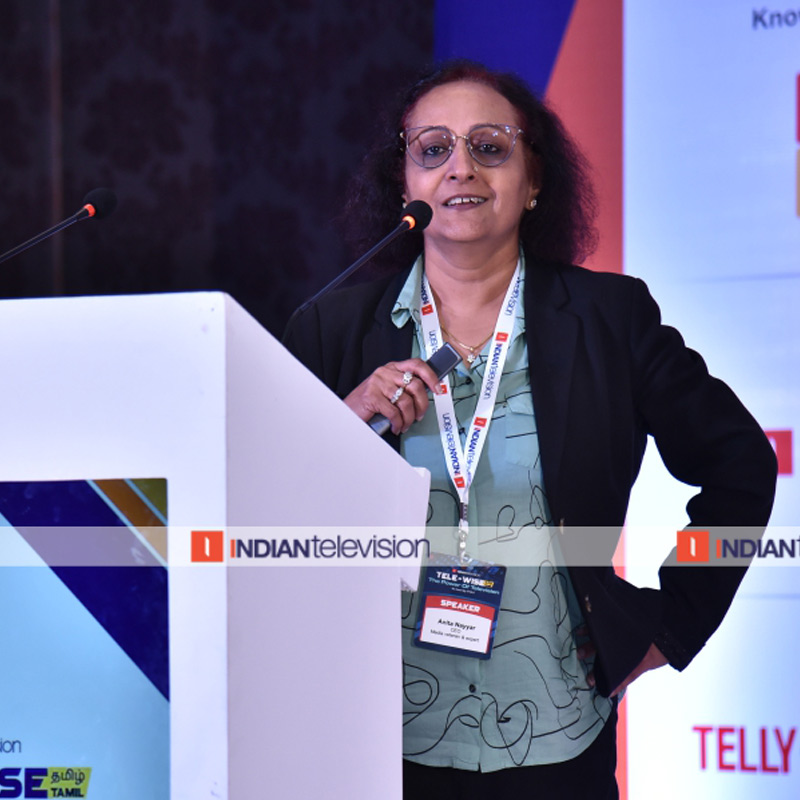
    Havas Media Group CEO India & Southeast Asia Anita Nayyar shared similar thoughts as she mentioned that one can’t neglect the role of digital in driving the growth of television medium. “When we think of TV, we should think audio-visual. The content is becoming screen-agnostic now.”

    Elaborating more on the potential that the Tamil Nadu market has for digital and TV media, Nayyar noted, “Tamil happens to be the third-largest content language being consumed online. 42 per cent of the population in Tamil Nadu has internet and mobiles. 42 Tamil channels have crossed more than 1 million followers on YouTube. Sun NXT today is talking about 1 crore installs of its app. In fact, Tamil originals are working great on other OTT platforms like Netflix, Amazon Prime, and Hotstar as well. Mobile definitely is the next most important device in one’s hand for content consumption.”

    Nayyar, however, also insisted that growth of alternate screens won’t perish the TV in its original form in Tamil Nadu or India.

    She highlighted that while the TV viewership in the country grew by 13 per cent in the last year, in Tamil Nadu this number was 14 per cent. She added that in South India, Tamil Nadu noted the second-highest time spent on television at 215 minutes a day vis-a-vis 245 minutes of Andhra Pradesh.

    Shedding some more light on the TV-viewing patterns in the state, Nayyar said, “Tamil Nadu is completely hooked to television. They prefer entertainment over any other genre. At prime time, 73 per cent of viewership is for GECs, which actually falls to an all-day average of 65 per cent. Tamil GEC is at 55.5 per cent in terms of genre preference, and the top shows are recording up to 23.4 TVRs, which are unheard in today’s time. People also prefer to watch movie channels during prime time. News and music viewership is quite low in the night time but they are most preferred in the morning.

    Tele-Wise Tamil was the inaugural edition of Indiantelevision.com’s Tele-Wise series that aims to look into the opportunities that regional markets have for broadcasters, advertisers, marketers, and other related shareholders. The event was concluded in Tamil Nadu recently with a number of industry veterans and experts in presence.

  • Tele-Wise Tamil’s inaugural edition advocates greater involvement of national advertisers in regional markets

    Tele-Wise Tamil’s inaugural edition advocates greater involvement of national advertisers in regional markets

    CHENNAI: Indiantelevision.com hosted the inaugural edition of Tele-Wise Tamil, yesterday in Chennai, with the aim of propelling the power of television in one of India’s biggest regional markets. The event offered a platform to stakeholders in the state’s TV industry to understand, analyse, and find potential solutions to issues faced by broadcasters and advertisers in the state.

    The day-long conference was opened by Indiantelevision.com founder, CEO, and editor-in-chief Anil Wanvari with a welcome speech. Addressing the gathering inclusive of some of the top names from the media and advertising industry from the regional as well as the Tamil market, Wanvari noted that Tamil Nadu is a very vibrant market with a lot of local talent. “They are diverse and open to looking outward,” he said.

    The proceedings of the day began with a presentation by BARC India chief operating officer Romil Ramgarhia who presented a report on the TV-viewing pattern and trends in Tamil Nadu market, which is unique in its viewing pattern and demographics.

    Sharing some interesting numbers around the TV viewership in the state, Ramgarhia noted that 75 per cent of people watch television daily in Tamil Nadu, dominated by 53 per cent women. He added that roughly 15 per cent of all advertisers in India are currently advertising in Tamil Nadu.

    The next item on the agenda was a fireside chat between Zee Entertainment Enterprises Ltd EVP and cluster head—south businesses Siju Prabhakaran and Indiantelevision.com founder, CEO, and editor-in-chief Anil Wanvari.

    The duo discussed the role Tamil Nadu TV market can play for advertisers. Highlighting the sheer opportunity that Tamil Nadu TV space is for advertisers, Prabhakaran said, "Tamil Nadu is the only market that has a high point in every quarter—be it Tamil New Year, or Diwali, or Pongal. National advertisers haven't been able to understand this phenomenon."

    Prabhakaran also emphasised on the need of good young writers to join the TV industry. He said "There is a need for young writers and technicians to come to TV. This is the issue throughout the country that they get enamoured by films and OTT. The onus is on broadcasters to make TV a more attractive medium for them.”

    The chat was followed by the first panel discussion of the day themed ‘Gauging the Might of Market’ between TVS Auto Assist (India) Ltd head marketing Mahima Singh, Wavemaker general manager Rajendra J Prasad, TAM Media Research VP TAM Axis Vinita Shah, Lodestar UM EVP Laya Menon, Paytm Travel GM brand marketing Bhushan Walzade, and Matrimony.com AGM marketing communication India & International Akhil Jain. The panel was moderated by Bodhitree Multimedia Pvt Ltd co-founder and director Mautik Tolia.

    The panel discussed some important topics including the potency of the Tamil Nadu advertising market, and how to get the attention of the screen-agnostic market. The panel unanimously agreed that there is a pertinent requirement for advertisers to create content in the regional language to connect with the people in the state as Tamil Nadu has a lot of potential.

    Elaborating more on the importance of content in regional languages, Menon quipped that national advertisers are very well aware of the fact that to maintain a relationship with the audience they have to go vernacular. “Gone are the days when it was a revelation for national advertisers that they need to bond with these audience using their languages. They now understand that the audience here is culturally-bonded.”

    Walzade added that it is critical for any business to connect with the tier 2 and tier 3 towns as they can contribute massively to the brand growth. He noted that along with language, brands can also work on introducing regional faces as brand ambassadors.

    Speaking about the growth potential that the Tamil Nadu market has, Prasad said, “We rank second in terms of the GDP in India despite being the 6th largest when it comes to population. It proves that Tamil Nadu has a lot of growth potential for not only regional but also national advertisers.”

    Shah noted that in the past five years, Tamil Nadu market has seen an exponential growth brought in by the growing number of GECs and by the top 10 advertisers in the country. However, there is a big gap that needs to be fixed between the viewership and advertising revenue that can be generated.

    Discussing the ways to attract the attention of a screen-agnostic audience to TV, Singh shared that marketers face a lot of challenge to achieve this. She said that the right strategy can be to communicate in a simpler format and in languages that audiences can connect to.

    Jain vouched for the need to maintain a balanced TV plus digital approach to target the consumers. Citing his own example, Jain mentioned that the digital-only approach has once failed for Matrimony.com and he thus maintains the mixed-media approach of marketing despite being a digital-first brand.

    Shah added that only 2.3-3 per cent of advertisers are doing TV and digital advertising, both, and asked the house to put some more thought in the matter for the industry to grow further. 
    After the session, Lowe Lintas regional creative officer Kapil Mishra took center-stage to discuss how marketers can harness the power of TV.

    He said that people should start looking at TV as a software and not the hardware which is a box or flat screen on the wall. “Technology has separated the software of TV from its hardware, changing the whole culture around it and liberating TV as a medium.”

    Bringing his own answer to the looming question of which half of the advertiser’s money gets wasted, Mishra noted that the investments in TV ads don’t get desired return when brands try to be rational and try to say a lot about themselves. “The audience doesn’t want to hear that. They want entertainment. Power of TV lies in emotions.”

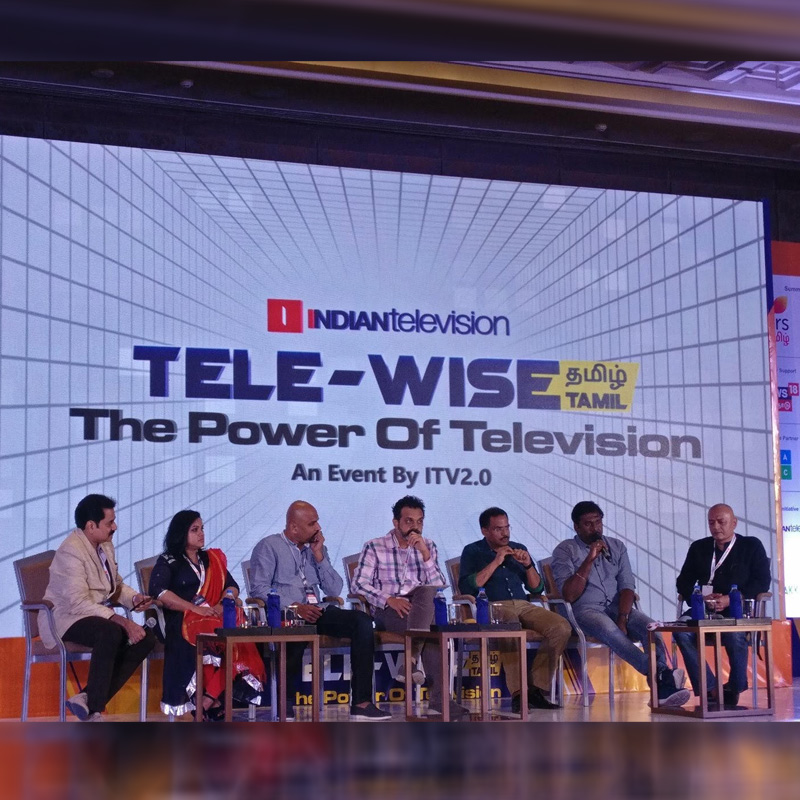
    Following Mishra, an elaborate panel took center stage to discuss the ‘Changing Face of Tamil TV’. On the dais were Colors Tamil business head Anup Chandrasekharan, Sun Life content acquisition and Sun TV Network Ltd Kids Entertainment Kavitha Jaubin, Trend Loud CEO Chidambaram Natesan, Star Network deputy business head for Vijay TV Balachandran Ratnavel, Bodhitree Multimedia Pvt Ltd co-founder and director Mautik Tolia, and Polimer TV strategic advisor and consultant Suresh Iyer. The session was moderated by Horse Pictures partner and YuppTV former head Vijay Adhiraj.

    The panel discussed the need for engaging content in regional languages and the challenge that the industry faces in order to attract the younger audience.

    Natesan said that TV-viewing has been under immense change in the past 4-5 years. “Audiences are now very clear what they want to watch. There are no group viewings and more personalised experiences.”

    Speaking on how to keep this changing audience hooked, Ratnavel shared, “If you know who your target audience is and you are sharp in identifying them, you have to stay constantly in touch with them. When you meet your consumers regularly, you know the right filters you need to put on your content.”

    Adding to this, Chandrasekharan said that the content that Tamil TV is offering is evolving with time. “The content Sun TV was offering was largely family dramas, Vijay TV was into romance. ZEE brought that romance in the family. Now that family has expanded within the outer circles as well. In coming times, the content will be more to do with things around family, like complexities in the society.”

    Iyer focused on advertising more. He said, “The content should drive the TG first. Then, at the end of the day, you will survive if you aggregate all the numbers and then give it to relevant advertisers. Platform can be anything.”

    Tolia added that industry will also have to be cognizant of the fact that it is going to get really tough to gain the attention of the younger audience and should work in getting them to watch their content.

    The next event was a fireside chat between Vikatan Group MD B Srinivasan and Anil Wanvari.

    Srinivasan mentioned that he would rather like to get commissioned on OTT space than TV. He also announced that he will soon be launching the first digital daily soap on YouTube. "We will be launching the first digital daily soap soon. It will be 120 episodes and will be aired on YouTube from Monday to Friday. We are hoping the advertisers come on board. If the first 120 episodes are successful, we are also planning to come up with the second season,” he said.

    Havas Group India CEO and media veteran & expert, Anita Nayyar was the next speaker on stage who in detail discussed with the room the concept of ‘Digi-Wise’ through an interesting presentation. She shared that in order to understand TV growth, one should not ignore the role of digital in it.

    Next was a presentation by Kalimark Group joint managing director J Ramesh who shared a brief history of the brand with the room. 
    The next panel discussion happened between SRM University head of marketing and media Chaitanya Gurijala, Challenge advertising founder and CEO R Sakthivel, Kalimark Group JMD J Ramesh, Viveks VP marketing BS Vishal, and Jaya TV Network business head Viswanathan Devraj, on the topic of ‘Retail Therapy’. The session was moderated by WIN News ED, Cornerstone founder president and Puthiya Thalaimurai Group former CEO RBU Shyam Kumar.

    The panel discussed how broadcasters can get retail advertisers on their platform and how the former can leverage the power of the latter.

    While Gurijala mentioned that he has got his main focus on print advertising, J Ramesh noted that around 75 per cent of his ad share goes to television.

    Sakthivel shared that for Tamil TV, almost 20 per cent of ad revenues come from movies, with producers spending as much as Rs 1.75 crore for a two-week campaign.

    BS Vishal added another interesting dimension to the discussion as he noted that the brand shops are struggling to survive in the online as well as the offline world and it is quite difficult for them to get younger consumers to their doors.

    Devaraj shared that as a broadcaster, he is depending on digital to drive retail advertisers to television.

    The panel also discussed the viability of subtitling Tamil content in various languages to get more people to watch their offerings.

    The day was concluded by a presentation by News18 Network CEO-languages Karan Abhishek Singh who spoke on the relevance of news genre in the Tamil Nadu market. He said that news as a genre has grown fastest in the past one year on the growth of regional news.

    The conference concluded as an insightful event that shed some light on the evolving television industry of Tamil Nadu and also presented solutions to some of the problems that it is facing on its way to becoming the dominant force within the country. 
     

  • Zee Tamil is summit partner for Indiantelevision.com’s Tele-Wise Tamil

    Zee Tamil is summit partner for Indiantelevision.com’s Tele-Wise Tamil

    MUMBAI: Zee Tamil has partnered Indiantelevision.com for the first edition of Tele-Wise. In its debut edition, Tele-Wise will showcase the power of television in the very significant Tamil Nadu market. The event will be held on 6 August 2019 at the ITC Grand Chola, Chennai.

    Tele-Wise Tamil aims to create a platform for industry stakeholders to understand, analyse and find potential solutions to issues faced by broadcasters and advertisers in the state. While Tamil Nadu boasts of a vibrant TV ecosystem, industry watchers are convinced there is scope to push the envelope on content, advertising and distribution fronts.

    The state has over 35 channels offering Rs 11.6 crore seconds of advertisement annually, the Tamil TV boasts of Rs 2,000 crore-plus potential. For perspective, that is nearly 10 percent of India’s total TV ad spend coming from just one state.

    "With the television industry witnessing churns of changes and development, we believe that dialogue among stakeholders would be key to uncovering the nuances of the market and discovering its potential. We are happy to be partnering with the first edition of Indiantelevision.com's Tele-Wise in Chennai and look forward to the multi-layered debates and discussions that are sure to bring significant value to all attendees," ZEEL EVP and cluster head south business Siju Prabhakaran said.

    Tele-Wise Tamil will comprise a series of one-on-one chats, panel discussions and presentations dissecting all the important factors at play in the state are broadcasting business.

    The day-long summit will see some of the finest minds in the ecosystem will weigh on the bright spots of the Tamil market and highlighted the areas that need fine-tuning.

    The audience will get insights into how national and local advertisers are looking for as well as views of some of India’s biggest broadcasters.

    Among the key speakers at the summit will be ZEEL EVP and cluster head south business Siju Prabhakaran, News18 Network CEO – languages Karan Abhishek Singh, BARC India COO Romil Ramgarhia, Vikatan Group MD B Srinivasan among others.