Tag: telcos

  • Regional OTT players veer towards aggregation model

    Regional OTT players veer towards aggregation model

    Mumbai: With 53 over-the-top platforms (OTT) offering video, music, gaming and news content in India, regional and niche OTT platforms are veering towards an aggregation driven model to grow revenues. A report by E&Y stated that 400 million consumers will consume content via telco and aggregator bundles by 2025 as data prices increase.  

    Video aggregators such as Amazon Prime Video Channels, JioTV+, Tata Sky Binge and telcos have become important drivers for regional and nice OTT platforms to reach a wider audience. As per E&Y report, 85 per cent of viewership volumes of certain OTT platforms were generated by telcos.

    “We believe that top three-four aggregators would dominate the market,” observed Hoichoi chief operating officer Soumya Mukherjee. “While it is difficult to predict the future, it does seem that regional OTT is heading towards an aggregation model. That’s because it takes a lot of investment and time for any player to enter the regional space.”

    Bengali OTT player hoichoi is a successful example of a regional OTT player that has grown its subscription base, majorly driven by content. In its three years in the market, the platform has released over 100 original web series and many films.

    “There were two inflection points in the history of OTT. First when the Jio revolution took place in 2016 and data became really cheap. The second was in 2020 when Covid-19 happened and the OTT industry got a boost,” said ViewLift director sales – APAC and EMEA Manish Manwani.

    When major OTT platforms such as Amazon Prime Video, Netflix and Zee5 began investing in regional content pieces, it expanded the market for regional content.

    “When these big players entered the OTT market with their regional content, we realised there is a market out there,” said Oho Gujarati and CineMan Productions founder Abhishek Jain. “When bigger platforms are marketing their regional content, it is indirectly having a positive impact on us because our library of content is much bigger.”

    Last year was a fantastic period for the growth of regional original content. According to E&Y, 47 per cent of OTT originals and 69 per cent of films released on streaming platforms were in regional languages (non-Hindi).

    The challenge for regional OTT platforms is that most of their budgets are spent on creating content with little left over for marketing. According to Hoichoi’s Mukherjee, 60 per cent of the company’s P&L goes into producing content with little to no advertising. While hoichoi has become an established brand in the Bengali market, it is tougher for other regional OTT players.

    “In some regional markets like Bengali, there’s already an established ecosystem and all one had to do was adapt the content for OTT,” said Oho Gujarati’s Jain. “Specifically, talking about Gujarati content, there is no legacy industry. There’s only one general entertainment channel and I don’t know how much it is working. The audiences predominantly watch movies in the theatre and local language films have only just started.”

    He added, “The challenge for a regional OTT player like us is that we have to create an ecosystem for Gujarati content and then adapt that and bring that to OTT. In the ten months of existence of Oho Gujarati, we’ve featured nine debutant directors, six debutant writers and 34 debutant actors.”

    Most of the regional OTT players are coming from a production background, however, technology is the backbone of such platforms. While it is important to create good content, experience in terms of payment options, auto renewals, marketing automation and data tracking are also critical aspects of the user experience. Relying on aggregators or partners allows these platforms to focus on what they do best – churn out amazing content, without having to reinvent the wheel from scratch.

    “We expect to see more bundled products like Amazon Channels, where platforms with large reach provide that to smaller/ boutique/niche OTT players on a revenue share basis,” said the E&Y report.

  • VBS 2022: Getting ready for the post-pandemic world

    VBS 2022: Getting ready for the post-pandemic world

    Mumbai: Indiantelevision.com is back with the 18th edition of the Video & Broadband Summit (VBS). The day-long summit will be held virtually on 19 January 2022, from 10.00 am to 5.00 pm. VBS 2022 is co-powered by broadpeak. Disney Star is presenting partner and NxtDigital is the summit partner.

    This year’s Video & Broadband Summit will provide a platform for industry and opinion leaders to discuss key issues being faced by the television industry as a result of the Telecom Regulatory Authority of India (Trai)’s New Tariff Order 2.0, broadband-fuelled growth of digital platforms, and the impact of cord-cutting on DPOs, as well as the possible ramifications of the impending 5G launch that has already created a stir among broadcasters and distributors.

    Some of the broad themes to be covered include Rising Cost of Video Entertainment, Changing Business Models and Revenue Models, Value-Added Services, and getting back to basics in a Post-Pandemic World. VBS 2022 will also delve into the concerns and opportunities around the 5G Teleco Threat, Virtual MVPDs, Cable TV’s Technology, and Back-End Challenges, DPO’s Marketing Drive, and the gradual expansion of Over the Top (OTT) Platforms.

    The summit will begin with an introduction by Indiantelevision.com Group founder CEO and editor-in-chief Anil Wanvari, followed by a presentation on the rising cost of video entertainment.

    First on the agenda is a fireside chat with M&E consultant Anuj Gandhi. During the next session moderated by former senior VP Star TV and CEO KCCL Shaji Mathews, Fastway’s Prem Ojha, Travelxp’s Prashant Chothani, Asia Satellite Telecommunications Holdings’ Rajdeepsinh Gohil, Shemaroo Entertainment’s Sandeep Gupta, BBC Global News’ Sunil Joshi, and Zeel’s Anil Malhotra will share their thought on ‘Getting Back to Basics and to a Post Pandemic World’.

    Lined up next is another fireside chat between NxtDigital MD and CEO Vynsley Fernandes and Anil Wanvari. Thereafter Gurjeev Singh Kapoor (Star & Disney India), Vynsley Fernandes, Amit Arora (Indiacast Media Distribution), Sambasivan G (Tata Sky), Ashish Pherwani (E&Y), and SN Sharma (DEN Networks) will delve on ‘Shaping the growth of linear TV distribution and subscription’.  

    In the post-lunch session, a panel consisting of MN Vyas (founder-director PlanetCast), Abhishek Gupta  (vice president IT, Dish TV), Yann Begassat (business development director, Broadpeak), and Salil Thomas (general manager & head ACV & Technology,  Asianet Satellite Communications Ltd) will demystify ‘The 5G Opportunity’ for the viewers. The talk will be moderated by Satcom Industry Association – India, senior director technology and policy Rajeev Gambhir.

    Following a fireside chat with Jio Platform’s Saurabh Sancheti, the event will wrap up with a discussion on ‘Delighting the Indian Consumer – Challenges & Opportunities’ between Rajib Mukherji (EVP-Strategy, IndiaCast Media Distribution Pvt Ltd.), Nagesh Chhabria (promoter, Metrocast), Rouse Koshy (chief operating officer, NXTDigital) and Yatin Gupta (senior VP, GTPL).

    The Video & Broadband Summit (VBS) 2022 will be live-streamed on Indiantelevision.com’s social media handles.

    For more details: https://www.videoandbroadbandsummit.com/ 

  • Modi says telcos must provide high level of consumer satisfaction

    Modi says telcos must provide high level of consumer satisfaction

    UMBAI: Prime minister Narendra Modi said that telecom service providers must provide a high level of consumer satisfaction and their resolutions should be based on the latest technological solutions. Modi said this while presiding over the 29th meeting of ‘Pragati’ — the ICT-based, multi-modal platform for proactive governance and timely implementation.
    A statement from the PMO quoted Modi as saying, “The Prime Minister said that resolution of issues related to the telecom sector should be based on latest technological solutions. He emphasised that service providers must provide a high level of consumer satisfaction.”
    According to the reports, Modi reviewed the progress of eight important infrastructure projects in the railway, urban development, road, and power and coal sectors. These projects are spread over several states including Uttar Pradesh, Jammu and Kashmir, Haryana, Gujarat, Maharashtra, Karnataka, Jharkhand, Odisha and West Bengal
    Reviewing the Pradhan Mantri Khanij Kshetra Kalyan Yojana, Modi noted that “significant resources are now available to several mineral bearing districts” and directed the officials to utilise the funds in a way that they bring “ease of living” to the people of these districts.

  • Reliance Jio ready to disrupt wired broadband: Matthew Oomen

    Reliance Jio ready to disrupt wired broadband: Matthew Oomen

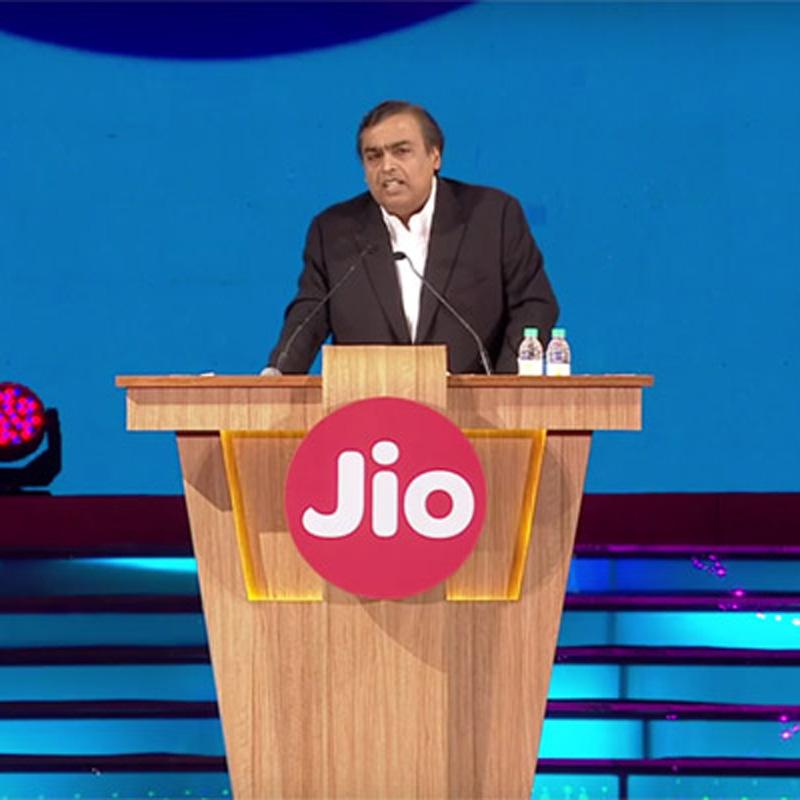
    MUMBAI: There’s further disruption coming thanks to the Reliance Jio juggernaut. Reliance Industries chairman Mukesh Ambani has said this time and time again for the mobile space where price wars have seen call and data prices plummeting, making consumers rub their hands in glee.

    And now this was reiterated by Reliance Jio president network, global strategy and service development Matthew O Oommen, according to a report on telecoms.com of his key note address at the Big Communications Event in Texas earlier this week. Said he: “ We disrupted the mobile industry and now we are looking further. India and Jio are just getting started.”

    The “further” he is referring to is wired broadband services to the home as well as to business customers. Its aggression in the telecom space has seen it snare 186 million subscribers for its 4G services who accounted for 372 billion minutes of VOLTE calls (in Q1 of this year) and 2.4 billion hours of video each month.

    Ambani has set an even more ambitious target: that of an overall 500 million subscribers for its video-centric network.

    But it has set its sights on shaking up the broadband FTTH and enterprise solutions segment as well. Just like it is doing in the 4G space where it is driving innovation in pricing, delivery and product. Tests have been on in different cities for its FTTH service with select residential and enterprise customers.

    Oommen, during his keynote in Texas, said that the Reliance Jio philosophy is disrupt or be disrupted and that both segments are relatively under-served. There are just18 million broadband residential customers and the enterprise market is just one fifth of the size it could be, he shared in India, he stated, according to telecoms.com.

    He also proudly claimed that FTTH will also see innovation as has been evidenced in the wireless segment with its MyJio app which has had 150 million downloads, with the JioTV service signing up 100 million subs and JioChat 50 million. Among the other services figure: JioBank, JioHealthHub and JioMusic which is slated to get a pump up with the acquisition of global Indian music leading streaming music service Saavn.com.

    Are the existing wired broadband providers ready for the coming meltdown? Watch this space!

  • TRAI aids consumers assess data quality, recommends year-long packs

    MUMBAI: TRAI has launched five apps including — MyCall, MySpeed and Do Not Disturb (DND 2.0) — to help subscribers assess call and data quality, and has sent an advisory to telcos to offer one-year data packs — only. Besides, TRAI has also upgraded its ‘Do Not Disturb’ app with additional new features like an intelligent spam detection engine and updates about action taken on complaints within the app.

    “The application MyCall will help mobile phone users rate their experience about voice call quality in real-time and help TRAI gather customer experience data along with network data,” TRAI said in a statement.

    The regulator and government have refused to lower their guard on the subject of call drops, and have kept a close watch on call quality through initiatives such as automated call system and drive tests.

    TRAI has also launched an update to its MySpeed app, which allows customers to measure 3G/4G data speeds and send the results to the regulator.

    The regulator said it has sent an advisory to all telecom operators asking them to launch at least one pack (special tariff voucher or STV) of data services with a validity of 365 days. The advisory comes after operators’ requested TRAI last year for longer validity for STVs with only data benefits, for certain category of consumers who prefer lower denomination data packs with longer validity.

  • Telcos can’t discriminate tariffs in same category

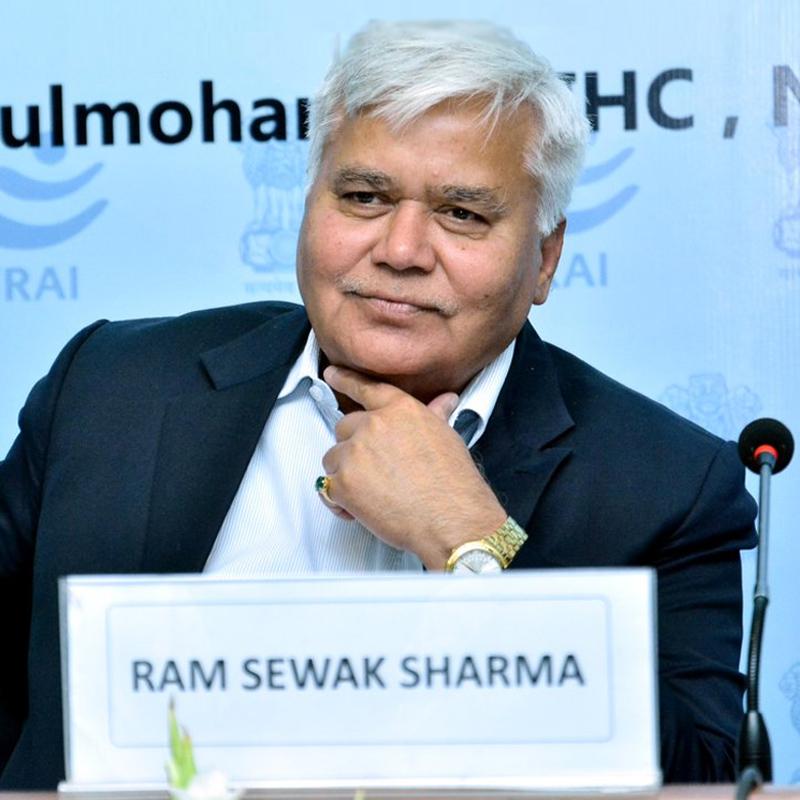
    MUMBAI: Telecom regulator TRAI has directed telecom operators to stop providing discriminatory tariffs to the subscribers of the same category and report all plans to the sector watchdog within seven days of their launch.

    The decision, signed by KaushaI Kishore, advisor (F&EA), comes soon after Reliance Jio’s complaint against other players, including Bharti Airtel, Vodafone India and Idea Cellular.

    Jio had filed complaint against Bharti Airtel in April saying the telecom major contravened tariff rules by releasing misleading offers and arbitrarily discriminating among its own consumers subscribing to the same plan. Bharti Airtel spokesperson had denied the allegations saying the company was fully complying with all regulatory guidelines, including tariff orders.

    TRAI has now said that all the tariffs offered to the consumers shall be in accordance with the provisions of Telecommunication Tariff Order, 1999 and shall not be discriminatory between the subscribers of the same class and to ensure that every tariff that is offered to a customer is invariably reported to the Authority.

    TRAI said it has the duty to notify in the Official Gazette the rates at which the telecommunication services within India and outside India shall be provided under the TRAI Act, 1997. The Authority may notify different rates for different persons or class of persons for similar telecommunication services and where different rates are flxed.

    The Authority, while adopting the forbearance regime in tariff, has made it mandatory for all the service providers to file their tariffs with TRAI within seven working days from the date of implementation of the said tariff;

    No exception/exemption has been granted for tariff reporting except for bulk customers and, in that case too, it is compulsory for all service providers to provide details about the number of plans and the bulk customers availing them along with a certification, for information and record of the Authority.

  • Telcos may offer multi-play OTT for security, energy & appliance control: Report

    MUMBAI: The Smart Home is a growing fifth-play opportunity for operators. The global smart home market is growing exponentially, attracting an array of service providers, including technology giants and startups to major media players, device makers, big-box retailers, home improvement companies, utilities and telecom network operator.

    Government mandates and initiatives in addition to the ongoing technology innovations coupled with increased attention paid to conservation- are the major factors contributing in making smart home a place with a bright future. Focus on sustainability, increasing awareness amongst the consumers with regards to energy consumption and regulatory mandates on energy conservation continue to drive smart home adoption trend globally. While adoption is increasing in countries where governments actively support faster broadband services, especially fiber to the home, the costs associated with new equipment, installation and ongoing maintenance are significant deterrents to home automation.

    Government mandates and initiatives, ongoing technology innovation and the intense attention paid to conservation all contribute to giving the smart home a bright future. The smart home is an attractive opportunity for network operators, thanks to their unique billing relationships and network connections into the home.

    Telcos can improve the value proposition of home automation by implementing a multi-play OTT strategy that offers a range of capabilities, such as security, energy and appliance control.

    Partnerships with companies from different industries are key to ensuring the role of operators in smart home functionality. The market is at a fork in the road, going either toward an open ecosystem with heterogeneous devices or toward proprietary platforms that control all device access.

    The Smart Home, a research report by Pyramid Research, analyses the smart home strategies of leading network operators in a number of markets across the globe, focusing on their roles in the value chain. It discusses the elements of smart home services, the participants in the ecosystem and a number of smart home strategies available to operators. Attention is paid throughout to the key challenges operators face, including the need for device standardization and interoperability.

    Introduction in the report: Providing a thorough overview of the smart home market, this section looks at the long-term evolution of the market, the types of services available as well as the main adoption drivers and barriers.

    The smart home ecosystem (in the report): This section examines the value chain and the roles of the various types of participants, from broadband providers to device manufacturers, utilities and home security platform providers.

    Telco positioning strategies and marketing opportunities: This section analyzes a number of approaches operators can take to gain competitive advantage in the connected home, including white-labeling, support services, bundling and OTT services.

    Key takeaways in the report whittles down into a number of actionable bullet points.

    Case studies: This section analyzes four smart home programs by operators: AT&Ts Digital Life platform in the US, Oranges Homelive in France, HKTs Smart Living in Hong Kong and Rogers Communications Smart Home Monitoring in Canada.

    One could identify the broad barriers to adoption as well as challenges specific to telecom operators in the smart home market. Assess the role and opportunity of operators in the smart home market and how they can gain competitive advantage over the markets many powerful players.

    One could gain information on some of the most valuable experiences by operators in the home automation market, placing them in the context of ongoing market developments and the main technological and competitive challenges.

    The Case studies could be leveraged upon by the operators and cable companies to make informed decisions pertaining to partnering, go-to-market strategies and investments in technologies.

    Also read:

    MatrixCloud OTT enables IPTV operators roll out OTT services in 60 days

    Content & channel management vital as Asian production enters new growth cycle

    Processing video from linear to live, OTT & VR: Verizon launches Exponent for global carriers

  • Telcos’ carbon footprint: TRAI may seek reduction, green tech soon

    Telcos’ carbon footprint: TRAI may seek reduction, green tech soon

    MUMBAI: Telecom regulator TRAI is seeking to come out with a consultation paper that would review issues related to reduction in carbon footprint for the telecom infrastructure that includes mobile towers. A TRAI source said the green telecommunication discussion topics are expected to be finalised over next few weeks after a reference from the DoT (Department of Telecom.)

    (Owing mainly to several policy reforms, telecom sector investments in India meanwhile are expected to reach Rs 68,000 crore (approx US$ 10 billion) this fiscal year, according to telecom secretary J S Deepak, which is approx a 670 per cent increase since FY16.)

    DoT had asked TRAI to review the targets that had been stated earlier with regard to percentage of towers to be powered by hybrid energy in a time-bound manner, and the methodology of calculation of carbon footprint from the telecom networks, including base transceiver station (BTS), the TRAI source said, PTI reported.

    It said that the consultation paper would be the next step in the regulator’s previous recommendations of 2011 on the subject. TRAI had recommended to the government to reduce carbon footprint by mobile operators, which was accepted by the government, and the latter had issued directions with regard to targets through use of green technologies.

    However, the telecom operators had concerns about the capex related to conversion of BTS into green towers through the use of hybrid energy and other means, the source pointed out. The new consultation paper would review methodology of calculation and the milestone (of carbon footprint).

    TRAI had, in 2011, sought industry views on issues such as — how should the carbon footprint of the telecom industry be judged; how should carbon credit policy be evolved, and the time-frame for implementing.

    It had sought views on issues such as what proportion of non-grid power supply to towers in rural areas could be anticipated to be through renewable sources of energy, and a relevant metric for certifying a product as green. It had also sought from the industry an estimate of the carbon footprint of the mobile, fixed and broadband networks.

    TRAI had, in the paper, noted that the growing infrastructure required more electricity. Part of the power came from the grid and remainder through burning of fossil. Both sources contributed to negative eco effects.

  • Telcos’ carbon footprint: TRAI may seek reduction, green tech soon

    Telcos’ carbon footprint: TRAI may seek reduction, green tech soon

    MUMBAI: Telecom regulator TRAI is seeking to come out with a consultation paper that would review issues related to reduction in carbon footprint for the telecom infrastructure that includes mobile towers. A TRAI source said the green telecommunication discussion topics are expected to be finalised over next few weeks after a reference from the DoT (Department of Telecom.)

    (Owing mainly to several policy reforms, telecom sector investments in India meanwhile are expected to reach Rs 68,000 crore (approx US$ 10 billion) this fiscal year, according to telecom secretary J S Deepak, which is approx a 670 per cent increase since FY16.)

    DoT had asked TRAI to review the targets that had been stated earlier with regard to percentage of towers to be powered by hybrid energy in a time-bound manner, and the methodology of calculation of carbon footprint from the telecom networks, including base transceiver station (BTS), the TRAI source said, PTI reported.

    It said that the consultation paper would be the next step in the regulator’s previous recommendations of 2011 on the subject. TRAI had recommended to the government to reduce carbon footprint by mobile operators, which was accepted by the government, and the latter had issued directions with regard to targets through use of green technologies.

    However, the telecom operators had concerns about the capex related to conversion of BTS into green towers through the use of hybrid energy and other means, the source pointed out. The new consultation paper would review methodology of calculation and the milestone (of carbon footprint).

    TRAI had, in 2011, sought industry views on issues such as — how should the carbon footprint of the telecom industry be judged; how should carbon credit policy be evolved, and the time-frame for implementing.

    It had sought views on issues such as what proportion of non-grid power supply to towers in rural areas could be anticipated to be through renewable sources of energy, and a relevant metric for certifying a product as green. It had also sought from the industry an estimate of the carbon footprint of the mobile, fixed and broadband networks.

    TRAI had, in the paper, noted that the growing infrastructure required more electricity. Part of the power came from the grid and remainder through burning of fossil. Both sources contributed to negative eco effects.

  • Telcos may migrate to ARPU-based model as 5-7 per cent hit feared

    Telcos may migrate to ARPU-based model as 5-7 per cent hit feared

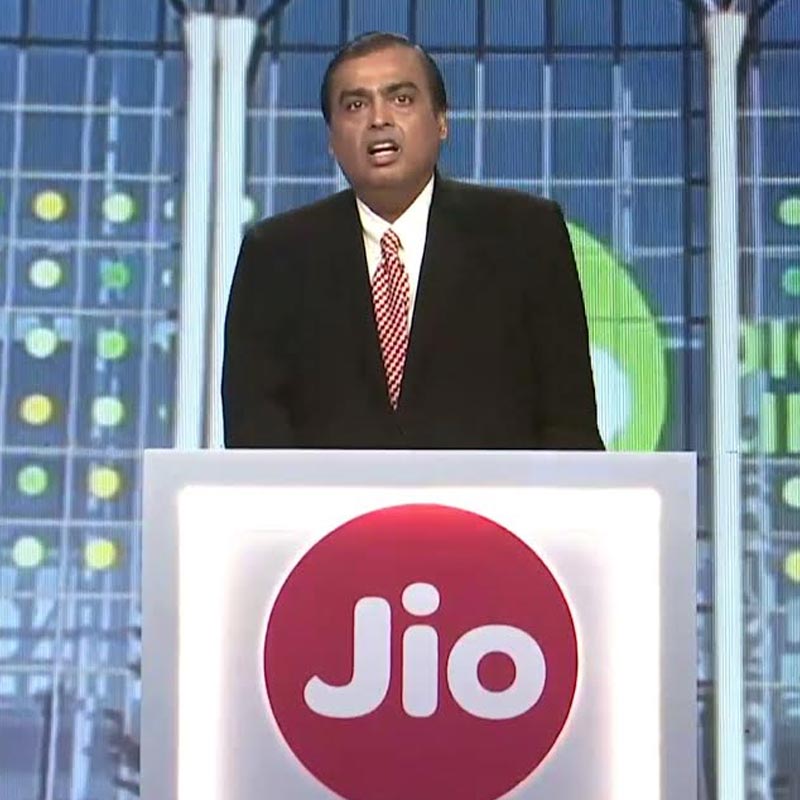
    MUMBAI: Loss of revenue on account of competitive pressure catalysed by the extension of Mukesh Ambani-led Reliance Jio free services and demonetisation may cumulatively affect telcos by 5-7 per cent.

    RJio recently announced an extension of its free services till 31 March, 2017. Speaking on the impact on the Indian telecom industry, ICRA Limited Associate Head – Corporate Ratings Harsh Jagnani, said: “At a time when the industry is already facing pressures on the operating metrics, owing to heightened competition, the extension of free services by RJio is expected to further push down the realisations in both the voice and the data segments. The impact is expected to be exacerbated by demonetisation of the higher denomination currency, which can lead to revenue loss of the telcos, especially in the pre-paid segment.”

    RJio, which launched its services in September 2016 with free voice calling along with lifetime free roaming, provided free unlimited data and a bouquet of mobile applications free till 31 December, 2016, as part of the inaugural offer. Recently, the company announced an extension of its free services till 31 March, 2017.

    The tariffs proposed, apart from being disruptive, are not looking at pricing voice and data separately, instead, it is seeing a subscriber holistically and offering bundled packages. The highlight is to develop a market with deep penetration and high consumption, especially for data, thereby targeting high average revenue per user (ARPU) subscribers.

    Apart from attractive pricing, other factors which can help RJio build a sizeable subscriber base are – (a) a big bang launch with a novelty factor, (b) a fresh network which gives good service, (c) a strong device ecosystem, and (d) a wide bouquet of content. These can translate into rapid subscriber additions, which would intensify the competition in the sector and increase the subscriber acquisition/retention costs for other operators. Nevertheless, the extent of subscriber addition and service quality delivered by RJio, its pricing strategies in the longer term, and the response by other operators remain watch events for the industry.

    ICRA is of the opinion that increasingly the industry would migrate from the revenue per minute (RPM) or the average revenue per megabyte (ARMB) approach to ARPU-based approach.

    “At a time when the industry is reeling under a Rs. 4,25,000-crore debt, this extension of free services by RJio has added to the industry’s woes. Heightened competitive pressures would impact the performance of the telcos during the next two quarters i.e. Q3 and Q4 of FY2017. Revenue loss, owing to demonetisation and pressure on operating metrics due to competitive pressures, intensified by extension of free services by RJio, are expected to negatively impact the revenue of the industry by 5-7% during the next two quarters,” Jagnani reiterated.