Tag: Telco

  • Jio signs up 16 million 4G  subs; target, 100 million

    Jio signs up 16 million 4G subs; target, 100 million

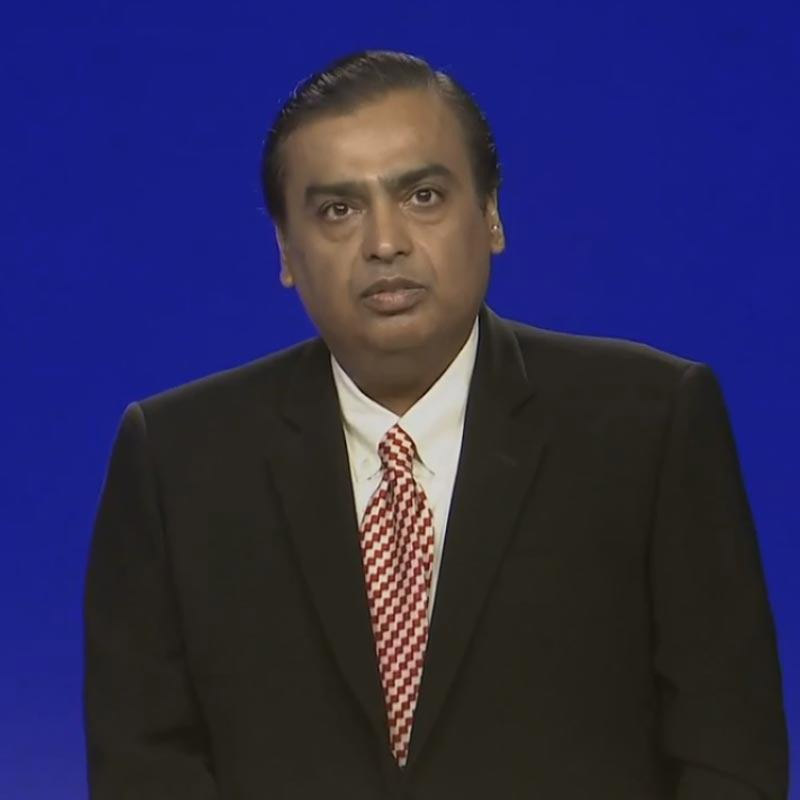
    MUMBAI: Think Big. Think Global. That’s been the motto of Reliance Industries chairman Mukesh Ambani. And, now the world’s biggest start-up Reliance Jio Infocomm Ltd. (Jio) — which he has been incubating for more than half a decade — has announced that it has achieved a global first.

    The number of registered sign-ups Jio has achieved in the first month of its 4G commercial launch – September 2016 — has crossed 16 million. That’s a faster adoption rate than that achieved by any telco or any start-up like Facebook, WhatsApp and Skype.

    And, of course, Ambani is pleased as punch by the consumer response. Said he in a press release: “We are delighted and humbled by the overwhelming response across India to the Jio Welcome Offer. Jio is built to empower every Indian with the power of data. We are delighted that people have recognized this and are utilizing our services to the fullest. We are customer-obsessed and committed to improve every day to exceed expectations of our customers.”

    Observers say Jio’s subscriber number could have been higher had Ambani and Jio managed to not run into a wall with older competitors like Airtel, Vodafone, Idea. Jio – which has made calls free – reported humungous amount of call failures because its rivals disallowed call connections by the newbie’s users.

    Jio is looking to disrupt the entire Indian telecom ecosystem. While all Indian telcos charge for calls, Jio announced that it would not be charging for calls made using its network. And it announced cheaper data plans than rivals. It has been running its Jio Welcome Offer wherein all its services – including data and apps – are free for customers until 31 December 2016. Last week, it announced an offer for iPhone users wherein buyers of the 7, the 7 Plus, the 6, the 6 Plus, 6S, 6S Plus, and the 5SE would not be charged for data and services for 12 months.

    To top it all, Jio has introduced Aadhaar-based paper-less Jio SIM activation across 3,100 cities and towns. This enables the customer to complete the SIM activation process in a matter of minutes, with only his/her Aadhaar number.

    The press release states that the “this process will be extended across the country and fully stabilized for satisfactory on-boarding experience in the next few weeks.”

    Ambani announced at the company’s AGM at the beginning of this month that Jio had set its ambitions high. His goal was to have 100 million subscribers to its services within a year.

    Rivals have been scrambling to ward off the Jio onslaught, dropping prices for data and bandwidth, as well as offering value added services at promotional rates.

    The overall Indian telecom sector has been seeing shifts too. According to the latest telecom data up to 31 July 2016, the wireless telecom subscriber base shrank to 1034.2 million as against 1035.1 million in end June. Amongst the big losers in the month were Reliance Communications which shed 32.4 lakh customers, and Tata Teleservices and Sistema lost 6,96,325 and 2,28,626 subscribers.

    Bharti Airtel led in the gainers table, adding a net 10.7 lakh new customers, taking its total sub base to 256.8 million, whereas Vodafone added 326,248 to take its tally to 199.7 million. Idea signed up 256,170 users taking its final number to 176.4 million.

    With Jio expected to spread out its availability further in the coming months, observers are expecting the battles to continue.

  • Jio signs up 16 million 4G  subs; target, 100 million

    Jio signs up 16 million 4G subs; target, 100 million

    MUMBAI: Think Big. Think Global. That’s been the motto of Reliance Industries chairman Mukesh Ambani. And, now the world’s biggest start-up Reliance Jio Infocomm Ltd. (Jio) — which he has been incubating for more than half a decade — has announced that it has achieved a global first.

    The number of registered sign-ups Jio has achieved in the first month of its 4G commercial launch – September 2016 — has crossed 16 million. That’s a faster adoption rate than that achieved by any telco or any start-up like Facebook, WhatsApp and Skype.

    And, of course, Ambani is pleased as punch by the consumer response. Said he in a press release: “We are delighted and humbled by the overwhelming response across India to the Jio Welcome Offer. Jio is built to empower every Indian with the power of data. We are delighted that people have recognized this and are utilizing our services to the fullest. We are customer-obsessed and committed to improve every day to exceed expectations of our customers.”

    Observers say Jio’s subscriber number could have been higher had Ambani and Jio managed to not run into a wall with older competitors like Airtel, Vodafone, Idea. Jio – which has made calls free – reported humungous amount of call failures because its rivals disallowed call connections by the newbie’s users.

    Jio is looking to disrupt the entire Indian telecom ecosystem. While all Indian telcos charge for calls, Jio announced that it would not be charging for calls made using its network. And it announced cheaper data plans than rivals. It has been running its Jio Welcome Offer wherein all its services – including data and apps – are free for customers until 31 December 2016. Last week, it announced an offer for iPhone users wherein buyers of the 7, the 7 Plus, the 6, the 6 Plus, 6S, 6S Plus, and the 5SE would not be charged for data and services for 12 months.

    To top it all, Jio has introduced Aadhaar-based paper-less Jio SIM activation across 3,100 cities and towns. This enables the customer to complete the SIM activation process in a matter of minutes, with only his/her Aadhaar number.

    The press release states that the “this process will be extended across the country and fully stabilized for satisfactory on-boarding experience in the next few weeks.”

    Ambani announced at the company’s AGM at the beginning of this month that Jio had set its ambitions high. His goal was to have 100 million subscribers to its services within a year.

    Rivals have been scrambling to ward off the Jio onslaught, dropping prices for data and bandwidth, as well as offering value added services at promotional rates.

    The overall Indian telecom sector has been seeing shifts too. According to the latest telecom data up to 31 July 2016, the wireless telecom subscriber base shrank to 1034.2 million as against 1035.1 million in end June. Amongst the big losers in the month were Reliance Communications which shed 32.4 lakh customers, and Tata Teleservices and Sistema lost 6,96,325 and 2,28,626 subscribers.

    Bharti Airtel led in the gainers table, adding a net 10.7 lakh new customers, taking its total sub base to 256.8 million, whereas Vodafone added 326,248 to take its tally to 199.7 million. Idea signed up 256,170 users taking its final number to 176.4 million.

    With Jio expected to spread out its availability further in the coming months, observers are expecting the battles to continue.
  • Ditto TV sees more demand for regional content

    Ditto TV sees more demand for regional content

    MUMBAI: With an aim to be the default app on every internet enabled smartphone in India for content delivery, Zee’s dittoTV seems to have got its marketing pitch correct with #BeeskaTV and #DeshkaTV campaign.

    Poised to clock an annual revenue of Rs 150 crore (according to a media analyst) from a base of approximately six million installs (downloads), mostly in the Hindi speaking markets (HSM), the OTT service is attracting audience from a segment that is still growing in India.

    “We have received a phenomenal response across all our platforms— six million installs and counting! The viewers loved our television commercial and we trended at no. 3 worldwide on Youtube when the campaign went live,” gushed dittoTV business head Archana Anand.

    #BeeskaTV and #DeshkaTV were among the top 10 Twitter trends worldwide, according to Anand who added that the the dittoTV app trended at #1 in the entertainment category in both the Android and iOS app stores.

    With an aim to build on this trending success and further enhance penetration, the digital platform has tied up with sister company Siticable, which is one of the oldest and largest MSOs in the country. Both come from the Subhash Chandra and family-promoted Essel group.

    As part of this collaboration, Siticable will be pushing the authentication and subscription to dittoTV from its portal to the subscribers of its cable TV service for free. The cable TV service will share 20 per cent as revenue for every ditto TV subscription that the operator sells.

    dittoTV subscription charges for three months, six months and one year are Rs 50, Rs 90 and Rs 170, respectively.

    “They say well begun is half done. By that theory, we are in an extremely good position. With the new alliance rolling out and the masses sharing the phenomena of #BeeskaTV, we see the start of a fun and exciting journey,” Anand explained, adding a strong uptake is also reflected on the service’s usage and good content consumption.

    Anand and her team are working on getting new business partnership for the platform and some alliances are said to be in the pipeline, which were not disclosed.

    The platform credits its success to a combination of factors: width and depth of content and its incredible pricing. dittoTV offers access to over 100+ Hindi, English and regional-language channels encompassing general entertainment, sports, movies, news and lifestyle at just Rs 20 a month.

    What worked best on Indian television (general entertainment) seems to have mirrored on the OTT service too as GECs were key drivers of dittoTV, followed by regional and news channels.

    “Regional language content performs superbly across all our platforms and is rising steadily,” opined Anand claiming that regional viewer is also a `returning viewer’ and spends higher time compared to the platform average.

    “On certain days, we’ve actually seen higher consumption for certain regional GECs as compared to key Hindi GECs. Sports and News are very event based and do extremely well for us in bursts when there is a sporting event or breaking news,” Anand said.

    The average view time on the platform has been up to 24 minutes per user. What the reason? Events like cricket (the West Indies vs. India series) and the bundling of dittoTV with data packs with telcos like Idea Cellular have contributed to this substantially.

    dittoTV has deliberately positioned itself differently from other similar players in the markets like HotStar, Sony Liv and Voot as they follow a simple and clear strategy of providing live content similar to what is available on television.

    An aggressive pricing strategy notwithstanding, dittoTV is still far away from replacing cable TV or DTH from consumer homes as a primary source of video consumption, but Anand is upbeat.

    “TV is synonymous with entertainment for the Indian masses and dittoTV being a linear TV offering remains synonymous with TV. I strongly believe that our platform will be a game changer and will help us drive volumes as well as change the way people consume content on-the-go,” she concluded.

  • Ditto TV sees more demand for regional content

    Ditto TV sees more demand for regional content

    MUMBAI: With an aim to be the default app on every internet enabled smartphone in India for content delivery, Zee’s dittoTV seems to have got its marketing pitch correct with #BeeskaTV and #DeshkaTV campaign.

    Poised to clock an annual revenue of Rs 150 crore (according to a media analyst) from a base of approximately six million installs (downloads), mostly in the Hindi speaking markets (HSM), the OTT service is attracting audience from a segment that is still growing in India.

    “We have received a phenomenal response across all our platforms— six million installs and counting! The viewers loved our television commercial and we trended at no. 3 worldwide on Youtube when the campaign went live,” gushed dittoTV business head Archana Anand.

    #BeeskaTV and #DeshkaTV were among the top 10 Twitter trends worldwide, according to Anand who added that the the dittoTV app trended at #1 in the entertainment category in both the Android and iOS app stores.

    With an aim to build on this trending success and further enhance penetration, the digital platform has tied up with sister company Siticable, which is one of the oldest and largest MSOs in the country. Both come from the Subhash Chandra and family-promoted Essel group.

    As part of this collaboration, Siticable will be pushing the authentication and subscription to dittoTV from its portal to the subscribers of its cable TV service for free. The cable TV service will share 20 per cent as revenue for every ditto TV subscription that the operator sells.

    dittoTV subscription charges for three months, six months and one year are Rs 50, Rs 90 and Rs 170, respectively.

    “They say well begun is half done. By that theory, we are in an extremely good position. With the new alliance rolling out and the masses sharing the phenomena of #BeeskaTV, we see the start of a fun and exciting journey,” Anand explained, adding a strong uptake is also reflected on the service’s usage and good content consumption.

    Anand and her team are working on getting new business partnership for the platform and some alliances are said to be in the pipeline, which were not disclosed.

    The platform credits its success to a combination of factors: width and depth of content and its incredible pricing. dittoTV offers access to over 100+ Hindi, English and regional-language channels encompassing general entertainment, sports, movies, news and lifestyle at just Rs 20 a month.

    What worked best on Indian television (general entertainment) seems to have mirrored on the OTT service too as GECs were key drivers of dittoTV, followed by regional and news channels.

    “Regional language content performs superbly across all our platforms and is rising steadily,” opined Anand claiming that regional viewer is also a `returning viewer’ and spends higher time compared to the platform average.

    “On certain days, we’ve actually seen higher consumption for certain regional GECs as compared to key Hindi GECs. Sports and News are very event based and do extremely well for us in bursts when there is a sporting event or breaking news,” Anand said.

    The average view time on the platform has been up to 24 minutes per user. What the reason? Events like cricket (the West Indies vs. India series) and the bundling of dittoTV with data packs with telcos like Idea Cellular have contributed to this substantially.

    dittoTV has deliberately positioned itself differently from other similar players in the markets like HotStar, Sony Liv and Voot as they follow a simple and clear strategy of providing live content similar to what is available on television.

    An aggressive pricing strategy notwithstanding, dittoTV is still far away from replacing cable TV or DTH from consumer homes as a primary source of video consumption, but Anand is upbeat.

    “TV is synonymous with entertainment for the Indian masses and dittoTV being a linear TV offering remains synonymous with TV. I strongly believe that our platform will be a game changer and will help us drive volumes as well as change the way people consume content on-the-go,” she concluded.

  • Multi channel communications continue to grow in India: Avaya

    Multi channel communications continue to grow in India: Avaya

    MUMBAI: Avaya, a global provider of enterprise communications systems, software and services has announced the latest findings of the Avaya Asia Pacific Customer Experience Index.


    The Index revealed continuous preference by Indian consumers for multichannel communications in customer service, with video emerging as a new customer service channel, and mobile (text messages, instant messaging platforms) as well as online (including website chat, video chat, social media) continuing to grow and deliver great customer satisfaction scores.


    Customer service remains a key influencer of brand loyalty, with 75 per cent indicating they would avoid buying from a company, and more importantly, actively advise friends and family to do the same if they experienced bad customer service. The potential for business generation from satisfied customers is great, with approximately two in every three consumers from India prepared to pay more money to a company that provides them with excellent customer service (69 per cent) with the majority of those being willing to pay at least 10-20 per cent more. This is a trend that is set to continue, as Gen Y is more inclined towards it than mature consumers. 72 per cent of those surveyed also indicated a preference for multichannel communications – demonstrating that companies now more than ever must have a fully integrated end to end multichannel customer experience strategy.


    While in-person communication (71 per cent) and phone conversations (76 per cent) continue to lead in terms of interaction volumes, 2013 saw a continuous increase in preference and adoption of mobile and online channels. An average of 4.6 channels are used by consumers when interacting with organisations.


    The Avaya Asia Pacific Customer Experience Index also points to opportunities for the Telco, Media or Utility industry segments to engage customers at various touch points, with highest utilisation averaging 5.4 channels. While the Telco, Media or Utility industry leads in mobile and online adoption, the Health, Government and Education sector is the strongest in face to face as a channel for communication.


    Despite being a relatively new channel, with an average of 14 per cent users say they have engaged in a service interaction through video in the last three months, the adoption of video chat is on the rise, especially in the finance, banking and insurance sector. Indonesia (41 per cent) and Thailand (29 per cent) lead in the adoption of video as a customer service channel. The rate of adoption of video is expected to grow across the board in 2014 by around 14 percent according to the survey. The main reasons for choosing video chat were virtual face to face interaction with the customer service representative (33 per cent), ease of use (21 per cent) and cost effectiveness (20 per cent).


    Crucially, consumers who have used video chat rate their experience very positively, 46 per cent mention that they are ‘very happy’ with the experience and over three quarters (76 per cent) agree that they would use it again if it were offered.


    An average of 68 per cent of customers across India agreed that service received from customer service centers has improved over the last 12 months. This is higher than the APAC average across the seven countries in the study which stands at 60 percent.


    Given the very evident desire among customers for multichannel communication, businesses must have the right capabilities to collaborate across platforms and agents to provide seamless, quality service regardless of contact points. As the adoption of service channels like mobile, online and video continues to rise, technology solutions that help manage these channels and provide customers with the seamless and ever-improving experience they demand are critical.


    According to Frost & Sullivan 2012 Asia Pacific Contact Center Market Report , the Asia Pacific contact center industry remains as the fastest growing region for contact center services, growing at 8.4 percent. Alongside fast and high growth, this presents businesses with the opportunity to take customer service to the next level – and deliver quality service at every contact.


    “The importance of multichannel communication continues to grow, with the Avaya Asia Pacific Customer Experience Index results highlighting the potential and importance of channels including mobile, online and video. 70 per cent of the people indicated a preference for multichannel communications – demonstrating that companies now more than ever must have a fully integrated end to end multichannel customer experience strategy. Video is also clearly starting to represent a significant opportunity for customer service differentiation. The Index makes compelling reading for anyone focused on driving a proactive Customer Experience Management strategy in India,” saysAvaya, India and SAARC contact center sales director Johnson Varkey.


    This is the sixth year of the Avaya Asia Pacific Customer Experience Index (formerly ‘Avaya Asia Pacific Contact Center Consumer Index’). In 2013, over 2,400 consumers from across the Asia Pacific region, located in Singapore, Japan, Australia, Indonesia, Thailand, Philippines and India, who were recent users of contact centers, were surveyed from August to September 2013.

  • Airtel announces strategic tie-up with Microsoft

    Airtel announces strategic tie-up with Microsoft

    Airtel announces strategic tie-up with Microsoft – Becomes first Telco to offer Microsoft’s latest Windows Mobile 5.0 technology in India

    · Strategic partnership with Microsoft to reinforce & strengthen Airtel’s innovation charter
    · Airtel enhances its business solutions portfolio with Microsoft Windows Mobile 5.0 – a powerful platform that delivers a comprehensive mobile experience beyond just email
    · Familiar MS Windows user interface big advantage for users
    · A huge opportunity with a large enterprise segment running predominantly on the MS Exchange server
    · An estimated 4 million SMEs potential users

    New Delhi, August 21, 2006: Reinforcing its commitment to innovation, Bharti Airtel, India’s leading telecom services provider, today announced a strategic tie up with Microsoft. This partnership is expected to deliver great value to all Airtel customers spanning mobile, landline and Broadband services.

    Today, Airtel and Microsoft launched Microsoft’s Windows Mobile 5.0 platform that provides an opportunity to all Airtel customers to access corporate email via direct push technology. Airtel becomes the first operator in India to offer this technology to its customers. The service will deliver
    powerful business applications and multimedia experience to all Enterprise and SME customers across India.

    Airtel’s tie up with Microsoft is part of its strategic innovation strategy that has been the cornerstone of the company’s objective to redefine the telecom experience of its 25 million plus customers. The tie-up also comes close on the heels of India’s first ever comprehensive ‘Service Delivery Platform’ that was recently announced by Airtel.

    Speaking on the occasion, Mr. Manoj Kohli, President, Bharti Airtel Ltd., said “Our partnership with Microsoft reinforces and strengthens our commitment to innovation. This is a great beginning for two leaders in the industry to come together and forge a strategic partnership with a single
    minded focus of providing value to the end user. It has always been our aim to be a step ahead of customer expectation and this alliance will further help us achieve this objective and consolidate our leadership position.”

    The Microsoft’s Windows Mobile 5.0 platform offers a host of applications, with a never-before ease of use. All Airtel users will now have access to MS office (Outlook, Word, Excel, Powerpoint, Internet Explorer), multi-mediafunctionality (camera, MP3, video recording) and Line of Business applications like Sales Force Automation on their mobile phones. With this latest innovative offering, Airtel has significantly enhanced its business solutions portfolio.

    Elaborating on Microsoft’s value proposition for customers, Ravi Venkatesan, Chairman, Microsoft India, said, “The launch of Windows Mobile 5.0 is in line with our stated vision of creating People Ready Businesses. Microsoft believes that people are the most critical asset of any business and empowering them with the right software is an imperative to deliver greater business value. Windows Mobile 5.0 is the perfect solution for the global mobile workforce to work in an always on environment and better organize their work and personal lives.”

    “The alliance with Bharti Airtel reflects the synergy between two industry leaders, both focused at innovating to help individuals realize their true potential. With this association Bharti Airtel thus joins 115 existing mobile operators who currently offer the Windows Mobile solution worldwide,”
    he further added

    This platform is viable for broader adoption by enterprise customers as a large number of such organizations in India use MS Exchange as their core platform for mail applications within their enterprise. Windows Mobile 5.0 is seamlessly integrated with MS Exchange server 2003. In addition, it does not require additional middleware or servers and offers a cost effective e-mail push environment.

    This tie-up also gives Airtel the opportunity to tap into the estimated 4 million SME market share in India. With anytime access to MS Office, it offers a compelling proposition to users from these segments that are constantly on the move. Microsoft Windows Mobile 5.0 will be available to Airtel customers on the latest HP I-Paq and I-Mate handsets. Airtel enterprise customers will
    also get the benefit of preferential hand-set pricing. A dedicated after-sales support, owing to the back to back SLA with all its partners, ensures uninterrupted services exclusively for Airtel’s customers.

    About Bharti Airtel Ltd.

    Bharti Airtel Limited is one of India’s leading private sector providers of telecommunications services with an aggregate of 25.89 million customers as of end of July‘06, consisting of 24.34 million mobile customers. Bharti Airtel has been being ranked among the top 10 best performing companies in the world in the BusinessWeek IT 100 list. The company was the first private operator to provide mobile services in all the 23 circles in India. The company also provides telephone services and Internet access over DSL in 92 cities. The company complements its mobile, broadband & telephone services with national and international long distance services. The company also has a submarine cable landing station at Chennai, which connects the submarine
    cable (owned by an associate company) connecting Chennai and Singapore. The company is a part of the consortium, which jointly owns and has developed the next generation undersea cable system SEA-ME-WE-4. The company provides reliable end-to-end data and enterprise services to the corporate customers by leveraging its nationwide fiber optic backbone, last mile connectivity
    in fixed-line and mobile circles, VSATs, ISP and international bandwidth access through the gateways and landing station. For more information, visit http://www.bhartiairtel.in

    About Microsoft
    Founded in 1975, Microsoft (NASDAQ “MSFT”) is the worldwide leader in software for personal and business computing. The company offers a wide range of products and services designed to empower people through great software-any time, any place and on any device. Microsoft has been in India since 1990 and employs over 4000 people across its offices in New Delhi, Mumbai, Bangalore, Calcutta, Chennai, Hyderabad and Pune.