Tag: Telco

  • Wavemaker India names Vishal Jacob as chief transformation officer

    Wavemaker India names Vishal Jacob as chief transformation officer

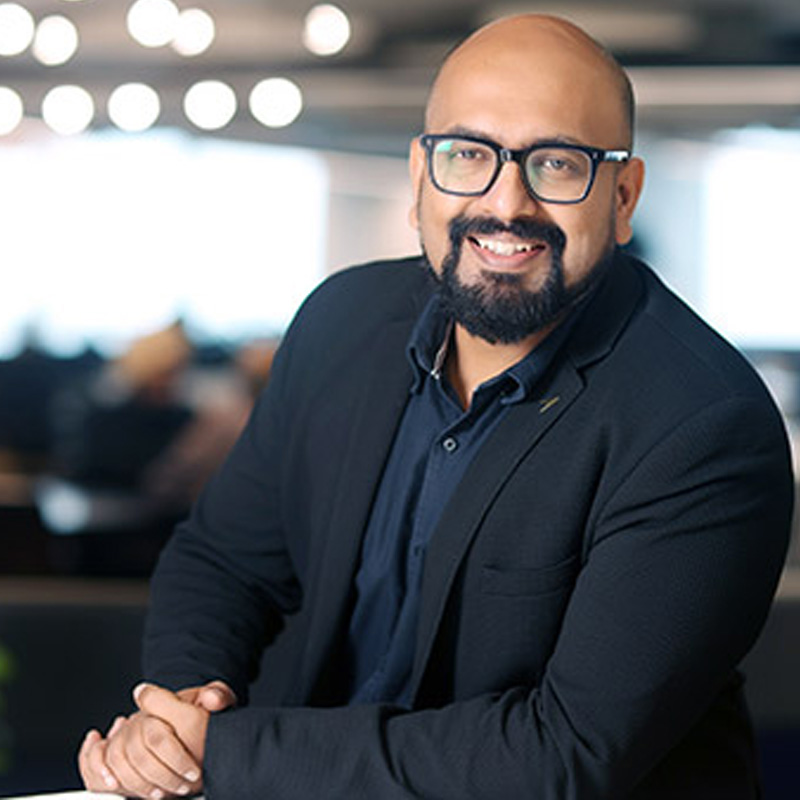
    Mumbai: GroupM’s media agency Wavemaker India on Tuesday announced Vishal Jacob as the chief transformation officer. Vishal will take on the additional responsibility in addition to his existing role as chief digital officer.

    In this extended role, Vishal will work with office heads and business leaders to structure and create diverse skill sets within business teams to manage current and future business requirements. He will also work along with practice leads to break silos and create more cross-functional teams to deliver unified solutions to clients, one of Wavemaker’s key focus areas. Vishal will also work on strengthening existing capabilities beyond digital and incubating new ones that will make Wavemaker’s future ready for the challenges.

    Wavemaker South Asia CEO Ajay Gupte said, “The environment around us is rapidly changing, and we need to continuously upskill ourselves to lead this change so that we continue to provide unique and innovative solutions for our clients. With Vishal taking over the additional responsibility of transformation, we will be better placed to craft customised strategic initiatives, particularly related to digitalization and driving company culture.”

    Speaking on this new role, Vishal Jacob said, “Consumer behaviour and the media landscape are forever evolving. Embracing these changes through a culture of agility becomes critical for success. Driving this transformation at an organisational level is highly challenging yet very exciting, and I am looking forward to it.”

    Vishal started his digital journey with GroupM in 2005. He has led and assisted clients across industries (auto, FMCG, telco, media, and retail) in their digital transformation journey, hinging it on creating a connected ecosystem of paid, owned, and earned properties. Vishal has also authored a book called “Connecting with Yourself: Why we Think, Feel, and Act the Way We Do.” He is a certified coach from ICF with further specialisation in transactional analysis and NLP, and he continues to nurture and coach talent to prepare them for leadership roles.

  • Eros Digital COO Ali Hussein on international partnerships for distribution & subscription

    Eros Digital COO Ali Hussein on international partnerships for distribution & subscription

    MUMBAI: As distribution plays a crucial role along with content for the business of over-the-top (OTT) platforms, Eros Now is betting big on partnerships in international markets to expand its reach in international markets. After recently striking deals with Vodafone Qatar and China’s WASU Media, the streaming player is also looking at such other partnerships. Although India definitely remains a large focus of the business, the company is trying to strengthen international distribution also.

    Talking to Indiantelevison.com, Eros Digital chief operating officer Ali Hussein spoke about the objective of the partnerships. He emphasised on the importance of two of the partnerships as both the countries are very important for the company.

    “We did an announcement for WASU in China which was our second partnership there. So, I don’t think any Indian OTTs really have any distribution partnership in China where we already have two. Moreover, China is doing a lot of investment in terms of market development on how to increase the further distribution of Indian programming or Indian content around the world. China is obviously a big market in terms of theatrical releases also and we are investing lots of resources trying to improve our digital distribution in China,” he commented.

    Talking about the Vodafone Qatar partnership, he noted that the Middle East is a focus area for the company. The company would try to penetrate better in the UAE and now in Qatar with the partnership along with Bahrain and some of the other countries.

    Hussein added that each market is unique in itself when it comes to content strategy thus requiring multiple strategies based on the market with localised approach like dubbing, subtitling, etc. Along with that, marketing is another area to get subscribers in conjunction with its partners also.

    Interestingly, these markets have two kinds of audience as Hussein shared. The Indian audience and South Asian audience  are watching a lot of South Asian content but it is some of the local audience watching Bollywood films. He also added that each market has a very different objective with different understanding of the audience behaviour. According to him, curating customer journeys, marketing the product and localisation of the product are also important factors.

    “Direct subscription we are doing anyway. This kind of telco partnership helps because they have the billing relationship with consumers. They are very accurate in customer profiling. As Telcos are more accurate in what is the type of customers looking to watch what kind of content, customer targeting is better done through these partnerships. So, I think both these efforts continue to go ahead hand in hand. We don’t segregate, it’s just different means of how do you acquire customers,” he commented.

    A recent KPMG report noted that telco partnerships contributed 30-35 per cent to the overall subscription revenues of OTT platforms in FY19. The report also added that although a majority of the subscription revenues are expected to come from direct subscriptions, the revenue from telco partnerships is also expected to achieve a robust growth, although slower as compared to direct subscriptions.

    “Our maximum growth actually has been coming from beyond the top eight cities. Some of our originals are also garnering a large amount of viewership from beyond the top six or eight cities. Actually, the number from metros is quite high but if you look at the growth percentage from tier-II, tier-III cities, that has been maximum for us,” Hussein commented on the subscriber growth of the platform.

    “Although user engagement also has a lot to do with the quality of network and quality of services, our time spent in terms of retention has gone north up of 75 minutes for most active users. A lot of original launches contribute to longer sessions. In general, we have seen a significant increase in time spent. For long-form episodic content, the company is trying to hit one original a month in the second half of the year,” he added.

    The company is now looking at the interactive video area. Other key areas the company is focusing on are Eros Now Quickies and short films.

  • Digital segment projected to reach Rs 386 billion by FY22: KPMG

    Digital segment projected to reach Rs 386 billion by FY22: KPMG

    MUMBAI: The digital segment of the India media and entertainment industry is projected to reach Rs 386 billion by FY22 from Rs 173 billion in FY19. The burgeoning sector is set to overtake print media and be behind TV within the same period, according to India’s Digital Future, a report by KPMG. By FY24, the digital market will be half that of TV in the Indian economy.

    Moreover, advertising growth will also be driven by the digital billion with close to 580 million OTT consumers by FY24. The report also added that with the proposed third party digital measurement systems coming into place in India over the next 12 months, the CPMs are also likely to see some growth from FY21 onwards, contributing to the overall growth of the segment. As per the report, video ads on OTT platforms are likely to constitute the bulk of the segment revenues.

    On the other hand, the revenue from OTT digital video is expected to reach 129 billion by FY22. While Indian OTT market’s revenue will continue to be dominated by advertising, the direct subscriber base in India will rise to as much as 55-65 million by FY24, driven by the availability of high quality content curated for different audiences.

    While the subscription revenues registered a nearly 3x increase in FY19, totalling Rs 12 billion, direct subscriptions contributed around 65-70 per cent and the rest were realisations from telco partnerships. Despite the growth of direct subscriptions, the revenue from telco partnerships is also expected to achieve robust growth, although slower as compared to direct subscriptions.

    The digital consumers have also been divided into four categories. The digital sophisticates who consume global content and tent-pole, original Indian programming tailored for the urban audience, typically behind a paywall in English and Hindi. The second is digital enthusiasts who will watch mainly Indian narratives in Hindi and regional languages and some pockets of English. The third is digital mainstream who are looking for free content available online or bundled plans through telcos and other distribution platforms and the last is fringe users who will have sporadic digital access on account of either poor connectivity or irregular income.

    On the course of digital segment evolution, technology and associated tools such as artificial intelligence will provide much needed direction around decisions relating to content creation, distribution and monetisation for digital businesses. It has also been pointed out that micro-segmentation of target markets in an increasingly upwardly mobile economy would be essential for effective monetisation.

  • IAMAI requests TRAI to recognise OTT services as “digital applications”

    IAMAI requests TRAI to recognise OTT services as “digital applications”

    MUMBAI: The Internet and Mobile Association of India (IAMAI) has reiterated that the term over-the-top (OTT) does not justify the innovation in the digital applications at the application layer. In its submission on counter comments to the OTT communication services consultation paper by industry body Telecom Regulatory Authority of India (TRAI) it has asked the regulator to recognise OTT communication services as ‘digital applications’.

    “Using the terminology of OTT paints digital applications as free-riding over telecom networks, as they are accessible to all users with internet service without any arrangements / agreements with TSPs. Using the internet to offer services to consumers does not amount to free-riding, as consumers pay TSPs for the data that they use,” IAMAI said.

    The industry body has also added that digital applications provide different services with diverse functionalities that do not merely replicate legacy telecom services. It has also noted that the use of the term “over the top” tries to equate the services while differentiating the mode of their accessibility. According to IAMAI, the services provided by digital service providers in the areas of communication, e-commerce, news, social media etc., do not provide substitutable services.

    While submitting comments on the OTT consultation paper, some of the telecom operators and COAI sought to qualify the services provided by some of the digital applications to be similar or substitutes for telecom services. IAMAI is of the view that digital applications are qualitatively very different from telecom services.

    “Identifying Rich Interaction Applications (“RIAs”) as comparable to telecom services is highly reductionist and unjustified. Moreover, digital applications are not available to those telecom subscribers who do not have access to the internet. While internet penetration in India is increasing with the rapid adoption of smartphones, this number is still a very small percentage of the Indian population. On the other hand, users can access telecom services without internet access or even smartphones,” it commented.

    Some of the stakeholders also spoke about the regulatory gap between ISPs and digital application providers. In response to that, IAMAI has said that the digital applications are duly governed by the IT Act under the Ministry of Electronics and Information Technology. It added that any new regulations under a different regulatory authority will only convolute the existing regulatory regime and adversely affect the ease of doing business in the country.

    “The argument of “same services same rules” was laid to rest in previous TRAI consultations on the matter. TSPs, with access to scarce national resources like spectrum and having restrictive access over physical infrastructures cannot possibly be compared to services being provided at the application layer, and any discussion of regulatory imbalance between the two would be comparing apples with oranges,” it highlighted.

    IAMAI thinks all arguments of service or functional substitution by the telcos ultimately stem from a narrow perception of revenue substitution. In this context, it has highlighted that earlier some telcos acknowledged that the rise of digital applications has actually led to a rise in data revenues for these service providers.

    “IAMAI would like to request the authority not to encourage TSPs to cherry-pick digital applications that help raise their revenues while choose to clamp down those they perceive as a threat for their revenues. Regulations should be based on principles and using regulations as restrictive tools for protecting business interests is a myopic outlook that harms the greater interest of the nation at large,” it commented.

  • JioCinema, Disney India strike content partnership

    JioCinema, Disney India strike content partnership

    MUMBAI: That latest OTT partnership is that of JioCinema, a digital app from Reliance Industries Ltd (RIL) with Disney India. Under the partnership, the app will host a dedicated Disney branded section on the homepage for the first time ever. Jio users now will get access to stories from the biggest brands in storytelling including Disney, Pixar, Marvel, and Lucas Film.

    Along with these famous stories, Jio users will be able to access a large number of international as well as locally created content through this association. Moreover, the app also brings in a unique character customisation option where fans can choose from their favourite Disney, Marvel, Pixar or Star Wars character such as Mickey Mouse, Captain America, and Lightening McQueen and browse the entire range of content available on that character.

    Kids will definitely enjoy JioCinema more than ever as it is now home to heart-warming stories of Disney like The Jungle Book, The Lion King and the ever-so-popular tales of Disney Princesses like Cinderella, Snow White and the Seven Dwarfs, Sleeping Beauty and more. Even superhero fans are in for a treat with movies like Iron Man, Captain America: The First Avenger, Thor along with animated series such as Guardians of the Galaxy, Avengers Assemble.

    It is obvious that the partnership will increase the width of content on the platform enormously. All telco players are increasing their content play by striking deals with large content creators as well as by investing in original content.

  • Airtel partners Bengali OTT platform Hoichoi

    Airtel partners Bengali OTT platform Hoichoi

    MUMBAI: Hoichoi, the over-the-top platform exclusively for Bengali content, has entered into a partnership with leading telco player Bharti Airtel. The former’s exclusive content will be available now on the Airtel TV app following the partnership.

    Hoichoi’s library includes original shows as well as chartbuster movies. After completing one year since its launch, the company recently announced 30 original shows and 12 original films for the next one year. This entire originals catalogue will also come to Airtel TV.

    “It gives us immense pleasure to announce this partnership with Bharti Airtel to offer complete digital entertainment experience to their customers. This will help us in extending our content distribution network through Airtel TV’s fast-growing user base,” Hoichoi co-founder Vishnu Mohta said.

    Moreover, some of their original shows like Hello, Byomkesh, Dupur Thakurpo, Cartoon, Mismatch and Charitraheen are dubbed in Hindi and Tamil to reach out to a wider audience base. As the platform claims, two leading shows Hello and Byomkesh are also performing extremely well on the Airtel TV app.

    “We are delighted to bring Hoichoi’s quality content to Airtel TV that will offer our Bengali users access to their favourite digital content in their local language, with a simple click of a button. With consumption of regional content going up significantly, we will continue to focus on adding diverse entertainment content to our kitty as we work towards building a world-class digital content ecosystem,”  Bharti Airtel West Bengal and Orissa CEO Sameer Anjaria commented on the partnership.

  • DoT moves Supreme Court to secure dues worth Rs 33,000 cr

    DoT moves Supreme Court to secure dues worth Rs 33,000 cr

    MUMBAI: A recent move from the Department of telecommunications (DoT) may push telecom players in the country deeper into trouble. According to a report from Economic Times, DoT has moved the Supreme Court for approval to secure dues worth almost Rs 33,000 crore from all operators. The department in favour of the move has argued that existing bank guarantees aren’t enough to cover the “huge public money” at stake.
    According to the report, DoT(http://www.indiantelevision.com/regulators/trai/trai-stands-up-to-dot-on-use-of-foreign-satellites-for-comms-services-on-aircrafts-180605) filed two petitions pleading the court to ensure that the “government’s interests are secured”. In the separate but identical petitions, they claimed that fresh bank guarantees for Rs 28.70 crore and Rs 32,655.58 crore are needed from the operators.
    DoT(http://www.indiantelevision.com/regulators/ib-ministry/dot-seeks-views-on-blocking-mobile-apps-like-fb-whatsapp-180807 )said in the petitions that it is “not adequate security towards its outstanding assessed annual license fee and SUC dues” even with existing financial bank guarantees and withholding the performance bank guarantee of the licensee companies.
    Telcos think it will increase the financial burden on them if the court speaks in favour of the petition.
    Shares of telecom companies including Bharti Airtel, Vodafone Idea, Reliance Communications and Tata Teleservices (Maharashtra) plunged up to 6 per cent in morning trade following the move of DoT.
    Reliance Communications would be in deep trouble as it is already debt burdened. Any decision favouring DoT could add to its financial liabilities which could lead to delay of the sale of its spectrum to Reliance Jio.

  • Comcast to slow video streams, hotspot connection speed

    Comcast to slow video streams, hotspot connection speed

    MUMBAI: US telco giant, Comcast, has written to its customers warning them about upcoming changes in  Xfinity Mobile. And these plans are not good!

    Comcast is said to drop the video quality from 720p to 480p when streaming using mobile data and mobile hotspot speeds will come down to 600 Kpbs, which in known as 3G speed in telco dictionary. 

    The company believes that the move will allow its users that pay By The Gig to save money and unlimited data plan users will take  longer to reach the 20 GB threshold after which the speed is throttled. Streaming over Wi-Fi will however remain unaffected. 

    Later this year, 720p video over cellular data will be available as a fee-based option, but in the meantime, customers can request it on an interim basis at no charge.

    Additionally the internet speed for customers with unlimited data option will  not exceed 600 Kpbs. when any device is connected to personal hotspot. According to Comcast, at this speed, users will conserve data so that it takes longer to reach the 20 GB threshold and they will still be able to do many of the online activities. 

    Only customers who pay by the gigabyte will get full-speed internet, but the cost will rise quickly as Comcast charges $12 for each gigabyte

  • Reliance Jio crosses 200 million subscriber mark

    Reliance Jio crosses 200 million subscriber mark

    MUMBAI: Within two years of its launch, Reliance Jio has crossed the 200 million subscriber mark. The Mukesh Ambani-owned telco reached this milestone in the shortest time ever, according to a report from financial Express. 

    Earlier Jio reported a subscriber base of 187 million at the end of March. Hence, in the last three months, the company added close to 9-10 million users. Given this speed, Jio is likely to overtake Idea Cellular’s 217-million user base and even Vodafone’s 222 million users. However, Vodafone and Idea are also concluding their merger making it India’s largest telco company.

    India’s current largest telco operator Bharti Airtel was the first in the country to cross 200 million subscribers back in 2014 which currently stands with 309 million wireless users.

    Jio has seen major success since its launch thanks to free voice calls in domestic territory and competitive data price. While Bharti Airtel, Idea Cellular and Vodafone India have been adding around 1.5 to two million users every month, Jio’s addition has been in the range of seven to eight million.

    After its launch in September 2016, Jio added 50 million subscribers in November of that year itself.

    Also Read:

    Reliance Jio to soon launch 5G services: all you need to know 

    Reliance Jio ready to disrupt wired broadband: Matthew Oomen

  • And now a nationalistic SIM card, courtesy Patanjali

    And now a nationalistic SIM card, courtesy Patanjali

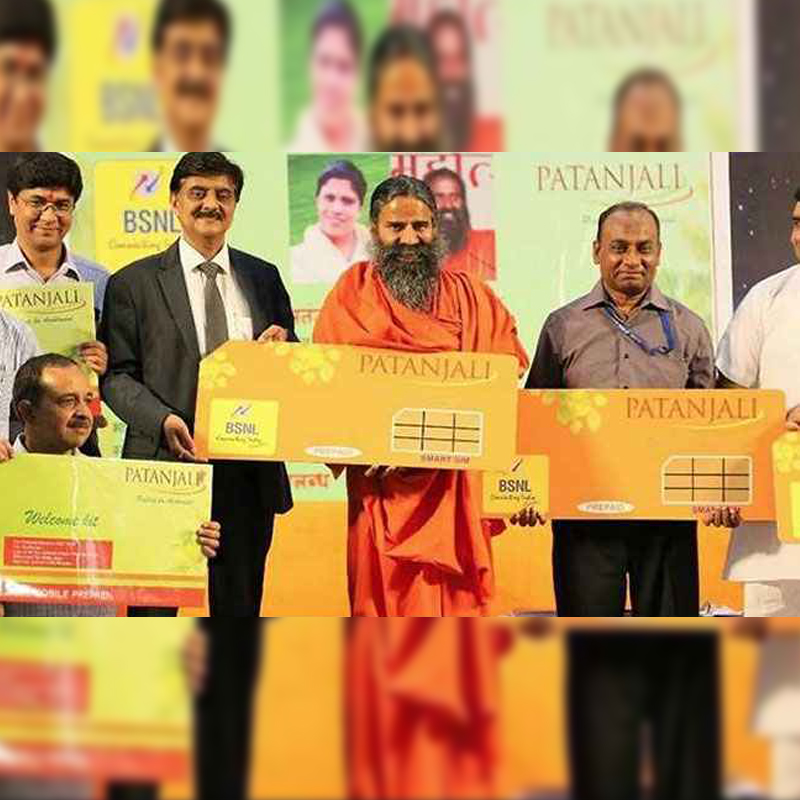
    MUMBAI: A swadeshi SIM card! Well, that was just waiting to happen, if we discount the other telecom services in India. So, after a slew of FMCG products, comes the co-branded service from Patanjali group, of course with a government-controlled telecom operator as a partner: swadeshi samridhhi (national prosperity) SIM card.

    Speaking at the launch, Patanjali’s Baba Ramdev cited the “welfare of the country” as a motif of the alliance with BSNL. However, Patanjali fans need to hold their horses for now because at the initial phase only the employees and office bearers of Patanjali will be able to avail the benefits of the SIM card.

    “Patanjali’s plan is BSNL’s best plan. In Rs 144, one can make unlimited calls from any part of the country. We are giving 2 GB data pack, 100 SMSes. The members of Patanjali have to just show their identity and their SIM will be activated,” BSNL chief general manager Sunil Garg said.

    After full-fledged launch, the ‘Swadeshi Samridhhi’ card will have its own perks including 10 per cent off on Patanjali products. More importantly, it comes with medical and life insurance covers of Rs 2.5 lakh and Rs 5 lakh ( subject to a number of conditions), respectively.

    While in Goafest 2018, Baba Ramdev revealed Patanjali’s plan to venture in the dairy sector and mineral water, this move was definitely an unexpected one. After competing with international FMCG brands, it is ready to take on bigger companies in an industry which is expected to be worth over Rs 14 trillion by 2020. However, FMCG and telcos being entirely two different sectors the future course in one is hard to predict the success in the other.