Tag: Tejas Apte

  • Clickbait to clean slate as HUL leads media trust reset drive

    Clickbait to clean slate as HUL leads media trust reset drive

     MUMBAI: What’s invisible, expensive, and possibly not even human? Thirty percent of your ad impressions. Hindustan Unilever Ltd (HUL),  head of media and digital marketing Tejas Apte didn’t mince words at Goa Fest 2025 as he peeled back the pixel-perfect surface of digital advertising to reveal a mess of murky metrics and media mayhem.

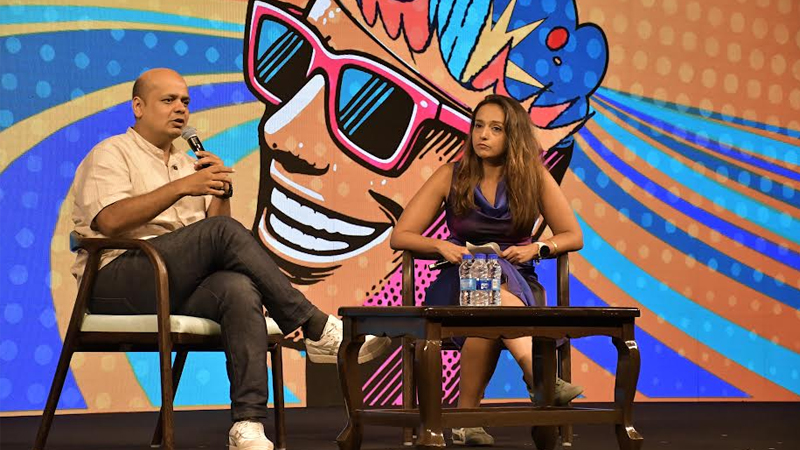
    Speaking in a session titled ‘Building a Safer, Smarter, Cleaner Media Ecosystem’, Apte laid bare the underbelly of modern marketing where ad fraud, bot views, and misuse of data are quietly eating away at ROI and trust. With up to 30 per cent of digital impressions possibly fake, brands aren’t just losing money; they’re losing credibility.

    “Legacy media had a balance subscription and ad-funded models. But digital is almost entirely ad-funded,” he noted. “And that makes transparency and safety non-negotiable.”

    As part of the Indian Society of Advertisers (ISA), HUL has taken a lead in drafting a four-point media charter that aims to disinfect digital with real-world rigour:Safe placements for both brands and users, Viewability standards to filter out the fake, Fraud prevention that spans all formats and platforms, Responsible first-party data usage grounded in clear consent.

    Apte underscored that these principles weren’t just boardroom theory, they were co-created with platforms like Google and Meta, ensuring that everyone speaks the same metric language. The focus is shifting from shallow click metrics to meaningful business outcomes.

    The ad world’s changing algorithm isn’t just affecting platforms, it’s rewriting agency job descriptions. With automation and AI replacing mechanical tasks, Apte sees agencies morphing from campaign vendors to strategic business partners. “In-housing is real, but rarely complete. Agencies remain critical, if they evolve from service delivery to impact delivery.”

    While some brands are building internal muscle, the ISA charter pushes for an ecosystem-wide adoption from nimble startups to legacy giants. The ultimate goal? A future where every impression counts, every ad is seen by a human, and every click has consequence.

    Practising what they preach, HUL has already implemented these guidelines internally. The result? Sharper first-party data strategies, better media ROI, and a wave of new, trustworthy media partners.

    So, next time your ad gets a million impressions, pause to ask were any of them real? Or are we all just chasing ghosts in the machine?

    As Apte put it with a smile, “Click fraud is not just a tech issue. It’s a trust issue.”

  • Byte the Future AI is Serving Up Personalised Innovation

    Byte the Future AI is Serving Up Personalised Innovation

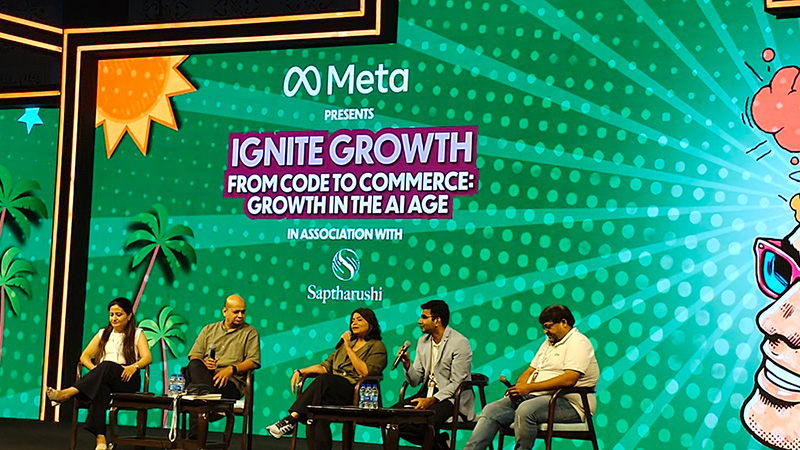
    MUMBAI: Who knew your AC could get to know you better than your flatmate? At GoaFest 2025, the session “From Code to Commerce: Growth in the AI Age” proved that artificial intelligence is no longer just a boardroom buzzword, it’s in your shampoo, your samosa delivery, your summer holiday plans, and maybe even your next Instagram ad.

    AI isn’t just flipping the script, it’s writing it, testing it, and turning it into 150,000 personalised versions overnight. In a power-packed panel at GoaFest 2025, leaders from HUL, Voltas, Makemytrip and Swiggy sat down with journalist Anuradha SenGupta to unpack how artificial intelligence is moving from the back end to front-of-house, making businesses smarter, faster, and far more personal.

    Voltas CMO Pragya Bijalwan  revealed how AI is transforming the home appliance business from cold machines to warm experiences. “Walk into a room and your AC already knows your favourite temperature,” she quipped. But it’s not just comfort AI is driving predictive maintenance, energy efficiency, and post-sale service readiness. Voltas uses customer data platforms to pre-empt service needs and personalise communication. One such campaign featuring their long-standing mascot ‘Mukti’ achieved a staggering 98 per cent CTR and an 87 per cent full-view rate with many recipients believing the video was speaking directly to them.

    HUL, head of media & digital marketing Tejas Apte shared how AI now powers product prototyping through the company’s Agile Innovation Hub, even allowing 3D-printed SKUs based on global trendspotting. AI also fuels the “Shikhar” app, used by kirana store partners now responsible for 20 per cent of HUL’s sales. Retailers can simply snap a photo of their shelf, and AI recommends stock-ups, upsells and even helps co-create hyperlocal ad campaigns. “Last year, we generated 150,000 AI-personalised video ads with Arshad Warsi customised to individual kirana stores,” said Apte.

    For Makemytrip, AI is less about flash and more about function. Director Sanket Tulangekar outlined how Myra, their AI assistant, has evolved to summarise reviews, answer natural language queries, and assist with travel planning. Myra now uses multi-agent orchestration, acting like an intelligent concierge handling everything from hotel bookings to activity recommendations. Tulangekar stressed the importance of red-teaming, bias testing, and moderation in ensuring AI-generated content is both accurate and safe.

    Over at Swiggy, VP Arjun Choudhary revealed how generative AI has quietly revolutionised internal operations. Sales teams now use AI co-pilots for performance insights, and restaurant partners receive personalised business analytics through conversational dashboards. “Even non-tech teams are generating demos and PRDs using AI,” said Choudhary. AI also boosts consumer experience through in-session personalisation and catalogue video generation. The company recently condensed a three-month cataloguing task into a single week using AI.

    Panelists agreed AI is now function-agnostic relevant across departments, not just digital teams. While job fears loom, Bijalwan emphasised it’s an evolution, not a threat. “It’s like when Google launched, initially scary, but now second nature,” she said.

    Ethics, however, remain a looming shadow. From labelling AI-generated ads to ensuring consent with India’s DPDP Act, companies are cautiously optimistic. “Change is inevitable,” the panel echoed, “but accountability must keep pace.”

    Whether you’re in media, FMCG, travel or tech, one thing’s clear: in the age of AI, relevance isn’t optional, it’s algorithmic.