Tag: Ted Sarandos

  • Netflix faces strong headwinds due to slowdown in revenue growth

    Netflix faces strong headwinds due to slowdown in revenue growth

    Mumbai: On Tuesday, Netflix reported a loss of almost 1 million subscribers during the spring amid soaring inflation that’s squeezing household budgets while the company faced tougher competition from rivals including HBO Max and Disney+.

    However, the drop was not nearly as high as the two million cancellations that had been forecast. Nonetheless, Netflix co-CEO Reed Hastings didn’t try to minimize things during a Tuesday conference call about the results. “It’s tough losing a million subscribers and calling it a success,” he said.

    Netflix was probably spared from deeper losses by the ongoing popularity of Stranger Things, its science fiction/horror series that debuted in 2016. Stranger Things 4 is the second-most-popular TV series on Netflix, drawing more than 1.3 billion hours of watch time on the platform in its first 28 days, according to the company.

    Despite the downturn, Netflix still earned $1.4 billion, or $3.20 per share during the quarter, a 6 per cent increase from the same time last year. Revenue rose 9 per cent from the same time last year to nearly $8 billion. Netflix’s stock price had previously plunged by nearly 70 percent in the last year, wiping out about $180 billion in shareholder wealth.

    Netflix is taking steps to decrease costs and bump revenue. The company has been cutting costs with employee and contract worker lay-offs in such areas as marketing and social media. In April, the company announced a crack-down on subscriber password sharing.

    To attract and retain subscribers, the company began branching out last year by adding free video games to its streaming service and is also reportedly exploring live-streaming content, such as comedy specials. In addition, Netflix has taken another step toward putting together a cheaper, ad-supported subscriber option when it announced it will team up with Microsoft to deliver the commercials.

    “We have some headwinds right now and we are navigating through them,” Netflix co-CEO Ted Sarandos said at the end of Tuesday’s conference call. “We’ve seen entertainment formats come and go, we’ve seen entertainment business models come and go, and we have managed to grow through all of them, though all kinds of economic conditions and through all levels of competition.”

    Last year, Netflix India made a bold move in slashing prices across its four subscription tiers, notably cutting its popular ‘Basic’ plan by a huge 60 per cent, reducing it from $6.24 (Rs 499) a month to just $2.49 ( Rs 199).

    While the company didn’t state a reason at the time for the price cut, Netflix India’s vice president of content Monika Shergill told the entertainment news portal Deadline that the strategic move was made in a bid to open up the service to a broader range of audiences across the Indian market.

    Six months down the line, Shergill says the pricing cut is “working very well for us, and it’s brought in a whole new set of audiences,” enabling Netflix India to prioritize subscriber growth at a time when the company had begun to ramp up its licensing and original programming slate beyond Hindi and English-language content. “It’s a very different pricing model,” she says of the Indian streaming market, adding that most local competitors work on annual plans with the benefit of big discounts from telco partners.

    “For us, our revision of the pricing was very well-timed with our content strategy and the new slate we were rolling out. We were very clear that when we started programming for a broader set of audiences that we would need to increase access and the pricing was a very important part of it,” said Shergill.

    After Netflix’s better-than-expected second-quarter earnings on Tuesday, the company’s shares continued their recent upturn as Wall Street analysts had differing opinions on the takeaway from the report. After weeks of worry, investors took a brief sigh of relief. However, sceptics point out that the loss was the biggest in any quarter in the company’s 25-year history.

    In a bold move to woo back subscribers and attract new ones, Netflix will stream the action thriller, The Gray Man this weekend after a limited release in theatres. The film cost a reported $200 million, the most expensive movie in Netflix’s history.
     

  • Netflix, The Duffer Brothers announce a new production company Upside Down Pictures

    Netflix, The Duffer Brothers announce a new production company Upside Down Pictures

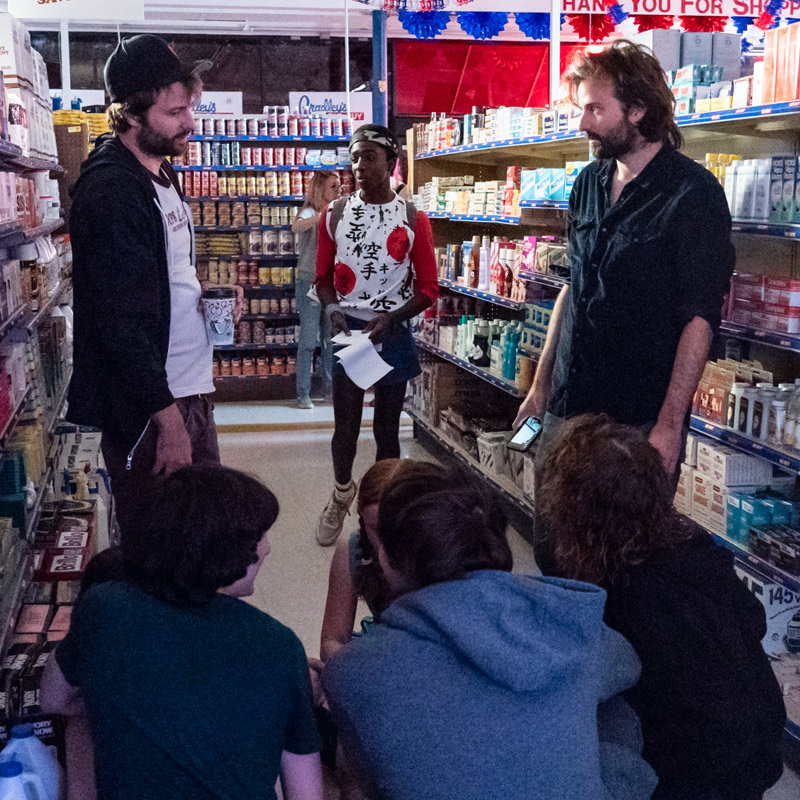
    Mumbai: The Duffer Brothers announced its new production company Upside Down Pictures for film and television projects. This is a part of their overall deal with OTT platform Netflix. 

    Overseeing this operation is Hilary Leavitt, an executive who has helped develop such hit shows as Orphan Black and Ozark in the past. 

    According to a statement, The Duffer Brothers said, “The Upside Down Pictures will aim to create the kind of stories that inspired the Duffers growing up – stories that take place at that beautiful crossroads where the ordinary meets the extraordinary, where big spectacle co-exists with intimate character work, where heart wins out over cynicism.”

    The Duffer Brothers and Netflix also announced their growing slate of projects in active development including a new live-action television adaptation of the Japanese manga and anime series Death Note, a series from creators Jeffrey Addiss and Will Matthews (Dark Crystal: Age of Resistance), a series adaptation of Stephen King and Peter Straub‘s The Talisman alongside Steven Spielberg’s Amblin Entertainment and Paramount Television to be created by Curtis Gwinn, a new stage play set within the world and mythology of Stranger Things, produced by prolific and multi award-winning producers Sonia Friedman, Stephen Daldry (The Crown, Billy Elliot, The Reader), and Netflix. Daldry will direct the series and 21 Laps will be the associate producer and lastly, a live-action Stranger Things spin-off series based on an original idea by The Duffer Brothers, with Upside Down and 21 Laps as producers.

    The Duffer Brothers most recently released the fourth season of their hit Netflix series Stranger Things, which is now the number one on Netflix’s (all time) most popular English TV list with 1.15 billion hours viewed in its first 28 days – only the second series to cross the billion hour viewing mark, with the final tally expected to be higher as volume 2 reaches the 28-day viewing period. 

    The third season released in 2019 still holds at number three.

    Speaking on the occasion, Matt and Ross Duffer said, “It didn’t take long into our first meeting with Hilary, where we bonded over films like Jaws, Home Alone, and Speed, to know we had found a kindred spirit. Hilary’s passion for storytelling is perhaps matched only by her passion for the storytellers themselves, for whom she is fiercely protective. No wonder so many writers and directors are drawn to working with her. She is a rare talent indeed, and we feel extremely grateful to have her at our side as we build Upside Down Pictures.” 

    Netflix co-CEO Ted Sarandos said, “Matt and Ross are an exceptionally unique talent with a vision so crisp and clear. They are all about the details —  it’s no accident that Stranger Things has pierced the zeitgeist to become the epic pop culture phenomenon it is today. We’re excited to continue telling new stories with them as they grow Upside Down Pictures and to welcome Hilary as creative partner.”

    Leavitt added, “I remember the first movie I saw in the theatre, the first VHS tape I got for Christmas, the first international one-sheet I bid for on ebay because it was cooler than the domestic. And the first time I met Matt and Ross. All of these seminal moments have led to this ridiculously cool opportunity to build a company with the Duffer Brothers where we produce movies and television because we love movies and television. This love is at the core of Upside Down Pictures, where we’re able to collaborate with other artists on projects across the full spectrum of genre. We all love what we do and are excited to do more and more.”

  • Indian content market is maturing with every story: Tanya Bami

    Indian content market is maturing with every story: Tanya Bami

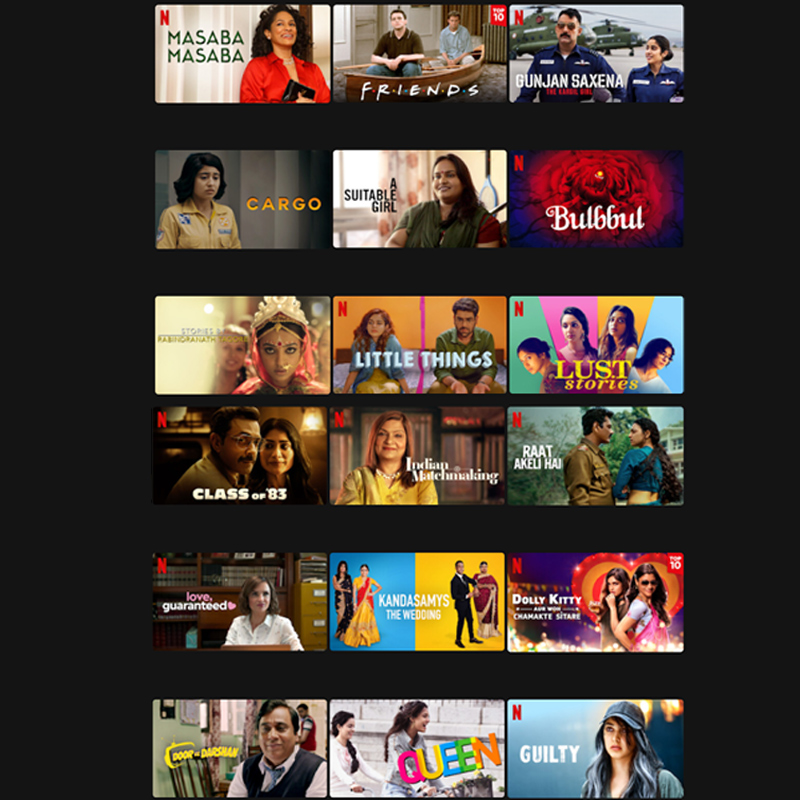
    Mumbai: Netflix is ramping up its original series slate for 2022. Its upcoming original shows include Scoop helmed by Hansal Mehta about the Jyotirmay Dey (J Dey) murder case, Guns and Gulaabs led by the duo Raj and Dk, CAT starring Randeep Hooda and directed by Balwinder Singh Janjua and Heeramandi led by Sanjay Leela Bhansali. “The Indian content market is maturing with every story,” Netflix India series head Tanya Bami tells Indiantelevision.com. “Creators, writers and directors are bringing forward their best work on OTT.”

    The OTT platform has ordered the second seasons of Jamtara, Masaba Masaba, The Fabulous Lives of Bollywood Wives. It has recently released shows such as The Fame Game starring Madhuri Dixit, Mai: A Mother’s Rage featuring Sakshi Tanwar, Yeh Kaali Kaali Ankhein and Kapil Sharma’s comedy special I’m Not Done Yet. “We’ve built out a really dynamic content slate title by title over the last four months, says Bami. “The last four months have seen eight shows launched by Netflix. The intensity at which we’re putting out content is fairly unmatched in the Indian landscape. Netflix is going to double the excitement over the next two years.”  

    Cursoring through Netflix India originals on Wikipedia, the company has put out an impressive range of content. It has intriguing docu-series such as Bad Boy Billionaires: India and House of Secrets: The Burari Deaths, it offers riveting drama series like Delhi Crime and Call My Agent: Bollywood, it has fun unscripted series such as Indian Matchmaking and The Fabulous Lives of Bollywood Wives and ambitious original films such as Minnal Murali and Jagame Thandhiram. It has yet to build any lasting franchises yet the OTT giant continues its bold approach to creating content.

    “What’s unique about us is that we tell very distinct stories with a lot of passion,” says Bami. “The ideas and concepts stick with us members. When you remember a story after watching it, I think that’s the true victory of the storyteller. There’s also a cinematic quality that we bring that is akin to the big screen experience in your living room. We offer a variety of genres, moods, creators and there’s a different creative experience with every title.”

    Netflix launched 28 India originals in 2021 including 15 films, eight series, five non-fiction titles, 11 genres, seven languages and eight formats. Moreover, it has worked with more than 70 different production houses till date with 70 per cent of them working on more than two projects for Netflix. Netflix co-CEO Ted Sarandos recently at the Economic Times Global Business Summit said that “India is a land of a billion stories. The opportunity is so large and the storytelling appetite is so big. As we get the storytelling right, the rest will fall into place.”

    Global streamers have been criticised for playing the volume game in local markets and missing out on the essential ingredient that is quality, especially, compared to western shows. Many believe this is why Indian original shows have not traversed the world much like a Money Heist, Squid Game or Dark.

    “To not recognise the contribution made by our creators at a global level and at an India level would be a little bit unfair as there are such amazing stories coming out whether it is one Netflix or any competing platform,” says Bami. “The world is recognising India’s content. Delhi Crime has won an International Emmy award. Our series like The Fame Game and Sacred Games are watched across 15-20 countries outside India. It’s time to be proud of Indian content,” she added.

    Elaborating on Netflix India’s content strategy, Bami states, “The idea is to capture a diverse audience segment because we feel everybody wants to watch something different. Yeh Kaali Kaali Ankhein is about the gender dynamic being subverted in the hinterlands (where we assume men have the power), Aranyak delves into Indian folklore, the moment when Kapil Sharma speaks about his father in his stand-up special, I’m Not Done Yet was memorable for audiences.

    Adding further, she says, “Like Ted (Sarandos) said recently, ‘India is a land of a billion stories’, a billion stories that are untold. We want to be a part of the zeitgeist and capture the imagination of audiences and that comes by working very closely with dynamic minds who’ve had varied experiences of this culture. They have experienced this country which they put into their stories that they create for us.”

    Netflix is largely perceived as a metro brand due to its high concept shows and anthology series. It is ready to shed that brand image and dive deeper into the Indian market. “Our show Mai: A Mother’s Rage is set in Lucknow and features actor Saakshi Tanwar who is popular with the broader TV audience. That is our way to open up a backdrop and milieu and unlock that audience segment for Netflix,” explains Bami.

    “We’re also excited to work with South creators and content which is actively under development as we look to penetrate the south market,” notes Bami. “We’ve had early successes with shows like Navrasa, Paava Kadhaigal, Minnal Murali and have so much more lined-up.”

    “Nothing is more important to us than to succeed in India and we realise that we have to go deeper within. We must reach out to a more diverse audience set,” concludes Bami.

  • Viewing of Korean dramas in India up by 3.7x in 2020 over 2019: Netflix

    Viewing of Korean dramas in India up by 3.7x in 2020 over 2019: Netflix

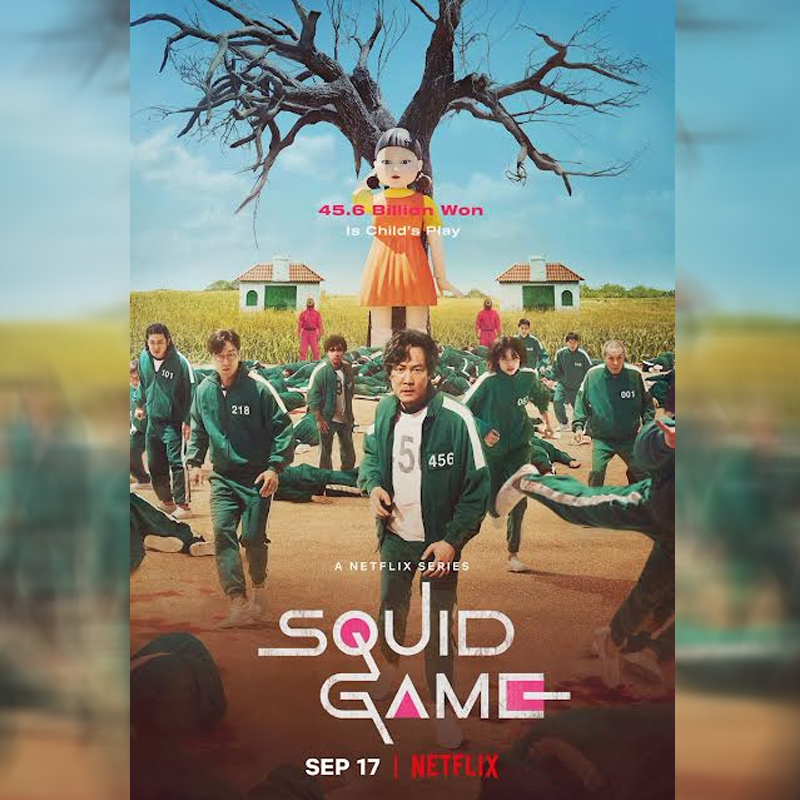
    Mumbai: The recent success of the Korean hit show ‘The Squid Game’ on Netflix has once again put the spotlight on the K-wave –or ‘Hallyu’ which has swept over the online audiences globally, including India. Not only was the Netflix original viewed by 142-million-member households globally in the first four weeks, according to CNBC, 89 per cent of people who started watching ‘Squid Game’ saw at least one entire episode. That is about 126 million hours of consumption.

    In India, the show not only holds the top position among Netflix top ten shows in India, but it is also accompanied by other K-dramas including ‘The King: Eternal Monarch’, ‘Kingdom’, ‘It’s Okay to Not Be Okay’, ‘Sweet Home’, ‘Crash Landing on You’, and ‘Space Sweepers’ in the category.

    According to the streaming platform, the viewing for Korean dramas on Netflix in India has gone up by 3.7X in 2020 over 2019, while it went up by four times in Asia overall in the pandemic year. Dubbing and subtitling have gone a long way in making these shows accessible to a wider audience. Currently, Netflix subs and dubs are in over 30 languages.

    “A story that is well told has the ability to make us laugh, or get excited or feel angry the same way, whether it is told in Korean or in Hindi, Tamil, and Telugu,” said a Netflix India spokesperson. “The emotions that these stories evoke transcend the boundaries of geography and language. Dubbing and subtitles play a major role in making these stories accessible to a much wider audience, in the language they are truly able to enjoy them.”

    In South Korea, the streaming platform’s local content push brought over 3.8 million subscribers.

    Netflix began working with South Korean filmmakers and talent in 2016 and has since launched over 80 Korean shows and films. It’s planning to invest another $500 million in Korean content in 2021 alone.

    In India and other countries like Argentina, Australia, Brazil, France, Mexico, Thailand, and the Philippines, audiences are discovering K-content perhaps for the first time on Netflix. A typical K-drama may have 10-16 episodes where each episode maybe 50-60 minutes in duration. Outside of their local market (South Korea), these shows should account for long-tail consumption on the OTT platform but are actually emerging as driver content in some countries.

    For instance, in India, Netflix is one of the few OTT platforms where audiences can access high-quality K-dramas from leading producers in Korea including CJ ENM/Studio Dragon and JTBC.

    Netflix’s co-CEO and chief content officer Ted Sarandos admitted that it was their Korea team that saw the potential in the show. “(Squid Game) was picked up a couple of years ago from the Korea team who did recognise it to be one of what they thought would be their biggest title this year. But I can’t tell you that we had the same eyeball on it to tell you that it was going to be the biggest title in our history around the world,” he said in the Q3 earnings call. “The growth – the viewing outside of Korea has been phenomenal everywhere we operate. If you look at the numbers – the internal viewing looks like a local language show in any country.”

    He further pointed out that Netflix shows like ‘La Casa de Papel’ from Spain, ‘Lupin’ from France, the film ‘Blood Red Sky’ from Germany, and ‘Sex Education’ from the UK show that great stories can come from anywhere in the world. “Non-English content viewing has gone up by three times since we started in 2008 making content,” he observed.

    Netflix also partnered with Deloitte to study the impact it had on the Korean creative ecosystem since its launch in 2016. According to the report, the platform’s investment in content production in Korea has contributed almost KRW 5.6 trillion won (~$4.7 billion) to the country’s GDP and helped create more than 16,000 jobs. The report studied the impact the company had on production and distribution as well as related fields including publishing, webtoons, music, consumer goods, and tourism. It highlighted that since the investment of OTT services, the average revenue of Korean VFX studios has increased almost fourfold from KRW four billion in 2010 to KRW 16 billion in 2020. It also observed that K-content has found success with audiences in over 80 countries.

    South Korean culture has left an indelible mark on people across the world and India is no exception. The successful globalisation of South Korean content by Netflix has incentivised other OTT platforms to bring Korean content to wider audiences. While Netflix has benefitted by riding the K-wave popularly known as ‘Hallyu’, it is now a key driver of the cultural zeitgeist that has gripped audiences globally.

  • US drama Bridgerton is Netflix’s most popular show globally

    US drama Bridgerton is Netflix’s most popular show globally

    Mumbai: Eight-part romantic drama ‘Bridgerton’ has trumped all shows to emerge as the most popular shows on Netflix, said co-chief executive Ted Sarandos on Monday, as he gave a sneak-peek into the streaming platform’s most popular shows.

    “We’re trying to be more transparent with talent, and with the market. Netflix’s streaming data, is a big black box, mostly,” said Saranodos while addressing the Vox Media’s Code Conference held on Monday.

    The top executive shared two slides. The first slide showed the most popular shows based on its proprietary metric of the number of accounts that selected a given title in the first month of release and streamed for at least two minutes. The second slide showed total time spent viewing (hours) within the initial 28-day of release- reported Variety.

    The first season of the US drama ‘Bridgerton’ topped both the charts, and was closely followed by first season of ‘Lupin’, ‘The Witcher’, ‘Sex/Life’, and ‘Stranger Things-3’. Spanish drama ‘Money Heist -4’ featured at sixth position, followed by ‘Tiger King’ and ‘The Queen’s Gambit’. The movies’ list was dominated by ‘Extraction’ and ‘Bird Box’.

    In terms of rankings for overall time-spent viewing in the first 28 days of release, ‘Bridgerton’ and ‘Money Heist-4’ again lead the charts. Sarandos also said that the recently released Korean horror series ‘Squid Game’ could become Netflix’s biggest non-English title so far.

    Sarandos also dismissed news of the streaming platform looking to buy a movie theater chain. Netflix owns a theater in New York, and one in Los Angeles, which it bought in 2020, and uses the cinemas to hold movie premieres and to showcase some of its original films.

  • Netflix acquires Roald Dahl Story Company

    Netflix acquires Roald Dahl Story Company

    Mumbai: Netflix has acquired the Roald Dahl Story Company (RDSC) in what is believed to be one of its largest deals recently.

    The acquisition builds on the partnership the two companies started three years ago to create a slate of animated TG series, including a series based on the world of  “Charlie and the Chocolate Factory” from the Academy Award-winning filmmaker Taika Waititi and Academy Award nominee Phil Johnston.

    Additionally, Netflix is also working with Sony and Working Title on an adaptation of “Matilda The Musical.”

    “These projects opened our eyes to a much more ambitious venture – the creation of a unique universe across animated and live-action films and TV, publishing, games, immersive experiences, live theatre, consumer products and more,” said Netflix co-chief executive officer and chief content officer Ted Sarandos and RDSC managing director and Roald Dahl’s grandson Luke Kelly.

    “As we bring these timeless tales to more audiences in new formats, we are committed to maintaining their unique spirit and their universal themes of surprise and kindness, while also sprinkling some fresh magic into the mix,” they added.

    Roald Dahl’s books have been translated into 63 languages and sold more than 300 million copies worldwide, with characters like Matilda, The BFG, Fantastic Mr Fox, Willy Wonka, and The Twits delighting generations of children and adults.

  • How Netflix is scripting India story?

    How Netflix is scripting India story?

    KOLKATA: This is an age of binge-watchers and Netflix is yet the undisputed king of the new era. Taking off with House of Cards to luring the audience to their screens with La Casa De Papel (Money Heist), the streaming giant has re-written the script of media and entertainment industry across the world. Once a US unicorn, it is now changing the reality of the industry across the world now. India indeed remains at the heart of its international expansion.

    As Netflix co-CEO and chief content officer Ted Sarandos says, “It's hard to say, how it (Indian market) could be more important. We have said from the beginning that India is a critical market in the world for us.” In a candid conversation with Film Companion editor Anupama Chopra at ET Global Business Summit Unwired 3.0, Sarandos shares insights on how Indian content is travelling outside the world, Indians are adopting global content and how the streaming giant itself is building up its understanding of the market gradually.

    Sarandos highlights that the Indian market is important not only for Netflix but for the global M&E industry. While it has been always adored for great storytelling and great cinema, the appetite for great TV content is also increasing. He says that they are very heavily invested in bringing out original stories from India. “But more importantly, we are not just growing it for India. We will grow these stories to be for the global platform so that people around the world are enjoying these stories,” he adds.

    Read more news on Netflix

    According to him, the Indian stories are travelling everywhere. Netflix’s first marquee content in India, Sacred Games played in every major market throughout Europe and Latin America. Mighty Little Bheem is now the most-watched non-English animated series in the US. On the other side, the reciprocal is true too as Indian subscribers are watching content from Spain, Korea, Japan at large scale. While the Indian stories are travelling globally, Sarandos mentions that the platform is mindful of local sensitivities.

    “It’s a very dynamic place. One of the things that I miss most since these travel restrictions of Covid2019 have been implemented is my opportunities to come to India. It's one of the most fascinating fast-moving dynamic places in the world. The energy on the ground is just you can feel it in your bones when you walk down the street,” Sarandos expresses his love for the market.

    The man who decides what the world will watch is fascinated with the consumption pattern of the Indian audiences. He is surprised by the way the Indian audience has embraced Roma and the overall diversity, breadth of programming. In the last year, more than 80 per cent of Indian subscribers have seen a film every week on Netflix.

    However, the streaming giant’s original movie slate in India is not qualitatively consistent compared to the global market. Sarandos thinks the inconsistency is due to the trial and error method as it has not been very long since when the platform has started building its Indian content library. He reassures that there will be constant improvement. “We're becoming much more ingrained in the creative culture of India,” he states.

    Streaming has been one of the very few businesses across the world which has not been crushed by Covid2019. More and more people have resorted to good stories. While the streaming services have been able to entertain the audience with fresh stories yet, the long pause in the shooting has been one of the main concerns of those platforms. Netflix is not an exception.

    Sarandos acknowledges that getting back to production safely tops the priority list to resist any interruption in the story. While it has been particularly challenging in India, it is also seeing very encouraging signs with more than 10 originals scheduled to be back for production in November. 

  • Netflix streamlines content team, Bela Bajaria to lead global TV

    Netflix streamlines content team, Bela Bajaria to lead global TV

    KOLKATA: Netflix has elevated Bela Bajaria as vice president global TV in order to streamline its content team. Cindy Holland, original content vice president quits as a part of the major shakeup at the organization. Holland has served for nearly two decades at the streaming giant.

    Bajaria joined Netflix in 2016 and she was given the mandate of unscripted programming and international content. Over the years, international content has been put at the heart of Netflix’s overall content strategy as the platform’s growth in the domestic market has become saturated.

    While several executives have led the different segment of Netflix’s TV programming, the film division was streamlined in the past. “Since becoming co-CEO, I’ve wanted to simplify the way our content teams operate,” Netflix co-CEO Ted Sarandos explained.

    "These kinds of changes are never easy, and I am enormously grateful to Cindy Holland for everything she has done over the last 18 years at Netflix — first licensing DVDs and then as the driving force behind our first eight years of English original series. Cindy’s been a great champion of creators and the power that comes from seeing more perspectives reflected on-screen — launching enduring dramas like Orange is the New Black, Stranger Things, and The Crown. Most important of all she’s been a fabulous colleague. We wish her all the best for the future,” Sarandos commented on Holland’s departure.

    According to reports, Bajaria was courted by NBCUniversal to oversee all entertainment programming across its several divisions. Now, she will oversee all original programming, scripted and non-scripted in both the English and non-English languages at Netflix. 

  • Netflix’s reinvigorated strategy for the next decade & India’s growing role

    Netflix’s reinvigorated strategy for the next decade & India’s growing role

    KOLKATA: Netflix wants to be the ‘best friend’, the primary choice of streamers across the world. While the streaming rat race is picking up internationally, Netflix is moving fast and expanding its content mix. It has moved on from only focusing on scripted episodic originals to also strive to replicate the success of premium TV in unscripted content, movies and animation. This, for Netflix, is the “next decade” of opportunities.

    “We are so excited about the next decade of Netflix growth. We've definitely got a good start, but the opportunity across the next decade is just amazing for us. It's a lot international but I couldn't be more excited about it, and it will be great to have some help as we expand the globe, and I'm looking forward to that.  And to be totally clear, I'm in for a decade. And as co-CEO, it's two of us full time. It's not like a part-time deal. So it's definitely broadening the management team and help us grow even faster over the next 10 years,” Netflix co-founder and co-CEO Reed Hastings said as he named chief content officer Ted Sarandos as co-CEO.

    Is Netflix in the next ten years the same compared to the last years? Hastings said in an earnings call after Q2 results that it has got a good model for the next ten years and just need to make it better. Netflix has historically spent most of its money on content but it is also working on making the service better, more user-friendly with a smarter UI.

    “A couple of years ago, we only had a premium TV. And now to be really good in movies, to be really good in unscripted, emerging in animation, very strong in local language shows and series, I mean it's an incredible expansion that Ted has pulled off over the last five years. So think of it as just us doing more of that at a higher scale and pleasing more people,” he added. 

    Sarandos, the content king at Netflix said that if the platform aims to be the go-to destination for entertainment, it would not be a smart move to ignore the area of programming that dominates broadcast. Hence, it has been dabbling in unscripted reality. Notably, Netflix has significantly spoken more of animated content in the last one year which is the best weapon of its rival Disney+.

    Hastings said that the content team is coming up with some big bets. “We want to have so many hits that when you come to Netflix, you can just go from hit to hit to hit and never have to think about any of those other services, right? We want to be like your primary, your best friend, the one you turn to. And of course, occasionally, there's Hamilton and you're going to go to someone else's service for an extraordinary film. But for the most part, we want to be the one that just always please you with the convenience, simple and easy choice,” Hastings said.

    Despite leading the streaming revolution, competition is going to be the biggest challenge for the pioneer in the next ten years with deep-pocket rivals like Disney+, Apple TV+, HBO Max and Peacock having entered the market. Even more of the traditional networks are now pulling off content from Netflix for their digital arms causing a big dent in the library as the evergreen popular shows still attract eyeballs.

    As the US market gets overcrowded with large-scale contenders, Netflix is going to focus highly on international markets. “When I think about what our future is and I think it's just a tremendous next stage of growth that we will see mostly coming from outside the United States. So think of more and more employees outside the United States, more productions, more operations happening outside the US and hopefully, many, many more members outside the US. This is an opportunity to lean in just a little bit more, be proactive and drive a little bit more alignment across those activities where we think alignment will benefit the business and push the optimisation of those activities a little bit more,” Netflix COO and chief product officer Gregory Peters said.

    Meanwhile, Netflix has already set its eye on the largest growing OTT market – India.  It set an audacious goal of getting its next 100 million subscribers from the country. This is a tougher market to crack given the local rivals alongside Disney+ Hotstar and Amazon Prime Video. In the last quarter, it has added less than three million paid subscribers from the entire APAC region. However, despite the slow growth, Netflix is increasing investment here. A few days ago, it announced 17 new local originals. As the Netflix bosses embrace the excitement for the coming 10 years, reinvigorated content strategy and international expansion can save it from the dwindling position of once-undisputed streaming king and definitely there will more spending to get Indian audiences.

  • Netflix content king Ted Sarandos named co-CEO

    Netflix content king Ted Sarandos named co-CEO

    KOLKATA: The brain behind the content strategy of the undisputed king in streaming service has additional responsibility now. Netflix has named its chief content officer Ted Sarandos as co-CEO of the company. In addition to that, Netflix has also appointed Greg Peters to be its chief operating officer, in addition to his role as chief product officer. 

    “Ted has been my partner for decades. This change makes formal what was already informal — that Ted and I share the leadership of Netflix,” Netflix co-founder and CEO Reed Hastings said while announcing the Q2 result. 

    Sarandos will continue as the company's chief content officer also. “My journey to co-CEO of Netflix has been as a fan of great entertainment. And that's my commitment to Netflix members going forward: to keep pushing the boundaries of what a consumer-first company can achieve for people who love stories,” he said.

    "Ted’s been instrumental to our success as a company. While I saw streaming coming and pushed for it, Ted drove the revolution in our content strategy, which was way ahead of its time and has been key to our continued success. It was typical of his ability to see where the industry – and consumer tastes – are headed. He’s built an extraordinary team, attracting some of the most creative and best entertainment executives from all around the world," said Hastings.

    Sarandos praised Hastings as an unbelievable role model and source of inspiration for him  and stated in an earnings call, “my focus is to continue the successful train we’ve been on for the next 200 million subs around the world.” 

    "Greg’s appointment as COO reflects the strategic and analytical strengths he’s brought to our product team over the past 10 years. As we’ve grown, one of my biggest roles at Netflix has been to be broad across the company, getting to know many different people in every area of our business. This has helped Netflix stay mostly aligned, loosely coupled and very productive. In his new role, I want Greg to take on more of this work so that we continue to improve rapidly. Eventually he needs to know every corner of Netflix better than I do today," added Hastings.

    These changes are part of a long process of succession planning, announced Hastings. "While transitions can be hard, I am optimistic because we have a well established culture that’s built to be flexible and many years to get good at this. I’m committed to Netflix for the long term,” he added.