Tag: technology

  • Micromax starts its Russia operations

    Micromax starts its Russia operations

    RUSSIA: Micromax, world’s 11th largest mobile phone player has announced the launch of its operations in Russia by extending its innovative product portfolio and services to the users in the country. Micromax has been the clear No 2 smartphone brand by a distance and a clear No 3 overall phone brand (smart+ feature phones) in India, is now gearing up for Russia. With a focus on democratizing technologies for the masses, the company aims to have an aggressive plan to make its mark in the Russian mobile handset marketre-emphasizing on its vision to offer innovative products and service offerings, which are customized to address the needs of consumers in Russia.


    Micromax, with its USP of pioneering meaningful innovations based on in-depth consumer understanding, would be operating througha partnership with VVP Group, one of the leading distribution houses in Russia. The partnership is a strategic move, which would provide good reach for Micromax in the regionwith a plan to make Micromax products available across the country, ensuring deeper shelf space and wider outlet spread.


    Micromax will be introducing its popular Canvas series of smartphones and Bolt series of smart-feature phones which have been a trendsetter, which have already sold more than 35 million devices across the operating markets for Micromax in the past one year. The company will be launching 14 products in the Russian market in the initial phase, as the brand is already looking at gearing up to be among the Top 4 brands in Russia by the end of 2014. The company is ready with its service infrastructure across Russia with an aim of having more than 60 operational service centers by end of the month. Micromax will also have its exclusive service centersin strategic cities in Russia as the brand strengthens its presence across the country.


    Commenting on the launch, Rahul Sharma, Co-Founder, Micromax said, “At Micromax, our emphasis has always been to democratize technology for masses around the world through an innovative product portfolio. As we look to take Micromax to key international markets, we are excited to announce our foray into the Russian mobile handset market which has immense potential not only for smartphones and features phones, but also for innovative tablets and data products. Our initial focus in the Russian market is to replicate the success witnessed in our other markets in the last couple of years. We have carved the vision for ourselves to be the 1st Indian hardware brand to be global and set our footprint with Russia as the first developed market to venture into.”


    He further added, “We see a growing trend of data consumption through mobile devices in Russia, and we would be initiating partnerships with the leading operators in the region to aim at efficient data consumption on our devices in the coming year”.


    Over the past decade, Micromax has been at the forefront of driving innovation through their innovative product offerings addressing the consumer needs. The company has many firsts to its credit when it comes to the mobile devices market including Canvas Laptab – world’s first dual boot tablet powered by Intel, launched on the 6th of January 2014 at CES in Vegas (Consumer Electronic Show), the first quad-core budget smartphone, phone with a 30-day battery backup, the first smartphone designed specifically for women, universal remote control mobile phones and a list of other innovative devices. The brand’s product portfolio embraces more than 60 models today, ranging from feature rich, dual – SIM phones, 3G Android smartphones, tablets, LED televisions and data cards.


    Speaking on the occasion, Vasily Sibirtsev, Chairman VVP Group said, “We are very excited to work with Micromax, one of the world’s leading mobile phone brands. Russia is an ideal market for Micromax to bring its innovative product portfolio and services customized for consumers in this market. Our immediate goal will be to build a very strong and robust distribution network to capture a significant share in the Russian mobile handset market. We will be working aggressively to strengthen our presence in the retail space across 9000+ sales points in the country backed by an efficient service infrastructure.”


    Amit Mathur, Vice President, International Business – Micromax said “ We believe Micromax products to a promising future in Russia where the smart phone market is booming along with data services.  Micromax has studied this market and will continuously introduce products and applications with consumer insights from the Russia to bring forth world-class products to this market.  We are happy to have found VVP as our strategic business partner to enter the retail market and will strive to maximize our retail strength going forward.”


    The partnership with the VVP Group is a strategic move which would provide wide reach for Micromax in regions of Russia as the group has been associated with some of the leading global smartphone players to help them make a strong presence in Russia. VVP is known for its superior logistics setup, warehouses, retail management system and transportation management systems across the main hubs of Russia which will further help Micromax build its footprint in the country. VVP group will be working with partners in all existing channels including federal and regional chains, operators, consumer electronics shops and computer shops, online and other sales points in the country. 


    The company has also tied up with the leading VAS providers in Russia including Odnoklassniki, Russia’s popular social network service; IVI.ru, Russia’s first free video & music service; Viber, the leading global instant messaging application; Facebook; Twitter and M!Live giving users access to social connectivity and unlimited free online games.


    Micromax plans to support the launch with a 360 degree branding exercise aiming to enhance the brand visibility in the region supported by marketing campaign across print, online and TV.

  • New technology to fuel the revenue growth for broadcasters in 2014

    New technology to fuel the revenue growth for broadcasters in 2014

    NEW DELHI: GAIAN Solutions India, a leading Technology and Consulting company that develops products and solutions for the Media and Entertainment industry, launches MAYA Platform for Satellite Broadcasters.


    The LIVE Demo of ‘Maya Platform’ can be viewed between 21st to 23rd January at  ‘Gaia TV’ Stall No.C-183, Upper Floor, Hall No. 18, Convergence India 2014, PragatiMadian, New Delhi.


    Intoday’s fierce and highly competitive broadcasting environment, sole revenue generating models of straight jacket spot selling are fast becoming redundant.


    A highly fragmented audience and an emerging class of smart advertisers exposed to the world of internet/world wide web are craving for a similar experience on TV as well since it’s the biggest screen in any household. This has made the industry look for a solution enabling localized content distribution and alternate possibilities of targeted advertising to create value for both broadcasters and advertisers.


    Addressing this need ofthe industry, Maya platform by Gaian Solutions is a technology that offers exciting real time localized cloud content services thus offering powerful tools to enhance Broadcasters programming content. This is done by delivering different broadcast content (Programs, Overlays, Advertisements, etc.) simultaneously across different locations at the same time. It has potential to change Satellite Broadcasters revenues by orders of magnitude.


    Chandra Kotaru, President and CEO – Gaian Solutions said “From the outsetwe have set the bar for technological innovation in digital TV, achieving an unrivalled array of industry firsts.Another such innovationMayais a breakthrough solution which has phenomenal potential to grow Indian TV industry by magnitude and it will increase value for all stake holders of Indian TV Broadcast ecosystem.”


    The Maya platform offers six never-before seen solutions to the challenges and opportunities facing today’s broadcasters.


    1. IP Free Edge Insertion: Maya’s localization technology integrates internet feeds and cloud content delivery mechanisms right into the uplink broadcast eliminating the need for internet connectivity at the edge devices. This liberates broadcasters from any kind of ecosystem challenges in commercializing localized data services.


    2. Platform Agnostic Localization: Maya is platform agnostic ensuring seamless localization across all delivery channels be it a satellite broadcast or an OTT platform.


    3. Satellite IRD Cloud Receiver: For the first time ever, Maya’s IRD integrates cloud and satellite reception into one device.


    4. Full Featured HD IRD Storage Streamer: Therefore this full HD IRD player and streamer ensure savings on broadcasters HD migration budgets.


    5. Full Featured Back Office & Self care Portal: Maya offers a full featured Back Office & Self-Care portal to automate the work flow of sourcing, delivery, approval, distribution, proof of play and billing of local advertisements


    6. Automated Social Media Feed Injection: Maya allows broadcasters to report breaking news, latest events and trending topics, as they happen on Social Media platforms.


    Thus Maya allows broadcaster to:-


    • Change the broadcast deferred by region and by time at a click of a button from central studio. Deferred Broadcast by Region


    • Enhance coverage of local events, rallies, and public meetings etc., on one part of the TV screen while the other part continues to run on the primary screen


    • Insert all overlays of the edge using MAYA Edge Insertion Device that is 3D ready


    • Supports local storage, advance audio options and unlimited regional language.


    • Grow engagements with minimum CAPEX wherein the investment can be made by region right for localization.


    • Go local on a global platform (GLOCAL Concept). ‘Maya’ is a Television broadcaster’s localization platform.


    In a nutshell, Maya platform provides an end to end seamless solution to Satellite Broadcasters’ various needs of management & controls of hardware, software, content & business services by advance usage of technology.  Prime aim is to increase more avenues for satellite broadcast industry to increase business intake, top line revenue as well as improve the bottom line profitability.


    Maya Platform has already found the partners in Indian Broadcast Industry, Information TV Private Ltd , the network which owns and operates 9x News and India News bouquet of TV channels and Spoorthi Communications Pvt. Ltd. which operates ‘10TV’a Telugu News channel from Andhra Pradesh,  have commissioned Gaian Solutions to install ‘Maya Platform’ for their channels.


    To speak about Maya Platform, Kartikeya Sharma, MD of ITV Network said, “There has always been a notion that news channels are not profitable, but I feel quite contrary to that. I think news channels can be profitable if we get our business models right. Things are changing rapidly and technology has a very important role to play, so if channels adapt and learn technology, then it can be really helpful in their growth and Maya Platform is the key.


    ‘We are really exited to adopt Maya Platform, as it opens various new ways to communicate with our viewers at grass root level where they are more concerned with local issues which directly affect and influences their life, Maya Platform helps us do so and monetize local advertising opportunities at the same time,” Quoted S. Prasad, COO of  10TV.

  • Conax demonstrating total service protection for Indian operators at Convergence India

    Conax demonstrating total service protection for Indian operators at Convergence India

    NEW DELHI: Conax, a leading global expert in total service protection for digital video content distribution over all types of networks and devices, today announced that it will demonstrate its total value chain broad portfolio of service protection solutions at Convergence India, January 21 to January 23. The company will be holding a feature event at Convergence India on  at 4 pm on the Conax stand with KCCL and partners to reveal the details of launch of new Conax technology in the KCCL operations.


    Conax’s 11 years of India success and broad spectrum of reference customers is a result of dedication to pay-TV operators in India, a pioneering approach to the needs of the market and its renowned open partnering policy for secure set-top-boxes for pay-TV operators. Conax is helping operators secure increased ARPU through digital service offerings, and easy, flexible upgrade for new, future solutions such as secure hybrid content delivery and multiscreen, anytime/anywhere content delivery.


    Equipping operators for the future, Conax is providing an entire value chain of service protection – future-proof, open and flexible solutions and partnerships for evolving new business models and capturing new segments well into the future, enabling operators to be first out with new services and solutions.


    Demonstrating Conax Value Chain of total Solutions at Convergence India


    Today’s marketplace filled with challenges and opportunities, thus service providers are on the move to identify the best technologies and solutions to positioning for future business. Meet experts from Conax to learn how we can bring your operations into the future.


    Conax Contego, the CAS solution with a broad portfolio of future-proof Secure Clients provides content security for any device with or without Smart Cards. It is designed to support operators of any size; small, medium and large, delivering unrivalled security to satellite, cable, terrestrial, IP and OTT networks.


    Conax is expanding its future-proof client portfolio with a cardless option that provides a unique level of cardless content security using new chip technology not offered by competitor’s pure software solutions. Conax recommends a combined approach using smart card security for high-end content operations and the cardless option for low-end ARPU content, based on the joint Conax security back-end.


    Hybrid, multiscreen and OTT content distribution for the future: The Conax team will feature Conax security hardened PlayReady Clients and Conax Xtend Multiscreen™, – cost-efficient, pre-st, 2013: Conax, a leading global expert in total service protection for digital – 23rd. The company will be holding a feature event at Convergence India on  at 4 pm on the Conax stand with KCCL and partners to reveal the details of launch of integrated, fast-time-to market solutions, enabling any operator to easily add and capitalize on a multiscreen offering.

  • India’s Doordarshan selects Harris Broadcast for nationwide digital transition

    India’s Doordarshan selects Harris Broadcast for nationwide digital transition

    NEW DELHI: Harris Broadcast, a market share leader of content management and network infrastructure solutions serving the global broadcast, communication service provider, government and enterprise markets, today announced it has been selected by national broadcaster Doordarshan to deploy a new DVB-T2 transmission infrastructure across the country.


    The government of India is pushing ahead with plans to complete the move from analogue to digital television transmission by 2017. As the leading public service broadcaster in India, Doordarshan has an obligation to cover the whole country and to reflect the diversity of Indian society, including content in the more than 40 languages. At the same time, it is promoting a boost in quality and viewer engagement by rolling out high definition channels, as well as delivering its multi-lingual content across multiple platforms including mobile devices in the future.


    “This is not only a large-scale project for Doordarshan, but it is also one of the most high profile and important projects the broadcaster has undertaken,” said Joe Khodeir, senior vice president Asia at Harris Broadcast. “Our DVB-T2 solution maximises spectrum capacity, allowing Doordarshan to roll out multiple channels serving different communities as well as offer multiple HD channels. For a project of this scope and significance, Doordarshan looked for a partner with a strong local service commitment and presence along with best-in-class technologies that delivered the lowest lifecycle costs.  Our Maxiva™ ULX architecture provides the best power efficiency in the market, which was a critical consideration for Doordarshan when energy consumption is such a large part of the operating cost.”


    The first of two transmission contracts awarded to Harris Broadcast adds HD channels to digital multiplexes in four major metropolitan areas. Each facility will be served with a new 6kW Harris Broadcast Maxiva ULX DVB-T2 transmitter. The second contract is for 19 Maxiva ULX transmitters, which will be used to roll out digital transmission to the regions of India. In the first instance, these will carry standard definition channels in their multiplexes, but the flexibility of the transmitter and infrastructure design allows for an easy upgrade to HD when the time comes.


    The Maxiva ULX is a liquid-cooled, solid-state transmitter built on a modular architecture for maximum flexibility in inputs, transmission standards and power outputs. By incorporating Harris Broadcast PowerSmart® technology, the Maxiva ULX uses the minimum energy for the radiated power, produces less heat and occupies the smallest footprint in the industry. Together, this provides simplified installation, easier maintenance and reduced total cost of ownership over the lifetime of the transmitter.

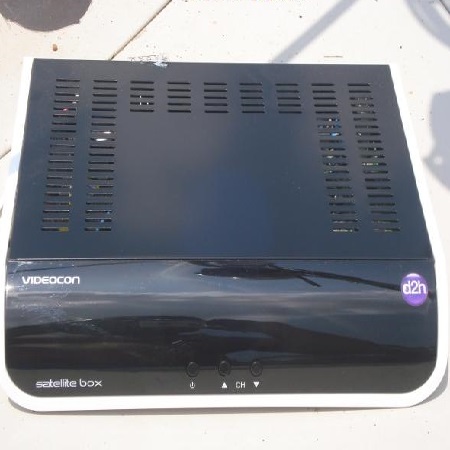
  • Videocon Industries plans new STB capacity by end-2014

    Videocon Industries plans new STB capacity by end-2014

    MUMBAI: The Indian government last year raised the import duties of set top boxes (STBs) from five per cent to 10 per cent in a bid to encourage Indian entrepreneurs to start making them indigenously. To no avail, Indian MSOs, DTH players, continued importing the boxes from China, Korea and Taiwan to meet the government mandate of digitising India’s cable TV sector.

    At least one player yesterday announced that it had taken up the gauntlet: electronics major Videocon Industries. Director Anirudh Dhoot told Press Trust of India that his company is planning to set up a one million STB manufacturing plant by end-2014. Dhoot told PTI that the plant is likely to be set up in either Punjab or Madhya Pradesh. 


    The Videocon group also runs Videocon d2h – one of the fastest growing DTH players in India. 


    The digitisation of cable TV in phase III and phase IV towns is expected to require around 80 million STBs; of which 60 million will likely be rolled out this year itself, totting up to a business potential of an estimated  Rs 7,500 crore at factory prices. The second and third phases of digitisation are scheduled to be completed by end 2014, but everyone in the industry expects a delay of about three to six months. If Videocon manages to get its plant to start churning out STBs by end this year, it could meet some of that demand. 


    The Indian cable TV industry has deployed around 22 million STBs during the first and second phase of digitisation; even as DTH players have deployed around 45-50 million STBs collectively over the years since DTH launched in India.


    Most of these were imports. Videocon, on its part, upped the capacity at its existing STB plant from 700,000 per annum to one million during the festival season last year. Now it plans to set up a new plant. Other players who are involved in the manufacture of STBs domestically include: Noida-based Dixon Technologies and Kortek Electronics.

  • Twitter co-founder Jack Dorsey joins Disney board of directors

    Twitter co-founder Jack Dorsey joins Disney board of directors

    MUMBAI: Walt Disney has named twitter co-founder Jack Dorsey as its independent board member. Reports also suggest that the company CEO Bob Iger can see a cut in his pay by 15 per cent.   

    Walt Disney on 23 December, through a statement, also announced the retirement of a former Cisco Systems chief technology officer Judith Estrin, citing tenure policy as a reason, which limits board service to 15 years. Estrin’s term comes to an end on 18 March 2014.

    Dorsey will stand for the election which will be held at Disney’s 18 March annual meeting. Dorsey confirmed the announcement by tweeting a famous quote from Walt Disney and also the sketches of Mickey Mouse.  At 36, Dorsey also is the CEO of the payments startup Square and will be the youngest board member in Disney.

    Iger through a statement said, “Jack Dorsey is a talented entrepreneur who has helped create groundbreaking new businesses in the social media and commerce spaces. His experience and perspective should be extremely valuable to Disney.”

  • Satellite & cable pay-TV subs slow down: Study

    Satellite & cable pay-TV subs slow down: Study

    MUMBAI: The satellite and cable pay-TV market is slowing down due to the emergence of new technology platforms.
     

    Net subscriber addition in the global pay-TV market increased by two per cent in the third quarter of the year over the prior quarter, according to ABI Research’s recent pay-TV market data.

    ABI Research practice director Jason Blackwell said, “The global number of pay-TV subscribers reached 692 million in the third quarter of 2010. Pay-TV subscriber growth is holding steady in a number of world regions.”
     

    Pay television markets have experienced many changes due to the entry of a number of new television platforms. These new platforms, such as digital terrestrial TV and online video, are stimulating more competition to the traditional pay-TV services. As a result, there is slower subscriber growth in satellite and cable television services.
     

    The slow growth in subscribers is notable especially in Western Europe and North America where the penetration rate is high. However, satellite and cable TV growth is expected to remain strong in the regions such as Eastern Europe and Latin America.
     

    Pay digital terrestrial television has seen success in countries such as France, Italy and Spain. Italian pay terrestrial television provider Mediaset is the leader in the pay terrestrial TV market. Mediaset added nearly 300,000 subscribers in 2Q-2010 to reach a total subscriber base of 4.4 million.
     

    ABI research associate Khin Sandi Lynn said, “At this moment Western Europe, with a comprehensive 99 per cent of the terrestrial pay-TV market, holds the largest terrestrial television market share”.
     

    There was strong growth in worldwide IPTV subscriptions in the third quarter of 2010, with more than 2.7 million IPTV subscribers added. Global broadband penetration is increasing, as well as the broadband speed. High-speed broadband opens an opportunity for operators to offer IPTV services. Western Europe remains the largest IPTV market, followed by the Asia-Pacific region and North America.
     

    ABI Research expects that the worldwide IPTV subscriber base will exceed 53 million at the end of 2011.

  • GroupM delves into Digital World 2013

    GroupM delves into Digital World 2013

    MUMBAI: “Internet is just a world passing around notes in the classroom,” said American television host and stand-up comedian Jon Stewart about the whole world wide web.

    Considering that the classroom has increased manifolds in the past couple of years with each and everyone using the internet ever second, every day of their life, Indiantelevision.com takes a look atGroupM’s recently released report, “This Year Next Year Interaction 2014” which highlights the impact of technology and tech companies on consumers and advertiser behaviour.

    The preview report mostly talks about the social media and video platforms and how the platforms have been utilised by various brands. The penetration and growth of smartphones in the world is stating the obvious and hence, it elaborates on how a few of the next billion online users will use a PC-like object as the principal method of access. Tablets and smartphones rule the roost, these days.

    The report goes on to state that by one mean or other, one-third of the world population is online. With television and print taking a backseat, advertisers have made PCs and now mobile devices a priority to reach out to the attentive audiences.   

    “However, with magnification of fragmentation, multi-tasking, active screen time and increasing adoption of over-the-top (OTT) and often ad-free media, the challenges among advertisers is increasing. Advertisers have to deliver effectively in more places and on more platforms with little additional resources,” highlights the report.

    The report goes on to say that 25 years after the web’s conception, what it delivers to consumers and to the business could not have been imagined by its creator. “Google is the 800-pound gorilla that has seamlessly combined its core revenue engine, search with a strong position in online video and successfully evolved both into mobile.”

    The report adds, “More significantly, Youtube has become the uber-network of video networks and is the wireframe on which more and more of the world’s video content hangs. With 25 per cent of all views on mobile devices and by Google’s definition that excludes tablets, Youtube sits alongside Facebook, twitter and Goggle search as one of the dominant applications of mobile consumption.”

    Global Youtube revenue is estimated, as per the report, at $5 billion and the top 10 brands which have been the platform’s biggest content creators include: Blackberry, DCShoecoUSA, Google, Coca Cola, Old Spice, GoPro, Samsung, Nike, Volkswagen and RedBull.

    Furthermore, the report goes on to say that if 2013 was the year of mobile advertising then Facebook and Twitter made it so. “Of its 700 million daily users, 500 million use the platform of Facebook via a mobile device. And if advertisers create more high-frequency engagement, they will in turn increase the algorithmics distribution of messages to a greater percentage of their fans and beyond, reducing the need to pay for that reach,” says the report.

    Also in 2013 Facebook positioned itself to participate in two new areas – search, long dominated by Google and ‘moments’ news, TV and otherwise on which Twitter has begun to build its revenue base. However, the report also states that twitter will never achieve the level of penetration of Facebook. “The platforms are so often referenced in the same sentence yet they have little in common other than as examples of the network effect as a catalyst of growth.”

    The top brands on the social networking site, as mentioned  in the report, are: Coca Cola, MTV, Disney, Red Bull, Converse, Starbucks, etc.

    Having said that, the report adds how many media companies have embraced Twitter as a tool  to extend the reach of their programming and deepen their advertiser relationship by re-distributing content on it. Top brands on Twitter are: Samsung, Starbucks, Whole Foods, Blackberry, Disney, Zappos, Chanel, says GroupM.

    The agency’s report has highlighted the benefits that professional networking site Linkedin provides to HR managers globaly, even, surprisingly in China. One third of the world’s profesionals, 95 per cent of Americans and 40 per cent Europeans use Linkedin, it says. With a quarter of a billion individual profiles, as well as 300,000 corporate profiles, it states and  goes on to explain how corporations, through their own profiles, sponsored updates and influencer content postings are investing significantly in building their brands and cohorts of followers.  The most-followed companies on the professional networking site are Google, IBM, HP, Microsoft, Apple etc.

    The report also looks at the online presence of  Apple, and its online music service iTunes and iTunesRadio. With almost 700 million iOS users globally, and 200 million iTunes accounts in the US it is a tour de force able to offer varying advertising options to advertisers. The report then goes on to examine how Yahoo, Microsoft (it acquired Nokia’s handset business this year), AOL, Amazon (almost 35 per cent of all digital customer journeys in the US end up at this online retailer, GroupM research states) and Electronic Arts have been dealing with the rapid evolution online and in digital and what kind of advertiser offerings they are drawing up, and how much success they are achieving.

    If one has to wrap up the year and see what’s next? “For advertisers the world will get more complex. The promise of the cloud and of big data implies an information adjacency and the ability to deliver content to the customer that promises super-precision in segmentation and targeting and by inference a value in an increasingly granular, dynamic and data-informed media environment,” as per the report.

    The report aims to give readers a real understanding of what’s happening in the world of online, and how they as marketers can get prepared to efficiently use the evolving ecosystem.

  • TERIs three-day digital conference ends today

    TERIs three-day digital conference ends today

    MUMBAI: With the aim of developing digital libraries and accelerating the process of knowledge management, the three-day conference by The Energy and Resources Institute (TERI) on International Conference on Digital Libraries (ICDL) 2013 themed ‘Vision 2020: Looking back 10 years and Forging New Frontiers’ concluded today.


    The conference brought together many experts and intellectuals from the industry and academic to deliberate on contemporary issues related to Digital Libraries. Some of the eminent speakers included University of Waikato, New Zealand Computer Science professor Ian Witten; P Microsoft Research India MD Anandan; Inflibnet, India director Jagdish Arora among many others.


    In the course of three days, the conference conducted nine thematic workshop-cum-panel sessions for intensive deliberations on topics like Applying Standards and Addressing Interoperability for Digital Libraries in a Networked World; National Mission on Libraries; Focus on Open Access; New Trend in e-Publishing; National Virtual Library of India; Digitisation and Digital Preservation; Revolutionising the Publishing Model and Technology For Libraries – Highest-Technology & Best Features, etc.


    The conference was inaugurated by the vice president of India, M Hamid Ansari. He said, “Knowledge would be the key driving force in the 21st century. The ability to use and create knowledge capital will determine a country capacity to empower and enable its citizens by increasing human capabilities. In this endeavor, digital library would be a critical instrument as they would enable people to access, share and apply knowledge in a more efficient and effective manner. The challenge before us now would be to overcome the digital divide that exists between north and south countries and also region within national boundaries. Democratisation of access to knowledge and creation a level playing field by bridging the digital divide would be essential for inclusive and sustained development.”


    Honorable Minister of Human Resource Development, Dr. M. M. Pallam Raju, who was also present at the opening ceremony, said “I am elated to notice the theme chosen for this important event. To me, most of the topics for deliberation are more relevant for education than ever before. This entails a radical improvement in existing systems of knowledge, as well as the creation of avenues for generating new forms of knowledge”.


    The objective of the conference included: To be a single platform for international and national experts, researchers, academics, and students to share and discuss advanced thoughts, experiences and to resolve critical issues relating to Digital Library Movement; to focus on the creation, adoption, implementation, and utilisation of Digital Libraries  and their future implications; and capacity building of knowledge professionals.


    TERI Director-General and Conference Chair of ICDL 2013, Dr. R. K. Pachauri, said “Digital libraries are a significant outcome of the unprecedented technological changes in the information sector that have taken place across the globe in recent years. These make it possible for documents, publications and knowledge in every field become accessible to every section of society. The International Conference on Digital Libraries (ICDL), which TERI is organising for the fourth time provides a unique global platform on which experts from round the world will be sharing their knowledge and vision of the future related to digital libraries. Developments in this field can revolutionise the systematization of knowledge and access to it for all sections of society.”

  • BARC meets today, set to appoint Mediametrie as its rating partner

    BARC meets today, set to appoint Mediametrie as its rating partner

    MUMBAI: The French audience measurement company Médiamétrie will be the ratings partner for the Broadcast Audience Research Council (BARC). Though multiple vendors, both Indian and international had thrown in their bids to be the one who would power BARC’s ratings, sources reveal that the council has opted for the French research agency. Apparently, the final decision was taken over the weekend wherein the — members of BARC met along with Mediametrie reps to sign on the dotted line.


    Mediametrie will be using audio watermarking tech to monitor TV consumption by its 20,000 strong panel. It involves inserting an identifying  mark inaudible to the human ear into the channel’s feed which is delivered to TV homes.. The technology enables different reception modes to be used to measure a TV programme’s audience.

    Médiamétrie features in the world’s top 25 market research firms’ list.


    The formal announcement is expected to be made later this month.  Sources have confirmed that deadline set by BARC such as launching the ratings service by mid-2014 will be met.


    The meeting which went on for two hours in the BARC office also discussed the financial aspects of the ratings, but another meeting is slated to be held for the same.


    BARC CEO Partho Dasgupta did not confirm the finalisation of the appointment of Mediametrie. Responding in an email he said:  “The board of BARC met today to decide on technology and the path ahead. There was unanimity in deciding on a leap in technology to be used in television measurement.  The board approved the management and the technical and commercial committees to go ahead and finalise with a couple of international companies for this. The team will be completing the pilots and will start deployments soon. The board also decided on the funding mechanism and is encouraged by the response received from banks for funding the project.”


    But sources indicate that it is indeed Mediametrie which will get the go ahead.


    According to sources, BARC will start the field trial of meters from January 2014. While the seeding of meters will start from June, the commercial data will be available in the market from October. While initially 20,000 meters will be seeded, BARC will seed 25,000 boxes by 2014 end.