Tag: technology

  • Guest Column: M&E industry in India: 5 not-to-be-missed trends

    The Indian M&E industry is growing at 15 per cent CAGR and is expected to double in size over the next five years. Almost all the sub-segments are growing in double digits. The existing ones are those in the middle of a consumption trend like on-demand content or beneficiaries of a regulatory push like digitisation.

    Here are the five biggest trends to watch out for:

    1.OTT

    Personalisation of content and delivery and real time access on multiple devices and platforms to make OTT mainstream. Big data through instant consumer analytics to become indispensable

    2.Digital Content as growth driver

    Growth to be driven by digital content in the internet industry in India as it doubles to $250bn in 5 years. Unprecedented proliferation of digital-first media brands like AIB, TVF, etc. Existing traditional media brands may reorient themselves to being digital-only brands. Repurposing widely popular content of the past on digital for consumption across multiple content formats may be a unique sound strategy.

    3.Immersive content as lead format

    Immersive content (VR/AR) to play an unexpected big role in the future. May become larger than any other format in the years to come.

    4.Technology to disrupt more than just content

    Technology to continue to disrupt the traditional ways of buying and selling advertising as programmatic, geo-targeting, etc becomes the new normal. TV and digital measurement to converge too as marketers look for platform-agnostic strategies.

    5.Convergence of M & E & Technology to undergird everything

    With cheap economics dictating the rationale, cloud-based services to drive content faster from creation to consumption thereby re-defining movement, distribution and management of content. Rapid convergence of media, entertainment and technology is interlinking content creation, distribution and consumption experiences.

    New media – signifying interplay between technology and media – is where the real excitement is. It offers a range of opportunities in content and platforms across gaming, video and music. Other than that, there are consolidation plays in traditional media like C&S distribution, film exhibition etc.

    public://Untitled-3_17.jpg

    (Piyush Sharma, a global tech, media and entrepreneurial leader, created the successful foray of Zee Entertainment in India and globally under the ‘Living’ brand. The views expressed here are of the writer’s and Indiantelevision.com may not subscribe to them.)


  • OYO survey reveals ‘safety’ as determining factor for women travellers

    New Delhi: OYO, India’s largest hotel network, recently conducted a survey among its women customers to unearth trends on how Indian women like to travel. The data is based on research conducted among 400 women in the age group 18-60+ across different locations in India, including Delhi, Maharashtra, Karnataka, Rajasthan, Odisha, Telangana and Madhya Pradesh.

    The survey threw up some interesting findings:

    ● 37% respondents reported travelling only for leisure, while 53% travelled for both work and leisure.

    ● Women appear to be more conscientious workers, or at least those with less disposable time on their hands as only 51% reported clubbing a work trip with personal break, while 23% claimed they had never considered it

    ● 27% respondents said they preferred travelling solo – of this, 36% said they enjoyed it but 33% said they had to opt for it because it was “difficult matching schedules with friends or companions”

    ● Friends (57%) rank higher than Family (51%) as “preferred travel companions” for women, but partners reign supreme at 62%

    ● Personal research via internet and magazines ranks higher (78%) than recommendations from friends & family (51%) while choosing a travel destination. Social media came third (32%) and movies trailed the last (12%) when it came to sparking travel inspiration. Kuch Kuch Nahee Hota?

    ● “Safety” ranked as the #1 factor followed by “cost of trip” when it came to selecting a travel destination

    ● Contrary to expectations, 69% women opted for budget hotels over five-star hotels (18%) while 6% preferred to stay in a hostel while travelling

    ● 10% respondents had never stayed with friends or family while travelling, but all had “often” or “sometimes” stayed at a budget hotel!

    ● While 10% women totally shot down the idea of impulsive trips, accommodation (52%) was the biggest concern followed by expense (29%) due to booking at short-notice

    ● Budget hotels (35%) topped the choice of accommodation for women travelling solo, followed by staying with friends or family (25%)

    Commenting on the findings, Abhinav Sinha, COO – OYO said, “Technology has brought about paradigm shifts in the way we live and work. Nowhere is this more evident than travel. From buying tickets to booking hotels and renting home-stays – the balance of power and choice has shifted to the customer. Businesses that keep a pulse on their customers to identify their expressed and evolving needs are able serve them better. Women are a significant set of travellers – undertaking travel for both personal and business reasons. Not surprisingly, 80% women reported that they take charge of their travel plans, often in consultation with friends or family. 52% reported that they liked taking impulsive trips – but interestingly more than half listed accommodation as their biggest concern. As service-providers it is important that we equip ourselves to serve the needs and expectations of this growing cohort.”

    OYO is the pioneer of affordable, predictable accommodation in the Indian hospitality sector. It offers several consumer friendly touch-points such as the OYO App which enables guests to control every aspect of their experience – from booking hotel and cabs, to ordering food – all from their smartphone. Recently, the company introduced OYO Captains, a unique concierge service to ensure smooth travelling and on-stay experience. OYO currently operates over 70,000 rooms in 200 cities in India and Malaysia.

  • Indian gaming revenue set to hit Rs 250 billion by 2019

    Indian gaming revenue set to hit Rs 250 billion by 2019

    MUMBAI: With the growing technology, not only the number of users in India is growing steadily but the mobile gaming users increased too.

    The latest report by mobile gaming trends and gaming habits the Seattle based enterprise SaaS for mobile marketing company has stated that Indian gaming revenue is set to double in the next three years and hit Rs 250 billion by 2019, owing its growth to the increase of smartphone penetration and higher in-app spending in the market. Combined with industry estimates this proves that mobile games in India are growing at an average rate of 56 per cent.

    The report titled, ‘India & Mobile Gaming: Poised for Massive Growth’ comprises insights and data collected from over 3,500 Indian smartphone owners and over 220 million mobile app installs in India mapped from January-September 2016.

    As per the Tune report, Indian mobile gamers are more likely to buy virtual goods. In fact, 34 per cent of Indians respondents admitted to spending money in mobile games every month. Interestingly, a tiny fraction of players are the highest contributors to game revenue, just as it is seen in other markets globally. Specific to India, 2.5 per cent of Indian gamers provide over half of game revenue, and 5 per cent account for almost 80 per cent of all game monetisation in the country.

    Regional Head of Sales India Ashwiny Thapliyal said, “India is already the world’s second-biggest market for smartphones. With 221 million smartphone owners and as many as 800 million Indian citizens joining the smartphone revolution over the next decade, India will emerge as the country with biggest global opportunity for growth. India is a mobile-first country and its people are mobile-centric buyers. This is one of the many reasons why we furthered our existing commitment towards the Indian market by opening TUNE’s first corporate office in India located at Delhi/NCR in November 2016. Our India office will also serve as our strategic hub for business in Southeast Asia.”

    Another key finding revealed that women are serious mobile gamers in India, with 87 per cent playing a game at least one hour per week. This number matches the North American data, where women make up 55 per cent of all mobile gamers. Of the women surveyed, 63% said that they prefer playing single player games and 18 per cent prefer playing against another player.

    Interestingly, women prefer single-player games to an even greater extent than men.

    Tune’s mobile economist John Koetsier added, “As per our research, the number of app installs in India doubled last year and in fact, Indians downloaded more than 3X as many commerce-oriented apps per capita as the next highest country, Brazil. Although relatively nascent, Indian mobile gaming industry is catching-up fast and our research highlights the immense potential it holds for gamers, game developers, mobile publishers and advertisers.”

    Indian Gamers and their Gaming Habits:

    84% of Indian smartphone owners have games on their phones.

    37% of gamers have three or more games on their phones.

    47% of Indians in top urban cities like Delhi and Mumbai tend to install one to two games on their phone.

    Indians are very eager to try new apps: a majority install new apps every week. 90% of Indian smartphone owners download games regularly and are very willing to try new apps, especially new games.

    Those with cheaper smartphones change to new games more frequently possibly due to low storage/device memory.

    Google Play is the undisputed leader in India, taking 94% share of all game installs.

    The cheaper the phone one possesses, the more likely is an Indian consumer to get new apps straight from a friend or from the web.

    Almost 7% of people get new apps from their friends.

    Gaming Behaviour Trends: Almost 9 in 10 Indian smartphone owners play games weekly.

    86% of people play at least one game regularly and almost a third play more than three games regularly.

    Indians who own expensive smartphones worth Rs 30,000 and up are less likely to play games.

    57% of Indian mobile gamers prefer single-player games.

    Only three of the top 10 downloaded games are team or multi-player games.

    Indians are loyal gamers, with significantly higher user retention compared to global averages.

    Almost a third of Indian gamers are exceptionally loyal to the games they love, at times playing them for months at stretch.

    Just over one in 10 Indians play the same game regularly for over a year.

    50% of Indians give a game just a few days and switch to a new one, if it’s not interesting, fun, or engaging enough they switch to a new one.

    Gender Matters: Women play just as many games as men, but men play for longer.

    92% men play at least one hour per week as against 87% women who play at least one hour per week.

    57% of men play more than two hours each week, compared to 48% of women.

    Interestingly, 54% men prefer single-player games. Team games get the least attention from both Men (14%) and Women (11%). Young men i.e. teens under 17 play less than men aged 20 or above.

    Mobile Game Monetisation and in-app Purchases:

    Top games tend to be team or multiplayer games; 8 out of the top 10 grossing games in India are multiplayer or team games

    Similar to world average, 2.5% of Indian gamers provide over half of game revenue, and 5% account for almost 80% of all game monetisation in the country.

    Young gamers are the least likely to pay; 71% of Indian smartphone owners (under the age of 21) buy nothing in games every month.

    2% of gamers spend over Rs 200 each month, and almost one in 10 spend over Rs 50 every month.

    32% of gamers use digital wallet to cover their mobile game purchases, while 25% use a debit card as opposed to a credit card- widely use payment mode internationally.


  • Indian gaming revenue set to hit Rs 250 billion by 2019

    Indian gaming revenue set to hit Rs 250 billion by 2019

    MUMBAI: With the growing technology, not only the number of users in India is growing steadily but the mobile gaming users increased too.

    The latest report by mobile gaming trends and gaming habits the Seattle based enterprise SaaS for mobile marketing company has stated that Indian gaming revenue is set to double in the next three years and hit Rs 250 billion by 2019, owing its growth to the increase of smartphone penetration and higher in-app spending in the market. Combined with industry estimates this proves that mobile games in India are growing at an average rate of 56 per cent.

    The report titled, ‘India & Mobile Gaming: Poised for Massive Growth’ comprises insights and data collected from over 3,500 Indian smartphone owners and over 220 million mobile app installs in India mapped from January-September 2016.

    As per the Tune report, Indian mobile gamers are more likely to buy virtual goods. In fact, 34 per cent of Indians respondents admitted to spending money in mobile games every month. Interestingly, a tiny fraction of players are the highest contributors to game revenue, just as it is seen in other markets globally. Specific to India, 2.5 per cent of Indian gamers provide over half of game revenue, and 5 per cent account for almost 80 per cent of all game monetisation in the country.

    Regional Head of Sales India Ashwiny Thapliyal said, “India is already the world’s second-biggest market for smartphones. With 221 million smartphone owners and as many as 800 million Indian citizens joining the smartphone revolution over the next decade, India will emerge as the country with biggest global opportunity for growth. India is a mobile-first country and its people are mobile-centric buyers. This is one of the many reasons why we furthered our existing commitment towards the Indian market by opening TUNE’s first corporate office in India located at Delhi/NCR in November 2016. Our India office will also serve as our strategic hub for business in Southeast Asia.”

    Another key finding revealed that women are serious mobile gamers in India, with 87 per cent playing a game at least one hour per week. This number matches the North American data, where women make up 55 per cent of all mobile gamers. Of the women surveyed, 63% said that they prefer playing single player games and 18 per cent prefer playing against another player.

    Interestingly, women prefer single-player games to an even greater extent than men.

    Tune’s mobile economist John Koetsier added, “As per our research, the number of app installs in India doubled last year and in fact, Indians downloaded more than 3X as many commerce-oriented apps per capita as the next highest country, Brazil. Although relatively nascent, Indian mobile gaming industry is catching-up fast and our research highlights the immense potential it holds for gamers, game developers, mobile publishers and advertisers.”

    Indian Gamers and their Gaming Habits:

    84% of Indian smartphone owners have games on their phones.

    37% of gamers have three or more games on their phones.

    47% of Indians in top urban cities like Delhi and Mumbai tend to install one to two games on their phone.

    Indians are very eager to try new apps: a majority install new apps every week. 90% of Indian smartphone owners download games regularly and are very willing to try new apps, especially new games.

    Those with cheaper smartphones change to new games more frequently possibly due to low storage/device memory.

    Google Play is the undisputed leader in India, taking 94% share of all game installs.

    The cheaper the phone one possesses, the more likely is an Indian consumer to get new apps straight from a friend or from the web.

    Almost 7% of people get new apps from their friends.

    Gaming Behaviour Trends: Almost 9 in 10 Indian smartphone owners play games weekly.

    86% of people play at least one game regularly and almost a third play more than three games regularly.

    Indians who own expensive smartphones worth Rs 30,000 and up are less likely to play games.

    57% of Indian mobile gamers prefer single-player games.

    Only three of the top 10 downloaded games are team or multi-player games.

    Indians are loyal gamers, with significantly higher user retention compared to global averages.

    Almost a third of Indian gamers are exceptionally loyal to the games they love, at times playing them for months at stretch.

    Just over one in 10 Indians play the same game regularly for over a year.

    50% of Indians give a game just a few days and switch to a new one, if it’s not interesting, fun, or engaging enough they switch to a new one.

    Gender Matters: Women play just as many games as men, but men play for longer.

    92% men play at least one hour per week as against 87% women who play at least one hour per week.

    57% of men play more than two hours each week, compared to 48% of women.

    Interestingly, 54% men prefer single-player games. Team games get the least attention from both Men (14%) and Women (11%). Young men i.e. teens under 17 play less than men aged 20 or above.

    Mobile Game Monetisation and in-app Purchases:

    Top games tend to be team or multiplayer games; 8 out of the top 10 grossing games in India are multiplayer or team games

    Similar to world average, 2.5% of Indian gamers provide over half of game revenue, and 5% account for almost 80% of all game monetisation in the country.

    Young gamers are the least likely to pay; 71% of Indian smartphone owners (under the age of 21) buy nothing in games every month.

    2% of gamers spend over Rs 200 each month, and almost one in 10 spend over Rs 50 every month.

    32% of gamers use digital wallet to cover their mobile game purchases, while 25% use a debit card as opposed to a credit card- widely use payment mode internationally.
  • Oppo shines at Emerging Brand Award 2016

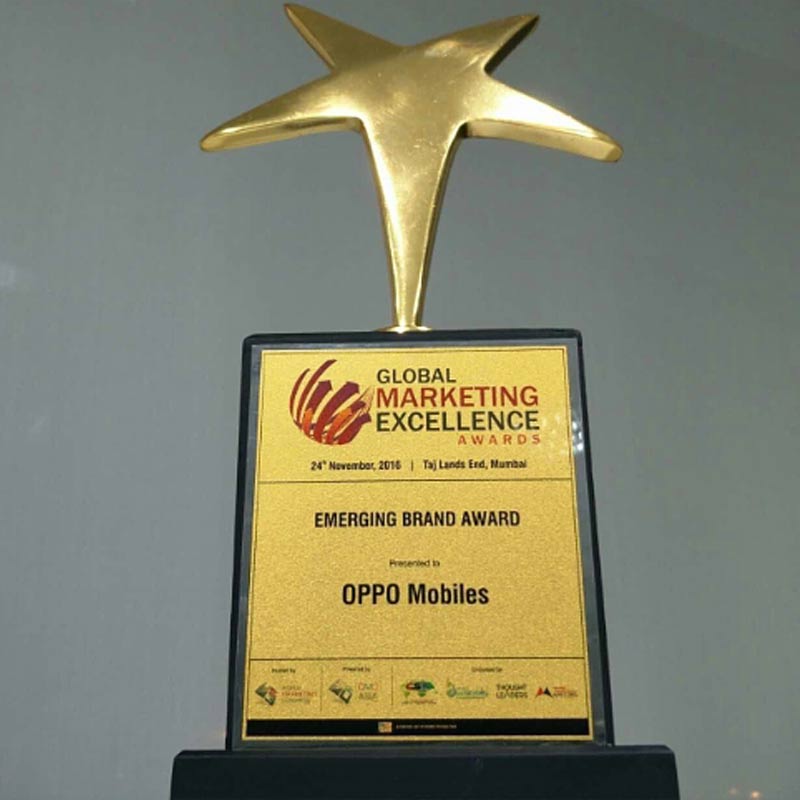
    Oppo shines at Emerging Brand Award 2016

    MUMBAI: Chinese smart phone Oppo has won the Emerging Brand Award at World Marketing Congress Global Brand excellence awards for 2016. The brand has been associated with its successful promotion of Selfie Expert smartphones and strong connection with young consumers in 2016.

    On this achievement, Oppo India brand director Will Yang said, “From the brand aspect, we are working hard in making our brand a well-known name for its innovation and quality over the coming years. The great camera experience and high built-quality has enabled our brand to stand out in global markets, and this will continue to be one of our core focus in the coming future as well. We aim to be one of best premium mobile brands here in India and globally.”
    Based on the study of targeted consumers, Oppo had launched Selfie Expert series – F1, F1 Plus and the latest F1s in 2016. As per the data from GFK, Oppo has become the No. 2 brand in India’s offline market in September, based on sales value.

  • Oppo shines at Emerging Brand Award 2016

    Oppo shines at Emerging Brand Award 2016

    MUMBAI: Chinese smart phone Oppo has won the Emerging Brand Award at World Marketing Congress Global Brand excellence awards for 2016. The brand has been associated with its successful promotion of Selfie Expert smartphones and strong connection with young consumers in 2016.

    On this achievement, Oppo India brand director Will Yang said, “From the brand aspect, we are working hard in making our brand a well-known name for its innovation and quality over the coming years. The great camera experience and high built-quality has enabled our brand to stand out in global markets, and this will continue to be one of our core focus in the coming future as well. We aim to be one of best premium mobile brands here in India and globally.”
    Based on the study of targeted consumers, Oppo had launched Selfie Expert series – F1, F1 Plus and the latest F1s in 2016. As per the data from GFK, Oppo has become the No. 2 brand in India’s offline market in September, based on sales value.

  • Da Vinci Learning launches kids OTT app

    Da Vinci Learning launches kids OTT app

    MUMBAI: Lately more and more digital content aggregators are waking up to the potential of offering a kids only digital video platform. Being fast adopters of technology, kids are the first ones to become the digital consumers. In a country where more than one third of the population are kids and youngsters, advertisers too are looking for ways to tap this raw consumer base. Thus kids only OTT apps are on the rise; NexgTV Kids and Voot’s kids only section being the recent few examples.

    With an intent to give these a tough competition, German kids television content leader Da Vinci Learning has now entered this market with its very own OTT service.

    The platform will provide on the go access to the programming and content of the channel. The OTT service has been launched as a web based service accessible through www.davinci-learning.in and will be soon available via an app as well.

    Playing the ‘safe content’ card, Da Vinci Learning’s OTT play is banking on its reputation for curating kids friendly and educational IPs for its viewers.

    The platform allows the users to choose from a wide range of content including Maths, Science, Space, Wildlife, Food etc. After logging in, the kid can watch full episodes on all their favourite topics and can also keep a track of the show timings on-air. The portal has different sections like Your Favourites, What’s Hot, Da Vinci’s Superstars where kids can view their favourite shows as well as shows that are popular with other kids. They will also be able to rate, like and add shows to their wishlist. The thematic of the service is built with kids in mind and uses very intuitive and a kids friendly design.

    Commenting on the same, Da Vinci Learning marketing director Monomita Mukhopadhyay said, “Today the viewer’s consumption pattern is changing dynamically; kids no more stick to the flat screen and wait for programs, rather they access content anytime, anywhere and on multiple devices of their choice.” She further added, “OTT is expected to grow exponentially in coming years and India will be the second largest market in Asia Pacific according to the Media Partners Asia report. Being in the TV broadcast industry we are committed to keeping pace with the dynamically changing scenario of the industry.”

    As a part of their OTT portal launch offering, Da Vinci Learning is offering a limited period free subscription to the portal. Some of the show highlights available at OTT play are Little Einstein, Mind-blowing breakthroughs, Maths is all around us, Gastroblast, Chasing happiness etc.

  • Da Vinci Learning launches kids OTT app

    Da Vinci Learning launches kids OTT app

    MUMBAI: Lately more and more digital content aggregators are waking up to the potential of offering a kids only digital video platform. Being fast adopters of technology, kids are the first ones to become the digital consumers. In a country where more than one third of the population are kids and youngsters, advertisers too are looking for ways to tap this raw consumer base. Thus kids only OTT apps are on the rise; NexgTV Kids and Voot’s kids only section being the recent few examples.

    With an intent to give these a tough competition, German kids television content leader Da Vinci Learning has now entered this market with its very own OTT service.

    The platform will provide on the go access to the programming and content of the channel. The OTT service has been launched as a web based service accessible through www.davinci-learning.in and will be soon available via an app as well.

    Playing the ‘safe content’ card, Da Vinci Learning’s OTT play is banking on its reputation for curating kids friendly and educational IPs for its viewers.

    The platform allows the users to choose from a wide range of content including Maths, Science, Space, Wildlife, Food etc. After logging in, the kid can watch full episodes on all their favourite topics and can also keep a track of the show timings on-air. The portal has different sections like Your Favourites, What’s Hot, Da Vinci’s Superstars where kids can view their favourite shows as well as shows that are popular with other kids. They will also be able to rate, like and add shows to their wishlist. The thematic of the service is built with kids in mind and uses very intuitive and a kids friendly design.

    Commenting on the same, Da Vinci Learning marketing director Monomita Mukhopadhyay said, “Today the viewer’s consumption pattern is changing dynamically; kids no more stick to the flat screen and wait for programs, rather they access content anytime, anywhere and on multiple devices of their choice.” She further added, “OTT is expected to grow exponentially in coming years and India will be the second largest market in Asia Pacific according to the Media Partners Asia report. Being in the TV broadcast industry we are committed to keeping pace with the dynamically changing scenario of the industry.”

    As a part of their OTT portal launch offering, Da Vinci Learning is offering a limited period free subscription to the portal. Some of the show highlights available at OTT play are Little Einstein, Mind-blowing breakthroughs, Maths is all around us, Gastroblast, Chasing happiness etc.

  • LeEco launches Le 2 and Le Max2, along with LeMall

    LeEco launches Le 2 and Le Max2, along with LeMall

    MUMBAI: LeEco has unveiled its second generation ‘superphones’, Le 2 and Le Max2, with the company’s symbolized content ecosystem and membership. The giant venture has also launched its marketplace e-commerce website LeMall.

    The company also revealed a Continual Digital Lossless Audio (CDLA) type-C earphone. At the event which was conducted today at New Delhi, LeEco’s official song was also revealed, composed and produced by Pritam’s studio Jam8 and sung by Nakash Aziz.

    Le Holdings VP and APAC CEO Tin Mok said, “Today is an extremely important day for us in our India journey so far. It marks our entry into the thriving e-commerce industry with the launch of LeMall. Additionally, we are thrilled to bring our second generation Superphones with supertainment to India. Also, we’re happy to have achieved a significant milestone by pioneering digital lossless sound experiences. As forerunners in bringing the breakthrough technology as well as great features at a disruptive price, we remain committed to bringing best-in-class devices and services to our users in India.”

    Le 2 comes at a price of Rs. 11,999, including one year membership, which is worth Rs 4,900 if purchased alone while for Le Max2, the 4GB+32GB model will cost Rs 22,999, and the 6GB+64GB version will be at a price of Rs 29,000 and will include a one-year membership.

    Both Le 2 and the Le Max2 will be available on Flipkart and LeEco’s very own marketplace e-commerce website LeMall.com soon. Registration for both the models will be open on 20 June on Flipkart.

    LeEco India smart electronics business COO Atul Jain unveiled the 2nd generation of Superphones, calling them redefine product value. “LeEco is ushering into the ET Era, or what we call Ecosystem Technology Era. It’s time to end the practice of taking the consumers a ride and put an end to profit-oriented business models, but actually redefine product value”, he added. He also shared that the devices, new and old, are now gradually available in retail stores across the country, apart from the online point of sale through Flipkart and LeMall. As reported earlier by indiantelevision.com, the company expects to launch its own brick and mortal stores in the upcoming two months.

    LeMall will serve as the primary channel for customers to engage with LeEco and become a part of the ecosystem through the products and services.

    “All the announcements we made today are in synergy with our expansion plans in India and are a testimony to our commitment to the Indian market. We are very grateful for the tremendous user responses we have received so far on all our products and services. We remain committed to raising the bar each time and creating newer industry benchmarks with our technological prowess”, added Mok.

    In the coming months, through LeEco Membership program, users can get access to a collection of 2000+ movies. LeEco is all set to have the largest collection of blockbuster and award winning movies from across the world including top Regional Cinema from India – across Hindi, Tamil, Telugu, Marathi & Bengali films. Meanwhile, the program provides 3000+ hours of curated shows, 150+ live TV channels and 3.5 million songs for users’ choices. LeEco takes the lead in offering 1.9 million songs with lossless audio, bringing the users’ audio experience to a brand new height.

    LeEco has ambitious plans to set-up fully owned exclusive retail stores in top 8 to 10 cities, starting with New Delhi, Mumbai and Bengaluru along with 500 franchise stores. The company will showcase its entire product and services ecosystem at the stores; ranging from phones, TVs, VR Headsets, Bluetooth devices and power banks.

  • LeEco launches Le 2 and Le Max2, along with LeMall

    LeEco launches Le 2 and Le Max2, along with LeMall

    MUMBAI: LeEco has unveiled its second generation ‘superphones’, Le 2 and Le Max2, with the company’s symbolized content ecosystem and membership. The giant venture has also launched its marketplace e-commerce website LeMall.

    The company also revealed a Continual Digital Lossless Audio (CDLA) type-C earphone. At the event which was conducted today at New Delhi, LeEco’s official song was also revealed, composed and produced by Pritam’s studio Jam8 and sung by Nakash Aziz.

    Le Holdings VP and APAC CEO Tin Mok said, “Today is an extremely important day for us in our India journey so far. It marks our entry into the thriving e-commerce industry with the launch of LeMall. Additionally, we are thrilled to bring our second generation Superphones with supertainment to India. Also, we’re happy to have achieved a significant milestone by pioneering digital lossless sound experiences. As forerunners in bringing the breakthrough technology as well as great features at a disruptive price, we remain committed to bringing best-in-class devices and services to our users in India.”

    Le 2 comes at a price of Rs. 11,999, including one year membership, which is worth Rs 4,900 if purchased alone while for Le Max2, the 4GB+32GB model will cost Rs 22,999, and the 6GB+64GB version will be at a price of Rs 29,000 and will include a one-year membership.

    Both Le 2 and the Le Max2 will be available on Flipkart and LeEco’s very own marketplace e-commerce website LeMall.com soon. Registration for both the models will be open on 20 June on Flipkart.

    LeEco India smart electronics business COO Atul Jain unveiled the 2nd generation of Superphones, calling them redefine product value. “LeEco is ushering into the ET Era, or what we call Ecosystem Technology Era. It’s time to end the practice of taking the consumers a ride and put an end to profit-oriented business models, but actually redefine product value”, he added. He also shared that the devices, new and old, are now gradually available in retail stores across the country, apart from the online point of sale through Flipkart and LeMall. As reported earlier by indiantelevision.com, the company expects to launch its own brick and mortal stores in the upcoming two months.

    LeMall will serve as the primary channel for customers to engage with LeEco and become a part of the ecosystem through the products and services.

    “All the announcements we made today are in synergy with our expansion plans in India and are a testimony to our commitment to the Indian market. We are very grateful for the tremendous user responses we have received so far on all our products and services. We remain committed to raising the bar each time and creating newer industry benchmarks with our technological prowess”, added Mok.

    In the coming months, through LeEco Membership program, users can get access to a collection of 2000+ movies. LeEco is all set to have the largest collection of blockbuster and award winning movies from across the world including top Regional Cinema from India – across Hindi, Tamil, Telugu, Marathi & Bengali films. Meanwhile, the program provides 3000+ hours of curated shows, 150+ live TV channels and 3.5 million songs for users’ choices. LeEco takes the lead in offering 1.9 million songs with lossless audio, bringing the users’ audio experience to a brand new height.

    LeEco has ambitious plans to set-up fully owned exclusive retail stores in top 8 to 10 cities, starting with New Delhi, Mumbai and Bengaluru along with 500 franchise stores. The company will showcase its entire product and services ecosystem at the stores; ranging from phones, TVs, VR Headsets, Bluetooth devices and power banks.