Tag: technology

  • Experience Driven Businesses Likely To Grow Revenue 1.8x Faster Than Other Companies: Adobe – Forrester APAC Research

    Experience Driven Businesses Likely To Grow Revenue 1.8x Faster Than Other Companies: Adobe – Forrester APAC Research

    MUMBAI: New Adobe-commissioned research has confirmed that brands which invest in experience transformation across people, processes and technology, achieve superior business performance. By investing across these disciplines, businesses in Asia Pacific (APAC) can trigger a transformation in customer experience that results in increased revenue and a rise in the acquisition and retention of customers.

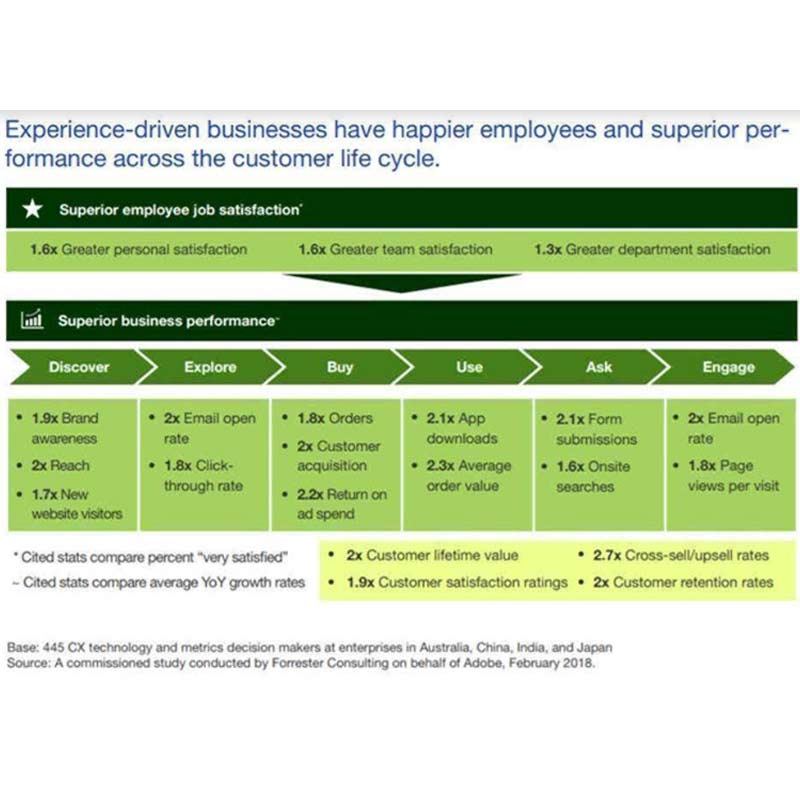
    Adobe commissioned Forrester Consulting to evaluate the business impact of investing in customer experience across the customer lifecycle. The study, The Business Impact of Investing in Customer Experience – A Spotlight On Asia Pacific, found that long term investment in customer experience is paying off for those brands willing to embrace it. The study found that APAC brands focusing on customer experience achieve an average revenue growth rate of 23%, compared with 13% of other companies surveyed.

    “It is amply clear that customer experience has moved from being a competitive differentiator to a business imperative for brands, said Kulmeet Bawa, Managing Director, South Asia, Adobe. “In evolving markets like India, significant advances in technology coupled with increasing internet penetration and mobile proliferation have had a huge impact in the way brands are interacting with their audience. The need to be able to provide rich and meaningful customer journeys across channels is leading brands to assume the role of experience makers, to succeed in today’s digital era.”

    Key findings of the study include:

    · Experience driven brands sacrifice short term wins in favor of creating holistic experiences.  Organizations that prioritize holistic customer experiences report higher costs, however they enjoy more than twice as much return on ad spend and are also 1.8x more likely to see revenue growth. They report 80 per cent higher year-on-year growth rates, and a doubling of their customer lifetime value.

    · Experience driven businesses are customer obsessed. They invest in specific customer experience and marketing initiatives such as loyalty programs and customer analytics; they are also twice as likely to increase their investment year-on-year.

    · Experience driven businesses report happier and more engaged employees. Employees in these businesses enjoy 60 per cent greater personal and team satisfaction than their counterparts in other businesses. They also feel 30 per cent greater company-wide satisfaction. 

    “The age of the experience driven business is well and truly upon us and it’s encouraging to see brands across APAC investing in experiences and customer loyalty,” said Scott Rigby, Head of Digital Transformation, Adobe.

    “There is a higher cost for these businesses, but the boost to their revenue growth rate, customer lifetime value, and even the happiness of their employees all mean the investment is worth it.

    “Customers are responding to businesses that are clearly dedicated to providing a unique and customized experience for their entire journey. As customers become more accustomed to this, businesses that don’t manage to deliver that experience are likely to be left behind.”

    Forrester conducted this survey with 1,269 marketing, advertising, CX, digital, and analytics business leaders at global enterprises to explore this topic. This spotlight focuses on the results of the 445 respondents surveyed in Asia Pacific (APAC): professionals with responsibility for CX technology decisions and metrics in Australia, China, India, and Japan.

  • India Mobile Congress Day –  2 Run Down

    India Mobile Congress Day – 2 Run Down

    New Delhi: The second day of India Mobile Congress, which is one of the biggest marquee Mobile, Internet, and Technology event for South-East Asia, saw the overwhelming response and attended by more than 18000 people.

    Key Highlights of the Day- 2

    Sessions

    The 2nd day of IMC 2018 started on a high note with the Global CEOs Conclave, which included plenary sessions on subjects such as Networks of Tomorrow, Emerging Technologies, Power of Content, Open Source Technologies etc. Who’s who of the global technology arena came together to deliberate on the future of technology and how it will bring about paradigm shifts in the way we go about our day to day lives.

    The conversational sessions were attended by global speakers such as Mr. Durga Malladi, Senior Vice President, Engineering, Qualcomm, Mr. Sanjay Kaul, President, Asia Pacific and Japan, Service Provider Business, Cisco, Dr. Jay Kim, VP, Samsung Electronics, Mr. Jay Chen, CEO, Huawei India, Dr. Anand Agarwal, Group CEO and Whole-time Director, Sterlite Technologies Limited, Mr. Nunzio Mirtillo, Senior Vice President and Head of Market Area, South East Asia, Oceania & India, Ericsson. The session was moderated by Balesh Sharma, CEO, Vodafone India Limited. They talked about how 5G would be the key drivers for new technologies and innovations. 5G is not just about speed but more about adaptability and flexibility. 5G will enable us to connect many new devices and this will be supported by AI. The next generation networks will be very complex for humans to handle and therefore AI and machines will be needed to manage.

    Panelists included Mr. Pardeep Kohli, President and CEO, Mavenir, Mr. Jim Jefferies, President and CEO, IEEE, Mr. Phil Twist, VP, Networks Marketing and Communications, Nokia, Mrs. Nivruti Rai, VP, Data Center Group, Country Head, Intel India, Mr. Jimmy Mizrahi, GM Global Portfolio, ECI Telecom.

    “Power of Content” was the session which focused on how technology is driving exponential data creation and consumption and how content delivery is going to be paramount in the future. The speakers highlighted the growth in user generated content, even from Tier 2 & 3 cities, where the content is both produced and consumed by consumers themselves.

    The panelists for the session included Mr. Matteo Maga, Managing Director, CMT, Accenture, Mr. Hiren Gada, CEO, Shemaroo Entertainment Limited and Mr. Sameer Batra, CEO, Wynk.

    IEEE-TSDSI 5G Technology and Standards Workshop

    The IEEE-TSDSI 5G workshop brought together technology experts and stakeholders from the Government, Industry, Research and Development Organizations, Academia to discuss emerging trends in 5G technologies, the opportunities and challenges that these pose for a broad spectrum of verticals including tactical and first responder missions, and infrastructure and ecosystem preparedness. The workshop is expected to serve as a catalyst to help define various use cases, drive standards, and investigate deployment issues suitable for 5G networks.

    Mr. Jim Jefferies, President, IEEE mentioned that, "Given the complexity of 5G technology, a successful implementation of this technology would require deep expertise ranging from semiconductor physics, Massive MIMO, Software Defined Networks, Shared Spectrum Access, Wireless Backhaul, Security and Applications to name a few."

    Mr. Jim added that "IEEE through its research and technical depth across its societies and through the IEEE Future Networks along with strong expertise in standards development through IEEE Standards Association will play a key role in driving this next generation technology globally. IEEE is also focusing on the region specific use cases and applications, including specific requirements for success of 5G deployments in India".

    Attendees learnt about and discussed emerging trends in 5G technologies, and the opportunities and challenges that these pose for a broad spectrum of verticals including tactical and first responder missions, and infrastructure and ecosystem preparedness. Ultimately, this workshop will serve as a catalyst to help define various use cases, drive standards and investigate deployment issues suitable for 5G networks.

    Innovation sessions

    Similarly, there were sessions on pro-innovation regulation and privacy, The Emerging World of Analytics, Artificial Intelligence, E-tail – The need of the Future, HealthTech – Age of Cyborgs, Industry 4.0: Building Factories of the Future, M-Education, Value Creation through Digital Marketing, Future of Enterprise, Aadhaar etc.
    Other sessions of Day 2 included discussions around The Emerging World of Analytics: Creating Business Solutions, HealthTech – Age of Cyborgs, Value Creation through Digital Marketing, Artificial Intelligence: Innovation, Investments, Ethics and Responsibilities, Industry 4:0: Building Factories of the Future, Future of Enterprise – Serving the Millennials, Next Generation Devices. Panelists for these sessions included Mr. Sandeep Bhushan, Director and Head Global Marketing Solutions, Facebook, Dr. Praveen Chandra, Chairman of Interventional Cardiology, Medanta, Gurgaon, Ms Sumili Chatterjee, VP and Head Brand, BCCL, Mr. Santanu Bhattacharya, Chief Data Scientist, Bharti Airtel Limited among others.

    Huawei

    Huawei today announced the launch of its OpenLab in India to provide a one-stop ICT infrastructure support for smart city and enterprises digitisation transformation. A testimony to Huawei’s commitment to Government of India’s Digital India agenda, the OpenLab Delhi aims to establish an industry ecosystem and serve as a co-innovation platform for Huawei, its customers and partners, both in India and global, for incubating industry solutions to address the challenges of digital transformation.

    Sterlite Tech

    Sterlite Tech leverages Red Hat technology to enable Programmable Networks of the future

    Sterlite Tech, a global data networks solutions company, announced that it will develop and deliver software-enabled programmable solutions using Red Hat’s portfolio of open, enterprise-grade technologies. The solutions will enable communication service providers, enterprises and citizen networks to realise the full potential of web-scale Network Function Virtualisation Infrastructure (NFVI) platform, for their network automation and Software Defined Network (SDN) initiatives.

    Given the volume and variability in data demand by end users in today’s digital landscape, the networks of today and tomorrow need to be higher-speed, more secure, programmable and more reliable. To enable this, Sterlite Tech will leverage Red Hat’s suite to help develop a solution-stack that is more open and vendor agnostic. This will be set up at Sterlite Tech’s Centre for Smarter Networks (CSN), showcasing its SDN and NFV offerings and next-generation revenue-management software, which builds upon the Red Hat NFV solution.

    Sterlite Tech combines network design innovation, service engineering with FTTx MANTRA

    Sterlite Tech, a global data network solutions company, today launched all new – FTTx MANTRA – an end-to-end FTTx-as-a-service solution. This solution allows swift roll-out of Fibre-to-the-Point (FTTx) networks at the scale, latency and agility needed to suit all future requirements of 5G, Internet of Things (IoT) applications, for global communication service providers, data centres and citizen networks.

    Uniting design innovation and expertise in service engineering onto a single technology platform, the Company’s indigenously developed FTTx MANTRA – Massive Agile Network Transformation, brings together the power of five I’s: Ingenious optical-fibre products, Integrated network design, Innovative virtualisation, Inclusive approach to hyper-scale network deployment, Intelligent software solutions that use analytics and Big Data.

    As consumers’ expectations for a seamless user experience across all devices is on the rise, and with 5G, IoT, Virtual and Augmented Reality on the verge of disrupting the global data consumption, Sterlite Tech has developed this technology to ensure faster and easier fibre infrastructure roll-out to the customers’ end-point. This new hands-on technology assists early adopters to reduce time-to-market of consumer broadband services as well as capital and operational costs of network deployment.

    Sterlite Tech is showcasing its inventive data network capabilities that make up the FTTx MANTRA along with the world’s slimmest 432F Cable, LEAD360 Execution Approach, Network Virtualisation approach with Digital Commerce and Customer Management platform and many other exciting experiences and technologies in Hall B, Booth 1.4 at India Mobile Congress 2018, taking place at Aerocity, New Delhi, India until October 27, 2018.  

    Follow updates on #IMC2018

    For more information please visit us at www.indiamobilecongress.com

    Write to us at:

    Twitter: @exploreIMC

    Facebook: https://www.facebook.com/IndiaMobileCongress
     

  • Google Assistant becomes bilingual

    Google Assistant becomes bilingual

    MUMBAI: Google keeps dominating the tech scene across world with constant upgradation of its features. The tech giant has announced that it will now be able to understand and speak more than one language at a time.

    Users can now speak two languages interchangeably with the Assistant on smart speakers and phones. This move is a part of Google’s multi-year effort to make user-Assistant conversations more natural.

    “Currently, the Assistant can understand any pair of languages within English, German, French, Spanish, Italian, and Japanese. We’ll be expanding to more languages in the coming months,” the company said. It is also aiming to make Assistant trilingual in the future.

    In US market, Google’s Home speakers lag behind Amazon.com’s Echo speakers with roughly 27 percent of the market as compared with Amazon’s 41 percent. But according to analysts, the scene is different internationally as Amazon doesn’t have the same brand recognition outside of the United States.

    “We hope multilingual will encourage more use of the Assistant in bilingual homes, thus helping us continue to improve our training models,” Google  said as quoted by The Washington Post.

  • Conekt to connect Indians with quality electronic accessories

    Conekt to connect Indians with quality electronic accessories

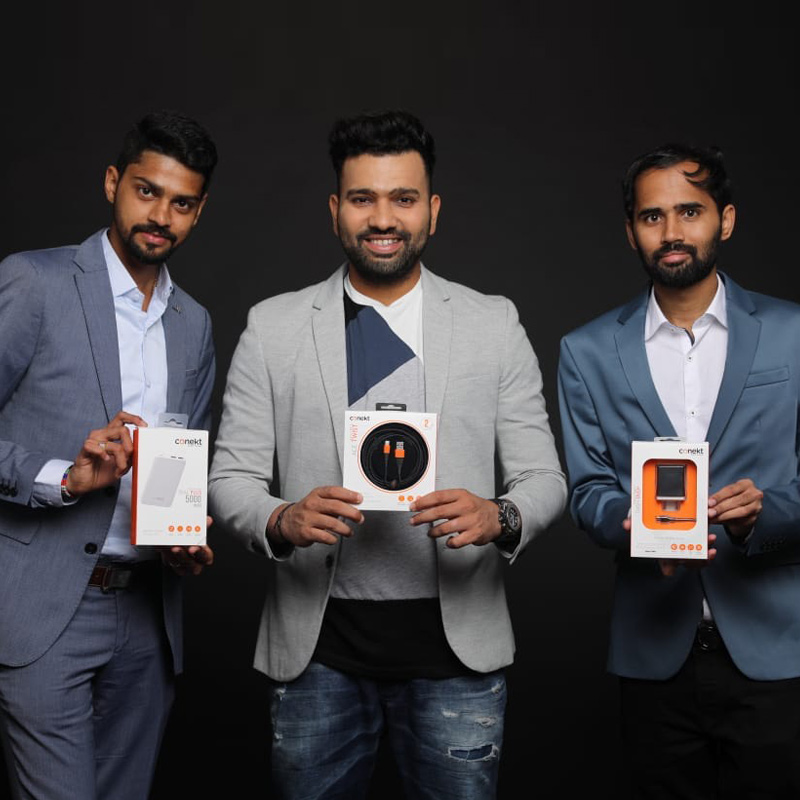
    MUMBAI: What started off as a personal need for two young entrepreneurs, has shaped into a full fledged technology company. Conekt, a gadget and smart phone technology accessories brand has forayed into the already cluttered space of accessories technology where consumers can choose from over 1000 products ranging from data cables to earphones and car mounts.

    What’s interesting is the fact that Conekt announced its launch in the market with its brand ambassador and cricketer Rohit Sharma. It’s pretty unusual for a brand to have an endorser from day one and that’s what the co founders Pradeep Yerraguntla and Aashish Kumbhat got right! And why wouldn’t they! With a startup capital of $2 million, the founders invested strategically on getting a brand ambassador and R&D.

    Currently, Conekt has products such as power banks, data cables, wall chargers, wireless chargers and earphones in its portfolio but is actively looking at expanding the range.

    Yerraguntla however thought of launching a company with the need to have all products under one umbrella so the consumer doesn’t have to buy 10 different products from different companies. He says, “Apple users always keep complaining that their chargers don’t work long enough and break only after 8-12 months of use. That’s when we thought to ourselves, whether it’s really that difficult to come up with a quality charger or accessories. While most mobile manufacturers concentrate on building quality mobiles, they often forget to build quality accessories. We wanted to change that.”

    While the products start from as low as Rs 399 for a pair of earphones, they go up as high as Rs 3499 for a power bank. The co-founders like to call themselves a mix of both world with products in mid-level and premium range.

    But Conekt will have to face stiff competition from local players and products that are built wise merely moderate but available at a much cheaper price point. And who doesn’t like saving some extra bucks! The company however wants to change the Indian mentality about investing in quality products rather than just buying something which will only last a couple of months. With this, they will not be competing with small players but directly with the Samsung and Apple of the world.

    Distribution is key. Conekt products will be available on Flipkart, Amazon and Paytm Mall from 20 August along with a strong distribution channel of 5000 retail outlets in the first phase of launch. The startup is looking at targeting metros and district headquarters for now and will gradually move in to tap the rural consumer in tier II and tier III towns.

    While launching a product or a company is relatively easy, sustaining the momentum in the long run is where most startups get it wrong. What better way for this than to advertise your product on all available platforms, especially television, the leader of all marketing expenses!

    Stating that the prime focus for the company will remain digital and BTL for all marketing initiatives, Ashish said that they will “have to” launch a television commercial during the festive season with Rohit Sharma to reach the audience at a mass level, even though they want to restrict their ad-spends on digital medium.

    Since there is no warranty/guarantee available on technology accessories, it is also one of those categories where demand will always keep pouring in as products will continue to keep getting damaged and consumers will keep coming back for new, replaced products. At such point, this poses another threat for Conekt which wants to deliver quality products with two years of warranty on its products. Being optimistic, Kumbhat says, “Most people don’t invest in accessories because they know it won’t last long enough, We are not worried about one time sale as we are in for the long game.”

    With only a day in the market, Conekt is already looking at international market and wants to expand globally. With everything in place and Indian sales channel all set up, the founders target the launch overseas by the end of financial year 2018-19.

    In the end, it’s a breath of fresh air to see a brand be conscious of what they deliver to the consumers and wants to focus on quality products rather than just giving out sub standard products so they keep coming back. As they say, competition is always healthy and calls for a level playing field, but whether the Indian cost conscious consumers will ‘Conekt’ with the products or not, only time and the next financial year will tell.

  • Tight deadlines holding Indian agencies back: Roopak Saluja, The 120 Media Collective

    Tight deadlines holding Indian agencies back: Roopak Saluja, The 120 Media Collective

    MUMBAI: Who can forget the catchy viral sensational song – Why This Kolaveri Di – from a few years ago? It might seem like just a song that went viral but the reality is far from that. The song has an interesting story.

    It was back in 2011 when Jack in the Box Worldwide, the digital agency brand of The 120 Media Collective, helmed by Roopak Saluja got a call from Sony Music to help them control the damage that was done when their upcoming movie, 3’s song had been leaked from the recording studio. That’s when a new viral marketing strategy was born.

    Soon enough, Jack in the Box Worldwide , Sony Music’s digital Agency of Record, decided to create an ‘official video’ of the song. Within 24 hours, the video was shot and humorously sub-titled, 12 hours after that the action began on social and 48 hours later, it was trending on Twitter.  The song to date has over 156 million views on YouTube.

    Why are we telling you this story though? Well, because it was Roopak Saluja and his team, who utilised the power of digital when Facebook and Twitter were still experiencing their nascent days in India.

    A former DJ, media businessman, an angel investor, owner of a record label in Europe, and an actor in few movies, Saluja has seen it all. While he originally wanted to become a writer, Saluja worked for six years in Y&R (Young and Rubicam) in Budapest and Ogilvy & Mather in Paris.

    Featured in Campaign India’s A-List of the Most Influential People in India’s advertising, media & marketing industry between 2010-2014, Saluja is founder and chief executive officer of The 120 Media Collective – a communications and content group comprising subsidiaries, Jack in the Box Worldwide, Sniper, Bang Bang Films and Sooperfly.

    Today, the agency handles digital and content marketing mandates for Unilever, PepsiCo, Reckitt Benckiser, Amazon, Novartis, Aditya Birla Group, Loreal, Indigo, Budweiser, IKEA and the Taj Group among others. It has been 12 years since he started his entrepreneurial journey in the advertising and media industry in India and a lot has changed ever since. While he was one of the earliest entrants in digital marketing, today we have over 150+ digital agencies in India. The challenges are shortcomings are more than ever before.

    Indiantelevision.com spoke to Saluja to understand the agency model, Indian creativity, use of technology by 2020 and more.

    You have always maintained that Jack In The Box is ‘premium priced’. Isn’t is hard for you to get clients in that scenario or are clients actually willing to spend that kind of an amount?

    Yes, we are premium in our pricing and that is because we know we deserve it for what we bring to the table. We do discuss the pricing before we start working for the client. And it is actually not about the size as not everyone has the appetite for it (big budget). It’s not always the big advertisers that spend a lot, there are also some smaller startups who are trying to build the brand and they will over invest.

    Larger clients today are reconsidering their investments and want to consolidate their spends in fewer agencies rather than having 10 different agencies on board doing 10 different things. Do you see that as a challenge?

    I think 10-15 years ago, getting marquee clients was considered good for an agency’s reputation and it was something everyone could brag about. Today, it has become hard for agencies to make money with large clients due to the rise of procurement. We had a large client that paid us well back in the day for the work we did for them but now they have changed their pricing value and pay us peanuts for the same kind of work.

    How do you view the work that comes out of India as compared to the rest of the world? Although we are getting there, so far we clearly aren’t winning a lot of awards at international film festivals.

    I think we definitely are getting there. The work that came out of India at Cannes this year was better than last year. What happens at Cannes usually is that you tend to support your home country’s work but when an Indian work comes up, the Indian jury is never happy with it. I don’t know if it’s the jealousy or what, but you won’t find Indians supporting a fellow Indian’s work.

    What is holding us back in terms of creativity?

    The biggest difference and what’s holding us back is not money and budget. Obviously, clients expect moon and stars for peanuts but it’s more importantly about time. What we Indian agencies get four weeks for, they (international agencies) get 14 weeks. In India, agencies are put under a lot of pressure to finish the creative under a tight deadline. When the pressure is put on agencies, that pressure is in turn put on the production team to finish off the final product soon. This results in a substandard quality of creative.

    Moving forward, do you think artificial intelligence, virtual reality and other technologies will become indispensable in ads, say 5 years from now?

    Use of technology will change the way we advertise now but the basics will still remain the same. Jack in the Box or digital agencies, in general, will no longer be called a ‘digital’ agency by 2020. Someone once said to me, “Digital marketing is dead, long live digital marketing!” Going forward, digital marketing will just be a way of advertising.

    What do you think will be the game changers for A&M in 2019?

    It will be a mix of technology and data. My brother has a PhD in AI and he laughs about what we call AI in our industry. I intend to deliver better business results with the technology. Content for business impact is really important for us. Everyone is looking at the effectiveness of budget and its accountability.

    Finally, what next for 120 Media Collective and what next for Roopak Saluja?

    I want 120 to be the most effective company in the marketing space. I want it to be effective, not the best, not most creative. When I say effective, I mean in terms of business results. I say company and not agency because the ability to do and deliver the results will not come only from agencies.  Who knows we may not even be an agency anymore as agency implies that you are a part of the advertising world. I don’t think this holy grail belongs to the advertising industry anymore. Accenture and other technology companies are going into play as marketing and technology start to converge and technology companies will have as much of a claim over those marketing budgets as agencies.

  • The Quint India Selects Brightcove For Its Digital-First News Platform

    The Quint India Selects Brightcove For Its Digital-First News Platform

    MUMBAI: Brightcove (NASDAQ: BCOV), the leading provider of cloud services for video, today announced that its video platform has been selected by The Quint, one of India’s fastest growing news publishers, to manage and stream video content on its website, mobile apps and across social media channels.

    The Quint was founded in 2016 as a digital-first publisher catering to the millennial generation. During this time, The Quint has seen its traffic soar to 15 million unique visitors per day with users accessing content topics ranging from politics, policy, entertainment, sports, business, food, and pop culture. Video is a core part of The Quint’s content portfolio and user engagement strategy and it is both embedded throughout its articles and used as standalone content. The Quint monetises video with pre-roll advertising.

    “At The Quint, we cater to the millennial generation which is mainly mobile and digital-first. Video as a content type is highly effective at engaging our audience because it makes the hard- hitting news easy to digest. Our ambition is to deliver high-value journalism on digital platforms, which requires combining compelling content with the right technology to distribute and track readership and viewership,” Tushar Banerjee, head of product at The Quint, said. “The Quint selected the Brightcove video platform because of Brightcove’s proven track record of delivering the fastest and most seamless video experiences around the world – and particularly in India. With Brightcove’s local presence in India, the post-sales service has been top-notch, another critical factor for us in selecting Brightcove.”

    “It’s impressive to see the digital footprint The Quint has created in India in only a few years. The publisher has adopted a more visual approach in delivering the news in a way that matters to its audience while successfully leveraging video to engage its viewership,” Ben Morrell, general manager, Asia at Brightcove, said. “We’re proud to be a technology partner to The Quint to help the company realise its mission of conveying hard-hitting stories in a highly engaging manner, leveraging the Brightcove video platform to deliver exceptional video experiences to its massive user base.”

    About Brightcove

    Brightcove Inc. (NASDAQ:BCOV) is the leading global provider of powerful cloud solutions for delivering and monetizing video across connected devices. The company offers a full suite of products and services that reduce the cost and complexity associated with publishing, distributing, measuring and monetizing video across devices. Brightcove has thousands of customers in over 70 countries that rely on the company’s cloud solutions to successfully publish high-quality video experiences to audiences everywhere. To learn more, visit www.brightcove.com.

    About The Quint:

    The Quint is media with intelligence. The Quint is media for mobile consumption – quickly, visually and socially. The Quint is popular, digital journalism. It is a smooth blend of video, audio and text for the best and easiest experience. The Quint is hard news made easy. The Quint offers a modern, sharp take on the world, and guides people through topics ranging from politics, policy and entertainment, to sports, business, food and everything else that matters. A compelling combo of content, tech and distribution, we’re developing high-value digital journalism, storytelling, and advertising at scale. www.thequint.com

  • Ficci Frames 2018: Smriti Irani for highlighting M&E’s economic importance

    Ficci Frames 2018: Smriti Irani for highlighting M&E’s economic importance

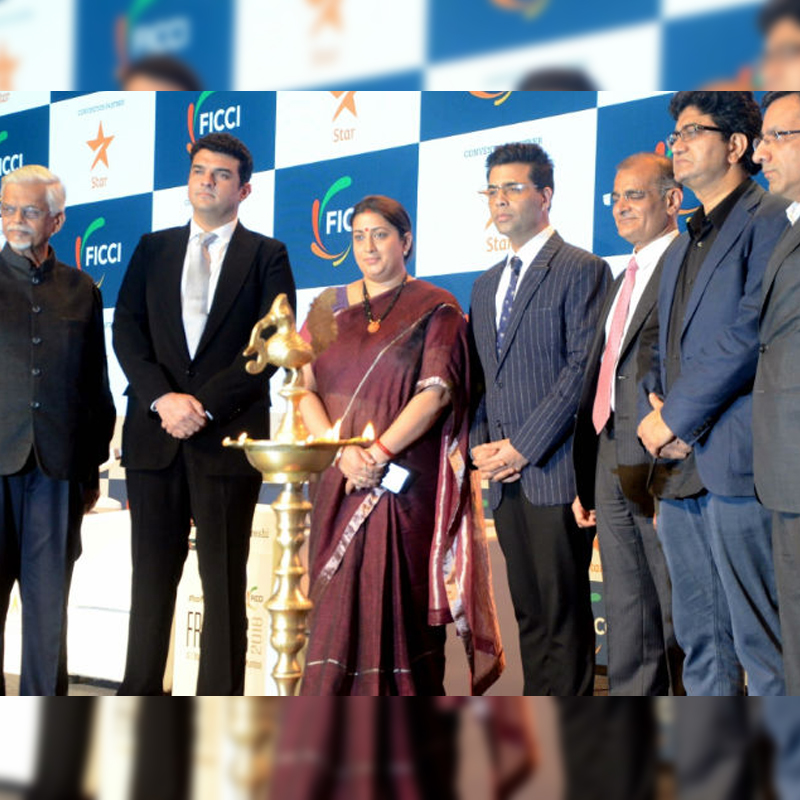
    MUMBAI: Even as the Indian media and entertainment (M&E) sector is projected to cross $31 billion by 2020, Minister for Information and Broadcasting (MIB) Smriti Irani said yesterday it is imperative that the country as a whole projected the economic value that the industry lends to the country’s economy.

    Speaking at the FICCI-Frames 2018 inaugural ceremony here, Irani said the Indian M&E industry is much more than just naach-gana (song and dance) and it was high time that the industry came forward to articulate the economic value and contribution that it gave to the Indian economy and exhorted the industry to use modern data analytics and technology to arrive at conclusions at the type of content the consumer desired.

    Referring to artificial intelligence or AI and other technologies, she said, “Technology is looked upon as a disruptor, but have we looked at technology from a creative point of view?”

    The Indian M&E sector hit nearly Rs 1.5 trillion ($22.7 billion) in 2017, growth of around 13 per cent over 2016. With its current trajectory, it is expected to cross Rs 2 trillion ($31 billion) by 2020, at a CAGR of 11.6 per cent. The digital segment-led growth demonstrates that advertising budgets are in line with the changing content consumption patterns, according to the FICCI-EY report ‘Re-imagining India’s M&E sector.’

    Launched on Sunday in the presence of the minister and other industry stalwarts such as Star India MD Sanjay Gupta, Siddharth Roy Kapoor and filmmaker Karna Johar, the FICCI-EY report highlighted that the M&E sector continues to grow at a rate faster than the GDP growth rate, reflecting the growing disposable income led by stable economic growth and changing demographics.

    The report states that the subscription growth outpaced advertising growth in 2017, but advertising would continue to grow till 2020 led by digital advertising.

    The report estimates that 1.5 million consumers in India today are digital-only and would not normally use traditional media. It is expected that this customer base will to grow to 4 million by 2020, generating significant digital subscription revenue of approximately Rs 20 billion. Going forward, micropayments, enabled through the Unified Payment Interface (UPI) and Bharat Interface for Money (BHIM) platforms, developed by the National Payments Corporation of India (NPCI), will further accelerate subscription revenue for entertainment content.

    EY partner and M&E leader Farokh Balsara stated, “The Indian M&E sector reached INR1.5 trillion in 2017 led by digital. With digital subscribers expected to reach 20 million by 2020, has Indian M&E reached its digital tipping point? We now need to reimagine the future of Indian M&E sector.”

    Said Gupta, “These are truly exciting times for our industry. It is amongst the fastest growing sectors in the country and has crossed the Rs 147 thousand crore mark. There is a revolution happening all around us, one that promises to, and in fact, has already started to redefine the future of media and entertainment.”

    “To compete well with the world, we need to set new standards of storytelling, we need to reimagine our stories. We cannot allow our legacy to shape our creativity. With digital, we have the license to break away from all the trappings of traditional media. We need to challenge where we release our films first, in a theatre or on a mobile screen. We need to challenge the constraints of 8 pm prime time, daily and hourly news formats and 22-minute episode lengths,” he added.

  • Technology at your fingertips to bring a change in the patient care at hospital OPDs & clinics

    Technology at your fingertips to bring a change in the patient care at hospital OPDs & clinics

    The long multiple queues, overcrowding and waiting time at Hospital OPDs and clinics leads to patient frustration and discomfort. To resolve these issues, the healthcare sector has realized the need of technology which can smoothen the work flow at the hospital OPDs and clinics and offer a comfortable visit to the patients. Under the pioneering initiative of mCURA, the heath-tech company, India’s first Integrated mobility platform, SMART OPD has been introduced in the market. This technology enables patients to bypass long queues at registration and billing counters, labs, pharmacies and doctor chambers which completely eliminates necessity of spending valuable time waiting at the hospitals. Through this technology, the patients can have ready information on their mobile phones or tablets located outside each consultation cabins on the inflow and outflow of other patients, providing comfort to the patients.

    At the registration counter, patients are given NFC based “ TAP & PAY “ CARD (Registration + cash card) & are  prompted to download patient  app, which stores all the medical records, medical bills/payment transactions, checks doctor’s availability, real time token broadcaster which helps doctors as well as patients at investigation/diagnostic counters and pharmacy.

    For Non-smart phone users The “ Tap & Pay”  Card has the capability to access records/ bills / payments/ book appointments from the tabs or devices installed outside every doctor’s chambers and at all investigation counters. The patients can use their “Tap & Pay” cash card to pay for hospital services easily without waiting in any queue from any of these counters. Simply recharge it and tap the card at the counter to pay for doctor fees, investigation bills and medicine delivery. It also instantly calculates wait times and provides required information between various lab tests recommended by the doctor. 

    According to Ms. Madhubala Radhakrishnan, Founder and President of mCURA,“Labs, Pharmacy, doctors and even patients are in tegrated fully into the IT Infrastructure through mobile devices. This helps facilitate faster filling of prescription, reduction in misreading of doctors’ handwriting, lowered waiting time for test results and automatic medicine intake reminders to patients. By automating everything, redundancy can be avoided and manpower can be optimized.

    “This technology will also help the patients who need a family member to take care of them at the billing counters, labs and pharmacy. This will help and ensure smooth entry, consultation and exit of the aged persons as there is no need of cash management at the billing counters. The patient’s only need to carry the SMART OPD card to experience the smooth flow at the hospitals and clinics”, adds Ms. Radhakrishnan.

    Recognizing the fact that doctors using technology at the point of care is a big challenge, mCURA also provides Clinical Information Executive who is equipped with smart devices to support doctors for quickly entering patient prescriptions digitally. This also helps preserving doctor-patient relationship as the doctor would only be listening to the patient’s problems, without diverting his/her attention on computers.

    Besides, catering to medical records in chronological order through single view case-sheet, it helps doctors to review and enter their current findings immediately. Delivering customizable pre-defined templates for common ailments frequently seen in OPDs, it reduces doctors’ time per patient visit and helps improve patient intakes. Moreover, by storing lab views of wounds and comparing it across time frames, doctors can measure treatment progressions/regressions.

  • Inito gives anxious couples hope through its new ad

    Inito gives anxious couples hope through its new ad

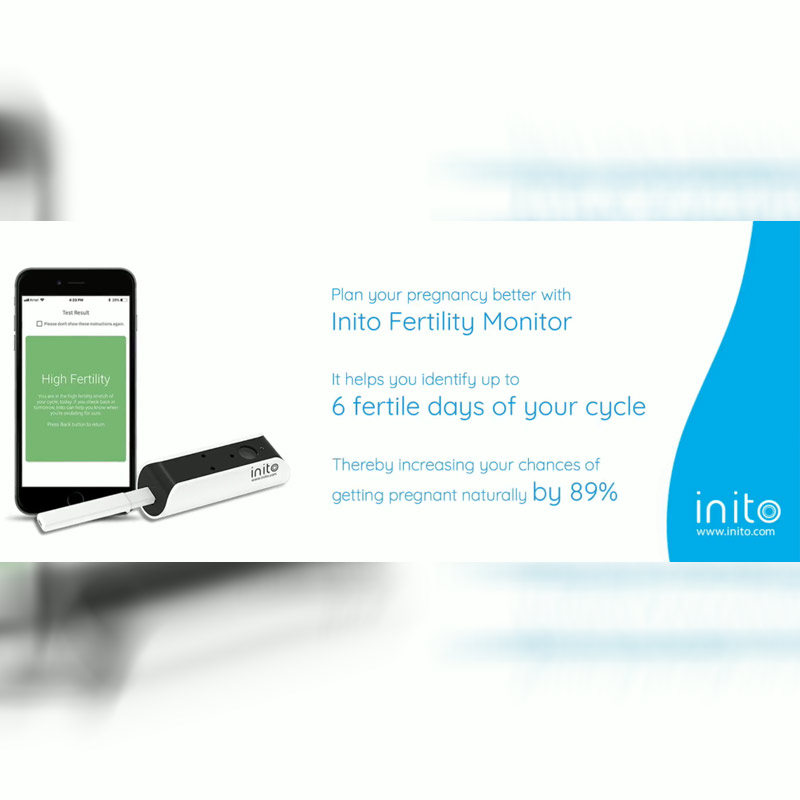
    MUMBAI: The desire to have children is something that is harboured by millions of couples. But, in the eagerness to do so, many times this whimsical process ends up becoming strenuous and stressful for many. In order to help beat the woes for many such couples, Inito, a medical technology company, has launched a hard hitting, realistic and emotional video ad highlighting how a smart fertility monitor like Inito can help them in their new beginning.

    A common reason for couples facing difficulty in conceiving is because they do not know their fertile days. A woman only has a few days every cycle when she has a high chance of getting pregnant, and couples can actually get pregnant faster when they know when exactly ovulation takes place. 

    Created by Aha Agency, the video captures the emotions of a dejected woman perfectly. The caring and friendly tone of the ad brings to light a solution for a couple that has been trying to conceive for more than eight months but to no avail. It brings home the message that rather than going to the clinic repeatedly for ultrasound scans, women can now use Inito’s fertility monitor to take the tests right in the comfort their home and increase their chances of getting pregnant by 89 per cent.

    Inito co-founder Aayush Rai says, “Inito is the most accurate and reliable tool to track fertility at home in the market today. Through this video, we have tried to highlight the stress and anxiety a woman goes through while trying to get pregnant and how Inito can help them. The smart and easy to use Inito Fertility Monitor helps them understand their fertility cycle and increase their chances of conceiving. By creating an emotional connect, the audience will realise that they are not alone in this and such a problem can be solved.”

    The Inito diagnostic device comes with the Inito reader, app and the test strips. The device is priced at Rs 3195 while a pack of eight fertility test strips costs Rs 895. Right now, users can buy it through Inito’s website or on Amazon. It will soon be available at pharmacies. Since its inception, Inito has raised funding of $1 million. It has also built and validated the multi-test platform; won three awards and has four international pending patents.

  • Guest Column: Life’s biggest stand-out success lesson

    A ship is safe in the harbour. But, that is not what ships are built for: John A Shedd. Why does stand-out success elude the early achievers from making it finally in the game of life. Did they learn this ONE thing!

    Think of that brightest one in your class back in school or college. Did they change the world or achieve extraordinary success?

    Umpteen number of studies from time to time throw up statistics to show that achievers of the highest grades in schools and colleges as a ratio of proportion of overall extraordinary achievers almost always is weighed in favour of those who did not have those fancy grades and did not walk away with a gold medal at the passing out graduation ceremonies.

    In his new book “Barking Up the Wrong Tree,” Eric Barker explores the maxims we use to discuss success. He finds that just as nice guys don’t always finish last, valedictorians rarely become stand-out successes.

    Not to be misled – by standards of ordinary success, they do well and find good lives but they do NOT achieve extraordinary success to become billionaires who change the world.

    Barker writes:
    There was little debate that high school success predicted college success. Nearly 90 per cent are now in professional careers with 40 percent in the highest tier jobs. They are reliable, consistent and well-adjusted, and by all measures the majority have good lives.

    But how many of these number-one high school performers go on to change the world, run the world or impress the world?

    The answer seems to be clear: zero
    Many academically brightest are acknowledged (even by themselves) to be as not the smartest students in their class but simply the hardest workers. Smartness is restricted to delivering against a teacher expectation rather than true ‘imbibing’ of the knowledge.

    In fact, research demonstrates that students who truly enjoy learning the most often struggle in school, trying to trade off attention given to subjects about which they’re truly passionate with the demands of their other distractions (read coursework). While intellectual students struggle with this tension, grade achievers excel.

    The most valued traits in school are self-discipline, conscientiousness and the ability to comply with rules. The ability to disrupt the world or make extraordinary breakthroughs however requires NOT these traits.

    The education system thrives on and rewards (remember the class monitor/rep) developing ‘promising ones’ with a positive trait of ‘trying to please everyone’. It is also the key to failure.

    I can’t give you a sure-fire formula for success, but I can give you a formula for failure: try to please everybody all the time — Herbert Bayard Swope.

    The high-grade achievers make it their business to be the best. ‘Best’ in real life is a label. It’s something someone decides for you – the ‘educational institution’ in case of students. ‘Better’ is more personal which pushes you to embrace ‘highs and lows’ to find that unique attribute called ‘individuality’ as the key to success while the graduation ceremony sees hundreds of them in identical caps and gowns.

    While the schools produce the best and the brightest to go and change the world, the achievers forget to unlearn to challenge notions and embrace uncertainty. The one thing that stands out is the inability of these ‘brightlings’ to encounter and treat real life’s chaos as a part of the deal.

    The ability to ‘shake things up’ is not a particularly well appreciated quality taught in schools.

    That one thing that keeps these ‘lives of promise’ from making it as truly THE ONE therefore is

    Unlearning is as important at all points in life as learning.

    Anyone whose goal is ‘something higher’ must expect someday to suffer vertigo. What is vertigo? Fear of falling? No, Vertigo is something other than fear of falling. It is the voice of the emptiness below us which tempts and lures us, it is the desire to fall, against which, terrified, we defend ourselves  ― Milan Kundera, The Unbearable Lightness of Being

    Education system mostly is akin to a ‘control experiment’ in science. Lots of mediocre students thrive outside a ‘controlled’ scholastic environment.

    In the school, rules rule life.  In the messy game called life, Chaos rules everything!  Unlearn and embrace it for your success.


    public://Untitled-3_17.jpg

    (Piyush Sharma, a global tech, media and entrepreneurial leader, created the successful foray of Zee Entertainment in India and globally under the ‘Living’ brand. The views expressed here are of the writer’s and Indiantelevision.com may not subscribe to them.)