Tag: technology

  • Appetite for quality content pushing the need for technological advancement

    Appetite for quality content pushing the need for technological advancement

    KOLKATA: With the appetite for quality content growing exponentially among consumers, the need for upgradation of technology has also risen simultaneously. Content studios and production houses have started looking at high quality hardware as well as cloud computing to keep up with the demand for better viewing experience. Moreover, the organisations are also looking at tools for easier remote work as the pandemic has changed the way the industry works. As part of the overall transformation, mobile workstations are gaining more prominence of late, panelists agreed during Indiantelevision.com's webinar themed ‘Accelerating the new age of content with technology’. 

    Moderated by founder, CEO and editor-in-chief Anil Wanvari, the engaging session included Excel Entertainment CG supervisor Apul Mehta, Endemol Shine India chief operating officer Gaurav Gokhale, Hats Off Productions chairman and managing director JD Majethia, Contiloe Pictures CFO & Illusion Reality Studioz business head – animation & VFX Nitin Dadoo, Redchillies VFX technology head Rajiv Sharma, Epic On chief operating officer Sourjya Mohanty, and Dell Technologies Dell Precision Workstations marketing consultant & product evangelist Suhas Pingat.

    While India is witnessing the heyday of content consumption, accelerated by OTT platforms, certain challenges have emerged as well. Sharma said the size of content has actually become bigger now with the demand for better quality content. Hence, hardware supporting better graphic cards, faster NVMe (non-volatile memory express) storage, better display for viewing content is a must. If the hardware is not updated, it is tough to produce content which is up to the mark, he added. 

    On the other hand, Mehta mentioned that delivering content on time still remains a challenge due to the exploding uptake and quality requirement. And with the spread of the cheap and fast 4G data, the industry is competing with mobile phones as viewers are consuming more content on phones, observed Majethia. The industry has to go beyond – focus on a good story supported by greater technology. According to him, the storytelling team and executing team need to be in sync with the upgradation of technology.

    Gokhale shared that the one important aspect which the industry needs to address is how it can adjust to the remote working style. In his view, even production can be executed with a smaller crew supplemented with more technology. From a post production perspective, the work has to move from a wired system to cloud based operating, he added.

    “We have solutions which are one to one remote which means you dedicate one complete workstation to one single user. Remoting does not mean virtualisation. It can be one to one connectivity. Remoting can also be mobile workstations but stage four is definitely going to be virtualisation, because there you need to have practically low levels of latency,” Pingat explained.

    As part of a production house, Dadoo has seen on set post-production work evolve in real time – this includes Unreal Engine and rear projection (cinematic technique in film production that combines foreground performances with pre-filmed backgrounds) for an upcoming feature series. The studio works closely with DOP and production designers from the beginning itself where they work live on set to complete the composition and final VFX on the camera itself. That’s where our system is heading, he added.

    “We have a set where we have LED walls and a virtual cam. With that, we are shooting the data that technically comes in a hard drive. We want to visualise that onset whether the shot is properly done or not,” Sharma commented. He added that further mobile workstation is always needed for them, along with RTX cards, fastest NVMe RAM to allow them on set for visualising content. Epic On’s Mohanty also deliberated upon the need for mobile workstations for real-time computing.

    Pingat explained further why mobile workstations are becoming more popular. Most importantly, the flexibility of the platform for a user to use on-site or anywhere makes it stand out. Mobile workstations do not require main power as well. Technology has enabled mobile workstations to be more powerful, he added.

    “From a technology standpoint, as far as mobile precision is concerned, it (Dell’s mobile workstation) is very fast. Its entire ecosystem supports 4K as of now. It’s a mobile workstation, its processing capability from a graphics perspective is very fast,” he said.

    In order to adapt to new technologies, content studios and production houses are investing increasingly in technology. Epic On’s Mohanty said it hovers around five to eight per cent because the platform usually keeps upgrading its technology on a six-month basis.

    Echoing the sentiment, Dadoo said that Contiloe’s investment also stands at around five per cent as it deals with a lot of animation and VFX, which need constant upgradation. Redchillies and Excel Entertainment, too, are investing in the five-ten per cent range. Gokhale did not reveal an exact figure but stated the input differs from project to project.

    Clearly, technological advancements have transformed the process of content production and it has become apparent that the filmmaker with the most cutting-edge tools has the edge over others in terms of qualitative aspects that make the consumer's viewing experience better. No wonder then, that the industry is upping the stakes in the technological race.


  • Technology needs to be upgraded for quality storytelling

    Technology needs to be upgraded for quality storytelling

    KOLKATA: The Indian media and entertainment industry is standing at a point when the requirement for video content is, more or less, growing in tandem with the investment in it. While Indian producers are branching out into new types of content across genres, formats, they need to scale up their investment in technology.

    To deliberate upon this changing landscape, Indiantelevision.com hosted a virtual webinar on Friday themed ‘Accelerating the new age of content with technology,” and moderated by founder, CEO and editor-in-chief Anil Wanvari. At the beginning of the discussion, Wanvari elaborated why more focus is required on faster seamless content delivery in the emergence of various formats like HD, 4K, 4K HDR. He also mentioned that a new breed of machine called workstation has emerged which is being increasingly used in studios across the world to deliver on hard and extremely tough specifications that are demanded by platforms.

    Media Partners Asia vice president Mihir Shah agreed that technology is going to play an increasingly crucial role going forward. In terms of production, there is a lot of innovation that is yet to be seen on the online video side. While India has tried to emulate the west, we have only been replicating what’s successful on television and films. Hence, there are a lot of things to be done on the online video side where different streaming options are available, he opined.

    “Technology will be used widely as ever before with the online opportunity available right now and you will see a lot of interactive videos coming in, short videos coming in, different format, vertical videos, we have just touched the tip of the iceberg,” Shah stated.

    He also brought up the aspect of the gap in creating franchises as the audience is used to seeing a lot of daily soaps. If the country starts focusing on more franchises, more innovations will come around. He believes a lot of local franchises can be created and monetised by utilising technology.

    In a fireside chat during the webinar, Dell Technologies’ Dell Precision Workstations marketing consultant & product evangelist Suhas Pingat remarked upon the importance of using workstations and technology to create content. He stated that times are changing and 5G is going to be widespread in a period of 18 to 20 months.

    According to him, India is not behind as far as accepting content is concerned. There are some technologies that are superior in developed markets, among which is MoCap (motion capture), then there is virtual filming which is taking place. In the west, the adaptation of technology is progressing at a pace that far outstrips India, noted Pingat, although he believes the scenario is slowly changing with the rise of OTT platforms.

    However, broadcasters and content studios still have a lot to catch up on, said Pingat. Moreover, there is a need for change in the way content is given to consumers in India and we need to move far ahead, as far as adapting technology is concerned. He also elaborated on how Dell Technologies has a very industry-specific approach to the business ecosystem, with a large media and entertainment vertical. He also touched upon the topic of how Dell workstations are helping its partners in the domain from a technology standpoint.

    “These are exciting times ahead in terms of technology. Whatever is available abroad, globally, is available in India too, in terms of not only workstations but from an infrastructure standpoint as well.  That’s one pint which is very good with Dell. We are the oldest workstation brand. We do partner across industry platforms which would be ISPs, global customers. We have a separate work team that has been helping solve customers’ problems. We look forward to fantastic content being delivered by our great partners in the country. Look forward to more exciting immersive years ahead,” he detailed.

    Post this discussion, the webinar hosted an engaging session on the role of technology with eminent experts. The panel included Excel Entertainment CG supervisor Apul Mehta, Endemol Shine India chief operating officer Gaurav Gokhale, Hats Off Productions chairman and managing director JD Majethia, Contiloe Pictures CFO & Illusion Reality Studioz business head – animation & VFX Nitin Dadoo, Redchillies VFX technology head Rajiv Sharma, and Epic On chief operating officer Sourjya Mohanty.

    The experts came to the conclusion that innovation is key to implement new technologies at this point of time. The transformation journey has started already but a lot more needs to be done. Storytelling and execution need to be in sync with upgradation of technology. It is imperative now to leverage technology at its best because consumers are demanding more quality content, not only on OTT bit also on TV.  While media organisations are significantly upping their investment in content, there is no point in shying away from technology.

    Technology needs to be brought to speed in the country. The demand side constraints can be met by great content and marketing strategy but supply side constraints can be rectified only by technology. Moreover, if big tech companies can look at the media and entertainment vertical as an industry and offer a solution rather than a product, a sea change will take place.

  • Group M research reveals consumers affinity for latest tech

    Group M research reveals consumers affinity for latest tech

    NEW DELHI: GroupM has released a new research that reveals that one in two (54.3 per cent) consumers believe it’s important to be equipped with the latest technology.

    Conducted by GroupM’s Live Panel in December 2020, this original research looks at the importance of new technology in consumers’ lives. The agency surveyed 1000 US consumers on their attitudes toward technology across six general categories: attitudes toward technology, information sharing and privacy, virtual reality-based devices and services, smart appliances, mobile devices and digital services, such as visual search, streaming audio and streaming video.

    The key highlights of the research are –

    · Attitudes toward technology:

    54.3 per cent respondents agree with this statement: “It’s important my household is equipped with the latest technology.” Males, younger people and higher-income households all “completely agree” with a much higher propensity than other groups.

    · 5G connected devices:

    More than half (51.5 per cent) respondents said they have a 5G device such as a mobile phone that can connect to a 5G network. Among the half of the population without a 5G connected device, 59.6 per cent of 35-54 year-olds said they expect to buy one in the next year, while 45.2 per cent of 18-34 year-olds said the same.

    · Digital services:

    Voice assistance/Visual search: 96.1 per cent respondents use an Amazon or Apple connected product to help with their shopping.

    Streaming audio services: The responses were significantly higher for females than males regarding YouTube Music (49.1 per cent to 42.4 per cent), Pandora (53.4 per cent to 39.7 per cent) and local online radio station (19.6 per cent to 15.4 per cent).

    Streaming video: In order to maintain a lower monthly bill for streaming services, 66 per cent respondents said they would accept having to watch commercials.

    · Virtual or augmented reality: 

    The higher the income, the more likely a consumer would respond “yes” to having a “virtual travel experience” like visiting a museum or a foreign city— eight per cent of the highest quintile, while only 24.7 per cent of the lowest quintile. Overall, males across each age group showed a higher propensity to have accessed a “virtual” trip.

    · Information sharing and privacy for health and fitness trackers: 

    81.7 per cent of respondents believe that either they or a family member should be the only ones with access to this data. On the other hand, only 6.9 per cent of respondents believe the company that made the device or software should have access.

    · Smart appliances: 

    48 per cent agreed that they would like a home appliance to “automatically order replacements when I am running out of related products” (i.e.: a washing machine ordering new detergent or a refrigerator ordering food).

    GroupM global president of business intelligence Brian Wieser said, “New technologies change the ways in which consumers engage with brands and introduce new ways to drive long-term growth. Exploring the contours of new technology adoption laid out in this research is critical for marketers to better understand how to allocate their resources in 2021 and beyond.”

  • Flipkart strengthens vernacular language offerings, app now available in Marathi

    Flipkart strengthens vernacular language offerings, app now available in Marathi

    NEW DELHI: Flipkart has further strengthened its vernacular language offerings with the introduction of Marathi, the third most widely spoken language in India. With this, the Flipkart app is now accessible in six major languages including English, Hindi, Marathi, Tamil, Telugu and Kannada for Indian consumers.

    The e-tailer has utilised a mix of translation and transliteration of over 5.4 million words to offer a personal and colloquial e-commerce experience for millions of Flipkart users. Built on Flipkart’s ‘Localisation and Translation Platform’, customers can now enjoy an easy end-to-end e-commerce experience in Marathi.

    The expansion of the platform’s vernacular capabilities is in line with Flipkart’s continuing innovations to address the pain points of Indian consumers who are transitioning to e-commerce, reducing the access barriers to e-commerce for millions of native language speakers.

    According to industry reports, Indian-language internet users are expected to account for nearly 75 per cent of India’s internet user base by the end of 2021, and over 50 per cent of all Flipkart users come from tier-2 and tier-3 cities, necessitating the need for an expanded regional language offering.

    Flipkart chief product and technology officer Jeyandran Venugopal said, “As part of our continuing efforts to innovate and bring e-commerce closer to customers in Bharat, we have significantly expanded our vernacular language universe over the past two years. The addition of Marathi on the platform as one of the six language offerings reflects our commitment towards making e-commerce more inclusive and will play a crucial role in removing language barriers. These developments are a part of our continued efforts towards further expanding the vernacular language universe on Flipkart, thereby making e-commerce more accessible and convenient for millions of consumers a across the country and will be key to democratising e-commerce in India.”

    Flipkart has launched numerous initiatives under its three pillars of video, voice and vernacular. Since 2019, 95 per cent of users who opted to interact with the platform in a regional language have continued to use it, serving as a testament to the acceptability of regional languages on the digital platform.

  • MX Player & Akamai partner to deliver seamless viewing experience

    MX Player & Akamai partner to deliver seamless viewing experience

    KOLKATA: MX Player has partnered with Akamai Technologies to provide its increasing user base in India with a seamless digital experience.

    In 2020, MX Player was ranked by App Annie as the no.1 streaming app in India and the onset of the pandemic saw the platform witness not just a massive boost in viewership, but also new subscribers, and a newer audience. This accelerated growth heightened MX Player’s need for infrastructure that could support the scale and availability of the app across different networks and locations.

    MX Player found Akamai’s world class media delivery solution to be the right choice in order to deliver a high-quality viewing experience to their customers across different cities. The enhancement in performance and user experience was particularly pronounced in the case of MX TakaTak, a popular short video platform, that has seen a rapid surge of users, with a large portion of them coming from tier-2 and tier-3 towns.

    According to Redseer, online content consumption in India grew by 35 per cent in April 2020 compared to January 2020. It further stated that short-form video content consumption recorded the most significant jump during the lockdown.

    MX Player COO Vivek Jain said, “In the last couple of months, our user base has increased exponentially. The demand to consume content on the go and the need for virtual entertainment amongst the middle, mass, mobile, millennial audience in India is growing faster than ever before. MX Player has seen more than 7X jump in time spent on the app. “

    “Even MX TakaTak, which we recently launched, crossed one billion video views per day within a month from launch and has quickly become the market leading app in the short video category. We have always obsessed about best-in-class video load times. Akamai is a pioneer in Edge distribution and its presence particularly in tier-2 and tier-3 towns has helped us deliver an unmatched viewing experience for our customers across India’s mega cities as well as the hinterlands,” Jain added.

    Akamai media and carrier section India sales head Mitesh Jain noted that unprecedented demand for content coupled with rapidly evolving user behaviour poses a challenge for apps trying to ensure high-quality viewing experience across a complex network topology.

    “We are glad to have partnered with MX Player to help them scale the user base and step up to conform with user expectations of evolving Indian consumers. Given MX player’s ambition, I am sure that this is just a start and we will be accomplishing many more milestones together,” Jain said.

  • Karan Bajwa is new Google Cloud Asia Pacific chief

    Karan Bajwa is new Google Cloud Asia Pacific chief

    NEW DELHI: Google Cloud has elevated Karan Bajwa, who currently leads Google Cloud in India, as the company’s new leader for Asia Pacific. Bajwa will lead all regional revenue and go-to-market operations for Google Cloud, including on Google Cloud Platform (GCP) and Google Workspace from today. 

    He succeeds Rick Harshman who leaves the organisation for a new opportunity. Bajwa is currently based in Gurgaon, India, but will relocate to Singapore in 2021. He will also continue to lead Google Cloud in India until a new senior leader for the business is appointed. He will report to Google Cloud president of sales Rob Enslin.

    “Since Karan joined us in March 2020, Google Cloud in India has grown from strength to strength. He’s advanced the digital transformation journeys of many large Indian organisations across industries and successfully expanded our partner community. He brings tremendous management and sales experience with him to this regional role, and we’re thrilled to have him at the helm of our APAC business,” said Enslin. 

    “With the disruptions of 2020 behind us, a true test of 2021 will be how companies replatform and build on the cloud not only for resilience but agility and innovation, and I’m excited for the opportunity to lead Google Cloud’s business in APAC to maximise this next phase of growth,” said Bajwa. 

    Google Cloud is on a strong growth trajectory within Asia Pacific and counts ANZ Bank, Lendlease, Optus, Sharechat, Tech Mahindra, L&T Finance, Wipro, Samsung Electronics, Foxconn, Kia Motors, Go-JEK, Tokopedia, and XL Axiata as customers to name a few. The company has also invested in technical infrastructure in the region, having launched its GCP regions in Jakarta and Seoul last year, with planned expansion to Delhi and Melbourne in 2021.

    Bajwa has nearly 20 years of experience and has worked across multiple technology companies such as IBM, Cisco, Microsoft, and IBM. 

  • Hindustan Times concludes Codeathon, one of India’s biggest coding olympiads

    Hindustan Times concludes Codeathon, one of India’s biggest coding olympiads

    NEW DELHI: Technology today has become a way of life, making coding an extremely important skill to possess in order to thrive in this competitive era. Hindustan Times Codeathon platform enables students to learn coding and showcase their talent thereby putting them on an accelerated path to success by enabling them to learn, participate and then win.

    While India has a lot of coders, coding for kids is novel and nascent. Institutional coding is not yet developed for kids while coding remains premium and aspirational for parents and cool for kids. Through HT Codeathon, there is an opportunity to build the next generation of coders.

    More than 10,000 schools participated with over 61,000 registrations, and students learnt programming languages such as HTML, CSS, Python.

    Samudra Bhattacharya, CEO-print, HT Media said, “This has been a long journey of over a year in developing the right platform which solves a need-gap in the education space for our partner schools as well as our sponsors. This is precisely the balance we wanted to achieve when we started this journey. I wish to thank our esteemed partners in Cuemath, IBM and Delhi government.”

    Rajan Bhalla, Group CMO, HT Media added, “This is a first-of-its kind initiative and solidifies our continued focus towards the millennial and GenZ audiences and the hugely positive response from our trusted readers and partner schools acts as the perfect endorsement. This is just the first step in creating a big movement around engaging the younger audiences with platforms that speak to them.”

    Hindustan Times Codeathon provided the perfect opportunity amidst the lockdown to enhance coding skills and make children ready for a tech-enabled future. A student just had to pay a one-time registration fee of Rs 499/- + GST to complete their registration process at www.htcodeathon.com.

    Eligibility: Students of Classes VI to IX

    Online preparation modules were provided to the student post-registration. Online qualifiers and the finale were conducted in December. HT Codeathon also provides various incentives to the students to participate by providing various gift hampers such as laptops and smart watches. Certificate of participation has also been provided to all the participating students.

  • Concept Public Relations bags the PR mandate of Epigamia

    Concept Public Relations bags the PR mandate of Epigamia

    Mumbai: Concept Public Relations India (part of the Concept Communications Group), has recently bagged the communications mandate for Epigamia after a competitive, multi-agency pitch contested by the top public relations agencies in India. The brand will be managed from the Mumbai (Head Office) of the agency. Concept will be responsible for handling media relations, strategic communications and brand advisory services for the brand.

    Commenting on the partnership, Siddarth Menon, Chief Marketing Officer, Drums Food International Pvt. Ltd. (Epigamia) said, “We are super kicked to have Concept PR partner us in our PR and Communication mandates. We look forward to leaning on their experience as we continue to increase our brand and geographic footprint”

    On winning the mandate, Ashish Jalan, Director & CEO, Concept Public Relations added, “Epigamia is India’s leading branded fresh FMCG brand and we are truly honored to have been awarded this immense responsibility. Our primary objective will be to develop a compelling communications narrative and advise the brand in navigating this new age of exponential change, new age consumers and increase its brand resonance through the various communications channels available. Concept has always been at the forefront of ideation and we are happy that Epigamia has seen this in our thinking.”

    The new client will help Concept Public Relations further augment its diverse client portfolio which spans across sectors such as Healthcare, BFSI, Auto, Lifestyle, Technology, Real Estate, Entertainment and Government. With experience in various verticals, enhanced emphasis on quality deliverables through innovative planning and execution successful campaigns, the agency envisions being one of the most reputed agencies in India in the coming years. 

  • Beyond 3D: What virtual commerce industry expects from technology

    Beyond 3D: What virtual commerce industry expects from technology

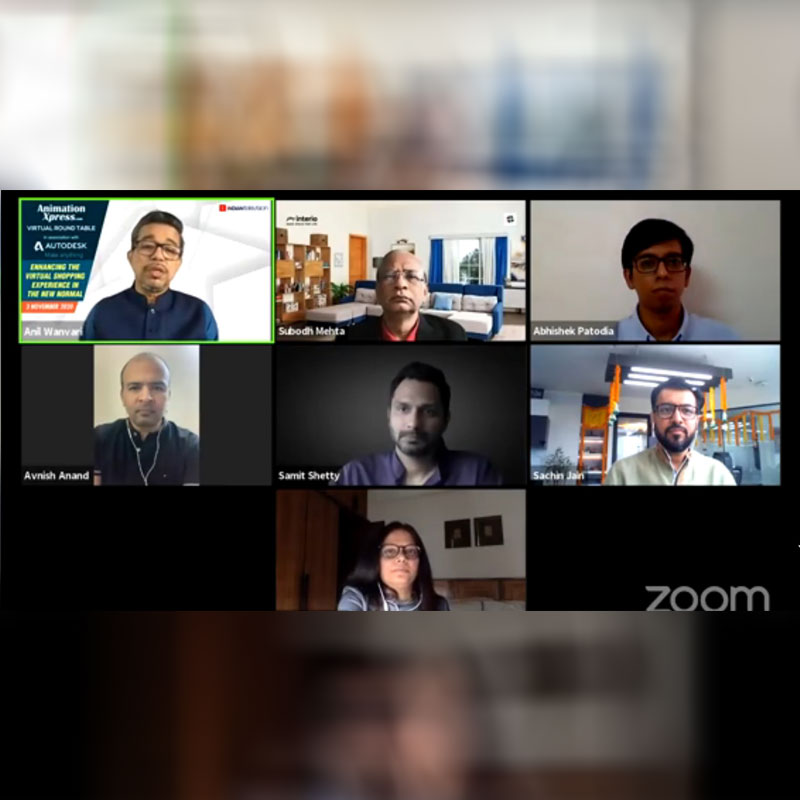
    NEW DELHI: The new-age Indian consumer wants the ease of shopping coupled with the element of traditional look and feel. To cater to this, technology players need to curate solutions that can seamlessly merge the online and offline worlds, as per industry leaders at AnimationXpress.com’s virtual roundtable in association with Autodesk.

    Moderated by Indiantelevision.com founder, CEO, and editor-in-chief Anil Wanvari, the panel discussed how to enhance the virtual shopping experience in the new normal and comprised stalwarts like Carwale SVP (used cars) Abhishek Patodia, Caratlane co-founder and online head Avnish Anand, Hometown CMO Medha Tawde, De Beers India MD Sachin Jain, Autodesk India senior technical sales specialist – media and entertainment Samit Shetty, and Godrej Interio SVP (B2C) Subodh Mehta. 

    Tawde noted that in the furniture industry, it is very important to help consumers visualise the pieces in physical spaces and that’s where the mock rooms in their stores are playing a key role in conversions. She is expecting the technology will bring these visual experiences to life virtually. 

    Mehta suggested, “I would like to tell the technology players that if you really want to create the best virtual experiences, you need to chart out a platform-agnostic customer journey, including the physical experiences, and then pick up those touch-points and create a similar virtual experience. For example, we have store walkthroughs and we have noticed that people themselves like to touch and feel the furniture, they want to open the drawers themselves and see how much space is in there; so we need to replicate it virtually too. The control should be in the hands of the customer.”

    He added that ultra-advanced technologies like scanning physical spaces to take measurements and then using 3D imagery to show how a particular piece of furniture would look in that area, whether it will fit or not, etc, need to be taken care of. 

    Speaking about the jewellery industry, Anand observed that the stumbling block they encounter is how to maintain the authenticity of size and material when using 3D rendering. This is the area where he is counting on some support from tech players. 

    Elaborating the pain points, he said, “It is hard to shoot jewellery because it is shiny. You have to manually edit each piece to make it look hard and the problem with that is that it starts looking fake. Another issue, especially for brands like us operating in the sub-30 category, is with the size of the jewellery. We sell very small pieces but in imagery, it has to be made to look bigger. And that’s also one of the biggest reasons why the return-rate is high in this segment because people are expecting some other size. That is the fundamental problem that needs to be addressed today.”

    However, what has been working really well for the e-commerce industry is the video feature that has solved a lot of problems for the sellers as well as the buyers. 

    Patodia shared that they recently introduced the option for sellers of second-hand cars to upload a video of the vehicle on their platform, which has driven up their number of online consumers. 

    Anand and Tawde also agreed that video calling features and assistance has helped them greatly in scaling their businesses online, especially during the Covid2019 lockdown. 

    Taking cognisance of all the suggestions coming from e-commerce players, Shetty stated that Autodesk is already working on enhancing the experience of virtual selling for both the buyers and the sellers. He highlighted that their focus remains on maintaining and improving the speed and efficiency of their solutions. 

    “To give you an example, we are working with a jewellery client abroad, who is using our solutions to tweak the design of a particular piece virtually, helping customers to customise their piece and see in real-time how it will look,” he stated. 

    During the lockdown, there have been a number of interventions from Autodesk to support the virtual commerce community and Shetty is further trying to improve on those aspects as well. “We made our group conversation tool Shotgun free for all our clients who were working from home to accelerate the communication process. Then, our software like Maya and Max are helping a lot of our clients in real-time 3D rendering processes. We are continuously trying to improve on those offerings,” he concluded. 

  • Why OTT platforms focus on user feedback

    Why OTT platforms focus on user feedback

    KOLKATA: As the over-the-top ecosystem turns more cluttered and competitive, the platforms are gearing up to retain users. Along with building a robust content slate, all the streaming services are also ensuring seamless viewing experience for the users. To build a good product, these players are focusing on multiple aspects including easy sign up to smart recommendations, and hyper personalisation. For all of these players, the user feedback holds an important position in the development of a sound UI/UX strategy.  

    In a webinar hosted by Indiantelevision.com in association with Accedo and moderated by Indiantelevision.com founder, CEO and editor-in-chief Anil Wanvari , experts from the industry discussed about what UX strategy one should adapt to stay relevant and create a differentiation in the market.

    Epic On chief operating officer Sourjya Mohanty said the platform gives high importance to customer listening across the cities, across cohorts of age groups to understand what kind of technical changes are needed to be done on front end and back end. According to him, these constant improvisations have helped them to hit 3x-4x DAU compared to pre-Covid period.

    Read more news on OTT

    Arre GM technology Rohit Bapat highlighted how one bad experience can lead to losing users. “Over the past couple of years, internet access has become very easy for consumers. People are coming from lowest end devices to users accessing the internet from fancy phones or laptops, all these people are essentially consumers. The market is very crowded which means a combination of easy access to internet and a lot of available applications with consumers having very less patience. So, all it is going to take is one bad experience from your platform for the consumers to take off and perhaps switch to a competitor,” he added.

    According to him, most of the players approach UI from a human interaction perspective. Even if an interface might tick all the boxes of what makes great UI or UX, it may not be necessarily geared towards understanding the user journey on the website. He added that the exercise of trying to understand the target audience and what attention paths they could take is a good way to figure out how you want to build your app. But for existing apps, the right way to improve is benchmarking the current state of the app, mapping user journey, and tracing the blind spots.

    ALTBalaji chief technology officer Shahabuddin Sheikh agreed that there should be an empathy towards users while designing UX. He added that hyper personalisation is important. As he shared, when a user samples an episode for the first time on the platform, the user does not experience any intervention. “What user is looking for hyper personalisation where he can look for a content piece programmed for him in the easiest way. We capture a lot of data of user behaviours while they interact on the app. Accordingly, content can be personalized for them,” he added.

    Moreover, he is of the view that a user has to feel the worth of his money as ALTBalaji runs on SVoD model. “We have to program content in such a way through a recommendation engine that he gets most of the relevant content and it is served in the best buffer-free environment,” he noted.

    Arre’s Bapat said that they are in the process of mapping the site, figuring out which areas people tend to take off from. They have made simple changes like having a single sign up for the potential user, how content is being shown on the web page. However, he reminded that the changes should be slow and gradual because an entirely new UI may increase churn on the app.

    While the journey of upgrading product is continuous, the Bengali OTT platform Hoichoi has recently come up with a new prototype. Hoichoi technology lead Aloke Majumder said that they are going to develop it very soon. According to him, details like layout, thumbnail makes a huge difference. But the key to a good experience is to follow the user, Majumdar opined.

    However, along with regular user feedback, in-depth research should be looked at as a very important element to understand consumers, Accedo APAC UX and design director Nikki Perugini added. She noted that the industry is not looking at a purely VoD future. Hence, linear virtual channels could emerge in the future. While some of the panellists agreed to her, SSK Osmosis Pvt. Ltd. product head Somuik Solanki countered that linear steaming does not work for health and fitness apps.