Tag: technology

  • Telegram rolls out new features, adds group video calling

    New Delhi: As its rival WhatsApp continues to be embroiled in a legal controversy with the government, Telegram has seized the moment to launch some new features for its users. 

    The messaging app has announced its latest update, which allows group video calls and screen sharing across all devices, tablets, and desktops. The update allows users to turn their camera on or share their screen during voice chats in groups – on all devices, including tablets and desktops, which can be used for online classes, business meetings, and family gatherings.

    The Group Video Call feature is the third major voice chat update from Telegram in the last six months. The audio-only participants are unlimited, and video is currently available for the first 30 people who join the voice chat. However, this limit will increase soon as voice chats take on streaming games, live events, and more, it said in its blog post. “When you are using a desktop app, anyone who starts sharing their screen will be pinned automatically. This is especially useful when small teams meet to coordinate their work,” it added.

    The app has also improved noise suppression on voice chats, for clear audio and a dedicated bot menu. There is also a new update that allows animated backgrounds, animated emojis and enables the import of customized third-party stickers as well. “These multi-colour gradient wallpapers are designed algorithmically and move with beautiful looking aesthetics every time users send a message. Telegram is offering this feature along with many default themes pre-installed,” it said in its blog post.

    The app has also enhanced user security measures in its latest update. Users will now get login info reminders, which according to the company, is an essential feature that will keep a user’s phone number up to date on Telegram. “Android users will get these reminders in the next update, for now, they can simply update their phone number by tapping on it in Settings,” it said.

  • Rohan Tiwary is head of business development, APAC at Google TV

    New Delhi: Google on Friday elevated Rohan Tiwary as the head of business development, APAC, Google TV. Tiwary has been associated with the tech giant for over seven years.

    Before this, Tiwary was APAC head partnerships (media, news and entertainment) since December 2019. He was responsible for building strategic partnerships with key players in media industries across the Asia-Pacific and advancing holistic solutions that span the breadth of Google’s suite, to solve the media industry’s business problems.

    “Excited to join the Google TV team and further the vision of connecting users to the content they love in an effortless and efficient manner. Look forward to working with partners from the media industry to uncover the opportunities in the Living Room space. What more can your TV do?” he announced the latest move in a LinkedIn post.

    He has also worked with Accenture, and Star TV Network in the past.

  • MX Player deploys H.266, slashes video streaming data usage by half

    KOLKATA: Online video consumption in India has grown exponentially, accounting for 80 per cent of consumer internet traffic. However, the user experience remains highly dependent on data usage and network speed.

    Now, MX Player has upgraded its video encoding & compression technology to H.266 (Versatile Video Coding), cutting down data usage for streaming videos by more than 50 per cent. MX Player as well as MX TakaTak users will be the first in the world to experience the benefits of H.266, enabling them to consume higher quality HD video streams with significantly less data consumption.

    With H.266, MX Player users will be able to stream more content with less data and network bandwidth – video streams will load faster and buffer less since they require only half (or less) the data it would need otherwise. H.266/VVC is the world’s most advanced video codec designed to succeed H.264/AVC and H.265/HEVC, used by most streaming video services worldwide today. Unlike its competitors, the H.266 upgrade makes MX Player the first OTT platform in the world to deploy this technology.

    MX Player and MX TakaTak CEO Karan Bedi said, “Video consumption dominates internet usage wherever you go across India, but the quality of experience deteriorates in areas with inconsistent data networks. The new standard is an opportunity for MX Player to give millions of users, regardless of where they are, an exceptional streaming experience that allows them to consume content the way content creators intended: faster loading, buffering-free, and true-to-life HD quality.”

    MX Player SVP Product Sidd Mantri further added, “At MX Player, the future is now. We relentlessly focus on raising the customer experience bar for Indian users. We were amongst the 1st few OTTs to deploy AV1 that reduced data consumption by 20-30 per cent compared to H.265. With H.266, we are taking it to the next level. H.266 offers the most advanced video compression standard available in the world and reduces data usage by more than 50 per cent. Many users in India live on daily data consumption caps, so with H.266 they can watch more as well as watch better on MX Player.”

  • Govt serves ‘one last notice’ to Twitter to ‘immediately’ comply with IT rules

    New Delhi: The government on Saturday issued ‘one last notice’ to Twitter Inc asking it to immediately comply with the new IT rules, failing which it could face stern action and lose exemption from liability under section 79 of the IT Act, 2000. This essentially means that the platform could be held responsible for content posted by the users.

    “The provisions for significant social media intermediaries under the Rules have already come into force on 26 May and it has been more than a week but Twitter has refused to comply with the provisions of these rules,” the ministry of electronics and information technology (MeitY) wrote to Twitter’s deputy general counsel, Jim Baker on Saturday.

    According to the ministry, the US company has not informed about the details of the chief compliance officer. The resident grievance officer and nodal contact person nominated is not an employee of Twitter Inc in India, as required by rules. Furthermore, the office address of Twitter Inc shared by the company is that of a law firm in India, which is also not as per rules.

    Twitter’s refusal to comply with the rules demonstrated its “lack of commitment and efforts towards providing a safe experience for the people of India on its platform,” it said. The ministry highlighted that the US tech giant has been operational in India for over a decade and “it is beyond belief that it has still doggedly refused to create mechanism that will enable the people of India to resolve their issues on the platform in a timely and transparent manner and through fair processes, by India based, clearly identified resources.”

    Though with effect from 26 May, “consequences follow” given Twitter’s non-compliance with rules, however, the ministry wrote, as a “gesture of goodwill”, it is giving Twitter Inc one last notice to immediately comply with the rules, failing which it will be liable for consequences as per the IT Act and other penal laws of India.

    The new IT (Guidelines for Intermediaries and Digital Media Ethics Code) rules, 2021, recommend a three-tier mechanism for regulation of all online media. As per the rules, each significant social media intermediary is required to appoint a chief compliance officer, a nodal contact person for 24×7 coordination with law enforcement agencies and a resident grievance officer. All three should be resident Indians.

    The intermediaries are also required to prominently publish on their website, app or both, the name of the grievance officer and his/her contact details as well as the mechanism by which a user or a victim may make a complaint. The grievance officer would be required to acknowledge the complaint within 24 hours and resolve it within 15 days from its receipt. The government has also asked the significant social media intermediaries providing services primarily in the nature of messaging “to enable identification of the first originator of the information.”

  • Sonali Malaviya appointed as managing director Essence India

    Sonali Malaviya appointed as managing director Essence India

    MUMBAI: Essence, a global data and measurement-driven media agency which is part of GroupM on Thursday announced the appointment of Sonali Malaviya as the agency’s managing director for India.

    Malviya will be responsible for leading continued client-centric innovation in data, analytics and technology, as well as business growth and company culture for the agency in the market. Based out of Delhi, she will report to Essence APAC CEO, T. Gangadhar and GroupM South Asia CEO, Prasanth Kumar. She will join Essence’s APAC leadership team and GroupM India’s executive committee as part of her role. Meanwhile, Anand Chakravarthy, previously managing director for Essence India, has moved on from the agency to pursue new opportunities.

    Joining Essence in 2018, Malaviya most recently led the agency’s Google business in India and Southeast Asia as senior vice president, client services. Previously, she served as chief operating officer at Colorbar Cosmetics and country marketing lead at Twitter in India. With over 20 years of industry experience, she has also held senior roles at Mindshare, PHD, Roy Morgan Research and MediaCom in India, the United Arab Emirates and Australia.

    “Sonali comes with rich experience in management, marketing and media across industries and markets, as well as a deep understanding of Essence’s business, work, people and culture. In addition to building strong, collaborative partnerships with clients and employees alike, she is an advocate of diversity and inclusion in the workplace. India continues to be a priority for Essence in APAC and globally, and with Sonali at the helm, I am very excited about our next phase of growth and development in the market,” said Essence APAC CEO, T. Gangadhar. “We would also like to thank Anand for his efforts in helping to establish our business in India over the last three years. We greatly appreciate his contributions and wish him the best in his future endeavours.”

    “We are glad to see Sonali take over the role of Essence India managing director. With her background and significant achievements, she will add to the capabilities of Essence and work with our teams to improve the client experience. As we continue to develop leaders internally, Sonali is also part of our growing pool of talent taking on various leadership roles across GroupM India. I look forward to working with Sonali and leveraging her expertise,” said GroupM South Asia CEO, Prasanth Kumar.

    “I am truly honoured to have the opportunity to lead Essence in India. Over the past three years, I have witnessed and been part of our incredible growth story in this market, and am very proud of what our agency, clients and employees have achieved together. I am looking forward to partnering with our highly talented teams and leveraging our industry-leading capabilities to help even more brands in India achieve data-driven growth and transformation, as well as valuable connections with consumers,” said Malaviya.

  • Tik Tok appoints Shouzi Chew as CEO

    Tik Tok appoints Shouzi Chew as CEO

    New Delhi: Chinese short-video sharing platform TikTok has tapped Shouzi Chew as the company’s new chief executive officer.

    TikTok’s interim head Vanessa Pappas, based in Los Angeles, will be the new chief operating officer.

    Chew is based in Singapore and was named chief financial officer of TikTok parent company ByteDance in March this year, and will continue in that role, the company said.

    The decision was taken after TikTok CEO Kevin Mayer quit the company in August 2020 amid India’s decision to ban the app.

    Chew has served as Xiaomi’s chief financial officer from 2015 to 2020, and ran its international business for a year, and took the company in one of the largest ever Chinese tech listings on the Hong Kong Stock Exchange.

    “The leadership team of Shou and Vanessa sets the stage for sustained growth,” said ByteDance CEO Yiming Zhang. “Shou brings deep knowledge of the industry, having led a team that was among our earliest investors and having worked in the technology sector for a decade.”

    TikTok became the most downloaded non-gaming app worldwide, with more than 58 million installs in March. Over 11 per cent of these installs were from China followed by the US at 10 per cent. The second most popular app was Facebook, with more than 56 million installs in March, according to data shared by app analytics firm Sensor Tower.

  • India in great position to create content using new tech: Streambox’s Bob Hildeman

    India in great position to create content using new tech: Streambox’s Bob Hildeman

    KOLKATA: With the rise of premium content in India, content creators, studios, production houses are embracing new age technology. US based video technology company Streambox is eyeing this emerging need with its innovative solutions. While it has customers in the broadcast sector, Streambox is expanding to provide solutions for film and post-production, shared CEO and co-founder Bob Hildeman.

    The company is excited about its prospects in India, which is probably the largest content creation market, in terms of volume if not revenue, mentioned Hildeman. The market is well-known for Bollywood film production, episodic commercial broadcast production that throw up many opportunities.

    “We have been providing cloud services in India for many years on AWS but most of the users have been non-Indian firms. And we can hopefully change that with the growth of Indian companies using a cloud service. Recently, we have released a software product called Streambox Spectra. It is a virtual encoder that works with our cloud. It provides Indian customers pure software into end workflow. And I know that Indian customers, as well as customers around the globe,  appreciate the software-based solutions, ” he said.

    Until now, the North American market, especially the US, has been the main avenue of growth for the company. Many film studios, streaming platforms like Netflix are headquartered in the US. But even if we look at Netflix’s content offering, more Indian and Korean shows and films are dropping every day. Multilanguage content is driving that type of adaptation, he added. Hence, India is in a great position to continue to evolve and create content using newer technology, he noted.

    Large post production companies in the US that work globally have been using Streambox for over ten years. They are strategic partners for the company as it develops ideas on how to make a better product to address the market needs, Hildeman explained further.

     “One of their use cases was using a Streambox chroma 4k, encoder-decoder to provide remote car grading for homes to a producer in LA. From Toronto, Canada, to LA – that is a long distance, and it needs technology where we compress high quality 4k video with Dolby Vision to be able to stream that out at around 80-100 megabits which is available globally. So, we call our technology internet friendly. And that means anyone with you know robust internet connection, can use our product for delivering remote production services,” he detailed.

    With the ongoing work from home trend, Streambox is being gradually adopted in other markets too. Other key markets include UK, Central Europe along with a growing customer base in Japan, Korea.

    The company has just started out its journey in the Indian market. It has Sanjeev Kr Sinha as country sales manager for India & SEA, who is in talks with many premium customers.

    “We see the Indian market as a primary market where we can utilise our software to essentially provide every Indian production company ways to use software-based solutions to do remote grading, remote production. With a cloud presence in India on AWS, it provides a very robust high-performance service that Indian companies could utilize immediately,” noted Hildeman.

    Currently, Streambox is projecting a demand from US, Europe, UK based customer base that carries production work in India. “One of the opportunities can be we move ahead and set up an Indian operation  for those customers as they expand and utilise India based production houses, and of course, the workforce and solution providers. And for them to work remotely, Streambox is a must have for them to do remote, high-quality video streaming from those locations, out to the UK, the US, North America, and so forth. So, I think the timing is critical that we step ahead and provide some direction to our customers outside India, as well as customers inside India,” he stated.

    However, bringing hardware to India is no cake-walk. Hence, Hildeman advised that having Spectra, virtual encoding solution, and cloud-based workflow with software-based music players is the ideal type of software solution for Indian customers to start to deploy.

    “We have travelled to India many times. We have customers in India, in the broadcast sector, and now we are expanding to provide solutions for film and post-production. I believe that the Indian market is very robust. There are highly talented creative, technical people for us to provide the tools so they could do their work better, faster and more efficiently. We are looking forward to the relationship that we build with our customer base,” he signed off.

  • Facebook to launch vaccine finder tool on its mobile app

    Facebook to launch vaccine finder tool on its mobile app

    New Delhi: Social media platform Facebook said it is partnering with the government to roll out a vaccine finder tool on its mobile app this week to help people identify nearby places to get inoculated. The announcement comes at a time when the country has begun the vaccination process for all citizens above 18 years.

    Earlier this week, the social media giant had announced a $10 million grant for emergency response efforts for the Covid2019 situation in India, which is grappling with a deadly second wave of Covid2019. “We are committed to doing our best to help the local communities in the country with medical supplies and other life-saving equipment,” it said in a public post on Friday.

    The tool will provide information in as many as 17 languages. The details of the vaccine center locations and their hours of operation have been provided by the ministry of health and family welfare (MoHFW).

    According to the government data, over 2.45 crore people have already registered on the Co-WIN app ahead of Phase-3 of the Covid2019 vaccination.

    In a post, Facebook said its tool will also show walk-in options for those aged above 45 years and a link to register on the Co-Win website and schedule vaccination appointments.

    “We are also partnering with organizations such as United Way, Swasth, Hemkunt Foundation, I Am Gurgaon, Project Mumbai, and US-India Strategic Partnership Forum (USISPF) to deploy the funds announced to help augment critical medical supplies with over 5,000 oxygen concentrators and other life-saving equipment like ventilators, BiPAP machines and to increase hospital bed capacity,” it stated.

    The platform said it is also providing health resources to people from UNICEF India about when to seek emergency care and how to manage mild symptoms at home. The information is accessible and prominent on Facebook’s COVID-19 Information Center and in Feed. It is also promoting this information on Instagram.

    Social media platforms like Facebook and Twitter have emerged as a lifeline, connecting those looking for oxygen cylinders, hospital beds, plasma donors, and ventilators with possible donors. Twitter too has set up a COVID-19 SOS page that helps surface information from those offering or seeking immediate help during this crisis.

    India is reeling under one of the most severe waves of Covid2019. The country reported a record 4 lakh new positive cases in the last 24 hours, its sharpest spike since the pandemic first gripped the country last year. 

  • Carl Pei’s Nothing appoints Megha Vishwanath to lead communications in India

    Carl Pei’s Nothing appoints Megha Vishwanath to lead communications in India

    New Delhi : One Plus co-founder Carl Pei’s new consumer technology company Nothing has roped in former technology journalist Megha Vishwanath as public relations manager for its India operations.

    In her new role at Nothing, Vishwanath will lead communications and influencer engagement in the region, the company announced on Thursday.

    “I am thrilled to welcome Megha to the Nothing family as we build our team in India. With her background in journalism combined with a deep understanding of technology in India, she will play an integral part in driving our regional communications strategy,” said Nothing India vice-president & general manager Manu Sharma.

    The forward-thinking consumer tech brand was announced in January 2021 to lead the way for the launch of an ecosystem of smart devices that are uniquely designed, quality engineered and simple to use.  

    “I am excited to be a part of Nothing’s journey and its vision of a seamless digital future. Nothing has ambitious plans for the India market and the world,” said Megha Vishwanath.

    A business journalist, Vishwanath has also worked as a television anchor and news producer. She joined Nothing from CNBC-TV18 India where she was the assistant editor and anchor. As the tech lead, she was also responsible for producing and anchoring some of the channel’s marquee shows like Tech Toyz, Startup Street and India’s longest running programme on entrepreneurship Young Turks.

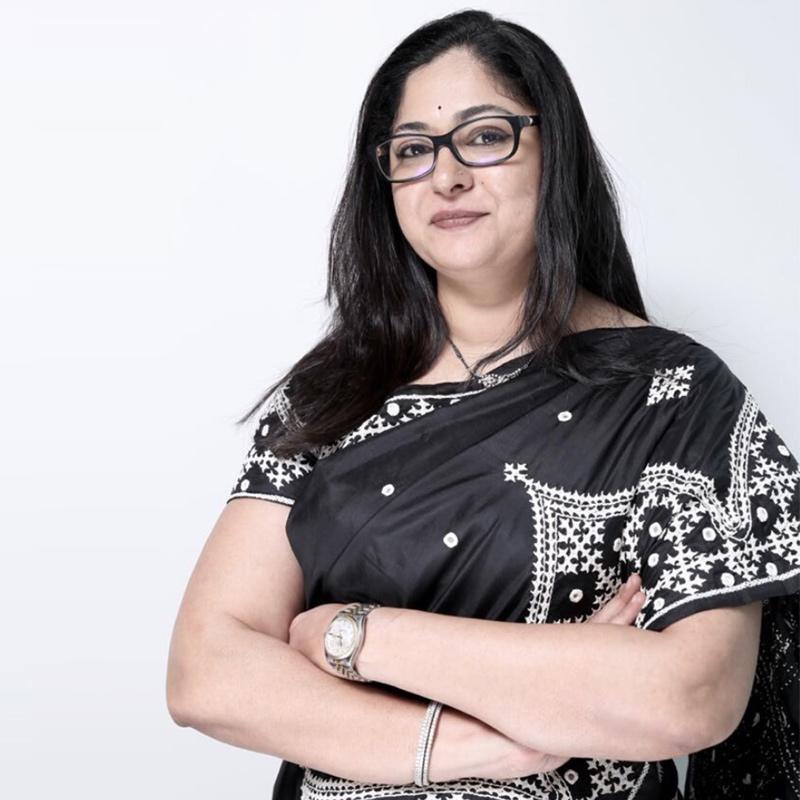
  • Zee TV’s Aparna Bhosle on changing the content game in television

    Zee TV’s Aparna Bhosle on changing the content game in television

    MUMBAI: Traditional television broadcast has long been a staple of entertainment. But as the fast-growing internet and over-the-top (OTT) video platforms make inroads into the consumer market, more and more people are beginning to cut the cord and move to a digital viewing experience. The rules of the content game have changed. Digitisation has lifted barriers and offered a multitude of opportunities to tell stories that were once impossible to tell and it has become more important than ever for broadcasters to up their game in terms of content quality.

    Indiantelevision.com’s Shikha Singh spoke to Zee TV business head Aparna Bhosle on how this transformation has impacted the audiences’ demands, the use of newer technologies, shooting techniques to meet the ever-growing need of viewers for quality entertainment and more.

    Edited Excerpts:

    On what has led to the growth of TV shows.

    Technology has evolved over the years and has certainly contributed significantly to our shows looking much better visually. We have more sophisticated cameras and lenses today, much better visual effects, and cutting-edge post-production software. But, at the end of the day, it is more about a maker's intent. Our audiences are far more exposed to global content than they ever were. Hence we, as makers, have started putting in a lot more effort into every small detail which makes the content look more aesthetic and visually appealing. It is not only about monetary investment but also investment in terms of time and thought. A lot more thought goes into production design which overall results in shows looking much better.

    On changes they have introduced to improve the look and feel of the shows.

    Shooting on Sony F5 is a standard in today's time. We even shoot on more sophisticated cameras such as Arri Alexa, Sony FX9. These are some cameras that have given great results even in low lighting conditions and the picture quality is top-notch. And with the advent of specialty equipment such as drones, Go-Pros, one can bring alive the scale of production values.

    Apart from that, more and more technicians are now experimenting not only with cameras but also lighting techniques. The days of flat lighting are long gone. Today's storytelling requires different shows to have different lighting. It is not just about having the latest technology at your disposal, it is more about how one leverages it to narrate a story more effectively. Technicians today love to experiment and create new looks for the show. They play with camera angles, lighting techniques which overall helps in achieving a new contemporary look. Sound, too, plays a very important role in storytelling. Today, our shows come with a Dolby digital 5.1 output which gives our viewers a high-quality sound experience while watching TV.

    On advantages of shooting in 4K.

    Shooting in 4K means more resolution, deeper colours, more creative options to work with during post-production. But the 4K files are heavy, which means more time to grab, hence for daily shows, it becomes time-consuming and not viable as a process. Shooting in 4K is possible in the case of certain events or promos that provide sufficient timelines between the dates of the shoot and on-air telecast.  

    On what kind of discussion goes on with production houses before creating any property.

    Detailed discussions between the channel and the production house right from the concept of a show, the narrative and the pace at which the storytelling should unfold, the key drama spikes, the characterisation, casting, core communication pitch, the production design, and the overall look and feel of the show are an integral part of the show’s making. As one moves closer to the show going on the floor, aspects such as set design, art direction, costume styling, camera treatment, and edit patterns get discussed.  

    Today, with the audience being far more exposed and discerning,  it is imperative for every broadcaster to display their A-game to hold and sustain audience interest.

    On how shows are made and changes introduced in the script.

    Just a few years ago, a tape used to be delivered from the editing studio to a channel’s office for transmission. Today, the same is achieved by a simple file transferring process. Content production is a dynamic process, and we are always eager to introduce new technology into our ecosystem. The journey from envisioning to execution is always a challenging one. As far as scripting is concerned, technology has given far more creative freedom to content creators as a lot of sequences that were earlier unthinkable in terms of execution have now become possible and even cost-effective.

    On how digitalisation has changed content production on TV.

    It has certainly lifted a lot of barriers. The camera quality is far better. Cameras can now shoot much better in low light conditions; they are lighter in weight, there is sophisticated equipment to shoot underwater, action sequences, etc. Our requirement for lights has considerably reduced. Shooting in uncontrolled environments, outdoors has become far easier. Footage transfer has become faster. The advancement in visual effects has empowered us to bring our viewers stories that were once impossible to tell.

    The post-production process has gone through a mammoth leap. The process of DI (digital intermediate, or digitising filmed content and manipulating the colour and other image characteristics), colour grading, sound effects, and background music were all very time-consuming and today can be achieved in a decent timeline. From a viewer's point of view, they are experiencing content with never-seen-before visual and audio quality and further advances in digitisation will only help us to up our ante.