Tag: technology

  • Yogesh Nehra named upGrad president, technology

    Yogesh Nehra named upGrad president, technology

    Mumbai: Higher ed-tech company upGrad has appointed Yogesh Nehra as president – technology to spearhead development for the tech infrastructure and make the online learning experience more immersive for its learners globally.

    In his new role at upGrad, Nehra will oversee high-performing engineering teams and driving digital transformation initiatives like product conceptualisation, and application architecture, which can further continue to add-on to the platform’s capabilities for a smoother consumer experience.  

    He brings with him over 15 years of experience in scaling and building high-performance teams, building ground-up software products, and aligning them with business growth to meet scale across the start-up ecosystem. He has co-founded and built ShopG as a social commerce product for Indian users. Before ShopG, Nehra was part of many unicorn’s journeys that include start-ups like Rivigo, Ola, Inmobi, and Wittyparrot among others.

    “We are thrilled to have Yogesh join the upGrad family at such an important juncture. As we are witnessing exponential growth in our user base, the existing infrastructure needs incremental re-engineering to embrace newer technologies that can be integrated into our existing processes to deliver a superior learning experience,” said upGrad, co-founder & MD, Mayank Kumar. “I am confident that his proven expertise in the domain will lead the company to the next level and support the ever-accelerating growth trajectory of the business.”

    “I am excited to join upGrad and contribute towards the vision of powering career success for every member of the global workforce as their trusted lifelong learning partner & driving meaningful career outcomes,” said Nehra. “I look forward to working with this dynamic team and using my expertise in building a product roadmap and infrastructure that will play a significant role in the company’s expansion journey in the coming years.”

  • Shadowfax appoints Sumit Pilankar as VP of engineering & technology

    Shadowfax appoints Sumit Pilankar as VP of engineering & technology

    Mumbai: Homegrown crowdsourced logistics platform Shadowfax Technologies on Friday announced the latest addition to its senior leadership team. To further strengthen the technology vertical and make a strategic move towards the larger business goals at Shadowfax, the company has appointed Sumit Pilankar as the vice president – engineering and technology.

    With over 17 years of rich experience in the technology industry, Pilankar will be taking charge of spearheading the engineering and technology unit and will be reporting to Shadowfax Technologies, co-founder & CTO, Vaibhav Khandelwal.

    His role will involve creating innovative tech-enabled solutions to power last-mile delivery services. Prior to joining Shadowfax, Pilankar had led technology intervention in various organisations like Flipkart, Holiday IQ, WordPoint Technologies, and Kudos Infomedia.

    Sharing the vision for the company’s growth aligned to the latest developments, Khandelwal said, “We are a growing and dynamic company. Our core has always been delivering value to our customers and helping them create an enhanced experience for the end customers. At Shadowfax, we leverage technology to build best-in-class logistics solutions that are efficient, cost-effective, and agile to service a vast range of businesses thereby adding value to the lives of our partners and patrons. We are excited to welcome Sumit on board and continue to ameliorate this journey towards excellence.”

    Expressing his thoughts on his new stint, Pilankar said, “I have been closely following the developments in the Indian logistics and supply chain industry and believe that technology has the potential to be the game-changer. The industry has been transforming from manual to data-driven decision making and this when coupled with the latest technologies will enhance the experiences for all stakeholders.”

  • Benchmark Broadcast partners with Adobe to upgrade video & audio services

    Benchmark Broadcast partners with Adobe to upgrade video & audio services

    Mumbai: In the last few years, the media and entertainment industry has taken a giant leap, thanks to the digital transformation that it has witnessed. The industry leaders now increasingly recognise technology’s strategic significance and do not see it merely as a tool for operational efficiency.

    On the other end of the spectrum, consumers are keen to explore new experiences, including audio and video content. Their consumption avenues are not limited to TV, but also cover OTT platforms, web, social media, and native apps. For media and broadcasting companies, the evolution is a lifetime opportunity, and it requires them to use agile and effective ways to create a niche for themselves.

    Setting ‘Benchmark’ since 2006

    Established in 2006 in Singapore, Benchmark Broadcast Systems is a consultant and technology partner for media and broadcast companies in Asia. The company has over 50 in-house engineers and more than 500 years of cumulative experience in the broadcast industry to empower broadcast and media clients. The team works for end-to-end systems integration, project roadmaps, site support and maintenance, and personnel training.

    From assessing requirements to designing systems, procurement, installation, and maintenance, Benchmark provides all services to its clients, which includes several broadcasters in the Indian sub-continent and Southeast Asia – CNBC, Mediacorp, Aljazeera, Nepal TV, and MyTV among many others.

    For the uninitiated, production companies work with multiple vendors who provide a complex array of equipment and software — from the network, storage, and compute infrastructure to editing software, ingest systems, and media asset management. Often, these companies struggle to put all of these complex pieces together and follow a streamlined workflow. As a systems integrator, Benchmark works with each client to identify and implement a customized solution to address their specific problem.

    The pandemic has not only catalysed the demand for digital content but also changed the production environments significantly. At this juncture, Benchmark set out to look for new-age solutions which help its clients respond to the changed environment and maintain their competitive edge.

    Adobe joins the saga

    Being a leader in creating digital experiences, Adobe’s solutions create environments that help media companies achieve their goals.

    In September 2020, the company introduced the Adobe Certified Service Partners for Video and Audio program. The program helps systems integrators gain the high-level knowledge and confidence needed to deliver their services in three strategic areas: support, workflow and system design, and in software integration. Systems integrators that meet proficiency requirements in all three areas become Adobe Certified Service Partners for Video and Audio. The program supports partners in several ways. Through training, engineers become proficient in each service areas, giving systems integrators a clear path to gaining skills that will enable them to compete in the industry and better serve their clients. They can also leverage the certification as a unique selling point to offer professional services to their clients.

    Benchmark Broadcast’s relationship with Adobe is not a recent one. The company has been successfully creating workflows for its clients by using Adobe Premiere Pro. Therefore, the leadership at Benchmark was excited to have their engineers be a part of the Adobe Certified Service Partner for Video and Audio program.

    The program modules offer structured lessons about best practices on building the right workflows throughout the production journey. This enables Benchmark’s engineers to be more efficient in managing timelines yet develop a deeper understanding of systems integration, as they aim to improve the Adobe ecosystem for clients.

    Amid the demand for complex remote production environments, production houses need trusted partners to help them with effective integration and the desired production workflow.

    By joining the Adobe Certified Service Partners for Video and Audio program, Benchmark attempts to enhance the customer’s trust. For a relatively small team at Benchmark, the certification becomes a testimony of its experience with the Adobe ecosystem and the ability to get the work done.

    By becoming an Adobe Certified Service Partner for Video and Audio, Benchmark Broadcast Systems is pushing the envelope in helping media and broadcast companies adapt to new consumer demands.

  • Digital Marketing – The Best Way To Create Branding

    Digital Marketing – The Best Way To Create Branding

    In this digital world, where everything is automated, many companies try to implement digital solutions for their problems. By hiring the relevant services, it is possible to sort out any problems using technology. Marketing is one such aspect to be considered in the business world. There are techniques related to marketing both traditional and online strategies. Compared to traditional techniques, many companies are switching to online solutions. Though these strategies are available, press release distribution service also serves to be important along with digital marketing. Know some of the digital marketing techniques to improve brand awareness. 

    Email marketing for effective branding

    Nowadays, everything is carried out digitally, including communications. People are using the internet and social media for effective communication. Along with that, for communicating regarding businesses or sending files, emails acts as the best one. It can be used for digital marketing by sending relevant emails to the target customers. This process starts when the customer likes to know about any brand’s products.

    When the user clicks over the website and gives personal details, the user’s email is utilized for sending product emails. It can help target the best customers who show interest in buying the products. One of the best ways of marketing is email marketing and seems to be effective for many purposes. It is being implemented by most of the companies that need branding. Hiring the best press release distribution service can improve recognition.

    Social media and video marketing

    Other marketing strategies include social media marketing. It involves branding over social media, where people communicate with their friends. As many social media accounts are being created, it can effectively create awareness about various brands and products. Companies can use it as an efficient tool to communicate with their target audience and know their feedback.

    Along with social media marketing, where communication acts as a tool, video marketing can also be implemented. By creating videos for the products, people will find it interesting to watch them. There are high chances for the public to spread awareness about a brand when videos are uploaded. These brand videos can be uploaded, either on the social media page or on the website. 

    The best and cost-effective marketing solution

    As online resources are replacing traditional marketing, it is best to switch towards digital marketing due to various reasons. One can hire the best service company to assist in digital solutions for the company. Many businesses can start their website to encourage customers from all over the world to buy their products. The best way to create brand awareness is through digital resources.

    Effectively using digital tools can improve the brand’s image among the public. Within a few years, the business firm can visualize the positive growth of their company. Try out different marketing solutions to improve your recognition among the customers. Reach out to the mass crowd by implementing cost-effective digital marketing solutions. Gain more popularity by utilizing the best strategy and attain the best out of it.

  • Smart TV ownership to surpass 50% of homes globally by 2026, says report

    Smart TV ownership to surpass 50% of homes globally by 2026, says report

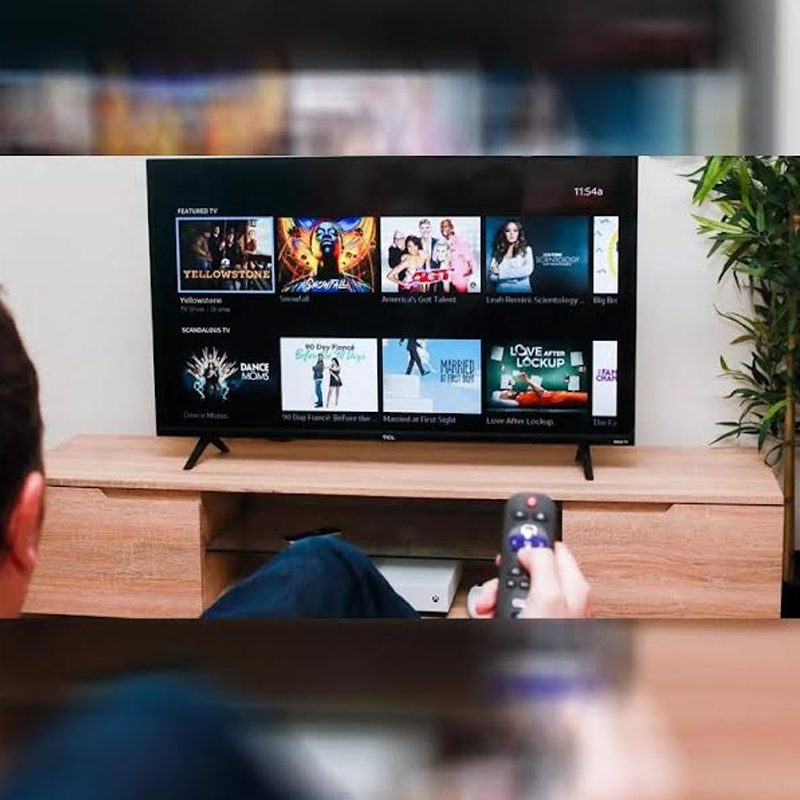
    New Delhi: Over 665 million global households owned a Smart TV by the end of 2020 accounting for 34 per cent of the total households, said the US- based firm Strategy Analytics in its latest report.

    According to the report, ‘Global Smart TV Forecast for 88 Countries 2011-2026′, the penetration of Smart TV is set to rise to 51 per cent by 2026 when Smart TV ownership will reach 1.1 billion homes. While the demand for smart TVs was growing anyways, the pandemic-induced lockdown accelerated the sale further. As per the data collected by the firm, annual shipments reached 186 million units during 2020 representing 79 per cent of all TVs shipped worldwide. The shipments are expected to break through 200 million units per year in 2022 it stated further.

    The strongest growth was witnessed in North America. According to the report, this could also be due to the government stimulus cheques which helped to drive an increase in spending on home entertainment products as consumers found themselves spending more time at home due to Covid-19 related restrictions.

    Samsung, TCL and LG emerged as the world’s leading smart TV brands and represent over 40 per cent of the market between them, up from 33 per cent in 2015. Samsung led in terms of annual sales units for the ninth straight year in 2020 while TCL climbed above LG and into second place for the first time. Meanwhile, the Smart TV market continues to coalesce around a handful of TV streaming platforms or operating systems.

    The report found that Samsung’s Tizen leads the way but major third-party software platforms such as Android TV and Roku TV OS have made strong gains in recent years.

    “Smart TV is a standard fit feature of most flat panel TVs sold today and so smart TV household penetration will inevitably continue to grow as consumers replace old sets with new modern smart-enabled versions,” said Connected Home Devices senior analyst, Edouard Bouffenie. “As smart functionality is no longer a point of differentiation but has become a checkbox necessity, smart TV manufacturers have had to make a choice between maintaining their own software and application ecosystems or licensing a software platform from a third-party partner.”

    While many have decided to partner with the likes of Google’s Android TV and Roku in order to avoid the ongoing costs of maintaining their own platform, others like Samsung, Vizio and LG are going alone to capitalise on the fast growing Connected TV advertising business.

    “However, the current Connected TV landscape in the home is incredibly complex and consumers may have multiple devices in multiple configurations to choose from”, said Media and Intelligent Home Practice, vice president, David Watkins. “Factor in different viewing habits amongst different members of the household and it’s clear that TV streaming platform providers face a significant challenge in driving engagement and ensuring that TV viewers remain on their platform and do not switch to another source. Smart TV OS providers must look to influence the TV viewer’s journey through improved content discovery capabilities, advanced analytics and advertising platforms and the development of an intuitive and user-friendly UI.”

    The report forecasts global smart TV shipments, installed base, households and household penetration by six major regions and 88 countries from 2011 to 2026.

  • ZEE set to onboard over 500 tech experts for digital hub in Bengaluru

    ZEE set to onboard over 500 tech experts for digital hub in Bengaluru

    New Delhi: Media and entertainment conglomerate ZEE Entertainment Enterprises Ltd (ZEE) is set to expand its digital footprint by setting up a cutting-edge technology hub in Bengaluru to drive innovation and exponential growth for its integrated platforms.

    Taking strategic steps in the digital transformation journey of ZEE 4.0, the innovation centre in Bengaluru will onboard over 500 experts with a strong expertise in the field of design, technology, data & cyber security. The Company has already on-boarded as many as 120 experts to drive the change and enhance its overall tech prowess.

    The products and solutions designed by the team will lead the Company’s digital pivot, driving exponential growth across platforms, it said on Wednesday.

    According to the company, the innovation centre in Bengaluru will help build a strong cohort of design, tech, data and talent to cater to the new-age consumer seamlessly across connected devices, built on futuristic tech stack that will enable engineers & data scientist to unlock innovative technology-led solutions.

    Speaking on this development, ZEE, president – technology and data, Nitin Mittal said, “In order to build an awesome user experience across platforms, it is imperative to build design thinking, enhance tech capabilities to serve the ever-evolving needs of the consumer and leverage data to personalize the options for them. As a digitally adept data-first company, the new technology hub set up in Bengaluru will create an environment that sparks innovation. The centre will be focused on developing world-class tech products & data solutions by creating synergies across our businesses, promoting innovative thinking and driving collaboration. We are looking for sharp, like-minded innovators who think new, act agile and create with passion to join us and shape the next.”

    ZEE, head HR – digital platforms, technology & head – employee engagement, Aditi Vashisht said, “Human Capital is the most precious asset for us at ZEE and we are building the ZEE 4.0 team across our digital arm to drive higher innovation as well as capitalize on the immense growth opportunities in the M&E landscape. ZEE has always been an Academy of Talent in the M&E Industry and the new tech hub is designed with a unique employee value proposition focused on culture, collaboration & innovation. The tech hub will be an amalgam of a cross functional talent pool of like- minded individuals ready to challenge the status quo and lead innovative solutions in the digital ecosystem.”

    The new ZEE 4.0 version of the company will focus on reinventing existing business models, maximising its core, expanding into adjacent spaces and exploring new areas of business. 

  • TV ad spend touched Rs 35, 015 crore in 2020 despite pandemic

    TV ad spend touched Rs 35, 015 crore in 2020 despite pandemic

    New Delhi: Despite the pandemic’s devastating blow to businesses worldwide, the Indian media and entertainment sector showed ‘remarkable resilience’, according to PwC’s Global Entertainment and Media Outlook 2021-2025.

    TV advertising continued to expand in 2020 as the country emerged from the onslaught of the first wave and reached Rs 35, 015 crore, making India the fourth-largest market globally after the US, China, and Japan. Further expansion at a 7.6 per cent CAGR is likely to take TV ad revenues to the level of Rs 50,660 crore in 2025, according to PwC.

    The outlook for India suggests, multichannel advertising will account for nearly 92 per cent of the total TV advertising market in 2025. Online TV advertising will make modest inroads in the forecast period, with broadband penetration likely to remain extremely low at 7.3 per cent of households.

    The pandemic hit the industry hard, and according to PwC, the total global M&E revenue fell 3.8 per cent year on year in 2020, by far the most significant drop in revenue ever. While sectors like cinema, live music, and trade shows suffered unprecedented setbacks, the persistent growth of digitisation softened the blow for the broader industry.

    Amid all this uncertainty, PwC’s outlook suggests that India’s M&E industry is likely to reach Rs 412656 crore by 2025 at 10.75 per cent CAGR. A significant part of this growth story will be written by demand for great, localised content, increased internet penetration, and the creation of new business models. Technology and internet access will continue to influence the way Indians consume content, says the report.

    The report also shed light on how India is emerging as the fastest-growing Internet advertising market in the world at a CAGR of 18.8 per cent during 2020-2025. Around the world, pandemic lockdowns made home entertainment effectively the only choice, with internet access an essential. Growth in mobile ad revenue overtook wired revenue in 2019 and is expected to be 74.4 per cent of the total internet advertising revenue of Rs 30471 crore by 2025. In 2020 revenue from mobile internet advertising in India was Rs 7331 crore and will rise to Rs 22350 crore in 2025 – increasing at a 25.4 per cent CAGR.

    “This makes India the fastest-growing mobile ad market in the world, reflecting the growth potential, with over half the population yet to take up a mobile Internet subscription in 2020,” says the report.

    One of the worst impacts was seen on the cinema industry, which saw a 70.4 per cent collapse in revenues. With theatres shut, and movies heading to the OTTs, the box-office revenues in India plunged by 75 per cent year-on-year in 2020 to Rs 2,653 crore. However, according to PwC, the box-office revenue is expected to recover and grow at a CAGR of 39.3 per cent grossing up Rs 13,857 crore by the end of 2025.

    “The overall segment comprising box-office and cinema advertising is predicted to grow back to pre-covid level by mid of 2023,” says the report, providing a glimmer of hope to the industry.

    Meanwhile, the gaming market in India continues to enjoy exceptional growth and shows enormous potential. Video games and esports revenue reached Rs 11250 crore in 2020 and is set to expand to Rs 24212 Cr in 2025, at 16.5 per cent CAGR. India’s gaming market is dominated by the social/casual category, which accounted for 77 per cent of all video games and esports revenue in 2020.

    “India’s esports market is small but as awareness grows and, crucially, the mobile esports offering becomes stronger, this sector will see rapid expansion, at a 31.6 per cent CAGR over the forecast period,” it says.

  • GUEST COLUMN: What marketers will need to learn about voice and audio

    GUEST COLUMN: What marketers will need to learn about voice and audio

    New Delhi: A renowned Content and Marketing Strategist, Lee Odden says “Content isn’t the king, it’s the Kingdom”.

    In a world of digitization and technological advancements, there are certainly no bounds to evolution in any industry. And, the content space is one such area that has seen a major evolution in the marketing landscape, especially in the audio space.

    Audio messaging has been around for a long time but the approach and outlook towards it has changed over the years. Consumer’s interests keep changing and their form of convenience too. Earlier, people were dependent on the radio for entertainment and news, and then TV took over the role. And now audio is back as the preferred medium of content consumption.

    With technological advancements and the demand for convenience, audio has become the forerunner in not only the marketing world but also in our regular lives.

    Audio – An old form of communication gaining popularity in modern times

    Audio holds great prominence in the world of social media and digital marketing. The audio-only feature has the power to eliminate all the distractions that are usually faced by a consumer consuming content on a visual medium, thus improving their attention span.

    With busy lifestyles and hectic schedules, people prefer consuming information or experiencing entertainment on the go. Tuning in to a podcast or live audio session on your topic of interest while driving, is a preferred option than being glued to TV and laptop screens or mobile screens for consuming the same information. Be it in a car, or at a gym, or in a public vehicle, access to an audio form of information and entertainment has become convenient. Audio mediums allow a consumer to consume content with ease while multitasking. It allows them to listen to their favourite audiobooks or podcasts while walking, cooking, doing laundry, or traveling.

    Voice-based technology – A better companion or convenient dependency?

    Audio mediums offer highly immersive experiences, and also make us perceive the depth of emotions. We all still have the voice of Vidya Balan’s ‘Good Morning, Mumbai’ from the Munnabhai MBBS movie playing fresh in our ears. It is this connection created by audio mediums with characters and hosts, which has led to the rise of the podcast wave and voice-based technology hardware.

    Consumer behaviour has evolved over the years, and there is an innate desire to adopt a relaxing and luxurious lifestyle. This explains why consumers opt for more enhanced sound systems at home for a theater-like experience to an increased dependency on virtual assistants. ‘Alexa, switch on the lights’ or ‘Hey Google, Play the latest music tracks’ has become a more convenient way of getting work done.

    Voice-controlled devices also provide a personalized experience, and marketers as well as brands and businesses use voice search interfaces to connect with consumers. Whether it is voice assistant applications or smart products like smart TV and speakers, voice search has great significance.

    Types of Voice Marketing tactics:

    ● Sonic Branding – Sound and music have a recall factor. Audio branding will be common and marketers will be seen creating audio logos to create a unique audio identity for audio-based content and to strengthen brand recognition, like the Nokia’s ringtone or Nirma’s iconic “washing powder Nirma”.

    ● Podcasts – The wave of podcasts has created a buzz. A few marketers have already created their market space with their branded podcasts, which have proven to be one of the highly engaging forms of audio marketing.

    ● Audiograms – Audiograms is the evolving fad and brands have started making the most of it by overlaying images with audio-based elements

    ● Voice Search Optimization (VSO) – The era of digital marketing saw brands market search engine optimization (SEO) based content for enhanced search results. With the evolution of search optimization, the voice-based search will be the next frontier, and voice traffic will soon be witnessed as an advantage for brands.

    Future of Audio and Voice-based technology

    The future of marketing will be based on voice recognition and audio formats. With more and more advancements in artificial intelligence and machine learning, we will soon see a revolution in the world of audio and voice-based technology. An increasing number of marketers and brands are using voice marketing tactics and using audio-based mediums to increase customer engagement.

    This is the sole reason why there have been new players in the market that offer only audio and voice features. Even existing social media platforms have realized the need for audio and are evolving their platforms accordingly. Clubhouse disrupted the live social audio market and it has been phenomenally adopted by the Indian audience. Twitter Spaces has also gained popularity and seen an increase in user base. Facebook has also launched live audio rooms and Spotify has come up with Spotify Greenroom.

    Voice and audio are certainly the future of social media and the digital world and can be leveraged by a country like India, where there are still limitations in context to writing. Audio content eliminates the barrier of writing appropriately and opens up a plethora of languages for a marketer to produce content for different audiences. Marketers now have an added advantage to reach a wider audience, which otherwise was restricted due to the limitations offered by visual mediums.

    Hence, voice-enabled search and audio-based technology open a whole new dimension for marketers to bank on. It will be interesting to see how marketers leverage audio content and voice marketing strategies for brands to create a buzz in the market.

    (Sowmya Iyer is the founder & CEO of DviO Digital. The views expressed in the column are personal and Indiantelevision.com may not subscribe to them.)


  • SonyLIV brings in TCS as its technology partner

    SonyLIV brings in TCS as its technology partner

    MUMBAI: IT company Tata Consultancy Services (TCS) on Tuesday said that it has entered into a strategic partnership with SonyLIV, to help the streaming platform create an innovative business model enabled by digital technologies, enhance customer experience, and pave the path for future growth.

    The partnership will leverage TCS’ next-gen digital capabilities, global expertise, domain knowledge, and innovation ecosystem to define SonyLIV’s platform transformation roadmap for India and global markets, it said in a statement.

    TCS will help enhance its core OTT platform to leverage AI and machine learning to provide personalised experiences to subscribers across devices. It will also help SonyLIV use data and insights to monetise content and create new revenue streams, it added.

    Additionally, TCS will set up a world-class Experience Design Center leveraging its innovation labs, where it will deploy its Location Independent Agile Model to accelerate innovation by rapidly prototyping and helping SonyLIV launch new best-in-class features ahead of the market.

    The partnership will help SonyLIV reimagine the customer experience and engagement, enhance its brand, establish competitive differentiation in the marketplace and drive growth, the statement further said.

    SonyLIV, Sony Entertainment Television and Studio Next, business head, Danish Khan said, “We are delighted to have TCS on board as our technology partner. We will work closely with the TCS leadership team in India, the US, and UK to enhance the user experience of SonyLIV. Further, we hope to harness the TCS global talent reach, infrastructure, and global centers of excellence to bring innovations that will improve engagement and provide a delightful consumer experience.”

    “Through this partnership, TCS will bring its deep domain knowledge in the media and OTT industry along with world-class technology capabilities to enable SonyLIV to innovate at speed and scale. TCS will leverage its global innovation ecosystem to introduce next-gen immersive and interactive features to enrich the overall customer experience,” TCS India, country head, Ujjwal Mathur said.