Tag: technologists

  • Rajya Sabha clears sweeping ban on online money gaming despite opposition uproar

    Rajya Sabha clears sweeping ban on online money gaming despite opposition uproar

    NEW DELHI: The Indian parliament on Friday pushed through a controversial law banning the operation, facilitation and advertising of online money games, amid noisy opposition protests over the lack of debate.

    The Promotion and Regulation of Online Gaming Bill, 2025—passed by voice vote in the Rajya Sabha a day after clearing the Lok Sabha—makes online money gaming punishable with up to three years in prison and fines of as much as Rs 1 crore. Offences will be cognisable and non-bailable.

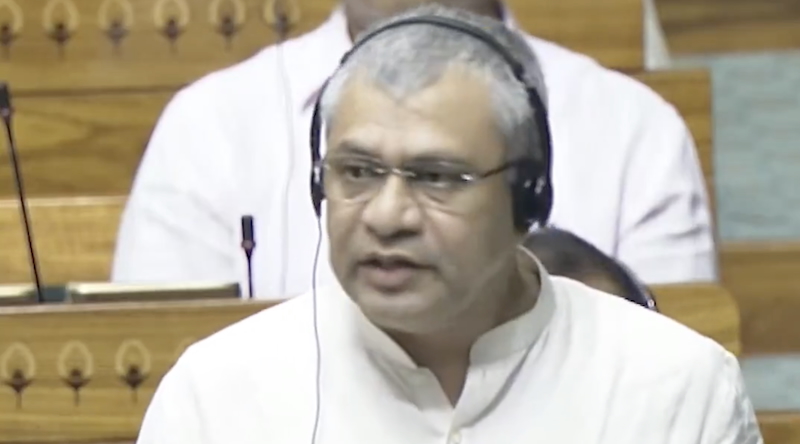
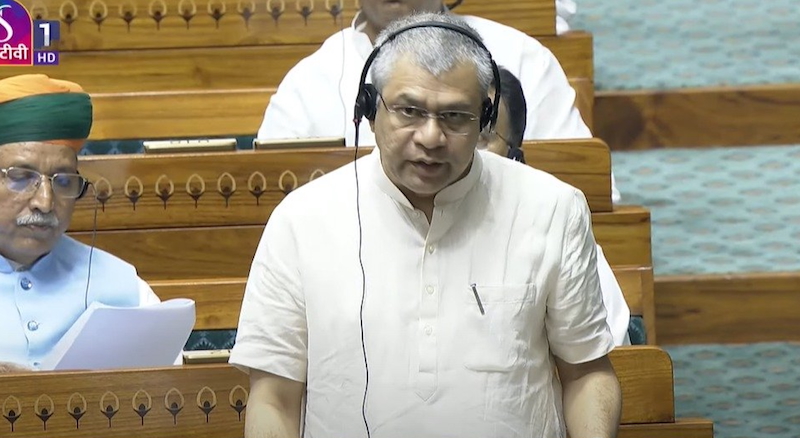
    Tabling the bill, electronics and IT minister Ashwini Vaishnaw likened money-gaming addiction to drug abuse and accused powerful vested interests of fuelling terror finance through gaming platforms. He said roughly 45 crore Indians had lost money online, with annual losses pegged at Rs 20,000 crore.

    The legislation bans all forms of online betting and gambling—from fantasy sports and poker to rummy, lotteries and other card games—and bars banks and payment providers from processing related transactions. 

    Advertising such services will invite up to two years’ jail and fines of Rs 50 lakh, while facilitating payments could mean three years in prison and Rs 1 crore in penalties. Repeat offenders face enhanced sentences of up to five years and Rs 2 crore in fines.

    Opposition leader Mallikarjun Kharge hit out at the government for forcing the bill through without discussion, even as union minister Kiren Rijiju said protests made a debate impossible.

    Vaishnaw stressed the bill distinguishes between harmful money games and esports. Speaking to ANI, he said the government aims to “promote and encourage the good parts” of online gaming, and to make India a hub for development through the planned Indian Institute of Creative Technologies.

    Prime minister Narendra Modi, addressing an NDA meeting, hailed the online gaming ban as a reform with “far-reaching impact”, while accusing the opposition of reducing the monsoon session to disruption.

    NDTV reported that the government will also act against “big people” attempting to sway opinion through media and social media campaigns against the ban.

  • India’s gaming giants face extinction as government prepares blanket ban

    India’s gaming giants face extinction as government prepares blanket ban

    MUMBAI: India’s booming online gaming sector is bracing for devastation after electronics and information technology minister Ashwini Vaishnaw introduced the Promotion and Regulation of Online Gaming Bill, 2025, in the Lok Sabha on Wednesday. The proposed legislation threatens to outlaw all real-money gaming platforms, regardless of whether they involve skill or chance—a move that could obliterate 86 per cent of the industry’s current revenue streams.

    The bill proposes harsh penalties for violators: up to three years imprisonment and fines of Rs 1 crore for operators, and two years jail plus Rs 50 lakh fines for advertisers. Banks and financial institutions facilitating transactions for money games face similar punishment. Repeat offenders could face between three and five years behind bars with higher fines.

    Market leaders including Dream11, Games24x7, Winzo, GamesKraft and My11Circle now face an existential crisis. India’s online gaming market, currently valued at $3.7 billion and projected to reach $9.1 billion by 2029, could see its financial lifeline severed overnight.

    The All India Gaming Federation, E-Gaming Federation and Federation of India Fantasy Sports have written jointly to home minister Amit Shah, warning that the legislation would “destroy over 200,000 jobs, result in over 400 companies shutting down, and weaken India’s position as a digital innovator.”

    The industry argues that legitimate platforms will be forced to close, pushing crores of users towards illegal matka networks, offshore gambling sites and unregulated operators. The sector has grown into a Rs 2 trillion industry, generating Rs 31,000 crore in annual revenue and over Rs 20,000 crore in taxes whilst expanding at 20 per cent compound annual growth rate.

    The bill defines an online money game as one where users pay fees or deposit money “in expectation of winning in return of money or other stake.” It explicitly excludes esports and online social games such as casual entertainment formats without monetary stakes. A proposed Online Gaming Authority would determine whether games qualify as money games and oversee the sector.

    MeitY secretary S Krishnan said the legislation aims to recognise the industry’s creative intent whilst restricting undesirable segments. The government cited instances of severe financial distress and suicides linked to online money gaming during cabinet deliberations, noting particular concerns about addiction among children and youth.

    The move represents a decisive shift from tax-and-regulate to prohibit-and-enforce. Authorities have already imposed a 28 per cent goods and services tax on gaming revenues since October 2023, followed by a 30 per cent tax on net winnings from FY 2024-25. Over 1,400 illegal betting and gambling sites have been blocked since 2022.

    Players themselves will not face criminalisation under the proposed law, being treated as victims rather than offenders. Free-to-play and subscription-based games where users pay fixed fees without wagering during gameplay will remain permissible.

    Industry insiders warn the legislation could violate constitutional principles whilst strengthening illegal offshore operators—described as “one of the biggest national security threats to the country today.” India’s gamer base has grown from 360 million in 2020 to over 500 million in 2024, with foreign direct investment in the sector crossing Rs 25,000 crore by June 2022.

    The Lok Sabha session was adjourned until 2pm shortly after the bill’s introduction amid opposition protests, leaving the industry’s fate hanging in the balance.

  • Hong Kong storms to third in global competitiveness rankings

    Hong Kong storms to third in global competitiveness rankings

    MUMBAI: Hong Kong has ascended to the third spot in the world’s most competitive economies, according to the World Competitiveness Yearbook 2025 (WCY 2025) published by the Swiss-based International Institute for Management Development (IMD). This marks the second consecutive year the city has climbed two places, reaching its highest ranking since 2019 among the 69 assessed economies.

    The IMD report highlights Hong Kong’s gains across all four key factors of competitiveness: “government efficiency” (second), “business efficiency” (second), “economic performance” (sixth), and “infrastructure” (seventh). This broad-based improvement underscores Hong Kong’s effective strategy in attracting private sector investment.

    Chief executive John Lee affirmed the positive trajectory, stating, “The World Competitiveness Yearbook shows that Hong Kong’s scores in overall terms and in many areas have improved, indicating that the Hong Kong Special Administrative Region (HKSAR) Government’s policy directions are on the right course and that various policies have yielded results.” Hong Kong has consistently ranked among the top 10 globally for over two decades, since the WCY 2003.

    Lee further emphasised the city’s “world-class business environment,” citing the rule of law, independent judiciary, a simple and low-tax regime, efficient markets, a robust financial system, and the free flow of capital, information, goods, and talent as key strengths recognised by the business community.

    Despite global economic uncertainties and geopolitical turbulence, Hong Kong recorded solid year-on-year GDP growth of 3.1 per cent in the first quarter of 2025, with full-year GDP growth anticipated to be between 2 per cent and 3 per cent.

    The city saw a record 145,053 new local companies registered under the Companies Ordinance last year, bringing the total to an unprecedented 1,460,494 by the end of 2024. Additionally, 1,079 new non-Hong Kong companies were registered, pushing that total to an all-time high of 15,126.

    Lee reiterated Hong Kong’s unique “one country, two systems” advantages, positioning it as a “super-connector” and “super value-adder.” He affirmed the government’s commitment to strengthening international exchanges, expanding regional trade, and exploring new markets to foster a vibrant economy and improve livelihoods.

    To further bolster its appeal, the government recently launched new legislation for company re-domiciliation, providing a streamlined mechanism for companies to relocate to Hong Kong. Already, two major insurance companies, AXA Hong Kong and Macau and Manulife (International) Limited, have announced plans to re-domicile under the new regime, pending regulatory approvals.

    Hong Kong is actively pursuing reforms to solidify its standing as an international financial, trade, and shipping hub. The Office for Attracting Strategic Enterprises has successfully drawn over 80 strategic enterprises, projected to bring in HK$50 billion in investments and create more than 20,000 jobs.

    Among the WCY 2025 sub-factors, Hong Kong secured top positions in “tax policy” and “business legislation,” and ranked second in “education,” “international investment,” and “finance.”

    As a top-three global financial centre, Hong Kong’s stock exchange remains a vital indicator of market performance. By May 30, 2025, stock market capitalisation had surged by 24 per cent year-on-year to over $5.2 trillion. The Hong Kong Stock Exchange has also emerged as a leader among major global exchanges in initial public offerings (IPOs), with total funds raised nearing HK$79 billion ($10.12 billion) so far this year.

  • Sitharaman stuns with her Union budget 2025

    Sitharaman stuns with her Union budget 2025

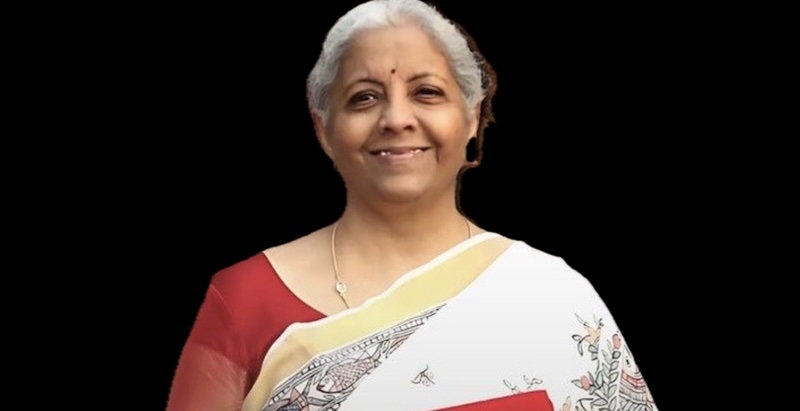
    MUMBAI:Should finance minister  Nirmala Sitharaman  be hailed  or should she be nailed? 
    The jury is out – as were the stock markets.

    One faction has been stunned in a negative sense and  is pretty morose that the government is not pumping in enough capital spending behind infrastructure to make up for the loss of revenue courtesy the tax reforms. Hence, they pulled down all the infrastructure stocks. 

    They will change their minds quickly should the government make some interim extra-budgetary announcements on infrastructure spends which it most likely will.

    Another faction is singing Sitharaman’s hosannahs for her tax reforms making government levies on personal  income nil upto Rs 12 lakh. They believe that the repressed middle class will run to the malls and markets and buy more groceries and garters (read: items of luxury) now that it will more money in its  pocket rather than given away to the government by way of taxes. Customers  will premiumise, go after articles of conspicuous consumption.

    This lot of the jury can’t stop praising Ms Sitharaman. They sent the stocks of FMCG, retail firms, entertainment outlets screaming up on the bourses. 

    Should they be proved right, then advertising spends will rise, sales will soar, and boy will it be party time for all. 

    On the whole, however, the Union Budget is being seen as growth oriented introducing significant measures aimed at stimulating economic growth and addressing key societal concerns.

    In a bid to bolster the middle class and enhance domestic consumption, the government has raised the income tax exemption threshold from Rs 8 lakh to Rs 12 lakh per annum. Additionally, tax rates for higher income brackets have been reduced, a move anticipated to increase household spending and savings. 

    The budget unveiled a six-year programme to boost the production of pulses and cotton, aiming to reduce dependence on imports. This includes state agencies purchasing pulses at guaranteed prices to support farmers. Furthermore, a “national mission” has been announced to develop high-yielding seed varieties, addressing challenges posed by shrinking farmlands and erratic weather. 

    Revised MSME criteria will double investment and turnover limits, benefiting over a  crore enterprises.
    Credit guarantee cover for micro and small enterprises will increase from Rs 5 crore to Rs  10 crore, with start-ups eligible for up to Rs  20 crore.

    A customised credit card scheme with a Rs  5 lakh limit will benefit 10 lakh micro-enterprises registered on the Udyam portal.

    A Fund of Funds with a fresh government contribution of Rs 10,000 crore will support start-ups. A scheme offering loans up to Rs  2 crore will target first-time women, Scheduled Caste, and Scheduled Tribe entrepreneurs.

    Labour-intensive sectors like footwear, leather, and toys will be promoted to boost employment and exports
    The government plans to modestly increase capital spending to offset revenue losses from tax cuts. This includes investments in infrastructure development, manufacturing, and exports. A high-level committee for regulatory reforms and the creation of an investment friendliness index have been proposed to improve the ease of doing business. 

    Measures benefiting the poor, youth, farmers, and women have been incorporated into the budget. The allocation for food, fertiliser, and rural employment subsidies remains nearly flat at Rs 4.57 trillion, with the rural job guarantee programme retaining its budget of Rs 860 billion. These steps aim to support the rural economy and provide a safety net for vulnerable populations. 

    Infrastructure ministries will outline three-year project pipelines under PPP mode. States can leverage the India Infrastructure Project Development Fund.

    The government has allocated Rs 1.5 lakh crore as interest-free loans to states for capital expenditure. The second Asset Monetisation Plan (2025-30) aims to unlock Rs 10 lakh crore for new projects.

    The Jal Jeevan Mission will extend until 2028 to achieve universal rural tap water access.

    Urban sector reforms will be incentivised, with a Rs 1 lakh crore Urban Challenge Fund supporting city redevelopment and sanitation projects.

    India Post will evolve into a logistics hub for MSMEs, with NCDC supported for cooperative lending.

    A National Manufacturing Mission will bolster clean tech production, including solar PV, EV batteries, wind turbines, and grid-scale batteries.
  • SMPTE names Sally-Ann D’Amato as executive director

    SMPTE names Sally-Ann D’Amato as executive director

    MUMBAI: The Society of Motion Picture & Television Engineers (SMPTE), the home of media professionals, technologists, and engineers, today announced that Sally-Ann D’Amato has been named executive director by the SMPTE board of governors. D’Amato formally began this new role on 18 December 2024, after acting as interim executive director since October. 

    “I’m honoured to accept the role of executive director,” says D’Amato. “After more than two decades with the society, I’m humbled to be chosen as its leader. I will continue to work toward a society that is efficient, innovative, and united. My goal as executive director is to encourage more collaboration across sections to create more opportunities for members, strengthen the standards community, and reinforce the organization’s infrastructure. This will be enacted through a mission we’re calling ‘We Are All One SMPTE.’” 

    D’Amato joined the SMPTE family in 2001, working as an administrative assistant. She was promoted to executive assistant in 2003, and again promoted to director of operations in 2005. In 2016, she became director of events and governance liaison. In this role, she was responsible for planning and executing events and was also responsible for working with the board on issues of society governance and board activities. In October 2024, she became the interim executive director. 

    During her time at SMPTE, D’Amato helped enact the current bylaws and operations manuals. She also has been responsible for producing the media technology summit since 2005, and even produced a virtual version of the event during the Covid-19 pandemic. She also produced the SMPTE centennial celebration in 2016 and incorporates her creativity by writing songs for and performing in many of the events she works on.
     
    “Sally-Ann has been a tremendous asset to SMPTE, and will continue to be in this new role,” says SMPTE president Renard T. Jenkins. “She has proven her commitment, qualifications, and talent time and time again, and when asked to lead the society, she didn’t hesitate to step up. Her performance in the role of interim executive director has already had a positive impact on the society. I believe she will lead SMPTE to a brighter future, and I look forward to helping her do just that.”