Tag: technologies

  • Planetcast to showcase ‘Cloud.X Turbo’ at NAB 2020

    Planetcast to showcase ‘Cloud.X Turbo’ at NAB 2020

    MUMBAI: At NAB 2020, Planetcast will showcase its latest and most powerful cloud platform ‘Cloud.X Turbo’. The event will take place from 18-22 April at Las Vegas Convention Center. As a part of the live demo, Planetcast will highlight the latest technological advancement in its cloud platform. Cloud.X Turbo has been successfully deployed for reputed global broadcasters and is garnering positive customer reviews. Cloud.X Turbo offers immense flexibility to broadcasters as they can make critical changes at the operations level, which is a great power to have. It has an excellent capability to integrate legacy platforms on any third party playout solution to provide a super high quality and delivery.

    The new wave of technology is sports broadcasting

    The company will also showcase it latest sports broadcasting media asset management software Media.X sports which is capable of handling complex workflows of sports broadcasters. Media.X sports is equipped to handle large volumes of content and operated on direct to customer model. Online viewership is rising rapidly for sporting events and our latest product can deliver the linear streams to online platforms in a highly secure and efficient manner.

    Content delivery over IP

    At the event,  it will reveal the latest version of its IP delivery solution ‘Recaster’. The indigenously developed proprietary technology developed by Planetcast can delivery your content from anywhere to anywhere in any format. Broadcasters can create their own content delivery network completely managed by Planetcast. Recaster is a highly affordable and reliable delivery mechanism for the broadcast world. Recaster is also suitable for live sports and other live events which involves picking and dropping of signals or a group of signals from event location to MCR for live distribution.

    B2B online marketplace for content related services

    Making content related services like editing, dubbing, subtitling, content enrichment, translation etc a completely online experience is the vision behind our latest offering ‘Planetshare’. Planetshare offers complex content related services online, just like shopping from ecommerce website. Planetshare is all set to change the way content is treated around the globe. At NAB 2020, visitors will get world exclusive preview of Planetshare.

    Also on the show

    Planetcast, a global leader in digital broadcast technologies offers technology led managed broadcast services. Planetcast operated one of the largest Teleport in this part of the world uplinks 280+ television channels from its premises. Planetcast manages playout for reputed Indian and

    Global broadcasters by engaging its latest cloud technologies.

    Planetcast has recently entered into a long term service provisioning arrangement with Intelsat for Inflight and maritime communication services in India to provide uninterrupted internet connectivity to cruise ships and airplanes while sailing in Indian waters or flying in Indian airspace respectively.

  • TRAI sets new targets for carbon emissions by telecom sector

    TRAI sets new targets for carbon emissions by telecom sector

    NEW DELHI: With the world coming to grips with problems of climate change and greenhouse gas emissions, the Telecom Regulatory Authority of India has set 30% as the target for reduction in carbon emission by the year 2019-20 and 40 per cent by the year 2022-23 taking the base year as 2011-12.

    The regulator has revised the formula for calculation of carbon footprint by only recommending the target for overall reduction, in its recommendations following responses to its consultation paper issued early this year. TRAI has decided not to recommend any sub-targets for induction of RET.

    The directives of the Department of Telecom of 4 January 2012 have been amended in its recommendations.

    TRAI is in the process of preparing a strategy to tackle the problems created by the telecom sector concerning climate change.

    Following a request received from the DoT, TRAI had issued the Consultation Paper on Approach towards Sustainable Telecommunications on 16 January 2017. The paper had raised 14 questions on which stakeholders had to respond by 27 February 2017 but this date was extended to 28 March 2017.

    TRAI had issued a paper on similar issues in 2012 and the DoT had in fact given directions on that basis, but new issues have cropped up with emerging technologies.

    India has the second largest and fastest growing mobile telephone market in the world. Power and energy consumption for telecom network operations is by far the most important significant contributor of carbon emissions in the telecom industry.

    Hence, it is important for the telecom operators to shift to energy-efficient technologies and alternate sources of energy. Moreover, going green has also become a business necessity for telecom operators with energy costs becoming as large as 25 per cent of total network operations costs. A typical communications company spends nearly one per cent of its revenues on energy which for large operators may amount to several million rupees.

    The Telecom Sector witnessed substantial growth in the number of subscribers during the year 2015-16 and up to September 2016. As of November 2016, the subscriber base was 1123.95 million, out of which 1099.51 million were wireless subscribers.

    To develop the roadmap, a comprehensive program and viability gap funding for mobilising the renewable energy technology deployment in telecom sector, DoT constituted a Renewable Energy Technology (RET) committee that submitted its report on 1 August 2014. The recommendations of RET committee were further examined by a departmental committee which has submitted its report in May 2015.

    In light of the above mentioned reports of the Committee and deliberation thereof, DoT had sought recommendations of TRAI on the methodology of measuring Carbon Emission and calibration of Directives issued by DoT in 2012 and approach for implementation (Target on the implementation of RETs).

  • Broadcasting is going through a period of change: BBC Trust chairman Lyons

    Broadcasting is going through a period of change: BBC Trust chairman Lyons

    MUMBAI: The media industries in general, and broadcasting in particular, are going through an extraordinary period of change where the EU regulatory framework has served audiences well. But this is a timely moment to ask whether it remains appropriate for the new world of digital convergence and on-demand services, into which everyone is moving at an extreme speed.

    This point was rasied by BBC Trust chairman Sir Michael Lyons at the EU conference in Strasbourg. He emphasized upon the fact that the BBC is more than simply a broadcaster.

    “It is expected to fulfil public purposes that go well beyond the provision of high quality television and radio programmes and online content,” Lyons said.

    “These public purposes are set out in some detail in the new BBC Charter, in effect its constitution, which was put in place 18 months ago. The public purposes range from sustaining citizenship and civil society, through promoting education and learning and stimulating creativity and cultural excellence, to representing the UK, its nations, regions and communities, and bringing the UK to the world and the world to the UK. The BBC is also tasked with delivering to audiences the benefits of emerging communications, technologies and services,” he added.

    Lyons explained that the BBC can only deliver these high public purposes if it remains independent.

    “The public purpose of ‘sustaining citizenship’, for example, implies the provision of high quality impartial coverage of news and current affairs. This is the essential fuel of an informed democracy; and impartiality in news provision cannot be sustained without full editorial independence. The independence of the BBC is guaranteed by the Charter and this includes independence from government. Of course government has a role, but that role is closely defined. It is to set the Charter (there is a new Charter every 10 years or so) and to set the formula that defines the licence fee for the Charter period,” elaborated Lyons.

    However, Lyons believes that oversight of the BBC is carried out not by government, or by Parliament, but by the BBC Trust and hence one of the key roles of the Trust would be to defend the independence of the BBC from undue pressure from any quarter.

    In terms of the things that the BBC Trust has been doing, he said that it had challenged the BBC executive to do much more to ensure that BBC responds appropriately to the needs of all audiences in the UK. “We have supported plans to move very significant amounts of production and control of airtime out of London. Our aim is that by the end of the Charter period in 2016 around 50 per cent of BBC production should take place outside London.”

    “We have also prompted the Executive to make significant changes in BBC journalism to ensure that our news gives a truer and more accurate picture of life throughout the UK, and fully reflects the fact that powers have been devolved from Westminster to new legislative bodies in Scotland, Wales and Northern Ireland. Taken together, these changes are taking the BBC in a new direction – a direction set by its audiences, and mediated by the Trust as the representative of those audiences,” Lyon stated.

    He added that a similar journey had begun in regard to the relationship between the BBC and other organisations active in the UK media market. He also conceded that this relationship would never be a completely easy one.

    This is because there will always be areas of direct competition between what the BBC provides and what the market supplies. Convergence and market changes are bringing new areas of competition as both public and private providers seek to make the most of the opportunities created by the digital revolution.

    “On this general issue, our fundamental position as trustees, representing the interest of audiences, is this: audiences clearly like wide choice in their media diet and deserve to get the benefits of competition and innovation, so the BBC must not use its market power in a way that restricts audience choice; and we have the power to ensure this happens… the power to approve new BBC services used to lie with government. But under the new charter, it rests with us. This is a significant strengthening of the independence of the BBC.”

  • Iamai to organise digital summit later this month

    Iamai to organise digital summit later this month

    MUMBAI: The Internet and Mobile Association of India (IAMAI) is organising the India Digital Summit 2007 on 18 and 19 January 2007 in New Delhi. This will look at the progress the internet and mobile are making.

    The organisation notes that the internet has ushered in a quiet but definite revolution at homes, offices and cyber cafes in India and changed the way we look for content, communicate or undertake commercial transactions. Whether it is through the PC or the ubiquitous mobile device, internet and wireless based technologies are transforming the socio-economic fabric of India in ways that we never thought of before.

    The combination of technologies and devices have for the first time thrown open the possibility of acting as a great leveler making it possible to ‘walk the talk’ on empowerment and inclusiveness. Communications, availability of content and commercial transactions are much more efficient. cost effective and pervasive due to these technologies.

    The speakers at the seminar will include People Group chairman Anupam Mittal, eBay India chairman Avnish Bajaj, On Mobile CEO Arvind Rao, ACL Wireless persident Atanu Mandal and Connecturf MD and CEO Neville Taraporewala.

    The first day looks at the internet. The topics are the driving forces of the Internet in India, how businesses can use it, what the net can offer and the role of the youth in driving net uptake. The second day looks at the mobile in terms of value added services. The speakers will look at what makes a successful mobile marketing company in India. then theer is the issue of forces that are driving adoption beyond metroplolitain cities.

    The panellists will also look at whether the policy environment is right for mobile value added services industry.

  • Robin Main is senior VP application software development at Tanderberg Television

    Robin Main is senior VP application software development at Tanderberg Television

    MUMBAI: Tanderberg Television has announced the appointment of Robin Main as senior vice president of application software development.

    Earlier Main served as senior vice president of engineering at Movaz Networks and prior to that he was vice president of software engineering at Scientific-Atlanta, asserts an official release.

    Main will lead the research and development of software technologies for Tanderberg Television’s global customer base, adds the release.

    Tanderberg Television CEO Eric Cooney said, “Robin is a seasoned executive with a proven track record of successful product development and tremendous experience working with major network operators and service providers around the world. He brings a wealth of experience and technical expertise to our organisation as we strive to be at the forefront of technology innovation that is changing the television industry.”

    “Tanderberg Television is a worldwide leader in advanced compression, on-demand and interactive television technologies with a diverse array of innovative products for this market.I am thrilled to be a part of such a talented team and contribute to the development of next-generation technologies for this industry,” added Main.

  • Digital arena is driving global music sales

    Digital arena is driving global music sales

    MUMBAI: Sales of digital music in the first half of this year rose by 106 per cent to $945 million when compared with the first six months of last year.

    Globally, digital sales now account for 11 per cent of the total recorded music market worldwide, up from 5.5 per cent in December 2005.

    According to a report put out by the Ifpi the US is still leading the digital revolution, with 18 per cent of recorded music sales now being made through digital channels. Digital music sales in the US increased by 84 per cent to US$ 513 million in the first six months of 2006.

    Digital music also accounts for a significant part of the overall market in South Korea (51 per cent), Japan (11 per cent), Italy (9 per cent) and the UK (8 per cent).

    The explosion in digital music services, spurred by consumer demand and a widening array of delivery channels, has seen online and mobile music sales grow from $134 million in the first half of 2004 to $945 million in the first half of 2006.

    In Japan, Italy and Spain mobile dominates the digital market, accounting for 85 per cent, 76 per cent and 78 per cent of the overall sales respectively. Online downloading is more prominent in markets such as the UK, Germany and the US, where online sales account for 70 per cent, 69 per cent and 64 per cent of digital sales respectively.

    Physical music sales declined in the first half period, down by 10 per cent worldwide. This led to total music sales falling by four per cent in the period to $8.4 billion in trade values ($13.7 billion in retail values). Piracy and competition for consumer spending contributed to the first half fall.

    There was growth in some markets, such as Japan (12 per cent), South Korea (5 per cent) and Australia (6 per cent), counter-balanced by declines in Germany (-4 per cent), the US (-7 per cent) and France (-9 per cent).

    Ifpi promotes the interests of the international recording industry worldwide. Its membership comprises over 1400 major and independent companies in more than 70 countries. It also has affiliated industry national groups in 48 countries. Ifpi’s mission is to fight music piracy; promote fair market access and good copyright laws; help develop the legal conditions and the technologies for the recording industry to prosper in the digital era; and to promote the value of music.

  • Call to experiment with new platforms, technologies: CII seminar

    Call to experiment with new platforms, technologies: CII seminar

    MUMBAI: While new technologies have the risk of copyright violation it is important for the Indian entertainment industry to explore the possibilities offered by new delivery platforms whether it is IPTV, mobile, DTH.

    At the same time the rights situation particularly for the film industry needs to be made clearer.

    This was one of the points stressed at a panel discussion organised as part of the Confederation of Indian Industries (CII) Legal Workshop this morning. The speakers were Sony head – licensing and telephony Kaushal Modi, Hutchison Essar VP value added services S.P. Narayanan, UTV VP international Ashoka Holla and consultant Raj Tilak. The session was moderated by Tata Teleservices VP value added services Pankaj Sethi.

    Modi pointed out that with new distribution platforms emerging the rights situation for the older film titles is not clear. There is more clarity regarding the newer titles but there is more work to be done. Definitions need to be clear like Vod, Pay per view.

    Tilak says that the film industry needs to come together and form a common standard that will be adhered to by both buyers and sellers. A common body needs to be set up who will interpret the rights situation in a uniform manner. In the US for instance video on demand is not a right by itself. It is segmented in different platforms. Unfortunately among some Indian filmmakers there is a lack of understanding about the emerging technologies. So perhaps distributors of content need to sit down with content creators and explain to them the different ways in which content can be exploited for the mutual benefit of both parties.

    He also suggests a robust system of arbitration be put in place. So any dispute over revenue sharing or who has the rights can be brought before a panel whose word in the matter will be final.

    Holla said that content creators compound the situation by sometime abusing the rights of their own property. So sometimes the DVD release date is brought forward and is available before the film has had a decent run in theatres. For UTV which distributes its own films and those of other producers this poses a problem he says. Creators need to respect the different windows of release.

    Modi spoke about the need for content owners to experiment with new platforms and modes of distribution. He gave the example of music ringtones which have become very profitable despite the music industry’s fear of copyright issues in new media.

    The situation though requires planning on the part of the content creator and provider says Modi. It is not that there is a simply readymade new media platform that a content owner whether it is film or television can just put his offerings on and then start making money. The platform has to be grown and content has to be tailored. He says that Sony is experimenting with its own content rather than what is aggregated. When it acquires content like formats it is usually for all formats to avoid confusion later on.

    Sure some people try to use software to forward ringtones and wallpapers on the mobile but that is small compared to the opportunity that exists. Another area of new media is mobile. Here too there are grey areas. A case in point is SMS updates on cricket news scores. While cricket news is available if it is used by a mobile operator for commercial purposes then a case can be made that there is a copyright issue. Right now a lot of operators offer cricket scores and updates. However the BCCI is wisening up and is looking at the mobile as a huge opportunity.

    After all if news channels pay for news clips of cricket matches then why shouldn’t mobile firms pay for using scores to boost their SMS facility. There is a case going on in the Madras High Court regarding the use of SMS to offer cricket scores. The Formula One body got strict on use of SMS alerts on race status.

    Another new media arena that can be looked at as a friend rather than a foe are the community sites like myspace. There are videos uploaded some of which are copyrighted. At the same time content creators can use community sites which attract millions of users as a place to sell their product offerings in the form of paid downloads.

    Narayanan dwelt on how compression techynology has helped the mobile become a tool for value added offerings. Now one can download full music tracks. Java and bluetooth has taken mobile gaming to another level. The memory storage in handsets will grow. Therefore mobile games can afford to become more complex and content rich. data connections speeds have grown. So content can be relayde to diffeernt devices.

  • Aventail Expands India Distribution with Select Technologies

    Aventail Expands India Distribution with Select Technologies

    Select Technologies to Support Aventail’s Growing SSL VPNs sales and support

    Bangalore, 30th May, 2006 – Leading SSL VPN product company Aventail Corporation (www.aventail.com) is expanding its distribution in India through a new agreement with Select Technologies, a leading solution provider in the country with more than 5,000 customers. Select Technologies will provide sales and support to Aventail’s growing clientele, which includes Wipro, Tesco, Marico, iGATE, ING Vyasa, and i-flex, both directly and through their large channel partner network across India. Together, Aventail, Select, and system integrators will offer a three-level support system.

    “With security being the top priority for enterprise and SMB customers, an affordable solution with top class security features and protection is the requirement today,” said Mr. Sunil Pillai; Business Head, Select Technologies. “Aventail’s leading technology coupled with Select’s expertise in providing innovative, cutting-edge solutions for Information Protection and Management domain make this relationship a strong one,” he added.

    “Select has a good history of making brands successful in India , and they have the required experience and expertise to carry Aventail in their portfolio,” said Mr. Ajay Kumar, Country Sales Manager for Aventail in India . “Aventail is leading the market in providing enterprises secure remote access, and Select’s strong channel network will help us increase our penetration and customer base across India.”

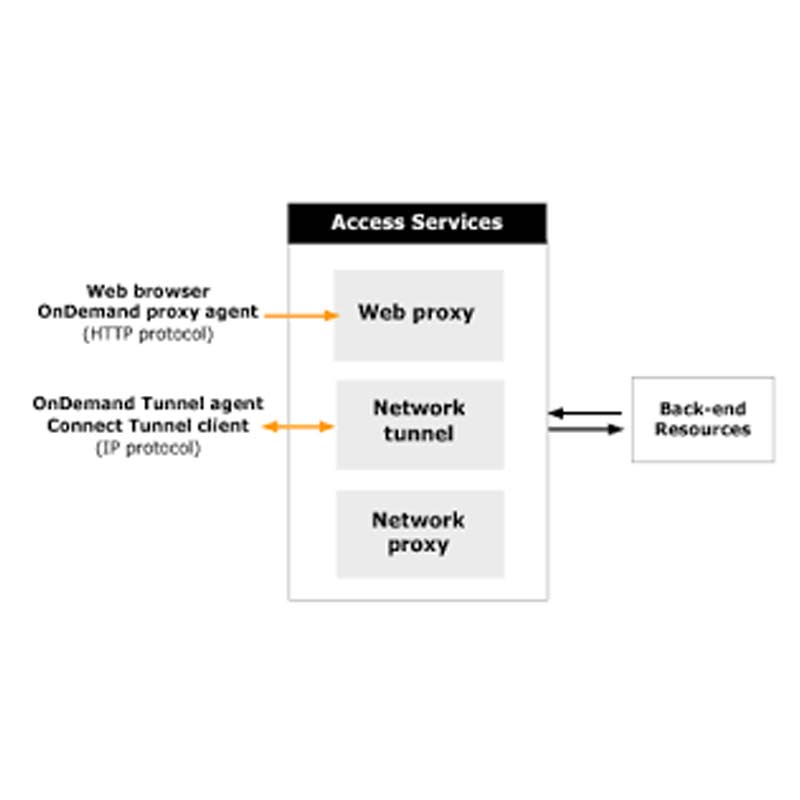
    Aventail’s SSL VPN is a scalable, enterprise class, clientless solution based on Aventail’s proven Smart SSL VPN platform. Aventail’s clustering and high availability support with load-balancing is an ideal solution for hundreds or thousands of users. The secure application platform is designed to provide practical, easy-to-use anywhere access to Web, client/server, and file shares from any device combined with simple manageability and usability. All of this makes it a clear alternative to IPSec-based VPNs. Many of Aventail’s customers worldwide are replacing legacy IPSec solutions with the Aventail SSL VPN in order to have one solution for all remote access scenarios.

    About Select Technologies

    Select Technologies is a 100% wholly owned subsidiary of WeP Peripherals Limited (WeP). Select Technologies provides innovative Information Protection & Management Solutions and Services to Large Enterprises, Corporates and SMEs and is a ‘One Stop Solution House’ for market leading Information Protection and Management solutions. Select specializes in providing innovative and effective world class solutions through a strong and dedicated team of qualified and trained professionals to provide support services and training to partners and end users. Select conducts business through more than 238 NSI, RSI, Solution Providers & channel partners across the country focused on Information Protection and Management business and sustains relationship with over 5000 customers. Headquartered in Bangalore, Select has offices across the metros and major cities of the country. For more information, please visit: www.select-technologies.net

    About Aventail
    Aventail is the best-of-breed remote-access company. Aventail delivered the first SSL VPN solution in 1997 and today is a market leader, delivering the easiest to use and control remote-access solution. Aventail Smart SSL VPN appliances provide users with transparent, clientless access to more applications from more devices via any network environment. For network managers, Aventail delivers a single secure access gateway for all users, internal and external, to all network resources with complete security. With more than two million end users around the globe, Aventail is the SSL VPN of choice among mid to large-sized organizations worldwide, Some of Aventail’s customers in India include Wipro, Tesco, Marico, iGATE, ING Vyasa, i-flex, Times of India and ITC. For more information, go to www.aventail.com.

    Aventail, Aventail ST, Aventail Smart Access, Aventail Smart Tunneling, Aventail EPC, Aventail OnDemand, Aventail Connect, Aventail Secure Collaboration, Aventail EX-2500, EX-1500, Aventail EX-750, and their respective logos are trademarks, registered trademarks, or service marks of Aventail Corporation. Other product and company names mentioned are the property of their respective owners and are mentioned for identification purposes only.

    Note: The information in Aventail press releases is accurate and current only as of the date posted. Aventail does not update the information once the release has been issued. To the extent any press release contains information that is not historical fact, that information is considered forward-looking. Aventail’s results may differ from those projected in any forward-looking statements.

  • Aventail Expands India Distribution with Select Technologies

    Aventail Expands India Distribution with Select Technologies

    Select Technologies to Support Aventail’s Growing SSL VPNs sales and support

    Bangalore, 30th May, 2006 – Leading SSL VPN product company Aventail Corporation (www.aventail.com) is expanding its distribution in India through a new agreement with Select Technologies, a leading solution provider in the country with more than 5,000 customers. Select Technologies will provide sales and support to Aventail’s growing clientele, which includes Wipro, Tesco, Marico, iGATE, ING Vyasa, and i-flex, both directly and through their large channel partner network across India. Together, Aventail, Select, and system integrators will offer a three-level support system.

    “With security being the top priority for enterprise and SMB customers, an affordable solution with top class security features and protection is the requirement today,” said Mr. Sunil Pillai; Business Head, Select Technologies. “Aventail’s leading technology coupled with Select’s expertise in providing innovative, cutting-edge solutions for Information Protection and Management domain make this relationship a strong one,” he added.

    “Select has a good history of making brands successful in India , and they have the required experience and expertise to carry Aventail in their portfolio,” said Mr. Ajay Kumar, Country Sales Manager for Aventail in India . “Aventail is leading the market in providing enterprises secure remote access, and Select’s strong channel network will help us increase our penetration and customer base across India.”

    Aventail’s SSL VPN is a scalable, enterprise class, clientless solution based on Aventail’s proven Smart SSL VPN platform. Aventail’s clustering and high availability support with load-balancing is an ideal solution for hundreds or thousands of users. The secure application platform is designed to provide practical, easy-to-use anywhere access to Web, client/server, and file shares from any device combined with simple manageability and usability. All of this makes it a clear alternative to IPSec-based VPNs. Many of Aventail’s customers worldwide are replacing legacy IPSec solutions with the Aventail SSL VPN in order to have one solution for all remote access scenarios.

    About Select Technologies

    Select Technologies is a 100% wholly owned subsidiary of WeP Peripherals Limited (WeP). Select Technologies provides innovative Information Protection & Management Solutions and Services to Large Enterprises, Corporates and SMEs and is a ‘One Stop Solution House’ for market leading Information Protection and Management solutions. Select specializes in providing innovative and effective world class solutions through a strong and dedicated team of qualified and trained professionals to provide support services and training to partners and end users. Select conducts business through more than 238 NSI, RSI, Solution Providers & channel partners across the country focused on Information Protection and Management business and sustains relationship with over 5000 customers. Headquartered in Bangalore, Select has offices across the metros and major cities of the country. For more information, please visit: www.select-technologies.net
    About Aventail
    Aventail is the best-of-breed remote-access company. Aventail delivered the first SSL VPN solution in 1997 and today is a market leader, delivering the easiest to use and control remote-access solution. Aventail Smart SSL VPN appliances provide users with transparent, clientless access to more applications from more devices via any network environment. For network managers, Aventail delivers a single secure access gateway for all users, internal and external, to all network resources with complete security. With more than two million end users around the globe, Aventail is the SSL VPN of choice among mid to large-sized organizations worldwide, Some of Aventail’s customers in India include Wipro, Tesco, Marico, iGATE, ING Vyasa, i-flex, Times of India and ITC. For more information, go to www.aventail.com.

    Aventail, Aventail ST, Aventail Smart Access, Aventail Smart Tunneling, Aventail EPC, Aventail OnDemand, Aventail Connect, Aventail Secure Collaboration, Aventail EX-2500, EX-1500, Aventail EX-750, and their respective logos are trademarks, registered trademarks, or service marks of Aventail Corporation. Other product and company names mentioned are the property of their respective owners and are mentioned for identification purposes only.

    Note: The information in Aventail press releases is accurate and current only as of the date posted. Aventail does not update the information once the release has been issued. To the extent any press release contains information that is not historical fact, that information is considered forward-looking. Aventail’s results may differ from those projected in any forward-looking statements.


  • Content remains major issue for IPTV providers: seminar

    NEW DELHI: The industry is hyping IPTV in India as the next revolution, but has actually done little on the content side, said former member of Telecom Regulatory of India (Trai), DPS Seth.

    Speaking here today at IPTV India 2006 conference, organised by Bharat Exhibitions, Seth disagreed with some of the speakers before him saying that people who have been talking about IPTV have “failed to address the issue of content,” which could be delivered through IPTV.

    A certain section of the industry, especially the telecom companies have touted IPTV as a technology ready to ready to change the way Indians have been watching television.

    With its advantages over the current cable and satellite TV technologies, IPTV can be typically bundled with other services like video-on-demand (VOD), voice over IP (VoIP), or digital phone, and Web access, which are collectively called triple play.

    But, asked Seth, not many have given a thought to the type of content that should be generated to be delivered over this triple play platform.

    Seth¡’s argument was that unless the content issue is addressed — especially as in this segment content has to be customized — IPTV may languish.

    A report by Multimedia Research predicts that IPTV adoption worldwide will grow from 1.9 million users in 2004 to 25.3 million in 2008 and that the service provider revenue from IPTV is likely to jump from $ 635 million to 7.2 million by 2008.

    Various speakers at today’s IPTV seminar harped on strategies to tap this opportunity in India as the consumer is getting increasingly demanding.

    Some of the pertinent questions that were raised during the day-long conference were the following:

    What should be the policy framework that will govern IPTV in India?
    How will the interdependence between various service, technology and hardware providers work?
    Will it require further expansion of broadband spectrum?
    What are the operational challenges that would be faced by service providers in transforming their existing businesses models to the one suiting IPTV?

    Key panelists included Airtel CTO (mobility) Jagbir Singh, Sun Microsystems director (telecom) Kapil Sood, URStarcom director sales K K Peringhat, Alcatel South Asia Ltd vice president and head of sales, India, Fixed Communications Group Anuj Kapur, BSNL director (planning and new services) RL Dube and Siemens Public Communication Networks (Pvt.) Ltd MD Michael Kuehner.