Tag: Tea

  • “Tea is a lifestyle and hence we thought to collaborate with a lifestyle consumer”: Rupali Ambegoankar

    “Tea is a lifestyle and hence we thought to collaborate with a lifestyle consumer”: Rupali Ambegoankar

    Mumbai: In the heart of bustling cities and serene countrysides alike, there exists a world where time slows down and senses awaken to the delicate dance of leaves and water. This is the realm of Tea Culture of The World  owned by Society Tea (Amar Tea Private Limited {ATPL), where each cup is not just a beverage but a symphony of flavors crafted from the finest gardens across the globe.

    From the misty mountains of China to the sun-drenched fields of India, every leaf is hand-plucked with reverence and steeped in tradition. With 120 exquisite blends, TCW weaves a tapestry of taste, inviting tea lovers on a journey of unparalleled refinement.

    Dr. Rupali Ambegaonkar, the astute business head of Tea Culture of the World (TCW) at Society Tea (Amar Tea Private Limited), has steered an extraordinary journey marked by innovation, resilience, and a relentless pursuit of excellence. Armed with a medical degree from Lokmanya Tilak Medical Hospital and a master’s from GS Medical and KEM Hospital, Dr. Ambegaonkar’s foray into the tea industry in 2011 marked a transformative moment. Recognising an untapped niche in India’s tea market, she founded TCW, introducing a diverse range of herbal and flavoured teas that defied convention and captivated consumers’ palates.

    Tea Culture Of The World

    Indiantelevision.com recently interviewed Ambegaonkar, who shared insights on their collaboration with Label Chola at Lakmē Fashion Week X FDCI. She discussed the infusion of Japanese tea culture into the runway, as well as their successful online business ventures.

    Edited excerpts

    On the collaboration with Lakhme Fashion

    Throughout my journey, I have been associated with women led sustainable businesses and we decided to collaborate with Lakmē Fashion Week X FDCI. Their team mentioned Label Chola and we liked the work that they did which was women led, sustainable orientated and fashion. We really thought that our synergies match so why not support each other and take this journey forward together. 

    On ways you see the convergence of tea culture and fashion influencing consumer behaviors, particularly in the context of luxury markets

    We have always looked at ourselves not as a team, but as a lifestyle. We always brought our teas from all over the world. People in different countries enjoy tea so we have always tried to introduce it. In our own tea culture, we have taken it to a different level. We procure tea from the rarest Indian estates and bring that to our Indian consumers which wasn’t happening before our company. So tea is a lifestyle and hence we thought to collaborate with a lifestyle consumer. A consumer who is attending Lakmē Fashion Week X FDCI is enjoying that kind of a lifestyle. There we felt our synergies match and so we thought it’s a great association also we are always learning. We don’t know how it will pan out but yes, we are evolving.

    On incorporating these themes into its brand identity and product offerings

    I think we incorporate it because of sustainability, and we like the colours of Chola. Our packaging is also very fashionable and we come up with very interesting packaging. We in our sense are very fashionable.

    On your online business

    Online business is the need of the hour. The consumer is more and more online. Our patrons find it extremely easy to get tea at their doorstep while our store offers an experience to taste and smell the tea also or people will give more information on the tea. But someone who has already experienced our store and wants the tea at their doorstep online is very convenient. We are scaling our online business and pandemic has taught us new lessons and that’s why we started to occupy online. Our online vertical is profitable and we are seeing growth which helps us to spend more in online business and increase our reach to not only food and tea patrons but to also our lifestyle and fashion patrons. We want to introduce our tea and lifestyle to them. We are really liking this online business and how it is evolving for us so far. It’s positive.

    On specific elements of Japanese tea culture integrating into Label Chola’s runway showcase

    Our brand is Tea Culture of the World so we are not biased to any particular culture. We celebrate all tea cultures. We have teas from all around the world. When we were discussing with Chola, she felt that this time’s collection was inspired from Japan, so we thought, why don’t we too celebrate the Japanese tea culture? So those who will attend the show, will get a taste of Japanese tea. This time we celebrated their culture next time it could be anyone be it India, Chinese, Argentinian etc.

    On collaborating with other events in future

    We keep doing interesting collaborations and want to give exposure to as many people who are in our target audience. There are few events and festivals that we  want to collaborate with in future. We will definitely announce when the collaboration will happen. People who follow our Instagram will know that we advertise a lot of events like tea-blending masterclass or tea tasting and something or the other where our consumers have the experience. During the pandemic we did a lot of online tea tasting sessions where we sent hampers to home and people could taste different teas. We keep doing events, which we announce on our portal. 

  • Unilever to sell its global tea biz to CVC Capital for $5.1 billion

    Unilever to sell its global tea biz to CVC Capital for $5.1 billion

    Mumbai: Unilever PLC has agreed to sell its global tea business to CVC Capital Partners for $5.1 billion, concluding a process of reviewing and spinning off the division that took more than two years. The business being sold, called Ekaterra, hosts a portfolio of 34 tea brands including Lipton, PG Tips, Pukka Herbs, and Tazo, and generated revenues of two billion euros in 2020.

    The sale, however, excludes Unilever’s tea units in India and Indonesia and its partnerships in the ready-to-drink tea market, such as its bottled tea joint venture with PepsiCo.

    CVC reached an agreement with the British multinational consumer goods giant after beating out rival private equity bidders including Advent International. Ekaterra will be sold to CVC’s Capital Fund VIII on a cash-free and debt-free basis in a process that is expected to conclude in the second half of 2022, Unilever said in a statement on Thursday.

    The company said in January 2020 that it was starting a strategic review of its tea business that could result in a partial or full sale. The transaction marks a much-needed win for Unilever’s chief executive officer Alan Jope, who’s been seeking to rejig the company’s portfolio to keep up with changing consumer tastes.

    “The evolution of our portfolio into higher growth spaces is an important part of our growth strategy. Our decision to sell ekaterra demonstrates further progress in delivering against our plans,” Jope said.

    The sale relieves Unilever of a business that has been a drag on earnings for several years as demand for black tea waned and consumer tastes changed in recent years amid a shift to green tea and other flavourful herbal alternatives.

    The global consumer goods major has been under some pressure as its stock languishes and it struggles to compete in the face of high inflationary costs, especially in emerging markets, its biggest source of revenue.

  • Tata Tea Premium turns to Odisha with hyper-local advertising approach

    Tata Tea Premium turns to Odisha with hyper-local advertising approach

    NEW DELHI: Tata Tea is synonymous with its activism-led campaign – Jaago Re – that ran for nearly a decade and focused on multiple issues and subjects. It looked beyond the functional aspects of the tea advertising category and focused on self-actualisation – increased civic consciousness and political awareness — that a morning tea could offer its consumers. Undoubtedly, the campaign won over the audiences and gave a huge fillip to the brand in terms of brand recall and a strong market reputation.

    After a decade of Jaago Re campaigns, the brand decided to move a step forward and take a hyperlocal approach to its marketing strategy, shifting the needle from not just celebrating ‘India Pride’ but to also evoking ‘Regional Pride’. With this, Tata Tea Premium aims to usher in a new era of hyperlocal advertising and communication in the FMCG category and stay away from the clutter.

    In its quest to celebrate regional pride, the brand has recently launched its latest film focusing on Odisha. It illustrates how the people of Odisha don’t indulge in unnecessary confrontation but shows them taking charge when it counts.

    The proposition of the campaign is ‘Kadak Iraadon vale Odisha ke liye Kadak Assam Chai’.

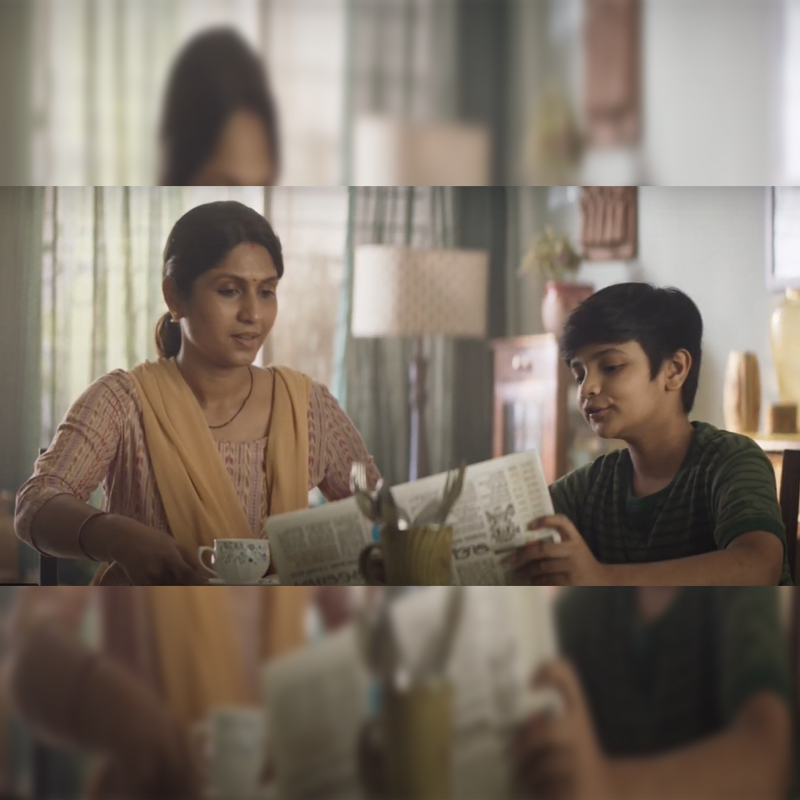
    Designed and conceptualised by Mullen Lintas, the film is set around the story of an Odia police officer. It opens with a mother and her son who are trying to take their scooter out of their own house but. due to their neighbours car being parked outside their gate, are unable to do so. While the son is livid as this keeps happening time and time again the mother does not want to get into needless arguments and would rather let it go. The turning point in the film comes when she gets an urgent call and has to rush to the office. It is seen that this woman is a police officer who has arrived at the police headquarters for a briefing to evacuate stranded people from a life-threatening cyclone. She shows her grit, bravery and strong resolve by leading the evacuation and getting people to safety.

    Once she has achieved this incredible feat we see her in the kitchen where she boils herself a cup of Tata Tea Premium. Her son then shows her a front-page article in an Odia newspaper where she is featured for her valour.

    Tata Consumer Products SVP marketing packaged beverages – India Puneet Das, said, “Our tea expertise has been catering to the local taste preferences and we are known for offering blended basis consumer taste preferences in various geographies across India. Today, while being Desh ki Chai, Tata Tea Premium celebrates the kadak spirit of Odisha and has showcased this pride of Odisha in its new packaging and communication, which is made especially for the region.”

    Earlier in 2019, the brand launched two campaigns around Delhi and UP. The two films focused on the cultural nuances of the two states and showcased how the people of the region are stereotyped. The UP film focused on power while the Delhi film focused on the city’s swag and how rich it is at its heart.

    It also launched state-specific packs featuring the ghats of Varanasi, Taj Mahal, dances, as well as iconic places and features of the capital, like the Delhi Metro and others.

    With the launch of the Odisha creative, the brand has clearly shown its intentions to build this hyperlocal campaign.

    Tata Tea comprises several brands – Tata Tea Agni, Tata Tea Elaichi, Tata Tea Premium and Tata Tea Gold. It is one of the biggest brands with a countrywide distribution. India is a tea-loving nation and nearly one out of every three people drink tea. It is estimated that 1.10 million tonnes of tea was consumed in 2019 and the market is only poised to grow in the coming years. Also, India is one of the biggest tea-producing countries. 

  • Society celebrates India’s tea-drinking culture

    Society celebrates India’s tea-drinking culture

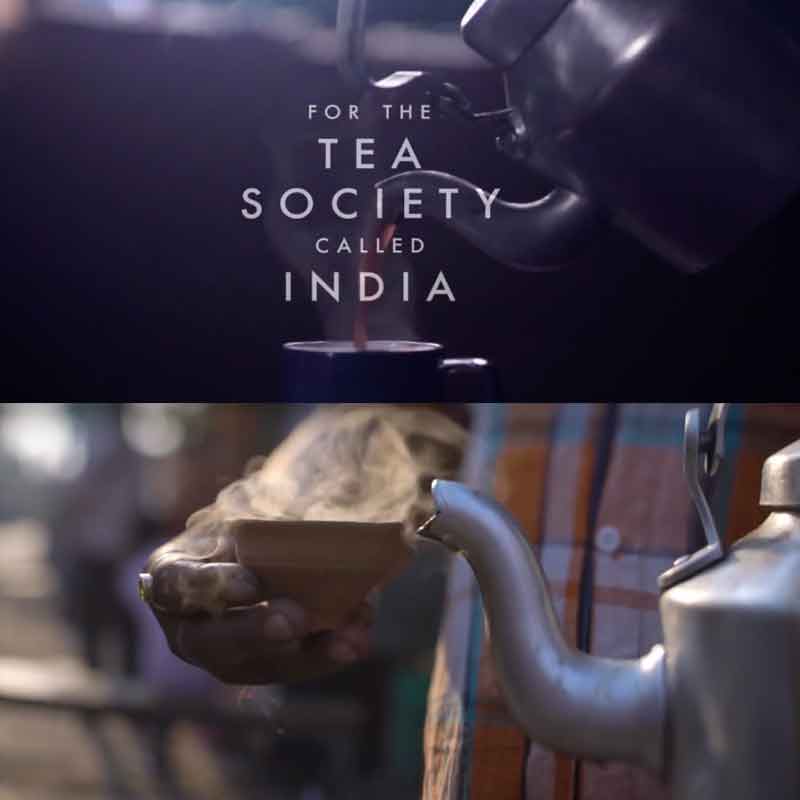
    MUMBAI: If there is one thread that binds us unequivocally as a nation, no matter what our differences may be, it is our love of tea. Being innately Indian is synonymous with starting the day with a steaming cup of chai-be it a time held, homemade recipe, or that of the ever-dependent tapri chaiwallah around the bend near the office building, tea is a constant in our lives.

    To take the love for tea a notch further, Society Tea has launched its latest brand campaign – The tea society called India. It celebrates this unifying and proudly home-grown tea drinking culture across the length and breadth of our country.

    Society Tea director of business development Karan Shah says, “The idea of the campaign emerged serendipitously from the brand name itself, Society Tea. Society Tea has always strived to maintain a consistent quality with infallible taste. Our travails whilst executing this campaign across several regions in India is testimony to our passion for quality. The campaign is a perfect amalgamation of people who are unique and diverse as it perfectly captures our brand footprint across incredible India.”

    To essay a wonderful human interest brand story campaign idea, the right set of photographers and filmmakers were arduously handpicked for lyrical, documentary style of photography and film.

    The film features photography mavens-Palani Mohan, a Hong Kong based award-winning photographer with a wealth of experience and Rakesh Haridas, whose Instagram feed showcases a truly unique style of photography. These mavens covered the length and breadth of India, right from Kanyakumari to Kashmir and Meghalaya to Mumbai. Between endless cups of tea, all-nighters and travel secrets, this human interest campaign was spearheaded by Sachin Pillai, a young and dynamic director from the film production company, Epitome.

  • Radical changes in FDI regime; Most sectors on automatic FDI route

    Radical changes in FDI regime; Most sectors on automatic FDI route

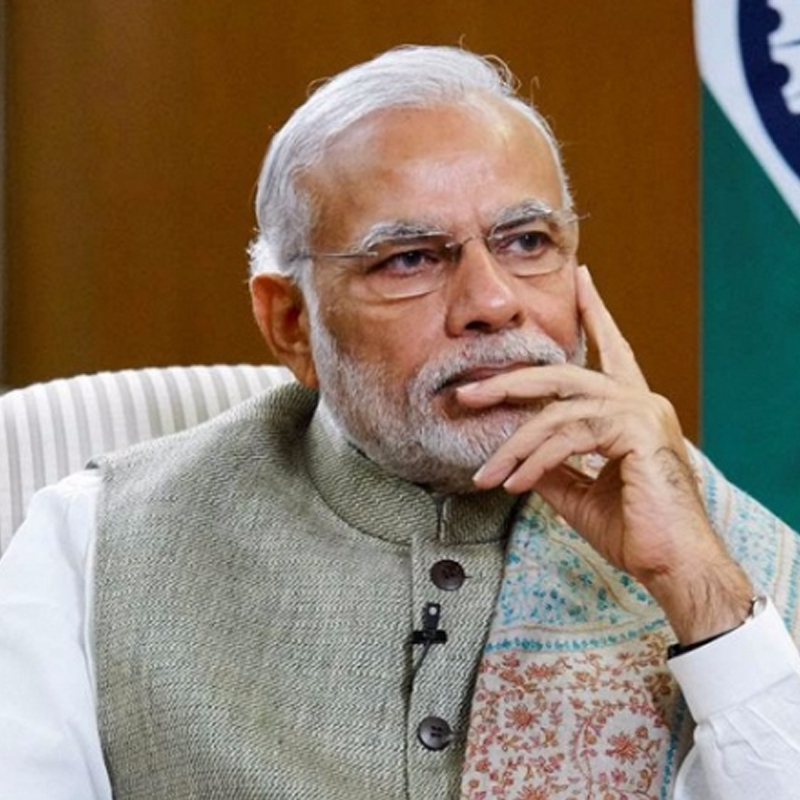
    MUMBAI: The Union Government has radically liberalized the FDI regime today, with the objective of providing major impetus to employment and job creation in India. The decision was taken at a high-level meeting chaired by Prime Minister Narendra Modi today. This is the second major reform after the last radical changes announced in November 2015.  Now most of the sectors would be under automatic approval route, except a small negative list. With these changes, India is now the most open economy in the world for FDI.

    In last two years, Government has brought major FDI policy reforms in a number of sectors viz. Defence, Construction Development, Insurance, Pension Sector, Broadcasting Sector, Tea, Coffee, Rubber, Cardamom, Palm Oil Tree and Olive Oil Tree Plantations, Single Brand Retail Trading, Manufacturing Sector, Limited Liability Partnerships, Civil Aviation, Credit Information Companies, Satellites- establishment/operation and Asset Reconstruction Companies. Measures undertaken by the Government have resulted in increased FDI inflows at US$ 55.46 billion in financial year 2015-16, as against US$ 36.04 billion during the financial year 2013-14. This is the highest ever FDI inflow for a particular financial year. However, it is felt that the country has potential to attract far more foreign investment which can be achieved by further liberalizing and simplifying the FDI regime.  India today has been rated as Number 1 FDI Investment Destination by several International Agencies.

    Accordingly the Government has decided to introduce a number of amendments in the FDI Policy. Changes introduced in the policy include increase in sectoral caps, bringing more activities under automatic route and easing of conditionalities for foreign investment. These amendments seek to further simplify the regulations governing FDI in the country and make India an attractive destination for foreign investors.  Details of these changes are given in the following paragraphs:

    1. Radical Changes for promoting Food Products manufactured/produced in India

    It has now been decided to permit 100% FDI under government approval route for trading, including through e-commerce, in respect of food products manufactured or produced in India.

    2. Foreign Investment in Defence Sector up to 100%

    Present FDI regime permits 49% FDI participation in the equity of a company under automatic route.  FDI above 49% is permitted through Government approval on case to case basis, wherever it is likely to result in access to modern and ‘state-of-art’ technology in the country. In this regard, the following changes have inter-alia been brought in the FDI policy on this sector:

    i. Foreign investment beyond 49% has now been permitted through government approval route, in cases resulting in access to modern technology in the country or for other reasons to be recorded.  The condition of access to ‘state-of-art’ technology in the country has been done away with.

    ii. FDI limit for defence sector has also been made applicable to Manufacturing of Small Arms and Ammunitions covered under Arms Act 1959.

    3. Review of Entry Routes in Broadcasting Carriage Services

    FDI policy on Broadcasting carriage services has also been amended. New sectoral caps and entry routes are as under:


    http://www.indiantelevision.com/sites/drupal7.indiantelevision.co.in/files/styles/large/public/fdi.jpg?itok=yfNxkWYk


    4. Pharmaceutical

    The extant FDI policy on pharmaceutical sector provides for 100% FDI under automatic route in greenfield pharma and FDI up to 100% under government approval in brownfield pharma. With the objective of promoting the development of this sector, it has been decided to permit up to 74% FDI under automatic route in brownfield pharmaceuticals and government approval route beyond 74% will continue.
    5. Civil Aviation Sector

    (i) The extant FDI policy on Airports permits 100% FDI under automatic route in Greenfield Projects and 74% FDI in Brownfield Projects under automatic route. FDI beyond 74% for Brownfield Projects is under government route.

    (ii) With a view to aid in modernization of the existing airports to establish a high standard and help ease the pressure on the existing airports, it has been decided to permit 100% FDI under automatic route in Brownfield Airport projects.

    (iii) As per the present FDI policy, foreign investment up to 49% is allowed under automatic route in Scheduled Air Transport Service/ Domestic Scheduled Passenger Airline and regional Air Transport Service. It has now been decided to raise this limit to 100%, with FDI up to 49% permitted under automatic route and FDI beyond 49% through Government approval. For NRIs, 100% FDI will continue to be allowed under automatic route. However, foreign airlines would continue to be allowed to invest in capital of Indian companies operating scheduled and  non-scheduled air-transport services up to the limit of 49% of their paid up capital and subject to the laid down conditions in the existing policy.

    6. Private Security Agencies

    The extant policy permits 49% FDI under government approval route in Private Security Agencies. FDI up to 49% is now permitted under automatic route in this sector and FDI beyond 49% and up to 74% would be permitted with government approval route.

    7. Establishment of branch office, liaison office or project office

    For establishment of branch office, liaison office or project office or any other place of business in India if the principal business of the applicant is Defence, Telecom, Private Security or Information and Broadcasting, it has been decided that approval of Reserve Bank of India or separate security clearance would not be required in cases where FIPB approval or license/permission by the concerned Ministry/Regulator has already been granted.

    8. Animal Husbandry

    As per FDI Policy 2016, FDI in Animal Husbandry (including breeding of dogs), Pisciculture, Aquaculture and Apiculture is allowed 100% under Automatic Route under controlled conditions. It has been decided to do away with this requirement of ‘controlled conditions’ for FDI in these activities.

    9. Single Brand Retail Trading

    It has now been decided to relax local sourcing norms up to three years and a relaxed sourcing regime for another five years for entities undertaking Single Brand Retail Trading of products having ‘state-of-art’ and ‘cutting edge’ technology.

    Today’s amendments to the FDI Policy are meant to liberalise and simplify the FDI policy so as to provide ease of doing business in the country leading to larger FDI inflows contributing to growth of investment, incomes and employment.

  • Radical changes in FDI regime; Most sectors on automatic FDI route

    Radical changes in FDI regime; Most sectors on automatic FDI route

    MUMBAI: The Union Government has radically liberalized the FDI regime today, with the objective of providing major impetus to employment and job creation in India. The decision was taken at a high-level meeting chaired by Prime Minister Narendra Modi today. This is the second major reform after the last radical changes announced in November 2015.  Now most of the sectors would be under automatic approval route, except a small negative list. With these changes, India is now the most open economy in the world for FDI.

    In last two years, Government has brought major FDI policy reforms in a number of sectors viz. Defence, Construction Development, Insurance, Pension Sector, Broadcasting Sector, Tea, Coffee, Rubber, Cardamom, Palm Oil Tree and Olive Oil Tree Plantations, Single Brand Retail Trading, Manufacturing Sector, Limited Liability Partnerships, Civil Aviation, Credit Information Companies, Satellites- establishment/operation and Asset Reconstruction Companies. Measures undertaken by the Government have resulted in increased FDI inflows at US$ 55.46 billion in financial year 2015-16, as against US$ 36.04 billion during the financial year 2013-14. This is the highest ever FDI inflow for a particular financial year. However, it is felt that the country has potential to attract far more foreign investment which can be achieved by further liberalizing and simplifying the FDI regime.  India today has been rated as Number 1 FDI Investment Destination by several International Agencies.

    Accordingly the Government has decided to introduce a number of amendments in the FDI Policy. Changes introduced in the policy include increase in sectoral caps, bringing more activities under automatic route and easing of conditionalities for foreign investment. These amendments seek to further simplify the regulations governing FDI in the country and make India an attractive destination for foreign investors.  Details of these changes are given in the following paragraphs:

    1. Radical Changes for promoting Food Products manufactured/produced in India

    It has now been decided to permit 100% FDI under government approval route for trading, including through e-commerce, in respect of food products manufactured or produced in India.

    2. Foreign Investment in Defence Sector up to 100%

    Present FDI regime permits 49% FDI participation in the equity of a company under automatic route.  FDI above 49% is permitted through Government approval on case to case basis, wherever it is likely to result in access to modern and ‘state-of-art’ technology in the country. In this regard, the following changes have inter-alia been brought in the FDI policy on this sector:

    i. Foreign investment beyond 49% has now been permitted through government approval route, in cases resulting in access to modern technology in the country or for other reasons to be recorded.  The condition of access to ‘state-of-art’ technology in the country has been done away with.

    ii. FDI limit for defence sector has also been made applicable to Manufacturing of Small Arms and Ammunitions covered under Arms Act 1959.

    3. Review of Entry Routes in Broadcasting Carriage Services

    FDI policy on Broadcasting carriage services has also been amended. New sectoral caps and entry routes are as under:


    http://www.indiantelevision.com/sites/drupal7.indiantelevision.co.in/files/styles/large/public/fdi.jpg?itok=yfNxkWYk


    4. Pharmaceutical

    The extant FDI policy on pharmaceutical sector provides for 100% FDI under automatic route in greenfield pharma and FDI up to 100% under government approval in brownfield pharma. With the objective of promoting the development of this sector, it has been decided to permit up to 74% FDI under automatic route in brownfield pharmaceuticals and government approval route beyond 74% will continue.
    5. Civil Aviation Sector

    (i) The extant FDI policy on Airports permits 100% FDI under automatic route in Greenfield Projects and 74% FDI in Brownfield Projects under automatic route. FDI beyond 74% for Brownfield Projects is under government route.

    (ii) With a view to aid in modernization of the existing airports to establish a high standard and help ease the pressure on the existing airports, it has been decided to permit 100% FDI under automatic route in Brownfield Airport projects.

    (iii) As per the present FDI policy, foreign investment up to 49% is allowed under automatic route in Scheduled Air Transport Service/ Domestic Scheduled Passenger Airline and regional Air Transport Service. It has now been decided to raise this limit to 100%, with FDI up to 49% permitted under automatic route and FDI beyond 49% through Government approval. For NRIs, 100% FDI will continue to be allowed under automatic route. However, foreign airlines would continue to be allowed to invest in capital of Indian companies operating scheduled and  non-scheduled air-transport services up to the limit of 49% of their paid up capital and subject to the laid down conditions in the existing policy.

    6. Private Security Agencies

    The extant policy permits 49% FDI under government approval route in Private Security Agencies. FDI up to 49% is now permitted under automatic route in this sector and FDI beyond 49% and up to 74% would be permitted with government approval route.

    7. Establishment of branch office, liaison office or project office

    For establishment of branch office, liaison office or project office or any other place of business in India if the principal business of the applicant is Defence, Telecom, Private Security or Information and Broadcasting, it has been decided that approval of Reserve Bank of India or separate security clearance would not be required in cases where FIPB approval or license/permission by the concerned Ministry/Regulator has already been granted.

    8. Animal Husbandry

    As per FDI Policy 2016, FDI in Animal Husbandry (including breeding of dogs), Pisciculture, Aquaculture and Apiculture is allowed 100% under Automatic Route under controlled conditions. It has been decided to do away with this requirement of ‘controlled conditions’ for FDI in these activities.

    9. Single Brand Retail Trading

    It has now been decided to relax local sourcing norms up to three years and a relaxed sourcing regime for another five years for entities undertaking Single Brand Retail Trading of products having ‘state-of-art’ and ‘cutting edge’ technology.

    Today’s amendments to the FDI Policy are meant to liberalise and simplify the FDI policy so as to provide ease of doing business in the country leading to larger FDI inflows contributing to growth of investment, incomes and employment.

  • Tourism Malaysia Commercial – Feel like a Star selected as the ‘Best International Tourism Ad’

    Tourism Malaysia Commercial – Feel like a Star selected as the ‘Best International Tourism Ad’

    MUMBAI, September 10, 2013…..Tourism Malaysia’s advertisement has not only evoked delightful feelings among the audiences but has also earned the title of the Best International Tourism ad among all other tourism advertisements.

    The Tourism Malaysia ad –Feel like a Star, was selected by the Juries of the Advisory Panel for ‘Thomas Edison Advertisement (TEA) Award’ as the ‘Best International Tourism Ad’ and was conferred the title of ‘Journey of Delight’. The award was presented by Honorable Minister of State for Industry & Commerce, Mr. Sudarshan Nachiappana midst a gathering of dignitaries and celebrities on the 9th of September in Chennai.

    On the receipt of this prestigious title, Ms. Sarala V Pathar, Deputy Director, Tourism Malaysia, South India said, “Tourism Malaysia has always shown an inclination towards promotions and support in India. We have put in our best creative and technical efforts behind this campaign and nothing can make us happier than the fact that people have accepted and liked our advertisement. It’s a great honour to earn the title of the best international tourism advertisement; it’s a prestigious opportunity for us and our team.”

    The winning ad shows a young couple celebrating their love amidst the serene and luxurious spots of Malaysia. The advertisement beautifully portrays their playfulness towards each other as they visit an array of exotic locations. Their love blossoms under the dreamy blue skies, crystal clear waters and marvelous beaches of Malaysia. We then see the same young couple visiting Malaysia in their later years but their bond with the country is as good as new.

    Mr. Selva Kumar, CEO, Edison Awards said, “The title of Journey of Delight is completely justified as the Malaysia Tourism Ad weaves in human emotions to showcase the beautiful locales of the country. It instantly connects to the audiences leaving them feeling delighted and wanting to visit the country and carry memories with them forever.”

    The Thomas Edison Advertisement Awards is in remembrance of Thomas J Barratt, the father of modern advertisement and Edison, an entity responsible for the wide range of entertainment. Barrathas a wide mention for the first ever commercial advertisement for promotion of products. He is often addressed as the father of modern advertisement and his innovative contributions are still looked upon with high regard.

    TEA AWARDs revolutionizes recognitions conferred to the best of all creative and appealing advertisements. The TEA Awards comprise awards based on 50 different categories for various brands and services. This is the first time that the advertisements in electronic medium are honoured for their panache in various departments. The awards are classified into 33 different categories and Jury awards.

  • Worldspace India appoints Harshad Jain as Chief Marketing Officer

    Worldspace India appoints Harshad Jain as Chief Marketing Officer

    MUMBAI: Worldspace, satellite-based digital radio services provider has announced the appointment of Harshad Jain as Chief Marketing Officer for its India operations. Jain will be responsible for extending the Worldspace service to markets across India, enhancing consumer experiences and building upon growing brand awareness levels in the country.

    Jain joins Worldspace from Pepsico India where he had a productive 12-year plus stint, serving in various roles and building Pepsi brands including Lipton Ice Tea, Aquafina, Tropicana, Slice, Gatorade, and others. In his last role as Executive Vice President (Pepsi-Lipton Joint Venture), Jain headed up the strategic alliance between Pepsi and Unilever, laying the foundation for the merger of the successful Lipton Ice business with Pepsi as well as developing the marketing strategy and the long-term vision for the alliance, informs an official release.

    Worldspace India MD Shishir Lall said, “We are delighted to have Harshad join us at Worldspace as we look to grow our business and undertake an extensive brand-building campaign. His appointment is part of a concerted effort to continue building a passionate management team as we share the joy of satellite radio with more and more music lovers across the country.”

    With over 40 premium radio stations Worldspace India will leverage Jain’s considerable brand building experience to further extend the reach of the satellite radio service and establish a connection with a larger base of music lovers across India, adds the release.