Tag: TDSAT

  • SC ruling gives FM lifeline to Millenium Broadcasting

    SC ruling gives FM lifeline to Millenium Broadcasting

    MUMBAI: There’s hope yet for Millenium Broadcasting, one of the early entrants into the FM scene in Mumbai with its Win 94.6 station, but which has been off air since May 2004.

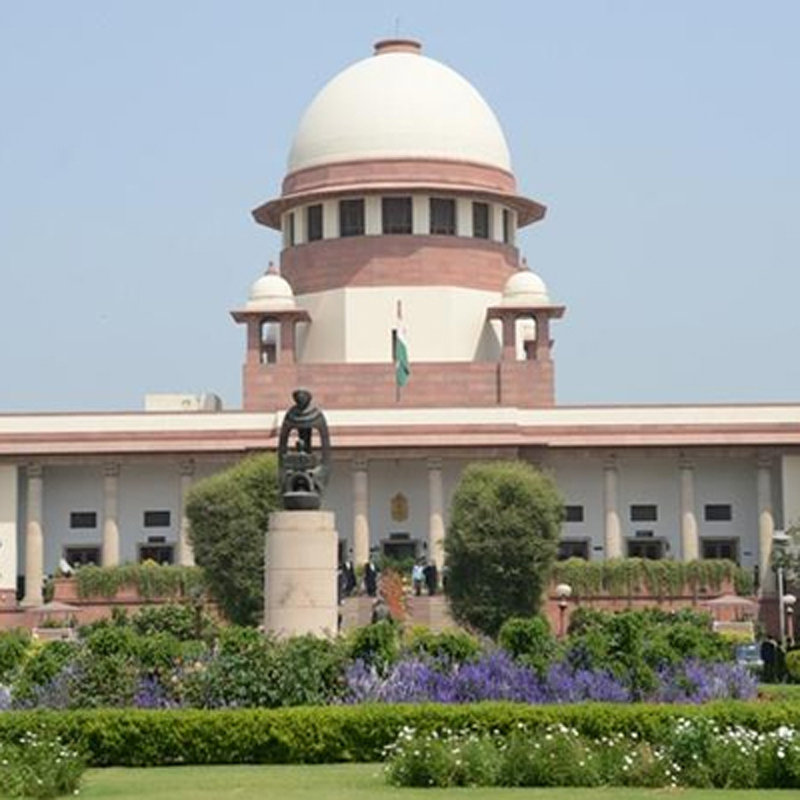
    The Supreme Court has thrown a lifeline to the Gautam Radia promoted private radio venture in its long drawn battle with the government, initially fought through the Telecom Disputes Settlement Appellate Tribunal (TDSAT).

    The apex court, which heard the case last week, has ruled in Millenium Broadcasting’s favour, concurring with TDSAT’s judgment in the matter. TDSAT had earlier ruled that the government shall not auction the frequency 94.6 MHz and that the company was entitled to broadcast FM radio within the territory of Mumbai.

    In its ruling, TDSAT had also ordered that Millenium Broadcasting was entitled to the benefit of migration from fixed licence fee regime to revenue sharing regime under the second phase of the FM radio policy, which grants this benefit to the existing license holders.

    For the record, the licence of Millenium Broadcast Pvt Ltd was revoked in May 2003 for non-payment of licence fee. Subsequently, in September 2005, the government had invited pre-qualification bids for 338 FM channels in 91 cities across the country, including five FM stations in Mumbai.

    After hearing Millenium Broadcast’s plea in the matter, TDSAT issued an order in October 2005 stating that the frequency shall be excluded from the ambit of the five FM channels in Mumbai that were up for bidding.
  • Govt proposing to set up separate disputes tribunal for broadcast content

    Govt proposing to set up separate disputes tribunal for broadcast content

    NEW DELHI: The government is proposing to set up a separate disputes tribunal for broadcast content on the lines of Telecom Disputes Settlement And Appellate Tribunal (TDSAT) as part of a comprehensive content regulation framework.

    The proposed organisation, likely to be called Content Disputes Settlement Appellate Tribunal, would have the powers as vested under the Code of Civil Procedures, 1908, but not totally bound by it.

    The content disputes tribunal would take up issues brought to it by aggrieved parties, including those who feel unfair treatment has been meted out by the proposed Content Regulatory Authority of India.

    The structure of these two organizations are based on the functioning of Telecom Regulatory Authority of India (Trai) and TDSAT, which oversee telecom services, including broadcast and cable services at the moment.

    The idea of creating a separate content disputes tribunal is based on feedback that the government has had from industry stakeholders and industry bodies like the Federation of Indian Chambers of Commerce and Industry.

    As in the case of TDSAT, any appeal against content disputes tribunal’s orders can be made only in the Supreme Court. The government is also proposing to put a penalty on flouting the appellate tribunal’s order’s, which can go up to Rs 50 million.

    Programming scheduling TV channel’s responsibility

    Meanwhile, as per a draft of content code being considered in the I&B ministry, the onus of proper scheduling of programming would rest with a licensee.

    “(The) licensee should take care that the time when minors are expected to be viewing the programmes, i.e. between 4 pm to 7 pm, the Broadcasting Code should be strictly followed,” a draft of the code states, stressing clearly on greater degree of self-regulation on the part of TV channels.

    However, as pr another suggestion to the ministry, the restrictions on the provision of material unsuitable on television programmes for children should be relaxed on a gradual and progressive basis after 7 pm.

    The assumption is that after 7 pm parents may reasonably be expected to share responsibility for what their children are permitted to watch on television.

    The proposed content regulator is also unlikely to preview or pre-censor any TV programme, including films on television. It should be a licensee’s responsibility to ensure that the viewers are aware of the classification of the films broadcast on the television.

  • Tdsat directive on Dish TV: Deadline over, MTV mum

    Tdsat directive on Dish TV: Deadline over, MTV mum

    MUMBAI: With just a day left for the 30-day deadline set by the Telecom Disputes Settlement and Appellate Tribunal (Tdsat), but music channel MTV and sibling kids’ channel Nick are still missing from Dish TV.

    It was on 10 February that Tdsat had issued a directive giving the two Viacom channels 30 days notice to make themeselves available to Zee Group’s DTH service Dish TV. As per Tdsat’s dictat, within the time frame from 10 February to 12 March, the two channels from the MTV stable had to be visible to Dish TV subscribers.

    Dish TV had issued a reminder to MTV, stating that the time period is on the verge of expiry and hoping for a positive response on the same. According to a senior Dish TV executive, “We issued a final reminder on 9 March. If they fail to respond to the same, we will move the Tdsat next week.”

    When contacted by Indiantelevision.com, a senior MTV Networks India executive said, “At this point of time, we don’t want to comment on this matter.”

    It is worth noting that when contacted earlier by Indiantelevision.com, MTV Networks India Sr VP network development and licensing and merchandising Sanjeev Hiremath had stated that the Set-Discovery One alliance (of which the two channels are a part) is already in talks with ASC Enterprises (Dish TV’s holding company) in regards to the matter.

    When asked if his DTH network and the One Alliance were anywhere near agreement, a senior Dish executive said, “We did have a few rounds of talks. However, nothing has been finalized as of now.”

    Dish TV, last year, had moved the disputes tribunal seeking legal redressal against, what it says, is MTV’s unwillingness to come onto its DTH platform.

    MTV India operates three channels in the country — MTV and Nick, distributed by the One Alliance and Vh1, distributed by Zee-Turner.