Tag: TDSAT

  • AIDCF to hold a meeting to discuss Star’s RIO deal implementation

    AIDCF to hold a meeting to discuss Star’s RIO deal implementation

    MUMBAI: Just 10 days after its formation, the All India Digital Cable Federation (AIDCF) under the presidentship of Siti Cable CEO VD Wadhwa is all set meet for the second time on 31 October in New Delhi. The meeting will be attended by the leading multi system operators (MSOs) and has a set agenda for the day.


    The meeting which is being held just a day after the Telecom Disputes Settlement Appellate Tribunal (TDSAT) accepted Star India’s 10 November deadline for implementation of the RIO deal by MSOs is not co-incidental.


    “The platform operators are meeting in Delhi in order to decide on the modus operandi for implementation of the RIO deal, the deadline for which is 10 November,” says a MSO, who is likely to be a participant of the meeting.


    The TDSAT in its order has asked the MSOs to sign the RIO deals with Star before 10 November, failing which the broadcaster can disconnect its signals.


    The meeting is likely to be attended by Manthan, Siti Cable, GTPL, Hathway among others.


  • TDSAT gives a nod to Star’s 10 Nov deadline to MSOs for signing RIO deals

    TDSAT gives a nod to Star’s 10 Nov deadline to MSOs for signing RIO deals

    MUMBAI: In the Hathway Cable & Datacom versus Star India case, the Telecom Disputes Settlement and Appellate Tribunal (TDSAT) has asked all the multi system operators (MSOs) in the DAS I and II areas to sign the Reference Interconnect Offer (RIO) by 10 November 2014.


    Failing to comply with the deadline, Star India will disconnect its services from MSOs who do not sign the RIO deal. 


    Hathway, which was directed to implement the RIO by the Tribunal had filed a case stating that other MSOs were not following the RIO deal. Subsequently, TDSAT had asked MSOs Den Networks and Siti Cable to implead into the case. The case then came up for hearing on 30 October and has been disposed off without the need for any impleading. 

  • “The news industry is fighting amongst itself”: Rajat Sharma

    “The news industry is fighting amongst itself”: Rajat Sharma

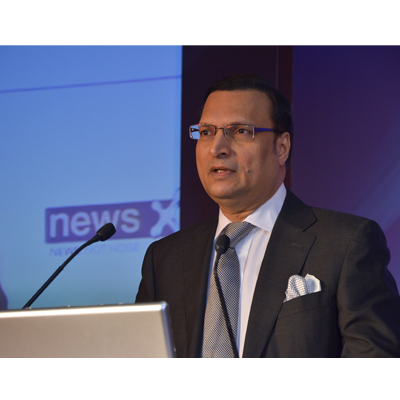
    NOIDA:  He is one of the most well known faces of the Indian media industry. Rajat Sharma, the host of popular talk show, Aap Ki Adalat, has added responsibilities on his shoulders. He is not only the chairman and editor in chief of India TV, but also represents the industry as the new president of the News Broadcasters Association as well as the vice president of strategic affairs of the Indian Broadcasting Foundation (IBF).

    Sharma, who was addressing the 7th Indian News Television Summit 2014 organised by indiantelevision.com as a keynote speaker highlighted the evolution of the news industry as well as listed the three biggest challenges that lie ahead.

    He began by saying that three years ago the news channel industry was very different from what it is today. “There has been a change in perception in the way news is seen,” Sharma said adding that news no longer is considered to be negative.

    Substantiating the evolution in terms of changing perception, Sharma gave the example of the 26/11 terror attack when reporters did 24X7 reportage and were blamed for aiding the terrorists and their handlers in Pakistan. “News channels also suffered commercial losses during the attacks as ad breaks were restricted,” he informed. According to Sharma, while news channels earlier were perceived as being a platform that telecasted frivolous events to garner eyeballs, things today have changed. “News is back,” he announced.

    He pointed out that the space has seen drastic changes.  “The society has evolved and the media has played a great role in it especially during events like the Lokpal Bill, the Delhi gang rape and the tirade against corruption,” he said.

     “Today even if Shah Rukh Khan or Salman Khan want to promote their films or emerging sports like Kabaddi wants to garner attention, news channels have a role to play in that as well,” he opined.

    Sharma while praising the social commitments of the news industry said that the space as a whole is not healthy. “The biggest problem for the industry is its revenue model,” he said while pointing out that though this year the balance sheets of the industry looks good due to elections, but, as a whole, the model is not sustainable.

    Listing the three main challenges for the genre, Sharma said that carriage fee was the biggest concern. “A few years ago, people expected news channels to be a loss making property since carriage fees were high and when broadcasters spoke to the multi system operators (MSOs) they said it was a problem of demand and supply. When digitisation kickstarted, we thought that consumers will get better quality channels and carriage fees will disappear. For the MSOs, it is the carriage fee from the news channels that helps them sustain, since they pay the GEC’s huge sums for getting their programming on their platform,” he said.

    He informed that the industry had 20-25 meetings with the previous TRAI chairman to discuss the issue of carriage fees.  While it was expected that digitisation would bring down carriage fees, something unexpected happened. Two days before the former TRAI chairman could retire he signed the ad cap. “When we were trying to improve the content and trying to solve one issue we were burdened with another one.”

    “Ad cap ensured we received 50 per cent less advertising. Death was certain now for the news channels,” he added.

    While the then Union Minister Ambika Soni said she will look into the matter, the broadcasters decided to fight the case in TDSAT. “News channels have managed to get a stay and therefore are surviving,” he said while giving the example of the newspaper industry, which has no such restriction. “We want the same for the broadcasting industry,” he opined.

    He also mentioned that the industry needs a better rating system and the TAM currency will be replaced by BARC India, which is an incorruptible agency.  “Therefore today the biggest challenge for the industry is the ad cap, the rating system and carriage fees,” he informed.

    In his closing remarks he said the whole industry including the IBF and the NBA should work together to resolve these issues. “The news industry as a whole cannot fight the MSOs as we are fighting amongst ourselves. While, we come together during a board room meeting, once we are out there will be one or two who would go against the same,” he lamented. 

  • Kolkata MSOs to meet Star to resolve RIO rates issue on 28 October

    Kolkata MSOs to meet Star to resolve RIO rates issue on 28 October

    KOLKATA: Multi system operators (MSOs) in Kolkata are likely to meet Star India representatives on 28 October to discuss the issue of RIO rates as per the outcome of the Telecom Disputes Settlement Appellate Tribunal’s (TDSAT) order of putting Star India channels on a la carte.


    On one hand, the package prices will go down by Rs 9, Rs 12 and Rs 16 respectively for different packages but cable TV consumers will have to spend an additional amount for watching their favourite Star channels if the MSOs put Star India channels on a la carte.


    Siti Cable Kolkata director Suresh Sethiya says, “We are meeting Star India officials on 28 October to find a solution. The rates should be fashioned in such a way that the broadcaster does not lose revenue and at the same time, consumers do not have to shell out huge amounts to watch cable TV.”


    Star Network comprising Star Plus, Star Jalsha, Star Movies, Star Sports, National Geographic and other channels, are likely to lose viewers if the MSOs remove the bouquet of Star channels from the packages and offer to subscribers on a-la-carte basis only, cable TV analysts claim.


    Initially, almost all the MSOs in Kolkata had agreed to remove the channels on the Star Network from basic, smart and premium packages and had issued advertisements across major newspapers notifying consumers about the same. “The ground is not prepared for RIO rates. If Star India comes on a negotiation, it is good for the industry,” says Advance Multisystem Broadband Communication (AMBC) managing director Sujit Das.


    While Manthan Broadband director Sudip Ghosh hopes that the negotiations between MSOs and Star Network would bear fruit.


    Though Star India had mailed the change to MSOs on 30 September, MSOs have cited the festive season for delay in implementing it.


    A source says, “Star Jalsha that currently reaches 100 per cent households here may lose around 40 per cent subscribers in a la carte as more than 50 per cent non-Bengali population in Kolkata would opt out.”

  • TDSAT wants to hear all MSOs on common date for RIOs, lists matter for 30 October

    TDSAT wants to hear all MSOs on common date for RIOs, lists matter for 30 October

    NEW DELHI: The Telecom Disputes Settlement and Arbitration Tribunal (TDSAT) today issued notice to multi-system operators Siti Cable and Den Networks to file their viewpoint on a petition by Hathway Cable & Datacom seeking a common date for implementation of reference interconnect order (RIO) agreements.


    The date suggested by Hathway was 1 October, but Star India against whom the application had been filed argued that the matter had already been settled in the judgment of the Tribunal on 25 September in the Taj TV case.


    However, chairman Aftab Alam and member Kuldip Singh fixed the matter for further hearing on 30 October, while at the same time calling upon other MSOs to implead themselves in the matter so that it could be resolved.


    After a fiery battle that lasted just over seven months, Hathway and Star India had last month been directed to execute an interconnect agreement based on Star’s Reference Interconnect Offer for Star general entertainment channels and Star Sports channels by 30 September.


    The Tribunal had also said Zee would also execute the RIO by 30 September in case it had not so far countersigned the RIO sent to it duly signed on behalf of Hathway.


    Before parting with the case, the Tribunal said it was “constrained to observe that the TRAI has failed to examine the rates quoted in the RIO submitted before it from the point of view indicated above. In an earlier judgment [Petitions nos.836(C)/2012 & 382(C)/2011 – Dish TV India. Ltd. Vs. ESPN Software India Pvt. Ltd.], we had asked the TRAI to pay attention to this aspect of the matter but unfortunately our observations failed to receive due attention. We reiterate the urgent need for TRAI to examine the RIOs submitted to it, especially the rates quoted by broadcasters and MSOs, to make these serve the purpose as intended in the regulations.”


    The Tribunal “categorically rejected” the submission made on behalf of the broadcasters that publication of their RIO on their websites satisfies the condition to act non-discriminatingly. However it added that though this may be the ideal, it can never be accepted as valid having regard to the way RIOs are being framed by the broadcasters and the MSOs at present. “In the state in which we find the RIOs at present, this argument becomes a ploy to turn the RIO into a coercive tool and a threat to the seeker of the TV channels, and it undermines the essence of the regulations, which is to promote healthy competition by providing a level playing ground”, the Tribunal added.  

  • Tariff orders in case of DTH operators set aside by TDSAT

    Tariff orders in case of DTH operators set aside by TDSAT

    NEW DELHI: The Telecom Disputes Settlement and Appellate Tribunal (TDSAT) has set aside the tariff orders drawn up by the Telecom Regulatory Authority of India (TRAI) in the case of direct-to-home operators.


    The judgment follows two separate petitions filed by Dish TV and Bharat Business Channel, in which TDSAT chairman Aftab Alam and member Kuldip Singh clarified that it will be open to TRAI to issue a fresh tariff order after taking into consideration the inputs provided by the appellants and addressing the issues raised by them.


    The Tariff Order had been issued by TRAI on 27 May 2013 under the Telecom Regulatory Authority of India Act 1997 read with notification of 9 January 2004.

     
    The petitioners have alleged that TRAI has no jurisdiction to fix the tariff for the supply of set top boxes (STBs) and there is basis for arriving at the price of STBs. Furthermore, it was alleged that even if TRAI had such powers to fix the tariff or rental for STBs, it has not been exercised lawfully, reasonably and in a non-arbitrary manner and after considering the relevant matters which are required to be considered in price fixation.

     
    Clause 4 of the impugned Tariff Order prescribes tariff for supply and installation of customer premises equipment.

     
    The stand of TRAI is that the operators are offering the services in a bundled form and can spread its costs on the bundled services which include the programming service. TRAI said ‘In view of this fact, the expenditure side of the hardware (CPE) cannot be seen in isolation of the pricing of the bundled service which includes programming service.”

     
    The Tribunal said there was an apparent contradiction in this stand and the main objective of the tariff order which is commercial interoperability. In other words, if a subscriber is not satisfied with the service of an operator or wants to change the operator due to any reason, it is not stuck with the cost of the CPE, it can return the CPE and get its security back at any time.

     
    “In our opinion, one way to address this issue can be to permit the DTH operators to supply recovered/refurbished CPE under the standard tariff order and the subscribers may not insist on new CPE if they want this tariff. However, we may clarify that this is just one example and the respondent is free to address the various issues as it may deem fit. Though all these issues have been raised by the appellants, in our view the same have not been satisfactorily addressed TRAI.”

     
    In view of the above, we find that some elements of cost have not been taken into account and issues raised by the appellants have not been fully addressed by TRAI.

  • TV9 signals still not on air in Telangana

    TV9 signals still not on air in Telangana

    MUMBAI: A few days ago, the Telecom Disputes Settlement Appellate Tribunal (TDSAT) ordered MSOs in Telangana to carry TV9’s signals. This came after the latter decided to give an apology for telecasting ‘defamatory’ content.


    The case was disposed off two weeks ago after which TV9 filed an EA. However, counsel for TV9 (Associated Broadcasting Company) stated that despite the order, the channel’s signals continue to be off air while distributors claim that they are still receiving threat calls from unruly elements.


    The TDSAT had asked the state government to provide protection to the MSOs, which the counsel for Telangana had also agreed to.


    The case is now put up for 10 October when TDSAT has ordered Telangana additional advocate general J Ramchandaran Rao to be present in court.


    In the earlier order, it had ordered TV9 to refrain from telecasting such content in future and to strictly abide by the Programme Code and the Advertisement Code from rules 6 and 7 of the Cable Television Networks Rules (1994).

  • Star India on watch as Hathway implements RIO TDSAT order

    Star India on watch as Hathway implements RIO TDSAT order

    MUMBAI: The seven month long battle between multisystem operator (MSO) Hathway Cable and Datacom on one hand and Star India and Taj Television on the other, finally ended last week, with the Telecom Disputes Settlement and Appellate Tribunal (TDSAT) directing Hathway to execute an interconnect agreement based on Star’s Reference Interconnect Offer (RIO). 


    The TDSAT had directed the two to sign the interconnect agreement in its current form and approach the Telecom Regulatory Authority of India (TRAI) in case of any objections with parts of the RIO. “We have signed the RIO in its current form and have sent it to Star,” informs Hathway Cable and Datacom MD and CEO Jagdish Kumar.


    But, having said this, Star still seems to have some concerns. “As of today, the Star channels have been dropped on Hathway in Mumbai, Delhi, Kolkata and Ahmedabad. So while channels like Star Movies, Star World have been switched off from the Mumbai headend, in Ahmedabad, except Star Plus and Star Movies, all the other channels from the network have been dropped,” says a industry source close to the development.


    According to the same source, Hathway, fundamentally has been offering less channels at a higher price to consumers, as compared to the other MSOs or DTH operators in the same market.


    “Currently, the MSO has shown a consistent behaviour and pattern of taking on the broadcasters. It has been dropping channels and moving them to a la carte and has been depriving a significant number of consumers of good content,” he further adds.


    The network is looking forward to the way the changes will be communicated by the MSO to the customers. “The consumers will have to call the MSO and find out how they can subscribe to the channels as it is no longer available in the packs. And so communication is crucial,” the source informs. 


    According to Hathway’s Kumar, with the court ordering the MSO to follow procedures from 1 October, it is doing everything they can to inform their subscribers.  “We are using various means of communication. So while the first thing we are doing is communicating to our local cable operators, we have also put tickers on our channels, informing consumers that Star channels will be available on a la carte, henceforth. This apart, all the MSOs together are coming up with a press release in order to inform the consumers about the change,” says Kumar.


    Kumar says, that Hathway will continue to inform its LCOs and subscribers, even after the initial phase.


    Hathway will be providing non-sports channels of Star at Rs 10 each, and sports channels for Rs 20 to its consumers.


     The MSO believes it can still make a good profit margin at these rates, even though this looks challenging, considering the range of RIO pricing for the Star package is from 52 paisa for Channel V to Rs 17.39 for Star Sports2 and Rs 2.36 for Star World.


    “But we didn’t want to confuse our customers with so many price points, and so came up with this plan. So while we expect to make a good margin for Channel V, the margin for Star Plus which is for Rs 9 will be small. But overall, we hope to make a good margin,” ends Kumar. 

  • TDSAT directs Hathway to enter into RIO pacts with Zee, Star India

    TDSAT directs Hathway to enter into RIO pacts with Zee, Star India

    NEW DELHI:  After a fiery battle that lasted over seven months, Hathway Datacom and Star India have been are directed to execute an interconnect agreement based on Star’s Reference Interconnect Offer for Star general entertainment channels and Star Sports channels by 30 September.


    The Telecom Disputes Settlement and Appellate Tribunal (TDSAT), which had reserved orders in the ‘deep-rooted’ dispute between Hathway and others and Taj TV after a hearing that commenced on 25 August and continued on a day-to-day basis, also said Zee would also execute the RIO by 30 September in case it had not so far countersigned the RIO sent to it duly signed on behalf of Hathway.


    TDSAT Chairman Aftab Alam and member Kuldip Singh in a 51-page judgment said in case Hathway has any objections to any of the clauses in the RIOs of Star and/or Zee, it would be open to it to make representations in that connection to TRAI. But the clauses under representations would continue to be binding upon it unless and until those are set aside or modified by TRAI.


    Hathway has also been asked make payment of licence fees to the broadcasters at the RIO rates from the date of execution of the RIO based agreement.


    For the interregnum between the expiry of the previous agreement and coming into existence of the new RIO based agreement, the Tribunal said Hathway will pay for the Star GEC channels and Zee at the rate of Rs 23 cost and Rs 21.50 respectively per subscriber. The licence fee on CPS basis as directed will be computed by taking into account every set top box by means of which any Star channel is viewable.


    Hathway will pay the licence fee to Star Sports at the rate of Rs four cost per subscriber for the interregnum between the expiry of the previous agreement and coming into existence of the new RIO based agreement. The licence fee on CPS basis as directed will be computed by taking into account every set top box by means of which any Star Sports channel is viewable.


    Taking into consideration the payments made earlier by Hathway, the payments will be made following reconciliation of the accounts.


    Before parting with the case, the Tribunal said it was “constrained to observe that the TRAI has failed to examine the rates quoted in the RIO submitted before it from the point of view indicated above. In an earlier judgment [Petitions nos.836(C)/2012 & 382(C)/2011 – Dish TV India vs. ESPN Software India, we had asked the TRAI to pay attention to this aspect of the matter but unfortunately our observations failed to receive due attention. We reiterate the urgent need for TRAI to examine the RIOs submitted to it, especially the rates quoted by broadcasters and MSOs, to make these serve the purpose as intended in the regulations.”


    The Tribunal “categorically rejected” the submission made on behalf of the broadcasters that publication of their RIO on their websites satisfies the condition to act non-discriminatingly. However it added that though this may be the ideal, it can never be accepted as valid having regard to the way RIOs are being framed by the broadcasters and the MSOs at present. “In the state in which we find the RIOs at present, this argument becomes a ploy to turn the RIO into a coercive tool and a threat to the seeker of the TV channels, and it undermines the essence of the regulations, which is to promote healthy competition by providing a level playing ground”, the Tribunal added. 


    The Tribunal also clarified that its observation was not directed to the broadcasters in this case alone, but found true not only of most of the broadcasters but also of multi-system operators in their dealings with the seeker of the signals below them in the distribution line. “We find, in case after case, an MSO or an LCO complaining that it was being required (by the broadcaster or the MSO, as the case may be) to take the signals at the price quoted by the provider or to sign on the dotted lines in the RIO.”


    It noted that the “Reference Interconnect Offer”, as defined under the Regulations, is a positive concept and if framed properly it should go a long way in ensuring a level playing ground. In Europe, and in an increasing number of jurisdictions worldwide, incumbent operators and/or those with significant market power are required to produce a RIO. This Specimen offer provides a common and transparent basis for all agreements for the provision of interconnection services subject to regulation. It also helps to ensure that new entrant operators can be confident of gaining terms which will not be less favourable to those applied to others (including the interconnection provider’s own retail operation).


    The RIO may therefore be said to define the parameters of negotiations for arriving at an agreement on mutually acceptable terms. It may be argued that the RIO must contain the details and rates relating to all the bases on which the maker of the RIO intends to enter into a negotiated agreement, the Tribunal said.


    It noted that ‘unfortunately’, RIOs are framed in India seemingly in negation of these attributes. “RIOs mostly give only a-la-carte rates and even those rates are fixed with reference to the maximum permissible under the tariff orders. But in reality the maker of the reference would be giving signals to most parties, or at least its favoured ones, at rates far lower than those stated in the RIO. In other words, the RIO rates are completely divorced from the market rates. The vast difference between the realistic market prices and the rate in the RIO gives the provider a free hand to quote a price much higher than the market price to a new seeker or one in disfavour, a price that would be commercially unviable and force the seeker either to accept that price or to accept the RIO.”


    Furthermore, Clause 4(1) of the DAS Regulations requires the RIOs to be submitted to the TRAI and clause 6 requires that any amendments in the RIO must also be similarly submitted to the Telecom Regulatory Authority of India. The Regulations thus imply the endorsement of the RIOs by TRAI and that gives the RIOs a certain degree of sanctity. “


    Before the Tribunal reserved its order on 10 September, Star India had filed an affidavit in which it said it would ‘henceforth’ enter into agreements under the RIO on a year-to-year basis with all multi-system operators. It said the RIO would commence three months after the expiry of the erstwhile agreement and would only be on the basis of a published RIO. It also said it was sign any new agreement on cost per subscriber basis with MSOs operating at national level.


    However, it listed eight MSOs working at regional or state level with which it already has CPS agreements and said these will continue for the term for which they are valid and thus last the full term.


    The eight MSOs are Inspire Infotech Pvt Ltd of Delhi, Novabase Digital Entertainment Pvt Ltd of Delhi, E-Infrastructure and Entertainment Pvt (India) Ltd of Bangalore, Satellite Channels Pvt Ltd, of Delhi, Poona Cables Systems and Services of Pune, Sky Channel of Delhi, Home Cable Networks of Chittore District in Andhra Pradesh, and City TV of Coimbatore.


    During the hearing, the Tribunal heard various counsel on behalf of Taj TV and Zee TV, Star India, Hathway, Bhaskar (MSO) from Jabalpur and Scod, an MSO from Mumbai and Navi Mumbai.


    When listing the case for 25 August, the Tribunal had said: ‘unfortunately, the dispute between the two sides is playing out in highly aggressive way and one may add in a rather unpleasant manner. It seems to be affecting a large number of people in viewing their favourite TV channels. The disputants themselves are approaching the Tribunal on a weekly basis complaining against the actions of each other and seeking some interim directions of the Tribunal consuming a lot of time on arguments on miscellaneous applications.”


    The Tribunal noted that both sides had assured the Tribunal that they would avoid issuing the offensive advertisements against each other.


    In the order last month, the Tribunal directed Taj TV to file their respective replies in petitions nos.319(C) of 2014 and 47(C) of 2014 and asked Hathway to file its rejoinder.


    The Tribunal noted that the dispute has arisen at a stage when the earlier fixed fee agreement between the parties has come to end and they are unable to come to agreed terms for a fresh agreement and under the circumstances the MSO has no option but to take the broadcasters’ channels on their RIO terms.


    Earlier last month, TDSAT had directed Taj Television to restore with immediate effect the signals of Zee TV channels to Hathway Cable and Datacom pending the final hearing a petition by the latter.


    It had also directed Hathway as an interim measure to make payment of the monthly subscription fees from 1 April 2014 (in case of in case of Kolkata and Digital Addressable System – II areas) and from 1 May 2014 (in case of Delhi and Mumbai) up to 31 July at the of Rs.21.60 cost per subscriber basis.


    Zee Channels were earlier being distributed to Hathway by Media Pro but the latter was not in a position to renew the agreements In view of the Aggregator Regulations issued by the Telecom Regulatory Authority of India in February this year, around the same time the earlier agreements came to end.


    Thus, the Zee group of channels came to be handled by Taj Television. But when discussions between Hathway and Taj Television for Zee TV channels failed to yield any results, Taj TV on 26 June sent the RIO based agreement executed from its side. There was delay on the part of Hathway in executing the RIO based agreement and in the meanwhile Taj Television issued the disconnection notice under regulation 6.1 on 8 July 2014 and the public notice under regulation 6.5 on 11 July 2014. However, Hathway later counter-signed the RIO based agreement and sent it back to Taj Television which refused to accept a cheque sent by Hathway. This led to the petition by Hathway.
  • TDSAT directs TV9 to stop airing defamatory and inflammatory programmes

    TDSAT directs TV9 to stop airing defamatory and inflammatory programmes

    MUMBAI: The Telecom Disputes Settlement Appellate Tribunal (TDSAT) has disposed off the case between Associated Broadcasting Companies (ABC) that runs the channel TV9 and multi system operators (MSOs) Hathway Cable and Datacom and Siti Vision Digital Media regarding a show that had been telecast on the channel which had made defamatory remarks against the new Chief Minister (CM) K Chandrashekar Rao of the state.


    The programme telecast on 12 June was carried by the MSOs and LCOs in Telangana and according to the tribunal was ‘highly defamatory’ of the CM leading to a serious law and order problem. Therefore, MSOs and LCOs stopped carrying TV9.  As the petition filed by ABC involved Constitutional rights and public order, The Union of India through the Information and Broadcasting secretary and Telangana home secretary were directed to be impleaded as respondents in the case.


    Although the broadcaster stopped the broadcast of the offending programme and issued a public apology for it, MSOs did not resume transmission and the channel was literally taken off air in Telangana.


    The TDSAT had in an earlier order this month directed the MSOs to commence showing the channel. Siti Vision started showing it on 3 September in the evening but had to take it off the very same day as it received threatening calls. ABC went ahead and filed an EA in the tribunal.


    On reading the transcript of the programme, TDSAT stated that it found the content ‘extremely defamatory, offensive and inflammatory and the product of a sick mind.’


    Counsel for the government, K Parameshwar, informed TDSAT that the I&B Ministry had written a letter to the Telangana chief secretary to ensure that the tribunal’s orders are complied with. The letters of the same had been submitted to it.


    A similar case is pending before the Privilege Committee of the Telangana Assembly for which no proceedings have begun either under the Cable Television Networks (regulation) Act 1995 (CTN) section 19 or any other law. However, counsel for Siti Vision and Telangana additional advocate J Rama Chandra Rao pointed out that Rule 5 (A) of the CTN Act (1994) casts an obligation on the MSOs and LCOs to not carry programmes which might be in violation of the programme code and/or the advertisement code prescribed under rules 6 and 7 of the CTN Act.


    According to TDSAT, the MSOs have also changed their stance for stopping the broadcast of TV9. While earlier it was fear of public violence, now it is due to non renewal of interconnect agreement that expired on 31 March 2014. To this the counsel for the government stated that this was merely an excuse to not show the channel for fear of public anger. Rao assured TDSAT that the state of Telangana would do all that is required to provide sufficient security to the MSOs and LCOs, as long as the channel does not telecast any defamatory statements against Telangana, its people and the government.


    The TDSAT has directed TV9 to strictly abide by the Programme Code and the Advertisement Code from rules 6 and 7 of the Cable Television Networks Rules (1994) and that it won’t make any false or malicious references to the state of Telangana or its people or government or its elected representatives. Subject to this, the MSOs are directed to carry the broadcaster’s channel.


    It also clarified that this order would not come in the way of the proceedings in the Telangana Assembly nor would it stand in the way of the authority to take legal action against TV9 under section 19 of the Regulation or any other provision of the law.