Tag: TDSAT

  • TDSAT gives Sun Distribution nod to cut Digicable signals in case of non-payment

    TDSAT gives Sun Distribution nod to cut Digicable signals in case of non-payment

    NEW DELHI: The Telecom Disputes Settlement and Arbitration Tribunal (TDSAT) has given Chennai’s Sun Distribution Services permission to disconnect the signals to Digicable Network (India), Andhra Pradesh if it fails to pay the Rs 26 lakh of monthly installment and monthly licence fee for August within a week.


    The order by TDSAT chairman Justice Aftab Alam and members Kuldip Singh and B B Srivastava was given after being informed that Digicable had paid the fee upto July in accordance with an earlier order of the Tribunal.


    The amount of Rs 26 lakh comprises the monthly installment of Rs 19 lakh and the monthly license fees of Rs 7 lakh.


    However, the Tribunal made it clear that as and when Digicable clears the dues and makes up-to-date payment of monthly installment as well as monthly licence fee in terms of the interim order passed on 6 May, Sun Distribution should resume the supply of its signals to the respondent.


    The Tribunal noted that Digicable had made the payments up to July “with great difficulty and after seeking repeated adjournments.”


    Digicable had told the Tribunal that it would pay the monthly licence fee by 15 September and instalment by September. 


    The Tribunal said, “From the conduct of the respondent, as would appear from the previous orders passed in this case, we are satisfied that it does not deserve any further indulgence of the kind” sought by Digicable.

  • TRAI issues separate tariff for commercial subscribers under DAS & non-DAS areas

    TRAI issues separate tariff for commercial subscribers under DAS & non-DAS areas

    NEW DELHI: The Telecom Regulatory Authority of India (TRAI) today issued separate tariff orders for commercial subscribers under digital addressable systems (DAS) and non-DAS areas.


    TRAI described a “commercial subscriber” as one “who causes the signals of TV channels to be heard or seen by any person for a specific sum of money to be paid by such person.” 


    The definition is contained in two Tariff Amendment Orders (TAO) relating to TV services for commercial subscribers, one applicable for TV services being provided through analogue cable TV systems (Non-CAS areas) and the other one applicable for TV services being provided through Digital Addressable cable TV systems were notified today.


    The amendments are to the Telecommunication (Broadcasting and Cable) Services (Second) tariff (Twelfth Amendment) order & the Telecommunication (Broadcasting and Cable) Services (Fourth) (Addressable Systems) Tariff (Fourth Amendment) order.


    For definition of ordinary subscriber, the notification simply says anyone who is not a commercial subscriber under its definition is an ordinary subscriber. 


    Total forbearance has been prescribed both at the wholesale and retail level with respect to tariffs for commercial subscribers and broadcasters have the option to enter into tripartite agreements with the Distribution Platform Operators (DPOs) and the commercial subscribers, if so desired.


    The order says that a broadcaster will offer all its pay channels, for commercial subscribers on a-la-carte basis to distributors of TV channels, and may specify separate a-la-carte rate for each pay channel.


    This is provided the broadcaster may also offer all its pay channels as part of bouquet consisting of pay channels or both pay and free to air (FTA) channels and specify the rate for each such bouquet of channels offered by it; and a broadcaster may enter into a tripartite agreement with the distributors of TV channels and the commercial subscribers for supply of signals of TV channels to the commercial subscribers.


    Broadcasters have been mandated to offer their channels or bouquet of channels for commercial subscribers on non-discriminatory terms and conditions. 


    Broadcasters have also been mandated to file their tripartite agreements, if such agreement is done with commercial subscribers, with TRAI within 30 days of entering into such agreement.


    TV signals to commercial subscribers have to be provided by DPOs only in accordance with policy guidelines for up-linking and down-linking of television channels.


    Following directions by the Telecom Disputes Settlement and Arbitration Tribunal (TDSAT) on 9 March that there was need for a fresh look at tariff orders, TRAI had issued a new paper on “Tariff issues related to Commercial Subscribers.” Stakeholders had been asked to give their comments by 31 July and counter-comments by 7 August and had then held an Open House on 18 August.


    The case in TDSAT had been filed by Indian Broadcasting Foundation (IBF) and others last year. The tariff orders challenged by IBF were issued on 16 July last year following the Supreme Court’s order of 16 April, 2014.


    TRAI said in a press release that it “expected that with the coming into force of these changes in the regulatory framework for commercial subscribers, distribution of TV services to commercial subscribers would be streamlined and would be available to them at competitive rates. It is also envisaged that it would balance the interests of all the stakeholders in the value chain and bring in complete transparency in the business transactions.”


    In the consultation paper, TRAI had asked commercial subscribers whether there is need to define and differentiate between domestic and commercial subscribers for provision of TV signals and the basis for such classification. TRAI wanted to know how it can be ensured that TV signal feed is not misused for commercial purposes wherein the signal has been provided for non-commercial purpose.


    It had also asked if there is a need to have a different tariff framework for commercial subscribers (both at wholesale and retail levels) and what should be the suggested tariff framework for commercial subscribers (both at wholesale and retail levels).

  • Ad cap case to be heard on 23 September, news channels seek clarity on MIB stand

    Ad cap case to be heard on 23 September, news channels seek clarity on MIB stand

    NEW DELHI: The challenge to the advertising cap of 12 minutes per hour by the News Broadcasters Association (NBA) and others in the Delhi High Court will be heard on 23 September.

    The NBA sought adjournment on the ground that it wanted to discuss the issue with the Information and Broadcasting (I&B) Ministry to seek certain clarifications.

    According to information available with Indiantelevision.com, this comes in the wake of a statement made by I&B Minister Arun Jaitley in January this year that there should be no ad cap in the print or electronic media.

    The order that the Telecom Regulatory Authority of India (TRAI) will not take action against any channel pending the petition will continue. In an earlier hearing, the Court had, at the regulator’s instance, directed that all channels keep a record of the advertisements run by them.

    The NBA had challenged the ad cap rule, contending that TRAI does not have jurisdiction to regulate commercial airtime on television channels.

    Apart from the NBA, the petition has also been filed by Sarthak Entertainment, Pioneer Channel Factory, E24 Glamoru, Sun TV Network, TV Vision, B4U Broadband, 9X Media, Kalaignar, Celebrities Management, Eanadu Television and Raj Television.

    The news and regional broadcasters fear that the capping of commercial airtime will curtail their ad revenues. They also argue that the ad cap must be brought only after the benefits of cable TV digitisation start showing. 

    Meanwhile, TRAI recently released results of their records, which show that around 36 news channels apart from 105 General Entertainment Channels (GECs) have violated the ad cap by telecasting ads for more than 12 minutes an hour.

  • DAS: A mirage that moves farther, the closer one gets to it

    DAS: A mirage that moves farther, the closer one gets to it

    New Delhi/Mumbai: When developed countries like the United States and the United Kingdom decided to adopt digital addressable systems (DAS), they knew there would be major road blocks.

    Not only did these countries decide to complete digitisation by 2017-end, but admitted that both analogue and DAS would have to co-exist for some time until all viewers realised the advantages of digitisation.

    In its effort to beat these bigger countries, India decided it would set out a deadline wherein analogue and DAS would not co-exist.

    The result was a mirage that was shown to most Indians and – as it happens with a mirage – the realisation became more distant as the deadlines approached.

    It was exactly a decade earlier (14 September, 2005) that the Telecom Regulatory Authority of India (TRAI) presented its first report on Digitisation of Cable Television. Five years later, in August 2010 it gave recommendations relating to DAS.

    However, it was only in April 2011 that the Ministry of Information and Broadcasting (MIB) finalised the schedule for digitisation. According to that decision, which was notified in November that year, the entire country was to have adapted to digital addressable cable systems by December 2014. The first phase covering the metros was to be completed by 31 March, 2012, Phase II covering cities with a population more than one million by 31 March, 2013, Phase III covering all urban areas (Municipal Corporations/Municipalities) by 30 September, 2014 and Phase IV covering the rest of India by 31 December, 2014.

    Since then, the deadlines have been pushed at least twice. The first was when Phase I was delayed by six months, whereas the second was when the current Government decided that the Phase III deadline would be extended to December 2015 and Phase IV to December 2016.

    And clearly at a time like this, it would be apt to quote these popular lines from Robert Frost’s poem made famous by the country’s first Prime Minister Jawaharlal Nehru – ‘The woods are lovely, dark, and deep, But I have promises to keep, And miles to go before I sleep.’

    Indeed there are miles to go even as Phase I in the metros claimed to be major success. But it is well known that DAS continued to be barred by a stay order of the Madras High Court, and there are large pockets in the other three metros (Mumbai, Delhi & Kolkata) where analogue TV continues to thrive. 

    Phase II also suffered in that many of the cities are still not digitised and this is evidenced by the large number of cases pending before the Telecom Disputes Settlement and Arbitration Tribunal (TDSAT).

    Keeping in mind ground level realities, the government initially contemplated merging the final two phases, but realised that this might lead to major embarrassment. Therefore, it was decided by the Narendra Modi led government to implement Phase III by the end of 2015 and the rest of the country in Phase IV by the end of 2016. The third phase includes 38.79 million television households spread across 630 districts and 7,709 urban areas.

    In a recent conversation with Indiantelevision.com, MIB additional secretary J S Mathur, who heads the Task Force for the final two phases, ruled out any possibility of extension of deadline. He said, “There is no reason for any extension of dates for completion of phase III. Work is proceeding as per schedule.”  

    However as the saying goes, there are many a slips between the cup and the lip. So even as the first deadline is barely four months away, there are many hurdles in the way that need to be crossed.

    Apart from several legal issues, the last Task Force itself laid bare many of these hurdles.

    SHORTAGE OF MSOs

    Although the Home Ministry has in principle decided to do away with security clearance for multi system operators (MSOs), the fact is that India still has not even touched the figure of 375 in the number of MSOs. As per the last report dated 20 August,2015, while 226 MSOs have 10-year licences, 146 have only provisional licences. It does not need a bright mind to figure out that the number stands out as a joke when one considers the number of television households in the country.

    SET TOP BOXES

    The country still does not have adequate STBs and it is claimed by many local cable operators (LCOs) that the STBs being supplied are those that are meant for direct-to-home (DTH) transmission and not cable and therefore create problems. The other option is to take cheap China-made STBs.

    Despite the Make in India campaign, very few manufacturers have come forward with proposals for reliable STBs. 

    The Consumer Electronics and Appliances Manufacturers Association (CEAMA) complained at the Task Force meeting that no major orders were being placed with it by MSOs. However, a representative of the CEAMA said, “There is little time to place orders if they want the STBs, which are required to be delivered before the cut-off date.”

    The FICCI annual survey of manufacturing shows that there has actually been a decline in the manufacture of electronic goods, despite the Make in India impetus. The manufacture of electronics – presuming these include broadcast equipment and STBs – and electrical came down from 75 per cent in the last quarter of 2013-14 to 70 per cent in the same period of 2014-15.

    LACK OF AWARENESS

    Clearly, this is a grey area, since many people in the country are not aware of the advantages of DAS. The last Task Force meeting stressed on the need to push up awareness through advertisements, workshops, and interactive sessions. There was even mention of a Chetna Yatra.  

    There is lack of communication even between the regulator TRAI and the stakeholders. A Task Force member from Assam said, “The regulatory bodies need to speed up their action. TRAI is supposed to launch its regional operations. There is no clear idea when that will happen. The system here in Assam is not aware of various rules and regulations and the operators do not have the affording power to take the legal battle to Delhi so they often succumb to injustice.”   

    INTER-CONNECT AGREEMENTS

    TRAI had recently asked all broadcasters and MSOs to make the Authority aware of any problems they were facing. However! there were very few complaints, because in most cases the matters are pending before TDSAT or courts of law.

    The interconnect agreement between the stakeholders of the ecosystem is pending even in DAS phase I and phase II areas. “People are not ready to spend in head-ends as there is no clear revenue model. There are distributors who have their favorite MSOs and there is a discrimination of revenue flow on the basis of that favouritism,” said an LCO. He further added “We want a transparent revenue model, which will only come after signing of the interconnect agreement.”

    DAS TARIFF

    In an order on 28 April subsequently upheld by the Supreme Court, TDSAT told TRAI that it “will be well advised to have a fresh look at the various tariff orders in a holistic manner and come out with a comprehensive tariff order in supersession of all the earlier tariff orders.”

    It had also said, “While doing so, it may consider all the agreements and relevant data available with it. It may consider differentiating between content, which is of a monopolistic nature as against that which is shown by other channels also. It may also consider classifying the content into premium and basic tiers.”  The Tribunal had struck down TRAI’s tariff orders.

    COMMERCIAL TARIFF

    TRAI has already begun a fresh exercise in the light of court orders in trying to determine the difference between commercial and private tariff. Following directions by TDSAT earlier this year that there was need for a fresh look at tariff orders, TRAI had issued a new paper on “Tariff issues related to Commercial Subscribers”. In the paper, TRAI asked commercial subscribers whether there is need to define and differentiate between domestic subscribers and commercial subscribers for provision of TV signals and the basis for such classification.

    PROBLEMS BETWEEN MSO AND DISTRIBUTORS

    There is no clear communication between the two very important stakeholders of the DAS ecosystem – the MSOs and distributors. Recently all Multi Screen Media MD channels were taken off Hathway due to internal issues between the two stakeholders. Additionally, Indusind Media and Communication Limited (IMCL) and India Cast are now going through disruption. IMCL informed its subscribers through a message: “Indiacast group is demanding steep increase in monthly subscription, which is commercially unviable, they are pressurizing us by running OSD on colors. IMCL is planning to take the legal recourse. Regret inconvenience caused to you and appreciate your support. Thanks IMCL team”

    MSO – LMO TUSSLES

    The lack of understanding is more prominent when it comes to the MSO and the last mile operators (LMO). The LMOs claim that they are never given their due. The differences are often taken to the regulatory bodies. In one such case, the Bombay High Court issued directions to TRAI to settle the Interconnect Agreement (ICA) issue between LMOs and MSOs within two weeks even as the MSOs believe that there is not enough transparency when it comes to the revenue models.     

    Progress, it is said, cannot be stopped. Similarly, DAS is bound to come in the country. What remains to be seen is whether in its race to catch up with the developed world, it will succeed in a smooth transition or lead to a mess that probably will linger on in courts of law, corridors of bureaucracy, or the one-upmanship of political parties. 

    digitisation


  • Siticable resumes inadvertently disconnected signals to Bhopal LCOs

    Siticable resumes inadvertently disconnected signals to Bhopal LCOs

    NEW DELHI: Siticable Networks has apprised the Telecom Disputes Settlement and Arbitration Tribunal (TDSAT) that it had resumed signals, which were inadvertently disconnected, to 119 local cable operators (LCOs) from Bhopal.


    Siticable Networks counsel Tejveer Singh Bhatia assured the Tribunal that the supply had been resumed.


    The Tribunal had two days earlier directed Siticable Networks not to disconnect the supply of signals to 119 cable operators represented by the Bhopal Cable Operators’ Association.


    TDSAT chairman Aftab Alam and members Kuldip Singh and BB Srivastava had passed the order after a statement made by the LCO association’s counsel Nittin Bhatia that all due payments had been made.


    Bhatia had said the LCOs have made up-to-date payments as per the invoices issued by Siticable and continue to make payment at the rate at which invoices of June 2015 was issued.


    Bhatia told the Tribunal that he had the authorisation from 67 cable operators but would get these from the remaining 52 operators within a week.


    The Tribunal had said the status of any cable operator who is in dues will be determined on the basis of reconciliation of accounts and dues if any would be cleared within two weeks from the ascertainment of the said amount.


    The Tribunal had also said that the parties would be well advised to resolve their disputes through the process of mediation and directed both sides to appear before the Mediation Centre on 7 September.


    As was previously reported by Indiantelevision.com, the primary grievance of the Association was that the respondent was unilaterally and steadily increasing the monthly subscription fees payable by them. According to Bhatia, the cable operators paid the monthly subscription at the rate of Rs 30 per STB up to March 2013 and thereafter at Rs 60 per STB. Now the invoices being raised by the respondent are at the rate of Rs 83.11 (excluding taxes) for the package of channels supplied by it.

  • TDSAT adjourns Star India-Chennai LCO case following stay by Madras HC

    TDSAT adjourns Star India-Chennai LCO case following stay by Madras HC

    NEW DELHI: The Information and Broadcasting (I&B) Ministry has been spared the onus of explaining denial of digital addressable system (DAS) licence to the Tamil Nadu Arasu Cable TV Corporation Ltd (TACTV) following a Madras High Court order.


    The Telecom Disputes Settlement and Arbitration Tribunal (TDSAT) has adjourned sine die the hearing of the LCO Thamizhaga vs Star India case in which the Arasu question had arisen.


    The order by TDSAT chairman Justice Aftab Alam and members Kuldip Singh and BB Srivastava came on being informed by the Government counsel that a single judge of the High Court had on 28 August stayed the proceedings pending before the Tribunal.


    The Tribunal however gave liberty to the parties to bring to its notice any further development in the matter.


    On 14 August, TDSAT had asked the I&B Ministry to file an affidavit in a matter where the root issue was about the denial of DAS licence to TACTV. It also directed the Indian Broadcasting Foundation (IBF) to get impleaded in the case.


    At that time, TDSAT also said Star India, a respondent in the case filed by cable operator Thamizhaga Cable TV Communication, New Delhi, was free to negotiate with Arasu and other multi-system operators (MSOs) for areas in Chennai for DAS and outside Chennai for analogue transmission.


    At the same time, it said that there would be no disconnection of signals until the next date.


    However, the Tribunal had held that Arasu (TACTV) was guilty of transmitting television signals in Chennai – which had adopted DAS in the first phase – in analogue mode, and at the same time guilty of using Star signals in the metropolis without any authorization inter-connect agreement with Star India.


    The Tribunal was told by TACTV that it had applied for a DAS licence as far back as July 2012 but the government had failed to take a decision despite an order of the Madras High Court of December 2013 asking the Centre to take a decision on the application of TACTV for grant of its license “in the soonest possible time.”


    Noting that there is no compliance with the direction of the Court even after more than a year and half, the Tribunal had felt it was imperative to know the stand of the Government for a proper adjudication of the matter. 


    The Tribunal had not accepted the argument by TACTV in the last hearing that it had negotiated with Star India for the entire state since the Letter of Intent (LoI) was only for the rest of Tamil Nadu barring Chennai.

  • TDSAT permits MSMMD to file restitution application for disconnecting signals to Meghbala

    TDSAT permits MSMMD to file restitution application for disconnecting signals to Meghbala

    NEW DELHI: The Telecom Disputes Settlement and Arbitration Tribunal (TDSAT) today permitted MSM Media Distribution (erstwhile MSM Discovery) to file restitution application as it said that Meghbala Cable and Broadband Services Pvt. Ltd, Behrampore had failed to comply with the Tribunal’s orders.


    TDSAT chairman Aftab Alam and members Kuldip Singh and B B Srivastava listed the matter for 24 September when it was informed that Meghbala had failed to comply with the conditions under which it was granted interim protection on 4 June.        


    The Tribunal said the interim protection granted to Meghbala was withdrawn by order dated 6 August and MSM Media Distribution was free to disconnect its supply of signals to Meghbala.


    MSM Media Distribution also said that it was entitled to seek recovery of subscription fees for supplying its signals to the petitioner in terms of the interim orders passed by the Tribunal.


    The Tribunal had on 4 June directed MSM Media Distribution not to give effect to its disconnection notices to Meghbala in Kolkata, Behrampur, Haldia and Bankura pending final orders of the Tribunal. 


    The Tribunal had then said MSM Media Distribution will remove the OSDs running on the petitioner’s network provided the petitioner makes an on account payment of Rs 50 lakh to MSM in two instalments, the first instalment of Rs 25 lakh payable by 15 June and the second instalment of Rs 25 lakh by 30 June.


    It had said the payment will be without prejudice to the rights and contentions of the parties and will abide by the final outcome of these petitions. 

  • TDSAT asks Siticable not to disconnect signals of 119 Bhopal LCOs

    TDSAT asks Siticable not to disconnect signals of 119 Bhopal LCOs

    NEW DELHI: The Telecom Disputes Settlement and Arbitration Tribunal (TDSAT) has directed Siticable Network to not disconnect the supply of signals to 119 cable operators represented by the Bhopal Cable Operator Association.


    TDSAT chairman Aftab Alam along with members Kuldip Singh and B B Srivastava gave the order in view of a statement made by the LCO association’s counsel Nittin Bhatia that all due payment had been made.


    Bhatia had said the LCOs have made up-to-date payments as per the invoices issued by Siticable and continue to make payment at the rate at which invoices of June 2015 were issued.


    Bhatia told the Tribunal that he had the authorisation from 67 cable operators but would get authorisation from the remaining 52 operators within a week.


    The Tribunal said the status of any cable operator who is in dues will be determined on the basis of reconciliation of accounts and dues if any would be cleared within two weeks from the ascertainment of the said amount.


    The Tribunal also said that the parties would be well advised to resolve their disputes through the process of mediation and directed both sides to appear before the Mediation Centre on 7 September.


    The primary grievance of the Association is that the respondent is unilaterally and steadily increasing the monthly subscription fees payable by them. According to Bhatia, the cable operators paid the monthly subscription at the rate of Rs 30 per STB up to March 2013 and thereafter at Rs 60 per STB and now the invoices being raised by the respondent are at the rate of Rs 83.11 paise (excluding taxes) for the package of channels supplied by it.


    Siticable counsel Tejveer Singh Bhatia did not have full instructions in the matter but stated 

  • Road fraught with political & bureaucratic potholes for new MIB secy

    Road fraught with political & bureaucratic potholes for new MIB secy

    For a person taking charge as the head of bureaucracy in any Ministry, perhaps the biggest challenge is to put aside his or her own personal views and get down to translating the decisions of the Government and the Minister into action.


    However, this becomes even more onerous when there are tasks that have to be accomplished within just a few months.


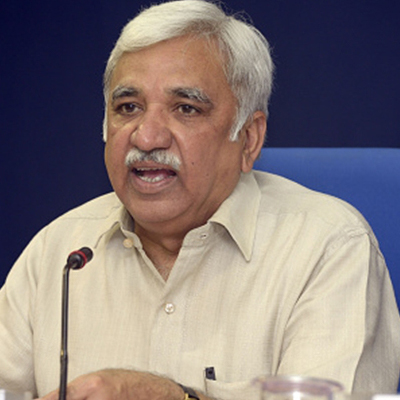
    For senior Indian Administrative Services (IAS) officer Sunil Arora, who is slated to take over as secretary in the Ministry of Information and Broadcasting (MIB) from 1 September, the first major task looming over him is Phase III of the Digital Addressable System (DAS) for Cable TV, which has to be accomplished within four months. 


    Arora is an IAS officer from the Rajasthan cadre of the 1980 batch. His immediate predecessor – Bimal Julka belongs to the 1979 batch from Madhya Pradesh. Julka took over his post in the MIB in July 2013 when Uday Kumar Varma retired.


    DAS PHASE III


    Even though the present government changed the deadlines for the last two phases of DAS, the stakeholders do not appear to be ready for it. There is still a dire shortage of compatible set top boxes (STBS), and there has been little headway despite the incentives offered under the Make in India scheme. Even at present, a large number of local cable operators (LCOs) are having to work with poor quality STBs made in China or other countries. 


    Added to that is the fact that a large number of broadcasters, multi system operators (MSOs), and LCOs still have to work out their agreements – an issue further complicated by the directives of the Telecom Disputes Settlement and Arbitration Tribunal (TDSAT), which wants a re-look at the tariffs.


    It is also a fact that analogue transmission continues in many parts of cities and towns that have gone digital and the Government has failed to get the stay of DAS in Chennai vacated. 


    TRAI


    Although these are issues that the Telecom Regulatory Authority of India (TRAI) is dealing with, all decisions relating to the broadcasting sector can only be effective if there is proper coordination between the regulator and the Ministry. This effectively means there has to be a quick response to any issues that either parties raise to the other, if deadlines have to be met.


    Other issues pending before TRAI relating to broadcasting include the need to reconsider the foreign direct investment (FDI) norms for media, shortage of spectrum, a growing demand by states seeking permissions to start their own television channels despite the TRAI having opined against it twice since 2008. 


    Although broadcasting duties were handed over to TRAI just over a decade back, it is also clear that the Ministry will have to consider whether there is need to form a broadcasting-specific body as TRAI is primarily a body set up for the telecom sector. If the Government decides to continue with TRAI handling both portfolios, the Regulator will be under pressure from the MIB to strengthen its broadcasting team and also ensure greater coordination among officers in both broadcasting and telecom.    


    With convergence of technologies becoming a reality, and with issues of spectrum already bringing telecom and broadcasting together, the National Democratic Alliance (NDA) Government has again begun to talk about convergence and this is bound to gather pace over the next two years.


    SPECTRUM


    Though the Defence Ministry has in principle agreed to hand over some spectrum and swap some other spectrum, the whole process is caught up in bureaucratic wrangles. If the Ministry wants to continue with its policy of ensuring there are no caps on the number of television and FM radio channels or direct-to-home (DTH) and Headend in the Sky (HITS) platforms in the country, the issue of spectrum will need early solution. 


    FM RADIO AUCTION


    The Government is in the midst of the FM Radio e-auction, and is committed to continue the process till all slots in the first stage of Phase III – of 69 cities, which already have FM channels – are completed. With at least 13 cities failing to get even a single bid, the new secretary may have to find ways of either lowering the reserve price for those cities or move those cities to the next stage. 


    The fact that the cumulative winnings from the channels auctioned so far has exceeded the reserve price by more 100 per cent is undoubtedly a matter of great satisfaction, but some cities failing to attract bidders remains to be an irritant.


    AD CAP


    The matter of enforcing the advertising cap of 12 minutes an hour is already before the Courts, but the Ministry may have to do a rethink in the light of the I&B Minister Arun Jaitley having said that he was opposed to ad caps on the print or electronic media, and because the free-to-air channels (most of which are news channels) have already expressed their opposition to this. TRAI had failed to get permission to take action against television channels violating its diktat of the total of 12 minutes of commercial and promotional advertisements every hour, though all broadcasters were asked to keep records of this by the Delhi High Court. 


    SPREAD OF FM RADIO vs DRM


    Even as All India Radio (AIR) has spent crores of rupees on the digitised Digital Radio Mondiale (DRM), Prasar Bharati feels that Frequency Modulation (FM), which is an analogue technology should be promoted until the nation is ready for digital radio sets. The Ministry can resolve this issue only if it can ensure adequate manufacturing at affordable process of DRM sets under the Make in India programme. Until then, this continues to be a thorn in the already dicey relations between the public service broadcaster and the Ministry.


    COMMUNITY RADIO


    More than a decade has elapsed since the introduction of community radio, but the number of operational stations still remain very low. To boost this sector, the Government introduced a new scheme last year for funding community radio, but bureaucratic wrangles continue to hold up the smooth implementation of this scheme. 


    PRASAR BHARATI & THE MINISTRY


    On paper, as per the Prasar Bharati (Broadcasting Corporation of India) Act 1990, it is clear that the pubcaster is autonomous. However, in reality this appears quite contrary.


    On the one hand, as a measure to help the pubcaster, a Group of Ministers had decided that persons employed as on 5 October, 2007 will get the salary and pension from Government funds. However, for employees who joined after that date, Prasar Bharati was left to fend for itself.  


    Since Prasar Bharati is listed as an autonomous company under the Ministry, this means – and it appears so even from the manner in which questions relating to the pubcaster are answered in Parliament – that there is dispute on what real autonomy is.


    Prasar Bharati CEO Jawhar Sircar – a former bureaucrat himself – feels the government does not given him full freedom and there is interference at every level and has said so either in speeches in articles by him or others in the pubcaster.


    While there is generally full autonomy as far as content goes, there are allegedly checks and balances placed by the government in administrative matters. 


    Journalists on the Parliamentary beat are often flabbergasted by the fact that when it suits the Government, a reply will say that the pubcaster is an autonomous body, and yet there are times when the Government has intervened even in appointments in Prasar Bharati.


    FOREIGN DIRECT INVESTMENT


    The TRAI had given its recommendations for an increased FDI in many sectors of the media in a report in July 2013. Although there was some change by the Government earlier this year, it has still not implemented the FDI report of TRAI in full.  


    SECURITY CLEARANCE


    While the Home Ministry has decided it is doing away with security clearance for MSOs, it has not taken a decision as far television channels are concerned. While the issue relating to foreign ownership can be understood, the denial of security clearance to Sun TV continues to flummox everyone in the media.


    It is generally felt that an accused is not guilty till proven, but the Home Ministry and the MIB appear to have decided that the Maran brothers should be denied security clearance despite the fact that the cases against them have no relation to the security of the country, and are in fact an incursion on the freedom of the media. Even the Supreme Court while permitting Sun Group companies to take part in the FM auction said so.


    PAID NEWS


    It is now almost five years since the issue of paid news became the talk of the town. The Press Council of India set up a committee, which even gave recommendations, and a Parliamentary Panel along the Election Commission also wanted some steps to be taken to stop this. However, there has been no tangible action so far in this matter.


    FILM INDUSTRY


    The film industry has been raising similar issues year after year. As far as taxation issues were concerned, it was hoped that the Goods and Services Tax (GST), when implemented will help. But the way the matter is stuck in Parliament forces the industry to just wait and watch.


    Entertainment tax is another issue on which there has been no unanimity and states have different taxes. About a decade earlier a proposal for bringing cinema into the Concurrent List of the Constitution might have solved the problem, but most states opposed the idea. 


    In a country producing around 1000 feature films every year, apart from the large number of films from overseas, India still suffers from an acute shortage of theatres, with the number less than 11,000. With the high rates of ticketing charged by the multiplexes, the average cinegoer is denied the pleasure of seeing a film in a cinema hall. 


    All attempts to curb video piracy appear to have failed because the film industry and the government have failed to work together to curb the menace. This in turn means huge losses for the makers of bold films unless there are big stars to lure the audiences.


    The Film Museum has been in the planning and making for more than a decade, but it does not appear that the Museum planned for 2013 to coincide with a centenary of cinema will see the light of day for at least a couple more years.


    The Film and Television Institute of India (FTII) has been caught in a logjam that just refuses to untangle. The appointment of a Chairperson, who was said to be close to the ruling party, is what triggered the issue, but the continued struggle has led to the police making an entry into the campus in Pune. 


    Clearly, the new MIB secretary has his job cut out for him and will have to tread carefully on the long road ahead – but it is not without political or bureaucratic potholes that can hold up even his best intentions.
     

  • TDSAT asks Karnataka LCOs & Siti Cable to resolve dispute over payment & STB quality

    TDSAT asks Karnataka LCOs & Siti Cable to resolve dispute over payment & STB quality

    NEW DELHI: Karnataka State Digital Cable TV Operators Welfare Association and Siti Cable Networks have been asked to resolve their disputes relating to accounts as well as quality of set top boxes (STBS) before a mediation centre by 30 September.


    Telecom Disputes Settlement and Arbitration Tribunal (TDSAT) chairman Aftab Alam and member Kuldip Singh however said status quo would be maintained till this exercise is completed.


    Furthermore, the Tribunal said any one of the two parties were free to mention the matter before the Tribunal in case it is not satisfied with the mediation.


    The Karnataka Association represents 269 cable operators and its counsel Nittin Bhatia claimed that the STBs were of very poor quality and it was adversely affecting the viewing quality of the signals supplied by Siti Cable.


    He said that all the cable operators who were part of the petition were willing and prepared to make payment of the monthly subscription fees at the rate of Rs 60 per month. He also stated that the cable operators were also willing to have a reconciliation of accounts and if any dues are found against them at the rate of Rs 60 per month, they would clear all the dues without delay.


    Cable operators represented in the petition were also willing to introduce package-based transmission as directed by the Telecom Regulatory Authority of India (TRAI), as in that case the cable operators would also be entitled to certain benefits.


    Siti Cable counsel Upender Thakur said there was a dispute regarding the number of cable operators involved. He also said large sums are due against the cable operators and in any event Siti Cable is bound to follow TRAI’s direction to introduce package-based transmission of channels. 


    The Tribunal said the parties should first try to resolve their disputes through mediation. It asked the mediator to try to conclude the matter expeditiously.