Tag: TDSAT

  • Pan India Network allows removal of equipment from Prasar Bharati’s premises

    Pan India Network allows removal of equipment from Prasar Bharati’s premises

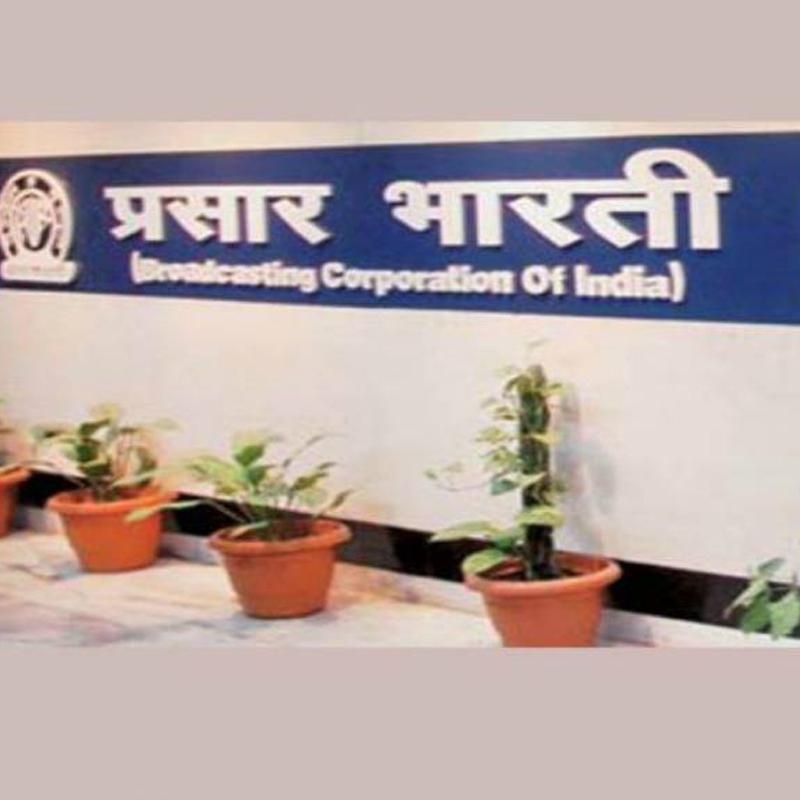
    NEW DELHI: Pan India Network Infravest Pvt. Ltd., Mumbai is willing and ready to have its equipment removed from the premises of Prasar Bharati licensed out to them under the previous licenses at different kendras.

    These kendras are Nanded, Allahabad, Jalgaon, Varanasi, Agra, Aloka, Amritsar and other kendras in Punjab.

    This was conveyed to the Telecom Disputes Settlement and Appellate Tribunal by Prasar Bharati counsel Tejveer Singh Bhatia.

    However, Bhatia made it clear that the Network had not admitted any of the allegations or statements made in the Miscellaneous Applications 152 to 159 of 2016 filed on behalf of the pubcaster.

    In view of the stand taken by the respondents, chairman justice Aftab Alam and member B B Srivastava disposed off the applications.

    However, the tribunal directed Pan India to have its equipment removed from the premises in question within 30 days.

  • TDSAT nixes payment demands without written agreement

    TDSAT nixes payment demands without written agreement

    NEW DELHI: The Telecom and Disputes Settlement and Appellate Tribunal has said that a proceeding for recovery of money due for supply of TV signals is not maintainable   under  section   14A  of  the  Telecom Regulatory Authority Act 1997 in the absence of a written interconnect agreement between the parties.

    Dismissing two petitions, chairman justice Aftab Alam and member B B Srivastava turned down the argument that trading in TV signals or giving TV signals for retransmission is not per se illegal in terms of section 70 of the Indian Contract Act 1872 notwithstanding the provisions in the Digital Addressable System regulations mandating an agreement in writing.

    One petition had been filed by multisystem operator Manthan Broadband Services Ltd against local cable operator Rajarhat Cable Broadband Service, while the other is by UCN Cable Network India Pvt. Ltd against Raj Cable Network.

    The Manthan case is that Rajarhat has a large amount as dues of subscription fees  but is shifting  to  another MSO without clearing arrears amounting to Rs 67,70,433 as dues of subscription charges up to 31 March 2015 and another sum of Rs 3,35,96,000 for the set top boxes (STBs) given to it by the petitioner, apart from interest @ 18 percent per annum from the date of filing of the petition till the date of payment. Manthan also wanted Rajarhat to be restrained from receiving signals from another MSO till all dues are cleared. The area comes under DAS.

    UCN Cable Network filed for recovery of Rs 28,09,195 as dues of subscription fees and cost of STBs from Raj Cable Network and to restrain it from going to another MSO till the dues are cleared. The only difference in this case is that UCN had an interconnect agreement with Raj Cable in the form of a memo of understanding)  that came to end on 31 August 2012, but the supply of signals continued beyond the term of the agreement and the dues claimed by the petitioner are computed up to September 2015. But the petition was filed on 5 November 2015 and the tribunal says this is ‘plainly barred by limitation and any claim for recovery of dues beyond that period is liable to rejection as being not based on any interconnect agreement.’ The area of operation relate to transmission in analogue mode.

    Both the Interconnect Regulations 2004 and the DAS Interconnect Regulations 2012 contain almost identical provisions prohibiting distribution of TV signals for re-transmission without entering into an agreement in writing.

    In view of this, the tribunal said it had in a number of cases taken the view that a distributor of TV channels acting in blatant disregard and deliberate disobedience of the regulations framed by TRAI in exercise of its powers under the TRAI Act cannot seek for recovery of its dues.

    However, various counsellors had sought to argue on the basis of the Indian Contract Act and some Supreme Court judgments that the distributor was entitled to compensation.

    However the tribunal said that the Interconnection Regulations 2004 were issued by TRAI on 10 December 2004 in order to cover arrangements for interconnection and revenue sharing among service providers in the broadcasting sector. On 17 March 2009 a notification was issued incorporating clause 4A in the body of the Regulations which clearly says ‘It shall be mandatory for the broadcasters of pay channels and distributors of TV channels to reduce the terms and conditions of all their interconnection agreements to writing’ and ‘No broadcaster of pay channels or distributor of TV channels such  as multi-system operator or headend  in the sky operator shall make available signals of TV channels to any distributor of TV channels without entering into a written interconnection agreement.’

    The tribunal also said clause 5(16) of the DAS Interconnect Regulations 2012 (corresponding to clause 8 of the Interconnect Regulations 2004) allowed, after expiry of an agreement, three months’ time to the parties to negotiate the terms of the fresh agreement (which on being executed would relate back to the date of expiry of the previous agreement). The provision was widely misused, especially under DAS transmission, and supply of TV signals would be continued, in many cases for long periods of over a year after the existing agreement came to end.

    The regulator clearly viewed it as an abuse of the regulation and by notification issued on 7 January 2016 amended clause 5(16) of the DAS Regulations 2012 with effect from 1 April 2016. Under this, no supply of signals can be made for a single day unless a fresh agreement is executed to replace the previous agreement on its expiry.

    The tribunal also said cases coming to it showed a clear pattern. ‘When a major MSO wishes to enter a market, it poaches upon the LCOs, affiliated with other MSOs operating in the area from before by offering them much lower rates. As the LCOs shift to the new entrant in large numbers, conflicts arise between the LCOs and the MSO from which they earlier received signals. The new entrant gives its own STBs to the LCOs shifting to it for having the boxes seeded at the subscribers’ places.  After LCOs in substantial numbers come under it and a large number of its boxes are seeded, the new entrant starts increasing its rates and then there is another round of conflict between the new entrant and its poached LCOs. All the arrangement is oral and without any inter-connect agreement. Hence, when the matter comes to the tribunal, it is the word of one side against the word of the other side. In the past months, a large number of such cases have come to the tribunal.  It is obvious that such practices based on oral arrangements, besides being in violation of the regulation, vitiate the market and disrupt the orderly growth of the sector.”


  • TDSAT nixes payment demands without written agreement

    TDSAT nixes payment demands without written agreement

    NEW DELHI: The Telecom and Disputes Settlement and Appellate Tribunal has said that a proceeding for recovery of money due for supply of TV signals is not maintainable   under  section   14A  of  the  Telecom Regulatory Authority Act 1997 in the absence of a written interconnect agreement between the parties.

    Dismissing two petitions, chairman justice Aftab Alam and member B B Srivastava turned down the argument that trading in TV signals or giving TV signals for retransmission is not per se illegal in terms of section 70 of the Indian Contract Act 1872 notwithstanding the provisions in the Digital Addressable System regulations mandating an agreement in writing.

    One petition had been filed by multisystem operator Manthan Broadband Services Ltd against local cable operator Rajarhat Cable Broadband Service, while the other is by UCN Cable Network India Pvt. Ltd against Raj Cable Network.

    The Manthan case is that Rajarhat has a large amount as dues of subscription fees  but is shifting  to  another MSO without clearing arrears amounting to Rs 67,70,433 as dues of subscription charges up to 31 March 2015 and another sum of Rs 3,35,96,000 for the set top boxes (STBs) given to it by the petitioner, apart from interest @ 18 percent per annum from the date of filing of the petition till the date of payment. Manthan also wanted Rajarhat to be restrained from receiving signals from another MSO till all dues are cleared. The area comes under DAS.

    UCN Cable Network filed for recovery of Rs 28,09,195 as dues of subscription fees and cost of STBs from Raj Cable Network and to restrain it from going to another MSO till the dues are cleared. The only difference in this case is that UCN had an interconnect agreement with Raj Cable in the form of a memo of understanding)  that came to end on 31 August 2012, but the supply of signals continued beyond the term of the agreement and the dues claimed by the petitioner are computed up to September 2015. But the petition was filed on 5 November 2015 and the tribunal says this is ‘plainly barred by limitation and any claim for recovery of dues beyond that period is liable to rejection as being not based on any interconnect agreement.’ The area of operation relate to transmission in analogue mode.

    Both the Interconnect Regulations 2004 and the DAS Interconnect Regulations 2012 contain almost identical provisions prohibiting distribution of TV signals for re-transmission without entering into an agreement in writing.

    In view of this, the tribunal said it had in a number of cases taken the view that a distributor of TV channels acting in blatant disregard and deliberate disobedience of the regulations framed by TRAI in exercise of its powers under the TRAI Act cannot seek for recovery of its dues.

    However, various counsellors had sought to argue on the basis of the Indian Contract Act and some Supreme Court judgments that the distributor was entitled to compensation.

    However the tribunal said that the Interconnection Regulations 2004 were issued by TRAI on 10 December 2004 in order to cover arrangements for interconnection and revenue sharing among service providers in the broadcasting sector. On 17 March 2009 a notification was issued incorporating clause 4A in the body of the Regulations which clearly says ‘It shall be mandatory for the broadcasters of pay channels and distributors of TV channels to reduce the terms and conditions of all their interconnection agreements to writing’ and ‘No broadcaster of pay channels or distributor of TV channels such  as multi-system operator or headend  in the sky operator shall make available signals of TV channels to any distributor of TV channels without entering into a written interconnection agreement.’

    The tribunal also said clause 5(16) of the DAS Interconnect Regulations 2012 (corresponding to clause 8 of the Interconnect Regulations 2004) allowed, after expiry of an agreement, three months’ time to the parties to negotiate the terms of the fresh agreement (which on being executed would relate back to the date of expiry of the previous agreement). The provision was widely misused, especially under DAS transmission, and supply of TV signals would be continued, in many cases for long periods of over a year after the existing agreement came to end.

    The regulator clearly viewed it as an abuse of the regulation and by notification issued on 7 January 2016 amended clause 5(16) of the DAS Regulations 2012 with effect from 1 April 2016. Under this, no supply of signals can be made for a single day unless a fresh agreement is executed to replace the previous agreement on its expiry.

    The tribunal also said cases coming to it showed a clear pattern. ‘When a major MSO wishes to enter a market, it poaches upon the LCOs, affiliated with other MSOs operating in the area from before by offering them much lower rates. As the LCOs shift to the new entrant in large numbers, conflicts arise between the LCOs and the MSO from which they earlier received signals. The new entrant gives its own STBs to the LCOs shifting to it for having the boxes seeded at the subscribers’ places.  After LCOs in substantial numbers come under it and a large number of its boxes are seeded, the new entrant starts increasing its rates and then there is another round of conflict between the new entrant and its poached LCOs. All the arrangement is oral and without any inter-connect agreement. Hence, when the matter comes to the tribunal, it is the word of one side against the word of the other side. In the past months, a large number of such cases have come to the tribunal.  It is obvious that such practices based on oral arrangements, besides being in violation of the regulation, vitiate the market and disrupt the orderly growth of the sector.”


  • TDSAT regrets TV distributors interconnect pacts without any written document

    TDSAT regrets TV distributors interconnect pacts without any written document

    NEW DELHI: Noting that a large number of cases keep coming up before it suffer from the ‘malaise of distributors of TV channels entering into interconnect arrangements without any agreement in writing (or at any rate a definitive agreement) as mandated by law’. The Telecom Disputes Settlement and Appellate Tribunal has observed that ‘oral arrangements may appear expedient and profitable but with the passage of time, the relationship becomes both strained and hurtful.’

    Disposing off three petitions involving 375 local cable operators, one by the Karnataka State Digital Cable TV Operators Welfare Association against Siti Cable Networks and the other by Cable Operators Sangram Association, Kolkata against Hathway Cable and Datacom, chairman justice Aftab Alam and member B B Srivastava said a large percentage of cases coming to the tribunal from the broadcasting sector have their root cause in the absence of any agreement in writing between the parties. “What is more  regrettable” is the fact that the cases in which two distributors of TV signals happen to be in interconnect arrangement without any agreement in writing is not confined only to analogue transmission but arise almost in equal numbers under the Digital Addressable System regime.

    In the two Kolkata cases, all the 102 LCOs and Hathway are directed to execute either the Model Interconnection Agreement based on mutual negotiations or failing this, the Standard Interconnection Agreement within 30 days as there is no interconnect agreement between the two sides.

    TRAI made it clear that in case no interconnection agreement in writing comes into existence between the LCOs and The MSOs, Siti Cable in the Karnataka case and Hathway (in the Kolkata case) will be obliged to discontinue the supply of signals to the LCOs for any supply of signals beyond that period would be illegal and in contravention of the statutory prohibition.

    In case any of the LCO wishes to shift away from its present MSO, it must give 21 days’ notice to the MSO before migrating to any other distributor of signals.

    As regards the past relationship, in case of any dues that the two MSOs (Siti Cable in Karnataka and Hathway in Kolkata) might claim on the basis of any written agreement or on the basis of any interim order passed by the tribunal in these proceedings, it would be open to them to initiate recovery proceedings against the concerned LCO in accordance with law.

    “Needless to say, no monetary claim for supply of signals may be entertained that is not based on any written agreement.”

    The Tribunal said it was “glad to note that the regulator has moved in and amended the regulations to plug in even the little loop-hole that was misused for continuing the supply of signals under DAS transmission even after the expiry of the agreement. Further, by another amendment in the Regulations it has removed the ambivalence that was created in the scheme of interconnections as result of fixing the shares of the MSO and the LCO by the Tariff Order dated 10 July 2010 as amended on 30 April 2012.”

    The two amendments in the Interconnect Regulations 2012 made by TRAI during the pendency of these petitions leave nothing for adjudication in these matters and all that is required is to direct the parties to simply follow the law.

    In the Karnataka LCO petition, the Tribunal said all the 269 LCOs will be free either to continue with the existing agreements or to switch over to either the Model Interconnection Agreement or the Standard Interconnection Agreement within 30 days.  Each of the LCOs should intimate Siti Cable whether or not it wishes to continue with the existing agreement. Those exercising the option not to continue with the existing agreement may further negotiate with Siti Cable for execution of the Model Interconnection Agreement failing which both sides must execute the Standard Interconnection Agreement within 30 days from today.

    The LCOs operate in Bengaluru which came under DAS transmission in Phase-11. All the LCOs represented through this petition are receiving their signals from the Siti Cable.  The petition was filed on 24 August 2015 challenging the disconnection notices issued by the MSO under clauses 6.2 and 6.5 of the Telecommunication (Broadcasting and Cable Services) Interconnection (Digital Addressable Cable    Television Systems) Regulations2012 issued on grounds of non-payment of the monthly subscription dues. Mutual negotiations before the Mediation Centre failed.

    On 15 December 2015, it was stated on behalf of the MSO that as  on 31 October 2015, the cumulative dues against the 269 LCOs amounted to Rs l.65 crore for the a Ia carte channels and for the channels that are given to the LCOs in bouquets, approximately Rs 25 lakh calculated @ Rs.60 per STB. It was also stated on behalf of the MSO that under the agreement with certain broadcasters, it was getting the broadcasters’ channels on the latter’s RIO rates and it was no longer possible for it to give those channels in any packages and any LCO wanting those channels could take them on RIO rates.

    The Kolkata petitions were filed by the Association on behalf of 42 LCOs and later on behalf of another 60LCOs. All these LCOs operate in Kolkata and receive TV signals from Hathway. Most of the LCOs are operating in areas that came under DAS transmission in phase-II and a few are operating in areas that come under DAS transmission in phase-III. In these two cases, the LCOs sought a direction to the MSO to restore supply  of  signals  to  some  of  the  STBs  that,  they  alleged,  were  disconnected arbitrarily and not to interfere with the smooth and good quality supply of signals to the LCOs.

    According to the petitioner, as per the understanding between the two sides, they were liable to pay Rs 110 per STB as monthly subscription fee for all the channels being received by them and regardless of the subscription fee charged by them from the individual subscribers but the MSO had raised the subscription fee and was trying to enforce package   billing that would further greatly increase the   monthly subscription fee.  Though the parties are in interconnect arrangement for a long time, there is no interconnect agreements.
     

  • TDSAT regrets TV distributors interconnect pacts without any written document

    TDSAT regrets TV distributors interconnect pacts without any written document

    NEW DELHI: Noting that a large number of cases keep coming up before it suffer from the ‘malaise of distributors of TV channels entering into interconnect arrangements without any agreement in writing (or at any rate a definitive agreement) as mandated by law’. The Telecom Disputes Settlement and Appellate Tribunal has observed that ‘oral arrangements may appear expedient and profitable but with the passage of time, the relationship becomes both strained and hurtful.’

    Disposing off three petitions involving 375 local cable operators, one by the Karnataka State Digital Cable TV Operators Welfare Association against Siti Cable Networks and the other by Cable Operators Sangram Association, Kolkata against Hathway Cable and Datacom, chairman justice Aftab Alam and member B B Srivastava said a large percentage of cases coming to the tribunal from the broadcasting sector have their root cause in the absence of any agreement in writing between the parties. “What is more  regrettable” is the fact that the cases in which two distributors of TV signals happen to be in interconnect arrangement without any agreement in writing is not confined only to analogue transmission but arise almost in equal numbers under the Digital Addressable System regime.

    In the two Kolkata cases, all the 102 LCOs and Hathway are directed to execute either the Model Interconnection Agreement based on mutual negotiations or failing this, the Standard Interconnection Agreement within 30 days as there is no interconnect agreement between the two sides.

    TRAI made it clear that in case no interconnection agreement in writing comes into existence between the LCOs and The MSOs, Siti Cable in the Karnataka case and Hathway (in the Kolkata case) will be obliged to discontinue the supply of signals to the LCOs for any supply of signals beyond that period would be illegal and in contravention of the statutory prohibition.

    In case any of the LCO wishes to shift away from its present MSO, it must give 21 days’ notice to the MSO before migrating to any other distributor of signals.

    As regards the past relationship, in case of any dues that the two MSOs (Siti Cable in Karnataka and Hathway in Kolkata) might claim on the basis of any written agreement or on the basis of any interim order passed by the tribunal in these proceedings, it would be open to them to initiate recovery proceedings against the concerned LCO in accordance with law.

    “Needless to say, no monetary claim for supply of signals may be entertained that is not based on any written agreement.”

    The Tribunal said it was “glad to note that the regulator has moved in and amended the regulations to plug in even the little loop-hole that was misused for continuing the supply of signals under DAS transmission even after the expiry of the agreement. Further, by another amendment in the Regulations it has removed the ambivalence that was created in the scheme of interconnections as result of fixing the shares of the MSO and the LCO by the Tariff Order dated 10 July 2010 as amended on 30 April 2012.”

    The two amendments in the Interconnect Regulations 2012 made by TRAI during the pendency of these petitions leave nothing for adjudication in these matters and all that is required is to direct the parties to simply follow the law.

    In the Karnataka LCO petition, the Tribunal said all the 269 LCOs will be free either to continue with the existing agreements or to switch over to either the Model Interconnection Agreement or the Standard Interconnection Agreement within 30 days.  Each of the LCOs should intimate Siti Cable whether or not it wishes to continue with the existing agreement. Those exercising the option not to continue with the existing agreement may further negotiate with Siti Cable for execution of the Model Interconnection Agreement failing which both sides must execute the Standard Interconnection Agreement within 30 days from today.

    The LCOs operate in Bengaluru which came under DAS transmission in Phase-11. All the LCOs represented through this petition are receiving their signals from the Siti Cable.  The petition was filed on 24 August 2015 challenging the disconnection notices issued by the MSO under clauses 6.2 and 6.5 of the Telecommunication (Broadcasting and Cable Services) Interconnection (Digital Addressable Cable    Television Systems) Regulations2012 issued on grounds of non-payment of the monthly subscription dues. Mutual negotiations before the Mediation Centre failed.

    On 15 December 2015, it was stated on behalf of the MSO that as  on 31 October 2015, the cumulative dues against the 269 LCOs amounted to Rs l.65 crore for the a Ia carte channels and for the channels that are given to the LCOs in bouquets, approximately Rs 25 lakh calculated @ Rs.60 per STB. It was also stated on behalf of the MSO that under the agreement with certain broadcasters, it was getting the broadcasters’ channels on the latter’s RIO rates and it was no longer possible for it to give those channels in any packages and any LCO wanting those channels could take them on RIO rates.

    The Kolkata petitions were filed by the Association on behalf of 42 LCOs and later on behalf of another 60LCOs. All these LCOs operate in Kolkata and receive TV signals from Hathway. Most of the LCOs are operating in areas that came under DAS transmission in phase-II and a few are operating in areas that come under DAS transmission in phase-III. In these two cases, the LCOs sought a direction to the MSO to restore supply  of  signals  to  some  of  the  STBs  that,  they  alleged,  were  disconnected arbitrarily and not to interfere with the smooth and good quality supply of signals to the LCOs.

    According to the petitioner, as per the understanding between the two sides, they were liable to pay Rs 110 per STB as monthly subscription fee for all the channels being received by them and regardless of the subscription fee charged by them from the individual subscribers but the MSO had raised the subscription fee and was trying to enforce package   billing that would further greatly increase the   monthly subscription fee.  Though the parties are in interconnect arrangement for a long time, there is no interconnect agreements.
     

  • TDSAT vacates order staying disconnection of signals to MSO

    TDSAT vacates order staying disconnection of signals to MSO

    NEW DELHI: An order staying disconnection of signals of Eenadu TV to Hyderabad Cable Digital Services Pvt. Ltd has been vacated by the Telecom Disputes Settlement and Appellate Tribunal.

    Chairman justice Aftab Alam and member B B Srivastava said the order given late last week was being vacated as Eenadu TV Counsel Prabhat Ranjan had produced ample documents that “belie the allegations made in the petition that the supply of signals was abruptly disconnected without any notices, etc.”

    The Tribunal said that Ranjan had produced documents that showed that the multi-system operator owes a substantial amount as dues of subscription fees. Ranjan also stated that the interconnect agreement between the two sides had come to an end.

    Listing the matter for 27 May, the Tribunal asked Ranjan to file Eenadu TV’s reply
    bringing all the documents on record and asked the MSO to file a rejoinder, if any, within a week thereafter.


  • TDSAT vacates order staying disconnection of signals to MSO

    TDSAT vacates order staying disconnection of signals to MSO

    NEW DELHI: An order staying disconnection of signals of Eenadu TV to Hyderabad Cable Digital Services Pvt. Ltd has been vacated by the Telecom Disputes Settlement and Appellate Tribunal.

    Chairman justice Aftab Alam and member B B Srivastava said the order given late last week was being vacated as Eenadu TV Counsel Prabhat Ranjan had produced ample documents that “belie the allegations made in the petition that the supply of signals was abruptly disconnected without any notices, etc.”

    The Tribunal said that Ranjan had produced documents that showed that the multi-system operator owes a substantial amount as dues of subscription fees. Ranjan also stated that the interconnect agreement between the two sides had come to an end.

    Listing the matter for 27 May, the Tribunal asked Ranjan to file Eenadu TV’s reply
    bringing all the documents on record and asked the MSO to file a rejoinder, if any, within a week thereafter.


  • TDSAT: Airan Consultants to pay UCN Cable Rs 50 lakh plus interest

    TDSAT: Airan Consultants to pay UCN Cable Rs 50 lakh plus interest

    NEW DELHI: Airan Consultants Pvt Ltd has been asked by the Telecom Disputes Settlement and Appellate Tribunal to pay to UCN Cable Network Pvt Ltd a sum of Rs. 50,00,020 with interest at the rate of 8 percent from 5 May 2015 till date of payment for carrying the News Express channel on its network.

    Chairman Justice Aftab Alam and member B B Srivastava, who heard the matter ex parte as Airan Consultants Pvt. Ltd did not put in an appearance, came to their judgment on the basis of the documents presented and the lone witness examined.

    While UCN Cable had demanded interest at 24 per cent, the tribunal confined it to 8 per cent which will be paid till the date of the final payment. 

    The tribunal said in the case of the second agreement, Airan had failed to fulfil its obligation and not even responded to the communication from the petitioner for payment.

    UCN Cable said the two parties executed an agreement in November 2013 for the period 6 November 2013 to 5 November 2014 for carrying the channels of Airan Consultants on its network and placing it in the digital and U band, below 800 mghz in analogue mode in the territory mentioned in the agreement. UCN has stated that it raised invoices in pursuance of this agreement and received payment as well against them. Both parties in furtherance of their relationship executed another channel placement agreement for one year from 6 November 2014 till 5 November 2015. The amount for the placement of the news channel “JIA News” was Rs 89 lakh per annum inclusive of all taxes except service tax and payable quarterly in advance.

    UCN says it fulfilled its obligation in respect of carrying the new channel on its network and placing it as agreed. Accordingly, it raised invoice for an amount of Rs 50,00,020. It stated that Airan sent a photocopy of a cheque dated 15 February.2015 drawn on Bank of India, Corporate Banking Branch, Nagpur, for an amount of Rs 45,000,18 through WhatsApp promising to deposit it directly into UCN’s account. UCN has said that Airan not only failed to deposit the cheque but did not respond either to UCN’s e-mails of 27 February, 9 March, 30 April and 1 May 2015. Thereafter, UCN served a legal notice on 3 August 2015.

  • TDSAT: Airan Consultants to pay UCN Cable Rs 50 lakh plus interest

    TDSAT: Airan Consultants to pay UCN Cable Rs 50 lakh plus interest

    NEW DELHI: Airan Consultants Pvt Ltd has been asked by the Telecom Disputes Settlement and Appellate Tribunal to pay to UCN Cable Network Pvt Ltd a sum of Rs. 50,00,020 with interest at the rate of 8 percent from 5 May 2015 till date of payment for carrying the News Express channel on its network.

    Chairman Justice Aftab Alam and member B B Srivastava, who heard the matter ex parte as Airan Consultants Pvt. Ltd did not put in an appearance, came to their judgment on the basis of the documents presented and the lone witness examined.

    While UCN Cable had demanded interest at 24 per cent, the tribunal confined it to 8 per cent which will be paid till the date of the final payment. 

    The tribunal said in the case of the second agreement, Airan had failed to fulfil its obligation and not even responded to the communication from the petitioner for payment.

    UCN Cable said the two parties executed an agreement in November 2013 for the period 6 November 2013 to 5 November 2014 for carrying the channels of Airan Consultants on its network and placing it in the digital and U band, below 800 mghz in analogue mode in the territory mentioned in the agreement. UCN has stated that it raised invoices in pursuance of this agreement and received payment as well against them. Both parties in furtherance of their relationship executed another channel placement agreement for one year from 6 November 2014 till 5 November 2015. The amount for the placement of the news channel “JIA News” was Rs 89 lakh per annum inclusive of all taxes except service tax and payable quarterly in advance.

    UCN says it fulfilled its obligation in respect of carrying the new channel on its network and placing it as agreed. Accordingly, it raised invoice for an amount of Rs 50,00,020. It stated that Airan sent a photocopy of a cheque dated 15 February.2015 drawn on Bank of India, Corporate Banking Branch, Nagpur, for an amount of Rs 45,000,18 through WhatsApp promising to deposit it directly into UCN’s account. UCN has said that Airan not only failed to deposit the cheque but did not respond either to UCN’s e-mails of 27 February, 9 March, 30 April and 1 May 2015. Thereafter, UCN served a legal notice on 3 August 2015.

  • TDSAT: MSO Honey Sky Vision’s petition against INX News dismissed

    TDSAT: MSO Honey Sky Vision’s petition against INX News dismissed

    NEW DELHI: The Telecom Disputes Settlement and Appellate Tribunal has dismissed a petition by multi-system operator Honey Sky Vision wanting a decree against INX News for certain payments.

    Chairman Aftab Alam and member B B Srivastava said, “Since the agreement itself fails to get our acceptance and absence of invoices and proper statement of account, there is no justification for entertaining this petition. Accordingly, we find no merit in the petition and it is accordingly dismissed.”

    Honey Sky Vision had filed for issuance of order/decree in its favour and against INX News for an amount of Rs 23,59,560 as the alleged outstanding amount due in lieu of placement of channel News X on its network. Additionally an order awarding interest at the rate of 18 percent in favour of the petitioner had also been sought.

    The case of the MSO is that the INX News had entered into an agreement with it for placement of its channel News X on the petitioner’s network. The agreement was for the period 28 September 2011 to 27 September.2012 and for a consideration of Rs. 21 lakh per annum plus service tax as payable.

    The MSO claimed it complied with all its obligations; carried/placed News X at desired frequency/band to the complete satisfaction of the respondent whose representatives/officials regularly visited the networks/units of the petitioner in various areas of Delhi.

    The petitioner also claims to have raised/provided monthly invoices to the respondent for placement of its channel. However, INX News completely denied all allegations made by the petitioner including execution of any placement agreement between the parties.

    The MSO produced copy of a placement agreement which only bore its representative’s signature and not those of INX News. The MSO also failed to produce the invoices it claimed to have raised.

    The tribunal, which also examined witnesses, said, “In view of facts emerging on the basis of pleadings, documents and evidences adduced, it is extremely difficult to accept the agreement, in the form it has been produced before us, as a legitimate and validly executed agreement between the petitioner and the respondent. Rather we hold and find that there was no agreement between the petitioner and the respondent.”