Tag: TDSAT

  • Dialling into decline RCom posts heavy losses amid ongoing insolvency

    Dialling into decline RCom posts heavy losses amid ongoing insolvency

    MUMBAI: The lines are anything but clear at Reliance Communications (RCom), which dialled in a staggering consolidated loss of Rs 8,125 crore for the financial year ended 31 March 2025. With the telecom player still navigating the turbulent waters of insolvency, its latest audited results tell a tale of debt, deferred dreams, and deepening losses.

    Under the shadow of ongoing corporate insolvency proceedings since 2019, RCom’s affairs remain under the management of resolution professional Anish Niranjan Nanavaty. In a disclosure to stock exchanges, the company reported a loss of Rs 162 crore from continuing operations and an even steeper Rs 7,963 crore loss from discontinued operations, which include legacy telecom assets like spectrum, towers, and fibre assets still listed at 2018 valuations and now held for sale.

    Operating income slumped to Rs 278 crore for the year, against expenses of Rs 440 crore. The auditors, however, weren’t convinced everything adds up.

    The audit report issued by Pathak H.D. & Associates LLP is riddled with red flags from non-provisioning of interest on borrowings and foreign exchange fluctuations, to unauthorised asset sales and unresolved willful default allegations. “Had the interest and foreign exchange variation been provided,” the auditors note, “the reported loss would have been higher by Rs 5,110 crore, and the net worth lower by Rs 37,573 crore.”

    What’s more, RCom continues to default on statutory dues and has not implemented Ind AS 116 for lease accounting,  a miss that auditors flagged yet again.

    Even as a resolution plan remains pending before the NCLT and the Supreme Court battles over spectrum liabilities drag on, RCom maintains it has prepared its books on a ‘going concern’ basis. A claim auditors aren’t entirely buying, given the sustained erosion in net worth, which now stands at negative Rs 69,204 crore.

    Amidst it all, resolution efforts have hit pause. Applications to migrate telecom licences remain stuck in litigation. Multiple petitions before the NCLT, TDSAT, and the Supreme Court including the AGR dues dispute continue to cloud the future of RCom and its affiliates.”

    As India’s telecom landscape moves ahead with 5G and AI-driven innovations, RCom remains tethered to unresolved past dues and legal quicksand. Whether it can ring in a revival or continue to be stuck in voicemail remains a question only the courts and creditors can answer.

  • Unencrypted channels on DD Free Dish suspected of promoting privacy: A growing concern

    Unencrypted channels on DD Free Dish suspected of promoting privacy: A growing concern

    Mumbai: Cable operators have alleged that unregistered local players are illegally taking unencrypted feed from DD Free Dish. Over the last few years there have been increasing discussions on the growing popularity of DD Free Dish, a free-to-air service being provided by Prasar Bharati. While consumers continue to enjoy the FTA service, cable operators are disturbed by the fact that DD Free Dish is providing unencrypted channels, which is “promoting piracy”.

    According to big cable operators, Prasar Bharati, which is selling DD Free Dish slots to broadcasters at huge prices, is allegedly not complying with TRAI’s Telecommunication (Broadcasting and Cable) Services Standards of Quality of Service and Consumer Protection (Addressable Systems) Regulations, 2017 (Quality of Service Regulations) which makes it mandatory to provide encrypted channels.

    The AIDCF recently moved the Telecom Disputes Settlement and Appellate Tribunal (TDSAT) against DD Free Dish for allegedly not abiding by TRAI’s regulation that requires the channels to be provided in an encrypted manner. TDSAT has issued notice to Prasar Bharati and other respondents in the matter which will now be heard next month.

    Industry experts say while all the multiple system operators (MSOs) have implemented DAS in phase wise manner from 2012 to 2016, thereby helping in curbing piracy, DD Free Dish is still providing its signals in non-encrypted mode.

    MSOs operate through their deployed cable network, wherein the consumer/subscriber is provided encrypted signals of television channels through a set-top box deployed at their premises. This, say experts, has also led to a non-level playing field for cable operators with DD Free Dish.

  • Why Barc’s landing page viewership measurement is worrying TV9’s Barun Das

    Why Barc’s landing page viewership measurement is worrying TV9’s Barun Das

    Mumbai: The landing page controversy continues to dog ratings body the Broadcast Audience Research Council India (Barc). The latest one to wave a red flag is TV9 Network CEO Barun Das. Das is quite emphatic that the TV monitor needs to change the manner in the way it measures viewership, especially that which is garnered by news channels through channel placement on the landing page of a distribution platform operator (DPO). He has gone so far as to call it illegitimate and a restrictive trade practice.

    The landing page helps TV broadcasters enhance reach as it allows them to be the first channel on which the viewer lands when he/she switches on the set-top-box (STB). News broadcasters have been paying top dollar to place their respective channels on the landing page as it allegedly helps them garner higher ratings on their respective genres.

    It has been argued that landing pages are a marketing tool for broadcasters to promote their TV channels. An analogy has been drawn that a channel placed on a landing page is akin to FMCG companies prominently displaying their products on shelves in a retail outlet. This practice by FMCG players gives consumers the ‘opportunity to see’ their products.

    Das says this reasoning has no merit, in a letter addressed to Barc chairman Shashi Sinha. Prasar Bharati CEO Shashi Shekhar Vempati and Barc CEO Nakul Chopra have also been sent a copy.

    “A landing page actually blocks other channels from reaching consumers as soon as a viewer switches on the TV. It is a restrictive trade practice as a whole,” he states in the missive. “All the more so because, unlike an FMCG where the shelf space (first step) only attracts the attention, and then the purchase (actual transaction) happens. In the context of TV, watching itself is the transaction. Thus, it cannot be compared to an FMCG.”

    Das further claims that due to some mechanisms on the ground, the landing page has been adjusted in such a way that even if the consumer does not want to watch the landing channel, the remote doesn’t allow him/her to change to another one.

    “Any viewership achieved this way is certainly not legitimate,” posits Das.

    The larger issue of leveraging landing pages is that it makes the news broadcasting industry uncompetitive and unviable.

    As per industry estimates, when a broadcaster signs a carriage deal with a cable operator, the same deal costs two to three times more with the addition of placement on the landing page. So, a carriage deal that costs Rs 10 lakh may amount to Rs 40 lakh with the landing page included. Such deals are locked with large sized head ends and multiservice operators.

    “The news industry collectively went wrong when they started paying absurd carriage/placement fees for better LCNs (logical channel numbers).  Now, we’re creating one more demon in the form of a landing page. If you continue to allow landing pages as part of legitimate viewership, the same carriage-fee phenomenon will set in soon,” Das appeals in the letter.

    Das is referring to the industry practice, where a broadcaster pays exorbitant placement fees to DPOs for favourable placement of its channel in the LCN. This practice continued until the Telecom Regulatory Authority of India (Trai) directed DPOs that all channels of a particular genre must be placed together and any change in the position of the channel cannot take place without prior approval from the regulatory body.

    “Landing pages are so priced so exorbitantly that only GECs (general entertainment channels) which have a far higher revenue base can afford them,” states Das. “Also, since the viewership base of GEC is much higher (compared with news genre), the viewership gained through landing pages has a minor impact on the overall viewership. In the context of news channels, the impact of landing pages is very significant.”

    In September 2017, the ministry of information and broadcasting asked Barc to pause the ratings of TV channels that were using landing pages. This was followed by Trai directing all broadcasters of TV channels to refrain from placing any registered satellite television channel whose TV rating was measured by Barc India on the landing LCN or landing channel or boot up screen.  

    This directive was overturned by the Telecom Disputes Settlement and Appellate Tribunal (TDSAT) in an order dated May 2019 after news broadcaster Times Network approached the appellate body. The order by TDSAT stated that the landing page was a legitimate tool for promotion, allowing the industry to continue using it.

    However, Das argues that the cost of placement on landing channels cannot be matched by the revenue potential of the news genre. Similar to LCN placement, in the quest for short term gains, news channels may again scramble to be placed on the landing page by out paying one another.  

    “Some channels are paying astronomical amounts and are gaining viewership,” claims Das.

    Barc has attempted to mitigate some of the impact of the landing page on viewership of channels, although it has not been able to completely exclude landing page data with its algorithm-based data validation method. The outlier data was previously removed using symptomatic statistics but Barc replaced it with a methodology that uses inferential statistics to deliver better results across genres.

    In his letter, Das appeals to the Barc board to investigate and resolve the landing page issue and save the broadcast industry from this ‘coming crisis.’

    “I strongly reiterate that landing pages can by all means be used as a promotional/marketing tool. But the viewership garnered through the landing page cannot be counted in BARC viewership reports,” Das tells Indiantelevision.com.

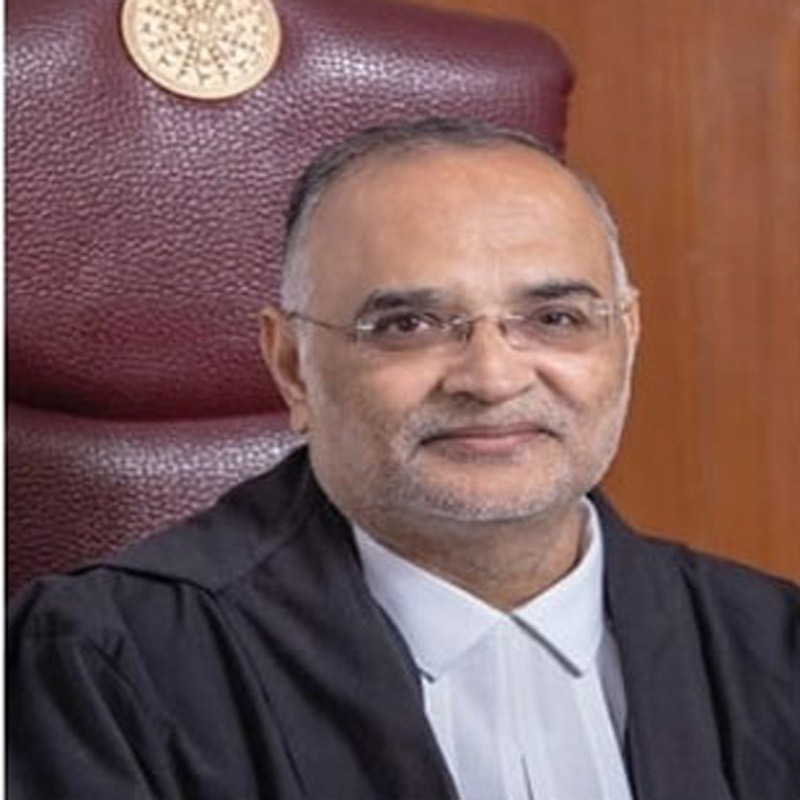
  • Delhi HC justice DN Patel appointed as chairperson of TDSAT

    Delhi HC justice DN Patel appointed as chairperson of TDSAT

    Mumbai: The central government has appointed Delhi HC justice DN Patel to the post of chairperson of Telecom Disputes Settlement and Appellate Tribunal (TDSAT) for a period of four years. Patel was appointed chief justice of Delhi high court on 7 June 2019.

    Notification issued by the law and justice ministry in this regard stated, “As approved by the appointments committee of the cabinet, the central government hereby appoints Justice D.N. Patel , chief justice of Delhi high court to the post of chairperson, Telecom Disputes Settlement and Appellate Tribunal, for a period of 04 years from the date of assumption of charge of the post, or till attaining the age of 70 years, or until further orders, whichever is the earliest.”

    “The conditions of service of Justice DN Patel as chairperson in the Telecom Disputes Settlement and Appellate Tribunal shall be governed by the provisions of the Tribunals Reforms Act, 2021 and the Tribunal (Conditions of Service) Rules, 2021,” it added.

    Prior to Delhi HC, Justice DN Patel served as acting chief justice of the Jharkhand high court and also as the judge of Jharkhand high court and Gujarat high court.

    Patel enrolled as an advocate in 1984, practicing at the Gujarat HC. He practiced in civil, criminal, and constitutional matters as well excise and customs on behalf of the Union of India at the Gujarat HC. He was appointed as special counsel of the state of Gujarat in other high courts.

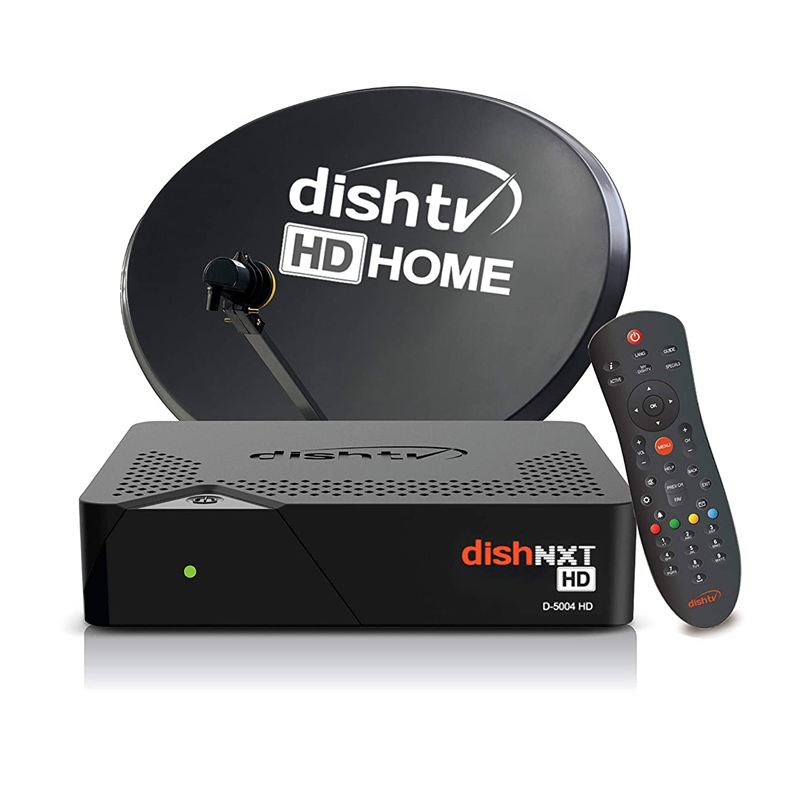
  • Dish TV receives MIB notice for payment of Rs 4,164.05 crore

    Dish TV receives MIB notice for payment of Rs 4,164.05 crore

    KOLKATA:The Indian ministry of information & broadcasting (MIB) and  direct to home television provider Dish TV have been at loggerheads over this matter for sometime now. And the latter has informed the Bombay stock exchange (BSE)  that the former has brought up its demand to pay up long disputed licence fees totalling Rs 4,164.5 crore once again.  The amount includes interest and the demand from the MIB is that Dish TV pay it up within 15 days.

    The Jawahar Goel headed firm says that the MIB has clarified that the amount  is further subject to verification and audit and the outcome of various court cases pending before the TDSAT, the high court of Jammu and Kashmir and the supreme court.

    “In this regard, we would like to inform that the ministry of information and broadcasting had issued a demand notice in the year 2014 for the licence fee pertaining from the date of issuance of DTH License till financial year 12 – 13. The said demand notice was challenged by the company before the TDSAT and the said demand has been stayed by the TDSAT, which stay continues to be in force,” Dish TV said in the regulatory  filing with the BSE. .

    Further, the company's petition is also pending before the  Jammu and Kashmir high court where it has challenged  inter alia the quantum / applicability of licence fee and imposition of interest. Similar writs are also pending before the apex court.

    Dish TV informed that it is studying the communication to determine its next steps. The DTH licence  fee matter has already been through several rounds of litigation, the final outcomes of which are yet to be argued and concluded, it added. It would update the stock exchanges on any material developments.

    The notice has come at a time when the government has opened up 100 per cent foreign direct investment in DTH, extended the duration of licences given to operators.

  • TDSAT dismisses petition against BARC on landing page issue differing from Delhi HC view

    TDSAT dismisses petition against BARC on landing page issue differing from Delhi HC view

    KOLKATA: The Telecom Disputes Settlement and Appellate Tribunal (TDSAT) has dismissed the petition against TV audience measurement body BARC India on the ground of lack of jurisdiction. Bennett Coleman and Sun TV Network approached the tribunal on the legality, validity of a recent decision taken by BARC on the landing page issue.

    The petitioners claimed that BARC India had acted arbitrarily by adopting a formula which according to petitioners reduce the viewership data collected by measurement tools of BARC India. On September 3, the latter announced the introduction of algorithms into its data validation method to mitigate the impact of the landing page on viewership data across all genres of channels.

    While the tribunal gave out the final judgement on 4 November, it stated that it found out after both the parties that the main task was to find out whether BARC is a licensor of any ( specified) public telecommunication/broadcasting services; and (ii) whether it is providing a service that is made available to the public as users.

    Notably, the petitioners also approached Delhi High Court earlier. TDSAT has differed from the Delhi High Court’s opinion that BARC is a licensee or a service provider under the TRAI Act. “It is noted that in para 34 of its order dared 29.09.2020, the Hon’ble High court clarified that the finding that TDRSAT would have jurisdiction to entertain the petition was a prima facie one and in Para 45 it was further made clear that none of the observation shall bind TDSAT which shall hear the petition filed by the petitioners and any interim application filed therein without being influenced by any of the observations made in the order. Hence, the issue of jurisdiction has been raised afresh and parties have been heard in detail,” TDSAT noted.

    TDSAT also stated that since it has been found that BARC is neither a licensee nor a service provider as defined under the TRAI Act, the petitions under consideration are found to be beyond the jurisdiction of its Tribunal. Hence, the petitions have been dismissed on the ground of lack of jurisdiction.

    However, the petitioners would be at liberty to pursue their grievances in accordance with law before any court of competent jurisdiction.

  • SPNI goes head to head with Indore-based Digiana Projects  on “piracy”

    SPNI goes head to head with Indore-based Digiana Projects on “piracy”

    KOLKATA: The battles in cable TV land continue, what with life gradually coming to the new normal.  Sony Picture Networks India (SPNI) ,for instance, says it is cracking the whip on Indore-based MSO Digiana Projects for allegedly availing signals through clandestine means. SPNI has gone ahead and switched off the transmission of its TV channels to the distributor as it has allegedly not paid its dues, and is pirating its channels. While the broadcaster has filed a contempt petition in the Delhi high court, the MSO has petitioned the Telecom Disputes Settlement &  Appellate Tribunal (TDSAT) to come to its rescue.

    The court has taken cognisance of piracy and admitted contempt of court case against Digiana along with issuing a notice to submit its response to the said petition. The matter will be listed in the second week of November this year. 

    In its response to TDSAT, SPN has charged that Digiana is continuing piracy even after undertaking before the court that it will not illegally broadcast the network’s signals. The broadcaster stated that it is difficult to deal with such a partner who is choosing unfair means along with withholding a huge amount in arrears – Rs 3.03 crore.

    However, Digiana claimed in its petition that the number is inflated and actually stands at Rs 1.48 crore. TDSAT has not found any good grounds to accept the claim and asked the defaulter to produce further materials and evidence. The next date of hearing is 2 November. In the meantime, the tribunal has directed Digiana to pay Rs 2 crore within ten days of the notice for the restoration of SPNI channels. Apart from payment Rs 2 crore, TDSAT also directed Digiana to clear dues of all forthcoming invoices within a period of 15 days from the receipt of Invoice.

    When indiantelevision.com reached out to the MSO, a senior staff member said that they had requested SPN for a fee waiver due to loss of revenue in Covid2019 crisis. He claimed that instead of waiving fees, the broadcaster hiked its bouquet price, which made the entire situation more difficult for its management. He also added that SPNI did not properly inform the MSO about the disconnection.

    indiantelevision.com tried reaching the CEO of Digiana for comment but he was unavailable at the time of publication.

    This isn't the first time that Digiana is in the dock over illegal transmissions of a broadcaster's signals. Last year, the Madhya Pradesh police registered a case against Digiana Projects after investigations revealed that the MSO had been stealing and broadcasting the signals of Star India at about 26 locations across the country.

    Major broadcasters have frequently complained about unauthorised transmission. Even major MSOs have also raised their voice against illegal theft of signals. A number of complaints before the MIB and TRAI remain unsolved, a senior executive recently said.

    The latest controversy involving SPN and Digiana comes amid an ongoing stand-off between broadcasters and TRAI over the amended new tariff order (NTO 2.0). While the case is sub-judice, the overall instability in the industry due to Covid2019 has precipitated more conflicts regarding signing agreements, timely payments, piracy, etc.

  • Final TDSAT order on Raghav Bahl’s plans to launch Bloomberg Quint expected on 9 Dec

    Final TDSAT order on Raghav Bahl’s plans to launch Bloomberg Quint expected on 9 Dec

    MUMBAI: The final TDSAT order on Horizon Satellite Services’ petition, seeking a name change for its TV license to ‘Bloomberg Quint,’ is expected on December 9.

    Horizon Satellite Services, that owned licenses of two news and current affairs TV channels, was acquired by Quintillion Business Media Private Ltd (QBM), a joint venture between Raghav Bahl and Bloomberg in a 74:26 partnership. After its acquisition by QBM, Horizon sought a name change of the television license it holds.

    Currently, the channel is called "Y TV" and Horizon had made an application to the Ministry of Information and Broadcasting (MIB) to change the name to ‘Bloomberg Quint’.

    Horizon has approached TDSAT after its application seeking a name and logo change for its TV license was pending with the MIB for months.

    The TDSAT order assumes significance as there have been media reports claiming that Bloomberg is expected to exit the JV and is looking for new partners in India on account of Bahl’s failure to secure a TV license for their planned business channel  ‘Bloomberg Quint’. Bahl, however, has called the media reports motivated and blamed it on the ‘competition’.

    "Some nonsense has just been published by our competitor who is getting very nervous about our imminent TV launch. Our application is coming up for a final order on Dec 9; and prospective investors are queuing up to invest with us,” Bahl wrote in a letter to the employees.

    "They have seen the enormous/pioneering success of our digital franchise, and are rather nervous about how we could disrupt their flagship operation!Also, this is a ham-handed ''get back'' at Bloomberg''s article on N18''s sale to TOI. Keep the faith. BQ shall remain in the race, and WIN," he added.

    In the last hearing on November 29, respondent (MIB) requested two weeks’ further time for taking a final decision on the pending application. Horizon opposed the request for more time on the ground their business interests are suffering on account of each day’s delay. Horizon further underlined that the respondent and the concerned authorities should have taken note of the observations in the last order to the effect that TDSAT was “not fully satisfied that the respondent have acted with due expedition”.

    “In such circumstances, this Tribunal feels that granting long time would cause further delay. Hence, the time granted earlier, even in the absence of any formal application, is extended by one week from today. It is expected that this time limit shall not be disregarded by the respondent. Post the matter under the same head on 9.12.2019,” TDSAT said in its order.

  • Dish TV pays Star India 2nd instalment towards outstanding arrears

    Dish TV pays Star India 2nd instalment towards outstanding arrears

    MUMBAI: Dish TV has paid the invoice for the month of September to Star India amid the ongoing payment dispute between the leading direct-to-home (DTH) operator and the broadcaster. Along with the current invoice, the second instalment towards the outstanding arrears has been paid as stated in a daily order of the Telecom Disputes Settlements and Appellate Tribunal (TDSAT) dated 21 November.

    Earlier, TDSAT ruled that Dish TV should pay the admitted dues to Star India by the end of November 2019 in three equal instalments by the end of September, October and November 2019.

    The latest order says that senior counsel for the DTH platform hinted that the petitioner is entitled to certain incentives in terms of the agreement enunciated and the circular of the respondent dated 27 September.  He also submitted that the invoices for the incentives have already been raised and submitted.  According to him, an early resolution of the demand for incentive would ease the burden upon them in making further payments.

    At the same time, the counsel for Star India submitted that these invoices have been raised simultaneously for several months and, therefore, verification is taking some time.  However, he assured that the task shall be completed and a suitable reply will be given to the petitioner informing whatever is found admissible by way of incentives. 

    Dish TV filed a petition in TDSAT against a disconnection notice issued by star India in July. Star India supplied a chart supplied to the TDSAT explaining Dish TV’s liabilities which mentioned a balance outstanding of Rs 83,70,895 on 22 July in respect of billing till January 2019. The tribunal noted that for the month of February to May 2019, the DTH operator has been billed for a further amount of Rs 284 crore including the earlier outstanding balance. Star India also mentioned that it has not included the interest component.

    “Having considered the earlier order and the stand of the parties, we are of the view that in addition to the liability to clear the current invoice as indicated above, the petitioner should liquidate the entire arrears to the extent admitted and already noted by end of November 2019 and for this petitioner shall pay the remaining outstanding dues towards the arrears in three equal instalments by end of September, October and November 2019,” TDSAT had said in its order.

    The matter has been posted under the same head to 11 December. 

  • TRAI issues consultation paper discussing target market, placement issues between broadcasters, DPOs

    TRAI issues consultation paper discussing target market, placement issues between broadcasters, DPOs

    MUMBAI: The Telecom Regulatory authority of India (TRAI) released a consultation paper on ‘Issues related to Interconnection Regulation 2017'. The objective of the move is to consult all the stakeholders on issues related to target market, placement and other agreements between broadcasters and distributors.

    The authority has received representations from quite a few regional broadcasters highlighting their concerns regarding the declaration of the target market by distributors of television channels (DPOs). As the existing regulations provide freedom to DPOs to declare their target market for the purpose of ascertaining the carriage fee, some of the DPOs have declared multiple states (or entire country in some cases) as their target market.

    In this context, regional broadcasters are compelled to pay very high carriage fee. This has created a negative economic barrier for regional channels thereby limiting their presence on smaller distribution platforms as proposition to pay carriage fee for national market makes it unviable for such channels.

    Not only does this put undesired financial burden on regional broadcasters, it makes them prone to undue arm twisting by the distributors, as their subscription continues to remain lower than the minimum prescribed threshold of five percent (5 per cent ), which is the limit under which a DPO is not mandated to carry any channel.

    "Further, the placement agreement, marketing agreements or any other technical or commercial arrangements between broadcasters and distributors (apart from RIO-based agreements) are in forbearance. But now, quite a few complaints have been received from various broadcasters whereby it is being alleged that some DPOs are resorting to pushing for marketing/placement/promotion agreement, by exploiting the available forbearance,” TRAI said in a press release.

    Recently, Telecom Disputes Settlement and Appellate Tribunal (TDSAT) also recommended the authority to examine the issue. According to a TDSAT order dated 29 July, the main challenge appears to be the wisdom of the regulator in giving liberty to DTH operators to declare their target areas.

    Adhering to the orders, the authority had several meetings with each group of stakeholders in the industry including news broadcasters, broadcasters, DTH operators, MSOs and regional broadcasters to discuss their viewpoints and come forward with a balanced solution that is in the interest of both the concerned parties (DPOs and regional broadcasters).

    According to some of the broadcasters, the decision of declaration of target market should be left upon them as it is their channel and they should have the freedom to decide that which sector of the population will opt for their channels. Almost all the regional broadcasters want that the target market should only be their respective state or city or territory and they should not be asked to pay carriage fee for the entire universe (PAN India).

    However, DPOs have a different opinion. According to some of the distributors, the cost of infrastructure associated with running a channel is significant. In case the provision related to target market is altered to states, it will alter their revenue structure. According to them, any reduction in the revenue stream from carriage fee will result in additional subscription cost for the consumers. Moreover, any smaller target market will mean more and more broadcasters will achieve subscription threshold of 20 per cent. As soon as the subscription crosses the threshold, their carriage fee revenue will reduce to zero. As per extent provisions, a broadcaster is exempted from payment of any carriage fee if the monthly subscription of his channel in the target market exceeds 20 per cent.

    As per TRAI, MSOs declaring its target market as the area covered under a head end or any smaller area within the total area covered by a head end can be an alternative. Another option which has been highlighted as a possible altenative is linking carriage fee to cost of carrying a channel. In this option the cost of carrying a channel may be worked out and the amount of carriage fee that a broadcaster may be required to pay the distributor may be capped at that level.

    The highlighted questions are primary issues for consultation:

    1. Do you think that the flexibility of defining the target market is being misused by the distribution platform operators for determining carriage fee? Provide requisite details and facts           supported by documents/ data. If yes, please provide your comments on possible solution to address this issue?

    2. Should there be a cap on the amount of carriage fee that a broadcaster may be required to pay to a DPO? If yes, what should be the amount of this cap and the basis of arriving at the           same?

    3. How should cost of carrying a channel may be determined both for DTH platform and MSO platform? Please provide detailed justification and facts supported by documents/ data.

    4. Do you think that the right granted to the DPO to decline to carry a channel having a subscriber base less than 5 per cent in the, immediately preceding six months is likely to be misused? If yes, what can be done to prevent such misuse?