Tag: TDS

  • A budget like no other; take a bow Ms Sitharaman

    A budget like no other; take a bow Ms Sitharaman

    MUMBAI: Imagine opening your paycheck and finding an unexpected bonus—except this time, it’s courtesy of the taxman. Looks like all the meme trolling has finally aided the middle class. FM Nirmala Sitharaman’s Union Budget 2025 under section 115BAC has shaken up India’s tax slabs like a well-mixed cocktail, giving middle-class earners a Rs 1 lakh crore collective boost. If last year’s tax regime was a clunky old scooter, this year’s is a turbocharged sedan with better mileage.

    The headline-grabber? The tax-free ceiling now sits at Rs 12 lakh, up from Rs 7 lakh last year, translating into a neat Rs 80,000 annual saving for many households. The 30 per cent tax slab, which kicked in at Rs 15 lakh before, has now been pushed to Rs 24 lakh. That’s a serious upgrade—enough to fund an iPhone 15 Pro Max, a holiday in Bali, or 12 EMIs on a Tata Nexon.

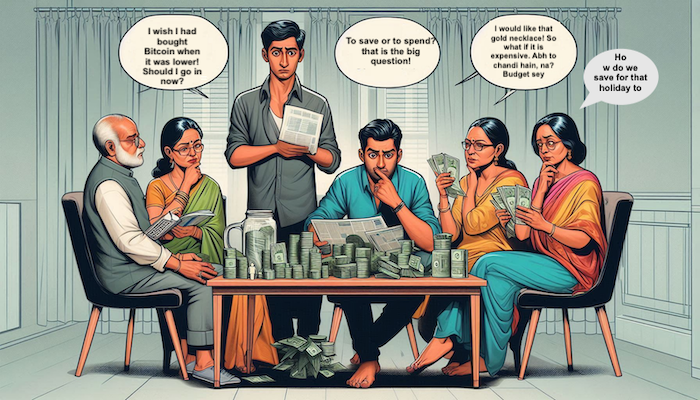
    But here’s the real question: will these extra rupees flood shopping malls and stock markets, or will inflation gobble them up before they can do any real good? While finance honchos cheer, economists are cautiously watching if this fiscal facelift is a lasting glow-up or just a one-time Instagram filter.

    Tax Slabs
    The new tax regime, which now serves as the default for Assessment Year 2025-26, offers a streamlined six-tier structure:
    * 0 per cent tax up to Rs 4 lakh (previously Rs 3 lakh)
    * 5 per cent on Rs 4–8 lakh
    * 10 per cent on Rs 8–12 lakh
    * 15 per cent on Rs 12–16 lakh
    * 20 per cent on Rs 16–20 lakh
    * 25 per cent on Rs 20–24 lakh
    * 30 per cent only above Rs 24 lakh (up from Rs 15 lakh earlier)

    Under the default new regime for assessment year 2025-26, the 30 per cent tax bracket now kicks in at Rs 15 lakh, up from Rs 10 lakh in the old structure (Part I rates). A taxpayer earning Rs 15 lakh saves Rs 37,500 annually versus the old regime. The slabs now have six tiers (vs four earlier), with a 5 per cent rate for Rs 3-7 lakh and 10 per cent for Rs 7-10 lakh. For seniors, the Rs 5 lakh threshold for octogenarians remains a sweetener.

    Sitharaman’s ministry has also played its cards well with surcharge reductions:

    * The surcharge on incomes exceeding Rs 2 crore (excluding dividends/capital gains) has been trimmed to 25 per cent from 37 per cent.
    * The ultra-rich still face the 37 per cent surcharge, but only on incomes exceeding Rs 5 crore.
    * A taxpayer earning Rs 3 crore saves Rs 3.7 lakh in surcharges.
    The government’s objective? A calibrated redistribution of wealth that puts more money in middle-class hands while ensuring high earners see incentives to keep investing.
    Consumer boom: Will it hold?
    A Deloitte study suggests that every Rs 1 saved in taxes results in Rs 0.65 of additional consumer spending. Here’s what that means for the economy:
    * Rs 37,500 savings per taxpayer Rs 24,375 extra spending per household
    * Eight million taxpayers in this bracket  Rs 19,500 crore injected into markets
    * Private consumption growth is forecasted to touch 7.8 per cent YoY in H2 2025, up from 6.7 per cent
     

    Says media veteran Yesudas Pillai: ” a proud Indian, I couldn’t have asked for a more comprehensive and forward-looking budget, setting aside all political narratives.It is visionary, inclusive, and growth-driven—a bold economic catalyst that fuels consumption, empowers communities, and accelerates sustainable development. With its progressive, consumption-led, and investment-focused approach, this blueprint lays the foundation for a resilient and thriving future. The budget ensures no sector is left untouched, with a strong emphasis even on center-state collaboration to drive holistic and inclusive growth. This is, without a doubt, the most transformative budget I have ever seen.

    The stock market is throwing a post-Budget party, and everyone’s invited! Avenue Supermarts (D-Mart’s parent) is up over 10 per cent, clocking its fifth straight day of gains. FMCG heavyweights HUL and ITC saw a five  per cent surge, as investors bet on rising grocery bills. Varun Beverages, PepsiCo’s bottling giant, snapped a two-day losing streak and fizzed up by six  per cent. Not to be left out, Sapphire Foods (operator of KFC and Pizza Hut) is dishing out a near 10 per cent jump.

    Even food delivery titans Zomato and Swiggy are savoring a six  per cent rally, proving that tax savings might just be feeding India’s appetite. Other big gainers? Godfrey Phillips (Up 12 per cent), Blue Star (Up 11 per cent), Phoenix Mills (Up 7.5 per cent), Devyani International (Up seven per cent), and Godrej Consumer (Up 6.5 per cent). Looks like the budget has delivered more than just tax cuts—it’s serving up a full-fledged consumption boom!

    Tata Motors ED Girish Wagh said, “Cutting customs duties on battery materials is a power move—literally. It’s a big push for India’s EV ecosystem and a greener future.”
    Godrej Consumer Products CFO Aasif Malbari noted, “This budget balances rural growth, manufacturing, and consumer demand—vital cogs for the FMCG sector. More jobs and rural investments mean stronger markets and higher consumption.”
    Marketing bonanza: Rs 2.3 trillion up for grabs?
    India’s advertising industry is preparing for a Rs 2.3 trillion windfall, assuming 30 per cent of tax savings flow into discretionary spends. Expect:
    * E-commerce wars: Flipkart, Amazon, Nykaa, and Myntra gearing up for record discount seasons.
    * Luxury labels expanding: Brands like Louis Vuitton and Tesla targeting Tier-2 cities.
    * Digital ad spends exploding: Google and Meta looking at all-time high revenues.
    When disposable income rises, premiumisation kicks in. Consumers opt for the iPhone over a budget Android, or a luxury sedan over a hatchback. GST collections are also forecasted to rise 12 per cent YoY, reflecting the broader spending wave.
    Beyond direct tax cuts, the budget carries a silent game-changer—the reduction of TDS on insurance commissions from 5 per cent to 2 per cent. With insurance premiums collecting Rs 7.3 lakh crore last year, this subtle move could spur a 15 per cent rise in agent-driven policy sales. Expect health and term insurance policies to fly off the shelves, driven by a more incentivised agent network.
    Despite all the optimism, a few red flags remain:
    * Inflation concerns: At 6.1 per cent in December 2024, inflation could dilute some tax savings.
    * Sensex jitters: The stock market’s muted response suggests investor caution over fiscal deficits.
    * Savings paradox: If too many households hoard their extra cash instead of spending, GDP growth could take a hit.

    The 2025 tax reset has transformed India into a giant Petri dish of economic psychology. Will taxpayers loosen their purse strings and fuel growth, or will inflation rain on this parade? Will digital marketing giants be the biggest winners of this newfound liquidity? And most importantly—does this set the stage for GST rate rationalisation ahead?

    One thing is clear: India’s middle class is stepping into 2025 with thicker wallets and bigger spending power. Whether that power 

  • Benefits of PNB Housing Finance Fixed Deposits: A Complete Overview

    Benefits of PNB Housing Finance Fixed Deposits: A Complete Overview

    Fixed Deposits (FDs) are a reliable savings tool in India. They provide secure returns and are a preferred choice for many investors. PNB Housing Finance offers various FD options. Understand the benefits of PNB Housing Finance FDs and why they might be suitable for your investment needs.

    Why Choose PNB Housing Finance Fixed Deposits?

    PNB Housing Finance provides competitive interest rates and flexible tenors for FDs. Here are some key benefits:

    Attractive Interest Rates

    PNB Housing Finance often provides higher interest rates. These rates are generally better than those offered by many banks. As of 2024, the cumulative interest rates for PNB Housing Finance FD rates range from 7.25% to 7.95% p.a. The rates vary based on the tenor and customer category. This includes the up to 0.30% p.a. additional interest rates offered to senior citizens.

    Flexible Tenors

    The tenors range from 12 to 120 months. This allows investors to choose based on their financial goals. This flexibility can cater to both short-term and long-term savings plans.

    Regular Income Option

    PNB Housing Finance provides options for monthly, quarterly, half-yearly, or annual interest payouts. This can be beneficial for those needing a regular income stream. The monthly payout FD is useful for those requiring consistent cash flow.

    Safety and Reliability

    PNB Housing Finance is a well-established institution in the financial sector. Investments are considered safe, with timely interest payments and principal repayment at maturity. The company adheres to stringent regulatory standards.

    Easy Application Process

    Applying for PNB Housing Finance FDs is straightforward. You can choose to apply online or visit a branch. The documentation required is minimal, making it convenient for investors.

    Premature Withdrawal Facility

    PNB Housing Finance allows premature withdrawal of FDs. This is subject to certain terms and conditions. While there might be a penalty, this feature provides liquidity in emergencies.

    Who Should Invest in PNB Housing Finance FDs?

    PNB Housing Finance FDs cater to a wide range of investors:

    Conservative Investors

    Investors who prefer low-risk investments may find PNB Housing Finance FDs suitable. These FDs offer guaranteed returns. The safety and reliability of these FDs are appealing to conservative investors.

    Retirees

    Retirees needing a regular income stream could benefit from the FD monthly payout option. The interest rates and payout frequency options may be favourable for regular income requirements.

    Young Professionals

    Young professionals planning their financial future can also consider these FDs. The flexible tenors help align with life goals. These goals may include buying a house, funding education, or saving for retirement.

    Tax Implications

    Interest earned on PNB Housing Finance FDs is taxable. Consider the following points:

    Tax Deducted at Source (TDS)

    If the interest income exceeds ₹40,000 in a financial year (₹50,000 for senior citizens), TDS is applicable. The current TDS rate is 10% if PAN is provided; without PAN, the rate is 20%.

    Form 15G/15H

    Individuals with no taxable income can submit Form 15G (for the general category) to avoid TDS. Senior citizens can submit Form 15H for the same purpose.

    Tax Filing

    Even if TDS is deducted, the interest earned must be declared in your income tax return. Proper planning and declaration can help in managing tax liabilities.

    Documents Required to Book a PNB Housing Finance FD

    Here are some documents you must submit to book an FD with the NBFC:

    ● Passport-size photograph  
    ● Self-attested copies of PAN card, Aadhaar card, Driving License, Voter ID, NAREGA card, and Passport

    Non-resident Indians have to submit the below documents for booking an FD:

    ● Passport copy (self-attested on the first and last 4 pages) 
    ● Valid employment visa/work permit 
    ● Address proof – Indian and overseas

    How to Open a PNB Housing Finance FD

    Opening a PNB Housing Finance FD involves a few simple steps:

    1. Visit the Official Website or Branch 
    You can visit the PNB Housing Finance website or the nearest branch to get started. The online process is quick and convenient.

    2. Online Application 
    Click on the ‘Contact us for Deposits’ button on the NBFC’s website

    3. Submit Required Details 
    Provide the necessary details and specify the amount you would like to invest in the FD.

    4. Customer Representative 
    A representative will get in touch with you to collect the documents and the FD will be booked within 48 hours.

    PNB Housing Finance FDs offer attractive interest rates and flexible tenors. They also provide various payout options. The safety and reliability of PNB Housing Finance add to the appeal of these FDs.

    Investing in a PNB Housing Finance FD could help achieve financial goals with ease. PNB Housing Finance FDs may be suitable for retirees seeking regular income or  young professionals planning for the future. They also cater to conservative investors seeking safe returns. Consider the features and benefits to make informed decisions and maximise returns.

  • Govt clarifies TDS provisions for broadcasters vis-a-vis producers and advertisers

    Govt clarifies TDS provisions for broadcasters vis-a-vis producers and advertisers

    New Delhi: The Finance Ministry said today that if a content/programme is produced according to the specifications provided by the broadcaster/telecaster and the copyright of the content/programme gets transferred to the telecaster/broadcaster, such contract is subject to TDS under section 194C at 2 per cent, rather than at a rate of 10 per cent under section 194J as payment for ‘professional or technical services’.

    In a circular issued recently, it was stated that such a contract is covered by the definition of the term ‘work’ in section 194C of the Income-tax Act.

    The Central Board of Direct Taxes has brought out two circulars to bring about clarity in the interpretation of certain contentious issues relating to Tax Deduction at Source (TDS) on payments made by television channels, broadcasters and newspapers.

    The first Circular No.4/2016 dated 29 February deals with TDS on payments by broadcasters or television channels to production houses for production of content or programme for telecasting.

    The other circular – No.5/2016 dated 29 February – deals with TDS on payments by television channels and publishing houses to advertisement companies for procuring or canvassing for advertisements.

    It has been clarified through the Circular that no TDS is attracted on payments made by television channels/newspaper companies to the advertising agency for booking or procuring of or canvassing for advertisements.

    This clarification puts at rest the litigious issue as to whether such payments/discounts are in the nature of ‘commission’ and so, subject to TDS at the rate of 10 per cent under section 194H.
    Both the Circulars are available on the website of the Department www.incometaxindia.gov.in.

  • Govt clarifies TDS provisions for broadcasters vis-a-vis producers and advertisers

    Govt clarifies TDS provisions for broadcasters vis-a-vis producers and advertisers

    New Delhi: The Finance Ministry said today that if a content/programme is produced according to the specifications provided by the broadcaster/telecaster and the copyright of the content/programme gets transferred to the telecaster/broadcaster, such contract is subject to TDS under section 194C at 2 per cent, rather than at a rate of 10 per cent under section 194J as payment for ‘professional or technical services’.

    In a circular issued recently, it was stated that such a contract is covered by the definition of the term ‘work’ in section 194C of the Income-tax Act.

    The Central Board of Direct Taxes has brought out two circulars to bring about clarity in the interpretation of certain contentious issues relating to Tax Deduction at Source (TDS) on payments made by television channels, broadcasters and newspapers.

    The first Circular No.4/2016 dated 29 February deals with TDS on payments by broadcasters or television channels to production houses for production of content or programme for telecasting.

    The other circular – No.5/2016 dated 29 February – deals with TDS on payments by television channels and publishing houses to advertisement companies for procuring or canvassing for advertisements.

    It has been clarified through the Circular that no TDS is attracted on payments made by television channels/newspaper companies to the advertising agency for booking or procuring of or canvassing for advertisements.

    This clarification puts at rest the litigious issue as to whether such payments/discounts are in the nature of ‘commission’ and so, subject to TDS at the rate of 10 per cent under section 194H.
    Both the Circulars are available on the website of the Department www.incometaxindia.gov.in.

  • AAAI version of net billing resolution with IBF

    AAAI version of net billing resolution with IBF

    MUMBAI: Broadcasters, facing tax liabilities on account of non-deduction of TDS on agency commission, had stopped airing ads. This was because advertising agencies did not agree to their proposal to move to net billing. AAAI continues to maintain that the tax demands made on some broadcasters are bad in law. It has committed that it will attempt to get a circular from CBDT.

    A circular that clarifies that broadcasters like other media are not required to deduct TDS from agency commission since broadcasters do not pay the agency commission.

    In a meeting that lasted over seven hours, representatives from IBF and AAAI last night arrived at an elegant solution that meets the needs of broadcasters and at the same time assures agencies of their legitimate earnings.

    As a result, advertisers‘ ads will be back on air starting May 3rd.

    Says Arvind Sharma, President AAAI, “We are happy that we have resolved the impasse. Advertisers‘ spots will be back on air starting today. We ensured that both broadcasters‘ and agencies‘ business interests are protected. We are happy that the solution we have found will meet the needs of our member agencies in terms of their transactions with their clients.”

  • IBF-AAAI: Net or gross billings? Quo Vadis?

    MUMBAI: Come the end of the next advertising billing cycle, an age old practice is likely to come to an end in the Indian broadcasting industry, if TV channels have their way.

    Media agencies will start receiving bills net of agency commissions, rather than gross bills (with the 15 per cent agency commission deducted from the gross amount) for TV commercials and ad spots carried by television channels.

    The Indian Broadcasting Foundation (IBF) has communicated this to the Advertising Agencies Association of India (AAAI). So what has forced the IBF to attempt to do away with a long standing practice of gross bills?

    What happened is that quite a few broadcasters received notices from the income tax department towards end-March 2013 claiming unpaid TDS on the 15 per cent agency commissions that is mentioned in the gross bill amounts that broadcasters normally send to agencies.

    “They have asked for retrospective TDS from some broadcasters over the past three years on the 15 per cent agency commission,” says IBF president and Multi Screen Media (MSM) CEO Man Jit Singh. “We have not calculated the exact amount of money this would entail, but it is substantial and could cripple the industry and hence we have been advised to move to net billing.”

    Immediate past president of AAAI and Draftfcb Group chairman India Nagesh Alai says that “this incident cannot be used to rationalise or force any move to net billing. It will adversely impact the advertising industry and hence is not acceptable to AAAI. It‘s a well-established principle under income tax laws that the payer of monies has to deduct TDS. The clients pay the agencies after deducting the TDS and thereafter the agencies pay the media the net amount due to them. Hence, there is no obligation on the media to deduct any TDS from agencies. This is well established by a circular issued by the tax authorities in 1995, when AAAI had sought a clarification. Hence, the notices raised on the broadcasters by the tax authorities on the specious argument that broadcasters have not deducted TDS from agencies, is untenable and not maintainable under law. It has to be argued on merits.”

    Singh says that broadcasters are broadly in agreement with the AAAI and that they are going to go in appeal against the notices. “We are going to argue our point. But who is going to pay the 50 per cent or so of the claim amount that we will have to deposit with the tax authorities until the appeal is heard and judgment in our favour delivered? Our cash flow position is going to be hit hard.”

    Alai says that broadcasters “should not be panicking as a result of such wrong claims. As business partners, AAAI and IBF will be working together on this, as always. KPMG and E&Y have been roped in to address the issue on merits.”

    He adds that “as an aside, it‘s a matter of fact that such tax notices and claims, based on irrational disallowances, invariably emanate in February or March, driven by revenue targets of the tax department.”

    Singh once again says that he concurs with the AAAI stance “but our tax advisors have said there is no guarantee that even if our appeal is upheld this time, we will not be issued notices from the income tax department again. We can‘t be going in appeal again and again. Hence we are quite firm on our decision to go ahead with the net billings system from the next billing cycle.”