Tag: TCL

  • TCL reveals new TVs with top tech featuring Dolby vision

    TCL reveals new TVs with top tech featuring Dolby vision

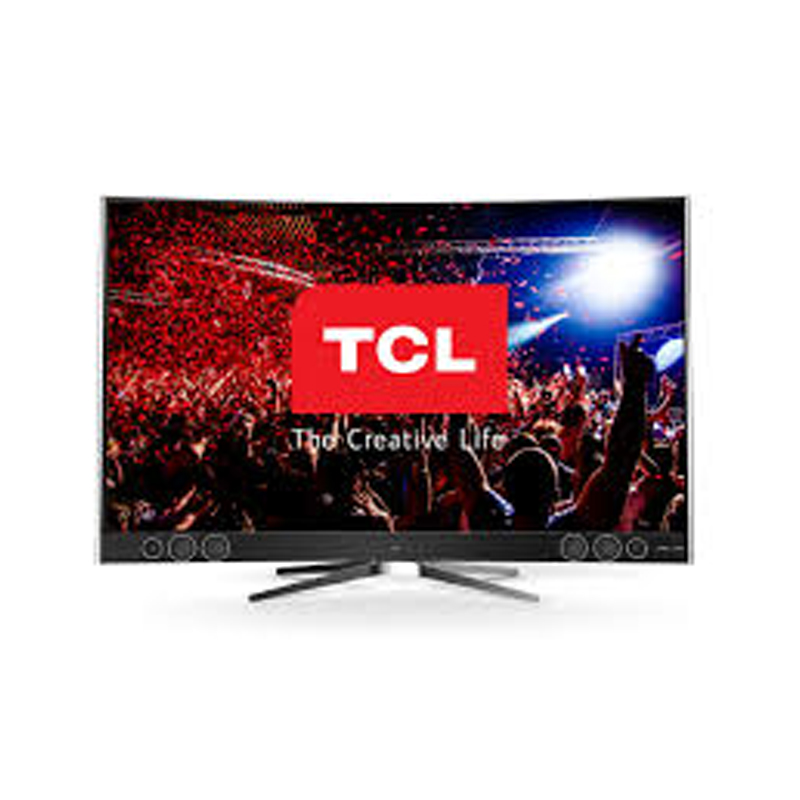
    TCL reveals newLAS VEGAS: TCL®, one of the world’s largest and America’s fastest-growing television brand, today announced an innovative portfolio of new products at the 2017 International Consumer Electronics Show (CES). The latest additions feature Dolby Vision™ high-dynamic range (HDR) technology for powerful imaging, advanced LED phosphors to experience vivid colors closer to reality, and Contrast Control technologies to yield deeper blacks and brighter whites. A total of 25 new TCL Roku TVs are coming to the North American market this year across three series – C, P, and S – touting even better picture, sound, design and content than before. TCL’s C and P series meet the highest standards for content with stunning picture quality via Dolby Vision. Using Dolby’s universal HDR solution, these sets will support both Dolby Vision and generic HDR (HDR10), providing consumers maximum choice when it comes to content.

    “We’re excited to partner with TCL to deliver Dolby Vision to more consumers than ever
    before,” said Dolby Laboratories senior vice president – consumer entertainment group Giles Baker. “With Dolby Vision, you are able to enjoy a premium entertainment experience that is more life-like. Preserving the artistic intent of the content creator, watching Dolby Vision is more like looking through a window than at a screen.”

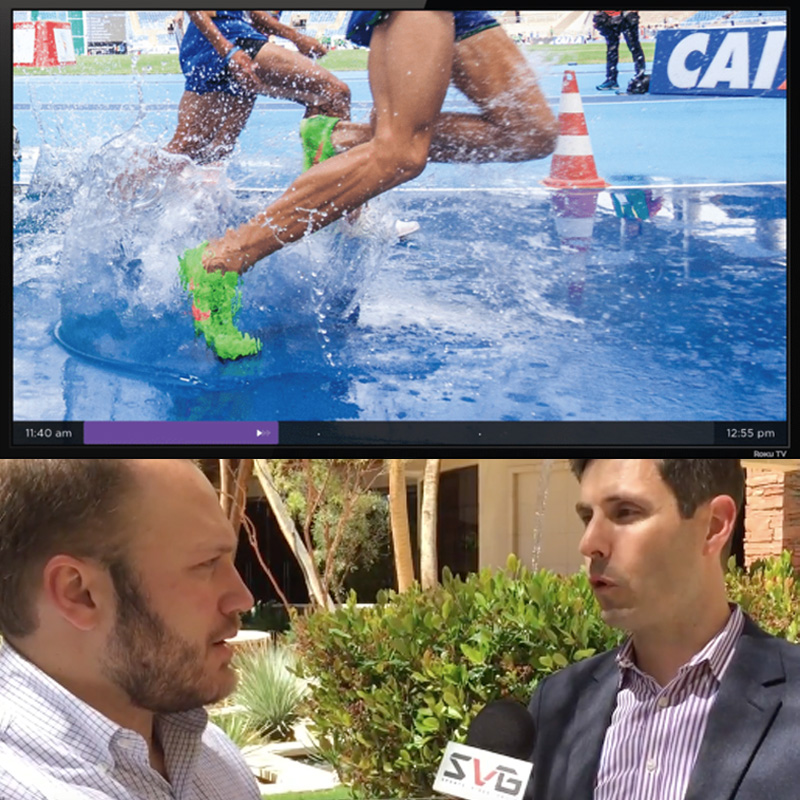
    TCL continues to build on its partnership with Roku which began in 2014. The 2017 4K HDR TCL Roku TV models combine premium picture quality and industrial design with the latest version available of Roku OS and its extensive line-up of streaming channels – more than 4,500 channels and 450,000+ movies and TV episodes. With Roku OS 7.5, TCL Roku TVs can pause live over-the-air programming as well as stay current with automatic software updates providing new channels and features to offer an exceptional smart TV experience.

    TCL Roku TV C-Series: Contemporary Design

    The high-end C-Series marries stunning 4K high-dynamic range and super slim, elegant design for an upscale TV experience. The set supports Dolby Vision, which delivers the ultimate HDR imaging experience. Dolby Vision delivers images that are brighter than those that can be seen on today’s standard TV sets, deep darks that provide a new level of richness and precision, as well as expanded contrast while still maintaining lifelike color and detail.

    Additionally, HDR Dynamic Contrast allows the contrast to be optimized for each HDR scene, delivering brighter whites and deeper blacks. They also feature wide color gamut with advanced LED phosphor for more realistic colors, brighter highlights and increased light-to-dark contrast. The C-Series smart TVs are equipped with TCL 4K Creative Pro up-scaling so viewers can enjoy their existing HD content with increased detail and realistic clarity, an enhanced Roku TV remote with headphone jack for private listening and voice search, high-speed 802.11ac wireless and Ethernet networking for faster streaming, and three HDMI® 2.0a ports with HDCP 2.2 so users can enjoy optimal functionality.   The C-Series will be available this Spring with sizes ranging from 49 to 75 inches.

    TCL Roku TV P-Series: Powerful Picture PerformanceTCL combines superior 4K UHD picture quality with Dolby Vision, which delivers the ultimate HDR imaging experience, in the P-Series. With HDR Contrast Control Zones, contrast is individually optimized across 72 zones to achieve deeper blacks and brighter whites. A wide color gamut with advanced LED phosphor steps up playback performance with exceptional colors, brighter highlights and increased light-to-dark contrast. Furthermore, P-Series TVs come packed with TCL 4K Creative Pro up-scaling, an advanced remote offering voice search and a headphone jack for private listening, high-speed 802.11ac wireless and Ethernet networking, and three HDMI 2.0a ports with HDCP 2.2.  

    Delivering premium Dolby Vision HDR picture quality at a great value, the 50 inch model will launch at $499.99 as part of a lineup that ranges from 50 to 65 inches.

    TCL Roku TV S-Series: Smart Value

    TCL brings together crisp 4K UHD picture performance, HDR and Creative Pro 4K upscaling for precise clarity and detail in the S-Series TCL Roku TVs. The television sets integrate a variety of innovative technologies and features to provide consumers with an exceptional viewing experience, including endless streaming entertainment, fast dual-band wireless connections and three HDMI ports for flexibility. Plus, the simple and intuitive user interface makes switching from streaming to cable and other devices a breeze.   The S-Series will be available beginning this Spring with sizes ranging from 43 to 65 inches. TVs with top tech featuring Dolby vision
  • “We plan to double staff in a year in pace with client growth”: Vizeum India MD Shripad Kulkarni

    “We plan to double staff in a year in pace with client growth”: Vizeum India MD Shripad Kulkarni

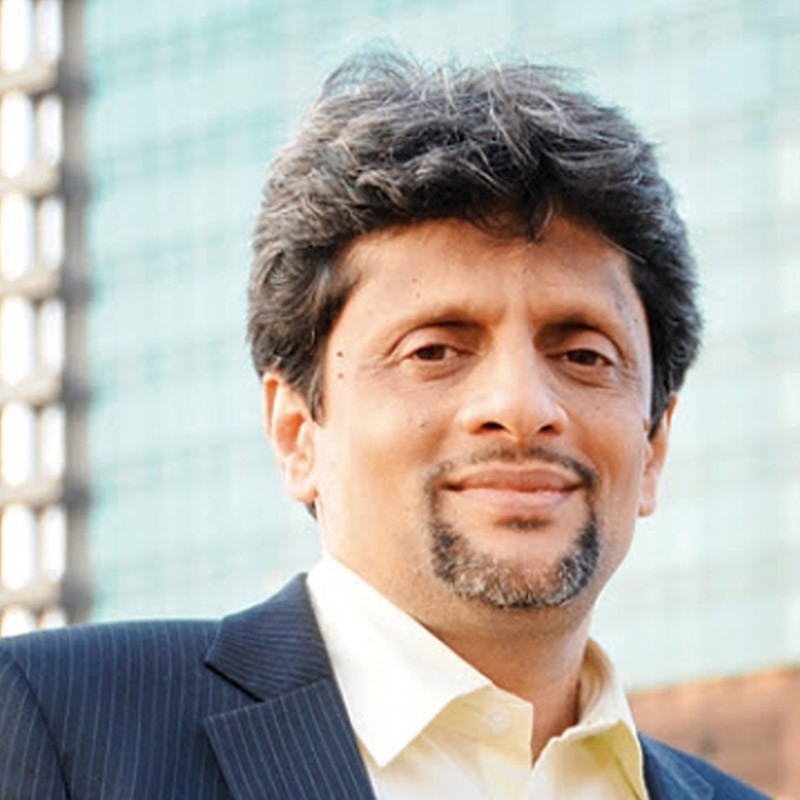
    Shripad Kulkarni is man on a mission. The mission is to transform Vizeum India digitally, not with just an add-on digital arm but from within. Thereafter, establishing the agency as an indispensable AoR partner for clients seeking real measurable value addition from its media management. And the last few account wins including Warner Bro. and TCL show that he is on the right track.

    The agency is believed to handle Rs 200 crore worth of media businesses spread across all its clients, of which the last quarter has been a significant contributor.

    But these numbers are not fruits of labour of just the past few months. Its foundation was laid when Kulkarni had joined Vizeum India as the managing director in 2015 from Percept Allied Media (where he was the CEO), following Dentsu Aegis Network (DAN) Ashish Bhasin’s laying out of his vision for the agency.

    It will be an understatement to say that the soft spoken professional had taken that vision seriously. It’s been a little over a year, and Kulkarni is already confident that the agency will double itself around the end of next financial year.

    In a freewheeling conversation with indiantelevision.com’s Papri Das, Kulkarni delves into his grand plans to realise this target, and more.

    Excerpts:

    What were your personal benchmarks in the last one year of working for Vizeum?

    I have kept a very ‘people first’ approach to my targets within the company since I joined almost a year back. The large team that operates in Delhi is undergoing its digital training  and familiarisation with the tools available within the agency and the group. The last quarter has given us a positive indication that the strategy is working. We have got Warner Bros, we have Panasonic as a client and just recently signed up as the media agency for TCL Corp.

    Given the momentum, I see a significant increase in our client portfolio in the coming few years. We want to double our staff strength in 12 to 18 months to handle this increase in new businesses and our entire budget planning is being worked out to favour this development.

    The one P&L structure that DAN follows is best in terms of getting integrated marcom planning done, and getting various specialists in verticals to work for a brand. The fact that a very high proportion of the revenue of the group comes from digital says a lot about DAN  as a future facing agency.

    Every media agency is ramping up to be the ‘all rounder’ these days. How differently is Vizeum positioned in the market?

    One has to understand that digital is changing your customers, and their linear behaviour in the purchase cycle; the classic AIDA (Attention, Interest, Desire, Action) is no longer working. Now that is a fundamental shift that we must align everyone to, even if one is planning for television. Based on this, we are remodeling Vizeum, to keep our clients up to date.

    At the core of the remodelled Vizeum, with its refreshed approach to traditional media with digital outlook, we believe that media can directly make a difference to business. Media can add value to businesses because of this entire disruption digital is doing across all media, and this significant value addition will be measurable.

    Has this fundamental shift impacted how television planning and buying happens?

    To start with, these days you have to look at video and not television, when doing planning for television, because there is a good chunk of the audience that watches TV on the Internet. There are youngsters who enjoy binge watching or as and when they want to. They are hardly watching television the way we know it. So that is changing the entire paradigm so that even the medium that was classically entirely outbound and spewing messages at its audiences is now changing.

    Another interesting aspect of this paradigm shift is how technology has made TV media more target-oriented. Technology now allows advertisers  to target people who have viewed their ads on television. We have experimented with this technology with a few of our clients where we have embedded certain beacons on their TV ads, and identified which  of the consumers had their smartphones around. Now these consumers could be reached digitally as well, now that we have made sure they had seen the TVC.

    We will soon see that technology and data is going to alter the way the entire marcom industry functions. It will require us agencies and clients as well to understand the complete customer decision journey, and accordingly reach out to them with specific messages at certain stages of the customer purchase journey.

    Do most of your clients come to you keeping a specific media in mind or do they have a specific outcome in mind, regardless of where the spend goes?

    Well of course a client has an outcome in mind to begin with. But the way the industry, and actually media itself, is getting more and more fragmented, advertisers too are seeking specialised use of media — some are looking at digital agencies, some are looking at mainline agencies, some are looking at agencies that are good at search engine optimisation, some are preferring social media only agencies and some are even doing it in house. I think the missing piece is a strategic direction across all media vehicles towards the outcome.

    Sounds like a massive level of unlearning and relearning on the part of the planners and buyers….

    Absolutely. In fact we are currently training every single planner under Vizeum with digital knowledge and skill sets. A planner classically handles mainstream media, and he can plan for digital. But we are aiming to make each one of them experts in digital. Every planner must know digital strategy on a par with an agency squarely into digital marketing. We plan to achieve this within one year, and there will be continuous refresher courses to keep them up to date.

    We have already initiated since a few months ago. It has picked up momentum and we should be able to see some of its results by the next quarter. The ultimate goal is to get all staff, irrespective of the department to be digital savvy. It is a DAN initiative.

    How do you measure a certain campaign’s performance? Is there any yardstick that Vizeum follows?

    Campaign performance must be measurable from day one, and it must be definitive and making a difference to the business. To achieve this, we look at performance in a three by three metric — three minutes, three weeks and three months of the  time spent on a campaign, where each time period gives us specific and significant measure of the campaign’s effectiveness. Certain tools that  we have developed using Facebook data, or Youtube data, or Google data, give us instant feedback on how a campaign is fairing.

    To start with, we can have this performance measure of all digital campaigns running for a few minutes to a day or, as we put it three  minutes to a day.. It will give an instant idea of what is working and what isn’t, which allows creatives to tweak a campaign. For example, if you have six campaigns or creatives running on Youtube, we can now tell which one is performing well, keeping a brand and campaign in mind.

    We make a second assessment after a campaign runs for a week, when we have significant data on it. For certain categories, this time period can extend to a month to be able to gather reliable data.

    The third assessment is made around the three month mark that leaves a planner with a lot of data to play with and analyse keeping quantitative results in mind. This assessment can give us insights on the brand health. In other words, we keep monitoring different measures at different entry points of a campaign within different parameters. We are heading towards an arrangement where we ask for compensations based on such performances.

    Where do you think the media management industry is headed in the next few years and what factors will impact it?

    We are doing a study called India 2020, where we are trying to understand the trends across the world and try and predict the entire media ecosystem of 2020 in India. We believe this disruption is going to stay for a while and lead to digital spends growing by leaps and bounds. As of now we are looking different simulations of different scenarios. We have narrowed down to three such scenarios for the time being based on how quickly high speed data will be available in our country. Whether it is brought about by Reliance Jio or the government, it doesn’t matter, but high speed internet is a deciding factor in the simulations. It will also need to be affordable and services will be free is what I believe. Open wifis will also be a huge thing.

  • “We plan to double staff in a year in pace with client growth”: Vizeum India MD Shripad Kulkarni

    “We plan to double staff in a year in pace with client growth”: Vizeum India MD Shripad Kulkarni

    Shripad Kulkarni is man on a mission. The mission is to transform Vizeum India digitally, not with just an add-on digital arm but from within. Thereafter, establishing the agency as an indispensable AoR partner for clients seeking real measurable value addition from its media management. And the last few account wins including Warner Bro. and TCL show that he is on the right track.

    The agency is believed to handle Rs 200 crore worth of media businesses spread across all its clients, of which the last quarter has been a significant contributor.

    But these numbers are not fruits of labour of just the past few months. Its foundation was laid when Kulkarni had joined Vizeum India as the managing director in 2015 from Percept Allied Media (where he was the CEO), following Dentsu Aegis Network (DAN) Ashish Bhasin’s laying out of his vision for the agency.

    It will be an understatement to say that the soft spoken professional had taken that vision seriously. It’s been a little over a year, and Kulkarni is already confident that the agency will double itself around the end of next financial year.

    In a freewheeling conversation with indiantelevision.com’s Papri Das, Kulkarni delves into his grand plans to realise this target, and more.

    Excerpts:

    What were your personal benchmarks in the last one year of working for Vizeum?

    I have kept a very ‘people first’ approach to my targets within the company since I joined almost a year back. The large team that operates in Delhi is undergoing its digital training  and familiarisation with the tools available within the agency and the group. The last quarter has given us a positive indication that the strategy is working. We have got Warner Bros, we have Panasonic as a client and just recently signed up as the media agency for TCL Corp.

    Given the momentum, I see a significant increase in our client portfolio in the coming few years. We want to double our staff strength in 12 to 18 months to handle this increase in new businesses and our entire budget planning is being worked out to favour this development.

    The one P&L structure that DAN follows is best in terms of getting integrated marcom planning done, and getting various specialists in verticals to work for a brand. The fact that a very high proportion of the revenue of the group comes from digital says a lot about DAN  as a future facing agency.

    Every media agency is ramping up to be the ‘all rounder’ these days. How differently is Vizeum positioned in the market?

    One has to understand that digital is changing your customers, and their linear behaviour in the purchase cycle; the classic AIDA (Attention, Interest, Desire, Action) is no longer working. Now that is a fundamental shift that we must align everyone to, even if one is planning for television. Based on this, we are remodeling Vizeum, to keep our clients up to date.

    At the core of the remodelled Vizeum, with its refreshed approach to traditional media with digital outlook, we believe that media can directly make a difference to business. Media can add value to businesses because of this entire disruption digital is doing across all media, and this significant value addition will be measurable.

    Has this fundamental shift impacted how television planning and buying happens?

    To start with, these days you have to look at video and not television, when doing planning for television, because there is a good chunk of the audience that watches TV on the Internet. There are youngsters who enjoy binge watching or as and when they want to. They are hardly watching television the way we know it. So that is changing the entire paradigm so that even the medium that was classically entirely outbound and spewing messages at its audiences is now changing.

    Another interesting aspect of this paradigm shift is how technology has made TV media more target-oriented. Technology now allows advertisers  to target people who have viewed their ads on television. We have experimented with this technology with a few of our clients where we have embedded certain beacons on their TV ads, and identified which  of the consumers had their smartphones around. Now these consumers could be reached digitally as well, now that we have made sure they had seen the TVC.

    We will soon see that technology and data is going to alter the way the entire marcom industry functions. It will require us agencies and clients as well to understand the complete customer decision journey, and accordingly reach out to them with specific messages at certain stages of the customer purchase journey.

    Do most of your clients come to you keeping a specific media in mind or do they have a specific outcome in mind, regardless of where the spend goes?

    Well of course a client has an outcome in mind to begin with. But the way the industry, and actually media itself, is getting more and more fragmented, advertisers too are seeking specialised use of media — some are looking at digital agencies, some are looking at mainline agencies, some are looking at agencies that are good at search engine optimisation, some are preferring social media only agencies and some are even doing it in house. I think the missing piece is a strategic direction across all media vehicles towards the outcome.

    Sounds like a massive level of unlearning and relearning on the part of the planners and buyers….

    Absolutely. In fact we are currently training every single planner under Vizeum with digital knowledge and skill sets. A planner classically handles mainstream media, and he can plan for digital. But we are aiming to make each one of them experts in digital. Every planner must know digital strategy on a par with an agency squarely into digital marketing. We plan to achieve this within one year, and there will be continuous refresher courses to keep them up to date.

    We have already initiated since a few months ago. It has picked up momentum and we should be able to see some of its results by the next quarter. The ultimate goal is to get all staff, irrespective of the department to be digital savvy. It is a DAN initiative.

    How do you measure a certain campaign’s performance? Is there any yardstick that Vizeum follows?

    Campaign performance must be measurable from day one, and it must be definitive and making a difference to the business. To achieve this, we look at performance in a three by three metric — three minutes, three weeks and three months of the  time spent on a campaign, where each time period gives us specific and significant measure of the campaign’s effectiveness. Certain tools that  we have developed using Facebook data, or Youtube data, or Google data, give us instant feedback on how a campaign is fairing.

    To start with, we can have this performance measure of all digital campaigns running for a few minutes to a day or, as we put it three  minutes to a day.. It will give an instant idea of what is working and what isn’t, which allows creatives to tweak a campaign. For example, if you have six campaigns or creatives running on Youtube, we can now tell which one is performing well, keeping a brand and campaign in mind.

    We make a second assessment after a campaign runs for a week, when we have significant data on it. For certain categories, this time period can extend to a month to be able to gather reliable data.

    The third assessment is made around the three month mark that leaves a planner with a lot of data to play with and analyse keeping quantitative results in mind. This assessment can give us insights on the brand health. In other words, we keep monitoring different measures at different entry points of a campaign within different parameters. We are heading towards an arrangement where we ask for compensations based on such performances.

    Where do you think the media management industry is headed in the next few years and what factors will impact it?

    We are doing a study called India 2020, where we are trying to understand the trends across the world and try and predict the entire media ecosystem of 2020 in India. We believe this disruption is going to stay for a while and lead to digital spends growing by leaps and bounds. As of now we are looking different simulations of different scenarios. We have narrowed down to three such scenarios for the time being based on how quickly high speed data will be available in our country. Whether it is brought about by Reliance Jio or the government, it doesn’t matter, but high speed internet is a deciding factor in the simulations. It will also need to be affordable and services will be free is what I believe. Open wifis will also be a huge thing.

  • Grey Group to acquire majority stake in ArtM in China

    MUMBAI: WPP‘s wholly-owned global communications network Grey Group has agreed to acquire a majority stake in China based full service integrated communications agency ArtM Communications Group. The investment is in line with WPP‘s strategy to expand its services in the fast growing markets around the world.

    ArtmM was founded in 1999 and has offices in Beijing, Shanghai, Shenzen and Guangzhou. It offers services ranging from advertising, branding, digital marketing, public relations, events, retail marketing and merchandising to channel promotion. It employs around 180 people and its client list includes companies like Intel, Microsoft, TCL and China Mobile.

    ArtM‘s unaudited revenues for the year ended 31 December 2011 were approximately RMB 45 million, with gross assets at the same date of approximately RMB 157 million.

    Greater China remains one of the fastest growth markets for the company and is currently WPP‘s third largest market with revenues of US $1.3 billion. The group currently employs over 14,000 people (including associates) across Greater China. In 2011, Asia-based agency research consultancy R3 estimated that WPP‘s revenues in mainland China were US$813 million, with the next biggest competitors Publicis and Omnicom at US$236 million and US$219 million respectively.

  • Consumer electronics firm TCL launches new range

    Consumer electronics firm TCL launches new range

    MUMBAI: TCL India, an emerging consumer electronics firm, has launched a range in various categories like LCD, Plasma and CTV.

    The company also shared its expansion plans to reach out to its growing consumer-base across India.

    TCL India’s Plasma TV category starts with 42″ in two models. The LCD range starts from 15″, 20″, 27″, 32″ & 40” in five models in different categories. The RPT are available in 2 models 43″ & 52″ respectively, while the CRT range starts from 14″NF to 29″PF, all put together aggregating to more than 25 models in this segment.

    TCL India MD Richie Liu said, “After being the market leader for the CTV category, we have now strategically established a very emphatic entry with LCD & plasma TVs. The overwhelming response that we have received from our distribution channel as well as from our esteemed customers, have reposed our platform of value addition & innovation in the LCD & plasma category. Our objective is to consolidate TCL’s global leadership position, offer a diversified high-quality product range from basic to high-end innovative products, and address all key markets competitively.”

    TCL says that it has become the largest manufacturer of television sets in the world with 22 million sets being sold in 2005 alone. TCL adds that its commitment can be gauged by the fact that it has more than 25 models in colour TVs, with the intention of introducing products to fulfill every individual need.

    TCL Plasma Display & Latest DDHD (Digital Dynamic High Definition vision engine) contains more than 60 picture – enhancement patents, including CCS, DCDi and film mode which earned TV Oscar (Emmy TV technology awards) three times. The award represents highest honour in TV video technology field, which is widely known in Europe and USA, and its shows the top technical strength and excellent product quality.

    TCL India VP- sales and marketing CM Singh says, “We plan to focus on exclusive high-end showrooms, which will be known as TCL Universe in major cities across the country, as a part of our expansion plans. At TCL, it’s our endeavour to create a world-class corporation, aligning the Indian R&D talent & system with TCL’s International R&D system. TCL is geared to meet the need gaps of the consumers from all aspects centered around innovation, technology, price, style & after sales service.” Holdings Pvt. Ltd. added.

    As part of its aggressive global expansion plans, TCL entered the Indian market in September 2004. It started with the manufacturing of colour televisions followed by airconditioners, washing machines and small home appliances.