Tag: TataSky

  • Communications veteran moves to realise Value 360’s growth ambitions

    Communications veteran moves to realise Value 360’s growth ambitions

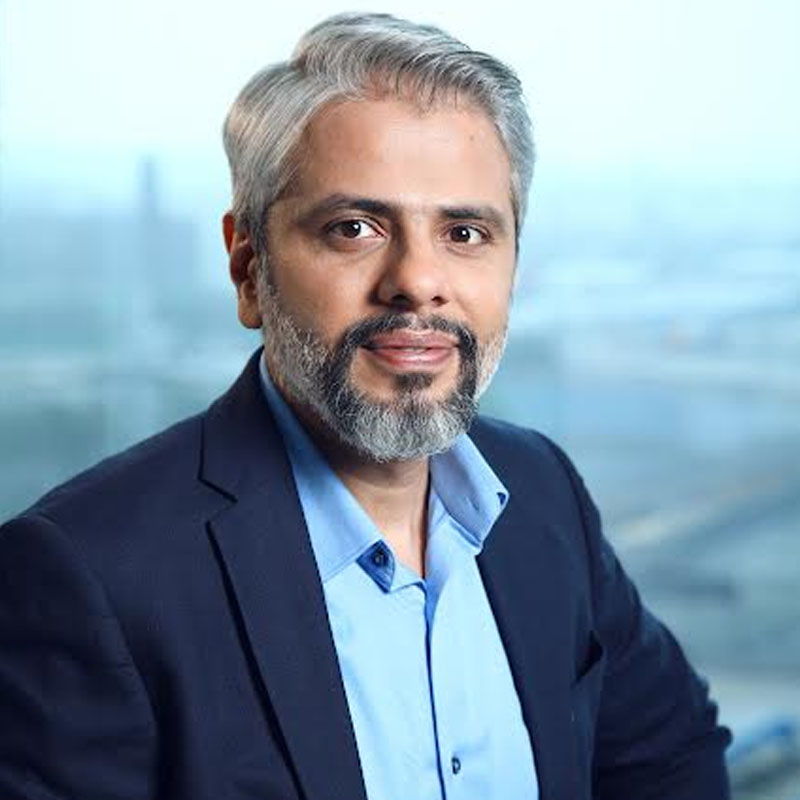
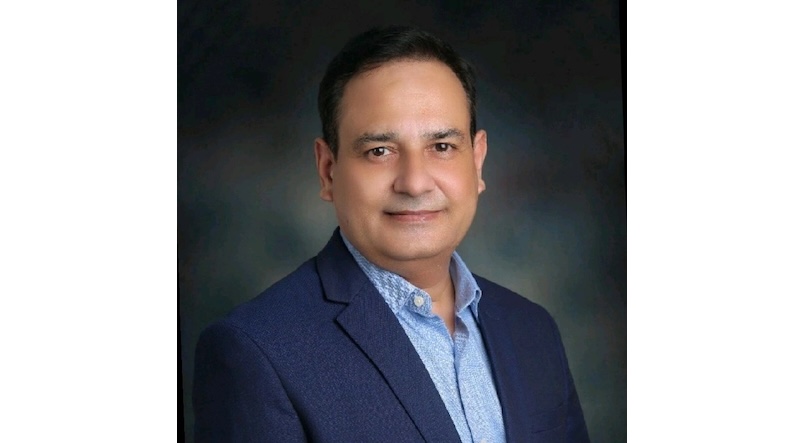
    NEW DELHI: Abhishek Dikshit, a communications specialist with over 20 years of experience crafting narratives for global brands, has joined Value 360 as vice-president. The appointment signals the PR firm’s intent to accelerate its evolution from challenger to trusted partner in India’s competitive communications landscape.

    Dikshit arrives from Kaizzen, where he spent four years as associate vice-president leading campaigns for healthcare, IT, energy and infrastructure clients. His portfolio included high-profile mandates for CMRI Hospital, Cairn Energy, FabIndia and BM Birla, among others.

    The new hire brings particular expertise in crisis management—a skill that earned his previous firm PR Professionals two golds. His crisis communication blueprint helped clients navigate reputational challenges whilst maintaining stakeholder trust.

    Before his agency stint,  Dikshit spent over four years at Amway India, where he led corporate communications across north India. His CSR initiatives there earned him the company’s regional trophy for three consecutive years and a spot representing India at Amway’s global CSR summit in Michigan in 2013.

    His career spans blue-chip clients including Google, Intel, Volkswagen, Canon and TataSky. At 20:20 Media, he orchestrated regional campaigns across 10 states, amplifying brand visibility for technology and automotive brands in tier-one and emerging markets.

    The appointment comes as Value 360 seeks to capitalise on India’s growing demand for strategic communications. The firm, led by Kunal Kishore, Gaurav Patra and Manisha Chaudhary, has built its reputation on what it calls a “will do” culture—emphasising execution over promises.

    Dikshit holds a postgraduate diploma in mass communication from Jaipuria Institute of Management and is certified in digital marketing. His approach combines traditional storytelling with data-driven strategy, tailored for diverse audience ecosystems across traditional, digital and owned media platforms.

    “In a world full of noise, the power of communication lies in crafting clarity that connects,” Dikshit said, outlining his philosophy as he settles into his new role.

  • U-TO onboards Wolfzhowl Strategic Instigation as business strategy partner

    U-TO onboards Wolfzhowl Strategic Instigation as business strategy partner

    Mumbai: MediaTech company U-TO Solutions is all set for its next phase of growth. Founded in 2000, U-TO has partnered with companies like Sony Pictures, Star TV, Viacom18, TataSky, Shemaroo and others in driving intelligence for profitable actions through technology. U-TO through their association with BroadView Software Canada and indigenously built RightsU are gearing up to enter Southeast Asia and Middle East and Africa this year. It has appointed Wolfzhowl Strategic Instigation as their business strategy partner.

    “As the media landscape becomes more complex, with the rise of streaming services and influencer-turned content creators, U-TO is looking at making in-roads by creating bespoke solutions for Media & Entertainment companies across India, Southeast Asia & Middle East and Africa. We were looking for a strategy consultancy that had expertise in B2B Technology and product marketing, who could become true partners in our success and not just work as external consultants,” said  U-TO co-founder CTO Sumit Suri on this appointment.

    Globally, the Digital Rights Management market is valued at $1.29 billion in 2018 and is expected to reach $2.05 billion by the end of 2024. India, South Korea, Southeast Asia and Africa will be driving this market growth with the increase in On-Demand Content and increased internet penetration.

    “U-TO is gearing up for the solidity of their success and we are happy to partner with them in this growth. As a behaviour change consultancy, we are excited to be working across the business’ value chain. Our deep understanding of culture and its impact on each stakeholder in the value chain along with our focus on outcomes ensures that we drive growth for U-TO. This growth will come through Brand Positioning 2.0, Service and Sales Design 2.0 and Product Branding and Marketing,” says Wolfzhowl partner and lead integrated strategy Prerna Dubey Gupta.

  • Our future strategy is to be ‘media agnostic’: Wunderman Thompson’s Shams Jasani

    Our future strategy is to be ‘media agnostic’: Wunderman Thompson’s Shams Jasani

    Mumbai : After having spent over 13 years at Isobar, heading the group in South Asia and launching its India division in 2008, Shamsuddin Jasani moved to Wunderman Thompson as CEO South Asia business in November last year. He has also worked with agencies such as Hungama, Mediaturf, and Apnaloan in the past. In his new role as CEO of a creative agency, Jasani is all set to carry forward Wunderman Thompson’s legacy, while integrating it with Digital, Commerce, and Technology.

    In an in-depth conversation with IndianTelevision, the industry veteran talks about the shift from a new-age agency to a traditional agency as he completes three months in office. Jasani also shares his thoughts on steering the agency through a post-pandemic world and on the key innovations adopted by the company in the new year, and the trends that might dominate the advertising and marketing industry in 2022 and beyond…

    Edited excerpts…

    On his priority since taking over as CEO in 2021 and vision for the agency

    My first priority is just making sure that people understand and feel proud of the beautiful legacy that we have, and continue that as we go forward. Number two is how can I add a digital flavour to what’s already there? We’ve been at the forefront of advertising for nine decades. My objective is to get an add-on to that with a lot more digital in there. And number three is really making sure that we are working with clients on some great creative, brave, and innovative work, and making sure that we deliver to them. And of course, powered by technology and creativity. By technology I mean marketing technologies, and from our Commerce perspective.

    On the evolving landscape of the workplace and in the new post-pandemic normal

    I think people have had to work harder towards creativity during the pandemic. For a lot of people, the pandemic has not taken a physical toll but a mental toll. So it’s important to make sure that if any such point comes, one speaks out and seeks help.

    I believe going forward the future of the workplace is going to be a hybrid model of working because we have understood the advantages of working from home and remote working. But at the same time, the advantage of coming back to the office and making sure that we’re creating a great piece of work, the whole idea of an advertising community, people coming together and creating some good content, and solving things working together cannot be discounted. The human element is one of the most attractive parts of our industry, working together is such a big part of our industry. So even though digital has driven that a lot, I do feel the ideal is a mix of the two working environments. It also helps build the office culture & work culture of the organisation. It is slightly more difficult to build culture when we are not meeting people. And that’s where I think the hybrid model will work better.

    On new client wins or brand association or any major campaigns in 2021

    Tata Pravesh is one of the campaigns we did that need to be mentioned, especially because it was very relevant in 2021 due to the pandemic. The second one that we are really proud of is our PepsiCo India campaign, again because of the circumstances then. And then there was Tata steel. There are a lot more coming out in the next few months. Last year Vedanta was a big win for us that happened, Sun Pharma is another big one. There’s also Dell, Shell India, TataSky, L&T Realty, so the list goes on- all clients are important to us and it’s been a great year in 2021. And we continue that as we go into 2022, with a lot more focus on digital.

    On major trends that the advertising and media industry witnessed.

    Clearly the pickup in terms of digital and commerce during the pandemic has changed things like never before. A fundamental shift has happened in the way that people are transacting and communicating, using their devices more than ever before. What has primarily changed over the last two years, was the adoption of technology. Adoption of digital has happened across the board, across consumer demographics that were missing earlier. Also, the lines between what is physical and what is digital consumption is getting blurred. So the strategy for us is that we are going to be ‘media agnostic’. So digital is not going to be an afterthought- we need to think what’s the best strategy for the client and adapt it to the right kind of medium.

    And, commerce has driven a lot of that change. How can we help clients make sure that they are leveraging their communication? So every brand experience that I’m creating for clients’ needs to also have some element on getting them to buy, whether it’s in the physical environment or in the digital environment. That’s the other thing that’s very important for us.

    On digital vs TV ad spend in 2022

    The whole idea of ‘what is digital’ needs rethinking, because a lot of content consumption is happening through the digital pipe. Even TV consumption is happening through apps and not necessarily through Linear TV, and that’s increasing. The whole idea of linear TV and appointment viewership is going to change. When you consume television through a digital pipe, do you call that television or do you call that digital?

    And that is where a different approach needs to come in where you need to be agnostic about it and say, this is how I need to reach my customer. My consumers have already moved. Having said that, yes, digital has come of age. The overall pie of digital is going up and the speed at which digital is growing, will go further up and I think the biggest numbers will come when the IPL rights for digital come out. We are expecting a huge jump in digital rights, in terms of the money that’s going to come in. And that will clearly show how much digital has moved.

    And again, in the last two years, the OTT adoption has been phenomenal, with new-age players like Netflix coming out with India-specific packages, where they are reducing the rates. And then the other big driver is that over the last two years, the amount of original content that’s available on OTTs has spiked, not just English content, Hindi and regional content has really driven a lot of that too.

    But also I think content consumption is at that inflection point where I think TV is still growing in India today. And I still am coming back to the point that it will be very difficult to segregate between what is digital spend and what’s television spend. I think we need to aggregate it and say, this is “video spend” – what I’m going to spend on video. And I think that’s where the change needs to happen.

    On the rise of influencer marketing

    It’s taking the age-old KOLs (Key Opinion Leaders) and putting them online. What has changed is the medium, how can I use the KOLs to really talk about it and how can I use those influencers to take my content strategy, make the center of the strategy, and make sure that I am talking to as many people and influencing as many people as possible. So influencer marketing and content strategy need to be there in all clients and all agencies- big, small and medium- It’s a big part of what we are driving forward. A lot of brands are clearly wanting to do it. And we are working with brands to be able to bring that to life. So, yes, it’s very important.

    On the emergence of new brand categories during the pandemic

    Most of the new brand categories belong to the digital-first category. Whether you’re talking about food tech, or whether you’re talking about e-commerce or the FinTech and crypto brands – all of these are something that belongs to the newer generation of technology. I think in the last two years, and especially coming to what happened in the last IPL- 80 per cent of the advertising was pretty much cryptocurrencies that I could see. So although they are digital-first, from a reach and a brand-building perspective, they are still spending a lot on television, a lot on video and want to work with agencies like us because at the end of the day brands matter the most.

    Another shift that has happened is that Bangalore is coming up as a new place of “advertising destination”. The huge startup revolution that’s happened there is fuelling the growth. Because of the new-age companies sprouting there, a lot of brands are also coming from Bangalore, as opposed to Mumbai & Delhi which were always dominating the advertising space. So it’s not just the shift in categories, but it’s also a shift of where it’s coming from.

    On venturing into NFTs and the metaverse, and what opportunities it holds for brands and marketers

    NFT is growing, no doubt, but I think the real opportunity for brands lies in the Metaverse. That’s about creating an entire existence, a way of life, which is going to exist a lot more on digital.  There are a lot of transactions that are going to be only happening in that space without anything happening in the physical space. How are we going to drive digital commerce, which means how are we going to drive assets that are being only sold on digital and consumed on digital in the Metaverse? Also, how we connect it back to the physical space is going to be important, how does that relate to creating brands in people’s heads.

    It’s an opportunity for brands, and it’s going to be a first-mover basis – whoever goes in there first might be able to create a great experience. So, we are extremely gung-ho about it, we have been thought leaders globally in the metaverse, have got a lot of published articles, and have been doing a lot in that space. In India as well we are working very hard with how to bring it alive. It’s a new space and we are trying to work with brands. It’ll take a little time to take off, but once it does, I think the sky’s the limit.

    On the way forward for the agency and any key announcements in the new year

    A. From a growth perspective, we’ve clearly said in the next three years we are going to double our size (in terms of revenue). Now to fuel that objective, of course, parts of the business are going to play a bigger role. But at the end of the day, at the center of it, we are a creative agency. How do we make sure that when we are working with our clients, whether it’s in the digital space or traditional when you talk about creating great customer experiences, creativity is always going to be at the core of what we offer? So that’s never going to go away.

    Two parts of our business that are going to grow are the MarTech business and the commerce business. Something that’s coming up is an announcement in the healthcare space. Health is going to be a very critical and very important part of our growth ambitions in 2022 and 2023. You will hear about it hopefully in the next two to three weeks, in terms of our foray into that. So I think that’s going to be critical as well. At the end of the day, I think the big drivers are going to be Health, Technology, Commerce along with the Creative business, which is already its core part.

    And finally, to fuel the growth, we would also be looking at acquisitions, by scaling acquisitions in data, MarTech technology, UI UX and consumer experience, and in Commerce- these are the main areas of acquisitions that we’re looking at to fuel our growth ambitions that are going to come from both organic as well as from acquisitions.

  • Convergence, consolidation & collaboration to fuel growth of cable, broadcast & OTT sectors

    Convergence, consolidation & collaboration to fuel growth of cable, broadcast & OTT sectors

    MUMBAI: In 2019, the Indian cable, broadcast and OTT industry witnessed many fundamental changes from digital dynamics to behavioural change of broadcasters moving from B2B to B2C model to industry stakeholders adjusting to the new tariff order (NTO). Indiantelevision.com’s VBS 2019 provided a platform to the industry experts to discuss and address the key issues faced them. Industry doyens revealed that convergence, consolidation and collaboration are the three 'C's to fuel the growth of the industry.

    VBS 2019’s panel discussions on ‘Transforming the sector to fuel growth’ included Elara Capital VP-research analyst Karan Taurani, Shemaroo Entertainment chief operating officer Kranti Gada, BBC Global News South Asia distribution head Sunil Joshi, PwC India partner and leader- media, entertainment Raman Kalra along with moderator SBICAP Securities equity research head Rajiv Sharma.

    Sharma set the tone of the discussion by briefing the audience on the major issues faced by the industry's stakeholders like cable, DTH, broadcasters, OTT, consumers and regulators in 2019.

    Kalra said, “We have been talking about convergence for a very long time and consolidation will keep on happening if we are willing to provide relevancy to the consumer. In the entertainment media space it is important to find a model which is relevant at scale. But how do you make relevant at scale? The relevancy for scale will trigger the consolidation because it leverages number on the financial statements and on the balance sheets of the company. It brings about so many synergies to the business models to run profitable, long term and sustainable business.”

    Taurani shared his view on consolidation in the cable space. He said, “Firstly it is important to highlight that business dynamics are changing completely. Broadcasters have been used to the B2B model since inception but now we are moving to B2C kind of a model. Basically everyone is well aware that if we really want to move to next level on digital, scalability is a very big factor and OTT platforms just offering about 10, 15, 20 movies will not help. So, to achieve that scale we need to invest in content. Apart from driving the partnership with other DTH cos or MSOs, achieving the scale on the digital part is needed. So I think it would take some more for them to understand the market and move to the next level.”

    Gada believes it is a great time for the media industry. With the emergence of OTT, the industry has added one and a half hours of screen time on digital front along with the television screen. Therefore the engagement of the end consumer with the content or with media or films has increased multifold.

    Gada says, “With deep-pocketed players cost goes haywire because short-term profitability is not their outlook, maybe their content is not their mainstay investment. It is sometimes just for consumer stickiness."

    Joshi said that convergence is the mantra of the day. “We have broadcasters, DTH, cable, OTT, consumers and a regulator who are the stakeholders of the value chain. If we look at post NTO and market dynamics, OTT is being discussed so widely because of its crispness and on-point approach to the consumers. Most of the broadcasters have direct consumer reach on their OTT to take care of and keep the stickiness on the linear also both compliments.”

    “Going forward, television needs to learn from OTT on what is been offered. So that on a quality level, both competes and at the operational level both collaborate. We have seen the collaboration of distribution platform and OTT because of their synergy and potential to exploit the potential consumers. Though they are competing at some level they are collaborating as well,” added Joshi.

    The panellists also elaborated on the digital monetisation model. They believe that there are three ways to monetise on digital platforms. The first is the business model, second is consumer centricity and third is the experience. Consumer centricity focuses on investing in knowing consumers. The second point of experience focuses on delivering the right experience. With respect to the business model, one has to experiment with multiple business models.

    The panellists also dwelled on the importance of the subscription model as AVOD does not lead to profitability because of the delivery cost, customer acquisition cost etc.  

    Stating an example of TataSky's binge initiative, Gada urged MSOs to become digital distributors and come up with aggregated and discounted offering for the consumer and make it convenient for those who are struggling with five to eight OTT apps. Gada asked MSOs to apply similar principles they used to offer TV channels to come up with bouquets of digital channels.

    The panel also highlighted the surge in term of telcos spending towards OTT. The new emerging game-changers today are e-commerce, smart TV and VMC.

    Sixty per cent of the money on digital advertising spent between Facebook and Google network. But now that is changing and the share is moving more towards OTT. The panel discussion ended on a positive note expecting that share of digital advertising will be 20-30 per cent whereas video advertising will be 40 per cent plus.

  • Tata Sky decreases price of SD and HD set top boxes

    Tata Sky decreases price of SD and HD set top boxes

    MUMBAI: In a bid to woo customers DTH player Tata Sky has slashed the prices of its set-top boxes (STB) again. The new price of SD STBs is Rs 1399 and that of HD STBs has dropped to Rs 1499, according to reports.

    Previously, the SD variant of Tata Sky STB was available for Rs 1600 whereas the HD variant was available for Rs 1800. Moreover, as compared to the other players in the space, the price of Tata Sky’s STB was higher, thus the player made a move to decrease its prices.

    About 10 days ago, rival Dish TV had also reduced the prices of its STBs by Rs 50 and was also offering a month-long free HD connection.

    Recently, Tata Sky had discontinued its multi-TV policy and so consumers had to pay a full new cost for a new STB in the same house.

    Months after it launched its multi-TV app, the DTH operator had discontinued the feature from 15 June and every TV connection was to be billed separately. Even as Tata Sky decided to revert to its previous mode of operation, other DTH operators went the other way by launching offers for multiple TV sets, in line with TRAI regulations. The DTH operator did not reveal the reason for the shift.

  • Tata Sky announces special price slabs for multiple TV connections

    Tata Sky announces special price slabs for multiple TV connections

    MUMBAI: Tata Sky has recently announced special price slabs for customers with multiple TV connections. According to reports, the company is considering removing the network capacity fee, service charges and Tata Sky Binge service charge with the primary pack price as part of the new plan.

    The move is aimed at offering relief to customers who use multiple TV sets and separate connections. The DTH operator also announced that it will charge customers variable prices for their multiple connections.

    The primary connection pack price will be considered for calculation of multi TV prices, exclusive of network fee, Tata Sky service charges and Tata Sky Binge service charge. The company is claiming Rs 153 per month for the first 100 channels and Rs 23 per month for every slab of 25 additional channels. Both the prices are inclusive of all taxes.

    The company said, “One HD channel shall be treated equal to two SD channels for the purpose of calculating the number of channels within the distribution network capacity subscribed.”

  • Tata Sky ShortsTV to premiere royal stag barrel select large short films

    Tata Sky ShortsTV to premiere royal stag barrel select large short films

    MUMBAI: Tata Sky ShortsTV will start showcasing the Royal Stag Barrel Select Large Short Films (LSF) catalogue on its platform 9th March onwards. It marks the first time these shorts format films will be seen on TV along with mobile & laptop in India on Tata Sky.

    LSF has established itself as one of the leading online short film platforms in India with some of the most original and inspiring short stories made by Indian directors. These include some of the most watched and talked about shorts in the country, created by young and aspiring directors and featuring big stars.

    ShortsTV is the world’s first and only TV channel dedicated to short movies and is available in India exclusively on Tata Sky. Launched in India in November 2018, the service Tata Sky ShortsTV has about 600 hours of unique and captivating short format stories on a single platform and is available to subscribers 24X7 on their television, the Tata Sky Mobile App & their web version

    Commenting on the initiative, Mr. Carter Pilcher, Chief Executive of ShortsTV We are thrilled to partner with Royal Stag Barrel Select Large Short Films. Large Short Films have ushered in a revolution in the short film industry in India, and it is the perfect partner for ShortsTV in India.  In the next 12 months, we will be showcasing amazing titles from short films by Royal Stag Barrel Select, bringing in a flood of India’s best shorts exclusively on”.

    Commenting on the partnership, Kartik Mohindra, Chief Marketing Officer, Pernod Ricard India, said “We are delighted to partner with ShortsTV, the world’s first and only 24/7 TV channel dedicated to short films. The short film industry has been growing dramatically owing to the changing viewer habits. Our platform Royal Stag Barrel Select Large Short Films has been at the helm of the evolving short film industry and has now become the torchbearer for original, powerful and perfect content. This partnership is a great opportunity for us to reach out to a wider audience”

    The LSF catalogue to broadcast on Tata Sky ShortsTV includes acclaimed titles such as ‘Chutney’, starring Tisca Chopra and Rasika Dugal, ‘Juice’, starring Shefali Shah, and ‘Shunyata’, starring Jackie Shroff to name a few.

    In addition, the films will be accompanied by exclusive interviews with the filmmakers behind the shorts, offering Indian audiences a glimpse into the making of these celebrated short stories.

    The series will begin on 9th March at 9pm with ‘Juice’ and ‘White Shirt’ and will be followed by ‘The School Bag’ and ‘Ahyla’ at 9pm on 16th March. The rest of the catalogue and interviews will be broadcast in the same timeslot in the coming months.

  • Launch of Ladakhi Regional Service on DD-Kashir Channel

    Launch of Ladakhi Regional Service on DD-Kashir Channel

    MUMBAI: Ladakhi News Bulletins are extremely popular among the people in Leh and Ladakh region as there are hardly any private channels telecasting programmes in Ladakhi.  Doordarshan is the only source of Ladakhi news for the people of the region.  DDK, Leh which started its telecast in the year 2000 has been producing and telecasting several programmes in Ladakhi.  As the world’s highest TV station, DDK, Leh has been fulfilling regional aspirations in spite of many challenges in the region.  The regional telecast, which takes place everyday between 6.00 p.m to 7.30 p.m. in Ladakhi is transmitted through  a network of 92 Terrestrial transmitters including 13 HPTs, 13  LPTs and 66  VLPTs.  

    Programmes of DDK Leh cover various aspects of local News and Current Affairs as well as local cuisine, life style, culture and heritage.  With increase in the popularity of  satellite transmission, it has become important to augment the terrestrial transmission services with the availability of Ladakhi programmes on satellite mode also so that programmes get a national foot print and are accessible to a large number of people not only in Ladakh but also elsewhere in India.

    It has been a long pending demand of people from the region that the Ladakhi regional service be made available on satellite platform.  Doordarshan, Prasar Bharati has decided to fulfil this regional aspiration by providing a Prime time slot to Ladakhi News and Current Affairs and other programmes initially through a half-an-hour slot on DD-Kashir, which is a satellite channel from 10th September, 2018 from 6.30 p.m. to 7.00 p.m.  This would enable accessibility of Ladakhi regional service on all DTH Platforms viz., DD Freedish, Tatasky, Dish TV, Videocon d2h, Airtel, Reliance Digtial TV, Sun Direct and Cable Services etc. as DD Kashir is mandatorily carried on all these platforms as per the direction of the Ministry of Information and Broadcasting.

    The Member of Parliament of the region Shri Thupstan Chhewang had met Smt. Supriya Sahu, Director General, Doordarshan during her visit to Leh and requested for providing a satellite platform to Ladakhi programmes for their wider dissemination.

    People of Leh and Ladakh can now tune in to watch their favourite Ladakhi regional service including Ladakhi News Bulletin from 6.30 p.m.  to 7.00 p.m. wherein 6.30 p.m. to 6.45 p.m. has been allocated for programmes of varied genres in Ladakhi and 6.45 p.m. to 7.00 p.m. has been earmarked for Ladakhi News Bulletin.

  • Dish TV expects significant growth from DAS P III & IV markets

    MUMBAI: Even as India’s consolidating MSOs race ahead to digitise India’s cable TV infrastructure — albeit in fits and starts — in smaller towns and villages, direct to home platform (DTH) owners expect to capture a slice of the action there. Amongst those who have been pushing in the heartlands include state-owned pubcaster’s DD FreeDish. And, it has registered some gains there. Dish TV — which is slated to complete its merger with Videocon d2h later this year — is also hoping to partake the TV subscriber harvest in heartland India.

    “We are anticipating that 70 per cent of the new connections over the next two years would come from those living in small towns and rural markets,” Dish TV CEO Arun Kapoor told PTI, adding that, “it would be primarily because of implementation of Digital Addressable System (DAS) in Phase III and IV.” Of Dish TV’s 15.5 million subscriber base at present, around 35 per cent are from top 100 cities, and the remainder from small towns and rural markets.

    Dish TV is expecting the Average Revenue Per User (ARPU) of the DTH industry to grow over two-fold in the next five years to Rs. 450-500. ARPU would increase from the current industry average of Rs. 150-160. This would be primarily driven by growth in number of HD channels, Value Added Services on DTH platform and implementation of DAS,” Kapoor added.

    Dish TV, the Zee group DTH service arm, is hoping to formally complete the merger with Videocon Group’s DTH arm Videocon d2h by October 2017 after receiving the required regulatory approvals. The merged company would have a subscriber base of 27.2 million, making it the largest DTH service provider in the industry. The merged entity will be renamed as Dish TV Videocon Ltd., the total revenue of Dish TV and Videocon d2h together was Rs. 5,915.8 crore on a pro-forma basis for the fiscal ended 31 March, 2016.

    Dish TV has an active subscriber base of 15.5 million, while that of Videocon d2h stands at around 12.2 million. The DTH industry has around 62 million active subscribers.

    Kapoor said it was soon expecting approvals from regulatory bodies such as National Company Law Tribunal, the Competition Commission of India, and stock exchanges.

    According to Kapoor, the DTH industry, which has players such as Sun Direct, TataSky, Airtel digital TV, Reliance Digital, has a current growth rate of 10 to 12 per cent.

    Also Read  :

    Migrate registration to GST regime, DishTV persuades distributors & trade partners

    DishTV expands its portfolio by 23 channels

    Active DTH subscriber growth subdued in Oct-Dec’16 quarter

  • FICCI Frames 2017: Stakeholders feel regulations cripple monetization

    MUMBAI: In keeping with the tone set in the morning about the changing scenario as far the political climate and censorship were concerned, every participant was keen to hear what the Government had to say about this on day one of the FICCI FRAMES meet here.

    Clearly not wanting to disappoint the M and E sector, Information and Broadcasting Ministry Secretary Ajay Mittal said the Ministry was conscious of these issues and was working on them.

    He expressed optimism that the entertainment industry will soon get an effective solution to their complaints, though he said he was not liberty at present to give more details about this. But the Government appreciated that “Creativity is a great thing, is the soul of society and it should not be affected”.

    Earlier in the same session, film producer Siddharth Roy Kapoor said, “I would strongly urge the government when it comes to the sub-titling and the litigation of the businesses, these issues must be left to the industry. The maximum support from the government should come from the tax regime, infrastructure sector and censorship.”

    Even as everyone appreciates the growth of the sector over the year, the ‘Do the Lions still roar: a reality check for the M&E industry’ was largely devoted to exploring whether the players in the content ecosystem have done their part to address the industry’s shortcomings or has the plot got lost in translation.

    The M&E industry has been a steady contributor to national revenues, employment growth and socio-economic development; it has shown a trajectory of growth over the past 15 years, been at the real cusp of ‘Make in India’ while promoting Indian culture and its soft power globally. And yet, it was largely dismissed as a glamour hub rather than a serious economic nerve centre.

    Of late, the industry has seen a battle of wits between stakeholders and the Government, thus preventing the sector from realizing its full potential. But the question sought to be explored in the session was whether the industry had done enough to highlight its own story.

    Moderated by The Times of India consulting editor and South Asian History and Culture senior fellow, IDF and editor Nalin Mehta, the session was attended by Union Department of Commerce joint secretary Sudhanshu Pandey, the Film and Television Producers Guild of India president Siddharth Roy Kapur, BAG Films & Media chairman and managing director Anurradha Prasad, Harvard Business School Professor of Business Administration Bharat Anand, Viacom 18 Colors CEO Raj Nayak, TataSky MD and CEO Harit Nagpal, and UFO Moviez India Ltd joint managing director Kapil Agarwal among the panelists.

    Asked about the impact of digitization of content and on the business, Nayak said, “People say that the data is the new oil but my philosophy is that the content is the new water. Digitization is no longer a new word. It is just that the number of pipes delivering the content has multiplied in different platforms. If I look at digitization, what is happening is that people have the choice of watching content wherever they want to. But the television audience today is 180 million households and still expected to grow by 80 billion households.”

    He added, “When we look at the monetization, 85 per cent is between Google and Facebook.Of the balance 15 per cent, the growth may be 30 to 35 per cent but it is so fragmented that everybody is losing money. Even when Netflix came, it came via television. If some breaking news is happening people will watch it, if there is some live speech going on or may be for sports, people will watch it on their television sets. As we evolved, we wanted bigger screens to watch television sets that show reality. For content creators, it is a great thing and it is not a golden but a diamond era for them. But the problem is when it comes to monetization because there is so much fragmentation I really doubt how most of these platforms will survive unless of course you are able to get subscription. If you are not able to make the right subscription revenue model, a lot of digital platforms will find it difficult to survive.”

    Asked whether the DTH players were making money from the content, Nagpal said, “People consume content in different ways. Some will spend Rs 20 on the content and some might take different channels in a bundling. So there are different segments. But the purpose of television digitization is to create the infrastructure which is digital and the customer can make his choice. We created a box between the customer and the television, but is that addressable? Officially, DAS Phase 1 and 2 are digitized. We were also supposed to bring transparency. The Government is one stakeholder, the broadcaster is the other stakeholder and the platform that distributes is the third one and the money is divided between the three of us.”

    Nagpal said, “DTH took 33 per cent of phase1 and phase 2 market and two-thirds is sitting with cable. On the service and entertainment tax, this 33 per cent component of digitization would be paying 80 to 90 per cent entertainment tax and 66 per cent of the digital cable sector is paying 10 to 20 per cent of the taxes. Is that addressability? So let not the government waste its time in deciding how I should be pricing myself. They should be making sure whether the digital transparent addressable platform that has been created rightfully.”

    Prasad asked, “Do we still roar? Sorry to say we don’t roar, we don’t have a voice. We have so many issues and for every issue we are going to the court. The stakeholders and the policy makers have divested their power and authority in the organization called TRAI and they vote themselves as they do not know how to move forward. Content needs to be curated, you have to be innovative and for that you need to spend money. You don’t have money flowing back to the system. So the money is getting divested. We don’t get the money back.”

    Sudhanshu Pandey said the service sector in India largely remained unorganized and had to find its own way to develop and grow. Fair market practices have to come in, and the finances should be there for that industry to grow. Some sectors regulators have come but there are many sectors without regulators.

    Agarwal asked: “How do you monetize the film content? The first window of monetization of the film content is theatre, then it goes to the satellite channel and then to other platforms. As a country we need more than 20,000 screens. The capital is there, the facilitation is there but it is restricted by regulations because at least 40 approvals are required. Today the screens are growing only by 2 per cent per annum. When we move from regulation to facilitation, the growth will start and the growth will just not come from the multiplexes but has to happen all over the country. The multiplex sector is very expensive.”