Tag: Tata Tiago

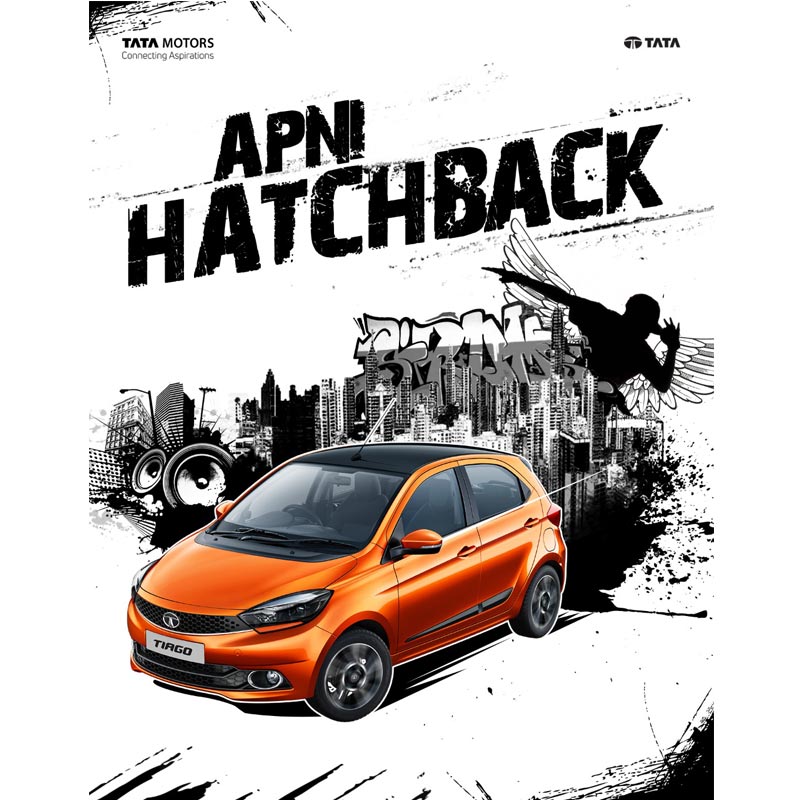
  • Tata Motors, WATConsult unveil ‘Apni Hatchback’

    Tata Motors, WATConsult unveil ‘Apni Hatchback’

    MUMBAI: Tata Motors, a global automobile manufacturer, unveiled a new music video titled ‘Apni Hatchback’ for the brand's bestselling hatchback- the Tiago. This is in collaboration with WATConsult, a digital and social media agency from Dentsu Aegis Network’s bouquet.

    Released across Tata Motors’ digital platforms, the music video leverages the growing acceptance and popularity of the rap music culture in the country and is an ode to the Tata Tiago community. Looking at the pace at which ‘Indie Hip Hop’ is cutting through the clutter of Bollywood among the audience, ‘Apni Hatchback’ is a testament to Tata Motors’ ability and efforts in catching the pulse of the audience. The music video is conceptualised and executed by WATConsult, the digital media partner for Tata Motors’ passenger vehicle business.

    Speaking on the same Tata Motors, head – marketing, passenger vehicle business unit Vivek Srivatsa said, “Raising a toast to all our Tiago customers, we are elated to launch this music video – ‘Apni Hatchback’. The video has been made keeping in mind our consumers, who are young, cool and fun loving. The Tiago has been one of our best-selling brands and we plan to continue leveraging newer trends and keep engaging with our audience in innovative ways. We are confident that our customers will shower as much love upon this video as they have on our product.”

    WATConsult founder and CEO Rajiv Dingra said, “Tata Motors in the last few years has been consistently innovating, not only in terms of bringing world-class vehicles on the road but also banking on the power of digital to deliver dynamic and unique communication through regular interventions. This music video is yet another shining example of how the brand has leveraged popular culture to create distinctive digital content.”

    The video that embraces the rap culture talks about the safety and the love customers have for the car, was released two days before Valentine’s Day and leveraged all social media platforms like Facebook, Twitter, Instagram, and YouTube. 

  • Tata Motors expects festive season to pump up sales; launches Tiago NRG

    Tata Motors expects festive season to pump up sales; launches Tiago NRG

    MUMBAI: Tata Motors has launched its newest addition to the passenger vehicle family – The Tiago NRG. It has extended the Tiago brand with an all-new SUV inspired vehicle, positioned as the ‘Urban Toughroader’.

    Tata Motors CEO and MD Guenter Butschek said, “In line with our brand promise ‘Connecting Aspirations’, we want to be in sync with the growing trend of bringing to market more SUV like vehicles. With this launch, we are extending the Tiago brand and increasing our presence by entering into newer segments and tapping new sets of buyers. This launch is a step towards our Turnaround 2.0 journey, as we continue to focus on winning sustainably’ in the PV business.”

    The company does not want to limit the brand to a set demographic and target audience and rather aims to appeal to audiences in big cities and small towns.

    Tata Motors head of marketing for passenger cars Vivek Srivatsa expects the festive season to perform well considering that the last two months have been slow for the market. “We expect a catch up to happen between October-December,” he said.

    On the distribution front, the car will be available with 300 dealers and another 300 EOS (extension outlets) to tap in a large set of audience across 300 towns in India. 

    The marketing campaign for the car is scheduled to go live from October with an extensive use of TV, print, digital and selective OOH. Srivatsa believes in the power of OOH as it will enable them to highlight the look of the car.

    In order to tap into more customers during the festive season, Tata Motors is set to launch a hatchback and a sedan within the next three months.

    The formerly launched Tiago stands in the top 10 brands in the country. The car has a market share of around 10 per cent as of 2018 and has grown steadily from a customer base of 3000 per month to 8000 per month.

    While manual cars are often the most bought, people are increasingly choosing automatic cars as it allows them to drive with ease. Although Tiago NRG does not have an automatic variant yet, Srivatsa mentions that the company will look at the market response for the car and then decide on whether it is a viable option to launch an automatic variant of the car or not.

    The earlier launched Tiago cars do come in an automatic variant and interestingly, 20 per cent of Tiago cars on road are automatic. The company is positive and bets big on automatic cars as the way ahead.

    Powered by the 1.2L Revotron petrol engine and the 1.05L Revotorq diesel engine, the Tiago NRG will be available with 5-speed manual transmission. It will come in three attractive colour options – Malabar Silver, Canyon Orange and Fuji White, with dual tone infinity black roof and roof rails.  The car is priced at Rs 5.49 lakh for the petrol version and Rs 6.31 lakh for the diesel version, ex-showroom Delhi.

    Tiago NRG will have to face stiff completion from Hyundai and Toyota who have similar cars in the market that are priced between Rs 5.5-8 lakh. 

  • Branded Content isn’t all about visibility: Maxus ESP’s Pooja Verma

    Branded Content isn’t all about visibility: Maxus ESP’s Pooja Verma

    MUMBAI:  Gone are the days when brands would like a piece of  popular content and sponsor it, or spend some marketing budget over product placements. It starts with finding out the brand objectives first and matching it with the relevance of the content.  It is not limited to a movie association or being a title sponsor of a prime time show; a plethora of content is available for brands to smartly associate with. Moving on from simple sponsorship deals, brands are donning the role of content creators themselves, both, short and long form, on television and the digital media. Content or, more precisely, branded content, is the new buzz word in the industry, as digital is becoming the norm. Naturally, traditional brands look at it as a risk, the same way digital was spoken of 10 years ago.

    While there are several brands jumping the content bandwagon following a few success stories, it is important to understand what content will work for them, and when. That is when specialists such as Pooja Verma come in. Verma took on the role of head of content, Entertainment and Sports Partnerships  (ESP) at Maxus  a little over a year ago and  life has been very busy since, she happily shares.

    Maxus ESP, the content solutions arm of Maxus stepped up the branded content ante by facilitating some very innovative brand and content associations — Vodafone’s ‘Be Super’ that went live on Independence Day to promote its 4G connections, Maybellene and  Manmarziyan, Tata Tiago’s association with TVF’s Tripling, and recently Vodafone’s association for Rock On 2 are some of the golden examples.

    In a candid chat with indiantelevision’s Papri Das, Verma looks back on the year, and opens up on the current trends in branded content, Indian cinema’s prospects of building franchises, and what brands look for in a piece of content.

    Excerpts:

    What is the truth behind the current buzz for branded content?

    Media agencies understand that it is not about the 30-seconder anymore, ever since social media became the norm. Thus they are investing significantly in technology, data and content of-course. Storytelling is a big part of how brands want to bring its message alive.

    While digital as a medium has gone from  a risk to the norm, content or storytelling for brands has taken up that space. Words like ‘native advertising’, ‘content marketing’ are being thrown up, because today’s consumers aren’t interested in being talked down to. They want to participate and engage, and then make a conscious decision to whether associate with a particular content, brand or product.

    Therefore, good storytelling that is organic and intuitive and captures the essence of a brand is playing a much bigger role.

    Are brands really finding it appealing and willing to spend on it?

    Marketers, brands and advertisers are increasingly looking at content from a partnership perspective. The old concept of buying an IP or putting some money on show is being redefined. Content sponsorships have taken a much larger and smarter role.

    For example, a brand spending  Rs 10 in sponsoring a TV show now thinks how that money can work for the brand as if it were Rs 20. Which is where innovative partnerships come in. Yes, the run-of-the-mill sponsorship is the route taken but the difference is in how those sponsorships bring the brand alive. Moving forward that is the route we see becoming a norm for brands. Making the investment make harder for you and more memorable as well.

    2016 has seen some interesting brands-movie associations. Yet Bollywood has a long way to catch up to international cinema when it comes to being brand-friendly. What do you think is holding Bollywood back?

    I would give the industry credit for sitting up and taking notice. Firstly, stories are becoming central to the craft. The craft of storytelling and how it has changed is more than visible today. The thing with franchises is that it’s the next level. I can tell you very safely that the franchise culture will soon hit Bollywood as well. ‘Dhoom’ has three editions already. The way characters are being created shows that content makers, storytellers are thinking long term when making it. Characters around which you can spin another tale. That is great news for brands.

    Look at all the bond movies, Aston Martin for car, and the Omega watch is a given. I can’t say how soon India will adopt the franchise culture, but it will be sooner than you are expecting. Hollywood saw the franchise boom because the studios took notice of the opportunity in allied businesses. The good thing is brands have started budgeting annually for movie partnerships.

    At which point does a brand start its association with a piece of content?

    It is around the same time a story is conceived. The thing about branded content is — whether you look at it from the film lens, or the passion point lens of sports, live gigs and others, or from a pure-play content perspective of TV, digital etc — stories are at the center of it. The whole point is ‘a brand should be spoken of in the context of the right story, which the consumers can relate to. Brands should come in at a time when it spots a great story, knows that there is future to the story, characters are memorable, and the product or the brand seems organic to it.

    When it comes to films, studios take the call when stories come to them, and it is usually when they are making up mind for cast, shoot plans etc. Since it is a relationships based business, we are always in touch with the studios and keep an out for which film they are investing in.

    How pressing are clients when it comes to RoI from branded content? How do you measure the success of branded content for your clients?

    Looking for RoI is a given and rightly so. True, though, that the measurement of a successfully done brand integration is an industry wide debate. Everyone has a different opinion, a different take on how to measure. The way we look at it is not as simple as how many times a brand’s logo popped up in the content. It is not about how many times your brand’s name appears. It is equally if not more important to ask ‘How many people are speaking of the core thought of the  brand.’

    For example, when we did the ‘Be Super’ campaign for Vodafone during Independence Day, the entire exercise brought alive how one can be super. People were talking about it. Of course, we got good views on the video, but that 20 other things can get you. A 30-sec TVC also gets great views. Acknowledging that measurement in the field of branded content is important, however the lens needs to be changed a bit.

    How do you convince a traditional brand to agree to an unconventional brand association? What parameters do you follow to decide if particular content works for a brand?

    We focus in getting the context and relevance of the content that we are recommending  fits well with the brand. Then comes the efficacy of the platform itself. Then, we discuss how we are making it ‘discoverable’. These are the questions that keep brand managers up at night as well.

    There are two ways to approach it: art and science. Art is great story, memorable characters, uniqueness of content. The science part is platform, ‘discoverability,’ finding if it’s being delivered to the right TG, is it in line with the cultural codes of the brand.

    I have had a client keen on associating with Bigg Boss, but the brand’s message was socially inclined. I couldn’t possibly recommend that. Yes, your product might be spoken about, but the brand’s positioning in the market and the psychographics it wanted to fit in will not be matched with Bigg Boss. It is not about just visibility.

    Can you think of any brand associations in recent times that were a bad fit according to you?

    Quite a few, and the examples are not just from outside, some of them were done by us. The kind of branded content we are doing now didn’t have several decades of precedence. It takes time to figure out what works for a brand and what doesn’t. But, increasingly, brands are becoming more aware of the value that good branded content can bring them. And, it is only because these bad examples exist that I can speak about the good ones.

  • Branded Content isn’t all about visibility: Maxus ESP’s Pooja Verma

    Branded Content isn’t all about visibility: Maxus ESP’s Pooja Verma

    MUMBAI:  Gone are the days when brands would like a piece of  popular content and sponsor it, or spend some marketing budget over product placements. It starts with finding out the brand objectives first and matching it with the relevance of the content.  It is not limited to a movie association or being a title sponsor of a prime time show; a plethora of content is available for brands to smartly associate with. Moving on from simple sponsorship deals, brands are donning the role of content creators themselves, both, short and long form, on television and the digital media. Content or, more precisely, branded content, is the new buzz word in the industry, as digital is becoming the norm. Naturally, traditional brands look at it as a risk, the same way digital was spoken of 10 years ago.

    While there are several brands jumping the content bandwagon following a few success stories, it is important to understand what content will work for them, and when. That is when specialists such as Pooja Verma come in. Verma took on the role of head of content, Entertainment and Sports Partnerships  (ESP) at Maxus  a little over a year ago and  life has been very busy since, she happily shares.

    Maxus ESP, the content solutions arm of Maxus stepped up the branded content ante by facilitating some very innovative brand and content associations — Vodafone’s ‘Be Super’ that went live on Independence Day to promote its 4G connections, Maybellene and  Manmarziyan, Tata Tiago’s association with TVF’s Tripling, and recently Vodafone’s association for Rock On 2 are some of the golden examples.

    In a candid chat with indiantelevision’s Papri Das, Verma looks back on the year, and opens up on the current trends in branded content, Indian cinema’s prospects of building franchises, and what brands look for in a piece of content.

    Excerpts:

    What is the truth behind the current buzz for branded content?

    Media agencies understand that it is not about the 30-seconder anymore, ever since social media became the norm. Thus they are investing significantly in technology, data and content of-course. Storytelling is a big part of how brands want to bring its message alive.

    While digital as a medium has gone from  a risk to the norm, content or storytelling for brands has taken up that space. Words like ‘native advertising’, ‘content marketing’ are being thrown up, because today’s consumers aren’t interested in being talked down to. They want to participate and engage, and then make a conscious decision to whether associate with a particular content, brand or product.

    Therefore, good storytelling that is organic and intuitive and captures the essence of a brand is playing a much bigger role.

    Are brands really finding it appealing and willing to spend on it?

    Marketers, brands and advertisers are increasingly looking at content from a partnership perspective. The old concept of buying an IP or putting some money on show is being redefined. Content sponsorships have taken a much larger and smarter role.

    For example, a brand spending  Rs 10 in sponsoring a TV show now thinks how that money can work for the brand as if it were Rs 20. Which is where innovative partnerships come in. Yes, the run-of-the-mill sponsorship is the route taken but the difference is in how those sponsorships bring the brand alive. Moving forward that is the route we see becoming a norm for brands. Making the investment make harder for you and more memorable as well.

    2016 has seen some interesting brands-movie associations. Yet Bollywood has a long way to catch up to international cinema when it comes to being brand-friendly. What do you think is holding Bollywood back?

    I would give the industry credit for sitting up and taking notice. Firstly, stories are becoming central to the craft. The craft of storytelling and how it has changed is more than visible today. The thing with franchises is that it’s the next level. I can tell you very safely that the franchise culture will soon hit Bollywood as well. ‘Dhoom’ has three editions already. The way characters are being created shows that content makers, storytellers are thinking long term when making it. Characters around which you can spin another tale. That is great news for brands.

    Look at all the bond movies, Aston Martin for car, and the Omega watch is a given. I can’t say how soon India will adopt the franchise culture, but it will be sooner than you are expecting. Hollywood saw the franchise boom because the studios took notice of the opportunity in allied businesses. The good thing is brands have started budgeting annually for movie partnerships.

    At which point does a brand start its association with a piece of content?

    It is around the same time a story is conceived. The thing about branded content is — whether you look at it from the film lens, or the passion point lens of sports, live gigs and others, or from a pure-play content perspective of TV, digital etc — stories are at the center of it. The whole point is ‘a brand should be spoken of in the context of the right story, which the consumers can relate to. Brands should come in at a time when it spots a great story, knows that there is future to the story, characters are memorable, and the product or the brand seems organic to it.

    When it comes to films, studios take the call when stories come to them, and it is usually when they are making up mind for cast, shoot plans etc. Since it is a relationships based business, we are always in touch with the studios and keep an out for which film they are investing in.

    How pressing are clients when it comes to RoI from branded content? How do you measure the success of branded content for your clients?

    Looking for RoI is a given and rightly so. True, though, that the measurement of a successfully done brand integration is an industry wide debate. Everyone has a different opinion, a different take on how to measure. The way we look at it is not as simple as how many times a brand’s logo popped up in the content. It is not about how many times your brand’s name appears. It is equally if not more important to ask ‘How many people are speaking of the core thought of the  brand.’

    For example, when we did the ‘Be Super’ campaign for Vodafone during Independence Day, the entire exercise brought alive how one can be super. People were talking about it. Of course, we got good views on the video, but that 20 other things can get you. A 30-sec TVC also gets great views. Acknowledging that measurement in the field of branded content is important, however the lens needs to be changed a bit.

    How do you convince a traditional brand to agree to an unconventional brand association? What parameters do you follow to decide if particular content works for a brand?

    We focus in getting the context and relevance of the content that we are recommending  fits well with the brand. Then comes the efficacy of the platform itself. Then, we discuss how we are making it ‘discoverable’. These are the questions that keep brand managers up at night as well.

    There are two ways to approach it: art and science. Art is great story, memorable characters, uniqueness of content. The science part is platform, ‘discoverability,’ finding if it’s being delivered to the right TG, is it in line with the cultural codes of the brand.

    I have had a client keen on associating with Bigg Boss, but the brand’s message was socially inclined. I couldn’t possibly recommend that. Yes, your product might be spoken about, but the brand’s positioning in the market and the psychographics it wanted to fit in will not be matched with Bigg Boss. It is not about just visibility.

    Can you think of any brand associations in recent times that were a bad fit according to you?

    Quite a few, and the examples are not just from outside, some of them were done by us. The kind of branded content we are doing now didn’t have several decades of precedence. It takes time to figure out what works for a brand and what doesn’t. But, increasingly, brands are becoming more aware of the value that good branded content can bring them. And, it is only because these bad examples exist that I can speak about the good ones.