Tag: Tata Sky

  • Tata Sky launches ‘Full Family Jingalala’ campaign

    Tata Sky launches ‘Full Family Jingalala’ campaign

    MUMBAI: Tata Sky, India’s leading content distribution platform has launched a new integrated campaign ‘Full Family Jingalala’ to tell families about the possibilities which can open for them through Tata Sky. The campaign is focused on showcasing some customer centric features of Tata Sky – a second screen via the mobile app to consume content, the fantastic HD picture quality of the set-top box and an innovative pack selector on the website which can help any family choose genres/ channels/languages and customise their TV pack based on their specific needs.

    Speaking on the occasion,  Tata Sky Chief Communications Officer Anurag Kumar said, “As an industry leader, Tata Sky wants to inspire new possibilities for everyone. With this campaign, we have put the man of the family in the centre and recognise that he wants to give better things to his family as they move up in life. With a simple change like getting a Tata Sky connection at home, he can create a much bigger impact on his family’s happiness which goes way beyond the act of just consuming content.”

    He further added, “If Tata Sky can enable fathers to help their children pursue their talents or enable husbands to recognise their wives’ toil in the kitchen and change that perspective or allow families to take care of the comfort of their domestic helpers too, then Tata Sky would have helped families in India become happier in meaningful ways.”

    Ogilvy India – West Chief Creative Officer Sukesh Nayak said, “Our creative idea for this campaign is to highlight the transformation at home. To show how the decision to bring home Tata Sky not just helps transform the entertainment experience, but also enables a family to create moments of happiness beyond entertainment.”

    The new campaign has been launched through an interesting set of three ad films that will focus on Tata Sky’s unique and quality services adding values to their lives. The films have gone live on television and digital platforms all over India. The campaign is live across the print and outdoor mediums.

    The first film ‘Dance’ opens with two girls learning to dance by watching a dance show on TV but stops dancing as their father arrives as he is an avid news watcher. On his arrival, he takes out his phone and watches news on his Tata Sky mobile app, which leaves the girls delighted and joyful. The film highlights the availability of Live TV on mobile app at no additional cost with a Tata Sky connection.

    The second movie ‘Picture Quality’ starts with a family, comprising of two daughters who are very excited to experience visually appealing theatre like experience at home with improved picture quality through Tata Sky connection. As the movie progresses, the father encourages his wife to join them to ensure that she experiences and decides to order food from outside. It reinforces the idea of how Tata Sky connection brings the family for better viewing experience by offering HD quality connection to its subscribers. 

    The third film ‘Family Pack’ showcases a husband selecting genres of show to subscribe for Tata sky. On being asked about the same, he lets his wife and elderly household choose genres of their respective choices which conveys the message that family packs can be subscribed within budget with a new Tata Sky connection.

  • ShortsTV celebrates one year of bringing the best short films to India

    ShortsTV celebrates one year of bringing the best short films to India

    MUMBAI: ShortsTV, a leading next-generation content platform delivering high quality short entertainment to global audiences, celebrated its one-year anniversary of bringing award-winning short films from across the globe to India with a reception at the British High Commissioner’s residence in New Delhi. Present at the celebration were the British High Commissioner, Sir Dominic Asquith KCMG, and ShortsTV  chief executive Carter Pilcher. The celebration began with a congratulatory speech from the British High Commissioner and was followed by a screening of the Academy Award winning British short film Stutterer.

    Debuting in India in 2018 exclusively on Tata Sky, ShortsTV has been one of their fastest growing services in its first year of operations in India. It is now available across most of India’s major DTH platforms, including Dish TV, d2h and Airtel Digital TV, reaching over 60 million households, which represents 85% of the country’s satellite TV market. 

    Speaking on the one-year anniversary in India, Pilcher,  said, “We are thrilled to celebrate our first year of bringing ShortsTV to India. We couldn’t have done it without our great partners Tata Sky, who helped us to get launched, and Royal Stag Barrel Select Large Short Films for their support in getting great movies out. I’d also like to thank our new partners where we launched last month – Airtel Digital TV, Dish TV and d2h. Our mission is to bring to the world the highest quality short entertainment on the face of the earth. India is our most important market and we launched with 30% of our catalogue being made in India. By next year 50% of short films aired on ShortsTV will be Indian made. That is 400-500 hours of Indian short films that we will be launching on television.”

    Commenting on the success of ShortsTV in India, British High Commissioner to India, Sir Dominic Asquith KCMG, said, “We see a lot of traffic back and forth between the UK and India across business, investment and technology, but the creative collaboration is sometimes less visible. Within a year of launching in India, UK-based ShortsTV has brought short films by Oscar nominees and winners to over 60 million households here. I look forward to seeing how their ambition to increase collaboration with Indian filmmakers opens up new opportunities for Indian-made short films at the Oscars.”

    ShortsTV is pioneering a new type of entertainment in India: highest quality, entertaining movies from leading Indian and international talent in short form, and audiences have taken note.  ShortsTV’s depth of films is unrivalled, drawing from a growing catalogue of more than 13,000 Indian and international short movies. Top of the list are award-winners from all the biggest international award franchises: Oscars, BAFTAs and Cannes and the biggest Hollywood and Bollywood stars: Benedict Cumberbatch to Jackie Shroff and Judi Dench to Radhika Apte. Furthermore, the ShortsTV India catalogue brings the  best of Indian short films from leading producers, including Royal Stag Barrel Select Large Short Films, Terribly Tiny Tales, Whistling Woods and Humara Movies.

    The ShortsTV service is available ad-free on Dish TV and d2h as ‘ShortsTV Active’ (channel 135), on Airtel Digital TV as ‘Airtel ShortsTV’ (channel 259) and on Tata Sky as ‘Tata Sky ShortsTV’ (HD channel 112 and SD channel 113).

    In addition, ShortsTV is the exclusive distributor of the annual Oscar Nominated Short Films theatrical release, bringing them to Indian cinemas for the first time this year with PVR Cinemas. They also founded the Best of India Short Film Festival, which received over 3000 entries and aims to qualify more Indian short films for Oscar consideration.

  • An Ode to Entertainment: Tata Sky’s #WorldTelevisionDay Campaign

    An Ode to Entertainment: Tata Sky’s #WorldTelevisionDay Campaign

    MUMBAI: Chimp&z Inc in conjunction with Griffin Pictures rolled out a video recreating the magic of the golden era of television in sand-art. The #TumseHumareTaarJudeHai campaign video served the brand purpose of Tata Sky on the occasion of World Television Day. The video garnered a total view of 2.9M in just one day on Facebook and YouTube and still counting.

    The video created by Griffin Pictures aims to highlight Tata Sky’s contribution to the evolution of the television industry as a service provider. Each frame created in the video depicts a symbolic phase in the timeline of Indian television. It starts from a box television set, highlighting the golden era and time-travels to the recent flat-screen television attached with a Tata Sky set-top box. The picturesque sand-art takes us back to the Mahabharata days, journeying through the soap-opera period and concludes with ISRO’s most recent achievement of launching Chandrayaan2 into space.

    Griffin Pictures is the in-house production house of Chimp&z Inc. It creates cinematic content that caters to the advertising and marketing requirements of brands.

    Commenting on the World TV Day campaign, Chimp&z Inc  CEO & Co-founder Angad Singh Manchanda said, “This day is significant for Tata Sky as a fore-runner in the television industry. We wanted to do something out-of-the-box to mark this day for our partner brand in collaboration with Griffin Pictures. Sand art was the perfect option to depict change and transition and make the audience recall the many milestones in television history."

    https://www.facebook.com/watch/?v=2410498262522182

  • Tata Sky unboxes #BachpanKaPitara

    Tata Sky unboxes #BachpanKaPitara

    MUMBAI: On the occasion of Children’s Day, Tata Sky promoted their special service for kids – Tata Sky Fun Learn on its digital platforms in a nostalgic way. This feature comprised foundational learning for kids across different age groups. Tata Sky, along with their digital marketing partner, Chimp&z Inc sent out #BachpanKaPitara boxes filled with 90s games and activities.

    The leading content distribution platform successfully executed this integrated offline campaign with an unboxing activity across all platforms. The box contains fun-learning elements like a bricks video game, spinning top, jigsaw puzzles, and toys.

    Tata Sky surprised influencer moms and dads with the #BachpanKaPitara boxes. The influencers expressed their gratitude and appreciation for the brand with videos, that were later reposted on the brand social media pages.

    The brand revealed a contest for its users on its Instagram and Facebook Page. The contest gave its users a chance to win a similar #BachpanKaPitara box by solving the mystery of what’s inside the box. Users could participate in this contest via Instagram and Facebook that went live on Children’s Day.

    Chimp&z Inc is a dynamic multi-dimensional marketing agency that has carried out numerous online and offline campaigns for its partner brands. Its association with Tata Sky has been going strong for 4 years. 

    Chimp&z Inc CEO & Co-founder Angad Singh Manchanda said, “Our aim was to reach the target audience for the Tata Sky Fun Learn service that includes the kids as well as their parents. This campaign reiterates that playing games and being creative can also be a learning experience for kids. Not only this, but it also ignites a sense of nostalgia in the adults. We at Chimp&z Inc enjoyed the process of designing and executing this campaign and hope that Tata Sky followers experienced the same joy.”

  • DTH operators against imposition of further regulation on platform services

    DTH operators against imposition of further regulation on platform services

    MUMBAI: Major direct-to-home (DTH) operators spoke against the imposition of any registration fee or annual fee for the platform services (PS) offered by them. Tata Sky, Dish TV, Bharti Telemedia the holding company of Airtel Digital TV are of the view that as DTH operators already pay license fee and furnish bank guarantee, there should not be any requirement of any additional payment for PS. The companies have also delivered their views against capping the number of PS channels.

    The Telecom Regulatory Authority of India (TRAI) issued a consultation paper (CP) on issues related to PS aimed at a proper regulatory framework for the services in late August. Before the CP was floated, the Ministry of Information and Broadcasting (MIB), in a letter dated 2 July  2019, sought the recommendations of TRAI on various issues related to PS with reference to DTH guidelines. TRAI also mentioned in the consultation paper that unlike private satellite TV channels which are permitted and regulated under the uplinking and downlinking guidelines of MIB, PS is not subject to any specific regulations or guidelines as of now.

    As TRAI invited comments on the consultation paper from the stakeholders Tata Sky, Dish TV, Bharti Telemedia submitted their comments on the issue:

    “Platform Services (PS) are programs transmitted by distribution platform operators (DPOs) exclusively to their own subscribers and does not include Doordarshan channels and registered TV channels. PS shall not include foreign TV channels that are not registered in India,” TRAI defined PS in its Recommendations on Regulatory Framework for Platform Services dated 19 November 2014.

    Here are the important questions raised in the CP and the comments by the mentioned companies:

    What should be the Registration fee/Annual fee for PS per channel? And how it is to be estimated?

    All three players have commented that there should not be any requirement of any additional payment by DTH operators applicable for a PS channel as the DTH operators are required to pay entry fee, license fee and also furnish bank guarantee. They also mentioned in the submission that other distribution platform operators like MSOs, LCOs, HITS are not paying such fees which already creates a non-level playing field. Dish TV also mentioned that the requirement for payment annual fee can be imposed on cable platforms who are not required to pay any kind of entry or license fee to the government.

    The maximum number of PS channels that can be offered by DTH operators:

    According to the submissions made by the DTH players, there should not be any cap on the number of PS channels offered by the service providers. One of the reasons that has been highlighted is that DTH operators provide pan-India service and need to cater to customers of varied tastes and languages. Moreover, at a time when the broadcasters are having their own over-the-top platforms, limiting the number of PS would harm DTH operators in the competition.  

    “If the authority still feels that a limit is required, then it should be sufficient for us to grow further beyond the number of channels that we already have, and the limit should also be flexible going forward so that we may not be required to approach MIB and TRAI for cap enhancement. Additionally, for maintaining parity, similar caps should also be placed on MSOs/ LCOs,”  Tata Sky commented.

    Is there a need to revisit/review the earlier recommendations of the Authority dated 11th November, 2014, relating to keeping recording of all PS channel programs for a period of 90 days and maintaining a written log/ register of such program for a period of 1 year by the DPO from the date of broadcast and the role of Authorised Officer and the State/ District Monitoring Committee and MIB as monitoring authorities:

    Article 8 of the DTH license condition mandates DTH operators to maintain the recoding of the programs carried on the platform for a period of at least 90 days at its own cost which is also applicable on PS carried by the operators. In addition to that, all the content transmitted by DTH operators are monitored by the Electronic Media Monitor Center which is entrusted with the responsibility to check the compliance of the ‘Programme and Advertisement Code’ under the Cable TV Network (Regulation) Act, 1995. Hence, they are of the view that there is no requirement for prescription of any additional compliance maintaining a written log/ register of such program for a period of one year by the DPO. 

  • DPOs say broadcasters misusing TRAI tariff order with heavy discounts

    DPOs say broadcasters misusing TRAI tariff order with heavy discounts

    MUMBAI: Distribution platform operators (DPOs) believe that broadcasters have misused the flexibility available to them to give a discount on the sum of a-la-carte as high as 90 per cent. The operators have shared their views on Telecom Regulatory Authority of India's (TRAI) consultation paper (CP) on ‘Tariff related issues for Broadcasters and Cable services. The industry has also given mixed views over the implementation of the 15 per cent cap on discount for a-la-carte by broadcasters.

    TRAI had released the consultation paper seeking responses from stakeholders to review the new tariff regime on 16 August 2019. In its consultation paper, the authority informed that it has observed that broadcasters are offering bouquets at a discount of up to 70 per cent of the sum of a-la-carte rates of pay channels constituting those bouquets. “It indicates that in absence of any restriction on the discount on the offering of bouquets, broadcasters are making prices of a-la-carte channels illusory thereby impacting the a-la-carte choice of channels by consumers and giving huge discounts on bouquets to push even those channels which are not the choice of subscribers,” said TRAI.

    Tata Sky in its responses to TRAI expressed disappointment of not revisiting the entire new regime. It said, “We are glad that TRAI has finally acknowledged these misgivings, however, to our  disappointment, TRAI, instead  of conducting a  holistic exercise of revisiting the new regime in entirety has chosen to selectively focus only on  few issues thereby limiting the scope of the exercise.”

    “Having acknowledged the serious misgivings in the regulations, the current consultation is a piece-meal and isolated effort and not the appropriate way forward,” opined Tata Sky.

    It also suggested that TRAI should allow the price forbearance models at the wholesale and the retail level. Further, the channel pricing framework and methodologies should be left to the parties involved, allowing the market forces and negotiation between the parties to decide the same.

    Tata Sky also informed the authority that it is against implementation of any kind of cap overpricing. It suggested, “The DPO bouquet is much more subscriber-friendly as it caters to the needs of the subscriber for availing channels from multiple broadcasters within a pack rather than having to subscribe to multiple bouquets/ or channels.”

    However Bharati Telemedia, in its responses, said, “We are of the view that at this stage, no changes should be made to any of the provisions of the tariff order including the provision w.r.t discount on sum of a-la-carte channels forming part of bouquets offered either by the broadcaster or the DPOs. Any changes at this stage will be equivalent to migration and this may not be the ideal time to cause any interference as it will also lead to unnecessary disturbances and customer dissatisfaction.”

    DEN Networks said that some broadcasters are indulging in heavy discounting of bouquets by taking advantage of non-implementation of 15 per cent cap on discount which has created a non-level field vis-à-vis other broadcasters.

    DEN Networks also expressed that popular channels are being unnecessarily clubbed with non-popular channels to push their uptake. It said, “The broadcasters who have large number of channels in their repertoire, are engaging in a practice of forming large number of heavily discounted bouquets (with minor changes) to push popular channels with non-driver channels. It can be seen that the channels which were FTA before the implementation of the new regulatory framework have been converted into pay channels with the price range of Rs 0.10-0.50/- just to push them with in a bouquet with popular channels of the broadcaster.”

    The operator believes that the non-implementation of 15 per cent cap on discount clubbed with the ceiling of Rs 19/- on the price of MRP of a-la-carte channels forming part of such bouquets is responsible for pushing unwanted channels along with popular channels.

    All India Digital Cable Federation (AIDCF) in its responses to TRAI said, “The non-implementation of the said proviso has given leverage to the broadcasters to offer their bouquets at discount which is as high as 70 per cent of the sum of a-la-carte channels forming part of such bouquets. This flexibility of giving discounts without a cap, created a non-level playing field for the distributors because the bouquets were priced on a discriminatory basis.”

    Sharing similar views, AIDCF and GTPL Hathway said, “The flexibility available to broadcasters to give discount on sum of a-la-carte channels forming part of bouquets has been grossly misused by the broadcasters. The same has also been acknowledged by the authority. It is pertinent to mention that the broadcasters have not only offered huge discounts as high as 90 per cent on their bouquets but have also created confusion in the minds of consumers, by offering  numerous bouquet(s) comprising of few popular  and bulk of non-popular channel(s) with a clear intent to push their non-popular channels.”

  • DPOs suggest changes to draft interconnection addressable regulations by TRAI

    DPOs suggest changes to draft interconnection addressable regulations by TRAI

    MUMBAI: Distribution platform operators (DPOs) have shared their comments to modify Telecom Regulatory Authority of India (TRAI)’s draft on The Telecommunication (Broadcasting And Cable) Services Interconnection (Addressable Systems) (Amendment) Regulations, 2019.  The industry has welcomed TRAI’s move to amend Schedule III of the regulation and believes that provisions related to watermarking, fingerprinting and digital rights management along with CAS and SMS is in right direction.

    AIDCF said, “It is submitted that the provisions relating to watermarking, fingerprinting and digital rights management along with CAS and SMS, is a step in the right direction and AIDCF wholeheartedly supports the same. With respect to amendments proposed to be introduced by TRAI in the schedule III of the Interconnection Amendment Regulations 2019, AIDCF stands in agreement with the same and supports TRAI in bringing about the amendments in the regulations.”

    However, Bharti Telemedia (Airtel), Tata Sky and GTPL recommended a few changes in the draft of interconnection addressable regulations.

    Airtel, with regard to Section C Clause 8 of the regulation, recommended that the capacity of the CAS and SMS should be linked to the volume of transactions rather than the subscriber base. The rationale for the same is that each subscriber can generate multiple volumes of transactions and hence, to handle these transactions of a single customer, the system is equally consumed and therefore, the correct assessment of the system capacity should be linked to the transaction count instead of subscriber base.

    It further commented “The subscriber base may not be the appropriate criteria to assess the capacity of CAS and SMS, more so, in the current framework when a single customer can generate more than one transaction in terms of activation/deactivation of channel, recharge etc. We, therefore, suggest that the criteria of 5 per cent should be measured in context to total volume of transactions.”

    The company in its comments to TRAI also raised concern over generating customised bills. It said, “We submit that the requirement of generation of bills is applicable for the post-paid services and we, therefore, suggest that clause must specify the same to avoid any confusion.”

    Similarly, Tata Sky also expressed that bill generation is a postpaid concept. DTH operators do not have a postpaid platform and are completely prepaid. “Therefore, it is suggested that a suitable clarification be inserted in the regulations as well as the audit manual to avoid any understanding gap between the DTH operators and the auditors,” said Tata Sky.

    Tata Sky also suggested, “The STBs and VCs are issued against a CAF to a subscriber and the subscriber's address is captured in our systems. Consequently, the auditor can check our systems on a random sample basis, however, we will not hand-over our entire database along with addresses to the auditor in compliance with this requirement. We would, therefore, suggest that a suitable clarification be inserted in the regulations as well as the audit manual to avoid any understanding gap between the DPO and the auditors.”

    The draft’s Clause 12(a) & 12(c) states that it is mandated that amongst other things SMS should also be capable of viewing and printing of historical data in terms of the activations and the deactivations of STBs and generating historical data of changes in the subscriptions for each subscriber and the corresponding source of requests made by the subscriber.

    GTPL on the same commented, “It has been observed in the past audits that the auditors have demanded generation of such historical data for all subscribers and from inception which has put undue stress on the systems of the distributors and the resultant inconvenience to the customers. It is suggested that the Authority limit the generation of historical data to reasonable percentage of the total as a sample size. We suggest a sample size of 5 per cent of the active sub base for platforms which have more than 5,00,000 average active subscribers while for platforms which have a lesser active subscriber base the sample size can be 25 per cent.”

  • DTH companies against changes to KYC norms for STBs

    DTH companies against changes to KYC norms for STBs

    MUMBAI: DTH operators believe that there is no need to change the KYC process for set top boxes (STBs) as the current process is well-equipped to meet the requirements and the DTH industry is already adhering to a comprehensive KYC process, which has been working effectively till date.

    The DTH operators have commented on TRAI’s consultation paper on ‘KYC and e-KYC of DTH Set Top Boxes’. Dish TV commented, “We are of the strong opinion that initial KYC done by the company is adequate enough and no further KYC is required thereafter.”

    “Broadcasting of channels through DTH involves unidirectional communication only i.e. broadcast through satellites and does not involve any inherent risk or misuse by the customers. In view of the same, introducing any additional measures for KYC other than what is being currently followed, would only aggravate the financial stress on the industry and will consequently lead to higher prices for the consumer, without yielding any benefits,” Bharti Telemedia commented.

    It further explained that during the provisioning of a new connection, a CAF is filled by the customer which captures details like registered telephone number of the subscriber, Name And Address for installation etc. These details are then entered into the systems. Only after these processes are completed, an engineer is assigned, who visits the customer premises for installation and demonstration. Thus, in any case, the present system already meets the KYC requirement of capturing the customer’s identity and address.

    One of the objectives stated by the Ministry of Information and Broadcasting, in its reference to TRAI, is to stop the illegal smuggling of set top boxes to other countries. The operators believe that even this objective cannot be met by introducing additional KYC requirements.

    “Collecting proof of identity (Pol) and Proof Of  address (PoA) documents, as an alternate to Aadhaar, will add to the inconvenience and cost  of approximately 100 million subscribers (includes  private DTH and DD Free Dish) and  potentially another 100 million future subscribers. Conducting such a massive exercise for weeding out a miniscule set of smuggled boxes would be an unfair burden for all stakeholders,” said Tata Sky.

    On the question of whether location-based services (LBS) needs to be incorporated in the DTH set top boxes to track its location, Dish TV replied, “This issue has been dealt at length and for the stated reason we strongly oppose this suggestion.”

    “We submit that there is no need to introduce the LBS requirement for the DTH set top boxes. To the best of our knowledge, there is no such implementation of LBS for DTH services anywhere in the world,” opined Bharti Telemedia.

    Tata Sky believes that location-based services (LBS) – developing and deploying STBs fitted with a LBS solution would make the box expensive and would add to the cost borne by the subscriber. “Also, there would be several cases of non-receipt of signals on account of equipment malfunction or other reasons and not necessarily  due  to the STB having been smuggled out,” the company said.

    Replying to TRAI’s question on whether one-time KYC is enough at the time of installation or verification is required to be done on periodic basis to ensure its actual location? Bharti Telemedia commented, “We firmly believe that the current one-time KYC at the time of installation is more than adequate as it duly meets the essence of any KYC process. Therefore, there is no need to introduce a system of re-verification.”

    Further it said, “At the cost of repetition, periodic verification in case of DTH industry has no relevance as the services provided over DTH platforms pose no threats or risks as these services are unidirectional and are made available transparently to the customer. When the verification activity yields no productive outcome, there is no rationale in terms of mandating a periodic re-verification exercise as the same will simply translate into a sizeable financial burden on the DTH industry as well as wastage of resources for a non-productive exercise.”

    According to Bharti Telemedia, re-verification will be a daunting and insurmountable task due to the complexities involved in taking customer consent and appointment or unavailability of customer due to various reasons. “It should be considered that it will cause huge inconvenience to users and may raise their apprehensions about the services. Therefore, we recommend that there should not be any change in the existing processes and the system of re-verification should not be introduced,” the company said. 

  • Tata Sky introduces HD set top box and Binge bundle offer at Rs 4,999

    Tata Sky introduces HD set top box and Binge bundle offer at Rs 4,999

    MUMBAI: After the formal announcement of Reliance Jio Fiber plans, other DTH operators are also taking measures to face the upcoming challenge. DTH operator Tata Sky has introduced an attractive offer for consumers.

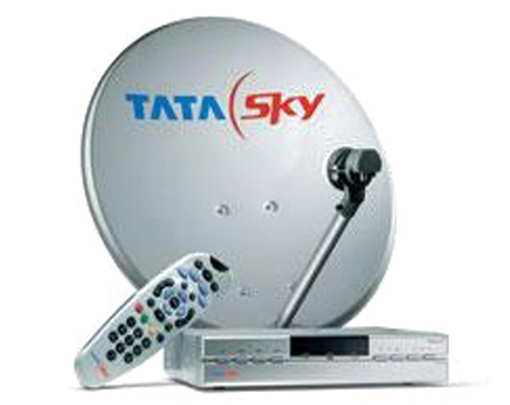
    Under the new offer, Tata Sky HD set-top-box and Tata Sky Binge bundle is available for new subscribers for just Rs 4,999 along with other benefits. Consumers will get the HD set-top-box worth Rs 1,499 under the same price and Rs 2,499 will also be credited in their account. Users can select different packs and the amount will be deducted from the cashback amount of Rs 2,499.

    Moreover, they will get six months worth of Binge subscription for free which otherwise costs Rs 1,494 along with three months of free Amazon Prime subscription. The Binge service which was introduced earlier in May, the service offers digital content from, Hotstar, Sun NXT, Eros Now, Hungama Play. 

  • Netflix sees 83% rise in price-related search after India-specific plan

    Netflix sees 83% rise in price-related search after India-specific plan

    MUMBAI: SEMrush, the online visibility management and content marketing SaaS Platform, recently conducted data analysis on three most trending media services in India – Netflix, Amazon Prime, and Tata Sky. The case study revealed amazingly interesting facts regarding the growth of traffic from different devices and an increase in the search volume. Netflix Subscription is the most searched keyword in the time duration from Jan 2018 to July 2019. After the announcement of Netflix’s new subscription plan for India, its price search volume increased swiftly by 83% between June 2019 and July 2019. Besides, Amazon Prime Subscription stands as the second most searched keyword with an average search volume of 6,878.9.

    On the other hand, Tata Sky’s app has the highest searched volume of 44,826 during the same time duration. Tata Sky has the smallest traffic volume, but it has shown a tremendous year-on-year growth counting to 293 per cent. Wherein, Netflix witnessed a 146 per cent growth in its traffic volume after Tata Sky. Interestingly, Amazon Prime enjoys the biggest traffic volume from India, but its year-on-year growth is merely 70 per cent.

    The desktop traffic to Netflix and Amazon Prime Video in July was 11,138,893 and 13,593,504 respectively. Both the media services have grown by 36 per cent in July 2019 as compared to the previous month. Netflix shows the biggest growth of mobile traffic (15.6 per cent) between June 2019 and July 2019, after it announced its new subscription plan, however, Tata Sky and Amazon still are bigger in numbers of mobile device traffic counting to 7,537,672 and 12,290,142 respectively as compared to Netflix’s traffic count 6,244,056.

     “Netflix, Amazon Prime, and Tata Sky are the new age media services which are giving tough competition to each other. All three of these media services are significantly attracting Indian audiences for the subscription with interesting packages. The data revealed in the study is self-explanatory for their accelerating popularity amongst viewers. According to this case study by SEMrush, Indian audiences are inclining more towards Netflix’s subscription in last couple of months, all credits to its interesting subscription plan,” SEMrush international market Fernando Angulo said.