Tag: Tata Sky

  • Insat-4C satellite launch fails; Sun’s DTH plans hit

    Insat-4C satellite launch fails; Sun’s DTH plans hit

    MUMBAI: India’s attempt to enter the elite “space club” has received a setback. The launch of the country’s first commercial communications satellite from home soil has ended in failure. The GSLV-F02, carrying the state-of-the-art communication satellite Insat-4C, crashed into the Bay of Bengal a short while after lift-off at 5:38 pm from its launch pad at the Satish Dhawan Space Centre (SDSC) SHAR, Sriharikota.

    The launch of the completely indigenous Insat-4C communications satellite on the Geosynchronous Satellite Launch Vehicle (GSLV) was delayed twice before its final failed attempt due to unspecified technical reasons. The launch was originally scheduled for 4:30 pm this evening. 

    The three-stage 414-tonne launch vehicle of the Indian Space Research Organisation (Isro), started under-performing right from the start and veered off its path after travelling a few kilometers into the sky.

    Isro chairman Madhavan Nair admitted the failure of the satellite. “The mishap happened in the first stage of the separation. We have activated and analysed the data and we will get to the bottom of it,” Nair said, adding, “today’s happening is a setback, especially after we had 11 continuous successful launches.”

    Insat-4C, which cost Rs 4 billion, was the second satellite in the Insat-4 series. The first, Insat-4A, was launched in December last year, from the spaceport of Kourou in French Guiana by an Ariane5 vehicle.

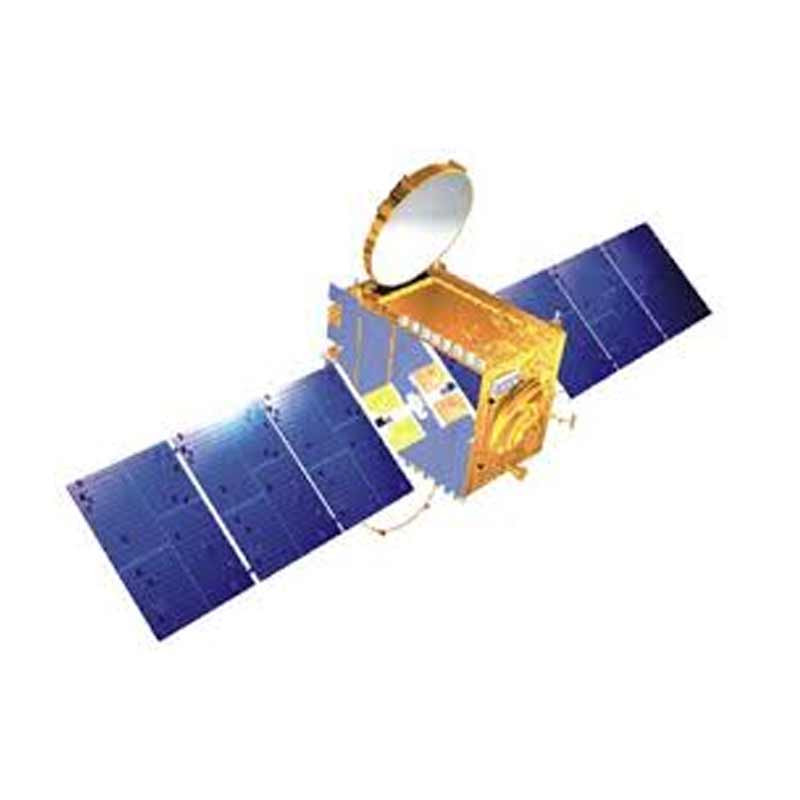
    It was for the first time that India’s space agency was putting into orbit a two-tonne class satellite. Equipped with 12 high-powered Ku band transponders (like the earlier Insat-4A), the 2,180 kg spacecraft is designed for a mission life of 10 years. Insat-4C was designed with the capability to broadcast 150 TV channels through the DTH platform.

    If succesful, this mission would have taken India to being one of the five major satellite launch countries in the world. With this failure, Isro’s strategy of taking satellite contracts from other countries has also received a setback.

    As regards the Insat-4 mission, Isro will now have to look ahead to the launch of the third satellite in the series – Insat-4B. The GSLV’s failure will in no way influence that launch however, because Isro will be using the services of Arianespace to launch Insat-4B from Kouru next year.

    The failure of this mission is not just about the challenge it throws up to India’s space ambitions though. Immediately hit will also be Kalanithi Maran’s Sun Group, which had booked space on Insat 4C for its DTH venture Sun Direct.

    At present, DD Direct Plus managed by the pubcaster Prasar Bharati and the Subhash Chandra owned Dish TV are the two operators offering DTH services in the country.

    All the Ku-band transponders on the Insat 4A satellite, meanwhile, have been leased to the Tata-Star consortium, which will soon be launching the Tata Sky DTH service.

    Other than Tata Sky and Sun Direct, there is also Anil Ambani’s DTH venture Reliance Bluemagic, which will be rolling out in due course.

  • Tata Sky earmarks Rs 1.5 billion for marketing of service

    Tata Sky earmarks Rs 1.5 billion for marketing of service

    MUMBAI: Tata Sky, an 80:20 direct-to-home (DTH) joint venture between the Tata’s and Star Group, is moving ahead step by step towards a launch, the date for which is still being closely guarded by the company.

    While most of the money is now riding on an August-September commercial kick-off, the latest on the Tata Sky front is that it has earmarked approximately Rs 1.5 billion for marketing the DTH service across all platforms, traditional and non-traditional. From pilot MDU (multi-dwelling unit) projects in some cities of India to educating an average Indian about the advantages of a DTH service supported by the Tatas and Star, the game plan covers the full gamut.

    Tata Sky sources reveal that a major part of the Rs 1.5 billion marketing budget is likely to be spent during the festival season in India, starting late September and lasting till Christmas-New Year, when consumers have a tendency to splurge on goodies.

    Meanwhile, apart from Zee Turner family of channels, most other major TV channels are almost sure of finding a berth on the Tata Sky platform from day one of launch. Apart from the news channels, the likes of Times Now and Disney are already part of the test signals, people in the know say.

    It needs noting however, that except for ESPN Star Sports, no other broadcaster (and that includes the Star Network channels) have signed commercial agreements wth Tata Sky as yet.

    ESPN Star Sports, a joint venture between Disney and News Corp in Asia managing the two sports channels, have also to take a call on whether to bring in a new interactive sports channel, or confine the interactive aspects to the two existing channels. “We are still weighing all options,” a Singapore-based source in ESS said.

    Zee channels’ appearance on Tata Sky, meanwhile, would depend on how soon (or how late) Star comes to an agreement with Dish TV, now that Discovery-Sony One Alliance has come aboard country’s first DTH platform.

  • Dish TV, Tata Sky lock horns over DVRs

    Dish TV, Tata Sky lock horns over DVRs

    NEW DELHI: Existing DTH player Dish TV has locked horns with Tata Sky over interoperability — or its waiver — of digital video recorders to be made available to consumers of a DTH service in India.

    DTH license holder ASC Enterprises, which operates the Dish TV brand, has told the broadcast regulator that if digital video recorders (DVRs) are not interoperable, as mandated in DTH guidelines, it would “compromise” consumer interest.

    On the other hand, Tata Sky and technology company NDS (controlled by Rupert Murdoch) have said that “interoperability is not feasible on high end devices” like DVRs.
    “The technical specifications vary with the (DVR) models that are introduced and these were not envisaged when BIS (Bureau of Indian Standards) drew up STB specifications,” Tata Sky has said in its submission to the regulator.

    ASC Enterprises has counter-punched by saying that existing clauses on interoperability of boxes protect the “consumer interests by ensuring they switch over their service providers for the basic functionality of watching the broadcast channels as per their option and choice.”

    If that was not enough, Tata Sky and residents’ welfare associations (RWAs) have come out in support of multi-dwelling unit (MDU) technology, which has been strongly opposed by all sections of the cable industry, including Cable Operators’ Federation of India (COFI), which feels cable ops stand to become redundant.

    MDU technology, being tested by Tata Sky for its proposed DTH service in a few cities, envisages making available a DTH service to multiple homes through a common dish antenna, but separate set-top boxes.

    The technology is being touted by its supporters as cost effective for consumers and as a safeguard for “aesthetic” senses in concrete jungles that Indian cities are turning into.

    Telecom Regulatory Authority of India (Trai) had asked for comments on various issues related to DTH, including whether certain clauses in the DTH guidelines need to be amended to exclude DVRs from being interoperable.

    Fifteen individuals/organizations, including a clutch of RWAs, have submitted their feedback, baring the fact there isn’t consensus on matters like DVRs and MDU technology, which have the potential of changing the way people consume television fare in India.

    Even a company like Anil Ambani’s Reliance Infocomm, whose DTH license application hasn’t been processed by the government, feels that DVRs should be kept interoperable.

    “The clauses 7.1 & 7.2 of DTH license conditions need not be amended to exclude digital video recorders. All set top boxes whether simple STB or personal video recorder/ DVR-enabled set top boxes should be interoperable,” Reliance has stated

    The full text of feedback, peppered with technical jargons and occasional innuendoes hitting at opponents, can be seen on the regulator’s website, www.trai.gov.in.


  • TDSAT puts a lock on any DTH operator carrying Star channels

    TDSAT puts a lock on any DTH operator carrying Star channels

    MUMBAI: As the second direct-to-home player Tata Sky gears for launch, the Telecom Disputes Redressal and Settlement Tribunal (TDSAT), in an interim order passed today, has ruled that Star channels will not be made available to any other DTH platform.

    The development took place as Star India gave an undertaking in this regard to the disputes tribunal, which posted the case for hearing on 3 July on a petition filed by the Subhash Chandra-owned Dish TV.

    If this order is interpreted in another way, it could also mean that Tata Sky would not be able to launch before 3 July and if it does so, it would have to do without the Star channels. Its test signals for the service also would not carry any Star channels till 3 July.

    Contacted by Indiantelevision.com, a Tata Sky spokesperson refused comment saying they had not received any notification from the tribunal on the matter. Star officials also declined to comment.

    The Chandra-promoted ASC Enterprises, which owns a DTH licence to operate a service under Dish TV brand, had moved TDSAT on 25 April alleging that Star was flouting the sector regulator’s (Telecom Regulatory Authority of India – Trai) diktat on making available all content to all platforms on flimsy grounds.

    The ASC petition states, “The unreasonableness on the part of the respondent is evident from the fact that the respondent has laid down impracticable and unreasonable terms and conditions for supply of its bouquet of channels.”

    The petition also mentions that discussions with Star were initiated by Dish TV in December 2004. Star is 20 per cent shareholder in Tata Sky, while the remaining stake is held by the Tatas.

    Meanwhile, Dish TV’s negotiations with Discovery-Sony joint venture One Alliance, which distributes signals of channels such as Sony, MTV, Nick, SET Max, Discovery to name a few, too, has not been concluded despite industry sources indicating that a formal announcement was due any time.

    Dish TV has also won a favourable judgement from TDSAT that has directed MTV Networks to make available MTV and Nick to Dish TV on a commercial basis. MTV has appealed against this order in the Supreme Court.

  • Tata Sky begins publicity, trade activities

    Tata Sky begins publicity, trade activities

    MUMBAI: Aasman se seedhe aapke ghar (straight to your home from the sky). This could well be the tag line for Tata Sky’s proposed DTH service, slated to be launched June-July 2006.

    So what’s new? Well, Tata, “India’s most trusted company”, and Star, “India’s No. 1 entertainment company,” feel the people of India should be told that the two entities have “come together to change the way in which television is watched in India.” And, Tata Sky has started the process of telling the tale of world’s “most advanced” DTH service — one must admit quite engagingly so.

    The 40-slide presentation being made by Tata Sky to the trade affiliates, on the other hand, has upset the cable fraternity. At one place, to hammer home the point that cable operators get eliminated in a DTH service, some funny lines have been used (cablewallah to consumer: I don’t have electricity, you can’t watch TV or I fight with the channel for non-payment, you pay the price — here goes the cricket match) that presumably have not gone down well with cable ops of Mumbai.

    The text points out that a consumer need not “suffer a poor quality cable service” as he has the right to choose channels he wants to watch and pay only for those. “Could you ever imagine a choice like?” the text eggs on a consumer, who’s then told after sales service means “problems are no problems.”

    Apart from the high quality programming and DVD-type visual experience, free onsite installation of the hardware and maintenance under warranty are thrown in as added sops.

    For the gaming freaks, Tata Sky promises a personal games parlour where new games will be made available periodically for the whole family at no extra cost.

    The presentation also goes to list step-by-step the installation process and how the digicomp is compatible with most varieties of TV sets.

    Unstated however, are the costs involved for a consumer, which is also an indication that the various packages, probably, are still being worked out.

  • ‘Zee Telefilms to see ad revenue growth of 12 – 15% in FY07’ : Rajiv Garg – Essel Group CEO of corporate strategy and finance

    ‘Zee Telefilms to see ad revenue growth of 12 – 15% in FY07’ : Rajiv Garg – Essel Group CEO of corporate strategy and finance

    Cable and direct-to-home (DTH) is where Zee Telefilms Ltd (ZTL) chairman Subhash Chandra is planning to put the accelerator on. Wire and Wireless India Ltd (WWIL), the cable outfit, will enjoy an investment of Rs 5 billion to lay out a digital platform, gear up for triple play and expand in value-added services. And to fight Tata Sky in the DTH business, he will pump in Rs 2.5 billion over two years.

    Zee News Ltd. (ZNL), which will have news and regional channels under its umbrella, is looking at a turnover of Rs 2.5 billion this fiscal. The listing of these demerged companies is expected to be in September-October.

    In an interview with Indiantelevision.com’s Sibabrata Das, Essel Group CEO of corporate strategy and finance Rajiv Garg talks about the reasons for the demerger and the expansion plans of these separate entities.

    Why did Zee Telefilms Ltd (ZTL) decide to demerge its businesses into separate entities?
    The driving argument for demerger was that all these businesses had become big in themselves. Huddled together under Zee, they were not given the right strategic focus as the company was very broadcast-oriented. In cable, for instance, we felt that we were not doing justice to its growth potential. Also, in certain lines of activity the government regulations were impinging upon the growth prospects of the company. The idea was to see if we could create that focus and comply with the government guidelines. With so many technological advances taking place, we felt it was the right environment to carry this out. We decided to create independent governing structures and managements, delink cable from broadcasting, and put together certain news-bearing channels into an independent entity.

    Why was the direct-to-home (DTH) business housed in complex structures which did not allow for tax efficiencies?
    The idea was to provide specialist services in specific entities. As the competencies lay in them, the DTH business was spread across three outfits. Integrated Subscriber Management Systems Ltd, for instance, has an expertise in such areas like subscriber billing. Siticable has been negotiating content from the time the cable industry began in India. New Era Entertainment formed the marketing and ad sales arm. The aim was to create a revenue-sharing arrangement with ASC Enterprises Ltd (Ascel), the DTH license holder. When we did this structuring, there was no service tax applicable to the industry which was introduced later. We did not anticipate taxation developments to happen so quickly and cause financial inefficiencies. Besides, demerger will provide clarity of structure and add value to shareholders.

    Since regulation allows for a broadcast cap of 20 per cent, why didn’t ZTL hold stake in the DTH business?
    It would have happened in due course. We were in no hurry as we wanted to present the DTH platform as broadcast neutral. The internal intention was to acquire equity once the key relationships came in.

    What does the demerger process in the DTH business involve?
    In the first stage, Siticable will hive off its cable TV business into Wire and Wireless India Ltd (WWIL). The residual Siticable and its wholly owned subsidiary New Era Entertainment Network Ltd will then merge with Ascel, thus consolidating all the DTH operations under one company. Zee Telefilms shareholders will get 23 shares of Ascel for every 10 shares held.

    How did you arrive at this exchange ratio and why did you prescribe for a subsequent cancellation of shares?
    It is the independent valuer (Deloitte Haskin & Sells) who came up with this ratio. As for cancelling three of every four shares held in Ascel, this is to bring back the capital base to the pre-merger level. The paid-up equity of Ascel would have bloated to around Rs 1.66 billion after the merger, up from the base of Rs 411 million. This would have been too large an equity for a company of this size. So we wanted to compress the capital base. We could have given a predetermined base, but didn’t know the ratio the valuer would arrive at.

    DTH revenues will touch Rs 8 billion in FY08 as subscribers rise to 3.15 million and ARPU to Rs 310

    Zee’s operating revenues from the DTH line of business was Rs 818 million in FY06 while losses stood at Rs 790 million. What is the investment plan and how do you see subscribers and average revenue per user (ARPU) size up over the next two years?
    The net expense for DTH operations so far is Rs 3.8 billion. We are planning to pump in a further Rs 2.5 billion over the next two years. But we are sitting on a dynamic model and if Tata Sky and us are aggressively competing, there is a possibility of the subsidy amount further increasing. It is a factor of what strategies we adopt to develop our subscriber base. By the end of FY06, we reached close to one million subscribers. We project a gross revenue of Rs 3.2 billion in FY07 on a subscriber base of 2.4 million and an ARPU of Rs 250 (up from Rs 190) mainly because of the launch of value-added services. And in FY08, we see ourselves growing to a revenue of Rs 8 billion as subscribers rise to 3.15 million and ARPU to Rs 310.

    When do you expect to sign up with Sony and how do you see content growing?
    We expect Sony to happen within a month. Gradually, the content kitty is filling up. We are also looking at creating new DTH channels. Our plan is to expand to 200 channels.

    Will transponder space be a limitation?
    We will have to find space. We may have NSS when Doordarshan’s DD Direct vacates the satellite to move to Insat 4B. We are also talking to Isro (Indian Space Research Organisation) to launch a dedicated satellite for us.

    Are your Korean set-top vendors planning to set up a manufacturing facility in India?
    I don’t think it is viable at this stage. The volumes are too small for us to ask our STB vendors to manufacture in India. When we scale up to five million (boxes a year), then it may be a feasible project.

    Which do you think will attract investors first, the DTH or cable company?
    Both have attractive growth paths. We are looking at a mix of debt and funding coming from strategic or private equity investors.

    Are you looking at a small dilution initially of up to say 26 per cent?
    It all depends on what is the offer. Yes, if you initially dilute a small stake you have the advantage of discovering value as the company grows. But we have a flexible approach and it all depends on how lucrative the proposal is.

    Have you started talking to investors?
    We have been approached by many, but nothing is imminent yet.

    Will WWIL infuse massive capital towards digitisation of cable and triple play?
    We know the cable business has a lot of undiscovered value and will be giving it a big push. WWIL has a business plan which would take in an investment of Rs 5 billion over three years to drive digitisation, broadband and triple play rollout. It is a classic example of how the focus has been lacking and we have not taken advantage of the technology advances. We are looking at a million digital cable subscribers in the first year as we bundle service and hardware together in some form of subsidy. We also plan to make the network available to telecom operators for voice. Valuation of the cable business can only go up as the industry is badly suppressed. Conditional access system (CAS), digitisation and triple play will liberate the industry and growth in revenues can be rapid.

    How much debt you will raise to fund the expansion?
    We are looking at a debt-equity ratio of 1:1. The net worth of the company currently is not that strong to support that size of debt. We are, after all, planning to pump in Rs 5 billion to expand the business.

    What was the need for restructuring Zee News again?
    The restructuring started a couple of years ago when the uplinking guidelines were changed. Since we had a substantial foreign holding in ZTL, broadcasting of news and news-bearing channels were placed on a separate footing. Gradually as a response we shifted news gathering and uplinking to a separate company, Zee News Ltd, which was in compliance with the guidelines.

    But in the last few months, we have been mutilating this model as we found that there is a lot of strategic gap or clarity between the thinking of the producer (Zee News), the distributor (Zee Telefilms) and the team that exploits the commercial rights (Zee Telefilms) to such channels. So we thought we would close the gap and put everything in an entirely separate entity. All strategic decisions should be taken in an integrated manner by one team – be it production, news gathering, programme slotting, distribution or commercial exploitation.

    So what were the strategic gaps?
    The differences sprung because there was a revenue sharing arrangement between the two, but I can’t give you the minute details. It is not a good idea tactically to unite even if both of them are part of the same family.

    Zee news and regional channels had a combined turnover of Rs 2 billion in FY06. Were regional channels brought under Zee News Ltd (ZNL) because they could add to the company’s topline growth?
    The main reason for this kind of arrangement is that they are news-bearing channels; the regional channels have a strong component of current affairs and news programming. One of the consequences of this combination, of course, can be fattening of the topline. We are projecting a revenue of Rs 2.5 billion in FY07 and Rs 2.9 billion in FY08.

    As part of the restructuring, 137 ZNL shares will fetch 100 shares in ZTL. But with the total foreign shareholding in ZTL at 54.69 per cent, how does ZNL fall within the regulatory cap of 26 per cent?
    ZTL chairman Subhash Chandra will be transferring his foreign holdings (22.77 per cent is foreign promoters holding in ZTL) to an investment company in India. Also, foreign institutional investors (FIIs) will be given preference shares to bring the cap under limit (FIIs hold 31.51 per cent in ZTL).

    When are you planning the launch of Tamil and Malayalam language channels? How much are the new southern channel launches consuming as investments?
    The two channels should see launch in the current fiscal and in FY08. Along with the Kannada launch, the total investments would be in the region of Rs 350 million.

    With the demerger, won’t the topline of core Zee Telefilms see an erosion?
    Even after physically transferring the topline out, there is enough of a mandate to register growth. We have the number two and three (Zee Cinema and Zee TV) channels in the country. If they continue to focus on the products they have, their growth path is mandated. The flagship channel, Zee TV, is seeing a surge in ratings and ad rates.

    For core ZTL (after demerged businesses), we expect an advertising revenue growth of 12-15 per cent in FY07. While international business will sustain its 10-12 per cent growth (adding of channels and gain from Middle East), domestic subscription will stay steady. Overall, the core ZTL (after demerged businesses) will see a growth of 10 per cent in the current financial year.

    Will the bottomline look healthy after hiving off the loss-making businesses?
    The pullout is of minor loss-making businesses. The impact will largely even out as Zee News and the regional channels were profit-making. Still, there will be some positive outcome.

    How will Zee Sports play out on ZTL’s bottomline, particularly after bagging at a whopping price of $219.15 rights to 25 offshore cricket matches over five years?
    Zee Sports is at a development stage and there will be investments made for the long term development of the channel. There is a particular sequence in which we have to pay and the outgo for the first year will be $5.04 million per match. That will give us reasonable time to drag on the investments and build the channel. Besides, we will be bidding for other major sports properties including the ICC World Cup which is coming up for grabs.

  • Tata Sky ties-up with Humax for set-top-boxes

    Tata Sky ties-up with Humax for set-top-boxes

    MUMBAI: Tata Sky Ltd, the joint venture between the Tata Group and Star, has inked a partnership with Humax to support the launch of its Direct-to-Home (DTH) service in mid 2006.

    Humax, a provider of digital satellite set-top boxes (STBs), will manufacture set-top boxes in India and also provide after-sales service and support network for Tata Sky customers.

    Tata Sky LTD CEO Vikram Kaushik said, “We are committed to building a state-of-the-art DTH operation in India and offer customers with the best satellite TV services available. Our DTH service will completely redefine the television viewing experience in India and our agreement with Humax takes us a step closer to our goal.”

    “We are excited to be a part of one of the largest DTH businesses in India. Our worldwide set-top box experience and expertise in the development of the most advanced digital television solutions will play a pivotal role in Tata Sky’s new business growth,” said Humax head of digital media business unit Dr. J U Kim.

    Tata Sky had recently joined hands with Thomson for STBs to support the launch of its DTH service and also teamed up with NDS Group Plc in order to deploy NDS solutions to support and provide range of digital and interactive TV services, ahead of launch.

  • Dish moves TDSAT against Star

    Dish moves TDSAT against Star

    NEW DELHI: Court cases are buzzing all over the place in the media sector as deadlines for various guidelines, including adhering to downlink norms, near.

    In its first direct salvo against the Hong Kong-based Star Group, the Subhash Chandra-promoted ASC Enterprises, owners of the Dish TV DTH service in India, has moved the disputes tribunal against the former’s reluctance to make available Star channels to its platform.

    “It is respectfully submitted that the present petition has been filed due to the refusal on the part of the respondent (Star Group through Star India) to supply its bouquet one channels to the petitioner on reasonable and non-discriminatory terms,” the petition states.

    Filed today at the Telecom Disputes Redressal and Settlement Tribunal (TDSAT), the ASC petition adds, “The unreasonableness on the part of the respondent is evident from the fact that the respondent has laid down impracticable and unreasonable terms and conditions for supply of its bouquet one channels.”

    Contacted by indiantelevision.com, a Star India spokesperson said, “Negotiations are on with Dish TV. Beyond that we cannot comment as we have not heard from TDSAT yet.”

    The petition has been filed as Telecom Regulatory Authority of India (TRAI) in an order has mandated that all content should be made available to all delivery platforms on a non-discriminatory basis.

    Justifying its action of approaching the TDSAT, the petition seeks “appropriate directions against the acts of omission and commission” of Star, including its failure to provide on request the signals of the channels of its first bouquet “on reasonable and non-discriminatory terms.”

    Bouquet one of Star consists of channels like Star Plus, Star Movies, Star News, Star World, Star Gold, Channel [V], National Geographic Channel, The History Channel and Vijay TV.

    The second bouquet — the formation of which was necessitated owing to certain directions from the sector regulator in an effort to control cable TV prices — comprises Star One, Hungama, The Disney Channel and Toon Disney.

    What is interesting is that the Chandra company has decided to take on one time ally-turned-competitor with a vengeance.

    The petition not only states that discussions with Star were initiated by Dish TV in December 2005, but also insinuates that the delay in concluding a commercial agreement is deliberate as the respondent is a joint venture partner in another DTH service, Tata Sky, proposing to start operations later this year.

    Interestingly, Dish TV has won a favourable direction from TDSAT in a similar case involving MTV.

    Discovery-Sony distribution joint venture One Alliance, which comprises MTV and sibling channel Nick, is said to be close to striking a deal with Dish TV for its channels that include the likes of SET, MAX, Discovery and AXN.

  • Tata Sky targets 1 July for DTH launch

    Tata Sky targets 1 July for DTH launch

    MUMBAI: Rumours of delays may be rife in the market but Tata Sky – the 80:20 joint venture between the Tata Group and Star India – is targeting a 1 July commercial launch of its direct-to-home (DTH) service, informed industry sources aver.

    Tata Sky CEO Vikram Kaushik, while speaking to Indiantelevision.com, was however quite categorical that any talk of a date of launch was premature at this stage and therefore purely speculative. Kaushik would only confirm that his company was on target for a mid-year launch for its DTH service.

    Tata Sky will begin the “test run” of India’s third DTH service after Zee Group’s DishTV and Prasar Bharati’s DD direct from 15 May, the sources say. It has marked out a 45-day window period till 30 June during which time all technical and channel and programme related issues will have been ironed out.

    According to the sources, the preparatory work for the launch has been ratcheted up several gears in the last three weeks after the company collected from the information and broadcasting ministry the final licence clearing the way for the $500-million DTH service to take off.

    It was in December last that the telecommunication ministry gave its green signal for the vexed matter of setting up an uplinking base in Delhi by Videsh Sanchar Nigam Ltd, an issue that was under government scanner on technical grounds of land use by VSNL of its Chattarpur facility. The telecom ministry nod was seen as crucial for obtaining the final licence from the I&B ministry.

    Tata Sky has three operational centres in the country. Its technical set-up is headquartered in the capital, its complete back-up systems, including call centre operations, is out of Bangalore while its commercial activities are managed from Mumbai.

    One big priority of course is getting all popular channels onto its platform, a matter that rival DishTV has still to resolve with the Star network and the Sony-Discovery One Alliance. Here, like in the case of the Subhash Chandra-promoted DTH service, ESPN Star Sports has already worked out a carriage deal with Tata Sky.

    Queried about this, Kaushik would only say, “We are in ongoing discussions with all major broadcasters. More than this I cannot comment at this stage.”

    Speaking of channels, a key function of all addressable systems is the electronic programme guide (EPG). Tata Sky has exchanged letters with all broadcasters on use of logos and such in regards to how the programming highlights in its EPG will be displayed. The operator has reportedly requested all channels to provide these details ahead of the 15 May week.

    Another aspect that Tata Sky has to confront is of how to get around the last mile roadblock. One strategy that it is going with is to introduce pre-paid cards, which Kaushik believes would make subscription payment easier for the consumer. This differs from the DishTV strategy, which offers new customers its services for Rs 3,990 that includes one year’s subscription. After a year, DishTV subscribers pay a monthly subscription fee.

    Secondly, Tata Sky plans to take the responsibility of directly installing the hardware in every subscriber’s home and servicing it whenever needed. This again differs from DishTV which has a distribution network of about 5,000 dealers / distributors across the country.

    On the hardware side, Tata Sky, like DishTV has done, will be offering its boxes through consumer durable outlets.

    As regards subscriber acquisition, Tata Sky is following a two-pronged strategy of targeting individual consumers as well as institutions, for which there is a separate head of institutional sales.

    Industrial townships, hospitals, hotels, etc. are where the operator is directly negotiating to set up a central dish antenna through which it can connect individual installations.

    Where it has come into direct confrontation with last mile operators has been when it approached housing societies in various cities with the institutional model to offer its services.

    In fact, one of the reasons for a majority of cable networks in Kolkata blacking out the Star group of channels has been this issue. The protest against carriage of the Star channels in Kolkata is being led by the Forum of Cable Operators and Cable Operators Sanjukta, two association bodies of the last mile operators in the city. “Star was asking for a hike, which we couldn’t have passed on to the consumers. Besides, Tata Sky, where Star is a partner, is wanting to grab subscribers by offering housing societies free cabling from a single central antenna,” Cable Operators Sanjukta spokesperson Papi Banerjee told Indiantelevision.com recently.

    Be that as it may, Tata Sky has set itself some ambitious goals. The major one reportedly being to acquire around one million subscriptions by this year.
    Tata Sky CEO Vikram Kaushik, while speaking to Indiantelevision.com, was however quite categorical that any talk of a date of launch was premature at this stage and therefore purely speculative. Kaushik would only confirm that his company was on target for a mid-year launch for its DTH service.

    Tata Sky will begin the “test run” of India’s third DTH service after Zee Group’s DishTV and Prasar Bharati’s DD direct from 15 May, the sources say. It has marked out a 45-day window period till 30 June during which time all technical and channel and programme related issues will have been ironed out.

    According to the sources, the preparatory work for the launch has been ratcheted up several gears in the last three weeks after the company collected from the information and broadcasting ministry the final licence clearing the way for the $500-million DTH service to take off.

    It was in December last that the telecommunication ministry gave its green signal for the vexed matter of setting up an uplinking base in Delhi by Videsh Sanchar Nigam Ltd, an issue that was under government scanner on technical grounds of land use by VSNL of its Chattarpur facility. The telecom ministry nod was seen as crucial for obtaining the final licence from the I&B ministry.

    Tata Sky has three operational centres in the country. Its technical set-up is headquartered in the capital, its complete back-up systems, including call centre operations, is out of Bangalore while its commercial activities are managed from Mumbai.

    One big priority of course is getting all popular channels onto its platform, a matter that rival DishTV has still to resolve with the Star network and the Sony-Discovery One Alliance. Here, like in the case of the Subhash Chandra-promoted DTH service, ESPN Star Sports has already worked out a carriage deal with Tata Sky.

    Queried about this, Kaushik would only say, “We are in ongoing discussions with all major broadcasters. More than this I cannot comment at this stage.”

    Speaking of channels, a key function of all addressable systems is the electronic programme guide (EPG). Tata Sky has exchanged letters with all broadcasters on use of logos and such in regards to how the programming highlights in its EPG will be displayed. The operator has reportedly requested all channels to provide these details ahead of the 15 May week.

    Another aspect that Tata Sky has to confront is of how to get around the last mile roadblock. One strategy that it is going with is to introduce pre-paid cards, which Kaushik believes would make subscription payment easier for the consumer. This differs from the DishTV strategy, which offers new customers its services for Rs 3,990 that includes one year’s subscription. After a year, DishTV subscribers pay a monthly subscription fee.

    Secondly, Tata Sky plans to take the responsibility of directly installing the hardware in every subscriber’s home and servicing it whenever needed. This again differs from DishTV which has a distribution network of about 5,000 dealers / distributors across the country.

    On the hardware side, Tata Sky, like DishTV has done, will be offering its boxes through consumer durable outlets.

    As regards subscriber acquisition, Tata Sky is following a two-pronged strategy of targeting individual consumers as well as institutions, for which there is a separate head of institutional sales.

    Industrial townships, hospitals, hotels, etc. are where the operator is directly negotiating to set up a central dish antenna through which it can connect individual installations.

    Where it has come into direct confrontation with last mile operators has been when it approached housing societies in various cities with the institutional model to offer its services.

    In fact, one of the reasons for a majority of cable networks in Kolkata blacking out the Star group of channels has been this issue. The protest against carriage of the Star channels in Kolkata is being led by the Forum of Cable Operators and Cable Operators Sanjukta, two association bodies of the last mile operators in the city. “Star was asking for a hike, which we couldn’t have passed on to the consumers. Besides, Tata Sky, where Star is a partner, is wanting to grab subscribers by offering housing societies free cabling from a single central antenna,” Cable Operators Sanjukta spokesperson Papi Banerjee told Indiantelevision.com recently.

    Be that as it may, Tata Sky has set itself some ambitious goals. The major one reportedly being to acquire around one million subscriptions by this year.

  • Cable operators black out Star chnls in Kolkata

    Cable operators black out Star chnls in Kolkata

    MUMBAI: A majority of cable networks in Kolkata have blacked out the Star group of channels, protesting against a seven per cent rate hike. Another contention is the forcing of the second bouquet which includes channels like Star One.

    The Star channels including Star Plus are not available to most viewers in the city since Saturday midnight. The decision was taken by the last mile operators (LMOs) who also blamed Tata Sky, in which Star is a 20 per cent joint venture partner, for approaching housing societies with the offer of a central dish antenna through which individual installations could be provided for direct-to-home (DTH) service.

    Indian Cable Net (which was bought out by Siticable) and Manthan Cable Network, the two big multi-system operators (MSOs) in the city, are not having the Star channels on their cable systems. “We were asked by the last mile operators not to carry the Star channels,” says an executive in Indian Cable Net.

    Earlier, Star had switched off signals to Manthan after claiming outstandings of over Rs 20 million. “Manthan owed us money and we switched off signals on 15 March after giving a month’s notice. There is no reason for the other cable operators blacking us out as the Telecom Regulatory Authority of India (Trai) has allowed a seven per cent hike,” says a Star India spokesperson.

    Manthan director Gurmeet Singh admits Star was off the network from 15 March, but says the case regarding dues is pending in the Telecom Disputes Settlement and Appellate Tribunal (TDSAT).

    The protest against carriage of the Star channels was led by the Forum of Cable Operators and Cable Operators Sanjukta, two association bodies of the last mile operators in the city. “Star was asking for a hike, which we couldn’t have passed on to the consumers. Besides, Tata Sky, where Star is a partner, is wanting to grab subscribers by offering housing societies free cabling from a single central antenna,” says Cable Operators Sanjukta spokesperson Papi Banerjee.

    Star channels are, however, available on Cablecom and Purvalaya Communications. “Star is also supporting some operators by issuing decoder boxes,” says a last mile operator in Kolkata.