Tag: Tata Sky

  • Tata Sky reaches deal to air India cricket

    Tata Sky reaches deal to air India cricket

    MUMBAI: The Tata Sky DTH platform has reached an agreement with Neo Sports, the channel that has rights to telecast India cricket.

    An immediate fallout of this is the fact that Tata Sky subscribers will get to watch live the third ODI that kicked off in Chennai today and the subsequent matches as well.

    The remaining matches of the series will be available live on Tata Sky and in digital picture quality, a release issued by the DTH service provider states.

    Doordarshan is also showing the matches but with a seven-minute delay. The national broadcaster was allowed to telecast the matches ‘deferred live’ following a Delhi High Court ruling on dispute between Nimbus and Prasar Bharti.
     

  • Bharti floats subsidiary company for DTH

    Bharti floats subsidiary company for DTH

    MUMBAI: Bharti Airtel Limited has floated a wholly owned subsidiary, Bharti Telemedia, for its direct-to-home (DTH) services.

    The plan is to launch DTH this calendar year, but this will depend on whether the telecom major manages to get transponder space from the Indian Space Research Organisation (Isro).

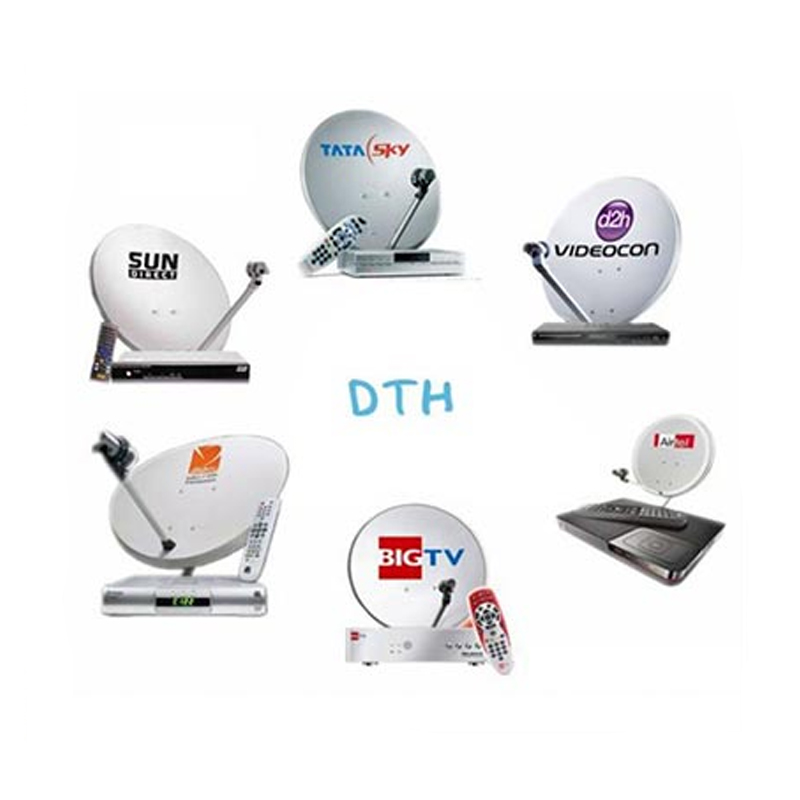
    Indiantelevision.com was the first to report that Bharti would be entering into the DTH business, joining Anil Ambani’s Reliance, Kalanithi Maran’s Sun Direct and the existing players Dish TV, Tata Sky and DD Direct Plus.

    Bharti also hopes to launch its IPTV services in the first quarter of the next fiscal, a source in the company says. UTStarcom is the digital service vendor for Bharti’s IPTV including the headend and the digital set-top boxes (STBs).

     
    “There are issues we still have to sort out on technology, cost and reach. IPTV could have limitations in India at this stage. DTH can give us a wider market,” says the source.

    Bharti had started test runs for IPTV with UTStarcom but later invited other vendors as well. Subsequently, it has been using UTStarcom for its IPTV build up.

     
    The telecom major has also announced the acquisition of a submarine network cable system from Network i2i, which is jointly owned by Singtel and a Bharti group company, for an overall consideration of $110 million. This will be subject to obtaining the requisite approvals.

    Bharti Airtel is structured into three strategic business units – mobile, broadband & telephone (B&T) and Enterprise services. The mobile business provides mobile and fixed wireless services using GSM technology across 23 telecom circles. The B&T unit provides broadband and telephone services in 94 cities while the Enterprise services provide end-to-end telecom solutions to corporate customers and national and international long distance services to carriers.

    Bharti has an aggregate of 33.71 million subscribers (as of December-end 2006), consisting of 31.97 million mobile customers.

  • TDSAT adjourns Tata Sky vs Zee case

    TDSAT adjourns Tata Sky vs Zee case

    NEW DELHI: The Telecom Disputes Settlement Appellate Tribunal on Friday adjourned the hearing in the appeal by Tata Sky against Zee Turner’s demand for carrying all the channels they have on offer.

    The case, which relates also to the technical issue of transponder constraint, has been adjourned till 9 February, as the counsel for Zee Turner contested the contention of Tata Sky that the regulations of Trai did not have a “must carry” provison., but just a “must provide” provision.

    The Zee Turner counsel said that there exist two specific Trai-issued documents that could be placed in the court right away, or later, as the court thought fit, which show that Trai regulations carry a “must carry” provision. The court finally fixed 9 February as the date for filing those documents with a note from the Zee counsel.

    Reading out the affidavit to seek to prove his point, the Tata Sky counsel said that Trai had made four points in the affidavit: first, that it was considering the issue and consultative paper would be issued, without fixing a timeframe for that; secondly, that the affidavit does say that there are capacity constraints on the transponders; thirdly, that DTH is at par with the cable operations, being an addressable system; and finally, that Trai says its regulations did have a “must provide”, but not a “must carry” provision.

    Tata Sky’s argument was that since the regulations did not enforce any “must carry” provision, the DTH operator was not bound to carry all the channels provided as package/s by a broadcaster.

    To this, however, the Zee counsel asserted that there were two earlier documents by Trai that specifically assert a “must carry” provision, and these could be produced in the court.
    Part of the dispute between Tata Sky and Zee Turner rests on the fact that the latter has been insisting that the DTH operator carry all its channels and could not “pick and chose” from them.

    The former had argued that the transponder constraint does not allow them to run each and every channel from a broadcaster they take signals from.

    In this context, in the earlier hearing on 2 January, Tdsat had asked Trai to look into the transponder issue as well as other issues. Trai has said today that transponder constraint is a reality.

    On this, Tata Sky today pleaded that since Trai was considering issuing a consultation paper, and yet, not fixed a date for that, Tdsat may ask Trai to fix a date and issue an interim order to that effect.

    However, the proceedings took a different turn with the Zee Turner counsel bringing up the issue of Trai documents mandating a “must carry” provision.

  • ‘Koffee with Karan’ to simulcast on Star One, World

    ‘Koffee with Karan’ to simulcast on Star One, World

    MUMBAI: Attempting to aggregate eyeballs, Star is bringing back the second season of filmmaker Karan Johar’s candid talk show Koffee with Karan on two of its upscale channels.

    The show will kick off on 11 February at 9 pm every Sunday and be simulcast on Star World and Star One.

    “Given its huge popularity, the show will for the first time be aired across our two channels Star One and Star World. Koffee with Karan has just the right mix of fun and excitement coupled with Johar’s own unique style. The show became a topic for coffee table discussions for everyone across the nation and we are delighted to have it back,” said Star Entertainment India CEO Sameer Nair.

    Star One is clearly planning to evolve a time band strategy, hoping to navigate eyeballs from Colgate Maxfresh Antakshari at 8 pm to Koffee… that will follow on the Sunday line up. The musical talent hunt show Antakshari will be aired on Friday, Saturday and Sunday on the channel.

    Along with the change in sets and look of the show, another addition is the title sponsorship deal that has been bagged by DTH service provider Tata Sky. Star Group owns 20 per cent in the DTH venture.

    Star has roped in PepsiCo, Colgate, HLL, Candila Healthcare and HDFC as associate sponsors, said Star India executive vice president and head, interactive media Ajay Vidyasagar.

    A SOL production, Johar will kick of the first episode with his three personal favourites Kajol, Rani and Shahrukh. Most of the second season episodes will consist of “celeb combos,” from a mix of entertainment, sport and corporate backgrounds.

    “We will have some rather interesting matches such as Mallika Sherawat and Sanjay Leela Bhansali, Vijay Mallya and Shobha De,” Johar said while addressing the press on Friday.

    The only episode having a single celebrity will be with Hollywood actor Richard Gere. “I have tried to make the show more irreverent, more tongue in cheek, more fun… and I am sure everyone will have fun watching it. The guests on my show will include a lot of my friends from the first season but in unusual combinations and will also feature big names from the corporate and sports world. I am sure that the show will recreate the same magic, as it did in the first season,” said Johar.

  • ‘Rolling out of Cas has been the most significant development’

    ‘Rolling out of Cas has been the most significant development’

    The Olympic motto `Citius Altius Fortius’ a Latin phrase when translated means Faster-Higher-Stronger. We see strong parallels between the motto and the Indian Entertainment & Media (IEM) Industry. India is among world’s largest media consuming and content creating markets. Paradoxically, IEM is just 0.7 per cent ($10 bn) of the global $1.4 trillion industry. Till now, poor policies, fragmented markets, low investments and leakages have kept the moolah remarkably elusive. However, with sweeping changes in distribution, convergence and integration of models, we see IEM growing to $21 billion by 2010. We are bullish.”

    The above mentioned observations of SSKI research aptly sums up the present upbeat scenario on the television and distribution sector in India. 2007 has been full of various significant developments in the television industry, which have laid the foundation for technological convergence, digitisation and addressability, thus ushering a new era in the sector which would revolutionalise the television viewing experience in the ensuing years.

    The most significant and landmark development of the year has been the successful implementation of Conditional Access System (Cas) in notified areas of Delhi, Mumbai and Kolkata. This is being regarded as a big leap towards migration from analogue regime to digital regime. The regulatory framework is acting as a catalyst in the process of digitization. Trai has already recommended to the government for extension of Cas in remaining areas of these three Metros.

    Trai has also submitted to the government a report of the Group on digitization for introduction of voluntary Cas in 55 more cities in a well defined time frame. It is now up to the information & broadcasting ministry, to trigger off the said process by laying down a clear cut road map.

    Prior to 2007 the digitisation rollout in cable was virtually negligible. However, now we expect it to be happening at an accelerated pace. It is estimated that by 2010, the total C&S homes are likely to increase to 90 million from present level of 68 million. It is expected that out of those homes, 37 million would be digitised.

    In October 2007, Trai had also sent its recommendations to the I&B ministry on the policy framework for licensing and issues pertaining to headend-in-the-sky (HITS), which too is a digital distribution platform. The ministry is examining them and once a final decision is taken on these recommendations, it is expected that the digitization in the cable segment will take off at a faster pace as HITS has potential of digitising the entire country within a short span of time.

    In addition to various benefits of digitization such as capacity augmentation and provision of Value Added Services (VAS) to consumers, digitisation also results in bringing transparency in the cable sector, which not only leads to better tax compliance and realisation of due taxes by revenue authorities, but also ensure equitable distribution of revenue across the value chain.

    The government is the biggest beneficiary of the shift from analogue to digital cable, as digitisation releases significant spectrum. The spectrum can be utilised for other services like telecommunications, defence, emergency, interactive platform and value added services. This is possibly what is driving the government to take the steps necessary for the evolution of digitisation.

    For instance, in Germany, the government subsidised Set Top Boxes for the low income group, whereas in Ireland, the government launched a company (Digico) to introduce digital terrestrial services.

    Digitisation in the cable segment will take off at a faster pace as HITS has potential of digitising the entire country within a short span of time
    _____****_____

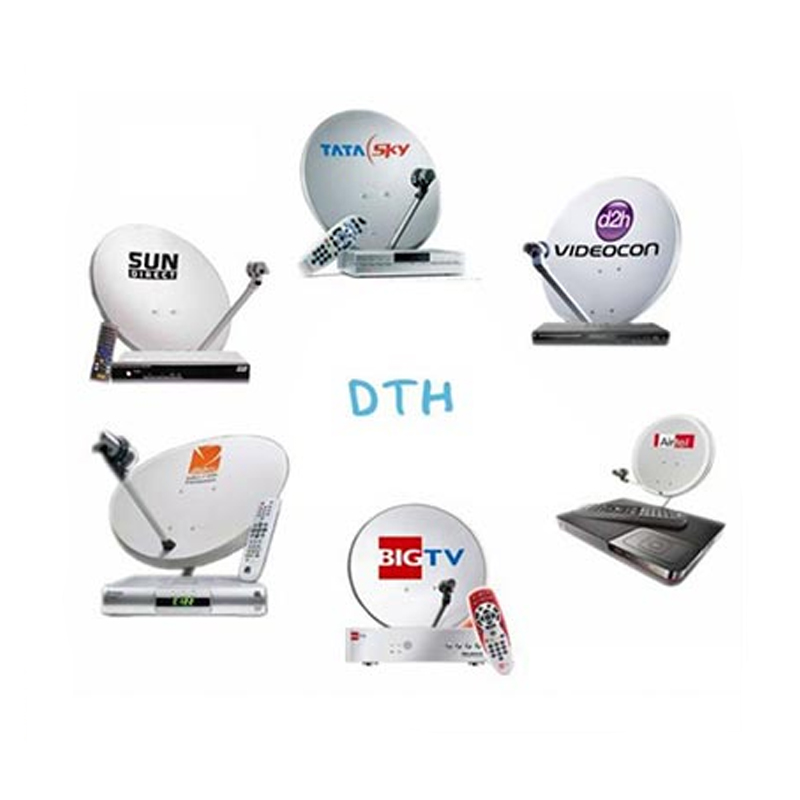
    Similarly in DTH distribution, the market is going to witness fierce competition amongst five to six players. In addition to the existing DTH operators DD Direct, Dish TV and Tata Sky, new entrants Bharti, Reliance, Sun TV and Videocon are also expected to launch their services shortly. It is expected that by 2010 the DTH segment would also have about 16 million digital subscribers.

    Similarly, IPTV and Mobile TV both emerging digital technologies are also expected to register an impressive growth by 2010.

    The year 2007 also witnessed lot of activities and developments on the content front. Though already about 270 channels are existing yet, unfazed by the large number of existing channels, several new channels of different genres were launched during the year.

    However, on account of bandwidth constraints on analogue network, the new channels are required to spend heavily on carriage fee in order to ensure their placement on the visible band in the cable network. The existing channels also witnessed intense competition and the entertainment/current affair channels were mainly dominated by “reality shows”.
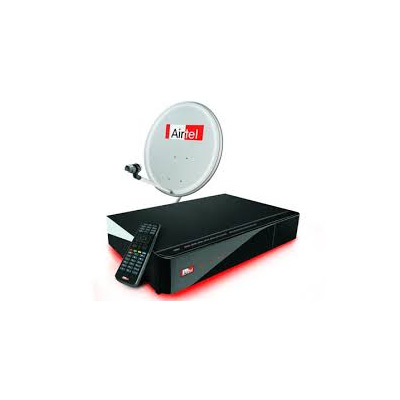
  • Insat 4A services disrupted due to minor glitch

    Insat 4A services disrupted due to minor glitch

    MUMBAI: Insat 4A, the satellite which Tata Sky uses for its direct-to-home (DTH) operations, saw a minor disruption in services for about 30 minutes at around 4 pm due to solar disturbances.

    Insat 4A lost earth lock when one of the momentum wheels used for stabilizing the spacecraft got switched off, Indian Space Research Organisation said today in a release.

    Isro engineers at master control facility, Hassan, immediately took action to recover the earth lock and orient the satellite properly within about half an hour.

  • Tata Sky, Zee Turner case: TDSAT asks for Trais’s position on DTH operations

    Tata Sky, Zee Turner case: TDSAT asks for Trais’s position on DTH operations

    NEW DELHI: The Telecom Disputes Settlement and Appellate Tribunal (Tdsat) today asked the Telecom Regulatory Authority of India (Trai) to look into the issue of transponder capacity as raised by direct-to-home (DTH) service provider Tata Sky as a limiting factor.

    The Tdsat has also asked Trai whether it would like to regulate prices for channels on DTH operations, as it has done in the case of cable operations in the Cas regime, or let market forces operate as they are now, in terms of broadcasters fixing their own prices.

    Trai had been asked to state the time they would need to do so, and their counsel wanted two weeks. Trai has been asked to file an affidavit by 19 January.

    Tdsat was hearing the ongoing case between Tata Sky and Zee-Turner, regarding the fixing of channel offered by the latter, which Tata Sky found too high. Tata Sky had filed the case earlier also because according to it, Zee-Turner had not acceded to its request to stream signals over the issue of prices, violating Trai regulation.

    The matter came to head when Tata Sky alleged that Zee-Turner was indulging in cartelisation, since it was not only a MSO, but also part of a broadcaster on behalf of Turner.

    While the Tata Sky counsel was addressing the court, the Zee counsel intervened to say that though Tata Sky was challenging Zee’s contentions on the ground that it was an arm of broadcaster Turner, the same was the case with Tata Sky, which had an agreement with Star television, and could simply not seek to plead as just a DTH operator.

    Tata Sky had said during the arguments that it had to operate through various transponders, and the total capacity of these was limited; but Zee rebutted that over and above the channels Zee was giving Tata Sky, the latter was still able to beam local channels, so the issue of a limited capacity of transponders did not hold good.

    This is when the court decided to rise and discuss the issue between the brother judges.

    On resumption of hearing, the court, instead of allowing the parties to continue arguments, directly addressed the Trai counsel and said that there are “larger issues that are worrying us”, and asked Trai to come out with their position.

    While the counsel for Tata Sky referred to an earlier judgement of the same court (July 14, 2006), the court said certain issues may have been overlooked and hence, it was only Trai that would first need to state its position.

  • Bharti likely to enter DTH arena

    Bharti likely to enter DTH arena

    MUMBAI: The direct-to-home (DTH) space is set to get more crowded in India with the telecom majors planning to join the fray in addition to their IPTV gameplan.

    Bharti Group is the latest player to have shown interest to enter an arena which will be occupied by Kalanithi Maran’s Sun Direct and Anil Ambani’s Reliance Group next year along with the existing DTH operators Dish TV, Tata Sky and Doordarshan’s DD Direct Plus.

    “We are looking at DTH and are rolling out IPTV,” Bharti Enterprises Ltd chairman Sunil Mittal tells Indiantelevision.com.

    Bharti, it is reliably learnt, had preliminary discussions with Indian Space Research Orgainsation (ISRO) officials. With several players interested to kick off DTH operations, Isro is finding it a challenge to meet the growing demand for Ku-band transponders.

    Sun, for instance, has had to wait after the unfortunate failure of the GSLV-F02 launch rocket carrying the Insat-4C communication satellite in July this year. Maran had booked seven high-power Ku-band transponders in this satellite, out of which six would have been used for DTH and one for digital satellite news gathering.

    Bharati, however, has not yet applied for a DTH licence. “We are still evaluating. We haven’t yet applied for a licence,” says Mittal.

    Though telecom companies in India have chalked out ambitious triple play plans, they have not yet managed to sort out the technical issues. Last mile access to customer homes has also remained a big hurdle and private telcos, who have built a strong mobile phone business, have even looked at striking alliances with local cable operators. On the content front, there is no regulatory clarity yet for IPTV rights.

    Bharati, for instance, had conducted test trials with UTStarcom as the digital service provider for IPTV, but later made it open for other vendors as well. A leading mobile service provider, Bharti’s (like the other private telcos) progress on fixed telephone connections has been slow. With an eye to increase this base and raise ARPUs (average revenue per user) by delivering video content into consumer homes, the company has taken several steps for IPTV rollout including setting up a digital headend in Gurgaon on the outskirts of Delhi.

    “With IPTV still to kick off, some telcos feel DTH offers good opportunity and synergy,” says a trade analyst.

    Reliance, thus, is launching DTH under the Bluemagic brand and has roped in former Dish TV CEO Sunil Khanna to head the operations.

    The formula now being worked upon by the telcos is obviously to have a DTH footprint as well as IPTV which would give them access to homes for delivering video content.

  • Tata Sky upping subscription rate to Rs 300

    Tata Sky upping subscription rate to Rs 300

    MUMBAI: Tata Sky is increasing the monthly subscription rate of its direct-to-home (DTH) service to Rs 300, sources in the industry say. The revised rate, up from Rs 200, is likely to come into effect from 1 December.

    Tata Sky, however, has decided not to offer “tiered” channel packages at this stage of the DTH market. “Bundling channels and fixing different rates is confusing to the consumers. The mobile telephony market has shown that to everybody in this country. Tata Sky will continue to offer a single package unlike its competitor Dish TV,” sources add.

    When contacted for a comment on the developments,Tata Sky CEO Vikram Kaushik remained noncommital.

    Tata Sky offers 102 channels (including Star, Sony, Zee, Discovery, Cartoon Network, Disney, ESPN Star Sports and National Geographic) and six interactive services (Actve Khabar, Actve Newsroom, Actve Star News, Actve Games, Actve Sports and an on-screen guide).

    Tata Sky had stuck to the introductory offer price of Rs 200 even after Zee Turner’s 32 channels had hopped on to the DTH platform in late September. As the interim pricing of these group of channels (fixed by The Telecom Disputes Settlement and Appellate Tribunal till the dispute gets resolved) was Rs 75, a rate revision was in the pipeline. But the debate was whether Tata Sky would subsidise the content cost to the subscribers in the wake of CAS (conditional access system) being introduced on 1 January with a la carte choice of channels that would pull down cable TV rates.

    Tata Sky claims to have a subscriber base of 250,000 and says it is on target to achieve one million within a year of operations. The southern region continues to be a weak spot with the Sun group of channels yet to join the platform. Tata Sky has moved the TDSAT, hoping to get a positive verdict which would ensure the supply of the channels from the Sun stable.

    The Tata Sky set-top box (supplied by News Corp owned NDS), hardware and installation cost has been priced at Rs 3,999 (inclusive of taxes) with a full service warranty for one year.

  • Addressable platforms offer huge revenue upscale for filmmakers

    Addressable platforms offer huge revenue upscale for filmmakers

    MUMBAI: The Bollywood industry has something to look forward to from emerging addressable platforms like Direct-to-home (DTH) and IPTV.

    Tata Sky will offer several dedicated movie and audio channels as part of its product package to lure subscribers away from the cable networks. “Movie-on-demand will allow consumers to view the latest films without ad clutters. They also can do away with pirated VCDs where quality is poor. We are showing a movie on multiple timings and this is quite popular with our subscribers,” said Tata Sky head consumer marketing Vikram Mehra. He was speaking at a session on the home entertainment segment.

    Tata Sky has already touched a subscriber base of 250,000 and is on target to achieve one million within a year of operations, Mehra added.

    Film producers and broadcasters suffered from a loss of revenues due to piracy and under-reporting of subscribers by cable operators. Having had to suffer from bad video quality, film producers can now tap an additional revenue stream with its addressable system of reporting subscriber figures, said Mehra. “Digital addressable system will keep all the stakeholders happy. The ground is ready for DTH to take off,” he added.

    Home entertainment in India offers only 7-8 per cent of total revenue collections for a film, while in the US it was as high as 65 per cent, said Silicon Image president and CEO Steve Tirado, while speaking at the same session.

    As digital content travels across devices, home would form an important part of the media distribution strategy. The challenge was to work out a digital interface across various devices.

    About 73 per cent of American households would rather watch movies at home as 80 per cent of them own DVD players. “Content will roam among devices. Storage will also form a critical part of home entertainment. Scheduled viewing is in permanent decline except for spectacles and live sports,” Tirado said.

    Fighting piracy was what all the speakers agreed would be at the core of generating more revenues. “We have to evolve a strong distribution network to combat this. Besides, penetration shouldn’t be the only focus and companies have to come out with strategies to get prices up,” said Saregama India MD Subroto Chattopadhyay.

    Speaking on the international business of home entertainment, Shemaroo CEO Hiren Gada said theatrical collections accounted for 60 per cent of overseas earnings. There was potential to rake in more money from territories outside the US (which contributed 30 per cent), UK (28 per cent) and UAE (20 per cent). Piracy and high acquisition prices were among the red flags that threatened the sector, he added.