Tag: Tata Sky

  • ‘We are refreshing BBC Entertainment in January’ : BBC Worldwide Channels director South Asia Deepak Shourie

    ‘We are refreshing BBC Entertainment in January’ : BBC Worldwide Channels director South Asia Deepak Shourie

    BBC Worldwide Channels is looking at cracking the Indian market a lot more seriously. The two channels, BBC Entertainment and CBeebies, were almost invisible for three years with a sole presence on Tata Sky, a DTH service provider.

    Now a lot more investments are being planned and the focus will be on beefing up the content and distribution of these two channels.

    BBC Entertainment is being refreshed in January and programming will be designed based on time bands for India.

    A local feed for CBeebies in Hindi is being examined, though a definite plan on this is some time away.

    For BBC Worldwide Channels, Asia is the fastest growing market. And within this region, India is emerging as an important market.

    While India has been flooded with American English entertainment content, BBC believes that the British flavour will be its big differentiator.

    In an interview with Indiantelevision.com‘s Ashwin Pinto, BBC Worldwide Channels director South Asia Deepak Shourie elaborates on the India plans for the two channels.

    Excerpts:
    How has BBC Worldwide grown its channel business over the past couple of years across Asia?
    The BBC Worldwide Channels business is ?262.5 million, up from ?225.5 million in the earlier year. The revenue from Asia grew from ?19 million to ?37 million. Asia is, thus, growing faster compared to the rest of the world.

    BBC is investing in new channels and geographies. About 35 per cent of BBC Worldwide‘s revenue comes from the channel business.

    In India, people say we are too late to enter. Are we? Global media companies are looking at India now. English content is watched by the affluent class. But is there space for everybody? People will have to find their strong propositions. BBC Entertainment will appeal to audiences who watch factual, entertainment and lifestyle content. We are bringing all of these genres into one channel. Our aim is to be a one stop destination.

    How important is India as a market for the BBC compared to that of Hong Kong and Singapore?
    The size is attractive. It is a market that is hot now. The other markets are good, but small demographically. India will be a very important market for us going forward.

    What is the roadmap that BBC Worldwide has set for their channel business in India?
    BBC World News is already there distributed in 34 million homes and holds its own as a premier news channel.

    As far as BBC Worldwide‘s channels are concerned, we have had BBC Entertainment and CBeebies in the market since 2007, but only as a small presence on DTH. They have not been mainstream. These two channels have had no advertising.

    We are refreshing BBC Entertainment in January with the tagline ‘Seriously Entertaining.‘ Our TG is 15-34 SEC A,B. In the daytime, viewing is leisurely. So we have lifestyle shows like Grand Designs that has Kevin McCloud following homebuilders. In the evening, we have factual entertainment like wildlife. Lifestyle content also airs like Extreme Makeover: Home Edition. At night, from 10 pm onwards, we have shows like Spooks, Top Gear and Sherlock.

    But why wasn‘t a push made earlier?
    That is always going to be a million dollar question. Should we have pushed earlier or is now the right time? The English market is expanding rapidly. So there is nothing wrong in entering now. The BBC Worldwide team in the UK is looking at India seriously now.

    How much is being invested in India and when do you expect to turn profitable?
    I cannot talk about numbers. However, all that I can say is that we see an opportunity here. Any market takes time to mature. Viewership traction has to be built along with the advertising base.
    ‘Research has confirmed that the audience we look at does not want localisation. There is enough local content around. The English audience wants international content‘

    Is the look and feel of BBC Entertainment being changed?
    The whole look and feel will change. The aim is to make it more vibrant and colourful.

    And from January, we will design programming based on time bands for India. There will also be a lot of fresh content and new shows.

    From 6-11 am, you have will light content like Trish‘s Fresh Country Kitchen. Early evening from 7 pm -10 pm will have a mix of lifestyle and factual shows like BBC Earth. Post 10 pm, we move towards more edgy, fast paced content like Luther which is about a detective who is fascinated by the darker side of human nature. London Live, which looks at the music scene, will also air at this time.

    The English GEC space is known for having ‘snacking‘ viewers. How do you plan to build loyal viewers?
    People want quality entertainment. It is not so much about storyline building as it is in the Hindi GEC space. People will come back to the show because of quality – there are shows like Wonders Of The Solar System and Human Planet. The key is to reach the audience with relevant content and, thus, offer advertisers relevant eyeballs. If you do this, then loyalty will automatically build.

    Is having a British flavour going to be your USP?
    That is important. Most content on air is from America. The BBC produces a wide ranging amount of content which has not been seen like Wallander, with Kenneth Branagh playing a detective in Sweden. The channel will give you everything.

    You also have other players coming into this genre like Big CBS. Do you see viewership growth happening as a result or will there simply be fragmentation?
    Viewership will change and grow. The question is whether everybody will get the viewership they are targeting. Fragmentation is a challenge. To counter it we are giving consumers everything in one channel. Our aim is to make an impact in the English entertainment space. The more you fragment by focusing on one genre, the chances are that people will see it.

    Are you selling BBC Entertainment to advertisers?
    Yes! The response is encouraging. We want to fill our inventory with quality clients. You have premium brands coming into the country. The world‘s most expensive car, Bugatti Veyron, has just been launched. They need to reach out to the relevant audience who are upscale. We will provide this audience segment. BBC Entertainment is being pitched as the Best of the BBC.

    The English space is worth $200 million and I see it growing. The nature of the market is such that you will depend more on advertising. Digitisation needs to spread for subscription revenues to really pick up.

    What are the synergies between BBC Worldwide Channels and the other businesses of BBC Worldwide?
    The magazine business has properties that the channels can exploit. An example of this is Top Gear.

    English GECs have started following a stripped strategy where one show airs at a time block across the week as opposed to a different show airing each day. Is BBC Entertainment doing something similar?
    A stripping strategy is good if you have long running shows. If it is not there, then it will not work as a concept. It depends on the concept. You can have factual content at a certain hour across the week, which we do. A documentary, though, cannot have that. The runtime is limited.

    Will localisation play a role in your strategy?
    No! Researchh

    has confirmed that the audience we look at does not want localisation. There is enough local content around. They want international content. The English audience is getting more confident. They are world citizens. They want world programming. Local shows will add a lot of cost for us, but not much value.

    What is being done for CBeebies?
    We could look at launching a local feed for it in Hindi in due course. As of now, we have not come up with a strategy for it.

    Are you launching more channels in India like BBC Knowledge?
    Not at the moment. BBC Entertainment has everything. When the time comes to have a wider bouquet of channels, we will look at it.

    BBC is launching BBC HD in more territories this fiscal. Is HD still some time away for India?
    HD is the future. Right now there is a bandwidth issue. Also, there are not many consumers who have HD ready television sets. When these two issues are sorted out, you will see a push for HD content. There will come a time when SD becomes HD.

    How will you leverage the mobile with 3G coming in?
    We will focus on this when the time comes. We know that people will want not just news but other genres like factual content.There will come a time when SD becomes HD.
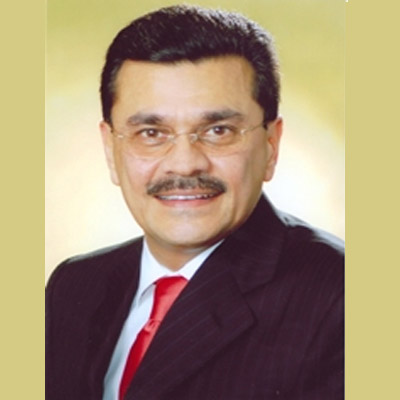
  • ‘The price war has come at an early stage of the DTH game’ : Vikram Kaushik- Tata Sky MD & CEO

    ‘The price war has come at an early stage of the DTH game’ : Vikram Kaushik- Tata Sky MD & CEO

     Tata Sky, a direct-to-home joint venture company between Tata Group and Star, is betting big on value-added services such as PVR (personal video recorder) and is ready to pump in another Rs 20 billion as it eyes a subscriber base of eight million by 2012.


    The focus is on building a strong brand with heavy spending on advertising. While rival network Dish TV has used Bollywood star Shah Rukh Khan, Tata Sky has Aamir Khan as its brand ambassador. Occupying a premium position in the mindshare has been part of the strategy as the company has the technology support of News Corp. and the trusted name of the Tatas.


    The DTH game has got tougher with competitive entries from Sun Direct, Reliance’s Big TV and Bharti’s Airtel Digital TV. This has meant a rise in project expense from Rs 30 billion to Rs 40 billion, lower ARPUs and high customer acquisition costs.


    Cable TV, which has a strong footprint across the country, is also offering stiff competition to DTH operators.


    In an interview with Indiantelevision.com’s Sibabrata Das, Tata Sky MD & CEO Vikram Kaushik talks about the company’s decision to stay away from being a discounted brand while fighting at different price points to tap different consumer segments.


    Excerpts:

    Has Tata Sky revised upwards the project cost from Rs 30 billion to Rs 40 billion?
    When we first formalised our business plan, we were looking at an investment of Rs 12 billion. Then we came up with a realistic estimate of Rs 30 billion. We revisited that plan and now believe our funding requirement for the venture would be Rs 40 billion. We have already invested half of this amount.

    Has the project cost gone up because of the higher element of subsidy in the Indian DTH market?
    When we first did our business plan, we didn’t expect so many DTH operators to come in. There is a lot of activity in the category and the price war has come at an early stage of the game. Competitive entries and an explosive growth in volumes mean higher costs. Customer acquisition accounts for a significant percentage of the costs.

    Will this mean that the gestation period for profitability will go up?
    I wouldn’t like to comment on when we would reach the break even situation. DTH is an infrastructure business and requires high investments and long gestation periods. We have no illusions about that. Generally, the break even for this kind of business is in excess of five years.

    Industry estimates put Tata Sky’s losses at Rs 8.15 billion in FY’07 and a little more than that in FY’08. Do these losses fall in line with your business plan?
    I can’t talk on financials.

    Are you in line with the projected subscriber growth?
    We have already touched 2.7 million subscribers and are targeting at least eight million connections by 2012. When we were at the drawing board, our broad plan was to add a million subscribers every year. We are growing faster than that.

    ‘When we first formalised our business plan, we were looking at an investment of Rs 12 billion. We revisited that plan and now believe our funding requirement for the venture would be Rs 40 billion

    But are ARPUs (average revenue per user) in place?
    I can’t reveal to you where our ARPUs currently stand. But there are definite efforts to push ARPUs up with the launch of value-added services such as PVR (personal video recorder). This technology allows subscribers to watch a particular television show while recording another. Viewers can also pause and rewind live television programmes. We have priced the set-top boxes (STBs) for PVR, which will use MPEG-4 compression technology, at Rs 8,999. For our existing subscribers, we will be offering at discounted rates.

    Isn’t the pricing on the higher side?
    Being below Rs 10,000, it is very competitively priced. We are aggressively marketing Tata Plus. In just a couple of days since launch, we have already sold 2500 PVRs. It took BSkyB 3-4 years to convert 50 per cent of its eight million subscribers to Sky Plus.


    Our priority is to make this really big as the product is very powerful and also addresses the ARPU issue. We realise that people in India are investing in high quality entertainment at home as out-of-home is becoming expensive. The PVR is a recognisation of this trend and we want to capitalise on it.

    Are you looking at niche content for lifting your ARPUs?
    Unless we have a critical mass, we can’t slice the market that thin in India. The Indian DTH market is endemically short of satellite capacity. We have 12 Ku-band transponders on Insat 4A, but want more and nothing is available at this stage. We can address niche audiences and offer more channels to consumers if we have more transponders available.


    It is, however, possible to offer premium content like lifestyle within large segments. On our interactive service, we have NDTV Good Times offering specialised cookery.


    Segmentation in the marketplace is also possible. And we have interactive services like Actve Wizkids (for children and pre-schoolers), Actve Darshan (24-hour darshan of Sai Baba, SiddhiVinayak, Iskon and Kashi Vishwanath) and Actve Matrimony. But the problem with interactivity is that it is very bandwidth hungry.

    What is the premium content you are lining up?
    We are in talks with movie producers like Sony Pictures, UTV, Eros and Fox for sourcing their movie content. We are looking at recent Bollywood, international and Hollywood content for our pay-per-view service. The challenge is how to get into revenue share deals as we can’t pay high MGs (minimum guarantees) and it is not attractive for the content suppliers if there are not high volumes.

    How about getting premium content channels?
    For premium content channels, we are at an early stage of development. There is also the transponder capacity issue. One area we are looking at is HD channels.

    Are you planning to strengthen your regional content line-up?
    Regional markets are integrated into the overall content plan. We have national, regional, international and eclectic consumers.

    Sun Direct has mopped up over one million subscribers in a short span of time because of its aggressive pricing. How has that impacted you in the southern market?
    Our growth has not stopped in the South because of Sun. We have the right kind of share in the right kind of segment. Sun’s pricing is unviable and we are at 30 per cent premium over them. Their strategy seems to reflect the pressure of their cable TV business while pricing their DTH proposition. The danger is that you can attract the wrong kind of customers – and you are vulnerable to a high degree of churn. In DTH business, this is a recipe for disaster because of the high subsidies involved in customer acquisition.


    The South has been a high pay-TV penetration market because of pricing. In this blood bath situation, one has to be cautious and keep away from just adding subscriber numbers.

    Isn’t market leader Dish TV also involved in the price war?
    More than Dish TV, it is Sun Direct which is acting as a discounted brand. The DTH market in India is open to segmentations. We are also offering subscriptions at Rs 99. But the question is how much at the bottom of the market you can afford to go.
    Why hasn’t the Tata Sky brand been able to stop Dish TV from mopping up a high number of incremental subscribers?
    Dish TV has followed a discounted brand strategy. We have operated at a Rs 1000 premium over them from the moment we launched. Dish TV has also picked up the low hanging fruit in smaller markets. Besides, they continue to work as an integrated media company and have leveraged that advantage as a vertical player.
    Has regulation worked against the DTH players?
    Regulations relating to the broadcast industry have been largely progressive. The problem has been the lack of a level playing field across the different addressable platforms. Why should cable operators get channels capped at Rs 5 in the Cas (conditional access system) areas? There is a structural inconsistency in this. Besides, the tax burden on DTH is scandalous. Around 40 per cent of our revenue goes towards taxes and licence fee. When our national objective is to push digitalisation, let’s lower the barriers and incentivise the sector.
    Hasn’t the Telecom Regulatory Authority of India provided some relief to the DTH operators by way of directing broadcasters to offer their channels at 50 per cent of analogue cable TV rates besides making them available at a la carte pricing?
    When we started, there was no RIO (reference interconnect offer). In fact, it is amazing that most of the content deals were done in the court. New players like Reliance, Bharti and Sun would have found it tough if the RIO regulation hadn’t come about.
     

    But even now there is an anamoly. Why should we get content from broadcasters at 50 per cent of what they offer to analogue cable when the Trai and the Information & Broadcasting ministry have formally admitted that the cable sector operates on 20 per cent declaration of their subscriber base?


    Besides, DTH should get content from broadcasters at Cas rates since we are an addressable platform.

    But aren’t cable operators offering set-top boxes even below the regulated price because of competition in the marketplace?
    Pay TV in India is subverted by cable prices which are artificially depressed because of under-declarations. DTH operators have had to drop prices because they have to compete with cable. Today the gap is higher between the two because cable TV pricing is artifically suppressed. If some DTH operators decide to go as low as cable, then it becomes unviable.
    Don’t you think exclusivity of content will allow platform providers to raise ARPUs?
    The ARPUs in the UK, US and Australia vary between $60-80. In India, the ARPUs are a fraction of this. Exclusivity of content is there in all markets except India. But we hope the regulation on exclusive content will also wither away. This will allow us room for being more creative and innovative.
    Since cable already has a wide presence, do you see them winning the war against DTH in India as in the US?
    DTH has already tapped over six million subscribers and will see explosive growth from now on. In the US, cable companies have made massive investments to digitalise their networks. And even there, 40 per cent of the market is still with DTH. Indian cable companies have not made such investments. Besides, the cable TV market here is hugely fragmented. And the last mile challenge (multi-system operators do not own much of the last mile which is with the local cable operators) will not go away.
    Tata Sky and Dish TV are on MPEG-2 compression technology while the new players have MPEG-4. What is the status on the inter-operable issue?
    There is a regulation on DTH boxes being inter-operable. But why have a law when this is not being followed?
    But why was Tata Sky opposing the inter-operable clause then?
    The regulator can say that the inter-operability clause was a mistake and just do away with it. We are asking for more clarity on the issue. If we are to switch over, then we want some amount of subsidy which the government can give from the revenue share that we part with them.
    There has been a drive to reduce the revenue share with government. What is the status on this?
    The Telecom Disputes Settlement and Appellate Tribunal has ruled that the licence fee for DTH services should be based on adjusted gross revenue – and not on the basis of gross revenue. But the government has not yet issued any notification on this.
    After Temasek Holdings took a 10 per cent stake in Tata Sky for $55.5 million, have we seen a rise in DTH valuations?
    I can’t talk about valuations or the price at which we got Temasek to invest in. But Temasek has 10 per cent while Star’s holding is untouched at 20 per cent and the Tata Group’s stake has come down from 80 per cent to 70 per cent.
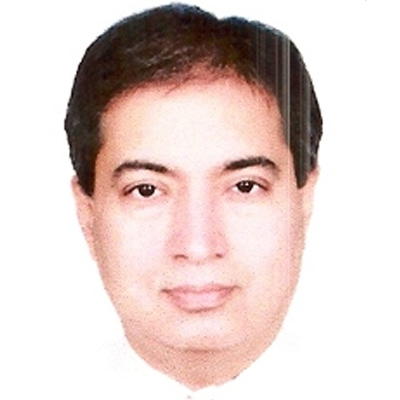
  • ‘A price war will expand the DTH market’ : Anil Khera- Bharat Business Channel Ltd CEO

    ‘A price war will expand the DTH market’ : Anil Khera- Bharat Business Channel Ltd CEO

     Venugopal Dhoot sees opportunity in the direct-to-home (DTH) business as he plans to push Videocon’s Plasma, LCD and premium TV sets.


    As part of Dhoot’s backward integration strategy, the consumer electronics giant will also manufacture the set-top boxes (STBs) in the Aurangabad factory.


    Bharat Business Channel Ltd (BBCL), a separate company for the DTH venture, will have a war chest of Rs 10 billion over two years as it readies to enter a turf that will see intense price competition.


    DTH in India, with players like Dish TV, Tata Sky, Reliance ADAG and Bharti, will be a low ARPU (average revenue per user), high volume game.


    Dhoot, not new to price wars, believes that the DTH market will expand and his distribution network will provide the pipeline for him to mop up one million subscribers in the first year.


    Heading the DTH venture is Anil Khera , who was earlier in charge of Videocon’s Sansui and Kelvinator brands.

    In an interview with Sibabrata Das, Khera talks about BBCL’s plans to quickly penetrate the DTH market across the country.


    Excerpts:

    Why does Videocon want to enter into the DTH business when the market has too many players and the race for subscriber acquisition is going to be led by a huge subsidy element?
    The total number of television households is pegged at 125 million and is growing at 12-15 per cent. The DTH subscriber base, which is currently a little over six million, is expected to touch 15 million by 2010 with the entry of new players like Reliance ADAG, Bharti and us. The DTH market will expand rapidly and there will be enough space for all the players. India will become the world’s largest pay-TV market by the stretch of numbers.

    Is Videocon entering the market because it sees DTH as an integrated business model with its consumer electronics business?
    We will be pushing our plasma, LCD and premium TV sets through our DTH service. Though we will firm up our offer plans closer to the time of launch, there will be some packaging done with subscription pricing, STBs and the TV sets. In many models, we will have in-built STBs. Unlike other DTH operators, we are a TV manufacturing company and will be making the STBs ourselves.

    Will Videocon Industries have any holding in BBCL and how much is being pumped into the DTH business?
    BBCL is a new company that has been floated for this purpose by the Videocon promoters. D2H+ is the brand name under which the service will be offered. We have already budgeted an investment of Rs 10 billion in this venture over the next two years.

    Is BBCL in talks to rope in an equity partner?
    No comments at this stage.

    How many subscribers are you targeting in the first year and at what ARPUs (average revenue per user)?
    We are looking at one million subscribers. We will be a premium service and expect our ARPUs to be Rs 200 in the first year.

    We will be pushing our plasma, LCD and premium TV sets through our DTH service. Unlike other DTH operators, we are a TV manufacturing company and will be making the STBs ourselves

    At what subscriber and ARPU level will BBCL break even?
    We expect to break even faster than expected because of our backward integration model. We will be manufacturing STBs and have strong distribution skills. The market will also expand better than expected due to competition from so many players.

    Aren’t you entering at a time when the price war will be at its height as Reliance and others launch their service?
    There will be a price war. That is when the market will also expand.

    Will Videocon manufacture STBs only for BBCL?
    Videocon has a strong manufacturing background. It will be manufacturing the STBs at its Aurangabad factory with the Korean technology. The STBs will be supplied to BBCL. Already 50,000 boxes have been manufactured.

    When will you launch and how many channels will be on offer?
    We will launch by October-end. The end-to-end instrument testing will happen in a week’s time. We will then conclude the date for friendly users test. We will start with 200 channels. We will have a range of packages available to our customers – from basic to the family and premium range. We will offer choice to the customers and will cater to the entire demographic pop strata, including the regional flavours.

    What is the differentiating content BBCL will offer to mop up subscribers?
    We are working upon many customer friendly schemes which we will announce when the commercial launch is about to happen. We are working upon few unique channels. We will also have a HD ready platform which would be bundled with the offers.

    How many Ku-band transponders have been booked and on which satellite?
    We have taken six Ku-band transponders on SingTel’s ST-1 satellite. We are using MPEG-4 compression technology and will be able to pack in more channels per transponder. Our encryption technology is from Irdeto. The uplinking centre is at Greater Noida.

    What is the call centre facility being created?
    We will be having a multi-lingual 24-hour call centre based at NOIDA/Gurgaon initially. Later we will have one each in the region of South as well as West.

    The telcos feel that they have IPTV plans and DTH will complement that growth. What is the synergy Videocon sees in the DTH business?
    We have been associated with consumer durables for over two decades and have a deep understanding of the viewing experience that a consumer seeks. We will drive penetration across the country soon.
  • B.A.G’s News24 is now available on Tata Sky

    B.A.G’s News24 is now available on Tata Sky

    MUMBAI: B.A.G Films and Media’s newly launched Hindi news channel is now available on direct-to-home (DTH) platform Tata Sky.

    Currently a free to air channel, News24 is expected to go pay by next month.

    B.A.G Films and Media MD Anurradha Prasad, “Television viewers will have one more platform to watch News24 wherein Tata Sky would definitely work as a catalyst in better brand positioning of the Channel. Going forward, we are confident of bringing back the discerning Hindi viewers to watch News24 as our message to all the viewers is that News is Back.”

  • ‘Our aim is to come up with total telecom solutions’ : Rajiv Agarwal – Essar Telecom Retail

    ‘Our aim is to come up with total telecom solutions’ : Rajiv Agarwal – Essar Telecom Retail

    The mobile retailing space is hotting up in India. Essar Telecom Retail, an Essar group company has entered mobile retailing in India with the launch of its “The MobileStore” outlets across the country. The basic aim is to be a complete telecom solutions provider.


    It has tied up with global media firm Virgin to provide the backend solutions like customer care. This marks Virgin’s entry into India’s burgeoning mobile sector. Virgin founder Richard Branson believes that this is an opportunity for the two parties to fundamentally change the face of mobile retailing in India.


    Indiantelevision.com caught up with Essar Telecom Retail CEO Rajiv Agarwal for a quick chat on the plans.


    Excerpts:

    Could you give me an overview of Essar’s mobile retailing initiative?
    This is a chain of retail stores that will serve as one stop shop for the needs of the mobile consumer. We are looking to fill a void that is present in the retail market. Today we have international players on the operators side, on the manufacturers side. But on the retail side we do not have an organised player. The customer is the most important element as all these people are working for him/her.

    As the number of mobile subscribers, users becomes more and more the market is becoming more complicated, which has created a void. Our aim is to come up with total telecom solutions for the customer.

    What are the different products and services being offered?
    One can buy cell phones, get repair services, do bill collection. We also have value added services like ringtones. We have media services like games, DTH connections, ipods, cameras. All are fast moving.

    What is the synergy that the group has in setting up telecom retail?
    Essar has decided to be in retailing in all their core businesses. We have been in telecom over the last 12 years. Our aim is to get closer to the customer. We have knowledge and awareness about telecom.

    As per research, what does the mobile user expect from a mobile retail chain and how is Essar going about fulfilling his/her needs?
    The mobile customer is looking for a range of products that he can touch and feel. He/she wants a store that is next to his house. He wants value for money, after sales service.

    Why did you decide against going the franchise route for your stores?
    There would have been the risk of our brand value being diluted. Also you have to manage many entrepreneurs if you walk down that road. This is a business where you cannot allow your service proposition to get diluted.

    The franchise route would have meant that there would have been no difference between us and any other mobile store.

    We have media services like games, DTH connections, ipods, cameras. All are fast moving

    Given that Indians are an extremely price sensitive won’t it be difficult for mobile retail to make a margin and have sustained revenue?
    That is the case for any product. We have developed our business model keeping this in mind.

    What is the investment being made and how many stores are being set up?
    In the next three years we are setting up 2,500 stores at an investment of Rs 1,250 crores (Rs 12.5 billion) across 600 cities.

    Over 70 stores have already been launched in places like Mumbai, Delhi, Kolkata, Hyderabad. In the next six to eight weeks we will have opened up another 100 stores. In the next six months we would be operating 700 stores.

    The stores are in three formats – large (1,000-1,500 sq ft), medium (800-1,000 sq ft) and compact (200-500 sq ft). The ratio being identified is 20:60:20 across large, medium and compact stores respectively.

    We are looking at a breakeven of three years for the business. The stores will cost between Rs 500,000 – Rs 5 million each to set up.

    What are the factors looked at to select each location?
    You look at places where customer footfalls are high. This could be in a mall or on a busy street. We will have the shop in shop concept to a certain extent going forward. Around 15-20 per cent of the stores will be in Metros.

    In terms of revenue how much comes in from where and who are the companies you have tie-ups with?
    Handsets contribute to 75 per cent of our revenues. We have tie-ups with all the major manufacturers like Nokia, Motorola, Sony. Mobile repairs are our core area. We have trained people in our stores who can look after the problem. We have straight tie-ups with the manufacturers and operators.

    We have a tie-up with Mauj Telecom for mobile games. For DTH there is Tata Sky, Dish TV. There are also opportunities for in-store advertising and merchandising.

    Could you talk about the back end solutions that have been put in place?
    We have a tie-up with Virgin. They bring retail knowledge in terms of softer skills in terms of customer relationship management. The deal is for brand licensing, technical and consultancy services.
    Virgin will provide their expertise in the areas of branding, marketing, customer care, store operations and staff training.

    We chose Virgin as that brand stands for good quality, brilliant customer service, innovation, fun and good value.

    Finally what marketing activities are being done to create awareness?
    We are airing ads during the broadcast of the cricket World Cup. A large portion of mobile users will be watching the event. We will also be doing a lot of print and outdoor activities.

  • Dishtv, Tata Sky plan schemes for World Cup

    Dishtv, Tata Sky plan schemes for World Cup

    MUMBAI: DTH service providers Dishtv and Tata Sky will use the upcoming cricket World Cup to entice their viewers and increase subscription numbers.

    Dishtv has come out with a World Cup For Free offer. It has come out with a special world cup promotional pack at Rs 3990, all inclusive with six months subscription free. This also includes dishtv’s sports active services free for the same six-month period. The offer is being introduced by the dishtv mascot who entices the viewer with his histrionics and invites them to this unique experience only on dishtv.

    Dishtv is positioning itself as offering active services that enable a better than stadium experience for the viewer. Besides digital picture quality and stereophonic sound, viewers will have value added controls.

    The matches can be viewed with multi-camera angles. Subscribers can watch a match through three different camera angles – the main feed, the square leg and the third which will be a mix of stump cam/high wide shot.

    Language Feed: The dish subscriber will have the opportunity to hear the commentary from a choice of five languages – English, Hindi, Tamil, Telugu and Bengali along with a live stadium ambient sound.

    Highlights: Match highlights, i.e. all wickets and key shots like – 4’s, 6’s will be available to the dishtv viewers at the press of a button whenever they want

    Statistics: The dishtv subscriber will have access to a stupendous Amount of cricketing data like team line ups, score cards, in-depth history of the players, their past records and so on again on their TV screens merely at the touch of a button.

    The firm says that subscribers will get the Sports Active services at no extra cost that would otherwise cost Rs. 25 per month.

    Dishtv CEO Arun Kumar Kapoor says, “Cricket is like religion in our country and the Cricket World Cup being the biggest opportunity to delight the consumers. With the advent
    of active services and new consumer offers available in the market, the subscribers have a win win situation. dishtv has always worked towards maximising its viewer’s delight and will continue to do so”.

    Commenting on the caricature launched by, dishtv to flag off the World Cup campaign, dishtv VP marketing Anjali Malhotra says, “The mascot lends a face to the brand that is warm, consumer friendly and trustworthy. Moreover he seems to simplify an otherwise perceived technology product apart from adding an element of fun to our communication as we are but, an entertainment provider to Indian homes. We are sure that the consumers will warm up to him.”

    As far as Tata Sky is concerned the company’s MD and CEO Vikram Kaushik says, “Tata Sky is offering free subscription for three months and has roped in actor Hrithik Roshan for its new marketing campaign.”

    He explains that as part of this campaign select viewers who have subscribed before 15 April will get to watch the World Cup final match with him. In adition the company is extending the free pricing policy to the second, third and fourth television set within a consumer’s household.

    “The new marketing campaign is a step to reach one-million subscriber base by the end of this year. We expect phenomenal subscription during the World Cup.”

  • Tata Sky to pump in Rs 20 billion, expects break even in 5-7 years

    Tata Sky to pump in Rs 20 billion, expects break even in 5-7 years

     MUMBAI: Tata Sky will take 5-7 years to break even and plans to further invest Rs 20 billion to ramp up its direct-to-home (DTH) business.

    “We have already invested close to Rs 10 billion. We will pump in a further Rs 20 billion,” says Tata Sky CEO and MD Vikram Kaushik.

    There is a hardware and content subsidy and it will take us 5-7 years to break even, he adds. Tata Sky charges Rs 3999 for hardware and installation cost while the subscription fee is Rs 300 per month.

    The DTH service provider has a subscriber base of half a million and expects to benefit largely from the ICC cricket World Cup with its free subscription promotional scheme for the next three months.

    It has roped in actor Hrithik Roshan for its new marketing campaign where select viewers would get to watch the World Cup final match with him.

    “We are on course to achieve our target of one million subscribers in our first year of operations. We have activated half a million boxes. The World Cup should give us a spurt as we have interesting value-added features. In the Cas (conditional access system) areas, we have also seen a rise in demand for our service,” says Kaushik.

    Tata Sky hopes to add on the Sun network channels soon. “There was a hearing in the court today. The final hearing will be before the first half of March,” says Kaushik.

  • SET Discovery targets Rs 4.5 billion in FY07 on back of World Cup

    SET Discovery targets Rs 4.5 billion in FY07 on back of World Cup

    MUMBAI: Riding high on the ICC cricket World Cup wave, SET Discovery expects to garner a revenue of Rs 4.5 billion in 2006-07. This would mean a growth of 40 per cent in a tight subscription market with cable operators resisting any big increase in payouts to broadcasters.

    “SET Discovery is targeting a total income of Rs 4.5 billion in 2006-07. This will include for the first time income from direct-to-home (DTH) which should be contributing eight per cent of the overall kitty,” says a source in the industry who is close to the company.

    SET Discovery signed a contract with DTH service provider Dish TV in June 2006 and subsequently with Tata Sky.
    When contacted, SET Discovery president Anuj Gandhi declined to talk on the financials of the company. “We had set an aggressive target this year and we are going to hit it,” he said.

    Despite a slide in Sony TV’s ratings, analysts say SET Discovery’s growth in the fiscal would be greatly helped by a rich lineup of cricketing properties that include ICC Champions Trophy and the ICC World Cup.

    SET Discovery’s revenue stayed flat in 2004-05 but rose 15 per cent to Rs 3.2 billion last fiscal as it added Ten Sports in its distribution bouquet. Sony signed a distribution deal with the sports channel which has key cricket properties that include the Pakistan, Sri Lanka and West Indies boards.

  • Sun ready, DTH play becoming hot chase for satellite space

    Sun ready, DTH play becoming hot chase for satellite space

    MUMBAI: Having finalised on Malaysia-based Astro as his 20 per cent equity partner, Sun network chairman and managing director Kalanithi Maran is preparing the ground to launch his direct-to-home (DTH) service. He has decided on Iredeto as the encryption system while the set-top boxes (STBs) will be from Coship Electronics in China and South Africa-based UEC Technologies, a source close to the company says.

    “He is also looking at more STB vendors. Besides the basic box which will be competitively priced, he will have graded STBs. Multiple vendors will ensure supply safety in case of a huge demand for his service,” adds the source.

    Maran will be using MPEG-4 technology that will allow him to compress more TV channels per transponder. While MPEG-2 can pack in around 12 channels, the advanced compression technology will be able to accommodate over 20 channels.

    Maran will have seven Ku-band transponders on Insat-4B, which launches on 10 March, while Prasar Bharati’s free-to-air (FTA) package DD Direct Plus will have five on the same satellite.

    He may consider himself lucky when the launch of Insat-4C satellite failed in July 2006 after the rocket carrying it veered off course and exploded. He had booked six Ku-band transponders (and one more for digital satellite news gathering) on it for Sun Direct’s DTH service.

    By being located on the same satellite, Sun’s subscribers will be able to access DD Direct’s channels without Maran having to separately put them on his transponders.

    Dish TV which was sharing the NSS-6 satellite with DD, will not be hit badly after the migration. Since NSS-6 is at 95 degree East, a minor realignment of antenna will be required for receiving the channels as Insat-4B shall be located at 93.5 degree East. Tata Sky, on the other hand, will have to recarry DD channels on their transponders.

    The DTH play in India is, indeed, turning out to be a hot chase for satellite space. If Tata Sky had to wait for the launch of Insat-4A as rival Dish TV aggressively went on mopping up customers, it is now the turn of Anil Ambani’s Bluemagic and Bharti Telemedia to plead with the Indian Space Research Organisation (Isro) to provide them with Ku-band transponders.

    In the sprint to start DTH before the market gets taken away, Bharti may be the clear loser. Unless, of course, it gets the approval from Isro to be on Measat-3, a foreign satellite launched from the Astro Group.

    “Measat has made their Ku-band transponders available for us and have supplied the data. We are studying it technically and are making an internal evaluation,” says Isro contract management and legal services director SB Iyer.

    The satellite has 49 dbW (decibel Watts) as compared to Insat’s 53. “We have indicated this problem and Measat has said that it would examine it and come up with a solution. Insat-4B has 53 dcW and offers a powerful beam across the country. We will have to ensure quality and also come into an agreement with Measat. Besides, the users will also have to express their interest in the satellite,” says Iyer.

    Measat-3 has 24 Ku-band transponders and has been designed to provide capability for data services and DTH applications in Malaysia, Indonesia and the Indian Subcontinent.

    If no clearance is given to Measat, Bharti will have to wait the longest with Insat-4G launching only by 2008-end. The DTH market could possibly have settled by then with the spoils being distributed among Dish TV, Tata Sky, Sun and Reliance’s Bluemagic.

    Anil Ambani will get a shot at the DTH market after Insat-4CR (replacement) launches in the quarter beginning July this year. Reliance has asked for eight Ku-band transponders and Isro is reserving the remaining four for other users like National Informatics Centre.

  • ‘TOI’ ties up with Tata Sky for marketing in Delhi

    ‘TOI’ ties up with Tata Sky for marketing in Delhi

    NEW DELHI: While the long awaited JV between Hindustan Times and Times of India may not have surprised anyone, another marketing exercise by TOI could: it is a so-far unannounced tie-up between TOI and Tata Sky for the marketing of its DTH service in Delhi-NCR.

    The deal is that Tata Sky is going to sell and collect the monthly subscription fees from their customers through the circulation department of TOI, now termed as Report and Market Development, or RMD department.

    Sources in TOI refused to comment. But while it is being said that a deal was signed earlier this month, Tata Sky CEO Vikram Kaushik told indiantelevision.com: “There is a lot of discussion with not just TOI but beyond that also, but nothing has been finalised as yet.”

    Tata Sky has been running a business module so far that involves selling its dishes and STBs through shops selling mobile phones and electronics equipment, especially TV sets. But that does not seem enough.

    They receive a large volume of orders and requests over the telephones which operate through BPOs. “If they have to land their own sellers to service all the new demands, it will be hugely costly and eat into their slender margins of selling boxes, especially due to the competition,” a source told indiantelevision.com, adding that each box is a one-time sale only.

    Which is why, Tata Sky, these sources reveal, has said that TOI’s newspaper vendors can be used to get feedback from those who called. The plan is that since TOI has a massive network of newspaper sellers, they could be coordinated through the paper’s RMD people. “The callers’ addresses are going to be passed on to the vendors who would make actual contact with the interested persons, thus saving Tata Sky the effort, time and cost.

    Similarly, Tata Sky has reportedly told the paper’s bosses that it alone has 200,000 DTH homes in the entire Delhi-NCR region, a lot of them being in the group housing societies in outlying areas of the NCR, like Gurgaon, Rohini, Ghaziabad and so forth.

    Tata Sky has proposed that the vendors also be used to collect the monthly charges for the card, which is a prepaid one.

    “They wanted to avoid the ‘cablewallah’ experience, where the cable operator’s grounds-man comes for the monthly rental and is sent back to come on another day. In any case, just as in the case of first-contact before a person buys a Tata Sky set, for collecting the monthly charges as well, the same inexpensive network of unskilled newspaper vending staff could be used.

    In fact, Tata Sky has convinced TOI that even if a fraction of the total monthly charge for each card is retained by TOI as collection fee, that is a substantial amount per month with Tata Sky having 200,000 users and the number growing. The system would be smooth and make business sense to both the paper and the DTH operator.

    It is not clear that this system would be tried in the other cities where TOI is read. It is believed that even in places where there is no TOI edition, but the company has bought other local papers, this system could be tried later.