Tag: Tata Sky

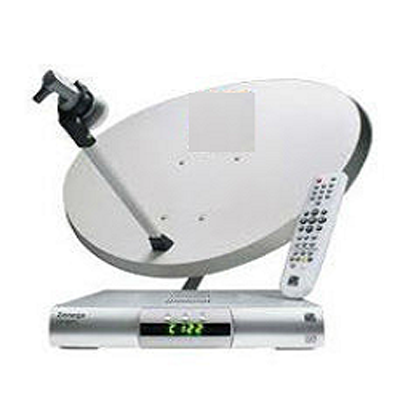
  • Tata Sky launches India’s first 4K set top box

    Tata Sky launches India’s first 4K set top box

    MUMBAI: Leading the innovation cycle, direct-to-home (DTH) operator Tata Sky begins the new year with the launch of India’s first 4K set top box (STB) in India. The set top box will be available for existing and new subscribers to enjoy the forthcoming cricket matches in ultra HD 4K picture clarity.


    Prospective subscribers can now book their Tata Sky 4K set top box at just Rs 6,400 while existing subscribers can avail the box at Rs 5,900. Subscribers can enjoy it as their first connection or an additional STB at home with the Tata Sky Multi TV connection option. Apart from relaying 4K content, the box will also showcase Standard Definition (SD) and High Definition (HD) channels. The 4K set top boxes can be pre-booked through the Tata Sky 24X7 helpline, Tata Sky website and dealers.


    Tata Sky 4K is a new generation set top box with the capability of delivering Ultra High Definition picture quality and Dolby Digital Plus 7.1 surround sound. 4K at 8.3 megapixels (3840×2160) has approximately four times the pixels as that of 2K (1920×1080) the current HD standard, thus brings far greater clarity and more vivid colors on screen for viewers.


    The launch of the Tata Sky 4K set top box has been timed just before the cricket matches. This will ensure that cricket and sports enthusiasts are well in time to own Tata Sky 4K STBs to witness the cricketing extravaganza for the first time in 4K picture quality.


    The launch plans were unveiled in July last year when Tata Sky showcased the first ever live FIFA World Cup quarter final match in 4K. Believing in taking innovation and customer needs to newer summits, Tata Sky has always been a step ahead of the industry, with launches such as the HD PVR (Personal Video Recorder), Video-On-Demand (VOD) service, unique interactive services, Everywhere TV, the Karaoke service and now the 4K set top box.


  • Tata Sky deploys speech recognition technology to improve customer experience

    Tata Sky deploys speech recognition technology to improve customer experience

    MUMBAI: Direct to home (DTH) operator Tata Sky will enter in the New Year, with the promise to service its customers better. And in keeping with that, the operator has partnered with Nuance Communications for its speech recognition technology which will be deployed in all Tata Sky contact centres.

    With this technology, customers calling into the contact centre can speak naturally, in English, Hindi and 10 additional Indian languages, to resolve their questions or be routed to the appropriate customer service representative.

     Tata Sky has a widespread network, providing over 270+ channels and interactive services Pan India. Previously, customers calling into the contact centre would have to navigate through lengthy menu prompts to be routed to the appropriate agent to handle their question, causing unnecessarily long call times. Tata Sky turned to Nuance to implement speech recognition technology into their Interactive Voice Response (IVR) system so that callers could simply state the reason for their call. A popular service provided by Tata Sky is allowing customers to simply say the name of a movie and the desired time for viewing in order to watch a Showcase movie. This process is  now  completely automated and saves customers from having to wait to speak to an agent to order a Showcase movie, reducing unnecessary call transfers and allowing agents to answer more complex queries.

    Tata Sky CEO & managing director Harit Nagpal said, “We wanted to provide our customers with a convenient experience that provided them with the service they desired quickly and eliminated the need to wait for an agent. We looked to Nuance’s speech and language solutions because of Nuance’s ability to service our customers in English, Hindi and 10 additional Indian languages as well as the robustness of the solution in terms of handling calls quickly and efficiently. Nuance’s professional services helped us to build a solution that integrated well with our current system and mapped well with our business processes. This deployment has successfully impacted the customer experience at Tata Sky.”

    “Tata Sky’s IVR speech implementation has given them a real advantage when it comes to servicing their customers, setting them apart from the competition,” said Nuance general manager, India & ASEAN Sunny Rao.

    “Speech recognition allows customers to have an experience that exceeds expectations. Customers can now receive service how and when they want, by choosing their preferred language and speaking conversationally,” concluded Rao.


  • The DTH industry’s big developments in 2014

    The DTH industry’s big developments in 2014

    MUMBAI: 2014 was the year of mixed fortunes for the direct to home television industry in India. The seven players in the industry continued to burn cash as customer acquisition costs continued to stay at high levels, at least one of the players spent a large part of the year looking for a white knight, all the players pushed ahead with their HD offerings in phase I, and II digitisation areas, leading to attractive rises in average revenues per user. The total number of registered subscribers and active subscribers, for all the six DTH players, as per the Telecom Regulatory Authority of India (TRAI) report, as on 30 June 2014 was 67.57 million and 38.24 million respectively. Close to 43.41 per cent of DTH subscribers were inactive till June 2014.

    At least two of the players have started generating positive cash flows during the year, even as new spectacular announcements of preparing launches of Ultra HD or 4K services were made during the year. Fresh debt and equity infusions, efforts to introduce new subscriber packages, and an announcement of new policy directions for licensing DTH by TRAI were the hallmark of the year.

    The DTH industry in the country saw some big innovative changes being made over the year 2014. These helped the industry in adding more subscribers while marginally increasing the average revenue per user (ARPU).

    The year began with three DTH operators, Tata Sky, Sun Direct and Reliance Digital TV being issued notices by the Information and Broadcasting Ministry (I&B) for not showing the mandatory 24 Doordarshan channels. Later on the Ministry also pulled the entire DTH industry for not paying licence fee worth Rs 2066 crore.

    The DTH ops resisted the amount stating that they had been paying the fees on the gross revenue (GR) basis while the government was extracting it on the adjusted gross revenue (AGR). A court case on the same had been pending from nearly four years and is still ongoing. However, Tata Sky and Reliance decided to challenge the same in the Telecom Disputes Settlement Appellate Tribunal (TDSAT) while Sun Direct made an application on its 2009 petition regarding AGR.

    The licence fee case was put in the backburner by the TDSAT stating that since it is relative to the telecom case on licence fee issue, it would hear that case first and then come to the DTH case. By the end of the year, however, the TDSAT agreed to hear the DTH ops separately rather than wait in line, the case is still on. Tata Sky in the meanwhile has already paid a sum of Rs 383 crore to the I&B Ministry, while Dish TV awaits court orders.

    The budget 2014 got some relief to the set top box (STB) manufacturers by reducing the excise duty from 12 per cent to 10 per cent from February to June 2014. However, they continued to fight the entertainment and service tax that was being levied on them since several years while cable operators go without paying it. Dish TV raised the issue with the finance minister Arun Jaitley and then I&B Minister Prakash Javadekar to discuss the multi layered taxes, which however didn’t lead to any conclusive solution on the same. DTH ops are subjected to licence fee, 12. 3 per cent service tax and also entertainment tax at the state level.

    The DTH Operators Association also saw a change of head with Dish TV CEO RC Venkateish replacing Tata Sky MD and CEO Harit Nagpal. Doordarshan ADG Ranjan Thakur who also headed Freedish moved out due to the expiry of his term.

    Freedish has been working on adding several Indian as well as international channels through its auctions while also setting up MPEG-4 boxes alongside MPEG-2 for the interior parts of the country.

    Several new innovations came across last year. Tata Sky introduced a new feature of Karaoke on TV while Videocon d2h came out with a headphone attached to the remote for watching TV without disturbing others. Both of them also were the first ones to introduce 4K HD TV set top boxes in the country. However, the official commercial rollout for both has yet to happen. Tata Sky even did a live telecast of one of the FIFA world cup matches on its 4K TV as a demo.

    Dish TV on the other hand, chose to go local, by introducing customised packs for regional India. A sub-brand ‘Zing’ was launched that would give localised packages in the states of West Bengal, Odisha, Tripura, Seemandhra, Telangana and Maharashtra. The oldest DTH operator also heaved a sigh of relief when after months, it received the nod from the Sri Lanka government to commence operations for its DTH project in the neighbouring country.

    With markets being more receptive, Videocon d2h, which has been planning on launching its IPO since long, went ahead with its filing to SEBI for Rs 700 crore with seven banks managing the share sale. Much of what it can raise will go towards acquiring STBs and outdoor units. Dish TV is also contemplating on starting its own manufacturing unit, though it hasn’t laid any concrete plans on it yet.

    TRAI played a big role when it came out with its DTH licencing recommendation paper which is now pending before the I&B Ministry. The paper restricted broadcasters from owning more than one DPO which is likely to affect Dish TV/Siti Cable under Zee and Sumangli Cable/Sun Direct under Sun Network.

    The paper however extended the 10 year licence period to 20 years while the one time entry has been retained at Rs 10 crore. DTH operators whose licence term expires after 10 years will be allowed to apply for a 10 year extension. The licence fee has been reduced from 10 per cent of GR to 8 per cent of AGR.

    The earlier norm of providing a bank guarantee (BG) of Rs 40 crore was change to the amount payable as a licence fee for two quarters and will have to be renewed year on year till the end of the licence period. New entrants will however have to provide a BG of Rs 5 crore for two quarters and then progress as above.

    The year ended with the Comptroller and Auditor General (CAG) of India coming out with a scathing report on the management of satellite capacity for DTH service by the Department of Space (DoS). In it, it stated that over the years the DoS has been lagging in its satellite launches that were required by DTH operators, leading to them migrating to foreign operators and loss of revenue to the government. The DoS had also goofed up on charging Sun Direct and Prasar Bharati leading to a loss. On the other hand, its commitment to Tata Sky for first right of refusal for using its Ku band transponders, led to its transponder space remaining idle for years.

  • Discovery’s six point agenda for 2015

    Discovery’s six point agenda for 2015

    MUMBAI: The network has tripled itself in India in the last five years, and today operates in six unique genres through its robust portfolio of 11 networks reaching a cumulative 260 million homes in five languages.

    We are talking about Discovery Networks, which extended its brand experience by launching Discovery Channel Magazine. It has expanded the business fuelled by marquee initiatives – new channels, unmatched India productions and marketing innovations.

    And going forward, the network is going to focus on six points – maintain leadership across genres, maximise viewership, build on the strength of Discovery Kids; establish ID as a ‘must watch’ channel; deliver on ‘male-centric’ brand promise of Turbo; continue to produce path-breaking India content, continue to innovate; and deliver value to advertisers and relentlessly explore new opportunities for growth.

    The year 2015 brings with it a heap of opportunities, but the path was laid in 2014 itself. The network revamped its channel, Turbo, to skew more towards men. The repositioning came in as a response to research conducted over the past couple of years.  “The viewers’ feedback and our constant research suggested a vacuum in English entertainment genre for men. Indian television has primarily been dominated by female led programming. The refreshed Turbo channel is an upscale men’s television network that provides high-octane programming for its viewers.  Turbo broadens its content with more genre mix to offer variety to its male audience.  It also enhances its value proposition for its viewers, advertisers and affiliates,” says Discovery Networks Asia-Pacific south Asia and southeast Asia executive VP and GM Rahul Johri.

    One of the key reasons to rebrand was to widen the channel’s appeal. Its core strength will be variety.  “Turbo will be the only specialised content channel in the English genre, reflecting the promised benefits of digitisation.  The Indian television landscape is ever changing and we have stayed ahead of the curve by recognising the evolving trends and addressing them by creating new television genres and distinct audience segments,” he adds.

    With each brand having its own identity and evolution process, the network is continuously evaluating all its channels, and when need arises, it shall plan if others too need to be revamped or not.
    Not only this, a surprise move for many in the industry, the network was able to get its recently-launched channel ID-Investigation in Tata Sky’s Hindi channel base pack. The move was to cater to Hindi speaking masses.  “The channel’s specialised content dedicated to crime and investigation has wider appeal.  In three months of its launch, ID has gained tremendous popularity, and has become an ideal ‘channel of choice’ for the base pack,” explains Johri when asked the reason behind the move.

    Others like Discovery Channel, Animal Planet and Discovery Science have wider demographic appeal and thus, are the preferred channels for viewers in the factual entertainment genre.  These channels too are in the base packs of DTH platforms.

    Nonetheless, with TheOneAlliance, the distribution JV between Multi Screen Media (MSM) and Discovery Network, being dissolved with effect from 1 January 2015, after 12 long years, the network is pulling all strings to make the coming year a remarkable one.

  • Al Jazeera English now available on Reliance Digital TV

    Al Jazeera English now available on Reliance Digital TV

    NEW DELHI: Al Jazeera English is now available on Reliance Digital TV in addition to Dish TV and Tata Sky. The channel will be available on channel number 460.

     
    With this association, Reliance Digital TV viewers will be able to access Al Jazeera’s award winning and well acclaimed news and programme content from around the world at a click of a button. Globally, Al Jazeera English is available in over 260 million households across 130 countries.

     
    Al Jazeera Media Network marketing and distribution executive director Abdulla Al Najjar said, “We are delighted to be associated with Reliance Digital TV and are looking forward to cater to their subscriber’s base across India. I would like to take this opportunity to welcome all our new viewers in India to Al Jazeera English on all our platforms. We are committed to provide the highest quality coverage of India, from the region, and from our bureaus in all corners of the globe.”

     
    Reliance DTH Business head Ashutosh Srivastava added, “It has been our constant endeavor to offer a wide range of content to our consumers that enhances their television viewing experience on Reliance Digital TV. Al Jazeera is a valuable addition to our platform that will provide a significant blend of both national and international news to our viewers.”

     
    Launched in November 2011 in India, Al Jazeera English is known for its belief in the shared humanity of the global community, and as a result keeps real people at the centre of the story.


  • Tata Sky and UNICEF join hands to promote ‘Child-Friendly Schools and Systems’

    Tata Sky and UNICEF join hands to promote ‘Child-Friendly Schools and Systems’

    MUMBAI: Tata Sky, the leading Direct-to-home service provider in the country and UNICEF today announced their joint initiative to promote quality learning in a protective environment using the ‘Child-Friendly Schools and Systems’ (CFSS) package.

    Supporting the UNICEF cause, Tata Sky will offer its platform to raise funds from subscribers facilitating the CFSS package. Tata Sky subscribers would be able to donate either Rs. 20/- or Rs. 50/- per recharge by simply giving a missed call on the two numbers (090154 90154 and 09015690156 respectively) allotted specifically for this cause.
     
    With the launch of this three month long initiative, Tata Sky reinforced its philosophy, of focusing on creating a platform for children’s educational and holistic development. For Tata Sky, supporting UNICEF’s program on improving the quality of learning in a protective environment is another step in that direction.
     
    “This initiative is an enabler as it leverages the wide outreach of Tata Sky in remote parts of the country and raises mass awareness on the need for quality education and inclusive learning. It is an opportunity to engage with the growing middle class in India – the majority of Tata Sky’s clientele – to contribute in creating a joyful and conducive school environment for children,” said Louis Georges Arsenault, Representative, UNICEF India.
     
    UNICEF India Celebrity Advocate, Kareena Kapoor Khan will support the communication campaign for the initiative which includes promotional films, mailers, and social media and advocates that every child should have the right to quality education.  
     
    Launching the partnership, Kareena Kapoor said, “I recently visited quite a few schools with UNICEF to see child-friendly schools and to meet some of the girls and boys that are benefitting from these programmes. I was inspired to see spaces which are child-friendly. These are places where children are full of joy when they interact with teachers, where children feel safe and secure and where interactive and creative tools are used to ensure that children are happy and learning.”
     
    She added, “Kisi aur ka sapna apnake dekho, achcha lagta hai!” (Own someone else’s dream, it feels good).


  • CAG hauls up DoS on DTH satellite capacity management

    CAG hauls up DoS on DTH satellite capacity management

    MUMBAI: The Comptroller and Auditor General (CAG) of India has laid its report ‘management of satellite capacity for DTH service by Department of Space’ on the table of  Parliament. And the report has severely criticised the entire process of satellite capacity management right from planning of satellite capacity, to allocation and leasing of transponders.


    The CAG audit was to evaluate whether planning and realisation of satellite capacity for DTH service was done with a view to give economic, efficient and effective service, whether allocation of satellite space was transparent, fair and equitable and whether transponder lease agreements safeguarded the financial interest of the government.


    Failures of DoS


    The DoS has been lagging in its launch of satellites leading to losses of revenue as well as trust. Out of the nine satellites with 218 Ku band transponders, planned during the 11th five year plan, only three were realised with 48 transponders. This was only 22 per cent of the target.

    The audit report states that despite having sufficient funds, DoS did not consider procured launches for its ready satellites or acquire satellites in orbit and position it under the orbital slot coordinated by India. Technical problems with transponders and satellites committed for DTH also hampered the DoS and hence it was forced to use these capacities as a replacement for satellites being decommissioned.  Because it could not  fulfill the needs of the DTH operators, they migrated to foreign satellite systems. Of the 76 transponders which DTH operators were using only 19 of these were on Indian satellites in July 2013. That number fell to seven when, in July 2013, Tata Sky surrendered its 12 transponders and migrated to a foreign satellite. The DTH service providers later did not prefer to return to INSAT due to trust deficit. Crowding of foreign satellites would affect the INSAT system and result in non availability of the strategically important slots for India. This clearly has lead to  loss of opportunities for revenue generation and strategic interests.


    GSAT8 which was initially intended for DTH use ended up being allocated for non DTH use after a three year delay.  GSAT9 and GSAT15 were not launched citing non availability of launch vehicle GSLV. The audit saw that two other satellites were launched through procured launches. Rs 250 crore and Rs 345.36 crore were spent for launching GSAT 8 and GSAT 10.


    CAG also stated that the prices of transponders from foreign satellites were increased by 5 to 33 per cent over one to six year period, while INSAT users paid the same charge for over six to 10 years. When the DoS did decide to raise prices by 15 per cent, it was never carried out.


    The report gives the following recommendations:

    1.    DoS and ICC may frame a transparent policy for allocation of satellite capacity for DTH services and all future satellite capacity allocations may be made based on the same.

    2.    DOS may consider creating Ku band satellite capacity for DTH services commensurate with the demand in the sector and requirement for national and strategic applications.

    3.    DoS may clearly define short term and long term strategy for allocation of Ku band satellite capacity to DTH service providers on domestic and foreign satellites to ensure continuity to the existing users as well as to bring those DTH service providers using foreign satellites back to INSAT/GSAT system.

    4.    DOS may incorporate price revision clause in long term transponder lease agreements and revise the transponder prices in time to avoid extending undue benefit to the service providers.

    The CAAG report has also stated that the DoS also botched up on the INSAT coordination committee (ICC), which was set up to allocate satellite capacity. The ICC went into cold storage after June 2004, and was revived only in May 2011. In the seven years in between, the DoS directly allocated satellite capacity to DTH providers, which was not as per Satcom policy. The procedure for allocation of satellite transponders was not framed by the ICC; DoS thus committed capacity to operators without an ICC approved procedure. Even the Ministry of information and broadcasting which is responsible for broadcasting in India and is a member of the ICC was kept out of the decision making process as the ICC never met for seven years.


    Then DoS gave precedence to Tata Sky – though it was fifth in queue – and allotted capacity to it on INSAT 4A over Doordarshan, CAG has stated in its report. DoS said that DD had been given space on NSS-6 prior to allocation of INSAT 4A to Tata Sky and the state broadcaster could migrate only  after the end of its contract period. But it did not state if it first made the offer for INSAT 4A capacity to DD, which the latter turned down. This is significant in the context that DoS granted exclusive rights to Tata Sky.

    Tata Sky’s transponders on INSAT 4A were functioning with reduced power and it voiced concerns about the health of the satellite and urged the government to launch GSAT 10 to avoid adverse impact on its business.

    GSAT10 was launched only in 2012 and in 2013, Tata Sky declined to shift satellites citing that this won’t give it the additional space it now needed and moved on to its MPEG-4 conversion technique.

    Tata Sky had been committed exclusive first right of refusal by DoS for using Ku band transponders, which was not done with other DTH providers, the CAG has stated. “This created a difficult situation for DoS in allocating its Ku band transponders in the slot to any other DTH service provider or usage. Consequently, DoS did not allocate Ku band transponders of GSAT 10 to any other user fearing litigation from Tata Sky,” reads the report. It also adds that this location was “advantageous to Tata Sky, since the communication satellites occupying this slot could uniformly access the length and breadth of the country”.

    Thereby, the 12 Ku band transponders remained idle, which could have ideally generated more than Rs 82.80 crore a year. While DoS stated that GSAT 10 was just spare capacity the CAG says it does not accept this answer. “Spare capacity of Ku band on GSAT 10 was not a planned option, but a fall back option since Tata Sky was given exclusive first right of refusal on INSAT 4A. Pending Tata Sky’s decision, the 12 transponders could not be utilised otherwise, with the implied pecuniary loss to the public exchequer. Audit further observed that allocation of satellite capacity being the responsibility of ICC, the decision to keep satellite capacity as spare was taken without the specific approval of ICC,” it states.

    When the audit pointed the preferential allocation to DoS, the latter held a meeting with the DTH operator which agreed to relinquish its right. However, no formal amendment was effected as of March 2014. “The fact, however, remained that DoS did not give exclusive right of first refusal to any other DTH service provider, indicating that DOS gave a preferential treatment to Tata Sky over other DTH service providers,
    ” states the report.

    The following are mentioned as the special terms and conditions of the agreement with Tata Sky:

    – Commitment for satellite capacity was open ended, with provision for additional transponder capacity whereas in other agreements the satellite capacity was committed for the period of lease only.

    -Credits were provided in the case of interruption in service for more than 30 minutes to 24 hours at slab rates, whereas in the other agreements the credits were provided for interruption of more than one hour on proportionate basis.

    -There was a provision for inspection of customer’s earth station by DoS at the request of Tata Sky, where as this facility was not extended to the other DTH service providers.

    -Tata Sky was allowed to assign any of its rights or delegate any of its obligations to its affiliates upon reasonable prior written notice to DoS, whereas this was not extended to the other DTH service providers.

    -Chairman of Tata group was one of the non-functional directors in the board of directors of Antrix. Although there might be no direct impact on the decision making process within Antrix, allocation of Ku band transponders of INSAT 4A on exclusive basis to Tata Sky does raise the question of conflict of interest.


    Tata Sky MD & CEO Harit Nagpal sent out a response to indiantelevision.com on the CAG report.  Said he: “While the SATCOM policy allowed DTH platforms, both Indian and foreign satellites, it stated that proposals envisaging use of Indian satellites would receive preferential treatment. Tata Sky is  the only Platform that stayed with DOS, while others migrated to foreign satellites.  While we continue to wait for allocation of incremental capacity, we have invested over Rs 500 Cr to migrate to new compression standards to ensure carriage of channels for our customers, despite a shortage of transponders.”

    DoS agreed to lease 6.25 transponder units in INSAT 4B satellite at Rs 4.75 crore per transponder. However, the report found that DoS actually charged Sun Direct only for six transponders leading to a loss of Rs 46.92 lakh. It also allowed a bonus free access for 1.5 months after the permitted three months, leading to a loss of Rs 3.56 crore.

    In the case of Prasar Bharati, the DoS allocated an additional transponder to PB but did not enter into a firm agreement or MoU. PB then informed that due to this, it did not use the added space, thus leading to a loss of Rs 5.9 crore for lease, that wasn’t collected by DoS.


    Click here for the full report

  • Tata Sky gets ID in its basic pack

    Tata Sky gets ID in its basic pack

    MUMBAI: Even though many niche channels fear that people don’t consume them as they don’t fall into the base pack offered by the platform operators, the newly-launched ID-Investigation Discovery from Discovery Network’s stable has now hopped onto the basic pack of direct to home (DTH) operator Tata Sky on channel number 135.


    The channel was launched about three months ago and currently reaches about 30 million houses. ID is also available on Dish TV, Airtel Digital TV, Videocon d2h, Siti Cable, Hathway, Den Networks, GTPL, InDigital and Digi Cable.


    The channel provides shows on crime and investigation that are dubbed in Hindi. Speaking on this development, Discovery Networks APAC EVP and GM South Asia and South East Asia Rahul Johri said, “ID has been recognised for its distinct appeal, refreshing programming and unique positioning. We are delighted to have Tata Sky as our distribution partner and its viewers can enjoy the best investigative programmes in Hindi in the comfort of their homes.”


    Series that will air on ID include Disappeared, Who the (Bleep) Did I Marry?, I was Murdered, Evil,I, I Married a Mobster, Blood Relatives etc.

  • How DTH got digitisation right

    How DTH got digitisation right

    MUMBAI: Two years gone, two more in hand. But the cable TV industry is still grappling with getting its act right for digitisation. It was 10 years ago when the direct to home (DTH) players entered the Indian market with huge tasks in hand: introduce and convert people from the analogue regime into the digital ecosystem.

    Currently, the DTH sector commands about 36 million active subscribers (as per the recent TRAI report). While Dish TV was first to enter, it was soon followed by Tata Sky, Sun Direct, Airtel Digital TV, Videocon d2h and Reliance Digital. Not to forget, Prasar Bharati’s DD Freedish.

    How did the DTH industry manage to cultivate the business model which the MSOs are still finding cumbersome? Ask the DTH players and they say, it is because of their direct contact with the customer. “We were able to deal directly with the customer and provide a business model the way we wanted to. There isn’t any intermediary,” says Dish TV CEO RC Venkateish.

    Agrees Sun Direct CEO Mahesh Kumar, “DTH adopted the retail distribution model akin to aggressive FMCG/ telecom companies which is purely B2C. Majority of the employees at the senior and middle level are from the retail background.”

    The MSOs on the other hand had been running the analogue business, handled mostly by the local cable operators (LCOs). It was only after being pressurized by the government and regulator that they finally took up digitisation and started work on creating a proper business model. Tata Sky CEO Harit Nagpal feels that MSOs are working like puppets. “Cable operators are looking at digitisation as forced upon them. Digitisation is not about putting a box; this is inconvenient for the customer. It has to be sold to the customer as empowerment and not as a curse. DTH has done that.”

    While initially convincing the customer to switch from analogue to digital DTH wasn’t easy, what went in their favour was superior product offering with better quality sound and picture and selection of channels and packaging. “When DTH first came, it was the only digital offering. The country was largely analogue. That was the big advantage we had. We started from zero and had the opportunity to build the billing system and packaging,” says Venkateish.

    The claims made by DTH ops were supported by setting up call centres, backend and investment in brand building. However, what all executives agree as the best tool is the prepaid mode of payment. “The biggest success factor of the DTH model is the prepaid model which is a very transparent business model,” says Kumar.

    Nagpal feels that the crux of their model is the consumer centric approach, which MSOs don’t have. “You can activate and deactivate channels and packages whenever you want. Go on a holiday and don’t recharge. This is not yet possible in cable. The benefits of flexibility and empowerment in the case of DTH are in the customers’ hands,” he says.

    The only difference in the two is the pricing models for packages. While DTH starts its base pack at around Rs 200 to Rs 220, cable gives the entire channel list for approximately Rs 250. But Nagpal disagrees, stating that MSOs are not subject to taxes and also gets carriage fees from broadcasters. Whereas DTH, despite paying taxes and also paying for content, gives channels at a decently low cost with options of adding more.

    Kumar points out that DTH community has been able to segment the market and the customer which has helped the industry to do up-selling and consistently improve average revenue per user. Though the initial uptake of dishes was slow, over the years it has picked up speed. The choice of packages, HD channels, addition of newer channels and easy payment methods have put them on the better side of digitisation.  

    While DTH did have the upper hand in entering the market with a fixed plan of action, it is about time the MSOs come to terms with getting addressable digitisation done rather than just fixing boxes in homes. “DTH got digitisation right because we looked at it from what benefits it has to customer and not what the regulator is asking me to do,” points out Nagpal.


  • Epic ties-up with Tata Sky, Airtel Digital and Videocon d2h

    Epic ties-up with Tata Sky, Airtel Digital and Videocon d2h

    MUMBAI: Starting 19 November 2014, Epic channel, distributed by Indiacast, will be available on some of India’s leading DTH service providers; Tata Sky on SD channel 133, Airtel Digital on SD at 125 and HD at 126 and Videocon d2h on SD at 117. The channel is likely to be on Reliance Big TV as well. The channel will also be available across leading digital cable platforms i.e. Hathway, Den Networks, GTPL, IMCL and all leading independent cable platforms. At launch, the channel is likely to be in close to 35 million households.
     
    Epic will have action, drama, comedy, supernatural and narrative non-fiction content, set against Indian history and mythology. The stories will be innovative with high production quality and a distinct look and feel that will appeal to both men and women. Most of the content is shot at real locations with HD cameras. The programming line-up has a mix of fiction shows, narrative non-fiction shows, short form content as well as films at launch. The channel is all set to go on-air by 19 November 2014.