Tag: Tata Sky

  • Tata Sky launches localised campaign for West Bengal

    Tata Sky launches localised campaign for West Bengal

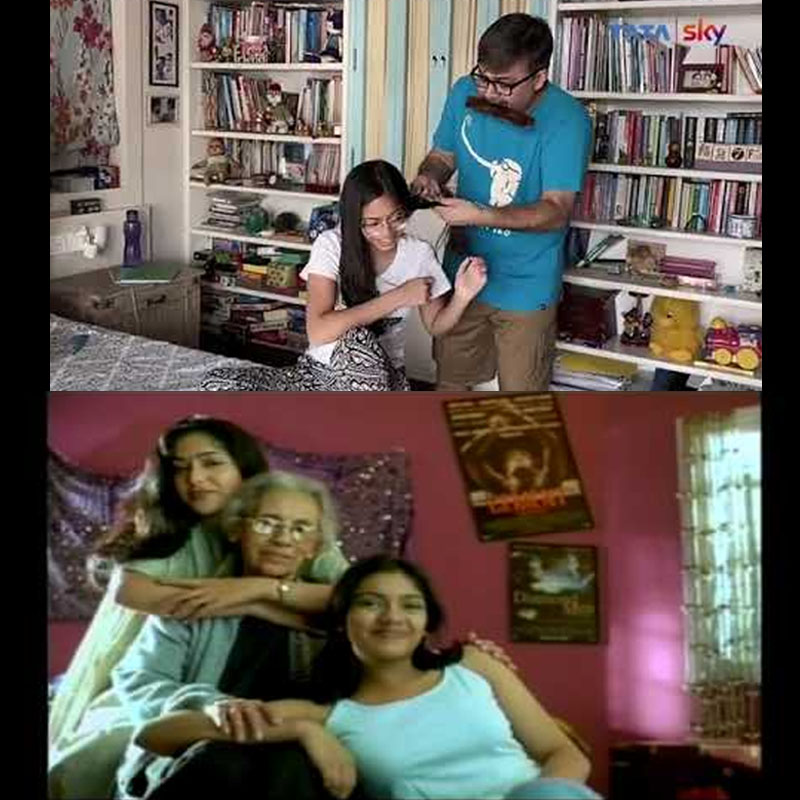
    Mumbai: Tata Sky has launched a new campaign – ‘Ki Darun’ in the West Bengal market to promote its Rs 225 pack.

    The pack comprises both Bengali and Hindi channels including drama, films, music, kids, news, sports and edutainment channels along with the benefit of on-the-go viewing available through the Tata Sky mobile app.

    To bring out the campaign messaging, Ogilvy India’s concept plays on the typical cultural distinctions of West Bengal like music and alpona. The marketing campaign also plans to seep into different channels of sales through a strong network of BTL and ATL initiatives targeted at engaging potential customers to convey the benefits of a Tata Sky connection. The specialised communication plan spread across print, TV and OOH is designed to resonate with the local audiences across locations.

    “For our regional campaigns, we’ve always played with local flavour that adds a distinct touch to the narrative,” said Tata Sky chief communications officer Anurag Kumar. “To connect with the viewers in West Bengal, we picked up the catchphrase- ‘Ki Darun’ to talk about our carefully curated offering that has all popular genres of content. Regional audiences love to watch TV and we feel Tata Sky’s ‘Sonar Bangla’ pack will make entertainment even more affordable for the consumers.”

  • Tata Sky launches new service Tata Sky Romance

    Tata Sky launches new service Tata Sky Romance

    Mumbai: Tata Sky has announced the launch of its latest platform service Tata Sky Romance to offer curated romantic content across Hollywood (dubbed in Hindi), Bollywood, and television to its subscribers. Priced at Rs two per day, the service is completely ad-free and is available for on-the-go viewing on Tata Sky mobile app.

    The DTH player has roped in Shaheer Sheikh and Sana Makbulhave to promote the new offering with a quirky campaign.

    Tata Sky Romance has a lineup of Hollywood blockbusters  “Bold & Beautiful,” “Cedar Cove,” “Ashk,” “Notting Hill,” “No Strings Attached,” “I Could Never Be Your Woman,” “Death Defying Acts,” “Heartbreakers,” “The Good Girl,” and popular Bollywood titles like “Jab We Met” amongst others.

    Going ahead, shows such as “A Place To Call Home” and “Juda Na Hona” will also be added to the service along with more film titles, said the DTH brand in a statement.

    “Romance is one of the most popular genres in India when it comes to entertainment. We believe Tata Sky Romance is a good destination for audiences preferring to watch content from a different country but in their own language,” said Tata Sky chief commercial and content officer Pallavi Puri. “The service provides the choicest selection of romantic titles across Hollywood and Bollywood on TV screen in Hindi, ad-free, making it a perfect gateway to unwind, this festive season.”

    “We at JOP Network are elated to associate with Tata Sky to bring to the audiences a special curation of romantic movies, shows and more from Hollywood and Bollywood that are sure to entertain the romantic chords of every viewer. These titles have been specially curated keeping in mind consumer likings, popularity and ratings of the shows and movies over the years. This first-of-its-kind service is sure to rekindle the heart,” added JOP Network director Urvi Agarwal.

  • There needs to be a level playing field: Tata Sky CEO Harit Nagpal on Free Dish issue

    There needs to be a level playing field: Tata Sky CEO Harit Nagpal on Free Dish issue

    Mumbai: Harit Nagpal, the MD and CEO of India’s largest Pay TV distributor – Tata Sky is known to be a vocal man. Time and again, he has used several platforms and occasions to bring the industry’s concerns to the notice of the government and regulators. Outlining these issues once again at the APOS India Summit – the two day virtual-event that concluded recently, Nagpal stressed upon the need to iron out disparities in regulation that exist in the current ecosystem.

    With the rapid emergence of multiple distribution formats and technologies in the past few years, he strongly believes that the “time has come for everyone to step back and take a look at the regulatory inconsistencies and biases prevailing across platforms.”

    Between the three main distribution technologies of DTH, Cable and OTT, “while both DTH and cable are licensed, regulated and censored (self), DTH pays a license fee while Cable doesn’t. OTTs, on the other hand, are neither licensed, nor regulated or censored, and they don’t even pay a license fee. Just because they came in at different points in time, different rules are applied to each one of them,” said Nagpal.

    In September, Tata Sky and Airtel Digital TV had written to the Telecom Regulatory Authority of India (Trai) asking the telecom regulator to address the issue of broadcasters making their pay channels available for free on DD Free Dish.

    Also Read: https://www.indiantelevision.com/dth/dth-operator/dth-operators-write-to-trai-over-broadcasters-offering-pay-channels-on-dd-free-dish-210909

    At the summit, Nagpal reiterated that while he appreciates Free Dish as a great channel of customer acquisition, there has to be a level playing field.  “There are roughly 100 million homes in India that don’t have a TV. They will not invest in a TV set and subscription simultaneously. Hence, at any given point in time there is a large pool that owns a TV but is not paying for subscription services. A subset of this population moves into the Pay TV universe every year, opening up a huge customer acquisition opportunity for us,” he explained, adding that “the problem begins when Free Dish starts serving them at no cost, the same content that we offer for a price.”

    According to Nagpal, this is an unfair practice on the part of certain broadcasters. It goes against the current tariff regime which mandates designating of channels as either pay or FTA. “This designation should be consistent across platforms,” he insisted. “A customer in rural areas does not understand regulations, and he starts distrusting us.”

    Commenting on the overall growth this year, Nagpal said, “We are north of 17 million homes; much in the same range as what we lost to FTA and economic losses faced by rural India. We have managed to keep our heads above water.”

    Despite the many challenges, he believes that pay TV delivered via cable or satellite cannot be written off in India so quickly. “OTT requires high quality broadband getting into homes, in which case the customer has to pay for both content as well as the pipe. In the case of cable and satellite they pay for the content only. So, when we talk of the masses, Pay TV is here to stay. Out of the 100 million homes without a TV some will keep getting them every year, and those numbers are far larger than the growth of paid OTT. Pay TV and FTA will also coexist and grow.”

    Even though DTH may not be facing an existential threat from either Free Dish/FTA or OTTs, its content that has historically been ‘mass’, will have to evolve, asserted Nagpal. “The masses also want innovation which is why there are nine million HD homes today, and many with HD are now looking for something new. Innovation has, therefore, constantly been on our radar. With regard to content as well, there is a very large number of discerning viewers among those who do not have access to the pipe. They are not happy with the ‘saas-bahu’ or the content of the past. There is a niche which is likely to grow, for which content needs to be invested in by broadcasters.”

    In fact, trends show that customers are not going off Pay TV even when they can afford or avail streaming services. Sharing his observations, the Tata Sky Nagpal stated, “The premium end of our user base did not switch off their Pay TV regardless of having access to VOD services. Binge Plus was an attempt to cater to this set of audiences. Whether a consumer wants to watch OTT or Linear on phone, tablet or the TV set, my job is simply to make it convenient for them.”

    In this space again, he welcomes the advent of aggregators like Prime Channels and Google TV to grow the market and industry together.

    Concluding the discussion with his thoughts on Tata Sky and the overall broadband market, Nagpal shared, “Broadband was never intended for the mass market because we didn’t have a network of fibre in the ground across the country. Our intention is only to reach our premium customers, and hence, it will remain a niche, very high-quality broadband play for us.”

    As for satellite, he averred, “In my understanding broadband is not reaching rural areas not because it is difficult to lay a wire to that place, but the fact that it will be difficult to find enough people in a village who can pay Rs 800 per month, month-on-month. Unless it can be delivered at the rate of Rs 200-300 per month, the economics of which is unviable, it looks unlikely. But we may be surprised in the future.”

  • Trai must focus on regulating process, not prices : Broadcasters at CII Big Picture Summit

    Trai must focus on regulating process, not prices : Broadcasters at CII Big Picture Summit

    Mumbai: As a regulator, the Telecom Regulatory Authority of India (Trai) must focus on regulating the process and not the prices, argued broadcast industry stakeholders at the CII Big Picture Summit held on Wednesday. The discussion was around the impact of new tariff order (NTO) 1.0 and 2.0 on linear TV broadcasting and the need for light touch regulation.

    The session was joined by Tata Sky managing director and CEO Harit Nagpal, Disney and Star India chief regional counsel Mihir Rale, House of Cheer Networks founder and managing director Raj Nayak, Ernst and Young Indian media and entertainment practice leader Ashish Pherwani and was moderated by Media Partners Asia co-founder and director Vivek Couto.

    The pay TV industry in India is the cheapest in the world and not by a small margin. Broadcasting is the largest contributor to India’s media and entertainment industry. India’s M&E industry accounts for 1.1 per cent of total GDP whereas in mature markets the contribution is usually 3-4 per cent. Panellists argued that excessive regulation by Trai is holding back the growth of the industry.

    “We belong to the service industry,” said Harit Nagpal. “A product like Tata Sky is aimed at customers who are willing to pay five to ten per cent extra to watch premium quality content. But when Trai regulates the prices, even if the customer is willing to pay extra, we can’t increase the prices. There is no incentive to invest in quality.”

    Trai’s intent seems noble on paper. The NTO regulations want to create parity in prices in linear TV broadcasting. However, there is a wide spectrum of customers in India that watch content. The players in the TV broadcast ecosystem understand the consumer’s needs and try to meet them with attractive prices. Trai’s regulation is akin to saying that a three BHK apartment must be priced the same whether you live in Cuffe Parade or the suburbs of Pune, remarked Raj Nayak.

    “When the regulator framed and implemented NTO 1.0 the stated objective was a-la-carte needs to be pushed in the interest of the consumer. Today, we know that if the consumer picks a-la-carte then his/her content costs will go up,” said Mihir Rale.

    Trai most contentious provisions in the NTO 2.0 were its twin conditions which mandated that average MRP prices of channels in a bouquet must not be more than 1.5 times the bouquet price. The second condition, which was struck down by a Bombay high court judgment, states that MRP of an individual channel in a bouquet should not exceed three times the average MRP of a channel in that bouquet.

    Rale said, “Linking a-la-carte pricing to bouquet pricing is a fundamentally flawed approach. The ability of the broadcaster to subsidise the cost to the consumer is important. Bouquets have an intrinsic value from an advertiser standpoint. We can customise and tailor our prices to everyone’s ability to pay. Why should that be taken away?”

    Stakeholders were of the view that Trai must step back and take a long hard look at the impact of NTO 1.0 regulation before implementing the amendment order. They said that consumer costs have gone up by 25-30 per cent and broadcasters have had to shut down a few of their channels. It was also noted that Trai must not assume every consumer is digitally savvy and will make the transition into the new regulatory mechanism easily. It is estimated that NTO 1.0 implementation resulted in the drop off of 12-15 million pay TV subscribers. 

    “We are in a free economy and the regulatory has come and put a price cap saying it is in the interest of the consumer. In fact, since there is a lot of competition in the linear broadcasting industry the fact is that broadcasters can’t raise prices indiscriminately without losing market share,” observed Raj Nayak.

    Trai has acknowledged that NTO implementation has yielded different results than what they expected. The need of the hour is for the industry to come together with the regulator and introspect on what’s best for the consumer.

    “The M&E industry is a creative industry. What we call different parts of the industry is just distribution. There are 130,000 digital influencers in India. How did this happen? Not by a regulated creative industry,” said Ashish Pherwnai. “The Indian media sector is $ 17 billion in size. How can regulation help us meet our targets in terms of percentage of GDP? Global companies like Disney and Lionsgate Universal get 50 per cent or more revenues from exports. In India that number is less than eight per cent.”

    Pherwani also talked about how the top studios in the US spend $20 billion on content, and in Europe, the top studios spend $40-45 billion. If 10 per cent of that market comes to us, then it is a $4 billion opportunity on a base of $17 billion, he said.

    The panellists hoped that the trust deficit between the regulator and broadcasting ecosystem can be dramatically reduced in the coming years and TV growth returns to 2017 levels.

  • Tata Sky launches Maharashtra focused campaign with Nana Patekar

    Tata Sky launches Maharashtra focused campaign with Nana Patekar

    Mumbai: DTH operator and pay-TV platform Tata Sky has rolled out a new Maharashtra-focused campaign featuring actor Nana Patekar.

    The ad film conceptualised by Ogilvy India has taken a spin on the colloquial Marathi phrases ‘Ugich Kashaala.’

    “With our new Maharashtra focused campaign, we not only highlight the distinct benefits of Tata Sky but also play on one of the most popular regional catchphrases i.e., Ugich Kashaala, to communicate that instead of needlessly postponing the decision, it is time for you to get a Tata Sky connection,” said Tata Sky chief communications officer Anurag Kumar.

    The brand highlights the convenience of watching live TV on the Tata Sky mobile app long with TV instead of fighting over the TV remote control.

    “This campaign is a great demonstration of how a culturally-rooted idea can be created to solve a business problem. We got Nana Patekar as the society’s favourite ‘Anna’ for admonishing people in his trademark style for asking Ugach Kashala Tata Sky?” said Ogilvy India chief creative officer Sukesh Nayak.

  • Tata Sky brings international content through new launch – ‘Videshi Kahaniyan’

    Tata Sky brings international content through new launch – ‘Videshi Kahaniyan’

    Mumbai: Amping the content game, content distribution and Pay TV platform Tata Sky has introduced a new platform service – ‘Tata Sky Videshi Kahaniyan’ to offer ad-free International shows and movies dubbed in Hindi for its viewers.

    The new service will give subscribers access to a vast collection of content across Korean, Bulgarian, Spanish, Ukrainian, and other languages, said the platform on Monday.

    “International content has been gaining popularity as stories from around the world resonate with Indian viewers,” said Tata Sky chief commercial and content officer Pallavi Puri. “For ‘Tata Sky Videshi Kahaniyan’, we are partnering with One Take Media, pioneers in global content production & distribution, to bring our viewers high-quality entertainment from across the globe at an affordable price. Some of the Korean, Bulgarian and Spanish shows on the service are very popular worldwide and will bring a richness and variety to the entertainment offered by Tata Sky.”

    The new service will be available on both DTH and mobile app, and will showcase blockbusters such as ‘Goblin’, ‘I am not a robot’, ‘Emergency Couple’, ‘Eternal’, ‘Undercover’ among others.

    The brand has also roped in TV personality, Rupali Ganguly of ‘Sarabhai Vs Sarabhai’ fame for promoting the new service. “I am excited to see my love for International content come to life with Tata Sky Videshi Kahaniyan. I have enjoyed shooting for the campaign and am sure that this service will be a complete entertainment package,” she said.

    “We are thrilled to partner with Tata Sky and launch their new value-added service Tata Sky Videshi Kahaniyan’, we have carefully collated the list of shows and movies for the service and are sure that the audiences will enjoy this collection,” said One Take Media Co-director Dimpy Khera.

  • DTH operators write to TRAI over broadcasters offering pay channels on DD Free Dish

    DTH operators write to TRAI over broadcasters offering pay channels on DD Free Dish

    Mumbai: Direct-to-home (DTH) service providers including Tata Sky and Airtel Digital TV have written to the Telecom Regulatory Authority of India (TRAI) asking the telecom regulator to address the issue of broadcasters making their pay channels available on Prasar Bharati’s FTA platform DD Free Dish.

    According to the DTH players, this goes against the current tariff regime which mandates the designation of channels as either pay or FTA and prohibits their bundling together. Tata Sky and DTH players want that such designation remains constant across distribution platforms, a matter they had requested the TRAI to look into earlier as well, but to no avail.

    It is being alleged that despite the above mandates and guidelines, broadcasters such as Zee, Sony, Star, Viacom18 and others continue to exploit loopholes to make their second-tier channels like Zee Anmol, Sony Pal, Star Utsav and Colors Rishtey available for free on DD Free Dish in order to increase their reach beyond the pay universe and get more advertising dollars. However, the same channels are present on private distribution platforms as pay channels, in accordance with their MRP filing with TRAI.

    DTH operators say that the practice is highly discriminatory as not only are the private DPOs paying the broadcasters to distribute these channels, but also charging subscribers for the same. On the other hand, DD Free Dish receives a license fee for making them freely available to viewers.  

    Reviving their demand, the DTH players have requested the TRAI to level the playing field for the public service broadcaster and themselves in this regard.

    Tata Sky CEO Harit Nagpal says that he is not against these channels being free nor is he asking the broadcasters to pull them off DD Free Dish, but asking for a level-playing field and parity. “We are just demanding that if these channels are available as free on DD Free Dish, it should also be the case on my platform. There are about 20 FTA channels on DD Free Dish that are being offered to my viewers at a price anywhere between ten paise – three rupees, which is highly discriminatory,” he says.

    Responding to the TRAI’s contention of DD Free Dish not being covered under NTO, he says that the regulator misses the point here. “This is not about DD Free Dish, but the channels,” states Nagpal.

    A senior official from a leading cable operator remarks, “I am not sure but the broadcasters may be taking advantage of a legal loophole where TRAI cannot regulate DD Free Dish which comes under Prasar Bharati. A channel that is allotted a slot on DD Free Dish may immediately gain 50 GRPs while FTA channels not on the free DTH players are struggling at seven GRPs. That’s the advantage of DD Free Dish.  Broadcasters slowly want to move pay-TV subscribers away from the value chain. In urban markets, they are going direct-to-customer by distributing their channels on their OTT platforms and in rural markets, they are opting for DD Free Dish. This practice boosts both advertising and subscription revenues for broadcasters.”

    Calling the unfair practice a “double whammy” for DPOs, he reveals that TV broadcasters are ready to pay Rs 8-16 crore in advance to be allotted a slot on DD Free Dish. “They are paying an enormous carriage fee and not charging a subscription fee for their pay channels on DD Free Dish whereas on cable and DTH operators they are paying much lower carriage fees and are charging a subscription fee. It’s a complete double negative.”

    It is important to note here that as per the new tariff order, 1.0 carriage fees on DTH and cable operators are capped at four lakh per month. According to TRAI performance indicator report Jan-March, DTH subscribers declined by 1.4 million at the end of March. 

    The unnatural growth in the number of pay channels on DD Free Dish has unbalanced the equation for cable and DTH operators. “Reports say that 40-50 per cent of the urban markets are already on OTT platforms. The rural market is still growing where broadcasters are trying to cut out ‘middle men’ like cable and DTH operators. This will slowly lead to the decline of the industry in five to ten years,” he reckons.

    Like Nagpal, he also demands that either the broadcasters should pull their pay channels from DD Free Dish or they should make those channels FTA for all DPOs. If there is parity on all platforms, no one will complain. 

  • Tata Sky’s new ad promotes aggressively priced Thalaiva pack

    Tata Sky’s new ad promotes aggressively priced Thalaiva pack

    Mumbai: Content distribution platform and pay-TV platform Tata Sky has launched a new campaign for potential customers in Tamil Nadu.

    The narrative of the campaign “Vera Level” communicates the elevated entertainment options that are offered by a Tata Sky connection – highlighting the regional family packs available along with a one-touch remote for the price-sensitive segment. This includes the Thalaiva pack that “combines the best of Tamil channels, drama, film, kids, news and sports channels curated for the benefit of the entire family,” said the company in a statement.

    Conceptualised by Ogilvy India, the communication plan for the campaign is spread across print, TV, OOH and designed to resonate with metro and non-metro audiences.

    “Regional audience has a very strong connect with their TV sets and what they watch in it. Keeping this in mind, Tata Sky has always been at the forefront to make the TV viewing experience worthwhile and engaging,” said Tata Sky, chief communications officer, Anurag Kumar. “Our new campaign for Tamil Nadu beautifully highlights the distinct benefits of a Tata Sky connection and connects with the audiences through their most loved regional catchphrases – ‘Vera Level’ which means taking anything to a superior entertaining level, just like a Tata Sky connection does with its varied offerings and personalised bouquets.”

  • DTH operators report sharp drop in subscribers in Jan-March: TRAI

    DTH operators report sharp drop in subscribers in Jan-March: TRAI

    Mumbai: The total number of active DTH subscribers declined to 69.57 million at the end of March 2021 from 70.99 million at the end of December 2020, as per the Telecom Regulatory Authority of India (TRAI). This is in addition to the subscribers of DD Free Dish (DTH service of Doordarshan).

    The share of leading DTH players stood at Tata Sky (33.3 per cent), Dish TV India (24.09 per cent), Bharti Telemedia (25.54 per cent), and Sun Direct TV (17.07 per cent).

    A total of 901 satellite TV channels have been permitted by the ministry of information and broadcasting (MIB) out of which 327 are pay-TV channels. There are 235 SD channels and 92 HD channels. All the other channels permitted by MIB may be considered free-to-air channels.

    There are 1726 MSOs registered with MIB out of which only 12 MSOs and one HITS operator have a subscriber base greater than one million. Siti Networks had 8.2 million subscribers followed by GTPL Hathway at 7.7 million, Hathway Digital at 5.6 million, Den Networks at 4.5 million, Thamizhaga Cable TV Communication at 3.5 million, Kerala Communicators Cable at 3.05 million, Tamil Nadu Arasu Cable at 2.9 million, Fastway Transmissions 2.2 million, NXT Digital (HITS) at 2.05 million, KAL Cable at 2.02 million, VK Digital at 1.7 million, Asianet Digital Network at 1.2 million and NXT Digital (Cable TV) at 1.1 million.

    There are 366 private FM radio channels in 105 cities with 30 private FM radio broadcasters. Odisha Television Ltd, has ceased the operation of its single FM radio station in the city of Rourkela, Odisha. The advertising revenue reported by FM radio broadcasters is Rs 321.52 crore as against Rs 323.01 crore in the previous quarter.

    There are 324 operational community radio stations up from 315 in the previous quarter.

  • Tata Sky unveils its first batch of Make-in-India set-top boxes

    Tata Sky unveils its first batch of Make-in-India set-top boxes

    New Delhi: DTH operator Tata Sky on Thursday unveiled its first batch of Made in India- set-top boxes which have been manufactured in partnership with Technicolor Connected Home and Flextronics.

    Talking about this landmark milestone, Tata Sky’s MD & CEO, Harit Nagpal said, “The India-made set-top boxes will help generate employment while reducing lead time. The boxes have been tested and re-tested beyond the factory floor for quality assurance, and we hope this endeavor will help us to serve the Indian consumers even better.”

    According to the DTH operator, the project builds further on the long-standing partnership between Tata Sky and Technicolor Connected Home, which provides set-top boxes and broadband access solutions for network service providers (NSPs) around the world. The mass production of the set-top boxes developed for Tata Sky by Technicolor Connected Home started in Chennai, in partnership with Flextronics in June 2021.

    Technicolor Connected Home, president, Luis Martinez-Amago said the announcement marks the accomplishment of objectives outlined in August of 2020, in which Tata Sky and Technicolor Connected Home committed to shifting the production and distribution of STBs – including Android TV-based Binge+ set-top box – within India.

    “This is another step in Technicolor Connected Home’s continuing investment in the growth of the important Indian market. The disruptions brought about by COVID-19 have illustrated the importance of having manufacturing and distribution operations that are as close to the subscriber base as possible. We remain committed to minimise risks and total cost of ownership of STB deployments,” he added.