Tag: Tata Sky

  • DTH’s year of consolidation

    DTH’s year of consolidation

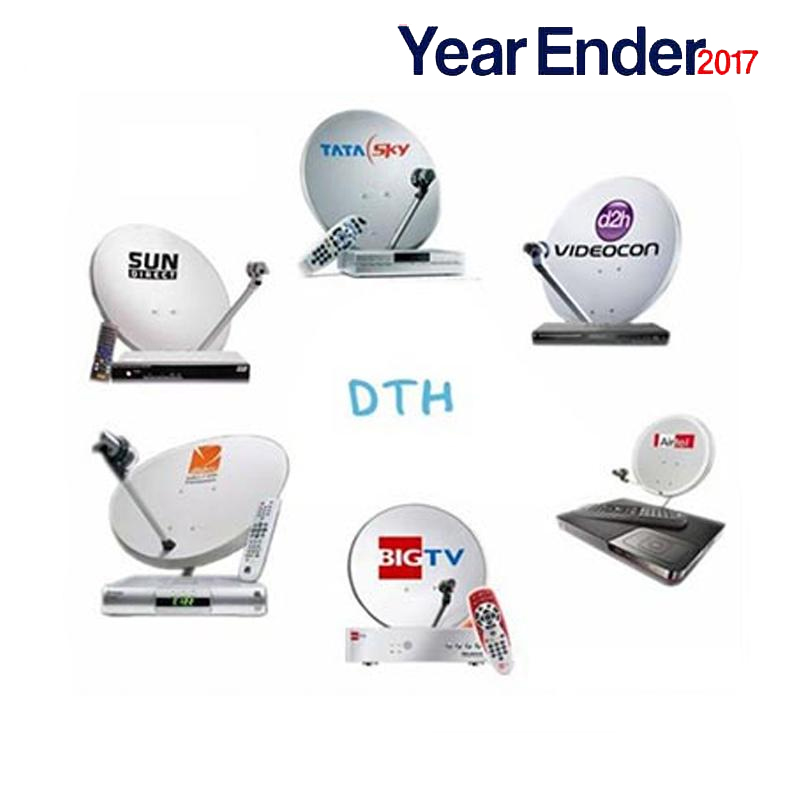
    MUMBAI: It would be safe to say that this was the year of the big DTH challenge. India’s cable TV multi system operators (MSOs) could not go into many phase IV areas and DTH stepped in wherever analogue broadcast signals were switched off following the crossing of the digital addressable system (DAS) deadline. Whether it was Tata Sky, FreeDish, Videocon d2h, Airtel Digital TV, Sun Direct or Dish TV, they all played a part.

    The going, however, was not as smooth as it could have been. High capex and opex and low ARPUs continued to dog the video distribution vertical making it an extremely low or no-margin business. While in the early days customer acquisition was the driver for most distribution platform operators, currently their eye has been on cost-efficiencies. This was evident from the ongoing overtures three of the players were making to others. Dish TV and Videocon d2h were already going through the throes of merging, the Anil Ambani-owned Reliance Big DTH was shopping around having conversations with almost every player, and there were talks of Airtel and Tata Sky possibly getting into bed with each other.

    The first nearly came to pass in 2017 with the two companies getting clearances from all quarters—government, courts and company law board—but getting stuck over the year end because of a technical difficulty. Reliance Big TV was sold to an IT and electronics company Veecon that sells security scanners and tablets–the wealth of its promoters is rumoured to be from selling religious lockets. Veecon said it would renew the Big TV licence by giving the requisite bank guarantees and ensure TV continuity for its approximately 1.2 million customers and jobs for nearly 500 people. It also announced that it would take Reliance Big DTH free to air (FTA) and announced a partnership with Sri Adhikari Brothers to launch a clutch of channels that would prove to be drivers of the platform. How Veecon will pay off Big TV’s payments to broadcasters was not clear at the time of writing and will decide whether the platform will ever take off.

    However, its announcement came at a time when the government had shut the door for private broadcasters and DD FreeDish, which had shown gee whiz growth rates, had come up as a powerful DTH player. New Ministry of Information and Broadcasting (MIB) minister Smriti Irani refused to make channel renewals for which several broadcasters took it to the Telecom Disputes Settlement Appellate Tribunal (TDSAT). An interim order gave the channels, whose licence was soon to expire, relief that they could continue by paying similar prices till Prasar Bharat came up with an alternative proposal and a convincing explanation to throw out private TV channels off DD Free Dish. It is expected that Prasar Bharati will formulate its new policy akin to the FM radio auction wherein 50 per cent of revenue is shared, apart from the bid amount, in e-auctions. Talk internally is that none of this would happen and DD Free Dish is most likely going to be used solely to relay government channels.

    Media reports also said sometime in the second half of the year that there could be more synergies between the Tatas and News Corp-promoted Tata Sky and Airtel Digital TV with possible merger talks taking place. That hasn’t happened as of now but the Airtel group did end up buying out certain telecoms asset of the Tatas.

    Also, private equity firm Warburg Pincus announced its decision to own 20 per cent stake in Airtel Digital TV for $350 million, leaving 80 per cent with Airtel’s promoters. That valued the Mittal-owned DTH service at a whopping $1.7 billion, which was mouthwatering news for the DTH pioneers. By September, Airtel claimed ownership to 14 million subscribers with revenue of $550 million.

    The year was significant for the fact that the DTH operators led by Tata Sky and Airtel Digital decided they had to take a tour of the court. The Harit Nagpal-led operator challenged the Telecom Regulatory Authority of India’s (TRAI) order on tariff and the reference interconnect regulations. The order stated that all stakeholders must abide by rates fixed by broadcasters. Joining Tata Sky in court was Airtel.

    Dish TV, the oldest DTH player in the country, appointed Anil Dua as its new CEO even as the company’s integration with Videocon d2h was on the anvil. Dish TV’s CMD Jawahar Goel raised an alarm over Star India’s monopoly in cricket events that, after its acquisition of the rights for the Indian Premier League (IPL), would force DTH players to include Star Sports channels and result in the broadcaster pricing the sports channels exorbitantly. No government reaction was forthcoming on this issue. Dish TV also took Star channel Life Ok to the TDSAT claiming that it could not rebrand itself as an FTA from a pay channel without sufficient intimation. Life Ok is today Star Bharat and a leading channel in BARC viewership ratings, riding on the expanded viewership courtesy Doordarshan’s FTA KU-band platform called DD FreeDish.

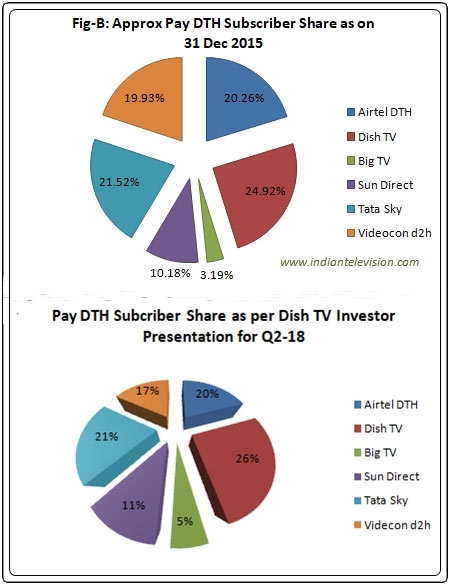
    For the quarter ended 31 March 2017, not only did subscriber additions dip drastically, but were also the lowest for a quarter in the financial year 2016-17. Airtel, Dish TV and Videocon saw total addition of just 8.33 per cent to 41.13 million for the concerned financial year. By 30 September 2017, there were just 2.47 million additions to the DTH industry as per TRAI, which was way below the 3.37 million it gained in the same six months in 2016. Moreover, active subscribers added in the July-September quarter were just 0.78 million, half of the figure from the corresponding quarter a year ago. Dish TV, Airtel DTH and Videocon d2h make up 63-65 per cent of the total active subscribers while Tata Sky holds about 21 per cent and Sun Direct 11 per cent. DD Free Dish is estimated to have 22 million subscribers and is expected to touch 40 million in two to three years.

    The second half of the year saw the introduction of the goods and services tax (GST) that gave a breather to those consuming cable and DTH services. Whereas customers once paid anything between 10-30 per cent as entertainment tax as well as a 15 per cent service tax, it was now fixed at 18 per cent. The Punjab government also announced that it would be adding a new entertainment tax to cable and DTH connections with the latter having to bear Rs 5 a month.

    Sun Direct is a major DTH player in the south holding about 40 per cent of the area. It also makes up 97 per cent of its total subscribers. Sun Direct took up an HEVC media solution from Harmonic to increase its HD channel number to 80.

    Profit after tax (PAT) for Videocon stood at Rs 168 million for the quarter ended 30 September 2017, which was just Rs 12 million for the previous quarter and Rs 148 million for the corresponding quarter a year ago. Dish TV, however, was in the red with net loss of Rs 178.7 million for the quarter as against PAT of Rs 689.6 million for the same quarter a year ago. During the quarter ended 30 September 2017, Airtel reported PAT of Rs 12,990 million down from Rs 27,350 million from a year ago.

    Videocon d2h and Airtel showed good average revenue per user (ARPU) numbers in 2017. The former raked in Rs 212 for the quarter ended 30 September 2017 from 13.25 million subscribers (a 0.21 million increase from the previous quarter). The ARPU for the previous quarter was Rs 198 while a year ago quarter was Rs 209. Dish TV’s ARPU for the same quarter was Rs 149, a rupee higher than the trailing quarter. It had a total of 15.1 million subscribers. ARPU for Airtel Digital TV stood at Rs 233 in the respective quarter, up from Rs 228 in the previous quarter and Rs 232 in the year ago quarter. Tata Sky does not release its financial numbers but analysts pinpoint its ARPU to be close to Rs 300.

    Dish TV introduced numerous value-added services (VAS) to encourage more viewers such as the Dance Active and Disney Active series, cardless STBs, 32 educational channels under Swayam Prabha. Early on in the year, it cut the rate of its base pack to Rs 33 a month to counter the free services by DD Free Dish. It even went to the extent of allowing people to curate their own packs by picking individual channels. Dish TV added 23 channels, which included nine HD ones.

    Tata Sky came up with a Make My HD pack for as low as Rs 30 per month and a regional HD Access pack at Rs 50 per month for users subscribed to regional SD channels. The channel targeted the south market with a South special pack at Rs 290. Dish TV campaigned for HD in all homes by removing the access fee on it and advertising a cost as low as Rs 169 per month (excluding taxes). Countering DD Free Dish, the oldest DTH player also introduced an FTA pack with a price translating to Rs 32 a month.

    On the technology front, Airtel’s hybrid STB was officially the first to launch in the market, bringing to consumers the best of both worlds–satellite channels and content available on the internet. The STB also came preloaded with Netflix and YouTube allowing even a regular TV to turn ‘smart’ courtesy an inbuilt wi-fi feature and Google voice search. Dish TV launched its new card-less security feature with Verimatrix as well as an artificial intelligence-enabled chatbot called ADI.

    For the coming year, the industry will likely see the outcome and growth of the first merger between Dish TV and Videocon and the synergies they bring to the industry. FreeDish is expected to be a big player in the remote parts of the country, especially with FTA broadcasters dancing to their tune. DTH operators have to still work hard to increase ARPU and maintain profitability.
     

  • DTH subscriber growth down in second quarter

    DTH subscriber growth down in second quarter

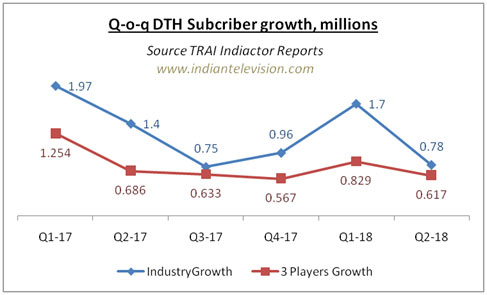
    BENGALURU: The carriage industry and more specifically the direct to home or DTH industry had a disappointing fiscal year 2017 (FY-17, year ended 31 March 2017) in terms of subscriber growth. Going by the subscriber numbers data of the six private DTH players in India provided by the Telecom Regulatory Authority of India (TRAI) in its Indicator Reports of the Indian Telecom Sector. This dismal performance seems to have spilled over to the second quarter of financial year 2017 (FY-18, year commenced on 1 April 2017 until 31 March 2018) as per TRAI data for the quarter ended 30 September 2017 (Q2-18, quarter under consideration). The industry could add just 2.47 million subscribers during the first six months (first 2 quarters, 1 April 2017 to 30 September 2017) as compared to the 3.37 million subscribers it added during the corresponding year six-month period the year before. Active DTH subscribers added in Q2-18 were just 0.78 million as compared to 1.4 million in Q2-17.

    Further, as reported by us earlier, despite the sunset date for DAS IV having passed, the DTH industry had not been able to leverage the opportunity that it was presented with. Earlier, TRAI numbers for the six private players in the DTH industry showed a very poor growth rate of just 0.96 million and 5.08 million during the quarter and year ended 31 March 2017 (Q4-17, FY-17) respectively. This figure is far lower – less than one-third of the 17.38 million active DTH subscribers that were added in fiscal 2016 by the six.

    Please refer to the figure below – The three players whose numbers are available in the public domain and whose combined q-o-q subscriber growth has been represented in the figure are Dish TV, Airtel DTH and Videocon d2h

    public://1_6.jpg

    Let us understand the status of the DTH industry at the end of September 2017. The six private DTH players are – Dish TV, Tata Sky, Airtel Digital Services (Airtel DTH), Videocon DTH, Sun Direct, and the Anil Ambani-led Reliance Big TV (Big TV). It may be noted that Big TV announced closure of its operations since November 2017. The three players – Dish TV, Airtel DTH and Videocon d2h represented approximately 63 to 65 percent of the active pay-TV DTH subscribers at the end of September 2017. Please refer to figure below for subscriber share of the private DTH players as per data in the public domain:

    public://2_1.jpg

    Besides the six private pay DTH players, Doordarshan’s (DD) Free Dish DTH service is a major player in terms of subscribers with an estimated 22 million as per the numbers available in the public domain. It must however be noted that an exact number for registered or active subscribers is not available even with DD, since this is a free DTH service. When the announced Dish TV Videocon d2h merger happens, the merged entity will probably be one of the largest DTH players in the world in terms of subscriber numbers.

    According to an E&Y report titled ‘India’s Free TV’ released in July 2017, among the DTH operators in India, DD Free Dish has grown to become the largest with its estimated 22 million subscribers which E&Y predicted could cross 40 million over the next two to three years.

    A number of reasons can be attributed to this dismal performance – two of the chief ones that are touted over the recent past by most players in media and entertainment industry – demonetisation in November 2016 and the implementation of GST. Another important reason could be that DTH is considered a premium service – by all the stakeholders in the carriage ecosystem with the resulting perception that procurement as well as monthly subscription will be premium and hence a deterrent for the consumer. While some players such as Dish TV have been making attempts to come up with packages that it perceives should attract the masses, but, results as per TRAI data seem to indicate otherwise. Yes, Dish TV is the largest private player in the country that has come up with different pricing models under different brands. Whether unwittingly or not, most of the other players present themselves as premium players and seem to have done little in that direction.


  • Tata Sky ties up with Ola Sunburn Festival 2017 to bring the biggest EDM extravaganza to small screens

    Tata Sky ties up with Ola Sunburn Festival 2017 to bring the biggest EDM extravaganza to small screens

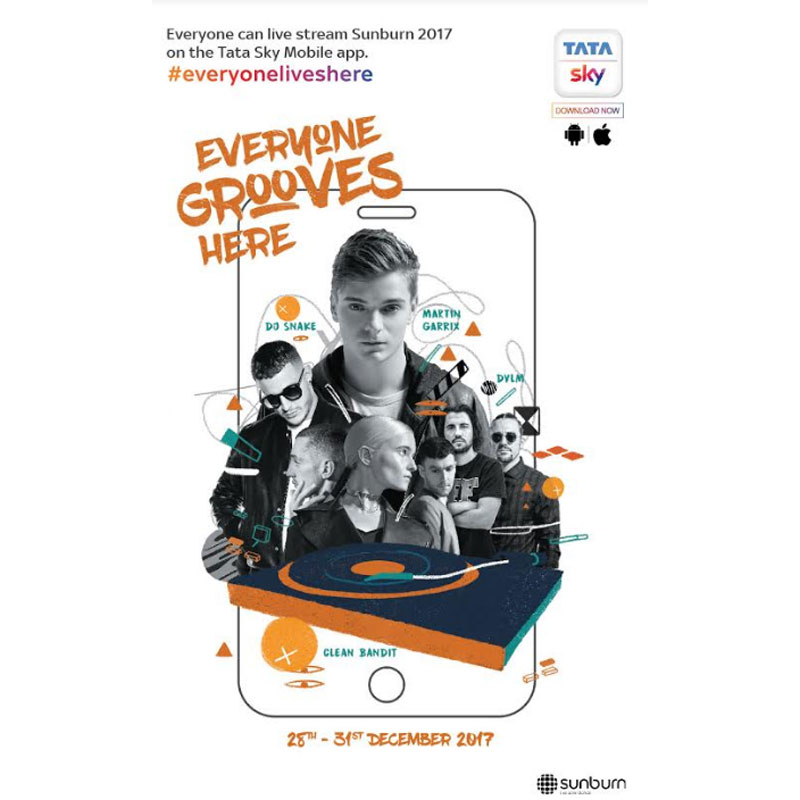
    MUMBAI: Tata Sky, India’s leading content distribution platform, tied up with Ola Sunburn Festival 2017, one of the largest music festivals in the world, to bring its eclectic mix of music, entertainment, experiences, celebration and lifestyle straight to the small screens. Apart from live streaming Ola Sunburn Festival 2017, Tata Sky Mobile App will showcase nearly 500 hours of music fest content from over the years too, which will be open to all users, including non-subscribers.

    Performances by the headliners of Ola Sunburn Festival – Dimitri Vegas and Like Mike, DJ Snake, Clean Bandits, Martin Garrix, Afrojack and KSHMR – will be live-streamed on Tata Sky Mobile App. Over and above the 4 days of live streaming, prior to the event there will be a rich library of content available on demand on the app. This includes official after movies, artist interviews, exclusive backstage footage and performances from the world’s top EDM acts such as KYGO, NUCLEYA, Hardwell, David Guetta, Tiesto, Armin Van Burren and many more as well as an archive of all the past events from Sunburn season 10.

    This is the first time ever that Ola Sunburn festival, which kicks off on December 28th, will be live streamed on the Tata Sky Mobile app making it the only OTT platform covering the festival live.

    The sheer depth of content on offer, which will be archived on the app for viewing after the festival ends, will allow EDM fans to fully immerse themselves in the 11th edition of Asia’s largest music festival on-the-go wherever and whenever they like. Moreover, Tata Sky will broadcast snippets of Ola Sunburn Festival 2017 on Channel 100 too.

    Tata Sky’s Chief Communication Officer, Malay Dikshit said, “With increasing screens and the appetite of millennials to experiment with content, it is essential to reach the entertainment needs of consumers, just the way they like it. To create endearing and impactful engagement with millennials and to bring alive content across all types and sizes of screens, the Tata Sky Mobile App has partnered with the hugely popular music festival – Sunburn.”

    The Sunburn Festival, the highlight of a year-long calendar of Sunburn events, has established itself as one of the annual ‘go-to’ events for EDM fans, drawing crowds of hundreds of thousands from India and around the world every year.

    To cater to these fans, Tata Sky has lined up a number of ground-breaking experiences:

    – A breath-taking 360-degree virtual reality experience that will let fans see what the DJ sees as he cranks out his tunes, putting them at the heart of the action like never before.

    – A Graffiti Wall where fans can get their photographs clicked and jazz them up by drawing over them with personalised messages, quirky costumes or spray paint.

    – A 3D hologram of the company’s logo at various points at the venue, in order to make fans’ engagement with India’s leading content distribution platform an even more experiential one.

  • 21st CF spins-off into new live news & sports co Fox

    21st CF spins-off into new live news & sports co Fox

    MUMBAI: After the blockbuster acquisition of 21st Century Fox by The Walt Disney Company, the former has announced that it will spinoff into a new brand Fox’ that will seek to replicate its own success in the newly focussed verticals of live news and sports brands.

    Using fiscal 2017 as a base, the new Fox is expected to have annual revenue of $10 billion and EBITDA of $2.8 billion. The company will have an investment grade balance sheet conservatively levered with a maximum of $9 billion of new gross debt or under 3 times net leverage on day one.

    Fox will hold iconic branded properties Fox News Channel, Fox Business Network, Fox Broadcasting Company, Fox Sports, Fox Television Stations Group, and sports cable networks FS1, FS2, Fox Deportes and Big Ten Network (BTN). It will also include the company’s studio lot in Los Angeles and equity investment in Roku.

    This new entity will own the top cable news channel in the US and the most-watched business news channel, as well as a station group, which is present in nine out of the 10 largest metro areas. Under sports, it holds the rights for NFL, MLB, World Cup Soccer and NASCAR.

    Fox will have a strong financial profile, supported by peer-leading growth and differentiated free cash flow generation, and will be positioned to continue to deliver consistent growth driven by affiliate rate increases, retransmission growth and strong advertising demand for its live content and entertainment product.

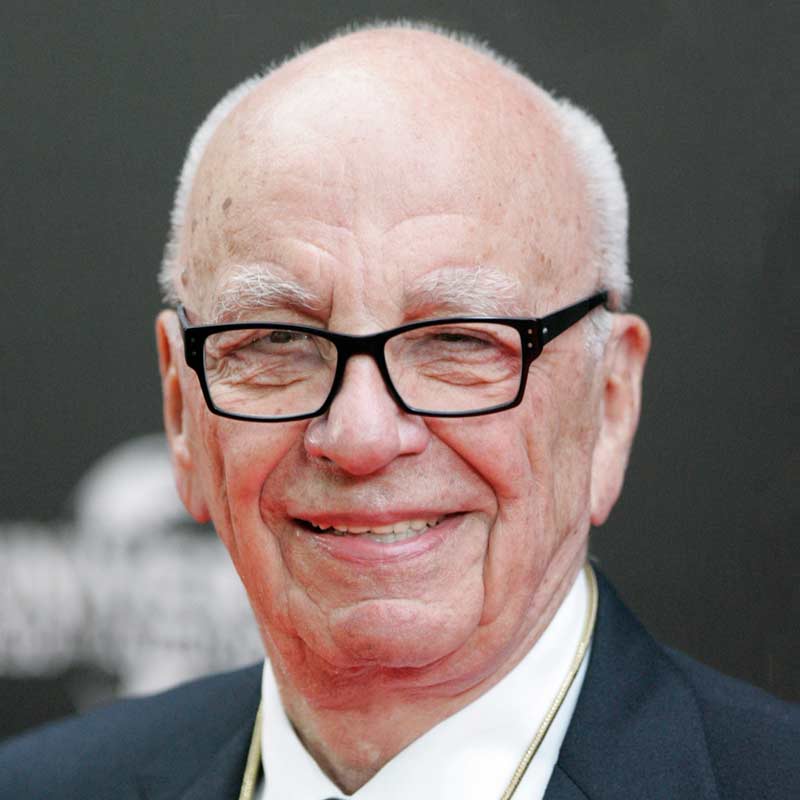
    21st Century Fox executive chairman Rupert Murdoch said: “The new Fox will draw upon the powerful live news and sports businesses of Fox, as well as the strength of our broadcast network. It is born out of an important lesson I’ve learned in my long career in media: namely, content and news relevant to viewers will always be valuable. We are excited by the possibilities of the new Fox, which is already a leader many times over.”

    The remaining business of the company has been combined with Disney in a $52.4 billion acquisition including all its film and TV studios, cable entertainment networks and international TV business. Disney will also acquire FX Networks, Fox Sports Regional Networks, Fox Networks Group International, Star India, and 21st Century Fox’s interests in National Geographic Partners, Hulu, Sky, Tata Sky and Endemol Shine Group.

    Murdoch said that the deals are crucial to paving way for a new Fox and a better Disney. “We have always made a commitment to deliver more choices for customers; provide great storytelling, objective news, challenging opinion and compelling sports. Through today’s announcements, we are proud to recommit to that promise and enable our shareholders to benefit for years to come through ownership of two of the world’s most iconic, relevant, and dynamic media companies. They will each continue to be leaders in creating the very best experiences for consumers.”

    The spin-off transaction will be taxable to 21st Century Fox, but not to its shareholders.  The new Fox will receive a step-up in its tax basis commensurate with the amount of the corporate tax relating to the spin-off that will generate annual cash tax savings over the next 15 years.

    Following the spin-off, Fox expects to continue to pay shareholders a strong regular dividend, with the initial rate to be determined prior to the completion of the spin-off. Prior to completion of the spin-off, new Fox will pay an $8.5 billion cash dividend to 21st Century Fox, representing an estimate of such tax liability. If the final tax liability of 21st Century Fox is less than such amount, the first $2 billion of that adjustment will be made by a net reduction in the amount of the cash dividend to 21st Century Fox from new Fox. The amount of such tax liabilities will depend on several factors, including tax rates in effect at the time of closing as well as market values of Fox following the closing.

    Upon closing of the spin-off transaction, 21st Century Fox’s shareholders would receive one share of common stock in new Fox for each same class 21st Century Fox share currently held.  Following the separation, new Fox would maintain two classes of common stock: Class A Common and Class B Common Voting Shares. Details of the spin-off transaction distribution will be included in the registration statement that will be filed with the Securities and Exchange Commission.

    As part of the definitive agreement with Disney announced today, 21st Century Fox shareholders will receive 0.2745 Disney shares for each 21st Century Fox share in the merger.  The per share consideration is subject to adjustment up or down for certain tax liabilities arising from the spinoff and other transactions related to the acquisition. Terms of the transaction call for Disney to issue approximately 515 million new shares to 21st Century Fox shareholders, representing approximately a 25 percent stake in Disney on a pro forma basis. The transaction values the merged 21st Century Fox business at $28 per share using a reference Disney share price of $102 and at nearly $30 per share based on Disney’s closing share price on December 13, 2017. This equates to a total enterprise value of approximately $69 billion.

    The merger is subject to customary conditions, including regulatory and shareholder approval.

    Combining with Disney are 21st Century Fox’s critically acclaimed film production businesses including Twentieth Century Fox, Fox Searchlight and Fox 2000, which together offer diverse and compelling storytelling businesses and are the homes of Avatar, X-Men, Fantastic Four and Deadpool, as well as The Grand Budapest Hotel, Hidden Figures, Gone Girl, The Shape of Water, and The Martian– and its storied television creative units, Twentieth Century Fox Television, FX Productions and Fox21, who have brought The Americans, This Is Us, Modern Family, The Simpsons, and so many more hit TV series to viewers across the globe.

    New Fox Assets

    Fox News Channel (FNC): 24-hour all-encompassing news service dedicated to delivering breaking news as well as political and business news. FNC has been the number one cable news channel in the country for 63 straight quarters, and more recently has been the top basic cable network.  FNC is available in approximately 90 million homes and dominates the cable news landscape, routinely notching the top ten programs in the genre.

    Fox Broadcasting Company (FOX): Home to some of the highest-rated and most acclaimed series on television as well as the most sought after sports properties, it is viewed by nearly 100 million households each month, airing 15 hours of primetime programming a week, as well as major sporting events and Sunday morning news.  Through the Fox Now app, Fox viewers can watch full episodes of their favourite Fox shows on a variety of digital platforms, while enjoying enhanced interactive and social capabilities around those shows.

    Fox Business Network (FBN): Financial news channel delivering real-time information across all platforms that impact both Main Street and Wall Street, Fox Business Network has been the number one business network for four consecutive quarters. FBN launched in October 2007 and is available in more than 80 million homes in major markets across the United States. The network has bureaus in Chicago, Los Angeles, Washington, DC and London.

    FOX Television Stations Group: One of the nation’s largest owned-and-operated network broadcast groups, comprising 28 stations in 17 markets and covering over 37 per cent of US television homes. This includes a presence in nine out of the 10 largest metro areas in the US including seven duopolies in the top 10 markets: New York, Los Angeles, Chicago, Dallas, San Francisco, Washington, DC and Houston; as well as duopolies in Phoenix, Minneapolis, Orlando and Charlotte. 

    FS1 and FS2: FS1 is a popular sports cable network launched in 2013 in approximately 90 million homes boasting nearly 5,000 hours of live event, news and original programming annually. FS1 has several pillar sports: college basketball and football, MLB, NASCAR, NFL (ancillary programs), international soccer, Bundesliga, UFC, Premier Boxing Champions (PBC) and USGA. Major events televised on FS1 include the US Open, MLB Postseason, the FIFA 2018 and 2022 World Cup and the FIFA Women’s World Cup in 2019. FS2 was founded in 2013 and is focused on extreme sports, including skateboarding, snowboarding, wakeboarding, motocross, surfing, mixed martial arts, BMX and FMX. FS2 is available in approximately 50 million homes.

    Big Ten Network: The first internationally distributed network dedicated to covering America’s most storied collegiate conferences. Covering over 1,000 sporting events each year, including football, basketball, Olympic sports and championship events and award-winning original programming, in-depth studio analysis and classic games. The network is in approximately 50 million homes across the United States and Canada, including carriage by all the major video distributors.

    Also read:

    With Star India, Disney emerges as India’s largest M&E firm

    Disney to buy 21st Century Fox assets for $52.4 billion

    Disney expected to announce 21 CF buyout tomorrow: media reports

    Now, Comcast in talks to buy 21st Century Fox


  • Tata Sky adds beauty-based interactive channel

    Tata Sky adds beauty-based interactive channel

    MUMBAI: Tata Sky has expanded its interactive channel list by adding Tata Sky Beauty, in partnership with FTheCouch (FTC) Beauty Studio, which is promoted by actor Suniel Shetty. It will feature your favourite actors sharing tips and tricks on makeup, skincare and the latest fashion trends in an easy to understand do-it-yourself (DIY) format.

    On the launch of Tata Sky Beauty, Tata Sky chief commercial officer Pallavi Puri said, “Tata Sky has always launched interactive services that inspire and encourage its subscribers to learn, grow and improve in areas that interest them. Tata Sky Beauty is designed to build DIY skills in grooming, styling and care and will inspire women to look good and feel confident at all times!”

    Celebrity make-up experts & stylists such as Bharat & Dorris, Ambika Pillai, Subhash Singh, Shan Mu, Aalim Hakeem, Anju Modi, Tarun Tahiliani, Kavita Bhartiya, Payal Jain and skin care experts such as Dr Swati Maheshwari will recreate Bollywood’s glamour from the comfort of your living room. The service also boasts of a pool of social media talents such as Shruti Anand, Noorin Sha, Hesha Cheema, etc.

    Shetty had previously teamed up with Tata Sky for its Fitness & Acting Adda service. Tata Sky Beauty will also have a Kids Special segment to give tips and updates on hairstyles and fashion trends. On Sunday, a special vignette Zindagi Khoobsurat Hai and show Saas, Bahu Aur Beauty will give subscribers a glimpse into the day-to-day lives of TV celebrities.

    FTC Talent Media & Entertainment co-founder and CEO Akshay Vatsa said, “Our vision at FTC has always been to create innovative content and provide our users with a convenient access to our offerings. Extending this thought, we are happy to launch FTC Beauty Studio with Tata Sky Beauty to help the audience learn and empower themselves to create their own beauty recipe, with the best in class experts.”

    Tata Sky subscribers can avail the service at Rs. 59/- per month on Ch #119 and it will also be available on the mobile app.

  • Tata Sky offers Reliance DTH consumers migration deal, Dish TV too in play

    Tata Sky offers Reliance DTH consumers migration deal, Dish TV too in play

    MUMBAI: Tata Sky reportedly is offering consumers of Reliance Digital TV a limited time offer till middle of November 2017 to migrate to its platform at no extra cost. Reason: Reliance is not renewing its DTH licence that expires in November 2017.

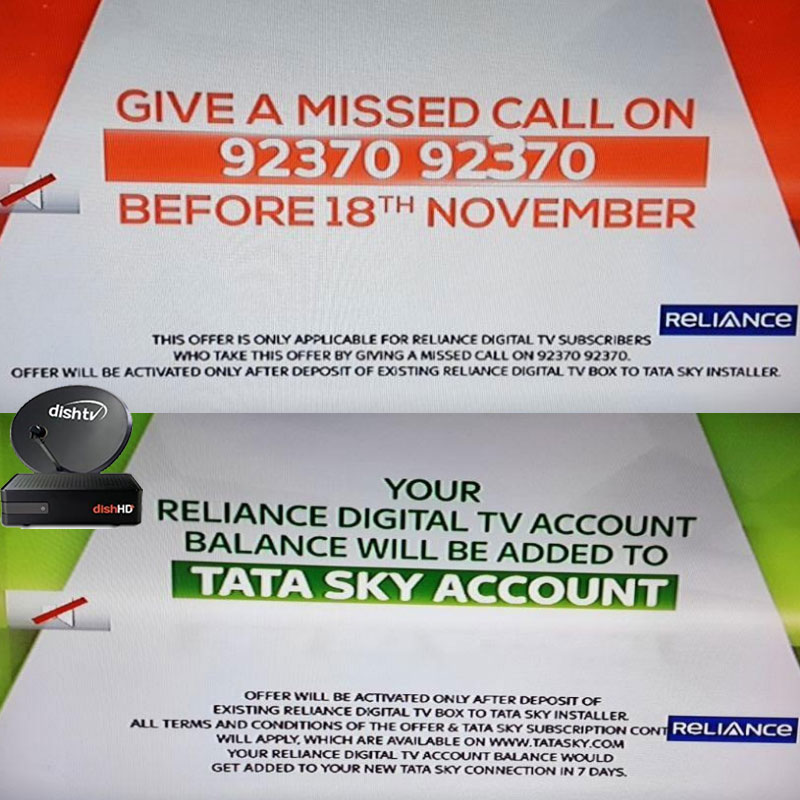
    Though no official confirmations are forthcoming from any of the companies involved, a message being flashed on TV sets of consumers of Reliance Digital TV informs people to call a designated number or give a missed-call after which the consumer receives a call back from its new DTH service provider.

    The message mentions a number 9237092370 that has to be called. When the number was called by this reporter, a recorded message said, “Thank you for showing interest in Tata Sky. We will get in touch with you within 72 hours.”

    According to a possible deal hammered out between the two companies, Tata Sky will offer to Reliance consumers a mechanism involving installation of free STBs and dish antennas for a painless migration in an offer that is valid till 18 November 2017.

    Tata Sky is also promising the approximately one million Reliance Digital TV consumers — mostly pre-paid — their Reliance credit money will be transferred to the new Tata Sky accounts.

    However, industry sources indicated that India’s first private sector DTH operator Dish TV too has, reportedly, told its distributors that any Reliance Digital TV consumer who has not migrated to a competitor’s platform should be targeted for acquisition after paying that consumer a one-time fee of approximately Rs. 1,000. Dish TV is in the process of amalgamating the ops of Videocon d2h DTH with itself pending some regulatory clearances.

    Few days back Reliance Communications, parent of Reliance Digital TV, had informed Bombay Stock Exchange: “DTH operation is a non-core business of the company provided through Reliance BigTV Limited (RBTV), a subsidiary of the Company. RBTV’s DTH license is expiring by end of November 2017and the company is currently working with three leading DTH operators for seamless migration of customers to enjoy uninterrupted services”.

    Whether some regulatory clearances by other satellite TV operators in India need to be taken for customer acquisition of soon-to-be-shuttered DTH ops of Reliance is not yet clear. 

    When indiantelevision.com had got in touch with regulator TRAI and Ministry of Information and Broadcasting last week, officials at both the organizations said they were unaware of Reliance Digital TV’s future plans and also the reason as to why it was not renewing its DTH licence as no official communications had been received by them till then.

    (With additional inputs from BB Nagpal in New Delhi)

    ALSO READ:

    Malaysia’s Astro ‘doesn’t know’ about talks with Reliance Digital TV

    Videocon d2h & Reliance Digital finding ways to wriggle out of tough situations

    ZEEL gets NCLT approval for restructuring acquired Anil Ambani GEC business

  • Tata Sky offers critically-acclaimed films in six languages for free

    Tata Sky offers critically-acclaimed films in six languages for free

    MUMBAI: Tata Sky, a content distribution platform, kickstarted the festive season with its Tata Sky Mumbai Film Festival.

    It has all – screening films from both, the remotest corners of India and countries across the globe, award-winning, critically-acclaimed masterpieces, spread over two months.

    The films are exclusive and curated films in association with Jio MAMI Mumbai Film Festival.

    Close to 30 films will run for a duration of two months starting from 1 October to 30 November 2017 in languages such as Hindi, English, Punjabi, Marathi, Assamese, Manipuri, International (with subtitles) available on channel number 302 in HD and 303 in SD.

    After a successful 2016 Tata Sky Mumbai Film Festival Service, wherein 20+ films were available to subscribers at no additional charge, the company announced a bigger and better festival catering to connoisseurs on 4 October 2017.

    Tata Sky chief content officer Arun Unni said, “The response last year indicated that there is a sizeable audience for high-quality and critically-acclaimed cinema, encouraging us to further explore and bring forward these hidden gems. Our scale allows us to support great art and good talent an all-India platform, especially to regions outside the major cultural centres, where access to film festivals is difficult.”

    MAMI festival director Anupama Chopra said, “There are so many wonderful filmmakers who narrate compelling stories. This unique platform enables these to reach new and varied audience. The festival serves both, story-tellers and movie-lovers.”

    Let the celebration of cinema begin!

  • Tata Sky partner QYOU achieves 100-mn reach milestone

    Tata Sky partner QYOU achieves 100-mn reach milestone

    MUMBAI: Digital-first generations have grown up on an appetite of online video and flock to popular platforms such as Snapchat, YouTube, and Facebook. According to eMarketer, 54 per cent of 18-34-year-olds use YouTube every day, and this number is only expected to increase — phenomenally.

    There is also a growing appetite for short-form online video in developing markets, where viewers are often mobile-first.

    QYOU Media, a curator of ‘best-of-web’ video for multiscreen distribution, has announced that its programmes and linear channels reach an addressable audience of more than 100 million consumers across six continents. The company’s rapidly expanding reach demonstrates a growing appetite for millennial-programming globally.

    This year, QYOU launched the new TBD multicast network in the US with Sinclair Broadcast Group, which brings curated digital-first shows and series to TV audiences for the first time.

    The company has also signed the largest deployment of its QYOU channel to date with an expansion of its partnership with Tata Sky Sky in India, bringing QYOU’s programming to its mobile, TV, and on-demand services. The company continues its push into these larger markets with localised content partnerships adding value to the offering for consumers, distributors, and advertisers.

    As more mobile operators, broadcasters, and content owners seek to target the youth, QYOU’s 24/7 linear channel and creation of its bespoke shows have been in demand.

    In the first half of 2017, QYOU signed a total of eight distribution agreements extending the reach of its content in Europe, the Middle East, Africa, Asia, Australia, Latin America and the US, as well as launching its content into new regions such as Sub-Saharan Africa and the Caribbean. QYOU is distributed to cable and OTT services run by Tata Sky, Vodafone, T Mobile and Telenor, etc.

    QYOU Media CEO Curt Marvis says: “Q4 of 2017 will see us extend our reach even further across Asia and Europe. Our programming is now available to more than 100 million customers across six continents, from the most densely populated urban cities on earth to remote mining sites in outback Australia.”

  • Tata Sky’s #RecallBengal reminisces art forms on Durga Pujo

    Tata Sky’s #RecallBengal reminisces art forms on Durga Pujo

    MUMBAI: Tata Sky has rolled out its #RecallBengal campaign on the occasion of Durga Pujo. 

    This first ever digital-only campaign will celebrate Bengal’s rich and vibrant culture by capturing and documenting the folk art indigenous to the Bengali community based across the country.

    Tata Sky will showcase specially shot AVs of Baul music, Santhal dance, the ancient scroll painting art of Patachitra, and the well-known one-man theatre act Bohurupee on their digital platform Tata Sky Blogbuster. The content will also be available across Tata Sky’s digital platforms, Facebook and Instagram pages and YouTube channels. Subscribers will also be able to indulge their love for Bengali culture by tuning in to Channel 100.

    Tata Sky’s chief communication officer Malay Dikshit said, “Tata Sky has always brought about entertainment with relevant festivals — be it Onam, Lodi, Uttarayan or Durga Pooja. We have seen immense loyalty to our unique proposition. #RecallBengal campaign is not only targeted to connoisseurs of Bengali heritage but also gives the audience across India, a chance to enjoy the captivating art forms.” 

    Viewers can feast on this cultural treat till the festival culminates on 30 September.

    · #RecallBengal Teaser: https://youtu.be/oeWZ5j5CQJ8

    · Baul Teaser:https://www.youtube.com/watch?v=LrSL5PiPUNw

    · Santhals: https://www.youtube.com/watch?v=hf93S9S_Vkw

    · Patachitra: https://www.youtube.com/watch?v=VDLWc_Dkldk

    · Bohurupee: https://www.youtube.com/watch?v=J1-vJVEF9g0

    · Baul Music: https://youtu.be/u9fmwNmS0e4

  • Tata Sky customises sports-viewing with Star alliance, in talks with Sony

    Tata Sky customises sports-viewing with Star alliance, in talks with Sony

    MUMBAI: Pushing the boundaries of innovation in sports viewing this sports season, Tata Sky and Star Sports launched the ‘Star Sports Select Experience’with the Premier League.

    This kind of service, which has been prevalent in the UK, US and Europe, promises to take the fans straight to the heart of their favourite sport in a fully-immersive experience, offering more live matches and the option of multi-camera and stadium view. This service can be accessed via the red button on the Tata Sky remote which will be visible on Star Sports Select 1 and Star Sports Select 1HD, Star Sports 1 (SD & HD), Star Sports 1 Hindi (SD & HD).

    Tata Sky has introduced the add-on service, experimenting with Roland Garros – The French Open, followed by Wimbledon. Also exclusive to all Tata Sky subscribers are the options of watching Wimbledon highlights and an “Inside Wimbledon” experience with expert analysis and player interviews. The service has taken the consumer experience to a different level.

    The official channel of Wimbledon came to India for the first time through this add-on service.

    Talking to Indiantelevision.com, Tata Sky chief content officer Arun Unni said, “The service is customised for each sports differently and improvement is done based on the feedbacks we got from our viewers. The innovation requires a close partnership between the platform and the broadcaster. We have approached Sony (Pictures Network India) as well for the same service.”

    For the cricket fans, Tata Sky has introduced its add-on service for India versus Australia matches which started on 17 September, 2017. Beyond viewing the main match, the consumer has two additional choices.

    Sports fans in India largely follow the game closely and observe the additional information constantly. Unni stated, “The service is free; the main idea behind launching it was to enhance the consumer experience. We started experimenting with tennis, and the objective was to go to a high viewership sports such as cricket. We believe that the enhancement and the experience can be maximised for the consumer, and ‘sports’ made sense.”

    “Tata Sky believes in going beyond the conventional entertainment platform. At no additional cost to Tata Sky subscribers, the feature gives its sports fans wider choices on camera angles, highlights and in-depth information on the sport at their convenience. Tata Sky, in partnership with Star Sports, has been able to empower subscribers by giving them freedom of watching multiple live simulcast matches,” Unni added.

    With the new complimentary viewing extravaganza, Tata Sky is surely wowing its Star fans!

    Watch video here :