Tag: Tata Sky

  • Star India urges Airtel Digital subscribers to switch

    Star India urges Airtel Digital subscribers to switch

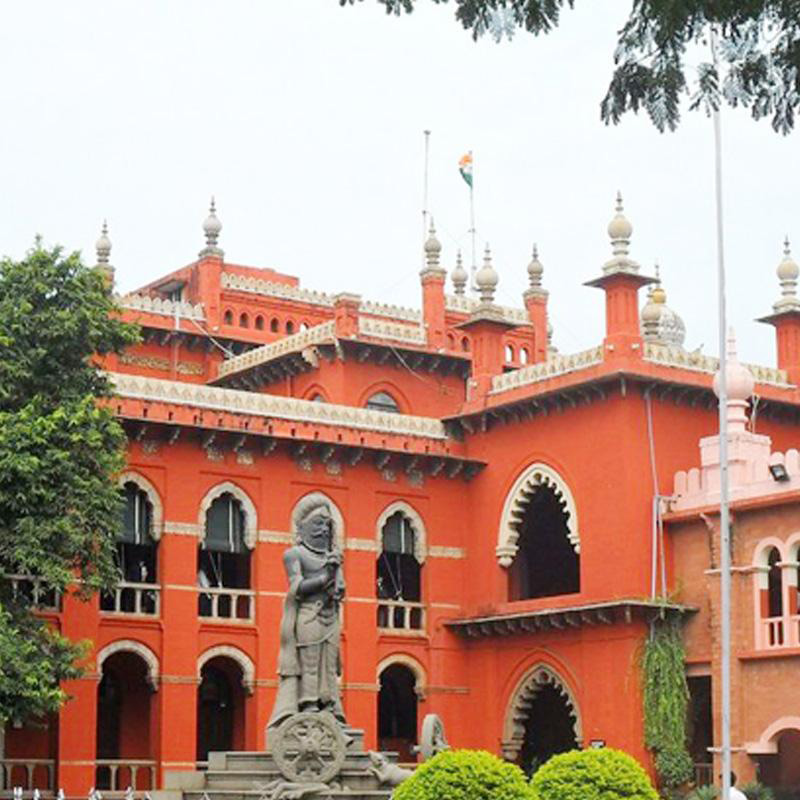
    MUMBAI: The slugfests were bound to happen in TV distribution. The time for agreement renewal is nigh between distribution platform operators and broadcasters with content contracts coming to an end. The Telecom Regulatory Authority of India’s (TRAI) proposed  tariff  and interconnection agreements are being passed  around from the High Court of Chennai to the Supreme Court and back without any resolution.

    Earlier this month, the Star Network issued a disconnection notice to one of India’s better-managed DTH operators Airtel Digital in an announcement that made waves in TV distribution circles.  Now, with the spat between the two continuing, India’s leading TV network has taken the fight to Airtel’s camp.

    It has started a digital campaign-for now at least-asking the DTH player’s subscribers to switch to other distribution platforms. Says the network on its Twitter handle: “Attention Airtel Digital  subscribers! Star has not increased channel tariffs. Airtel Digital TV  is misleading you and unilaterally increasing the prices of Star channels. To continue watching high quality Star entertainment switch to new DTH/cable operator now.”

     The digital  video,  which is doing the rounds on social media, has a voiceover that states: “You used to pay Rs 200 for the HD pack on Airtel. Now why are you being charged Rs 1,000? You can still get the same price for the same HD channels at around Rs 200! Change to another service provider. To get Star channels in a packet, make the switch.

    The video then lists operators like DEN, Fastway, SUN, Hathway, GTPL and Tata Sky that Airtel subscribers can opt for.

    We will have to wait and watch how Airtel responds to this direct attack. Will it buckle and give into the rates that Star India is asking for? Or will it hold firm and wait to see if the broadcaster will blink first?

    After all, Star has a lot at stake with the IPL coming up in the next fortnight. And it has to recover the humungous amounts it is pumping into the most prized cricketing property globally!

    Keep reading indiantelevision.com for further updates!

    Also Read:

    Airtel Digital TV disconnects Star India channels

    TDSAT tells Airtel DTH, Star to negotiate

    Tata Sky woos new customers with free Star Sports channels


  • Tata Sky woos new customers with free Star Sports channels

    Tata Sky woos new customers with free Star Sports channels

    MUMBAI: After Airtel Digital TV cut signals to Star India channels, Tata Sky has played smart and is working towards increasing its subcriber base.

    To acquire new customers, it has launched a new offer under which all new acquisitions on the platform will be provided Star Sports 1 and Star Sports 1 Hindi channels free of cost from 9 March to 27 May.

    New HD connections will get the standard definition (SD) channels free but the high definition (HD) version will be only available once they pay HD access fee.

    The Indian Premier League (IPL) 2018 featuring 60 matches will be held from 7 April to 27 May and is likely to give Tata Sky a competitive edge. The offer will mean that new customers will be able to enjoy the upcoming IPL free of cost without having to pay for costly sports subscription packages.

    Also Read:

    Airtel Digital TV disconnects Star India channels

    JSW acquires 50% stake in Delhi Daredevils

  • Madras HC gives split verdict in Star India versus TRAI case

    Madras HC gives split verdict in Star India versus TRAI case

    NEW DELHI: While parts of the country took a break on a moderately warm day after playing Holi, the Madras High Court delivered a split verdict in a case involving Star India and the Telecom Regulatory Authority of India (TRAI), apart from several other private and government organisations. This effectively means that the Supreme Court will again have to take a stand on whether the regulator’s proposed tariff order relating to broadcast and cable sectors could be implemented or remains in suspended animation.

    While striking down certain aspects of the tariff guidelines (maximum retail price and discounting limits), issued by TRAI late 2016, and upholding the petitioner’s plea, the two-judge bench of the high court referred to another yet-to-be-decided judge the issue of jurisdiction of TRAI on matters such as copyright over content.

    Now that the high court has delivered a fractured verdict, raising fears of a status quo and non-implementation of the TRAI tariff guidelines in certain sections of the cable distribution industry, the Supreme Court could likely early next week take a view whether TRAI can go ahead and implement the regulations or further judicial clarity is needed.

    “The reason for putting cap of 15 per cent to the discount on the MRP of a bouquet disclosed in to the impugned Tariff Order is that, as per data available with TRAI, some bouquets are being offered by the distributors of television channels at a discount of up to 80-90 per cent of the sum of a-la-carte rates of pay channels constituting those bouquets. Such high discounts force the subscribers to take bouquets only and thus reduce subscriber choice. This, in my view, cannot be a reason to restrict the discount,” the judgement observed at one point.

    The lengthy verdict (over 140 pages) of the two-judge bench of the high court, which had been hearing a case filed by Star TV and associate Vijay TV challenging tariff guidelines of TRAI on various grounds of copyright and whether the regulator has the jurisdiction to make regulatory guidelines, was delivered after the hearings got over several months back and the verdict was kept in abeyance.

    While stakeholders refused to comment on the verdict officially, saying the fine prints of the lengthy order need to be studied over the weekend, TRAI could not be reached for its version on the Madras HC verdict.

    However, an industry observer opined that considering the high court’s observations on MRP and discounts relating to TV channels, implementing the remaining part of TRAI’s proposed tariff and inter-connect guidelines would make less sense as both the issues frowned down upon by the high court form an integral part of the overall regulations.

    The tariff issue has been in the courts since late 2016. The Delhi High Court too is hearing a similar matter involving TRAI’s proposed tariff guidelines. In this case the petitioners are DTH operators Tata Sky and Airtel Digital.

    ALSO READ:

    MSOs move Madras HC seeking relief on inter-connect pacts

    Orders reserved by Madras HC on TRAI jurisdiction case

    SC stays new TRAI tariff, asks Madras HC to complete hearing in four weeks


  • DTH subscriber growth muted in CY-2017

    DTH subscriber growth muted in CY-2017

    BENGALURU: DAS, especially phases 3 and 4, was supposed to be a great growth opportunity for television direct-to-home (DTH) service providers. Has that been the case? Not if one were to go by data released by the Telecom Regulatory of India (TRAI) and three of the six private DTH players in India.

    The status quo
         
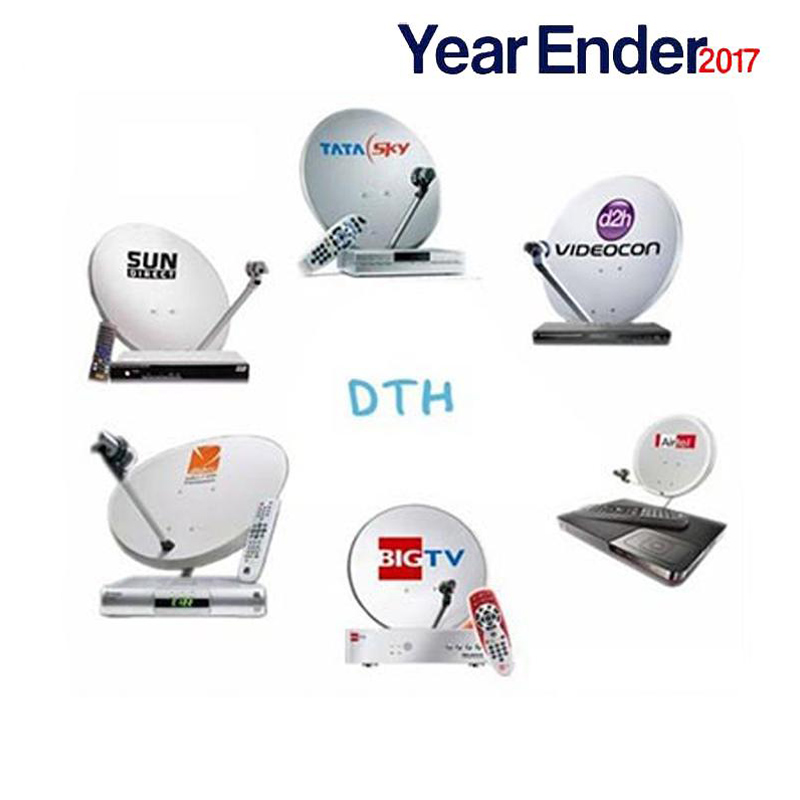
    At present, there are six private pay-TV players (five active in the true sense of the word) and one government free-TV player DD FreeDish. The five players are: Airtel Digital TV or Airtel DTH, Dish TV, Sun Direct, TataSkyand Videocon DTH–the sixth player being Reliance Digital TV or Big TV.

    Reliance Big TV has been acquired by Pantel Technologies and Veecon Media. Normal operations have to recommence as yet. A number of Big TV customers were acquired by other players and the true status of its operations and current subscriber numbers are still unclear at the time of writing.

    Please refer to the figure below for subscriber share of the six private players at the end of 30 September 2017 (Q2-18 or Q2-2108).

    public://11_0.jpg

    DTH subscriber acquisition seems to have petered down in calendar year 2017 (CY2017, 1 January 2017 to 31 December 2017) as compared with CY 2016. Please refer to the chart below for active subscribers addedas per TRAI data until 30 September 2017 (Q2-2018) and data reported by the three private players – Airtel DTH, Dish TV and Videocon d2h until 31 December 2017. It may be noted that these three players had almost 63 percent share of subscribers according to the above-mentioned Dish TV investor presentation.

    The continuous blue curved line in the chart below represents the total number of net active subscribersaddedfor each quarter – this number has been obtained by deducting the number of active subscribers in a quarter from the number of subscribers in the previous quarter. The combined total number of the three subscribers has been obtained by addition of net subscribers added by each of the three players – Airtel DTH, Dish TV and Videocon d2h – as declared by them in their financial/other releases and presentations. Thesecombined subscriber additions are represented by the continuous maroon line in the figure. The broken grey line represents the percentage of the combined net subscriber additions by the three players of the total subscriber additions as per TRAI data.

    public://2_6.jpg

    The chart below indicates the subscriber base of the three players and all private DTH players as per quarterly data released by TRAI. TRAI data for the October-December 2017 quarter has not been released at the time of writing. Subscriber data for each of the three players mentioned below has been obtained from their respective financial releases and presentations. The numbers have been rounded off to the nearest lakh by the author.

    As is obvious, Dish TV is the biggest player in the country in terms of subscribers followed by Airtel DTH and Videocon d2h in that order. It may be noted that Tata Sky subscriber base could be higher than Airtel’s subscriber base. Tata Sky data is not available in the public domain, and hence this cannot be verified.

    public://3_2.jpg

    Overall, the players are faced with declining monthly average revenue per user (ARPU). In absence of complete ARPU data, the author has taken the liberty to calculate ARPUs of each of the three players by using quarterly operating revenue/subscription revenue of the players and dividing it by the subscriber base at the end of that quarter and then calculating the ARPU per month. Similarly, the quarterly operating/subscription revenues of the three players have been added and then divided by the combined subscriber base of the three players at the end of that quarter and then the average monthly average ARPU has been arrived at. In each case calculated ARPU numbers have been rounded off to the nearest rupee.

    The combined four quarter average monthly ARPU of the three players across four quarters of 2017 has declined by Rs 9 to Rs 183 from Rs 192 in CY-2016. Airtel DTH is the premium player – its four quarter average monthly ARPU in 2017 increased by Rs 2 to Rs 230 from Rs 228 in 2017. Dish TV is a value player, its average declined by Rs 18 in 2017 to Rs 143 from Rs 161 in 2016. Videocon d2h four quarter average monthly ARPU in 2017 declined by Rs 9 to Rs 186 from Rs 195 in 2017. It must be reiterated here that the ARPU numbers mentioned in this paper have been calculated by the author and may vary from the actual numbers. The numbers in the graph below are just indicative numbers.

    public://4_1.jpg

    Besides the six private pay DTH players, FreeDish is a major player in terms of subscribers with an estimated 2.2 crore as per the numbers available in the public domain. It must however be noted that an exact number for registered or active subscribers is not available even with DD, since this is a free DTH service. If and when the announced Dish TV Videocon d2h merger happens, the merged entity will probably be one of the largest DTH players in the world in terms of subscriber numbers.

    According to an E&Y report titled ‘India’s Free TV’ released in July 2017, among the DTH operators in India, FreeDish has grown to become the largest with its estimated 2.2 crore subscribers which E&Y predicted could cross 4 crore over the next two to three years.

    A number of reasons can be attributed to this dismal performance–two of the chief ones that have been touted over the recent past by most players in media and entertainment industry are demonetisation in November 2016 and the implementation of the new GST regime. Given that most of India faced a cash crunch for a few months post demonetisation, money spends for entertainment took the least priority for the common man.Subscriber acquisition seems to have picked up in the April-June 2017 quarter, only to be dampened in the July-September 2017 – the quarter in which the new GST regime was implemented. The glitches of the new GST are slowly being ironed out. In the absence of TRAI data for the October-December 2017 quarter, numbers reported by the three players seem to indicate that DTH subscriber acquisition should have improved. Despite this, it seems unlikely that the industry was able to surpass or even match subscriber growth of CY-2016.

    Another important reason could be that DTH is considered a premium service – by all the stakeholders in carriage ecosystem with the resulting perception that procurement as well as monthly subscription will be premium and hence a deterrent for the consumer. While some players such as Dish TV have been making attempts to come up with packages that it perceives should attract the masses, but, results as per TRAI data seem to indicate otherwise. Yes, Dish TV is the largest private player in the country that has come up with different pricing models under different brands, whether unwittingly or not, most of the other players present themselves as premium players and seem to have done little in that direction.

    Also Read :

    DTH’s year of consolidation

    Recalibrating India’s DTH sector after Airtel DTH-Warburg Pincus deal

    Veecon Media acquires Reliance Big TV

  • Dish TV bemoans govt’s neglect of DTH sector

    Dish TV bemoans govt’s neglect of DTH sector

    MUMBAI: Dish TV, while lamenting neglect and step-motherly treatment of the whole DTH sector by the government, has exhorted policy-makers to remove various discriminations in the licencing conditions of various distribution platforms as it has resulted in taxing times for DTH operators.

    Furthermore, Dish TV has also pointed out that video distribution on OTT platforms should be brought under government regulations, similar to those governing other distribution platforms (DPs) to remove anomalies and creation of a level playing field for every stakeholder.

    “The present [regulatory] regime for the licence fee is discriminatory against the DTH operators and is designed to provide the leveraged position to cable operator, HITS, IPTV and MSO, etc in the market place as they are not required to pay any annual licence fee,” Dish TV has said in its submission to regulator TRAI’s consultation paper on issues related to uplink/downlink of TV channels and whether they could be auctioned in a way similar to FM radio licences.

    One of the largest satellite TV operators in India has added that because of discriminatory licencing regimes, the additional financial burden in terms of monthly subscription fee is put on a subscriber of DTH service when compared to subscribers of cable TV or HITS services.

    “It is a matter of record that in the month of March 2008, the Ministry of Information and Broadcasting (MIB) had taken a decision to fix the [DTH operator’s] licence fee @ 6 per cent of the gross revenue, which had the concurrence of the TRAI also. However, for reasons best known to the government, the decision is yet to be put into effect,” Dish TV has said.

    Pointing out that the DTH sector (India has six DTH licencees at present, according to MIB) has played a critical role in making the digitisation dream a success even while providing a world class experience to consumers, Dish TV has urged the government/regulator to “remove anomalies” by creating a level playing field for the DTH operators and rationalising the licence fee.

    Dish TV is also hopeful that TRAI’s new tariff structure and inter-connect regulations—which are in suspended animation owing to being legally challenged in Madras and Delhi High Courts by Star TV and Tata Sky and Airtel Digital combine, respectively—would go a long way in easing the pains of DTH ops. “Though the tariff order and the regulation are under challenge, however, it is just a matter of time that when the new regulation will sail through these minor hiccups and become a reality,” it added.

    Incidentally, as reported by Indiantelevision.com earlier, MIB is contemplating referring the issue of DTH policy guidelines review to its sister organisation, Ministry of Law, for an opinion.

    Meanwhile, Dish TV in its submission to TRAI has made a strong financial case for rationalisation of DTH licencing regime, while highlighting how owners of TV channels continue to play favourites with various DPs, has also urged a regulatory regime for video distributed on OTT platforms.

    In a section that dwells on OTT platforms, Dish TV has accused broadcasters or owners of TV channels of circumventing regulatory framework by distributing video on the internet or OTT platforms.

    Arguing that by starting OTT platforms broadcasters don’t just remain ‘broadcasters’, but also become ‘distributors’ of TV channels, Dish TV has said that such an arrangement breaches various existing regulations, including cross-media and cross-services restrictions.

    “It is important to note that the content being provided by the broadcasters [on OTT platforms] are free of cost with an intention to create a captive subscriber base and create a monopolistic situation. Because of ‘free of cost’ provision of the content by the broadcasters through OTT services, other distributor[s] of TV channels are heavily prejudiced… threatening the existence of other distribution platforms,” Dish TV has stated, adding such an arrangement could also create a monopoly where the broadcaster, being the distributor, would also control the end mile solution.

    It may be pertinent to note here that Dish TV’s sibling Zee group too has an OTT platform whereby it distributes TV programming to subscribers. Zee unveiled on Valentine’s Day a new avatar of its video streaming service called ZEE5.

    Though TRAI had initially left video streaming services out of a regulatory framework when it announced guidelines pertaining to Net Neutrality late last year, a section of the media has reported that the regulator is now thinking afresh and could bring in regulations for video content distributed via the internet (read video OTT platforms).

    Also Read :

    Law ministry likely to give opinion on DTH guidelines review

    Broadcasters, DPOs oppose TV channel auction proposal

    Dish TV-Videocon d2h deal on course

  • Sharlton Menezes joins Tata Sky as head of digital content

    Sharlton Menezes joins Tata Sky as head of digital content

    MUMBAI: Sharlton Menezes has joined DTH operator Tata Sky as head of content for digital. Based in Mumbai, Menezes, who took up the role last month, is reporting to Tata Sky’s chief content officer Arun Unni.

    Menezes has around a decade of experience in the content world. He started his content journey with Zee Entertainment Enterprise Ltd (ZEEL), where he was head of content and marketing English entertainment (Zee Cafe and Zee Studio) for the majority of his tenure. In August 2015, he was elevated to business head-digital video at the company.

    He subsequently joined LeEco, a Chinese multinational conglomerate corporation. It entered into the Indian market with mobile phones. Menezes worked with LeEco for over a year till May 2017.

    Also Read:

    Tata Sky customises sports-viewing with Star alliance, in talks with Sony

    ICC’s appointment of Indra Nooyi raises eyebrows

  • Law ministry likely to give opinion on DTH guidelines review

    Law ministry likely to give opinion on DTH guidelines review

    MUMBAI: Even as the government admitted in Parliament yesterday that it has granted six companies licences to operate DTH services in India, the Ministry of Information and Broadcasting (MIB) has, reportedly, referred to the Law Ministry a long-pending proposal to review DTH guidelines in the country.

    Replying to a question in Lok Sabha or Lower House on the DTH sector, Minister of Information and Broadcasting Smriti Irani, in written statement, said Dish TV, Tata Sky, Sun Direct, Reliance BIG TV, Bharti Telemedia and Videocon d2h are licenced to provide services in India under the DTH guidelines issued on 15 March 2001, which is amended from time to time.

    She said that in addition to the private players, pubcaster Doordarshan too operated a free to air DTH services in the country and there was no restriction on the total number of DTH licences.

    According to the minister, a licencee, in addition to an initial non-refundable entry fee of Rs 10 crore (Rs 100 million), is required to pay an annual licence fee that amounts to 10 per cent of its gross revenue.

    In the meanwhile, the DTH players who had been lobbying for the last 24 months or so for another review of the DTH guidelines, aimed at bringing down the annual revenue sharing percentage to between 6-8 per cent amongst other things, may have to wait for relief.

    MIB, which was studying a proposal to review the DTH guidelines based also on some past recommendations of the Telecom Regulatory Authority of India, has already referred or is in the process of referring the matter to the Law Ministry for an opinion, if government sources are to be believed.

    Amongst the six DTH licencees, a few are operating on the basis of temporary extension of their licences as the DTH guidelines do not spell out clearly the modalities for licence renewal once the initial 10-year period is over, DTH industry sources explained.

    MIB’s indecision on the regulatory review process hasn’t helped the industry much as the sector is witnessing consolidation — for example, the ongoing Dish TV-Videocon d2h merger and the sale of Reliance’s DTH business to a set of new investors — apart from the expiry of the 10-year licence period.

    Also Read:

    DTH’s year of consolidation

    Recalibrating India’s DTH sector after Airtel DTH-Warburg Pincus deal

    Dish TV-Videocon d2h deal on course

  • Wavemaker India retains media duties for Tata Sky

    Wavemaker India retains media duties for Tata Sky

    MUMBAI: Wavemaker, GroupM’s new billion-dollar revenue, media, content, and technology agency created from the merger of Maxus and MEC has retained the media duties for Tata Sky. 

    Maxus (now part of Wavemaker) has been the media agency on record ever since the DTH service provider launched its operations in India in 2006. 

    Wavemaker South Asia managing director Kartik Sharma adds, “I am grateful to Tata Sky team for selecting us as their strategic media partners right from the start of their launch in India. Associating with Tata Sky for over a decade now has been an enriching experience for all of us. Tata Sky is one of our oldest client partners in India and we are extremely happy to continue our relationship with them.”

    Tata Sky chief communications officer Malay Dikshit says, “GroupM has been associated with Tata Sky for the past 10 years and it was time that we scanned the media industry for best practices, great leadership and sound commercials. While there were some brilliant and very strong contenders delivering on all of these requirements, team Wavemaker stood a step ahead with their strategic steer and detailed planning.” 

  • 2017 was a regulatory roller coaster and the ride continues

    2017 was a regulatory roller coaster and the ride continues

    NEW DELHI: The year 2017 for the media industry certainly couldn’t be called easy from the point of doing business despite efforts and claims by the federal government that significant progress had been made in the regard.

    The downside of demonetisation of high-value currency notes not only continued to be felt well into 2017, but the introduction of the GST (goods and services tax) in July and its compliance added to the woes as it increased paperwork and investment in human resources for the entire media sector. The cascading effect of the tax and monetary policies on the general economy of the country had a telling effect on the media and entertainment industry as companies, big and small, struggled to keep up with compliance (and sliding revenue) and changing guidelines owing to teething problems.

    2017 began with broadcast and telecoms regulator TRAI’s new set of guidelines relating to tariff, QoS and inter-connection, issued in the second half of 2016, being challenged by one of the biggest broadcasting companies (in terms of reach and revenue), Star India, and its ally Vijay TV in a Chennai court. Separately, two other DTH companies filed a similar challenge in a Delhi court.

    Over a year later, the regulator’s guidelines-touted to be an effort in creating fair ground rules for all stakeholders leaving them free to take commercial decisions-remain in suspended animation as the Chennai court is yet to deliver its final verdict till the time of writing this piece though the arguments and other legal processes have been completed.

    And, then Ministry of Information and Broadcasting (MIB) got in Smriti Irani as minister, a person with a background in the media and TV industry and as someone with strong views on issues. The sudden cancellation of a programming contract to Balaji Telefilms, awarded by pubcaster Doordarshan after a tendering process, could be cited as Irani’s aggressive stand on matters relating to her ministry and the media sector. Ditto for Doordarshan’s parent company Prasar Bharati deciding suddenly during the year not to renew contracts of some private sector TV channels that rode piggyback on DD’s free-to-air DTH platform Free Dish. The latter case is now being debated at the disputes tribunal.

    Over the 12 months in 2017, the MIB came out with a series of regulations, ranging from advisories on condom ads (the flip-flop was surprising) to a sharp hike in processing fees for clearances without clear definitions on some matters to the dos and don’ts of covering sensitive developments, all of which have left most industry players uneasy.

    A section of the industry also feels that the government has cleverly fired the gun, at times, keeping it on the shoulder of TRAI. Even while the regulator is in the process of wrapping up a consultation on various points of ease of doing business in the broadcast and cable sector, towards the fag end of the year, the MIB requested the regulator to examine whether TV channel permissions to beam into the 183-odd million TV homes in the country could be auctioned and the entry-level threshold increased-all aimed at arresting the spiralling number of applications seeking permissions to start a new channel. If legislated, it would be a sort of first where TV channel permissions, and not spectrum, would be auctioned.

    Another directive causing concerns for broadcasters is an MIB order making provision for processing fees on account of change of satellite, channel name/logo, language of channel, category of channel, mode of transmission, teleport, teleport location and change in the category of a channel from a GEC to a news channel for temporary uplink of a live event. The regulation stipulates that a processing fee of Rs 100,000 would have to be paid by a TV channel if seeking temporary uplink permission for, say, a cricket match. Nothing wrong in putting an amount to undertake processing.

    But what is troubling the TV channels is that the fee of Rs 100,000 is for each channel. So, for example, if a broadcaster having four sports channels proposes to telecast live a test cricket match for five days, then the amount for processing of temporary uplink permission by MIB would be Rs 100,000 each for five days for each of the four sports channels (100,000x5x4). That, stakeholders point out, is quite a large sum of money for a five-day match telecast in different languages over several TV channels.

    The MIB also, for the first time, introduced new categories of channels, namely regional and national. As per the extant uplinking and downlinking guidelines of 2011, however, all the licences, whether it is an Assamese or a Tamil language channel, are for pan-India channels and can be distributed throughout India. In fact, many broadcasters obtain multi-language permission for their channels to be able to run in multiple language feeds. The ministry later had to come out with clarifications defining what constitutes a national channel and what is a regional channel, which makes things a bit more complicated in sharp contrast to the federal government’s claim of having created a more conducive business environment in India, a senior executive of a broadcast company opined. What’s more, some experts pointed out, it was surprising that the MIB took the decision on re-classification of TV channels because such policy decisions would ideally need to be ratified by the federal cabinet of ministers.

    The TRAI, however, was banking on its ground rules for the broadcast and cable sectors to herald a new era that is not to be–not at least in 2017. But the regulator’s earnestness to hold a dialogue with stakeholders cannot be faulted despite questions being raised on some of its consultation papers; the one on STB inter-operability, for example. The TRAI should be lauded for upholding principles of net neutrality, in general, and giving thumbs down to content availability in a walled-garden environment, while in the US the FCC is preparing ground to dismantle net neutrality regulations that claimed to be protecting consumer interest.

    What comes out quite clearly in the year of disruptions and a clear change in the ways media, especially TV news, functions is that the thin line blurred between ethics and the dance-on-the-unethical-side-while-remaining- technically-correct.

    The all’s-fair-in-love-and-war thinking was written all over the audience measurement controversy that broke out involving a new news channel that debuted with a bang and the incumbents of the news genre in 2017. Accused by a section of news channels of using dual LCN or frequency strategy to increase sampling and snacking to up audience ratings, the new news channel hit back saying all other players too had sometime used the same strategy. Subesequently, the regulator had to step in directing stakeholders to desist from using practices that were not allowed in the TRAI’s books.

    Such instances-apart from the now-contested TRAI directive barring use of the `landing page’ by TV channels-highlight one thing: if the industry craves for a light-touch regulatory regime, restraint and maturity is needed from the industry, too. For example, despite the TRAI cracking the whip on dual LCNs, many TV channels, including the not-so-new-news-channel-on-the-block, were repeatedly accused by competition of continuing to use the dual LCN strategy throughout 2017.

    If the TRAI-and the government-hoped its guidelines and advisories would reduce litigation in the broadcast and cable sectors, the dream is yet to be fulfilled. The website of broadcast and telecoms disputes tribunal TDSAT states there are approximately 800 cases (in both sectors) still pending till 22 December 2017 if statistics from January 2017 were considered. The high pendency was despite the fact that TDSAT disposed of hundreds of other cases in 2017.

    The broadcast and cable industry would hope that 2018 would be less challenging, at least from the point of view of regulations. Some issues (like the consultation paper on uplink/downlink of TV channels, online video piracy and lack of any guideline for M&As for the media sector), however, continue to rankle even as we all enter 2018, not to mention that a proposal to review DTH guidelines, involving issues like rationalising revenue sharing with the government and renewing of licenses have been seemingly put in the cold storage by the government.
  • Tata Sky partners Irdeto to secure content

    Tata Sky partners Irdeto to secure content

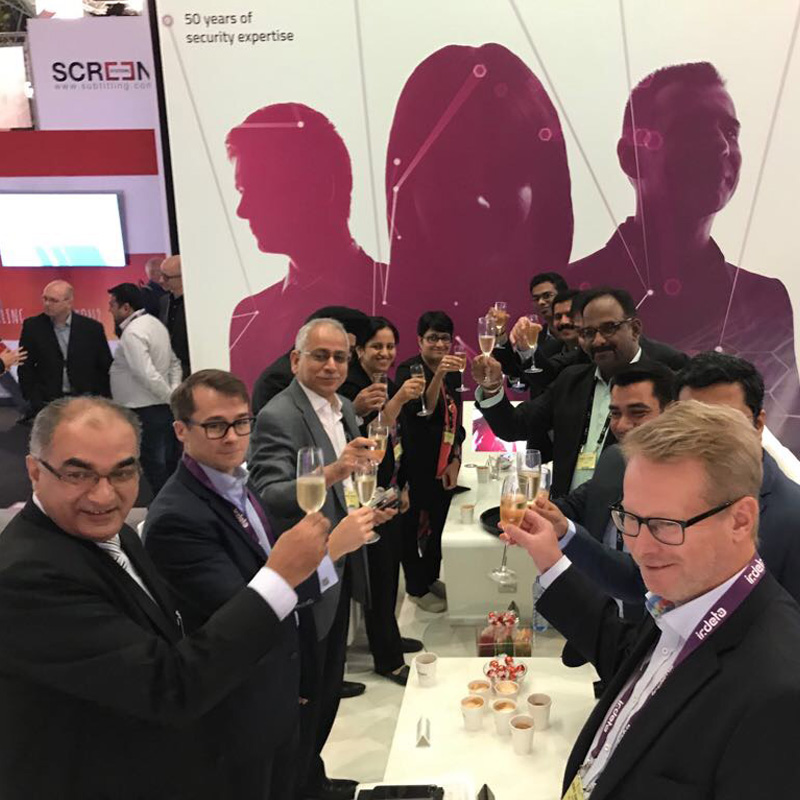
    MUMBAI: Tata Sky has signed a deal with Irdeto to ensure the safety of the DTH operator’s content relayed to any device across its satellite and over-the-top (OTT) platforms. The company will be implementing Irdeto’s Cloaked CA and middleware technologies for better customer experience.

    Tata Sky MD and CEO Harit Nagpal said, “At Tata Sky, we are committed to providing our customers with the most innovative video services across satellite and online platforms in India. To provide consumers with greater choice and convenience, we need a security partner that gives us the freedom to innovate without fear. In Irdeto, we are working with a strong security partner with a forward-looking approach and future-proof solutions. This enables us to continue innovating our solutions and services while giving us the peace of mind that our content is secure.”

    Irdeto will manage the planning and deployment of the project for Tata Sky to seamlessly integrate security technology with third-party solutions. Cloaked CA is a conditional access system for broadcast and IPTV operators. It reduces the need for a smart card and reduces cost and complexity.

    “We are honoured to be selected by Tata Sky as their long-term security partner for Conditional Access and Middleware,” said Irdeto CEO Doug Lowther.“This deal further reinforces Irdeto’s commitment to the dynamic and fast-growing media market in India and we are excited to continue working with Tata Sky to help them meet their business goals.”

    Also Read :

    Tata Sky and Irdeto tie up, OTT service launched on Android devices

    Tata Sky offers Reliance DTH consumers migration deal, Dish TV too in play

    Tata Sky deploys DataMiner to improve customer experience