Tag: Tata Sky

  • Did govt pressure nudge ABS-2 to shutter Indian TV channels on FTA DTH service?

    Did govt pressure nudge ABS-2 to shutter Indian TV channels on FTA DTH service?

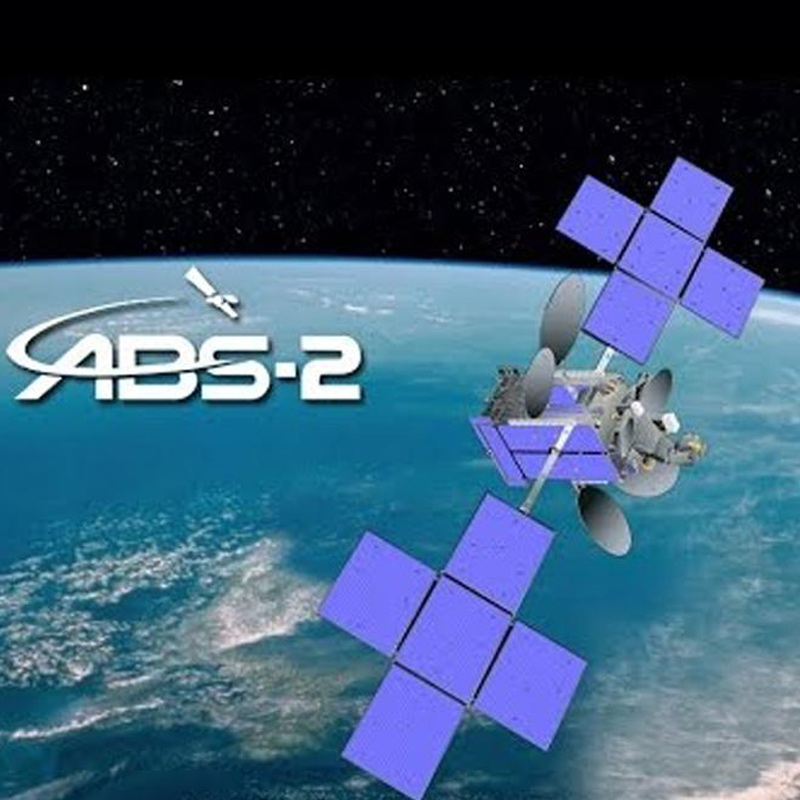
    NEW DELHI: ABS has closed the doors from 1 May 2018 on Indian TV channels that were using the ABS-2 satellite-beamed FTA Ku-band platform. Apparent reason: Indian government pressure on local TV channels to stop using the ‘unlicenced’ platform that discouraged payment of carriage fee to the satellite operator, which was the origin of the business.

    The Bermuda-registered satellite operator’s ABS-2 signals — hosting on its South Asian beam a Nepalese and a Bangladeshi DTH services licenced in their respective countries — have been spilling over into India and a mix of Indian, Nepalese and Bangladeshi TV channels were available to Indians as a FTA service that was accessed via some plain vanilla hardware (read set-top boxes and antennae) at a nominal cost.

    On being petitioned by Indian distribution platforms, Ministry of Information and Broadcasting (MIB) in 2017 had asked Department of Space (DoS) to block the “unauthorised” DTH or KU-band ABS-2 service on the grounds of possible threat to national security — an allegation that was refuted by ABS citing international laws of ITU.

    Finally, when ABS took the decision to shut the doors on the Indian TV channels, there were 90 of them, mostly beaming content in non-Hindi Indian languages. These channels were using the FTA Ku-band platform to reach not only Indian audiences in southern and eastern parts of India but, probably, also those in Nepal and Bangladesh for additional eyeballs. Eyeballs meant advertising revenue for these TV channels.

    ABS last year had refuted Indian government charges saying “natural spillover” of satellite signals into neighbouring countries, outside the service area of the countries offering licensed DTH services, but falling within the coverage area of the satellite, was in “full compliance” of ITU provisions.

    With ABS discontinuing the Indian TV channels, Reliance Big TV (sold by Anil Ambani’s Reliance Communications to new investors) FTA DTH service yet to fully bloom and Doordarshan’s FreeDish platform locked in a policy logjam, free to air platforms and low-cost television viewing for people in the Indian hinterland seem to have run into air turbulence.

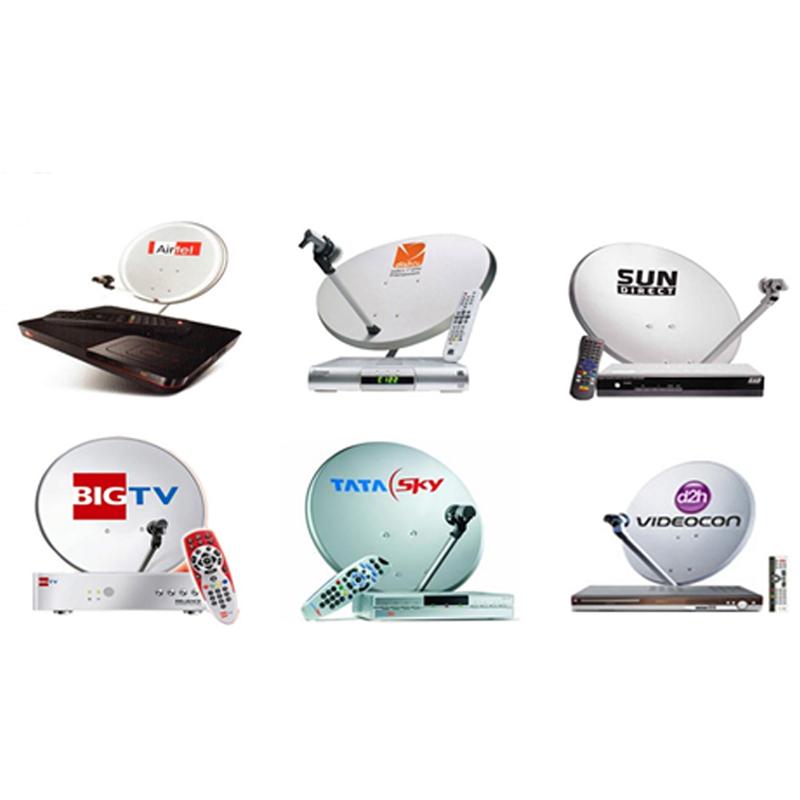
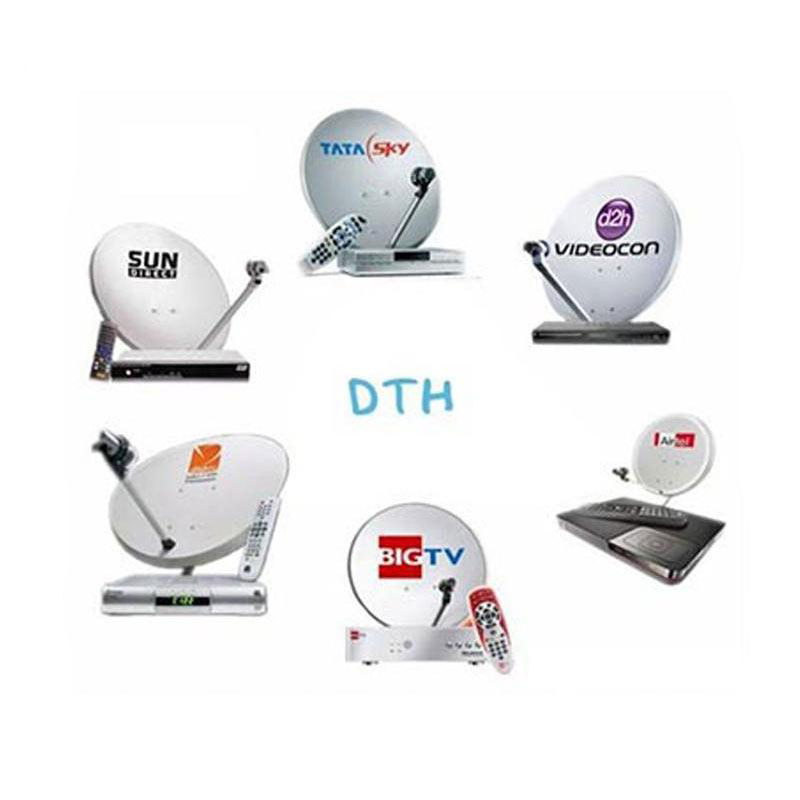
    According to industry experts, Indian hardware companies had devised a way to have two LNBs (low-noise box) in one single DTH antenna that was capable of receiving both ABS-2 and DD FreeDish services, resulting in sizable popularity of these two platforms that were accessed via a low-cost hardware. This was unlike the full-fledged subscription-based DTH services made available by the likes of Tata Sky, Dish TV, Videocon d2h and Sun TV.

    Also Read :

    Block illegal DTH FTA, space dept told

    Could India blocking ABS’ FTA TV signals lead to breach of ITU norms?

    Boeing delivers ABS-2A to optimise video services, DTH

  • How Harit Nagpal plans to keep Tata Sky ahead

    How Harit Nagpal plans to keep Tata Sky ahead

    MUMBAI: The DTH sector. What once seemed a lucrative arena has now seen companies getting acquired and merging, the competition being intense . Today, India is the largest DTH market in the world by number of subscribers. As on 30 September 2017, there were 66.99 million active pay DTH subscribers in the country. This does not include subscribers of free DTH services.

    A recent report published in Livemint sees Tata Sky CEO and MD Harit Nagpal stating that DTH has become a completely commoditised industry, like selling coal or steel, as everyone has access to everything today. He said, “If I drop prices, everybody will drop prices. So, there is really no differentiation. The only sustainable differentiation is process-centred, which is largely service. So, your boxes should fail less often, your picture quality should be good, your user interface should be better than anyone else’s, wherever there’s a failure, your response time should be the fastest.”

    Nagpal also revealed that Tata Sky’s current revenue is in the region of Rs 6000 crore where the current run rate (everyday recharge) is worth Rs 20 crore per day. Its revenue and profitability are increasing by 15-20 per cent y-o-y. The DTH player is witnessing subscribers mushrooming by 15-20 per cent every year. 

    Dismissing the general perception that Tata Sky is a premium service, he says that it isn’t so. However, the company has a higher proportion of high definition subscribers who pay Rs 500-600 every month. In the past five years, Tata Sky recorded 60 per cent new subscribers coming in from smaller towns and villages who pay Rs 200-220 per month, which is also a huge amount for them. For a business to be successful there has to be a balance of low, medium and high paying subs, Nagpal told Mint. Too many low-end customers will hamper profit and too many high-end ones will curb growth.

    The merger of Dish TV and Videocon to become India’s number one DTH entity has been of the key highlights of 2018 but Nagpal does not view the situation as a challenge and rather thinks Tata Sky’s numbers are equal to theirs or higher. 

    Cord cutting is a rage in the US with subscriber after subscriber giving up traditional TV services for OTT platforms like Amazon Video, Hulu, Netflix and Youtube. The internet content is either free or significantly cheaper than the same content provided via cable.

    In the US, cable costs $100 per month whereas in India it’s a mere $5. So, when Netflix or other OTT platforms are available at $10 each, a consumer would rather prefer watching the latter. But this won’t be the case in India due to the low pricing. Nagpal is of the opinion that India will never give up on TV even if people get on to watching OTT.

    Tata Sky recently tied up with OTT platforms Netflix, Hotstar, Youtube and Amazon Prime Videos in order to make them available to its subscribers. The DPO  says simply changing the customer premise equipment will allow Tata Sky subs to  receive both the signals—from the satellite and from  broadband, enabling viewers to watch on TV screen, live TV via satellite whenever they want to, and OTT via broadband whenever they want to.

    Nagpal concluded by saying that he does not feel pressure from OTTs since he is in the content business. “My life depends on the customer. I was buying content from broadcasters earlier and supplying it to the customer via satellite. The customer sometimes wants to watch the content of his choice, my job is to fetch that content for him. I am not wedded to the satellite,” he stated.

  • Tata Sky, Airtel DTH gain market share in 2017

    Tata Sky, Airtel DTH gain market share in 2017

    BENGALURU: Tata Sky and Airtel Digital TV (Airtel DTH) have reason to rejoice as they saw market share rise in calendar year 2017 as compared to a year ago. Both saw an increase by one per cent each at the end of December 2017 as compared to at the end of December 2016 according to Telecom Regulatory Authority of India (TRAI) data.

    Tata Sky had 24 per cent market share at the end of 2017 (CY-2017) as compared to 23 per cent at the end of 2016 (CY-2016), while Airtel DTH had 21 per cent share as compared to 23 per cent during the same period. Hence, the market share of Tata Sky and Dish TV, which lost one per cent market share in 2017, was the same. The other player that lost market share was Videocon d2h – its market share fell by a percentage point to 19 per cent in 2017 as compared to 20 per cent in 2016. 

    We had mentioned earlier that the share of the three major players whose numbers are available in the public  domain –(in order of number of subscribers – Dish TV, Airtel DTH and Videocon d2h) has been declining –  from about 65 per cent to 64 per cent in the Jun-Sep17 quarter to an even lower 63 per cent in the Oct- Dec 2017 quarter. 

    Please refer to the market shares of the six private DTH players at the end of 2017 and 2016 according to TRAI data:

    public://pic_1.jpg

    According to TRAI data, the overall private DTH active subscriber base grew by 4.19 million or 0.419 crore (7.8 per cent) in CY-2017 to 67.56 million or 6.756 crore from 62.65 million or 6.256 crore in CY- 2016. Comparatively, in 2016, the overall private DTH active subscriber base grew by 6.67 million or 0.667 crore (11.9 per cent) from 55.98 million or 5.598 crore in CY- 2015.

    As also mentioned by us earlier, quarterly data released by TRAI indicates that the industry added net 2.25 million or 0.225 crore subscribers for the quarter ended 31 December 2017 (Oct-Dec17 quarter), hence the final quarter of CY-2017 accounted for about 46 per cent of the net subscribers added during the year. The Oct-Dec17 quarter had the highest quarter-on-quarter pay-TV DTH subscriber growth in CY- 2017 at 3.45 per cent.

    We’d said that CY-2017 saw muted pay-TV DTH subscriber growth. Those numbers were based on the results declared by the above mentioned three private DTH players.

    It must also be mentioned that the government’s FreeDish DTH service is the largest DTH player by far in terms of subscribers with an estimated 22 million or 2.2 crore subscribers in 2016 as per the KPMG-FICCI Indian Media and Entertainment Industry Report 2017 (KPMG-FICCI M&E Report 2017) titled Media for the Masse: The Future Unfolds. It must however be noted that an exact number for registered or active subscribers is not available since this is a free DTH service. Also, the merger of Videocon d2h with Dish TV has created the largest private television carriage player in India and quite likely the second largest in the world, be it cable, internet television or DTH or any other.

  • Tata Sky coughs up Rs 561 crore as licence fee for FY 2017-18

    Tata Sky coughs up Rs 561 crore as licence fee for FY 2017-18

    MUMBAI: Direct-to-home operator Tata Sky has paid Rs 561 crore as licence fee to the government for 2017-18 financial year, according to a statement released by the company.

    The company paid a total of Rs 2,200 crore in the last fiscal year ended on 31 March 2018. This amount includes GST, state entertainment taxes and some other taxes.

    Commenting on the development, TataSky MD & CEO Harit Nagpal said: “With the payment made today, we have paid licence fee, past and current as per specified rates, regardless of pending litigations between the government and the platforms.”

    The Ministry of Information & Broadcasting (I&B) rules mandate DTH operators to pay 10 per cent of their gross revenue as their annual fee to the government. DTH operators, however, contend that the MIB should charge licence fee based on adjusted gross revenue left after paying several taxes and others.

    In 2014, the DTH operator had paid Rs 383 crore to the government as licence fee for the previous fiscal and arrears.

    In the same year, the MIB had sent notices asking them to pay licence fee totalling Rs 2,066 crore within 15 days. DTH operators had challenged the licence fee demand in the Telecom Disputes Settlement and Appellate Tribunal (TDSAT) in 2014.

    Tata Sky, a joint venture between Tata Sons and 21st Century Fox, has presence across 1.5 lakh towns with over 18 million connections.

    The Telecom Regulatory Authority of India (TRAI) has in its recommendations to the MIB said that the DTH licence period should be increased to 20 years while the licence fee should be charged as 8 per cent of adjusted gross revenue (AGR) where AGR is calculated taxes paid to the government.

    Also Read :

    Tata Sky brings Netflix content for customers

    Dish TV-Videocon d2h to bank on economies of scale


  • Amitabh Bachchan turns film critic for Tata Sky

    Amitabh Bachchan turns film critic for Tata Sky

    MUMBAI: Tata Sky’s latest high decibel ATL campaign this season highlights its multiple entertainment offerings with two versions — one featuring Bollywood actor Amitabh Bachchan and the other featuring Southern superstar Nayanthara. The new campaign emphasises on the depth of entertainment that Tata Sky offers in a manner that’s loveable and memorable.

    The campaign, ‘#HarSceneKaMazaaLo’ showcases Bachchan as he adorns the role of a Bengali critic mimicking Bollywood superstars in a series of nine ad films. Bachchan is seen to be completely engrossed in watching famous movies brought to him by Tata Sky where he reanimates the evergreen dialogues in his own Bengali avataar. The objective of the ad campaign is to showcase how an individual enjoys the offerings of Tata Sky to the fullest, highlighting the abundance of entertainment across platforms.

    Shot as a series of five ad films, the campaign primarily draws attention to the benefits that Tata Sky offers in the form of pay for what you watch, highest regional HD channels, on the screen of your choice along with a 24X7 customer helpline facility in dedicated southern languages

    Tata Sky’s chief communications officer Malay Dikshit says, “In a country which is obsessed with movies, it’s not a surprise that feature films aired on TV contribute to over 28 per cent of the total viewership. Bachchan’s legacy and Nayanthara’s versatile personality along with Ogilvy and Mather’s creativity has helped us create the magic for Tata Sky. It beautifully depicts our objective to strive and offer maximum and some of the best entertaining content to our consumers at any budget, on any screen, anytime, anywhere.”

    Ogilvy India chief creative officer Sukesh Nayak adds, “When you truly enjoy watching a film you begin to respond to an actor’s performance. You are awed or disappointed by their performance and you are always vocal about it. We used this insight as an entry point to talk about the huge bouquet of movie channels Tata Sky has to offer. It was a blast working with Bachchan and Shoojit on this campaign. We had lots and lots of fun. The core idea of ‘Har scene ka mazza lo’ will be amplified across different mediums. On digital, just like our tough film critic, we will encourage people to share with us their favourite scenes.

    With an aim to connect with the viewers, Tata Sky’s maximum entertainment campaign is a 360-degree campaign which includes outdoors in the form of bill boards, wall paintings and bus backs, digital and TVCs. Bachchan’s TVC has been envisioned and executed by Ogilvy and directed by national award-winning director Sircar. Nayanthara features in the campaign created for the southern states directed by R Krishnakumar.

  • OTT platforms boost appeal of English entertainment

    OTT platforms boost appeal of English entertainment

    MUMBAI: The over-the-top (OTT) space in India is exploding with broadcasters and new players taking the plunge to entertain the country. In such a scenario, even English entertainment content players aren’t far behind.

    With over a dozen channels in the genre and now even direct-to-home players contributing with value-added services (VAS), the market is likely to witness a significant jump in the number of consumers, hours of content consumed and revenue. Excluding VAS, the ad sales revenue for the English entertainment and movies market is Rs 600-700 crore.

    “Proliferation of OTT players has aided the appeal of English content in India, be it Hollywood or general entertainment. This is visible in the growth numbers for the English category, which has seen a growth in viewership in FY 18 as compared to FY 17,” says Sony Pictures Networks India EVP English channels Tushar Shah.

    Tata Sky has recently launched Tata Sky World Screen – a handpicked bouquet of international entertainment content. The VAS will not only feature Hollywood movies, but also prime content from across geographies and multiple languages like Arabic, Russian, Spanish, French and many more. The ad-free service will allow subscribers to view select series and movies from across the world round the clock. It is priced at Rs 75 a month and Tata Sky aims to drive up average revenue per user (ARPU) with international content.

    Tata Sky chief content officer Arun Unni says that the service targets a segment in which the genre is popular and is open to consume new content. “This kind of an offering doesn’t exist in the market. It is an alternative for those who are either already exposed or would not want to go on the purely digital option and even for those who do, they might find interesting and compelling content,” he adds.

    Critics claim that OTT is eating into traditional media. In an earlier interaction, Shah said, “There is always a churn between different platforms around the world. But this hasn’t led to viewership shrinking. Instead, it has grown by 54 per cent for the SPN English category between 2016 and 2017. The English movies genre overall has grown by 67 per cent in 2017.”

    Videocon d2h started a VAS named ‘Hollywood’ and ‘Hollywood HD’ long time back. The service was earlier priced at Rs 45 per month but now it has been reduced to Rs 38 per month excluding tax. The content is being sourced from seven top studios in Hollywood – Disney, Warner Bros, NBC Universal, Fox, Sony Pictures, Lionsgate and Paramount.

    According to FICCI Frames report, in 2017, English entertainment and other genres saw a reduction in their viewership because of rural panel weightage enhanced by the Broadcast Audience Research Council.

    OTT platforms in India have reached scale and now provide something for a vast array of audiences. Be it Eros Now with its huge library of Indian films, Zee5 with its wide regional offerings, Sony Liv and Hotstar with their TV content and premium sports while Hollywood rules the English entertainment offering.


  • Netflix deal will help in customer retention, revenue enhancement: Tata Sky’s Harit Nagpal

    Netflix deal will help in customer retention, revenue enhancement: Tata Sky’s Harit Nagpal

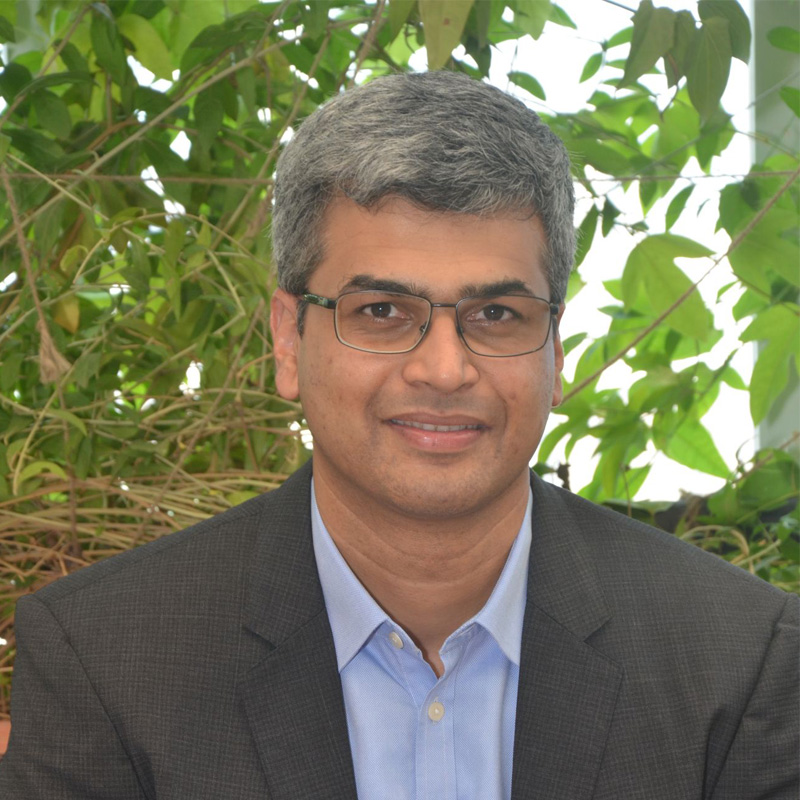
    Tata Sky MD and CEO Harit Nagpal has been a bit of an early mover in terms of innovation and building a world-class satellite TV operation. Whether it has been in the case of HD or VAS or top-notch customer services, Tata Sky has been driving many of the path-breaking initiatives in the DTH sector. Nagpal announced a major strategic partnership with Netflix under which Tata Sky subscribers will be able to watch the world-class streamer’s on-demand content, including TV shows, films and documentaries, in the coming months through the direct-to-home operator’s platforms.

    Nagpal was in APOS Bali and was on stage for a conversation with MPA’s Vivek Couto. He openly spoke about the reasons behind the Netflix partnership, how it will benefit customers, what it means for Tata Sky and how does he see the satellite TV leader continuing with its leadership status. Sources indicate that Tata Sky is generating close to a billion dollars in revenue from about 15 million subscribers. Excerpts from the conversation:

    Why the Netflix tie-up?

    We don’t look at us as satellite TV platforms, we look at ourselves as the equivalent of grocers in this industry that produce and distribute content. We are a distributor part of the content, depending on the customer, whenever he wants to buy wherever he wants to watch we are privileged to provide him that—that was our thinking.

    Some customers of ours—not all, a very small fraction in India—are having access to good quality broadband, which can carry video. Also, they have the capability of paying for the broadband. And third, they don’t have the time to watch when it is broadcast; they’d rather watch it at their time.

    Who are these customers?

    Unlike the western world, where almost everybody falls in this category, in our country, a very small fraction falls in this group. Fortunately, we are providing linear television services to this kind of customers and today there are about 3.5 million such customers who are paying about $10 plus per month on content in a country whose ARPU is much lower. We have two million of these customers. So, it’s been our endeavour to create a platform. Because the lunch is lying in front of me, I would rather eat it rather than wait for someone else to come and eat it. We met Reed (Hastings) and Bill two years ago at their villa in Bali during APOS. And the rest is history.

    How will you differentiate from other service providers and mobile companies?

    We are going to distribute almost everything but not on-demand content like the mobile guys did. Mobile guys could best take a phone and put in five, six, seven eight apps. We were distributing television very differently. We were going to Sony, Star, Zee, Colors and buying content in bulk but providing it to the customer by genres making content discovery easy. That means if a linear TV customer says I don’t have kids, I like music, I don’t like sports, and I speak Malayalam, then I see no reason why he should not be watching on-demand content in the same way.

    It is my job to get all the content from various sources or on demand platforms and make the content discovery as easy as I have made it on the TV screen. We are giving him probably seven days catch-up TV for what he is subscribing on linear. To that you add Netflix, Amazon, Hotstar, YouTube, and whatever else become the prominent apps. You distribute that content via genre and offer it to him for a little over what he is willing to pay for linear TV.

    Is the Netflix addition mostly about ARPU enhancement in India?

    It’s retention and revenue enhancement. We have noticed that a customer when he gets into one of our services, his inclination to churn reduces. To the extent of around 75 per cent. The moment he gets dependent on a DVR, the 12 per cent churn becomes three per cent churn.

    So one more dependency for another service which is OTT will drive down the churn or deactivation even if it is for a short duration. The premium segment which accounts for 15-20 per cent of our base, there is no more price increases you can take on them and hence grow revenue.

    They are also consuming almost every single genre of content that is there. There is no genre to go into and select. We can lure in these guys by giving him additional services.

    Will the tie-up work against Tata Sky? Don’t you fear competition?

    Competitive intensity is good for the industry especially at the stage we are in. We need more high-quality competition to come into this business. I don’t want to run a monopoly because monopolies become very lethargic and they don’t feed the customer and they don’t grow the industry. At this stage, the more, the larger number of good quality competition that comes in it will keep us on our toes it should be there. It will help get good quality of product to the customer and is welcome.

    It’s not going to be a single platform. It’s going to be a combination. Just like a set top box is HD, DVR, SD and all those kinds of things. It’s going to be low cost to high cost. Even the customer price models will be different. You pay upfront a lot and don’t make me subsidise, you pay less per month. You make me subsidise the equipment, you pay me more per month.

    Has not the pay TV market slowed down in India? What about free to air?

    Deceleration is not happening. First of all the pay TV mass in India was not growing. What was happening was the transition from analog cable to digital platforms. If you look at the last five or six years, the pay TV base has not grown tremendously. 50 million people we have migrated from cable TV to DTH. That was growing at a pretty fast pace earlier. In the last two years, it slowed down. First year was because of free to air (FTA). We licked that problem in May last year. And since that the FTA growth has been curbed.

    There has been a lack of competitive intensity amongst the DTH competitors in the last one year. Primarily because a couple of them were busy panning out the merger and they were not participating in the competition in the market. Which has probably led to the slowing down of migration from cable TV to DTH. It’s a momentary thing, I guess. It’s going to come back.

    We don’t treat FTA as competition. FTA is a good thing. FTA provides me a pool from which I can source customers from. Because the customer does not buy a TV and decide to pay subscription simultaneously. He first buys it as subscription is going to be free. Then some of them upgrade to a paid service and that’s the pool we can tap into.

    Where do you see growth coming from?

    I see growth coming from phase IV. Two thirds of India lives in phase IV. They

    live in small villages which have 50 and 100 households. Drawing a cable to that village is uneconomical. If the cable operator who was serving those 150 households, if he loses 50 households then serving the balanced left-over subs become uneconomical.

    Will the march of the telcos like airtel, Jio, Idea Vodafones into content and distribution also impact your business?

    I welcome the telcos getting into the content business because it will keep the addiction to content alive. Compare it to the time when we only had land lines, we talked for 200 minutes a month. And we added mobiles, we are talking for 600 minutes a day. Because I am not restricted to my sofa and talking. I can be in the car, on the road, in the loo, wherever. Similarly, if I am restricted to my living room, then there are chances of addiction not become addictive enough.

    If I have the option I am watching something on the phone then I come back and again watching it on the TV, the addiction will stay. So, it’s additive not subtractive. And nobody has watched content on a six-inch screen if a 42-inch was available in front of him. You will watch it if the remote is taken from you by your wife or the kid, you will watch it on the mobile sitting in the same room: I am not deprived of the content I want to watch.
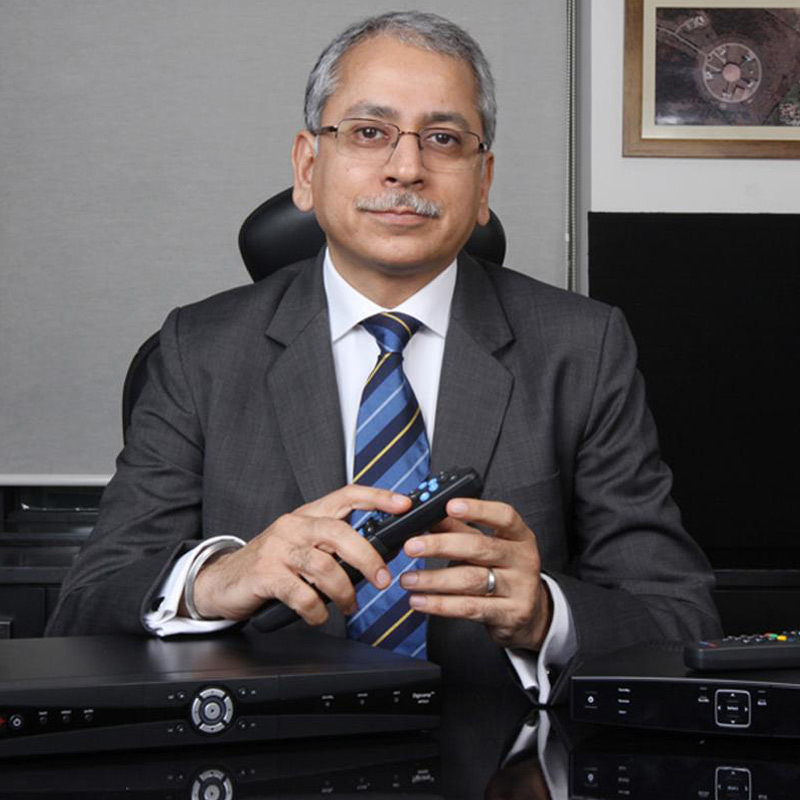
     

  • Tata Sky brings Netflix content for customers

    Tata Sky brings Netflix content for customers

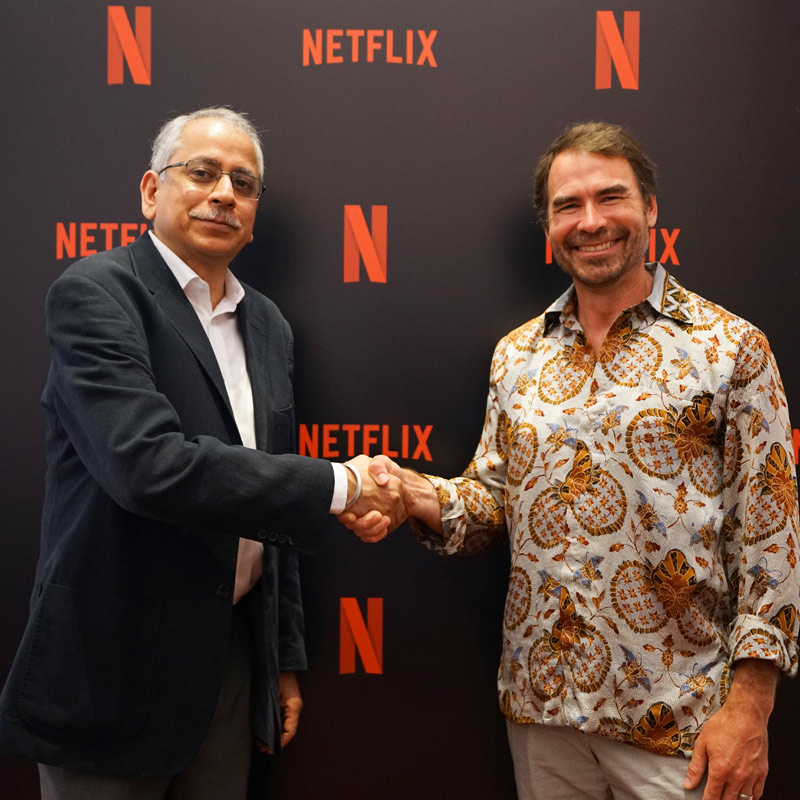
    MUMBAI: Streaming giant Netflix and DTH operator Tata sky have entered into a strategic partnership for easy access to a world of content through future Tata Sky platforms.

    “We are delighted to partner with Tata Sky to bring great content under the same roof. With this new partnership and Netflix’s stellar line up of original content from across the world, Tata Sky’s customers will be able to seamlessly access and enjoy all the best entertainment they love in one place,” Netflix global business development head Bill Holmes said.

    Tata Sky subscribers will be able to browse and access the entire Netflix service, including TV shows, films, documentaries, stand-up comedy and kids’ titles. Netflix’s service includes over a thousand hours of ultra HD content, complementing Tata Sky’s extensive high-quality programming.

    “Tata Sky’s partnership with Netflix adds another dimension to providing world-wide quality content on-demand for our subscribers. Keeping up with our promise of pioneering innovation, we will soon announce the offering that is possible with this partnership. We are glad to include Netflix in our family and look forward to keep offering an extraordinary entertainment experience to all our subscribers,” Tata Sky CEO Harit Nagpal said.

    Also Read :

    Tata Sky woos new customers with free Star Sports channels

    Indian content at Netflix to be creatively lead by Disney’s Simran Sethi

  • Tata Sky aims to drive up ARPU with international content

    Tata Sky aims to drive up ARPU with international content

    MUMBAI: Direct-to-home (DTH) service Tata Sky has launched its newest offering, Tata Sky World Screen—a handpicked bouquet of international entertainment content available from 16 March 2018. 

    Tata Sky World Screen will feature prime content from across geographies and multiple languages (Arabic, Russian, Spanish, Belgium, Israel, Cuba, German, French, Italian, Portuguese, Hindi, Swahili, Japanese, Chinese and Korean). Non-English content will have subtitles and some will also be dubbed in English. The ad-free service will allow subscribers to view select series and movies from across the world round the clock. 

    “Content like this is not just interesting to tier 1 and 2 cities but also to tier 3 and 4. People are willing to pay if they get the right product. The way we distribute our content has a greater chance of reaching hinterlands as well. Digital is more relevant in promoting this content than any other product,” said Tata Sky chief content officer Arun Unni.

    “We focus on both ARPU (average revenue per user) as well as increasing the subscriber base. The average industry ARPU is Rs 270-300, our ARPU is a bit higher than the industry figure,” he added.

    Priced at Rs 75 a month, the content will be available to subscribers on their TV sets through the set top box, mobile app and the web app of Tata Sky.

    “Our analysis indicates that consumption patterns are evolving, and there is an audience looking for exciting and diverse content, unconstrained by language. The objective here is to give consumers the content that is not easy to discover and consume. Our handpicked list includes some of the most popular and critically acclaimed movies and TV shows across the world, a lot of which has never been seen on TV before in India,” added Unni.

    Amongst the TV series premieres will be the acclaimed thriller Wallander, Happy Valley, Code 37, Team Chocolate, Prisoners of War and Babylon Berlin. There will also be two movie premieres a month from world cinema. 

    In another partnership, India’s premier youth entertainment portal 101India.com partnered with Toronto based media giant QYOU Media for its newly launched service on Tata Sky, The Q India. The localised service will showcase premium digital content curated from popular content creators and broadcast it on TV.

    Also Read :

    Tata Sky woos new customers with free Star Sports channels

    The party continues on Tata Sky Mobile app

  • Oct-Dec quarter sees highest pay TV DTH subscriber growth in 2017

    Oct-Dec quarter sees highest pay TV DTH subscriber growth in 2017

    BENGALURU: After the debacle created by demonetisation in November 2016 and then the implementation of the new Goods and Services Tax regime in July 2017, the fortunes of the pay TV direct-to-home (DTH) industry seem to be improving in terms of subscriber addition. Quarterly data released by the Telecom Regulatory Authority of India (TRAI) indicates that the industry added net 22.5 lakh (2.25 million) subscribers for the quarter ended 31 December 2017 (October to December17 quarter). Throughout the calendar year 2017 (CY-2017), the industry had added 49.1 lakh (4.91 million subscribers), hence the final quarter of CY-2017 accounted for about 46 percent of the net subscribers added during the year.The Oct-Dec17 quarter had the highest quarter-on-quarter pay-TV DTH subscriber growth in CY-2017 at 3.45 percent. The number of active pay-TV DTH subscribers in India as per TRAI data as on 31 December 2017 was 675.6 lakh or 67.56 million as compared to 653.1 lakh (65.31 million) in the Jun-Sep17 quarter.

    As mentioned by us earlier, CY-2017 saw muted pay-TV DTH subscriber growth. Those numbers were based on the results declared by three private DTH players whose numbers are available in the public domain. They are: Indian telecom major Bharti Airtel’s Airtel Digital TV (Airtel DTH), the Essel group’s Dish TV and Videocon d2h. The other three private pay-TV players during a part of CY-2017 were Tata Sky, the Sun TV Network’s Sun Direct and Reliance Big TV. It may be noted that Reliance Big TV has been acquired by Pantel Technologies and Veecon Media. Normal operations have to recommence as yet. A number of Big TV customers were acquired by other players and the true status of its operations and current subscriber numbers are still unclear at the time of writing of this paper. Furthermore, the merger of Videocon d2h into Dish TV has been recently concluded, and the combined entity has the second largest pay-TV subscriber base in the world.

    Be that as it may, the share of the three major players in the Oct-Dec17 quarter (in order of number of subscribers–Dish TV, Airtel DTH and Videocon d2h) has been declining from about 65 percent to 64 percent in the Jun-Sep17 quarter to an even lower 63 percent in the Oct-Dec17 quarter. It may be noted that Tata Sky subscriber base could be higher than Airtel’s subscriber base. Tata Sky data is not available in the public domain, and hence this cannot be verified or neglected.

    Besides the six private pay DTH players, Doordarshan’s (DD) FreeDish DTH service is a major player in terms of subscribers with an estimated 2.2 crore as per the numbers available in the public domain. It must, however, be noted that an exact number of registered or active subscribers is not available even with DD since this is a free DTH service.According to an E&Y report titled ‘India’s Free TV’ released in July 2017, among the DTH operators in India DD FreeDish has grown to become the largest with its estimated 2.2 crore subscribers which E&Y predicted could cross 4 crore over the next two to three years.

    Please refer to the figure below for the trends of pay-TV subscribers based on TRAI data and the numbers published by the three players in the public domain. Q-o-q growth for the Jan-Mar16 quarter cannot be compared with the Oct-Dec15 quarter since TRAI changed the way it measured active DTH subscribers in the Jan-Mar16 quarter.

    public://gr_0.jpg

    Also Read :

    DTH adds 14 lakh active subscribers in Q2-17 as per TRAI data

    DTH subscriber growth muted in CY-2017

    DTH subscriber growth down in second quarter