Tag: Tata Motors

  • Neo@Ogilvy Appoints Deepankar Kapoor head of strategy for India

    Neo@Ogilvy Appoints Deepankar Kapoor head of strategy for India

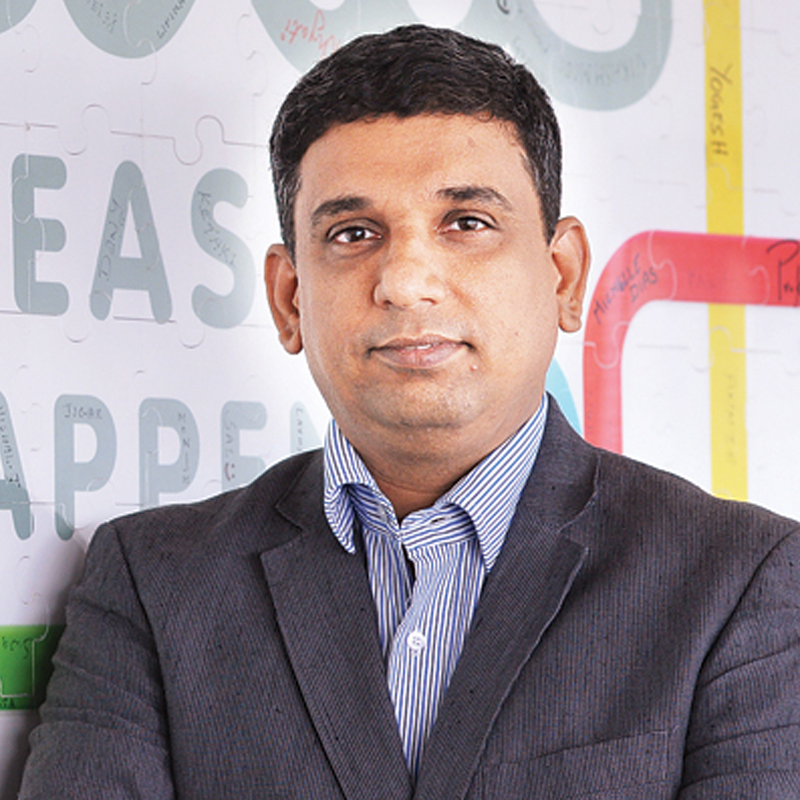
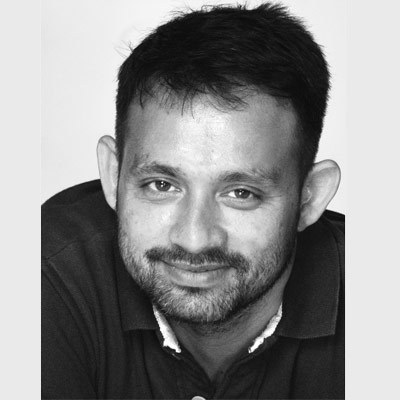
    MUMBAI: Neo@Ogilvy announced Deepankar Kapoor as Vice President and Head of Strategy – India, Neo@Ogilvy. He will be based in Gurgaon.

    Kapoor comes to Neo@Ogilvy with work experience that is richly diverse and spans eight years in digital strategy and planning. Kapoor has worked on multiple aspects of this business – creative, content, media, technology and CRM providing solutions for a roster of blue chip brands. He joins Neo@Ogilvy from Havas Media where he was leading the digital strategy function while working with brands such as Star TV, Sun Pharmaceuticals, LG, Amway, Xolo, Clovia among others.

    Neo@Ogilvy India president & country head Rajesh Bhatia said, “I have always emphasised the need and importance of sophisticated strategy and planning talent – this skill is often compromised by digital agencies. I am fortunate to have worked with some of the best talent in the industry who have reinforced that belief. I am delighted to have Deepankar join us in our journey to help establish our thought leadership and provide digital strategic direction to the brands we partner.”

    Before Havas Media Group, Kapoor has led digital strategy at the Grey Group and DigitasLbi where he drove digital transformation journeys for brands such as Tata Motors, Volkswagen, Quikr, Cadburys, Vespa, ITC, Dell, Johnson & Johnsons portfolio, Indian Army, Network18, Wipro Corporate, etc. A few prominent digital exercises under his belt are the digital brand launches of Tata Bolt & Zest, Tata Safari’s CRM initiative famously known as SOUL and the very recent buzziest campaigns of 2015 called Tardis Day (for Doctor Who fans) for Star FX.

    Academically, he holds an MBA from the University of Calcutta, a degree in Communications Management from Symbiosis International University and a Diploma in Cyber Laws from Government Law College Mumbai.

  • Neo@Ogilvy Appoints Deepankar Kapoor head of strategy for India

    Neo@Ogilvy Appoints Deepankar Kapoor head of strategy for India

    MUMBAI: Neo@Ogilvy announced Deepankar Kapoor as Vice President and Head of Strategy – India, Neo@Ogilvy. He will be based in Gurgaon.

    Kapoor comes to Neo@Ogilvy with work experience that is richly diverse and spans eight years in digital strategy and planning. Kapoor has worked on multiple aspects of this business – creative, content, media, technology and CRM providing solutions for a roster of blue chip brands. He joins Neo@Ogilvy from Havas Media where he was leading the digital strategy function while working with brands such as Star TV, Sun Pharmaceuticals, LG, Amway, Xolo, Clovia among others.

    Neo@Ogilvy India president & country head Rajesh Bhatia said, “I have always emphasised the need and importance of sophisticated strategy and planning talent – this skill is often compromised by digital agencies. I am fortunate to have worked with some of the best talent in the industry who have reinforced that belief. I am delighted to have Deepankar join us in our journey to help establish our thought leadership and provide digital strategic direction to the brands we partner.”

    Before Havas Media Group, Kapoor has led digital strategy at the Grey Group and DigitasLbi where he drove digital transformation journeys for brands such as Tata Motors, Volkswagen, Quikr, Cadburys, Vespa, ITC, Dell, Johnson & Johnsons portfolio, Indian Army, Network18, Wipro Corporate, etc. A few prominent digital exercises under his belt are the digital brand launches of Tata Bolt & Zest, Tata Safari’s CRM initiative famously known as SOUL and the very recent buzziest campaigns of 2015 called Tardis Day (for Doctor Who fans) for Star FX.

    Academically, he holds an MBA from the University of Calcutta, a degree in Communications Management from Symbiosis International University and a Diploma in Cyber Laws from Government Law College Mumbai.

  • Happy Finish created India’s first automotive virtual drive for Tata Motors

    Happy Finish created India’s first automotive virtual drive for Tata Motors

    MUMBAI: Happy Finish, a global creative production studio and agency offering immersive content experiences for leading brands, advertising agencies and photographers, has successfully delivered the last phase of cross platform media assets to support an ambitious campaign for Indian automotive brand, Tata Motors.

    In 2015, Tata Motors signed up Lionel Messi as its global brand ambassador and rolled out the successful #madeofgreat campaign across India. Happy Finish India brought #fantastico campaign to life for Tata Motors, by creating India’s first virtual drive experience for the Tiago car launch, including an array of cross platform media campaign assets.

    In supporting this bold campaign, the assets created by Happy Finish would reach an audience of millions through Tata Motors’ mass distribution of 2.3 million branded Google Cardboards, digital campaign and print ads in The Times of India, across the highly potential automotive markets of Mumbai, Delhi/NCR and Bengaluru.

    Tata Motors marketing communications and services head Delna Avari commented, “The challenge was how do we bring alive the test drive experience of a car which is yet to be launched. We felt that creating a VR experience would be the best idea and were delighted to partner with Happy Finish to introduce India’s first live action virtual drive experience. The reach has been phenomenal with great ROI and has been appreciated as one of the most innovative idea from Tata Motors for consumer experience.”

    Happy Finish APAC CEO Ashish Limaye commented, “We had a keen focus on the distribution channel for all of the cross platform media assets, and created a VR solution which enabled Tata Motors to leverage the power of mobile, producing engaging content via an easy to use app, available on both Android and iOS.

  • Happy Finish created India’s first automotive virtual drive for Tata Motors

    Happy Finish created India’s first automotive virtual drive for Tata Motors

    MUMBAI: Happy Finish, a global creative production studio and agency offering immersive content experiences for leading brands, advertising agencies and photographers, has successfully delivered the last phase of cross platform media assets to support an ambitious campaign for Indian automotive brand, Tata Motors.

    In 2015, Tata Motors signed up Lionel Messi as its global brand ambassador and rolled out the successful #madeofgreat campaign across India. Happy Finish India brought #fantastico campaign to life for Tata Motors, by creating India’s first virtual drive experience for the Tiago car launch, including an array of cross platform media campaign assets.

    In supporting this bold campaign, the assets created by Happy Finish would reach an audience of millions through Tata Motors’ mass distribution of 2.3 million branded Google Cardboards, digital campaign and print ads in The Times of India, across the highly potential automotive markets of Mumbai, Delhi/NCR and Bengaluru.

    Tata Motors marketing communications and services head Delna Avari commented, “The challenge was how do we bring alive the test drive experience of a car which is yet to be launched. We felt that creating a VR experience would be the best idea and were delighted to partner with Happy Finish to introduce India’s first live action virtual drive experience. The reach has been phenomenal with great ROI and has been appreciated as one of the most innovative idea from Tata Motors for consumer experience.”

    Happy Finish APAC CEO Ashish Limaye commented, “We had a keen focus on the distribution channel for all of the cross platform media assets, and created a VR solution which enabled Tata Motors to leverage the power of mobile, producing engaging content via an easy to use app, available on both Android and iOS.

  • Virtual Reality: What’s in it for marketers?

    Virtual Reality: What’s in it for marketers?

    MUMBAI: In the marketing industry, digital era is not something being anticipated but a reality that has arrived and the way one interact with digital content is also changing rapidly especially through the advent of virtual reality (VR) and augmented reality(AR). 

    The terms are often thrown in the air by marketers when citing examples of latest technology in marketing, but what few realize the ground zero report on the actual work and its effectiveness done using VR and Augmented reality as a marketing tool.

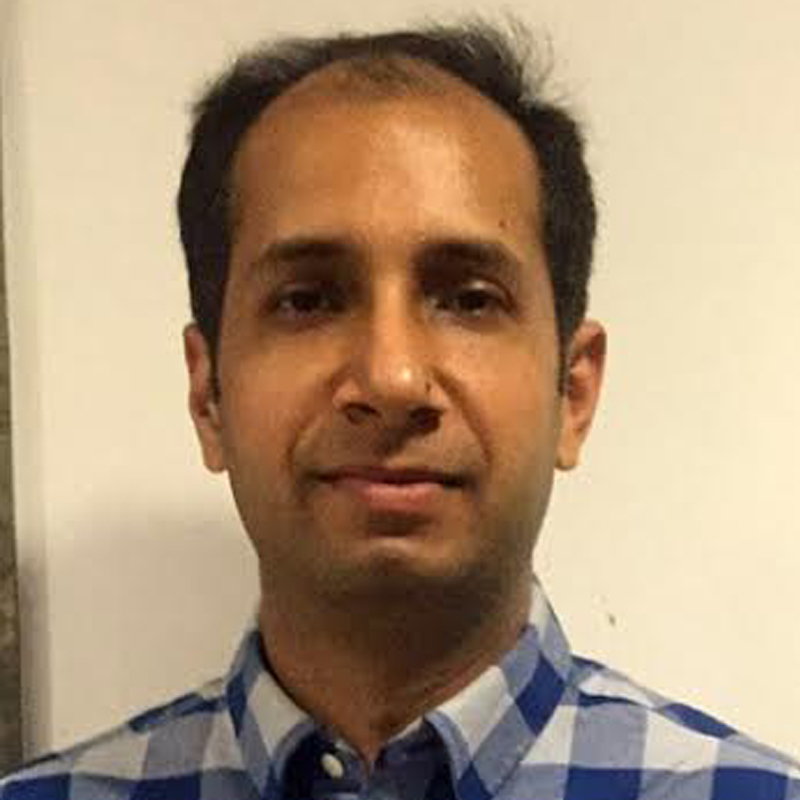
    And who better to vouch for it than Ashish Limaye the chief operating officer of Happy Finish, a creative post production studio media agency that dabbles heavily in VR, CG and AR.

    With a global presence of over 12 years, Happy Finish headquartered in the United Kingdom has managed to bag substantially big name clients since it entered the Indian market five years ago. The studio works closely with other creative agencies and caters to specific skillsets that a campaign requires while also having several clients of their own to boot.

    “We work with almost all the leading brands including brands like Unilever, Nestle and Marico to Coke and Pepsi in the beverage section,” points out Limaye, adding, “In the automobile section we work with Maruti Suzuki, Tata Motors, Toyota, and Renault.”

    Adapt or perish

    The single largest shift in the paradigm that Limaye has noticed in the last one year is the completely insulated channels that brands have established with consumers irrespective of any external stakeholders. “When I say stakeholders, I mean magazine, television, billboards etc. And this insulated channel is possible through smartphones that have penetrated the Indian market,” points out Limaye. “The shift which is happening is from all the above-the-line conventional paid media to a ‘owned by the brand’ media, which also generates organic reach through social media without spending a penny.” Coupled with the data points that smartphones facilitate, brands can now directly target their consumers and know them like never before -.not as part of some mass, but by name age and behaviour and preference. As smartphones and other smart devices can easily be used to access VR environment, its use in marketing will grow manifold in the coming years.

    Scope for VR in marketing

    When asked about the scope for VR and augmented reality he sees in marketing in India, Limaye points out the major challenges that today’s marketers are facing with conventional mediums of communication.  “There are two constants in this day and age: one if that media is getting fragmented, and second, consumer attention is getting more fragmented. Today, the consumer is bombarded with so many different media and it has become extremely tough establishing a dialogue with them. And that is where VR becomes extremely advantageous to marketers as it allows you to engage the consumer on a one-on-one basis.”

    To sum it up he adds, “Firstly, VR helps brands with a significant amount of credibility through immersive experience, which otherwise is not possible as effectively. Secondly it also allows to communicate the entire value chain with the customer, through multiple channels — be it retail, or post sale etc; from the factory to the showroom and then road.”

    Limaye explains with an example. “Suppose a telecom is launching their 4G services. With the past record of 3G services not being so favourable with people complaining of call drop, there is a lot of doubt in the market on how well the 4G will do. To counter that a marketer can create an immersive experience of a user in the 4G service and share it with prospective consumers to add credibility to 4G services.”

    VR Vs AR: 

    While VR has been cited several times for its use in experiential marketing, it is easy to confuse it with augmented reality. Limaye defines the two in a simple sentence: “Augmented reality is when I import an external element into my world, while virtual reality allows me to travel to that world.” 

    The biggest differentiating factor is that augmented reality can be consumed by more than one person at a time. “You can project a car on a table while sitting in coffee shop and show to a client or a buyer the inside of the car, its interiors, how it functions and drives. That’s augmented reality.”

    Another good example of clever use of augmented reality in a marketing campaign is what can be done for the online furniture brands like Pepperfry. “It allowed consumers to scan their living room and feed the information to their app, and then place furniture items wherever you like with the use of augmented reality to see what looks like where.”

    Adoption amongst brands:

    In India, the adoption of the technology is picking up fast. Limaye says he gets at least two to three requests daily from several big and small brands when it comes to VR, although he does acknowledge the presence of a learning curve that the industry is going through for this fairly new technology. “While there are brands interested in trying these out, when you ask them what exactly they want to do with it. They have no answer.”

    The area in which the marketers are falling behind is the lack of creative approach when working with VR and augmented reality. “You can’t be using VR for the sake of it just to sound cool or be counted amongst those who are progressive in the industry. There has to a communicative objective that the use of VR must fulfill,” Limaye said.

    The brands which have come forward in using VR and AR come from FMCG sector, beverages like Pepsi and Coke, tourism and travel, and of course automobiles. Currently 30 per cent of Happy Finish’s client base for VR is from the automobile sector.

    Accessibility and cost:

    While VR and AR paves way for endless possibility in use of the technology for marketing purpose, one can’t help but question if India is ready for it in terms of the accessibility of the experience. Can brands only target niche consumers or go brand to brand with it?  

    Knowing that similar questions have been bothering the industry for quite sometime, Limaye says: “It is a myth that you need a high-end headgear to access Virtual reality. You can access it in many ways. Firstly you have Google Cardboard, which is priced as low as Rs 100. Secondly you can access it using YouTube and Facebook that have started their 360 degree videos. Your mobile or your smart device – be it laptop or iPad – then becomes your window to the virtual reality. All one needs to do is shoot 360 media and put it up. Thirdly, if one has a budget to spare, one can go for head gears for a more complete experience. I can see big spending brands keep a gear at their showroom for showcases etc, or for B2B communication. So the distribution challenge is being dealt with in every level.”

    The ROI Factor: 

    So how much should a marketer going for VR budget for their new campaign? Typically, the feeling is that use of a new technology is more expensive as one has to set in place the infrastructure for it. But Limaye disagrees.

    Though the average budget is subjective to the brands need but for a decent campaign which includes an app development and a live action shoot, a budget of Rs 1 to s 1.5 crore is good enough for a good immersive experience using VR. That also reflects in the ROI.

    “I have metrics in place for how many people have downloaded an app, what feature they are interested in and I can even have a call to action post their immersive experience and directly lead the campaign to sales. The call to action is also well monitored and measure. When it comes to ROI, the investment too is very less when you compare it to mediums like television. To reach the Hindi Speaking Market with TVC, a marketer needs to have at least Rs 2 to 3 crore budget to reach a decent TRP number. But this is not needed when I am talking about a VR campaign while still reaching out to the relevant audience.” 

    “The quality of engagement is much higher as compared to other mediums, and the cost of acquisition of the customer’s attention is much lower, and the absolute spend is also lower. In all these metrics, the ROI is much higher,” Limaye adds in parting.
  • Virtual Reality: What’s in it for marketers?

    Virtual Reality: What’s in it for marketers?

    MUMBAI: In the marketing industry, digital era is not something being anticipated but a reality that has arrived and the way one interact with digital content is also changing rapidly especially through the advent of virtual reality (VR) and augmented reality(AR). 

    The terms are often thrown in the air by marketers when citing examples of latest technology in marketing, but what few realize the ground zero report on the actual work and its effectiveness done using VR and Augmented reality as a marketing tool.

    And who better to vouch for it than Ashish Limaye the chief operating officer of Happy Finish, a creative post production studio media agency that dabbles heavily in VR, CG and AR.

    With a global presence of over 12 years, Happy Finish headquartered in the United Kingdom has managed to bag substantially big name clients since it entered the Indian market five years ago. The studio works closely with other creative agencies and caters to specific skillsets that a campaign requires while also having several clients of their own to boot.

    “We work with almost all the leading brands including brands like Unilever, Nestle and Marico to Coke and Pepsi in the beverage section,” points out Limaye, adding, “In the automobile section we work with Maruti Suzuki, Tata Motors, Toyota, and Renault.”

    Adapt or perish

    The single largest shift in the paradigm that Limaye has noticed in the last one year is the completely insulated channels that brands have established with consumers irrespective of any external stakeholders. “When I say stakeholders, I mean magazine, television, billboards etc. And this insulated channel is possible through smartphones that have penetrated the Indian market,” points out Limaye. “The shift which is happening is from all the above-the-line conventional paid media to a ‘owned by the brand’ media, which also generates organic reach through social media without spending a penny.” Coupled with the data points that smartphones facilitate, brands can now directly target their consumers and know them like never before -.not as part of some mass, but by name age and behaviour and preference. As smartphones and other smart devices can easily be used to access VR environment, its use in marketing will grow manifold in the coming years.

    Scope for VR in marketing

    When asked about the scope for VR and augmented reality he sees in marketing in India, Limaye points out the major challenges that today’s marketers are facing with conventional mediums of communication.  “There are two constants in this day and age: one if that media is getting fragmented, and second, consumer attention is getting more fragmented. Today, the consumer is bombarded with so many different media and it has become extremely tough establishing a dialogue with them. And that is where VR becomes extremely advantageous to marketers as it allows you to engage the consumer on a one-on-one basis.”

    To sum it up he adds, “Firstly, VR helps brands with a significant amount of credibility through immersive experience, which otherwise is not possible as effectively. Secondly it also allows to communicate the entire value chain with the customer, through multiple channels — be it retail, or post sale etc; from the factory to the showroom and then road.”

    Limaye explains with an example. “Suppose a telecom is launching their 4G services. With the past record of 3G services not being so favourable with people complaining of call drop, there is a lot of doubt in the market on how well the 4G will do. To counter that a marketer can create an immersive experience of a user in the 4G service and share it with prospective consumers to add credibility to 4G services.”

    VR Vs AR: 

    While VR has been cited several times for its use in experiential marketing, it is easy to confuse it with augmented reality. Limaye defines the two in a simple sentence: “Augmented reality is when I import an external element into my world, while virtual reality allows me to travel to that world.” 

    The biggest differentiating factor is that augmented reality can be consumed by more than one person at a time. “You can project a car on a table while sitting in coffee shop and show to a client or a buyer the inside of the car, its interiors, how it functions and drives. That’s augmented reality.”

    Another good example of clever use of augmented reality in a marketing campaign is what can be done for the online furniture brands like Pepperfry. “It allowed consumers to scan their living room and feed the information to their app, and then place furniture items wherever you like with the use of augmented reality to see what looks like where.”

    Adoption amongst brands:

    In India, the adoption of the technology is picking up fast. Limaye says he gets at least two to three requests daily from several big and small brands when it comes to VR, although he does acknowledge the presence of a learning curve that the industry is going through for this fairly new technology. “While there are brands interested in trying these out, when you ask them what exactly they want to do with it. They have no answer.”

    The area in which the marketers are falling behind is the lack of creative approach when working with VR and augmented reality. “You can’t be using VR for the sake of it just to sound cool or be counted amongst those who are progressive in the industry. There has to a communicative objective that the use of VR must fulfill,” Limaye said.

    The brands which have come forward in using VR and AR come from FMCG sector, beverages like Pepsi and Coke, tourism and travel, and of course automobiles. Currently 30 per cent of Happy Finish’s client base for VR is from the automobile sector.

    Accessibility and cost:

    While VR and AR paves way for endless possibility in use of the technology for marketing purpose, one can’t help but question if India is ready for it in terms of the accessibility of the experience. Can brands only target niche consumers or go brand to brand with it?  

    Knowing that similar questions have been bothering the industry for quite sometime, Limaye says: “It is a myth that you need a high-end headgear to access Virtual reality. You can access it in many ways. Firstly you have Google Cardboard, which is priced as low as Rs 100. Secondly you can access it using YouTube and Facebook that have started their 360 degree videos. Your mobile or your smart device – be it laptop or iPad – then becomes your window to the virtual reality. All one needs to do is shoot 360 media and put it up. Thirdly, if one has a budget to spare, one can go for head gears for a more complete experience. I can see big spending brands keep a gear at their showroom for showcases etc, or for B2B communication. So the distribution challenge is being dealt with in every level.”

    The ROI Factor: 

    So how much should a marketer going for VR budget for their new campaign? Typically, the feeling is that use of a new technology is more expensive as one has to set in place the infrastructure for it. But Limaye disagrees.

    Though the average budget is subjective to the brands need but for a decent campaign which includes an app development and a live action shoot, a budget of Rs 1 to s 1.5 crore is good enough for a good immersive experience using VR. That also reflects in the ROI.

    “I have metrics in place for how many people have downloaded an app, what feature they are interested in and I can even have a call to action post their immersive experience and directly lead the campaign to sales. The call to action is also well monitored and measure. When it comes to ROI, the investment too is very less when you compare it to mediums like television. To reach the Hindi Speaking Market with TVC, a marketer needs to have at least Rs 2 to 3 crore budget to reach a decent TRP number. But this is not needed when I am talking about a VR campaign while still reaching out to the relevant audience.” 

    “The quality of engagement is much higher as compared to other mediums, and the cost of acquisition of the customer’s attention is much lower, and the absolute spend is also lower. In all these metrics, the ROI is much higher,” Limaye adds in parting.
  • Tata Motors invites netizens to name its new hatchback

    Tata Motors invites netizens to name its new hatchback

    MUMBAI: A couple of months after announcing its next new product and rolling out extensive marketing campaigns, it is indeed a risk to rebrand the product itself right before the launch — a risk Tata Motors is willing to take. Yes, India’s largest automaker Tata Motors has decided to do away with the name Zica for their soon to launch new hatchback. The reason being to empathise with the victims of the ZiKa virus, which has an identical sounding name.

    “We are making a conscious effort towards being the most customer-centric company. This translates not only into products but everything that we do in the market, be it services or marketing the products. Yes, we have decided to re-brand the car as that is the right thing to do,” shared a Tata Motors spokesperson.

    What is even more interesting is that the automaker has opened doors for their consumers to suggest a new name for their hatchback.

    “While we have showcased this car but not launched, so we decided to offer our customers to also participate in this endeavour and suggest a new name for this cool hatchback. We announced the #Fantastico Name Hunt a global crowd sourcing contest,” added the spokesperson.

    The contest is based on social media and mobile platforms where the marketers are engaging with the users and influencers to spread the word. To execute the this massive online campaign the automaker has roped in Maxus and LBi Digital.

    Aimed at the netizens, this new initiative by Tata Motors has received an overwhelming reception and serves as a very effective marketing campaign that prompts active participation from the consumers. After all, who wouldn’t want to see their chosen name on a brand new Tata Motor car? Which brings us to the criteria for choosing the name from the crowd sourced ones.

    “Through this contest, #Fantastico Name Hunt, we were looking for suggestions from our fans and audiences around the world to share what they think should be the name of the car. The company will further shortlist these entries for viewers to vote for their favourite name. One of the lucky contestant whose selection matches the final name, stands a chance to win the car (if within India) or win a reward of equal value, if located outside India,” a Tata Motor executive explains.

    In short, the contest will pan out in two steps — first that provides an incentive for the netizens to take part and the later naturally draws in those whose suggested names are in contest.

    With the initial marketing efforts for Zica already in place, re-branding the car can be a difficult move. Tata Motors thinks otherwise. “What will also work for us is that the car is not yet launched and we have time to make changes to our plan and come up with new creative ideas to sustain the buzz for the car. We are determined to place it in the market addressing all relevant needs of the target audience,” shares the spokesperson.

  • Tata Motors invites netizens to name its new hatchback

    Tata Motors invites netizens to name its new hatchback

    MUMBAI: A couple of months after announcing its next new product and rolling out extensive marketing campaigns, it is indeed a risk to rebrand the product itself right before the launch — a risk Tata Motors is willing to take. Yes, India’s largest automaker Tata Motors has decided to do away with the name Zica for their soon to launch new hatchback. The reason being to empathise with the victims of the ZiKa virus, which has an identical sounding name.

    “We are making a conscious effort towards being the most customer-centric company. This translates not only into products but everything that we do in the market, be it services or marketing the products. Yes, we have decided to re-brand the car as that is the right thing to do,” shared a Tata Motors spokesperson.

    What is even more interesting is that the automaker has opened doors for their consumers to suggest a new name for their hatchback.

    “While we have showcased this car but not launched, so we decided to offer our customers to also participate in this endeavour and suggest a new name for this cool hatchback. We announced the #Fantastico Name Hunt a global crowd sourcing contest,” added the spokesperson.

    The contest is based on social media and mobile platforms where the marketers are engaging with the users and influencers to spread the word. To execute the this massive online campaign the automaker has roped in Maxus and LBi Digital.

    Aimed at the netizens, this new initiative by Tata Motors has received an overwhelming reception and serves as a very effective marketing campaign that prompts active participation from the consumers. After all, who wouldn’t want to see their chosen name on a brand new Tata Motor car? Which brings us to the criteria for choosing the name from the crowd sourced ones.

    “Through this contest, #Fantastico Name Hunt, we were looking for suggestions from our fans and audiences around the world to share what they think should be the name of the car. The company will further shortlist these entries for viewers to vote for their favourite name. One of the lucky contestant whose selection matches the final name, stands a chance to win the car (if within India) or win a reward of equal value, if located outside India,” a Tata Motor executive explains.

    In short, the contest will pan out in two steps — first that provides an incentive for the netizens to take part and the later naturally draws in those whose suggested names are in contest.

    With the initial marketing efforts for Zica already in place, re-branding the car can be a difficult move. Tata Motors thinks otherwise. “What will also work for us is that the car is not yet launched and we have time to make changes to our plan and come up with new creative ideas to sustain the buzz for the car. We are determined to place it in the market addressing all relevant needs of the target audience,” shares the spokesperson.

  • Colors’ ‘Khatron Ke Khiladi 7’ to air from 30 Jan; show-based mobile game launched

    Colors’ ‘Khatron Ke Khiladi 7’ to air from 30 Jan; show-based mobile game launched

    MUMBAI: Even as the buzz over the finale of Bigg Boss season 9 is yet to die down, Colors is all set to unleash onto viewers its other popular reality show format – Khatron Ke Khiladi – Kabhi Peeda Kabhi Keeda from 30 January.


    The seventh season of the show, which will be hosted by actor Arjun Kapoor, will be aired at 9 pm on Saturdays and Sundays and will feature 14 celebrity contestants.


    Additionally, in an attempt to make the show’s experience more personal for viewers, Colors will also unveil a game – Khatron Ke Khiladi – The Game, which will urge players to overcome their fears and dodge high-speed obstacles keeping them engaged through levels of adventure-filled game play.


    With a user-friendly interface having Tilt-Based Control Scheme, the game will be available on Android and iOS platforms. Players will also be able to share their performance through social media features like Facebook sharing and Leaderboards. The game has been developed by Hungama Gameshastra.


    A change in the show’s format will see the contestants being split into two teams, turning the competition into an open battlefield.


    The channel has roped in Tata Motors’ ZICA as the show’s presenting sponsor and Red Chief Shoes as the powered by sponsor.


    Colors CEO Raj Nayak said, “We have kicked-off the year on a high with the closure of another successful season of Bigg Boss where the choicest celebrities were camping in a house away from prying eyes. And now, with Khatron Ke KhiladiKabhi Peeda Kabhi Keeda, it’s time for viewers to bear witness to their favourite celebrities facing their fears and performing stunts in the same time slot on weekends.”


    Colors programming head Manisha Sharma added, “This year we have incorporated a new twist in the show’s format by dividing the contestants into two teams. Their perseverance was put to test as they had to not only compete against each other but also play for each other whether or not they liked it. As a host, Arjun Kapoor surpassed all our expectations not only as an entertainer but also as a motivator at every level of difficulty. It was exciting to see the contestants fight all their fears to come out as strong performers.”


    Speaking about what’s in-store this season, Endemol Shine India managing director Deepak Dhar said, “With more than 100 people working tirelessly to bring alive the ‘Kabhi Peeda Kabhi Keeda’ theme of Khatron Ke Khiladi this season, it’s one of our most promising seasons thus far. An all-new location like Argentina and an exciting gen-next host Arjun Kapoor, have served as the perfect setting for our teams to up the entertainment quotient. Keeping in tune with the theme and the 14 eager participants, we have introduced a volley of surprises to create edge-of-seat moments for viewers and the unsuspecting Khiladis alike.”


    Tata Motors marketing communications & service, passenger vehicles business unit Delna Alvari said, “We continue to work with our partners to create interesting properties for our customer as a part of our Madeforgreat campaign. This is a step towards yet another offering and is delighted to work with Colors. The concept of Khatron Ke Khiladi is to push oneself to overcome new challenges, which resonates with our values as well. With the start of an exciting year for Tata Motors with new products and multiple customer engagement initiatives, planned under our #madeforgreat campaign, we have started the brand transformation journey.”


    The 14 contestants this season include Bollywood actors Tanishaa Mukherji, Sidharth Shukla, Vivan Bathena and Sana Saeed, real-life television couple Jay Bhanushali and Mahhi Vij, model Parvathy Omanakuttan, Indian hockey player Yuvraj Walmiki, telly actors Aishwarya Sakhuja, Tina Dutta and Himanshoo Malhotra, and dancing stalwarts Faisal Khan, Mukti Mohan and Raghav Juyal.


    On the marketing front, the channel has planned an integrated marketing campaign across mediums including print, cable and DTH, radio, electronic media, OOH and cinema. Also in the media mix are on-ground activations in sync with the Colors Golden Petal Club in nine cities across Uttar Pradesh.


    In Mumbai, special Khatron Ke Khiladi announcements are being made on Western Railways and Metros. A robust digital outreach will keep the buzz surrounding the property alive on social media platforms including Facebook, Twitter, Instagram and YouTube among other platforms.