Tag: Tata Motors

  • Starcom MediaVest Group appoints Hanley King as chairman, SMG India

    Starcom MediaVest Group appoints Hanley King as chairman, SMG India

    MUMBAI: Starcom MediaVest Group (SMG) has roped in Hanley King as chairman, SMG India. King will report to global operations president John Sheehy and will be based in SMG’s Mumbai office.  As chairman, SMG India, King will be focused on key client relationships, new business and commercial operations for the agency. SMG India CEO Malli CR and SMG Convonix CEO Vishal Sampat will dually report to King and will continue to lead daily operations for their respective organisations. 


    “Hanley is a consummate professional with a proven track record of delivering results across our globally networked clients,” said Sheehy. “Our recent acquisition of Convonix and our robust digital and analytics practice prove that our operations in India are among our most future-focused.  I look to Hanley to work hand in hand with Malli and Vishal to continue to build upon our momentum in India.”


    King was most recently SMG Global Client Lead for APAC, based in Singapore. In this role he managed multifaceted SMG client teams for Samsung, Mars Wrigley, Kellogg’s, Novartis and Bank of America and others across the APAC region. Prior to joining SMG, King was CEE President for Universal McCann, where he was responsible for 22 markets across the Central European region with 500 plus staff and billings of close to $1 billion. Prior to this role, he was UM CEO, Czech Republic, and previous to this he spent seven years working for media independents and full service communications agencies in his native New Zealand. In his career Hanley has worked on many global accounts in Asia, Europe or New Zealand spanning FMCG, Auto, Financial, Breweries and Telcos.


    “India is a fascinating, fast-paced and constantly evolving market,” King said. “And that’s why it’s such an honor to be joining SMG India and working with Malli and Vishal – a team that is so relentlessly focused on the future.”


    SMG India is leading the industry with its robust digital and analytics practice, as well as it best-in-class consumer insights work led by its Human Experience Strategist Network. SMG India’s client list includes Dabur, Axis Bank, Aircel and Ranbaxy In 2013, PublicisGroupe acquired Convonix, which aligned with SMG India. Founded in 2003, Convonix today employs more than 400 digital marketing specialists, making it the largest digital agency in India, serving such clients domestically as well as internationally as Tata Motors, Reliance Industries, Budweiser, Taj Hotels, DBS, Mahindra Holidays, Tata Global Beverages among others.

  • Getting Dolby 5.1 audio into Anil Kapoor’s ’24’

    Getting Dolby 5.1 audio into Anil Kapoor’s ’24’

    While the Indian television industry is no stranger to 5.1 Dolby surround sound, the recently concluded season of Anil Kapoor’s 24 on Colors garnered much appreciation for skilful use of this technology, while setting a benchmark for television shows to follow. 

    As most readers would be aware, Dolby  5.1 (five point one) surround sound is the common name for six channel surround sound multichannel audio systems, using five full bandwidth channels and one low-frequency effects channel (point one). Dolby Digital, Dolby Pro Logic II and DTS  are all common 5.1 systems, and use the same speaker channels and configuration, having a front left and right, a centre channel, two surround channels and a subwoofer.

    I wanted the experience to be exactly the same as when viewers spend Rs 100-200 on a ticket to watch a film in a cinema hall, says Abhinay Deo

    So how was a technology commonly associated with commercial cinema incorporated to create a more immersive experience for viewers within the comfort of their homes?

    Says Dolby India country manager Pankaj Kedia: “We started the dialogue with 24 quite early when everything was in the pre-production stage. We supported and worked closely with them right through the entire production and post-production. I think 24 is unique because the promise that we have been talking about, the possibilities we have been talking about for 5.1 and HD, 24 has made it all possible. Because consumers watch the content; they are not watching a channel or a particular operator. I think 24 as content is a new genre from an Indian broadcast perspective, and it has taken this experience to an altogether different level, which has never been possible before.”

    For 24 director Abhinay Deo, sound was one of the stars of 24. “Sound for me is a very important aspect. A film or emotion cannot be complete without the right sound. We started with the show, and looked at it both as a television product and as a feature film. I wanted the experience to be exactly the same as when you spend Rs 100-200 on a ticket to watch a film in a cinema hall,” says Deo.

    “I didn’t care about what it is that television viewers are used to, and I was warned about it time and again… ‘This won’t work in television… we are not used to this… and so on…’ But we went out with what we believed in. Forget about who is used to it and who isn’t, who used it and who didn’t. We gave them the experience we feel they should have had,” he adds.

    With only LCDs, LEDs and Plasma TVs supporting HD, how did the team ensure that HD viewers with home theatre systems and those without and those with plain vanillas TVs with normal stereo sound have an equally enjoyable experience?

    Replies Deo: “That was the biggest challenge in sound for us. We did a lot of pre-production. We didn’t do anything majorly radical in either of these parts. We did a lot of R&D and made a standard so that people on both sides of the fence could enjoy that experience. We kept the volume at a level it should be at; not more, not less. And that is great because of the Dolby experience.”

    Coming to the technology itself, sound designer for 24 Nimish Chheda goes on to explain the nitty-gritty. “We gave it a cinematic approach, right from the start; our studio had speakers behind a perforated screen equipped with a digital projector, making you feel like you are sitting in a theatre,” he says. “We had layers of all the elements – dialogues, sound effects, and music. We mixed it, keeping in mind what was important for a particular shot. We highlighted what was important in every shot and moved onto the next shot and thus, ensuring a smooth flow.”

    To keep the sound as ‘real’ as possible, ambiences were used more than sound effects. For the purpose, the team scouted the city at particular times, recording four-channel or ‘quad’ sounds. Usually in 5.1 surround sound, dialogues are always in the centre speaker and sound effects are in the left and right speakers, while ambiences are in the front left and right and the rear left and right channels. Hence, a viewer seated in the centre gets a surround sound experience.

    To keep the sound as _real_ as possible, ambiences were used more than sound effects, says Nimish Chheda

    Recording location sound proved to be an uphill task throughout as each episode took at least seven to eight days to shoot. For example for episode No 3 which is supposed to happen between 2 am and 3 am. Since the filming of that specific episode was done over eight days, ambient sound kept changing every night. 

    Unlike the norm on TV wherein the camera audio with its two channels is used, for 24, the team opted for eight dedicated channels. Specific microphones were assigned to Kapoor as the main protagonist Jai Singh Rathod, and film sync sound set up was used for the rest of the cast.

    Approximately 60 per cent of the filming was outdoors as compared to a general TV series; and Deo was extremely rigid about filming locales with natural environments. “Hence, we had to be extremely particular about ambient sound interference like a lorry honking or a dog barking when sound was being recorded,” says Cheddha.

    Another requirement that they had to keep in mind was that of the title sponsor Tata Motors. There was a commitment from the team to ensure that each and every Tata car sounds as real and distinct as it does on the streets. Hence, all these sounds were recorded on location. 

    The five-member strong post-production team comprised a dubbing engineer, foley artist, foley recordist, sound editor, and the sound designer, who also served as the mixing engineer for the entire series. The background score was done by two music professionals – Mark and Gaurav – while a team of post-production coordinators made sure the entire process between sound and video was smooth.

    No particular servers were used for audio though there were dedicated two 2TBa Enterprise Edition internal drives (10,000 rpm) for the purpose. This apart, they were backed up on two 2 TB drives each; thus three back-ups happened simultaneously at the end of each day.
    Standard Avid and Protools software were used for designing, clean-ups, mixing and so on.

    According to Pankaj Kedia, the biggest challenge for Dolby during the making of 24 was to preserve the content creator_s intent

    First the dialogues recorded on the eight track location sound recorder (Deva), were cleaned up and in unfortunate cases, where the ambient levels were too high, they were marked for dubbing. In the episode which had Richa Chaddha and Anil Kapoor on a construction site, despite all efforts to do live noise reduction of ambient sound; the team had to dub almost 80 per cent of it.

    Then, the location ambience tracks were listened too very closely…as well as the sound design and sound effects. In the sound design process, we used certain sounds which were generated using Kyma Pacarana. The rest of the sound effects were used from the library or recorded live to ensure that the sound is as real as possible. The music tracks from the music composers were then layered into the session, and making it ready for the 5.1 Dolby mix. 70 per cent of the background score used in the Indian series was that used in the US, and the Indian music composers had to work with the two stereo tracks that the music came down in to add their elements and nuances.

    The challenge was to make sure all the elements worked well in TV 5.1 for which the team did a lot of R&D. All the tracks were mixed as per the Dolby Mix Level of -23dBfs.

    General television shows comprise of just dialogue and music; the challenge here was to keep the overall mix i.e. the sound effects, music and dialogue proportionately loud enough, yet crystal clear when listened to separately, giving you a complete cinematic feel out of your general tv speakers.

    It may come as a shock but on an average, 70 hours were spent on post-production per episode to deliver 42 minutes of content. Of these, 30 hours were devoted to cleaning up and leveling of dialogues, 25 hours to sound designing and the remaining 15 hours to the final mix. “Time was always a challenge, we had to give unmix’s, Dolby 5.1 mix & a stereo mix version for every episode to the channel for their Promos and the HD and SD platforms respectively” says Cheddha. “But it was fun, which generally TV is not.”

    The dogged focus on getting it right ensured that Colors’ technical and quality control team gave it the go ahead for almost every episode. The only exception was the first in the series, which had a problem that got clearance after corrections from the production house. 

    The show is a refreshing change to Indian television, believes Resul Pookutty
    Deo points that the sound and technical standards used in the original US version of 24 became the gold standard for Dolby audio in TV shows worldwide. And the desi version too toed the same line. “I think the US 24 in its time, reinvented TV there, which is what our intent was as well,” he says. “Hence, we were clear when we said that whatever they had, we must have. There is standardisation in terms of treatment of sound, as Dolby did with the original. But having said that, Los Angeles and Mumbai are totally different and the way they sound is totally different. We needed to hear Mumbai at a particular hour. In that sense, the original US version is pretty clean whereas ours is noisy and that is great.”

    According to Kedia, the biggest challenge for Dolby during the making of 24 was to preserve the content creator’s intent. “We wanted to deliver the content exactly in the same way it was meant to be and not in any different way. The bullet sound, the explosion and the whisper had to all sound exactly the same that they’d been designed to,” he says.

    That’s a sound way of looking at things. And it worked if one goes by the kudos the entire sound team has been getting. Hear out what Oscar winning sound designer Resul Pookutty has to say.  “I haven’t seen it much on TV; I was supposed to do the sound for the same. But my schedules didn’t allow me to work on it, what I’m hearing is a lot of good things about the show, which in a way is a refreshing change to Indian television.”

    Indeed. And may the tribe pushing the envelope on sound in Indian television increase.

  • Outdoor ad spends register 8% growth in H1 FY 2013

    Outdoor ad spends register 8% growth in H1 FY 2013

    MUMBAI: Laqshya Media Group’s media research wing that caters to the OOH research and analysis has revealed the H1 fiscal analysis of 2013, while comparing it with the same period in 2012.

    According to the report, despite the lingering economic uncertainty, OOH continues to grow – giving a positive sign to advertisers who plan to reach out to people with billboards, bus shelters, huge gantries, foot-over bridges, and any other outdoor vehicles.

    According to Laqshya Media Research statistics on the outdoor advertising ad revenues, there has been a growth of 11 per cent for Q1 and 4 per cent growth during Q2 of 2013 over the same period in 2012, making it a total of 8 per cent growth for the H1 fiscal 2013 over 2012.

    The sector-wise analysis reveals that real estate has upped its OOH investments most rapidly as compared to any other sector making it the most dynamic category for the first half of 2013. The sectors’ spends grew by 51 per cent as compared to H1 of 2012. The report states that the realty players from Mumbai and Delhi have been spending heavily in traditional OOH, whereas south based players are also actively visible in premium ambient media like airports.

    The education sector with large focus on Q1 dominates the other category spends though their spends have reduced compared to H1 of 2012. In the media & entertainment category, TV channels particularly the GECs hold a substantial pie in the OOH share of spends. Jewellery brands like Tanishq has been spending heavily along with south based brands like Malabar and Kalyan on their store launch across various towns using OOH to create awareness. There has been a 28 per cent rise in their spends observed this year as compared to H1 2012.

    Many other sectors slightly exceeded their spends in the first half this year as compared to last year making the overall OOH share of spends bigger and thus creating an 8 per cent growth as compared to 2012. Categories like banking, mobile handsets, airline operators, housing finance, life insurance, retail (particularly the innerwear segment) and healthcare saw greater growth as compared to last year’s first half.

    Two-wheelers have emerged as one of the most active spenders in the first half of 2013 as compared to the same time in 2012, registering a growth of at least 50 per cent. Brands like Hero Motocorp, Bajaj and Honda have captured the roads with larger than life displays for their two-wheelers.

    The first half of fiscal year 2013 also saw a decrease in spends by the top OOH spenders like automobiles (four wheelers) and mobile services.

    Laqshya Media Group COO Atul Shrivastava said, “The overall OOH pie has grown 8 per cent this year as compared to same period last year. There has been a moderate growth in various other sectors but OOH that has traditionally thrived on automobiles and mobile services took a hit. Big players in the four- wheeler category like Hyundai and Tata Motors-owned Jaguar Land Rover have been successfully banking on OOH long term sites to create brand salience. The only spike observed in the category was during the brand launch of Honda Amaze and Chevrolet Sail.”

  • Anatomy of the top 100 brands 2013

    Anatomy of the top 100 brands 2013

    MUMBAI: This year, Apple has re-written history by replacing Coca-Cola, the number one brand for the past 13 years, as the new numero uno in the coveted top 100 global brands announced by brand consultancy, Interbrand.


    Interestingly, it’s not as if Coca-Cola got it wrong this time round. Rather, the FMCG brand has been on a successful spree; winning awards, launching brilliant campaigns, and engaging people in popular initiatives like Coke Studio. Just that technology and new media have emerged leaders this year.


    Says Interbrand India managing director Ashish Mishra: “If we look at the top five or ten, its technology and new media which is leading the pack and this is the trend all across.”


    The top 10 brands convey a message: A brand today has got to be all about the people. And how anticipation, co creation, conversation, innovation, investment in people & big data, strategic CSR and new leadership is the new way ahead. Mishra goes on to say that Apple has climbed the charts because of the Apple culture is has fashioned across the globe.


    East is East, West is West


    What emerges from the list is that most of the top 100 brands belong to the Western world. So is it to do with our white fixation or the fact that brands from the US, UK, Germany or France have made a name for themselves globally?


    “A brand needs to be where the top 10 GDPs are,” says Ashish, adding that apart from the brands’ financial performance, their role in influencing consumer choice, the strength they command as also recognition across the globe are important factors while determining their value.


    What is more unfortunate is that no Indian brand figures in the top 100. The consultancy reasons it’s all about diversification.


    Mishra explains that post Independence, India grew at a fast clip while business grew in various directions. For example, Tata today means different things i.e. Tata Steel, Tata Motors, TCS etc. to different people. Ditto for other Indian conglomerates, which diversified into different brands and sub-brands, which in turn grew bigger than the mother brand in some cases.


    “An organisational structure is important and somewhere down the line, custody of sub-brands was handed over to people (CEOs, CMOs, CFOs etc) who took charge but forgot to work towards the mother brand,” says Mishra of the irony of the Indian market.


    The agency is helping many companies in India to bridge the gap and be part of the global brands. And to achieve it, the agency feels the companies need to have an inside-outside perspective wherein they need to go to the right markets after creating a name for themselves here as well as compete with the global counterparts on the same parameters.


    Media not so savvy


    Of the top 100, the only media brands are Disney, Thomson Reuters, Discovery (new entrant this year) and MTV. Implying that while media may be the most influential opinion maker for readers and viewers, it somehow fails to impress brand creators.
    While the consultancy does evaluate media brands excluding publishing houses, very few made it to the list. Also, the consultancy made an exception for India and China by taking into consideration government-owned brands because of their sheer number in these countries.


    “The names in the list are the most influential brands globally. But if you look at the media in a broader context, then many other brands too would be included. For example, Facebook,” says Ashish. Incidentally, the top 30 brands evaluated by the consultancy in India did not have a single name from the media.
    Whatever may be the case, the names that figure on the list demonstrate that these brands have indeed managed to deliver meaningful and seamless experiences across all platforms and touch points.

  • Nano ‘celebrates awesomeness’ by breaking records

    Nano ‘celebrates awesomeness’ by breaking records

    MUMBAI: Tata Nano’s latest TVC on ‘Celebrate Awesomeness’ has crossed five million views on YouTube in less than 30 days. It is the highest for any automotive brand TVC in India, till date.

    Speaking on this milestone, Tata Motors vehicle business unit head-marketing communications Delna Avari said, “We are extremely proud of this achievement; it validates the Nano as a smart, peppy, and fun car which has found its way into the hearts of millions of young Indians through its bold and bravely uncompromising attitude. The consumer‘s voice has always defined India’s most innovative car as seen again with the all-new edition Nano. Our new ad campaign celebrates this awesome spirit of the Nano of living life on your own terms. There is a lot in store, with the new colourful TVC we have just begun our communication and we will soon roll out an activation programme to celebrate young achievers across genres.”

    Conceptualised by vice chairman and CCO, Sam Ahmed and NCD Komal Bedi Sohal along with the team at Rediffusion Y&R. The commercial was directed by Oscar nominated Iranian-British director Mehdi Nowrozian of Ridley Scott Associates.

    The TVC showcases the brand’s unique attitude to do things in a bigger, better, and different manner. It features Masaba Gupta, Sarah Jane, Ugesh Sarkar, everyone who embodies the spirit of ‘Awesomeness’.

  • ACK plans to paint the town yellow on Nat Geo’s 125 years

    ACK plans to paint the town yellow on Nat Geo’s 125 years

    MUMBAI: Come October, and ACK Media will leave no stone unturned to celebrate the 125 years completion of National geographic magazine. Get ready to see the city vendors don the yellow colour of National Geographic with the umbrellas distributed amongst vendors. This isn’t all, the media house which has planned a host of activities to celebrate this landmark achievement, had earlier conducted a photography workshop along with an exhibition.


    The main marketing campaign of ACK Media will be featured on the digital space. “Our online activation is massive where we will see a lot of communication about what National Geographic magazine gives to its customers. As of today, e-readers are evolving more and more. If we sell 90,000 copies to our readers, there are another 100,000 people reading content online. These readers are extremely important to us because that is where the action is. Considering our activity on social media, we are the second largest branded page globally with more than 14 million hits which is very important for National Geographic as a brand and also for us, we being their partners in India,” says the ACK Media COO and publishing director Manas Mohan.

    Readers on the online space are extremely important to us because that is where the action is says Manas Mohan


    The media house’s association with the magazine goes back 18 years for which it has been its license holder. “We have been selling the ad space locally for the magazine and also distributing it in a much larger way across India, thereby growing the subscription base. Unlike other magazines in India, National Geographic (the mother brand) is a subscription oriented magazine. So more than 50 per cent of our 90,000 circulation base is subscriptions and this is very unique for a magazine in India. There are very few magazines who concentrate on subscriptions in India. Over here, our primary focus is to grow the subscription for National Geographic magazine,” informs Mohan.


    The publishers aren’t just proud of the numbers of copies they sell (subscription and retail) but also boast about the fact that they have managed to get Indian brands to advertise in the magazine. “From the past couple of months, we have been able to offer the magazine advertising sales by Indian brands. The first time we brought in 19 pages of advertisements for the National Geographic magazine and that to at a very high price considering the magazine’s exposure globally and the response has been very warm and welcoming,” proudly claims Mohan who further elaborates by adding that Tata Motors was the first advertiser for the magazine in India.


    Talking about the scope of niche magazine in India, the publisher which took over IBH about three years ago feels that in the magazine business, the scope of existence and profit is only for the niche magazine. “I think general interest magazines face a huge competition as they are the biggest in the market. They would also face competition from television and internet. For example, a magazine would come to you once in a week but by that time television would have flashed the same news about 55 times in a span of two days and internet would have published everything to say on that topic in a span of three days,” says Mohan.


    He adds, “In term of niche magazines people collect information. Now there are two ways to the term niche – demographic niche and psychographic niche. Demographic niche is something where a person reads something belonging to a profession, while a psychographic niche is where people read out of non-livelihood reasons. So instead of me reading something at the doctor’s clinic which does not interest me, I would prefer reading my own magazine.”


    Feeling poignant about the recent shutting down of a few magazines, Mohan says, “Magazines start with a good idea but its survival depends on the way it is carried forward and executed. We have been hearing a lot about the readership of newspapers and magazines scaling down, but in my opinion, I think it is getting more fragmented. It is all about how well you manage your fragment. So if National Geographic Traveler India is the biggest travel magazine in the country, it is because it has done its job very well.”


    Maybe he is right when he says that sometimes people have an idea, but it cannot be followed through. So, just as it is said, ‘one per cent aspiration, 99 per cent perspiration’, it holds true for every business.

  • Colors’ 24 and Tata Motors to ride together

    Colors’ 24 and Tata Motors to ride together

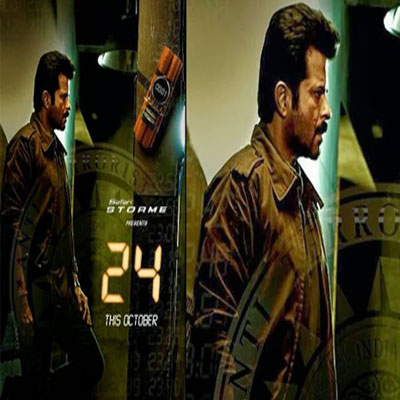
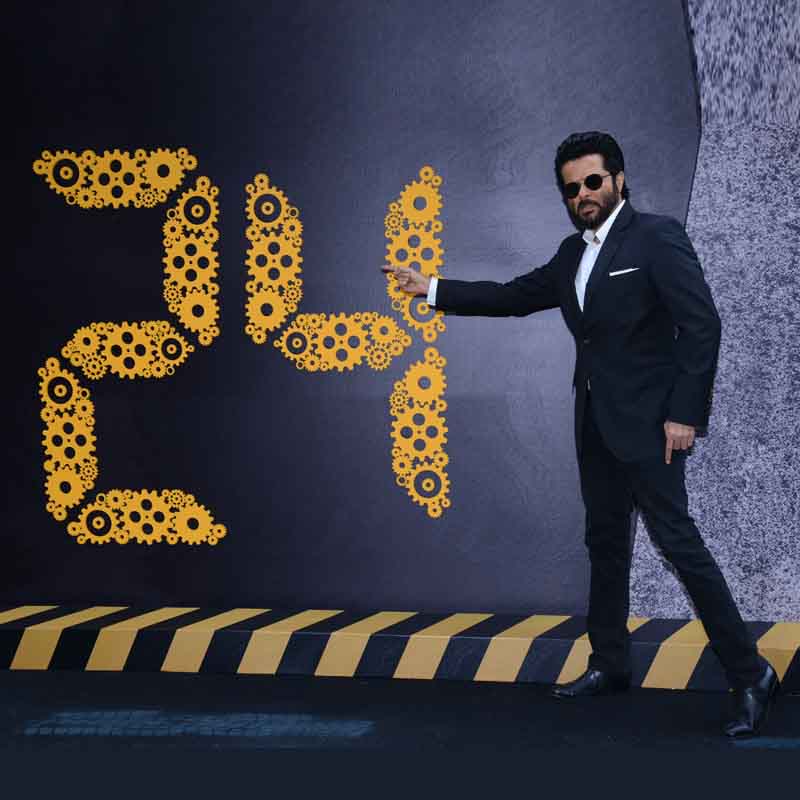
    MUMBAI: It has been touted as one of the biggest fiction shows to hit Indian television in a long time. Based on the hit Fox series which ran for eight seasons in the US, Colors‘ long-in-gestation 24 series has already created a buzz because of the fact that Anil Kapoor is associated with it as producer under the banner of Anil Kapoor Film Company. Additionally many key names from Bollywood are working on it: right from acclaimed Delhi Belly director Abhinay Deo who is helming it to Rensil D‘Silva and Bhavani Iyer who have been scripting it.

    Colors CEO Raj Nayak saw a lot of promise in the Indian adaptation of 24 when Kapoor approached him and it took barely 20 minutes to decide to put it on his channel. Some of Raj‘s faith in it is bearing fruit. Colors today announced that it has managed to rope in Tata Motors Vehicles as the presenting sponsor.

    Ranjit Yadav believes it to be a good opportunity for the company

    Speaking on the association Tata Motors Vehicles Business unit president Ranjit Yadav says, “This association with 24 offers us an exciting platform to demonstrate the true capability of our dynamic cars, which delivers performance and comes with technology rich features.”

    Brand integration will be visible throughout the series as Anil Kapoor and Tata Motors cars and UVs will be racing in action. Nayak points out: “It takes brand partnerships to another level beyond the conventional 30-second commercial.” Previously, the channel had also experimented with its brands on Bigg Boss where a lot of its sponsors were seen during the show.
     

    The show will be a hit, according to Raj Nayak

    Anil Kapoor who plays the role of Jai Singh Rathod, the Indian version of Jack Bauer explains: “In the show, I will be driving Tata Motors‘ dynamic and exciting vehicles in my adventurous quests across terrains to tackle various security threats.”

    This will be Anil Kapoor‘s first stint on the Indian small screen (he acted in the English version of the series in the US) and will have the pace of a real time narrative. The set which has been developed to look almost like the American version is in Andheri (Mumbai) at Kapoor‘s own studio named Stage 1. Under pre-production and production for more than a year, it was to see the light of day on 1 April. However, Nayak says that everyone had to take care during the adaptation process because of sensitive issues such as religion, terrorism and politics; hence it has taken time.

    “It will be a game changer and I genuinely believe it,” says an optimistic Nayak.

  • Tata Motors ups mass media communications spends

    Tata Motors ups mass media communications spends

    BENGALURU: Along with fresh expenses towards mass media communications for eight new variants launched within a week, Indian automobile major Tata Motors has planned for larger ad spends this fiscal revealed Tata Motors Passenger Vehicle Business Unit president Ranjit Yadav to Indiantelevision.com. The increased spends include brand building of the mother brand as well as the various passenger vehicle models and variants from the Tata Motors stable.

    “The Tata Group companies always vie for the podium – to be among the top three in any business,” said Yadav who was in Bengaluru to celebrate the success of two ‘Tata Nano expeditions‘. – A team set a Guinness World Record by accomplishing the longest journey of 10,218 kms, in a Tata Nano, in 10 days, breaking the current record of 8046.74 kms and a 78 day all India drive in a Nano across 26,500 kms by a 62 year old Thomas Chacko who has penned his journey‘s experiences in a book ‘Atop the world‘. A new TVC was also showcased at the event.

    Digital communications play a big role in Tata Motors communications plans – “With 40 to 50 per cent of car buyers checking out specs and details about cars, digital is very important for us,” informed Yadav. It is on the conventional social media sites such as Facebook and Twitter among others.

    Three agencies handle the creative work for various models of Tata Motors – Rediffusion, O&M and FCB Ulka. Media buying for old media is Lodestar. For digital media, the company has a number of agencies informed Yadav.
    In a bad market scenario, Tata Motors, which has a 12 per cent market share of the passenger car industry in India, is looking to grow market share to 14.5 per cent. Tata Motors too has seen a decline in its statistics when compared to last year. If the industry numbers shrink further, Tata Motors may achieve that growth even if its own numbers remain flat or shrink at a rate that is less than decline in the industry‘s figures.

    The automobile sector in India has certainly seen better days and is in for tough times. Numbers have taken a dive over the past seven months and industry sources are skeptical about even the low growth figures indicated by Society of Indian Automobile Manufacturers (SIAM) is the apex Industry body representing 46 leading vehicle and vehicular engine manufacturers in India.

    Some percentage of parts of all cars made in India is imported. The continued downward slide of the rupee vis-?-vis the US dollar has added to its woes, with the cost of imported components becoming dearer in Indian rupees.

  • Fiat’s 8 week ‘Make the move’ campaign

    Fiat’s 8 week ‘Make the move’ campaign

    BENGALURU: What does an automobile seller do when it’s seen its sales numbers fall year on year and it has split with its major sales/distribution partner? In a bid to try and double its sales numbers from less than 10,000 units (from less than 1 per cent) of the passenger car market in 2012-13, Fiat Group Automobiles India Private Limited (FGAIPL) has planned a strategy resting on three pillars – product, brand and network strategy. And with that strategy in place, the company plans to double its market share every year for the next three years.

    To that effect, on the brand front, starting 13 April 2013, the company launched a 360 degree campaign to run for eightweeks (or two months, if you will) ‘Make the move’ campaign conceptualised by Ogilvy. The campaign encompasses television, initially with a 60 second TVC which has been pruned to 30 seconds and has three mix-n-match variants; uses print, digital, outdoor and local event based radio. On television, besides the conventional mainline and regional GECs’, news and entertainment channels, the campaign had its share for 10 days of the on-going IPL season 6 limelight. Media buying is through Maxus.

    From the product point of view, the company has planned what it terms as an exciting line of launches over a two year period. In fiscal 2010, Fiat sales figures in number of units were 24,000, the next year 16,000 and last year just 10,000 units. It expects to grow its sales volumes and market share with newer products.

    After parting ways with Tata Motors on the sales front, FGAIPL, which commenced sales operations last year, launched its first CAFFE dealership store in Bengaluru and its third after Pune and Mumbai in India today. India is the only country among 11 others that has three CAFFE dealership stores, all other countries have one each until now. The Bangalore dealership is FGAIPL’s 54th dealership, with another 21 to be opened over a three month time frame. FGAIPL had announced that its dealership network in the country would be 112 numbers over the next year or so and is confident of reaching 100 stores by the end of the current fiscal.

  • Draftfcb Ulka creates new campaign for Vista D90

    MUMBAI: Tata Motors has launched an ad campaign created by Draftfcb Ulka for its new offering, the new Vista D90.

    In keeping with this vision for the brand, the campaign captures youthfulness in a fresh way. The TVC shows two Vista D90s driving alongside each other with parasailers, attached to the rear of the car, being lifted in the air as the cars catch speed. The analogy brings to life the new Vista D90’s powerful 90 PS engine – befitting its claim of being ‘Designed to thrill’.

    The agency felt that with the addition of features like the Touchscreen Multimedia System with GPS and Automatic Climate Control, there was a need to communicate how the new Vista D90 enhances one’s overall experience and sets a new precedent for hatchbacks in its class.

    Draftfcb Ulka group creative director Kartik Smetacek said, “The commercial is essentially a demonstration: Of power, of thrill, of the adventurous, adrenaline-fueled lifestyle that defines the new Tata Motors.”

    The ad films has been produced by Chrome Pictures while Amit Sharma has directed it.