Tag: Tata Motors

  • Tata Motors overhauls board as it splits commercial vehicle unit

    Tata Motors overhauls board as it splits commercial vehicle unit

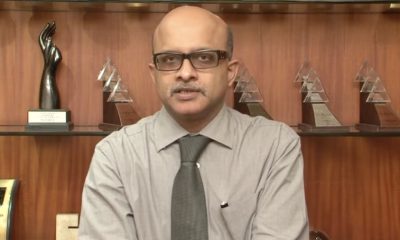
    MUMBAI: Tata Motors is reshuffling its boardroom as India’s biggest carmaker prepares to spin off its commercial vehicle business into a separate listed entity. The Mumbai-based company announced sweeping changes to its leadership on 26 September, with three independent directors stepping down and a new managing director taking the helm.

    The biggest change sees Shailesh Chandra appointed as managing director and chief executive, replacing Girish Wagh, who will move to head the soon-to-be-listed TML Commercial Vehicles. Chandra, currently joint managing director of Tata Motors Passenger Vehicles and Tata Passenger Electric Mobility, will serve a three-year term from 1 October.

    Three independent directors are departing as part of the reorganisation. Hanne Sorensen, a former Tata Consultancy Services board member, will step down on 30 September  but remain on the board of Jaguar Land Rover, Tata Motors’ British luxury car unit. Kosaraju Veerayya Chowdary and Guenter Karl Butschek will both leave on 1 October  to join the commercial vehicles entity’s board.

    Replacing them is Sudha Krishnan, a former senior civil servant who retired in 2020 as member finance to India’s Space Commission and Atomic Energy Commission.  Krishnan, who has four decades of experience in public policy and finance, will serve a five-year term as independent director.

    The changes come as Tata Motors executes a composite scheme of arrangement approved by India’s National Company Law Tribunal. The demerger, which becomes effective on 1 October, will see shareholders receive one share in TML Commercial Vehicles for every share they hold in Tata Motors.

    In another significant move, P B Balaji will resign as group chief financial officer on 17 November  to become chief executive of Jaguar Land Rover. He will be replaced by Dhiman Gupta, currently chief financial officer of Tata Passenger Electric Mobility. Unusually,  Balaji will rejoin Tata Motors’ board as a non-executive director on the same day he steps down from his executive role.

    The restructuring reflects Tata Motors’ strategy to separate its commercial vehicle operations from its passenger car and Jaguar Land Rover businesses. The company is also transferring Rs 2,300 crore worth of non-convertible debentures to the commercial vehicles unit as part of the demerger.

    The board changes were approved at a meeting that ran from 2pm to 5pm on 26 September, with all appointments subject to shareholder approval.

  • Infectious Advertising hires Divesh Mehta and Kiran Salkar for key roles

    Infectious Advertising hires Divesh Mehta and Kiran Salkar for key roles

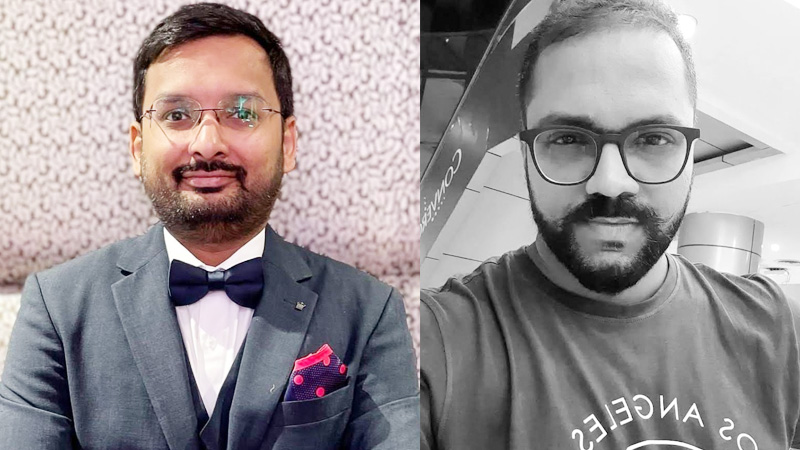
    MUMBAI: Infectious Advertising has just doubled its dose of creative and strategic medicine and the side effect could be potent campaigns. The independent agency has onboarded two industry veterans: Divesh Mehta as associate vice president planning and Kiran Salkar as creative director for art, bolstering both its brand strategy muscle and design flair.

    Mehta, who clocks in nearly 15 years in marketing communications, was a founding member of an omni-channel apparel brand that shook up casual wear retail. His advertising innings have spanned BFSI, finance, hospitality, pharma and heavy industry, all with the belief that “the right strategic intervention can transform client business.” On his move, Mehta said Infectious’ work is “both rooted and refreshing the kind of energy I want to be part of.”

    Salkar also brings over 15 years of adland experience, leading campaigns for marquee brands like Lux, Sunsilk, BMW, Tata Motors, Parle, Taj, SBI and Orra. An illustrator at heart with a photographer’s sensibility, he’s known for marrying bold aesthetics with brand storytelling. “I’m excited to join Infectious and look forward to doing some kickass work,” he said, adding that he’s been following the agency’s work “for a while” and likes what he’s seen.

    Co-founders Nisha Singhania and Ramanuj Shastry called the duo’s arrival a shot in the arm: “Both bring the attitude and skill sets needed to take Infectious to the next level.” With Mehta’s strategic scalpel and Salkar’s visual sizzle, the agency looks set to turn more heads and maybe win a few more awards in the months ahead.

  • Tata Motors stalls as tariffs and slow sales dent Q1 performance

    Tata Motors stalls as tariffs and slow sales dent Q1 performance

    MUMBAI: From roaring engines to grinding gears Tata Motors hit a speed bump in Q1 FY26, with global headwinds and fresh US tariffs putting the brakes on growth. The automaker’s consolidated revenue slid 2.5 per cent year-on-year to Rs 1.04 lakh crore, while EBITDA screeched down 35.8 per cemnt to Rs 9,700 crore. Pre-tax profit before exceptional items halved to Rs 5,617 crore, as free cash flow reversed into a deep Rs 12,300 crore deficit.

    The group’s luxury arm Jaguar Land Rover (JLR) bore the brunt, posting its 11th straight profitable quarter but feeling the crunch of trade duties and a planned Jaguar wind-down. Revenue skidded 9.2 per cent to 6.6 billion euros, EBITDA margin shrank 650 basis points to 9.3 per cent, and EBIT margin dropped to 4.0 per cent. Profit before tax tumbled 49.4 per cent to 351 million euros, hit by tariffs of up to 27.5 per cent on UK and EU exports to the US though a late-quarter UK-US deal promises relief, slashing rates to 10 per cent from June and a subsequent EU-US pact trimming them to 15 per cent.

    Back home, the commercial vehicles division held steadier, with revenue down 4.7 per cent to Rs 17,009 crore but EBITDA margins inching up 60 basis points to 12.2 per cent. Passenger vehicles struggled, with an 8.2 per cent revenue dip to Rs 10,877 crore and EBIT margins reversing to -2.8 per cent.

    On a standalone basis, Tata Motors posted revenue of Rs 15,682 crore, down from Rs 16,862 crore last year, but revved up profit after tax to Rs 5,350 crore, powered partly by Rs 4,913 crore in dividends from subsidiaries. Net profit margin stood at 34.1 per cent, while operating margin clocked in at 12.28 per cent.

    Despite the slowdown, the group ended the quarter with consolidated liquidity of 5 billion euros, including 1.7 billion euros in undrawn credit lines. But with inventories shifting, costs climbing, and global trade still unpredictable, the road ahead could test Tata’s grip on the wheel.


  • Nikita Aneja joins Netflix talent team

    Nikita Aneja joins Netflix talent team

    MUMBAI:  Nikita Aneja has announced on Linkedin that she is joining Netflix’s talent team as an HR business partner, effective July 2025. Aneja shared her “excitement” about the move, noting her long-standing admiration for Netflix’s innovative approach to work culture.

    Prior to her move to the streaming behemoth,  Aneja served as lead – HR business partner for digital biz & sports monetisation at JioHotstar for nine months. Before that, she was the head of HR at Viacom18 Sports for three years.

    Her extensive career in human resources also includes a three-year, three-month stint as a senior human resources business partner at Disney Star. Aneja also spent over three years at Edelweiss Financial Services, where she held roles as a human resources business partner and manager for talent management, campus relations, and strategic HR. Her early career saw her as lead – campus recruitment & employer branding at Tata Motors and assistant manager, corporate HR at Godrej Industries Ltd.

    Aneja holds an MBA in human resources management from the Goa Institute of Management (GIM), a management development programme qualification from the Indian Institute of Management, Indore, and a bachelor of business administration from Jai Hind College Entrepreneurship Summit. Her appointment is set to bolster Netflix’s talent strategies in the region.

  • Tata Motors slows down with 8.5 per cent dip in Q1 vehicle sales

    Tata Motors slows down with 8.5 per cent dip in Q1 vehicle sales

    MUMBAI: When the going gets tough, even the trucks slow down and Tata’s latest sales pitstop shows just that. Tata Motors hit a speed bump in the first quarter of FY26, clocking 2,10,415 units in total vehicle sales, a decline of 8.5 per cent year-on-year from 2,29,891 units in Q1 FY25. The slide was felt across both passenger and commercial segments, as domestic demand cooled off amid high base effects, macro headwinds, and flat market sentiment in May and June.

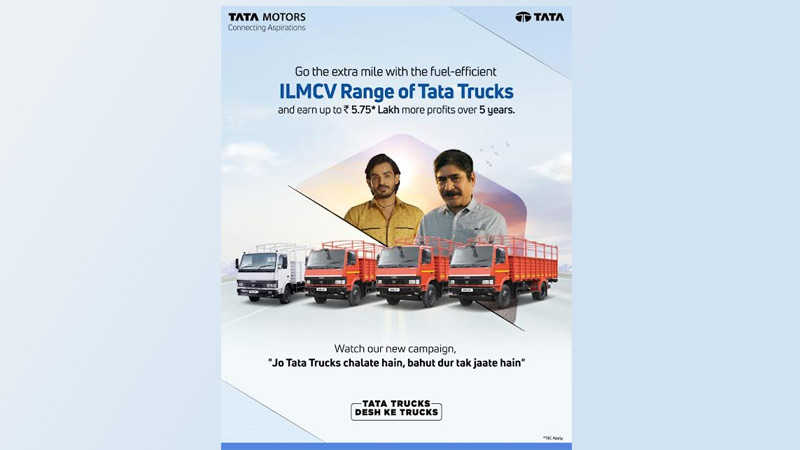
    Commercial vehicles bore the brunt, with total CV sales down 6 per cent YoY to 85,606 units. While HCV trucks fell 12 per cent, and small commercial vehicles (SCVs and pickups) dropped 17 per cent, there was some traction in ILMCV trucks and passenger carriers, which managed modest growth of 5 per cent and 1 per cent respectively. Interestingly, Tata’s international CV business was in overdrive revving up 68 per cent over the same quarter last year, thanks to new markets like Egypt and expanded play in the MENA region.

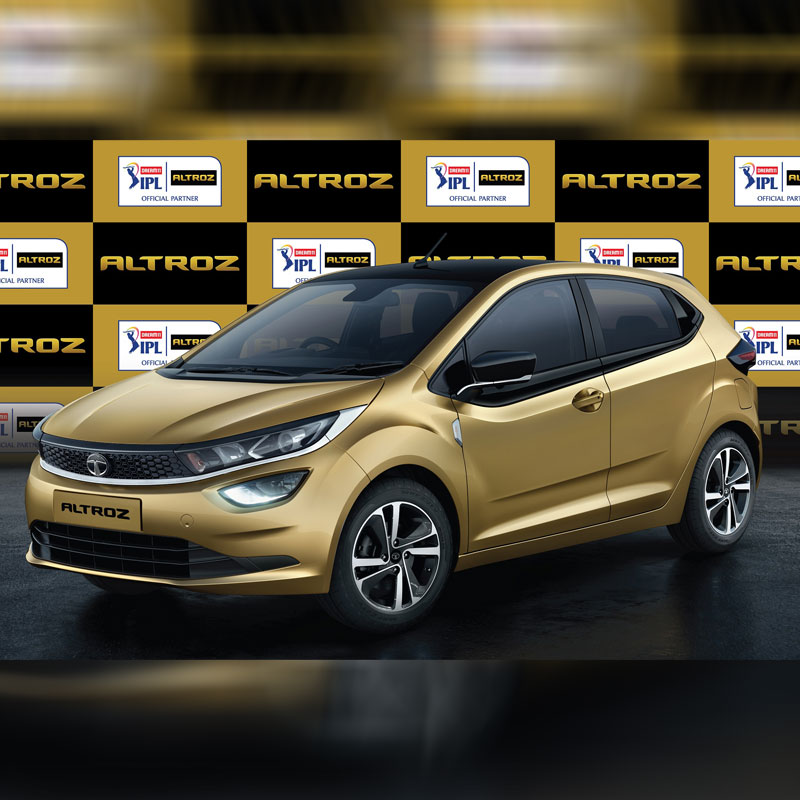
    Passenger vehicles also faced headwinds, with sales slipping 10% to 1,24,809 units, of which EVs contributed 16,231 units, a marginal 2 per cent dip YoY. The good news? Electric optimism is holding charge. EV sales picked up pace towards the quarter’s end, and new launches like the Altroz and Harrier.ev are expected to spark further momentum in the months ahead. The refreshed Tiago, meanwhile, zipped ahead with 16 per cent YoY growth.

    In the domestic market alone, Tata sold 2,03,411 vehicles, down 10 per cent, while international business sales rose on the back of a strong 67.9 per cent lift in CV exports.

    Tata Motors executive director Girish Wagh called it a “subdued start” to the fiscal, pointing to muted demand in heavy and small truck segments. But he remained upbeat, banking on a “healthy monsoon, repo rate cuts, and infrastructure push” to recharge CV demand in coming quarters. The company also launched India’s most affordable mini-truck, the Ace Pro, in multiple fuel variants, and introduced air-conditioned cabins across its truck range, a move aimed at improving driver comfort in gruelling conditions.

    Passenger Vehicles MD Shailesh Chandra, meanwhile, struck a cautiously optimistic note: “The EV segment was a bright spot,” he said, adding that Tata is “well positioned” to build on its lead with a fresh lineup across hatchbacks and SUVs.

    With the festive season on the horizon and fuel prices stabilising, Tata’s drive through FY26 may yet shift back into a higher gear. For now though, it’s a recalibration pitstop and the engines are humming, but not quite roaring.

    (If you are an Anime fan and love Anime like Demon Slayer, Spy X Family, Hunter X Hunter, Tokyo Revengers, Dan Da Dan and Slime, Buy your favourite Anime merchandise on AnimeOriginals.com.)

  • Chirag Alawadhi takes the leap from agency life to advisory heights

    Chirag Alawadhi takes the leap from agency life to advisory heights

    MUMBAI: From pitch decks to knowledge stacks Chirag Alawadhi is switching gears, not goodbye notes. After nearly a decade in the trenches of digital marketing, Chirag Alawadhi has stepped down as co-founder and CEO of The Leapfrog Network, closing a chapter that began in December 2021. But don’t expect another agency launch. Instead, Alawadhi is taking a wider lens approach diving into content ecosystems, strategic consulting, and marketing tech for a new generation of brands and builders.

    Alawadhi announced his decision on LinkedIn, marking the end of a journey that started as a solo founder and scaled into a full-fledged creative agency. “After 9 years of building businesses, I’m now focused on building the infrastructure and knowledge systems that will empower the next generation of marketers and entrepreneurs,” he wrote.

    His résumé reads like a digital marketer’s highlight reel: 1,300 campaigns delivered, over 7 million dollars in revenue generated, and content networks reaching more than 10 million followers. Along the way, he’s partnered with marquee names like Emami, Lenskart, Airtel, Reliance, OTT Play, and Tata Motors.

    What started with basic tools and delayed wins evolved into an agency known for bold campaigns and real community engagement. “This isn’t goodbye to the industry that shaped me, it’s a shift toward deeper impact,” Alawadhi said, reflecting on his departure as a move away from operations and towards enabling transformation at scale.

    His exit also mirrors a growing trend among agency veterans: trading day-to-day grind for advisory and ecosystem-building roles. Alawadhi joins a cohort of leaders looking beyond billing cycles and into future-facing industry infrastructure.

    Under his leadership, The Leapfrog Network carved out a niche in storytelling and strategy. While Alawadhi steps away, the agency rooted in its founding mission to create meaningful brand connections is poised for its next phase under fresh leadership.

    As for Alawadhi? He’s taking the leap again only this time, it’s beyond the agency playbook.

  • Havas India reels in Prashanth Challapalli to spark digital & innovation fire

    Havas India reels in Prashanth Challapalli to spark digital & innovation fire

    MUMBAI: Havas India has hired Prashanth Challapalli, a digital dynamo, to ignite its creative network as chief digital & innovation officer. Based in Mumbai, he’ll be reporting to  Havas India, SEA, and north Asia group CEO  Rana Barua. Challapalli, a veteran of the digital trenches with over 25 years under his belt, is tasked with fusing cutting-edge tech with creative wizardry, conjuring up digital-first solutions that’ll make brands pop.

    Said Barua: “Innovation is no longer an option; it is imperative. The creative industry is undergoing a seismic shift driven by technology, data, and consumer behaviour. Prashant will work closely with network leaders to drive the convergence of creative, media, and health, powered by data-driven innovation and technology, while seamlessly integrating storytelling to enhance impact.”

    Challapalli, formerly boss of Gravity Integrated, where he sprinkled his stardust on the likes of Amazon Pay, Google, and Tata Motors, reckons he’s ready for the challenge. “We’re in the ‘Attention Economy’, where AI’s rewriting the rulebook. Creativity’s still king, but innovation’s gone beyond a fancy advert. 

    Havas’s integrated model, with its AI-powered Converged OS, is like a digital Swiss Army knife. I’m chuffed to be joining a team that’s pushing the envelope, setting new creative benchmarks, and crafting a fresh narrative for Havas, its brands, and its people.”

    This appointment is a clear shot across the bow, a digital thunderbolt aimed at shaking up the advertising landscape. Havas is betting big on Challapalli’s ability to weave digital magic, and deliver solutions that are not just innovative, but downright electrifying.

  • Shibashish Roy takes the reins at electronics retailer Croma

    Shibashish Roy takes the reins at electronics retailer Croma

    MUMBAI: Shibashish Roy has taken over as chief executive & managing director of Infiniti Retail Ltd (Croma), India’s electronics retail powerhouse, effective 1 April 2025. The Tata Group has opted for a company man to mind the shop after the departure of founding member Avijit Mitra.

    Roy, a Tata Administrative Services (TAS) officer with over 20 years of group experience, has been quietly climbing the corporate ladder since joining as a project trainee at Tata Steel in 2003. His circuitous route to the top job included stints at Voltas, Tata Motors, and a six-year stretch at Tata Capital where he cut his teeth in wealth management and investment banking.

    The digital-savvy executive spent seven years at Tata Sons, including time in the chairman’s office, before joining Croma in 2021. Since then, he’s been on a rapid ascent—chief business officer to chief operating officer to deputy chief executive and now to the corner office—in what appears to be a meticulously planned succession.

    Outgoing boss Mitra, who retires after 35 years with the Tata Group, leaves behind sizeable shoes to fill. Under his stewardship, Croma expanded from a fledgling electronics retailer to a behemoth with over 560 stores across India.

  • Value 360 locks in Keshav Shanbhag as CFO for upcoming public listing

    Value 360 locks in Keshav Shanbhag as CFO for upcoming public listing

    MUMBAI: A company on the brink of a public listing needs a steady hand at the financial wheel enter Keshav Shanbhag, Value 360 Communications’ newly appointed as CFO. The firm prepares to make history as the first publicly listed PR company in the country, Shanbhag’s arrival signals a strategic push towards financial strength and investor confidence.

    The timing couldn’t be more significant. Value 360 Communications recently closed Its pre-IPO investment round, attracting heavyweight investors including film star Huma Qureshi and is set to file its Draft Red Herring Prospectus (DRHP) for its SME IPO. In this high-stakes moment, Shanbhag will oversee financial strategy, investor relations, and corporate governance, ensuring a smooth ascent to the stock market.

    With over 17 years of experience, Shanbhag isn’t new to the high-pressure world of IPOs, mergers, and turnarounds. He’s played pivotal roles at MCX, IN10 Media, and Dentsu Aegis Network, financial strategies that drove business transformations. His work at MCX, in particular, made waves when he spearheaded the company’s IPO, bagging the title of best mid-cap equity deal in the APAC region and earning himself the coveted most valuable player award.

    Value 360 Communications group CEO & co-founder Kunal Kishore said, “Bringing Keshav on board as CFO marks a strategic advancement in our journey. His proven expertise in managing IPOs, M&A transactions, and driving business transformation perfectly complements our ambitious five-year growth strategy. We are confident his management will be instrumental in creating substantial value for our stakeholders as we work toward scaling our operations exponentially as we complete 20 years of operations in 2027.”

    Shanbhag himself is no stranger to high-stakes financial management. Speaking about his new role, he remarked, “I’m honoured to join Value 360 Communications at such a transformative juncture in its corporate journey. The opportunity to steer the company’s financial strategy as it prepares for its public listing represents a unique challenge. I look forward to leveraging my experience in capital markets and investor relations to advance Value 360 Communications’ position as the market pioneer in integrated communications, while delivering exceptional value to our clients, stakeholders, and future shareholders.”

    Value 360 Communications isn’t just preparing for an IPO it’s gearing up for exponential growth. The company’s five-year roadmap focuses on expanding operations, investing in technology, enhancing capacity, and pursuing strategic acquisitions. Its impressive client roster already features Tata Motors, Pernod Ricard, Kia Motors, Skoda, Fedex, Digi Yatra, Poco, Zupee, Mondelez, Audi India, and Easemytrip, among others.

    With Shanbhag at the financial helm, the company is set to break barriers, redefine communications, and make waves on the stock market.

  • Mahindra races past Hyundai as India’s no two carmaker in February 2025

    Mahindra races past Hyundai as India’s no two carmaker in February 2025

    MUMBAI: India’s automobile sector witnessed a power shift in February 2025, as Mahindra outsold Hyundai to claim the second-largest carmaker spot in the country. With 50,420 domestic sales, Mahindra registered a robust 19 per cent YoY growth in the passenger vehicle segment, while Hyundai’s domestic sales dropped by 4.3 per cent YoY to 47,727 units, securing its third-place position.

    Mahindra’s total sales, including exports, reached 52,386 units, riding high on India’s SUV boom. On a year-to-date (YTD) basis, the company registered 20 per cent growth, selling 5,03,439 units in FY25, compared to 4,10,246 units in FY24.

    Mahindra’s export performance was particularly impressive, nearly doubling YoY, with 3,061 units shipped in February 2025, marking a 99 per cent surge from 1,539 units last year.

    Hyundai Motor India Limited (HMIL) recorded total sales of 58,727 units, including 47,727 domestic sales and a strong export performance of 11,000 units registering 6.8 per cent YoY growth. However, the domestic market decline from 50,201 units in February 2024 signalled a 4.3 per cent drop.

    Market leader Maruti Suzuki maintained its top position, selling 1,60,791 passenger vehicles, reflecting a marginal 0.32 per cent YoY growth. The company’s exports, however, dipped by 13.5 per cent, with 25,021 units shipped compared to 28,927 units in February 2024.

    Tata Motors saw a 9.43 per cent YoY decline in February, selling 46,435 passenger vehicles, down from 51,267 units in 2024. The company’s EV sales were particularly affected, registering a 22.82 per cent drop, with 5,343 units sold, compared to 6,923 in the previous year.

    Toyota Kirloskar Motor maintained its stronghold in the Indian automotive market, recording an impressive 13 per cent YoY growth in February 2025. The company sold 28,414 units, a significant jump from 25,220 units in February 2024. Of these, 26,414 units were dispatched to domestic dealers, while 2,000 units were shipped to international markets. With this steady growth, Toyota continues to strengthen its position, riding high on demand for its premium and reliable offerings in India and beyond.  

    Kia continued its upward trajectory, selling 25,026 vehicles in February 2025, marking an impressive 23.89 per cent YoY growth from 20,200 units in February 2024. Kia kept the momentum going in February 2025, clocking an impressive 25,026 unit sales, a 23.89 per cent YoY surge from 20,200 units in the same month last year. Leading the charge was the ever-popular Sonet, roaring ahead with 7,598 units, followed by the stylish and powerful Seltos at 6,446 units. The all-new Syros made a strong debut, securing 5,425 units, while the Carens, a favourite among families, registered 5,318 units. Meanwhile, the premium Carnival added an exclusive touch to Kia’s lineup with 239 units sold. With this stellar performance, Kia continues to solidify its place in India’s ever-evolving automobile landscape.

    Mahindra’s rise highlights India’s growing preference for SUVs, while Hyundai’s dip suggests an evolving competitive landscape. Tata Motors faces challenges in the EV space, while Kia continues to gain traction. As the race heats up, all eyes are on how carmakers respond to shifting market trends.