Tag: Tata Institute

  • Nimbus’ Thawani steps down; Akash Khurana takes charge

    Nimbus’ Thawani steps down; Akash Khurana takes charge

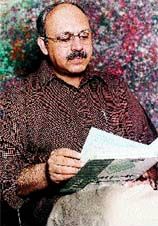
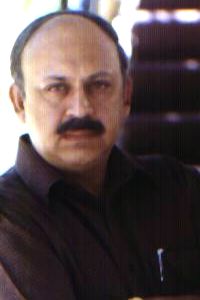
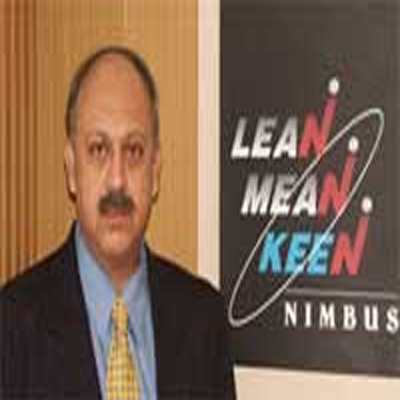
    MUMBAI: The board of directors of Nimbus Communications Ltd has announced the appointment of Dr Akash Khurana as MD and CEO with immediate effect. Khurana succeeds Harish Thawani, who will continue as executive chairman of the company. The stated aim is to make the company a creative powerhouse.

    Thawani’s decision to let go as far as day-to-day running of the company was concerned was reported by indiantelevision.com on 3 May.
     

    Dr Khurana’s mandate is to transform Nimbus over the next three years into a creative powerhouse with multiple corporate and creative leaders. It is the vision of the company that in those three years, he takes over as chairman, having groomed his successor for MD and CEO, an official release states.

    The choice of Dr Khurana to lead the company was a unanimous one and was taken in consultation with senior management and significant shareholders of Nimbus, the release says.
    With an increasing focus on content product lines: television, motion pictures and music; and with a view to building multiple leaders in the company, it was felt that Nimbus should now be led by a creative leader with a HR focus and domain expertise in both and the company believes Dr Khurana fits the bill.

    Thawani will henceforth be involved only with corporate strategy, new businesses mentoring and international ventures including joint ventures (such as World Sport Nimbus) and alliances. Nimbus is currently evaluating five allied lines of new businesses in the media and entertainment industry and to help new managers kick start them will be one of his key tasks in the months to come.

    Thawani is quoted as saying: “The man’s a genius – how can anyone be an engineer, an MBA, a marketing man, an award winning actor, an award winning screenwriter and a doctorate in human resource development? Nimbus is indeed very very lucky to have him and I have no doubt that he will make a far better creative and corporate leader than I could ever be.”

    Nimbus is currently involved with television content (2002-2003 produced over 300 hours of original content); motion pictures (two movies released in the past 18 months, three releases targeted over the next 12 months including the Hindi blockbuster Sarhad Paar); music (with its new label Nirvana Music lining up 12-15 releases for 2003-2004); sports (with a dominant position in cricket marketing and live production through its JV World Sport Nimbus); and media marketing (where it continues its traditional domination of air time sales in the biggest products on TV, i.e. cricket and movies).

    The 2002-2003 sales of Nimbus were just under Rs 1.5 billion (unaudited) and sales handled by World Sport Nimbus in 2002-2003 were over $ 105 million .i.e. approximately Rs 5 billion equivalent (unaudited).

    A brief CV of Dr Khurana

    Dr Khurana is an engineering graduate with an MBA from XLRI and an M.Phil. and Ph.D. from the Tata Institute of Social Sciences. He started his career as an executive with TELCO.

    Dr Khurana took up a full time career in the media and entertainment industry in the late 1980s. Before that he was already involved in theatre and was also the founder of the theatre magazine Ovation. Having directed and acted in many successful theatre productions, he made his first screen appearance in Shyam Benegal’s Kalyug and went on to play character roles in over 50 films such as Saaransh, Ardh Satya, Sarfarosh, and Company. He won the Nandi Award of Andhra Pradesh for playing the lead in the Telugu film Dr Ambedkar.

    Swayam directed by Mahesh Bhatt marked his debut as a screenwriter. He has written over 20 scripts, his best known work being Baazigar for which he won the Filmfare Award for best screenplay.

    Dr Khurana has also been a visiting faculty at the Tata Institute of Social Sciences, teaching subjects like creativity in learning organisations, organisational behaviour, business environment, and communications.
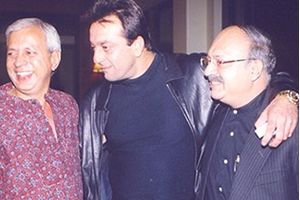
  • “Dialogues, not visuals hold the TV  audience rapt” : Akash Khurana

    “Dialogues, not visuals hold the TV audience rapt” : Akash Khurana

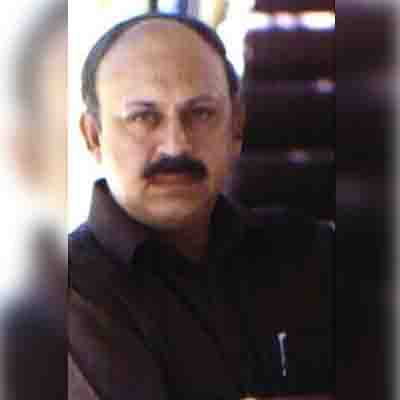
    He may be a familiar face as an actor, but Akash Khurana is a multi-faceted personality.

    He has a doctorate from the Tata Institute for Social Sciences under his belt, and divides his time teaching Organizational Behaviour and Business Environment at TISS and shouldering responsibilities as the chief creative officer at Nimbus Communications.

    His foray into the field of scriptwriting was quite accidental. It was while working on a Mahesh Bhatt film, Swayam, that he chipped in when the script was being reworked. There has been no looking back since. After writing the scripts for feature films like Aashiqui, Baazigar and Daag -The Fire, he ventured into TV territory with Kuch Ret Kuch Pani, a soap that aired on Channel Nine Gold. While he wrote and directed Kuch Ret Kuch Pani himself, he also wrote Plus Channel's Kabhie Kabhie, directed by Mahesh Bhatt.

    If his other virtues appear rather disparate from his writing avatar, they also add in making him a more thinking and intellectual writer. Excerpts of an interview with indiantelevision.com correspondent,Amar.

    How did your writing career take off?
    I was acting in a movie called Swayam with Waheeda Rehman in 1988. This was a small budget movie that had to be wrapped up in an intense 18-day schedule. However, the script had some lacunae and we had to re-work it while shooting. I re-worked the script along with Mahesh Bhatt and both of us shared the writing credits. That's how my writing career started. I later wrote the hit movies – Aashiqui andBaazigar, besides writing a lot of TV software.

    What do you think is essentially required of an effective writer?
    Your instinct, by itself is the most necessary factor. Besides, understanding the craft of TV and film writing, experiences, sensitivity to different situations, empathy towards unknown characters are some of the instincts required of an effective writer.

    Which subjects appeal most to you?
    As far as commissioned programmes go, one really doesn't have much choice as far as subjects are concerned. In fact, I have learnt to operate in a way that I'm fairly comfortable working on disparate subjects.

    What is the starting point of your writing – an idea, a concept, the complete story?
    It could be anything- a thought, a conversation, an incident from real life or it could be autobiographical stuff.

    "India is perhaps the only country where we have such a sharp distinction between screenplay and dialogues"
    __________

    Do you agree with the adage that TV is a writer's medium?
    I agree with it. The effort required in writing five episodes is equivalent to the effort required in writing one movie. Besides, TV has its limitations. Because it can't be shot with the lavishness with which a movie is shot, the dependence on dialogues is that much more. So, writing really is the most crucial aspect in making a serial tick.

    Why is TV so verbose? Is it because of budgetary constraints that are a hindrance to expensive outdoor shoots?
    More than the budgetary factor, I believe it's because the audience is too impatient to stay glued to a programme when there is a gap between dialogues. On TV, more than the visuals it is the dialogues that hold the audience rapt and the moment there is a gap between dialogues they tend to move to another channel.

    How important is effective narration in selling a story?
    It is indispensable. In India, the concept of a bound script is non-existent. At the same time, people lack the practice of extensively reading the scripts. In this situation, effective narration is what matters most.

    "While a bad piece of work draws flak very easily, writers seldom get due recognition for good work. "
    __________

    Mir Muneer has said that story telling is virtually non-existent today and serials are simply a conglomeration of some very dramatic scenes. Do you feel the same?
    I wouldn't agree with him entirely. There are some serials that have very good stories while others don't. So, it's really a matter of personal opinion.

    You have been quoted as saying that there is no sincerity and passion in TV writing, and no absorbing screenplays nowadays. Could you elaborate?
    Actually, I had said that these factors have diminished today. And it is quite obvious too. From less than 100 hours of entertainment programming in 1985, today we have some 5000 hours of entertainment programming. Obviously the ratio of skilled writers has not grown in the same proportion, hence the diminishing sincerity and passion seen in TV writing and the resultant lack of absorbing screenplays. But having said that, let me also add that I have a lot of admiration and respect for people who have sustained themselves and consistently done well as TV writers. I personally have found TV to be an extremely taxing medium where I reached a burn out situation rather quickly.

    Why do most veteran writers shy away from writing dialogues?
    Because they are not qualified. Their level of knowledge and usage of Hindi is rather pathetic. India is perhaps the only country where we have such a sharp distinction between screenplay and dialogues.

    Does TV writing pay well?
    This is a difficult question. Let's say it does pay better than what a well educated and qualified person would earn in a regular job. But if we speak in relative terms, yes, it should pay more considering that TV is acknowledged as a writer's medium. But, frankly, writing is one of the most unenviable professions. While a bad piece of work draws flak very easily, writers seldom get due recognition for good work.


    "My generation of writers is far more literate and well read than the generation that is coming up and there can be no substitute to reading."
    __________

    What is your writing schedule like?
    It's pretty erratic and that is because I am into so many activities – writing, teaching and then I have a whole lot of responsibilities to shoulder as the Chief Creative Officer at Nimbus. So, I really can't plan a definite writing schedule.

    Do you find channels' interference in the creative process overbearing?
    No, certainly not. Channels are more concerned about their product nowadays than they ever were. This has made them more collaborative and involved. But yes, I do feel that the time taken by them to respond on any issue is far too long. If they can improve on this front, it would help do away with a lot of the producer's uncertainties.

    Does writing require isolation from people in order to concentrate?
    Ideally, yes. But it is seldom completely possible. I have seen people writing on the sets also. It's not that one cannot write when not alone, but isolation is certainly preferred.

    What according to you are the major failings in new writers?
    Well, my generation of writers is far more literate and well read than the generation that is coming up and there can be no substitute to reading. But then I also feel that the new generation has grown up watching soaps and thus is that much better versed in its writing unlike my generation which hardly had an access to the electronic medium. But all said, I do feel that the new writers who are just coming up should be better read.

    Which has been the happiest moment of your career?
    My taking to writing was a happy moment. That I'm still writing today makes another happy moment (laughs). Actually, cracking a difficult scene makes an immensely happy moment. The feeling is akin to one of having struck a cover drive from the meat of the bat.