Tag: Tata Group

  • Interbrand India adds Mahindra to its roster

    MUMBAI: DDB Mudra‘s brand consultancy agency Interbrand India has added Mahindra Group to its roster of clients that includes Tata Group and Godrej.

    The Interbrand offices in Mumbai and London will carry out the assignment. Mahindra is looking to establish itself as one of the world‘s most valuable brands.

    Formed by the transition of Water, the brand strategy and design consultancy of DDB Mudra Group, to Interbrand, Interbrand India offers complete suite of brand consulting services including brand strategy, audit/evaluation, design, brand management and verbal identity. The operation will continue to be located in Mumbai.

    Interbrand India MD Ashish Mishra said, “We want Indian companies to realise that brands are not mere logos or slogans but rank among the most important assets a business owns. As the world‘s leading brand consulting firm, our task, quite simply, is to help the Best Indian Brands graduate to Best Global Brands.”

  • ‘The price war has come at an early stage of the DTH game’ : Vikram Kaushik- Tata Sky MD & CEO

    ‘The price war has come at an early stage of the DTH game’ : Vikram Kaushik- Tata Sky MD & CEO

     Tata Sky, a direct-to-home joint venture company between Tata Group and Star, is betting big on value-added services such as PVR (personal video recorder) and is ready to pump in another Rs 20 billion as it eyes a subscriber base of eight million by 2012.


    The focus is on building a strong brand with heavy spending on advertising. While rival network Dish TV has used Bollywood star Shah Rukh Khan, Tata Sky has Aamir Khan as its brand ambassador. Occupying a premium position in the mindshare has been part of the strategy as the company has the technology support of News Corp. and the trusted name of the Tatas.


    The DTH game has got tougher with competitive entries from Sun Direct, Reliance’s Big TV and Bharti’s Airtel Digital TV. This has meant a rise in project expense from Rs 30 billion to Rs 40 billion, lower ARPUs and high customer acquisition costs.


    Cable TV, which has a strong footprint across the country, is also offering stiff competition to DTH operators.


    In an interview with Indiantelevision.com’s Sibabrata Das, Tata Sky MD & CEO Vikram Kaushik talks about the company’s decision to stay away from being a discounted brand while fighting at different price points to tap different consumer segments.


    Excerpts:

    Has Tata Sky revised upwards the project cost from Rs 30 billion to Rs 40 billion?
    When we first formalised our business plan, we were looking at an investment of Rs 12 billion. Then we came up with a realistic estimate of Rs 30 billion. We revisited that plan and now believe our funding requirement for the venture would be Rs 40 billion. We have already invested half of this amount.

    Has the project cost gone up because of the higher element of subsidy in the Indian DTH market?
    When we first did our business plan, we didn’t expect so many DTH operators to come in. There is a lot of activity in the category and the price war has come at an early stage of the game. Competitive entries and an explosive growth in volumes mean higher costs. Customer acquisition accounts for a significant percentage of the costs.

    Will this mean that the gestation period for profitability will go up?
    I wouldn’t like to comment on when we would reach the break even situation. DTH is an infrastructure business and requires high investments and long gestation periods. We have no illusions about that. Generally, the break even for this kind of business is in excess of five years.

    Industry estimates put Tata Sky’s losses at Rs 8.15 billion in FY’07 and a little more than that in FY’08. Do these losses fall in line with your business plan?
    I can’t talk on financials.

    Are you in line with the projected subscriber growth?
    We have already touched 2.7 million subscribers and are targeting at least eight million connections by 2012. When we were at the drawing board, our broad plan was to add a million subscribers every year. We are growing faster than that.

    ‘When we first formalised our business plan, we were looking at an investment of Rs 12 billion. We revisited that plan and now believe our funding requirement for the venture would be Rs 40 billion

    But are ARPUs (average revenue per user) in place?
    I can’t reveal to you where our ARPUs currently stand. But there are definite efforts to push ARPUs up with the launch of value-added services such as PVR (personal video recorder). This technology allows subscribers to watch a particular television show while recording another. Viewers can also pause and rewind live television programmes. We have priced the set-top boxes (STBs) for PVR, which will use MPEG-4 compression technology, at Rs 8,999. For our existing subscribers, we will be offering at discounted rates.

    Isn’t the pricing on the higher side?
    Being below Rs 10,000, it is very competitively priced. We are aggressively marketing Tata Plus. In just a couple of days since launch, we have already sold 2500 PVRs. It took BSkyB 3-4 years to convert 50 per cent of its eight million subscribers to Sky Plus.


    Our priority is to make this really big as the product is very powerful and also addresses the ARPU issue. We realise that people in India are investing in high quality entertainment at home as out-of-home is becoming expensive. The PVR is a recognisation of this trend and we want to capitalise on it.

    Are you looking at niche content for lifting your ARPUs?
    Unless we have a critical mass, we can’t slice the market that thin in India. The Indian DTH market is endemically short of satellite capacity. We have 12 Ku-band transponders on Insat 4A, but want more and nothing is available at this stage. We can address niche audiences and offer more channels to consumers if we have more transponders available.


    It is, however, possible to offer premium content like lifestyle within large segments. On our interactive service, we have NDTV Good Times offering specialised cookery.


    Segmentation in the marketplace is also possible. And we have interactive services like Actve Wizkids (for children and pre-schoolers), Actve Darshan (24-hour darshan of Sai Baba, SiddhiVinayak, Iskon and Kashi Vishwanath) and Actve Matrimony. But the problem with interactivity is that it is very bandwidth hungry.

    What is the premium content you are lining up?
    We are in talks with movie producers like Sony Pictures, UTV, Eros and Fox for sourcing their movie content. We are looking at recent Bollywood, international and Hollywood content for our pay-per-view service. The challenge is how to get into revenue share deals as we can’t pay high MGs (minimum guarantees) and it is not attractive for the content suppliers if there are not high volumes.

    How about getting premium content channels?
    For premium content channels, we are at an early stage of development. There is also the transponder capacity issue. One area we are looking at is HD channels.

    Are you planning to strengthen your regional content line-up?
    Regional markets are integrated into the overall content plan. We have national, regional, international and eclectic consumers.

    Sun Direct has mopped up over one million subscribers in a short span of time because of its aggressive pricing. How has that impacted you in the southern market?
    Our growth has not stopped in the South because of Sun. We have the right kind of share in the right kind of segment. Sun’s pricing is unviable and we are at 30 per cent premium over them. Their strategy seems to reflect the pressure of their cable TV business while pricing their DTH proposition. The danger is that you can attract the wrong kind of customers – and you are vulnerable to a high degree of churn. In DTH business, this is a recipe for disaster because of the high subsidies involved in customer acquisition.


    The South has been a high pay-TV penetration market because of pricing. In this blood bath situation, one has to be cautious and keep away from just adding subscriber numbers.

    Isn’t market leader Dish TV also involved in the price war?
    More than Dish TV, it is Sun Direct which is acting as a discounted brand. The DTH market in India is open to segmentations. We are also offering subscriptions at Rs 99. But the question is how much at the bottom of the market you can afford to go.
    Why hasn’t the Tata Sky brand been able to stop Dish TV from mopping up a high number of incremental subscribers?
    Dish TV has followed a discounted brand strategy. We have operated at a Rs 1000 premium over them from the moment we launched. Dish TV has also picked up the low hanging fruit in smaller markets. Besides, they continue to work as an integrated media company and have leveraged that advantage as a vertical player.
    Has regulation worked against the DTH players?
    Regulations relating to the broadcast industry have been largely progressive. The problem has been the lack of a level playing field across the different addressable platforms. Why should cable operators get channels capped at Rs 5 in the Cas (conditional access system) areas? There is a structural inconsistency in this. Besides, the tax burden on DTH is scandalous. Around 40 per cent of our revenue goes towards taxes and licence fee. When our national objective is to push digitalisation, let’s lower the barriers and incentivise the sector.
    Hasn’t the Telecom Regulatory Authority of India provided some relief to the DTH operators by way of directing broadcasters to offer their channels at 50 per cent of analogue cable TV rates besides making them available at a la carte pricing?
    When we started, there was no RIO (reference interconnect offer). In fact, it is amazing that most of the content deals were done in the court. New players like Reliance, Bharti and Sun would have found it tough if the RIO regulation hadn’t come about.
     

    But even now there is an anamoly. Why should we get content from broadcasters at 50 per cent of what they offer to analogue cable when the Trai and the Information & Broadcasting ministry have formally admitted that the cable sector operates on 20 per cent declaration of their subscriber base?


    Besides, DTH should get content from broadcasters at Cas rates since we are an addressable platform.

    But aren’t cable operators offering set-top boxes even below the regulated price because of competition in the marketplace?
    Pay TV in India is subverted by cable prices which are artificially depressed because of under-declarations. DTH operators have had to drop prices because they have to compete with cable. Today the gap is higher between the two because cable TV pricing is artifically suppressed. If some DTH operators decide to go as low as cable, then it becomes unviable.
    Don’t you think exclusivity of content will allow platform providers to raise ARPUs?
    The ARPUs in the UK, US and Australia vary between $60-80. In India, the ARPUs are a fraction of this. Exclusivity of content is there in all markets except India. But we hope the regulation on exclusive content will also wither away. This will allow us room for being more creative and innovative.
    Since cable already has a wide presence, do you see them winning the war against DTH in India as in the US?
    DTH has already tapped over six million subscribers and will see explosive growth from now on. In the US, cable companies have made massive investments to digitalise their networks. And even there, 40 per cent of the market is still with DTH. Indian cable companies have not made such investments. Besides, the cable TV market here is hugely fragmented. And the last mile challenge (multi-system operators do not own much of the last mile which is with the local cable operators) will not go away.
    Tata Sky and Dish TV are on MPEG-2 compression technology while the new players have MPEG-4. What is the status on the inter-operable issue?
    There is a regulation on DTH boxes being inter-operable. But why have a law when this is not being followed?
    But why was Tata Sky opposing the inter-operable clause then?
    The regulator can say that the inter-operability clause was a mistake and just do away with it. We are asking for more clarity on the issue. If we are to switch over, then we want some amount of subsidy which the government can give from the revenue share that we part with them.
    There has been a drive to reduce the revenue share with government. What is the status on this?
    The Telecom Disputes Settlement and Appellate Tribunal has ruled that the licence fee for DTH services should be based on adjusted gross revenue – and not on the basis of gross revenue. But the government has not yet issued any notification on this.
    After Temasek Holdings took a 10 per cent stake in Tata Sky for $55.5 million, have we seen a rise in DTH valuations?
    I can’t talk about valuations or the price at which we got Temasek to invest in. But Temasek has 10 per cent while Star’s holding is untouched at 20 per cent and the Tata Group’s stake has come down from 80 per cent to 70 per cent.
  • Harris Broadcast Communications to provide end-to-end broadcast system to Tata Sky

    Harris Broadcast Communications to provide end-to-end broadcast system to Tata Sky

    MUMBAI:The battle for supremacy between Dish TV and Tata Sky has gone up by one more level with Harris collaborating with Tata Sky Ltd., to deliver its satellite television service via an end-to-end system that converts, processes, synchronizes and distributes digital program content.

    Tata Sky is the satellite television service for the Tata Group and Star Network in India.

    Designed to support 120 channels, Tata Sky’s facility uses Harris’ Integrator router for station routing, asserts an official release.

    “At Tata Sky, we continuously invest in state-of-the-art infrastructure to provide Indian audiences with a world-class satellite television service, offering unparalleled entertainment with pristine picture quality and sound,” said Tata Sky Ltd managing director and CEO Vikram Kaushik. “The Harris broadcast equipment will help us boost the quality of our digital transmission, enabling us to deliver top-of-the-line services to our customers.”

    According to the release, Tata Sky’s facility houses Harris NEXIO servers, for use in their test center; integrator router for station routing; a panacea router for clean switching; 6800+ and NEO modular interface products for video processing; the NEO MTG-3901 master timing generator system; the IconLogo modular branding solution; an IconStation master control graphics and channel presentation system; Videotek test and measurement products; the NEO SuiteView multi-source display processor; and the CCS Navigator software application and NUCLEUS user-configurable network control panel for control and monitoring.

    Harris Broadcast Communications division president Tim Thorsteinson said, “Tata Sky promises to revolutionise home entertainment in India, and we are extremely pleased to work with them in this venture.”

  • VSNL drops bandwith prices

    VSNL drops bandwith prices

    MUMBAI: Videsh Sanchar Nigam Ltd. (VSNL) has significantly reduced prices for its international bandwidth products – international private leased circuits (IPLC) and internet leased lines (ILL).

    IPLC prices in India will be reduced by up to 25 per cent with effect from 1 September. ILL tariffs will also fall by up to 40 per cent. These products are offered in India using VSNL’s global network that spans over 200,000 route km, connecting 200 countries.

    Demand for international connectivity has been rapidly growing with several Indian companies including Tata Group investing overseas and India emerging as a favourite destination for foreign investors. International connectivity is also an important driver for the growth of the fast growing IT and business process outsourcing (BPO) sectors. The market for international and internet bandwidth is expected to expand as the reduced prices will encourage demand from new customer segments like SMEs, smaller ISPs and academic institutions.

    VSNL also intends to build two new submarine cable systems, one between India and Europe and the other intra-Asia, in partnership with leading carriers in the respective regions. These multi-terabit capacity systems, incorporating state of the art technologies, would interconnect with VSNL’s existing global network that has over 20 terabits of capacity. The India-Europe cable would also provide connectivity to the Gulf region and the African continent, and supplement the Company’s existing bandwidth capacity in several consortium cables in the region. The intra-Asia cable between Singapore, Hong Kong and Japan would enhance the link between the Company’s Tata Indicom Cable (Chennai – Singapore) and TGN Pacific (Japan – USA). The overall build cost of these two cable systems is expected to be in the region of $600 million.

    “VSNL has always taken the lead in growing the internet and international bandwidth market in India. We have invested over Rs 25 billion in expanding our global presence and connectivity in the last 2 years. We have regularly passed on the benefits of improved cost efficiencies and service quality to our customers,” says VSNL executive director N Srinath. “The new cables would enhance VSNL’s global network in two of the fastest growing regions in the world,” he adds.

    IPLCs are point to point, international private circuits, mainly used by large Indian corporates and multinationals to connect to their regional and global locations. Internet Leased Lines are dedicated high speed connections to access the Internet, used by enterprises and small / medium ISPs.

    VSNL acquired Tyco Global Network (TGN) last year to own undersea cable bandwidth. Early this year it also acquired Teleglobe to become a large international wholesale voice carrier with about 17 billion minutes of traffic annually.

  • Tata Sky targets 1 July for DTH launch

    Tata Sky targets 1 July for DTH launch

    MUMBAI: Rumours of delays may be rife in the market but Tata Sky – the 80:20 joint venture between the Tata Group and Star India – is targeting a 1 July commercial launch of its direct-to-home (DTH) service, informed industry sources aver.

    Tata Sky CEO Vikram Kaushik, while speaking to Indiantelevision.com, was however quite categorical that any talk of a date of launch was premature at this stage and therefore purely speculative. Kaushik would only confirm that his company was on target for a mid-year launch for its DTH service.

    Tata Sky will begin the “test run” of India’s third DTH service after Zee Group’s DishTV and Prasar Bharati’s DD direct from 15 May, the sources say. It has marked out a 45-day window period till 30 June during which time all technical and channel and programme related issues will have been ironed out.

    According to the sources, the preparatory work for the launch has been ratcheted up several gears in the last three weeks after the company collected from the information and broadcasting ministry the final licence clearing the way for the $500-million DTH service to take off.

    It was in December last that the telecommunication ministry gave its green signal for the vexed matter of setting up an uplinking base in Delhi by Videsh Sanchar Nigam Ltd, an issue that was under government scanner on technical grounds of land use by VSNL of its Chattarpur facility. The telecom ministry nod was seen as crucial for obtaining the final licence from the I&B ministry.

    Tata Sky has three operational centres in the country. Its technical set-up is headquartered in the capital, its complete back-up systems, including call centre operations, is out of Bangalore while its commercial activities are managed from Mumbai.

    One big priority of course is getting all popular channels onto its platform, a matter that rival DishTV has still to resolve with the Star network and the Sony-Discovery One Alliance. Here, like in the case of the Subhash Chandra-promoted DTH service, ESPN Star Sports has already worked out a carriage deal with Tata Sky.

    Queried about this, Kaushik would only say, “We are in ongoing discussions with all major broadcasters. More than this I cannot comment at this stage.”

    Speaking of channels, a key function of all addressable systems is the electronic programme guide (EPG). Tata Sky has exchanged letters with all broadcasters on use of logos and such in regards to how the programming highlights in its EPG will be displayed. The operator has reportedly requested all channels to provide these details ahead of the 15 May week.

    Another aspect that Tata Sky has to confront is of how to get around the last mile roadblock. One strategy that it is going with is to introduce pre-paid cards, which Kaushik believes would make subscription payment easier for the consumer. This differs from the DishTV strategy, which offers new customers its services for Rs 3,990 that includes one year’s subscription. After a year, DishTV subscribers pay a monthly subscription fee.

    Secondly, Tata Sky plans to take the responsibility of directly installing the hardware in every subscriber’s home and servicing it whenever needed. This again differs from DishTV which has a distribution network of about 5,000 dealers / distributors across the country.

    On the hardware side, Tata Sky, like DishTV has done, will be offering its boxes through consumer durable outlets.

    As regards subscriber acquisition, Tata Sky is following a two-pronged strategy of targeting individual consumers as well as institutions, for which there is a separate head of institutional sales.

    Industrial townships, hospitals, hotels, etc. are where the operator is directly negotiating to set up a central dish antenna through which it can connect individual installations.

    Where it has come into direct confrontation with last mile operators has been when it approached housing societies in various cities with the institutional model to offer its services.

    In fact, one of the reasons for a majority of cable networks in Kolkata blacking out the Star group of channels has been this issue. The protest against carriage of the Star channels in Kolkata is being led by the Forum of Cable Operators and Cable Operators Sanjukta, two association bodies of the last mile operators in the city. “Star was asking for a hike, which we couldn’t have passed on to the consumers. Besides, Tata Sky, where Star is a partner, is wanting to grab subscribers by offering housing societies free cabling from a single central antenna,” Cable Operators Sanjukta spokesperson Papi Banerjee told Indiantelevision.com recently.

    Be that as it may, Tata Sky has set itself some ambitious goals. The major one reportedly being to acquire around one million subscriptions by this year.
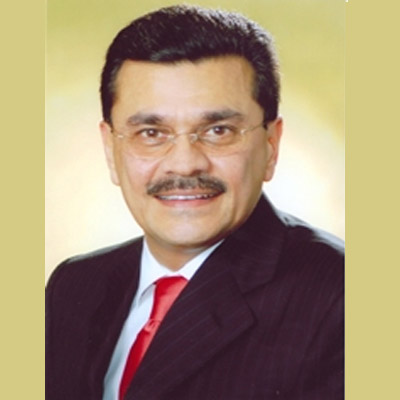
    Tata Sky CEO Vikram Kaushik, while speaking to Indiantelevision.com, was however quite categorical that any talk of a date of launch was premature at this stage and therefore purely speculative. Kaushik would only confirm that his company was on target for a mid-year launch for its DTH service.

    Tata Sky will begin the “test run” of India’s third DTH service after Zee Group’s DishTV and Prasar Bharati’s DD direct from 15 May, the sources say. It has marked out a 45-day window period till 30 June during which time all technical and channel and programme related issues will have been ironed out.

    According to the sources, the preparatory work for the launch has been ratcheted up several gears in the last three weeks after the company collected from the information and broadcasting ministry the final licence clearing the way for the $500-million DTH service to take off.

    It was in December last that the telecommunication ministry gave its green signal for the vexed matter of setting up an uplinking base in Delhi by Videsh Sanchar Nigam Ltd, an issue that was under government scanner on technical grounds of land use by VSNL of its Chattarpur facility. The telecom ministry nod was seen as crucial for obtaining the final licence from the I&B ministry.

    Tata Sky has three operational centres in the country. Its technical set-up is headquartered in the capital, its complete back-up systems, including call centre operations, is out of Bangalore while its commercial activities are managed from Mumbai.

    One big priority of course is getting all popular channels onto its platform, a matter that rival DishTV has still to resolve with the Star network and the Sony-Discovery One Alliance. Here, like in the case of the Subhash Chandra-promoted DTH service, ESPN Star Sports has already worked out a carriage deal with Tata Sky.

    Queried about this, Kaushik would only say, “We are in ongoing discussions with all major broadcasters. More than this I cannot comment at this stage.”

    Speaking of channels, a key function of all addressable systems is the electronic programme guide (EPG). Tata Sky has exchanged letters with all broadcasters on use of logos and such in regards to how the programming highlights in its EPG will be displayed. The operator has reportedly requested all channels to provide these details ahead of the 15 May week.

    Another aspect that Tata Sky has to confront is of how to get around the last mile roadblock. One strategy that it is going with is to introduce pre-paid cards, which Kaushik believes would make subscription payment easier for the consumer. This differs from the DishTV strategy, which offers new customers its services for Rs 3,990 that includes one year’s subscription. After a year, DishTV subscribers pay a monthly subscription fee.

    Secondly, Tata Sky plans to take the responsibility of directly installing the hardware in every subscriber’s home and servicing it whenever needed. This again differs from DishTV which has a distribution network of about 5,000 dealers / distributors across the country.

    On the hardware side, Tata Sky, like DishTV has done, will be offering its boxes through consumer durable outlets.

    As regards subscriber acquisition, Tata Sky is following a two-pronged strategy of targeting individual consumers as well as institutions, for which there is a separate head of institutional sales.

    Industrial townships, hospitals, hotels, etc. are where the operator is directly negotiating to set up a central dish antenna through which it can connect individual installations.

    Where it has come into direct confrontation with last mile operators has been when it approached housing societies in various cities with the institutional model to offer its services.

    In fact, one of the reasons for a majority of cable networks in Kolkata blacking out the Star group of channels has been this issue. The protest against carriage of the Star channels in Kolkata is being led by the Forum of Cable Operators and Cable Operators Sanjukta, two association bodies of the last mile operators in the city. “Star was asking for a hike, which we couldn’t have passed on to the consumers. Besides, Tata Sky, where Star is a partner, is wanting to grab subscribers by offering housing societies free cabling from a single central antenna,” Cable Operators Sanjukta spokesperson Papi Banerjee told Indiantelevision.com recently.

    Be that as it may, Tata Sky has set itself some ambitious goals. The major one reportedly being to acquire around one million subscriptions by this year.