Tag: Task Force

  • Union cabinet clears AVGC National Centre of Excellence

    Union cabinet clears AVGC National Centre of Excellence

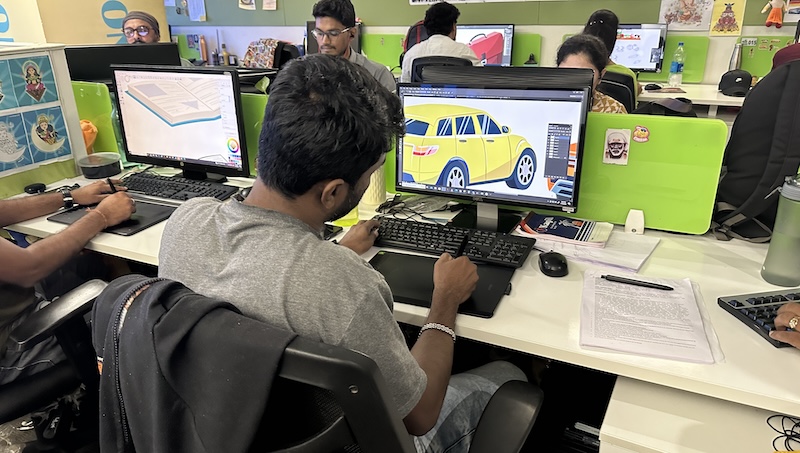
    MUMBAI: The Modi-led central government is putting its might behind the AVGC (animation, visual effects, gaming, comics &XR ) component of the media & entertainment sector. It has followed up its announcement a couple of weeks ago about the setting up of a National Centre of Excellence (NCoE)  in Mumbai by getting the plan cleared by the  union cabinet.

    The NCoE is planned to be set up as a section 8 company under the Companies Act 2013 with equity participation from the Federation of Indian Chambers of Commerce & industry  (Ficci) and the Confederation of Indian Industry (CII) and the Indian government. More than  Rs 500 crore is to be pumped into the centre by the government, possibly through the National Film Development Corporation (NFDC). .

    Provisionally named the Indian Institute for Immersive Creators (IIIC), the center aims to revolutionise the AVGC sector and foster innovation in immersive technologies. It is planned  to be modelled after the Indian Institutes of Technology (IITs) and Indian Institutes of Management (IIMs) with a sharp focus on creating content for India and the world.

    A press release issued by the ministry of information &  broadcasting on 29 September said that the idea is to create “a world class talent pool in India to cater to the Indian as well as global entertainment industry and make India a global hub for AVGC.”

    With rapidly evolving technology and increasing internet penetration all across the country, coupled with one of the cheapest data rates, the usage of AVGC-XR globally is poised to grow at an exponential pace.  This is bound to create abundant opportunities, particularly through the National Centre of Excellence (NCoE).

    Some of its key objectives are:

    * Focusing on creating Indian IP
    * Leveraging India’s cultural heritage in new age
    * Create a multiplier effect in the industry
    * An industry led initiative, in partnership with state and academia
    * Integrated focus on education, skilling industry, development, innovation
    * Hub and spoke model of development to be followed
    * IIIC as the hub and several centers as its spokes dedicated innovation and research fund to promote start-up ecosystem.

    The NCoE is being planned to provide a fertile platform for immersive tech – including virtual reality, augmented reality, mixed reality, 3D modelling, animation, comics and gaming – by offering cutting-edge training and integrate India’s rich cultural heritage with modern technology, fostering the creation of indigenous intellectual property (IP) and building the future of India’s digital creative economy.
    The target is to create an estimated 500,00 jobs,  with students gaining  practical experience through industry-driven courses, ensuring they are job-ready upon graduation. Those graduating will be provided with internships while start-ups will be mentored.  

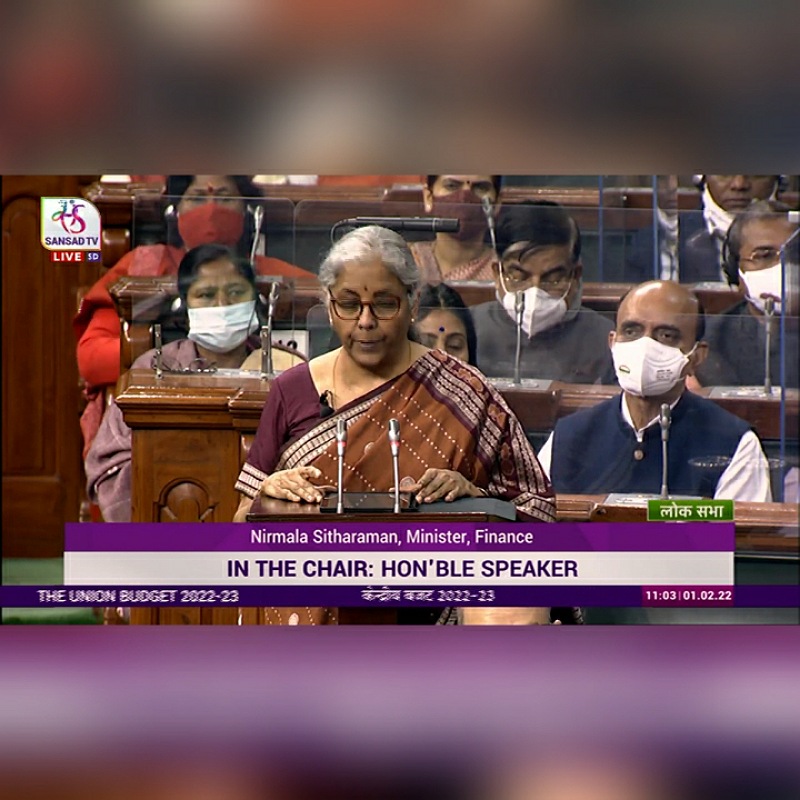
    It may be recalled that union minister of finance & corporate affairs Nirmala Sitharaman had announced in the 2022-23 budget that an AVGC task force would to created. The NCoE is one of the recommendations of the task force.

  • Budget2022: Govt to set up task force to promote animation, video gaming industry

    Budget2022: Govt to set up task force to promote animation, video gaming industry

    Mumbai: The government has proposed to set up a specialised task force for the promotion of the animation, visual effects, gaming and comics (AVGC) industry. The announcement was made by finance minister Nirmala Sitharaman while presenting the annual budget 2022 on Tuesday.

    “Animation, Visual Effects, Gaming and Comics (AVGC) sector offers immense potential to employ youth. An AVGC promotion task force with all stakeholders will be set up to recommend ways to realise this and build domestic capacity for serving our markets and the global demand,” said Sitharaman.

    The announcement was welcomed by the industry, with Federation of Indian Chambers of Commerce and Industry (FICCI) hailing it as a big win for the sector.

    FICCI chairman – AVGC XR Forum and Punnaryug Artvision founder Ashish SK said that the budget announcement of the formation of task force for AVGC Promotion has come at the most appropriate time. “After setting a strong foundation in the last two decades the Indian AVGC – XR is poised to grow phenomenally in coming decade. The creative skills from India needs nurturing to a great extend to enable the growth of the sector. Setting up of a task force will definitely bring in a great focus on positioning Indian AVGC sector for services exports, co-productions, growth of Indigenous intellectual property and its consumption patterns within India and overseas,” he said.

    According to industry representatives, the Indian AVGC – XR sector is expected to have a major share of the media and entertainment industry. The horizon and use cases of AVGC – XR verticals have expanded beyond its day-to-day defined utility in architecture, life science, legal, education, industrial, urban planning, sports, digital universe, metaverse etc apart from media & entertainment.

    “The AVGC task force is a huge step by the government to promote the sector. We wholeheartedly welcome it and FICCI AVGC-XR Forum will continue to work closely with the government on various policy initiatives to realise the growth potential of the Industry. This industry vertical has tremendous scope for employment generation and exports,” said FICCI co-chairman – AVGC- XR Forum, and Graphiti Studio founder Munjal Shroff.

    In its latest report released last month, the Confederation of Indian Industry (CII) and Boston Consulting Group (BCG) had also projected that India’s media and entertainment industry which is currently valued at around $27 billion is all set to grow at 10-12 per cent CAGR to become a $55-70 billion industry by 2030. The report had also highlighted that the industry’s next phase of growth will be led by OTT, gaming, VFX and animation.

    The finance minister said the union budget seeks to lay a foundation and give blueprint of the economy over the next 25 years – from India at 75 to India at 100.

  • Ministry begins Rio performance review with an eye on 2020

    Ministry begins Rio performance review with an eye on 2020

    NEW DELHI: A thorough review of India’s performance in Rio Olympics 2016 by the sports ministry has begun in the backdrop of the prime minister Narendra Modi announcement of establishing a task force to prepare for future Olympics.

    Sports Minister Vijay Goel has written to each of the athletes who participated at Rio, seeking their suggestions. He has stated that they should feel free to give their feedback. In his letter, Goel has stressed the need for more inputs from performers like them so that the pool of world-class athletes can be enhanced and sports infrastructure strengthened.

    The ministry has also written to the Indian Olympic Association (IOA) to submit their feedback on India’s performance in Rio and steps needed for improvement. Such feedback will also be sought from the National Sports Federations (NSFs).

    Goel will have detailed meetings with the IOA and the NSFs shortly in this regard. The objective of this exercise is to analyse performance.

    Modi had announced setting up a task force to prepare a comprehensive action plan for effective participation of Indian sportspersons in the next three Olympic games 2020, 2024 and 2028.

    The ministry will also take a look at the duties and responsibilities of various members of the Indian contingent for the Rio Olympics with the purpose of making a fair assessment of their role and taking steps for improvement.

    Goel will visit some prominent academies and Sports Authority of India Centres to have first-hand knowledge of the facilities available for training and improvement required. On 17 September, he will visit the Gopi Chand Badminton Academy in Hyderabad where he will meet players, coaches and other support persons. He will also visit the SAI Centre at Hyderabad.

  • Ministry begins Rio performance review with an eye on 2020

    Ministry begins Rio performance review with an eye on 2020

    NEW DELHI: A thorough review of India’s performance in Rio Olympics 2016 by the sports ministry has begun in the backdrop of the prime minister Narendra Modi announcement of establishing a task force to prepare for future Olympics.

    Sports Minister Vijay Goel has written to each of the athletes who participated at Rio, seeking their suggestions. He has stated that they should feel free to give their feedback. In his letter, Goel has stressed the need for more inputs from performers like them so that the pool of world-class athletes can be enhanced and sports infrastructure strengthened.

    The ministry has also written to the Indian Olympic Association (IOA) to submit their feedback on India’s performance in Rio and steps needed for improvement. Such feedback will also be sought from the National Sports Federations (NSFs).

    Goel will have detailed meetings with the IOA and the NSFs shortly in this regard. The objective of this exercise is to analyse performance.

    Modi had announced setting up a task force to prepare a comprehensive action plan for effective participation of Indian sportspersons in the next three Olympic games 2020, 2024 and 2028.

    The ministry will also take a look at the duties and responsibilities of various members of the Indian contingent for the Rio Olympics with the purpose of making a fair assessment of their role and taking steps for improvement.

    Goel will visit some prominent academies and Sports Authority of India Centres to have first-hand knowledge of the facilities available for training and improvement required. On 17 September, he will visit the Gopi Chand Badminton Academy in Hyderabad where he will meet players, coaches and other support persons. He will also visit the SAI Centre at Hyderabad.

  • Task Force being set up to study preparations for next three Olympiads

    Task Force being set up to study preparations for next three Olympiads

    NEW DELHI: India sent its largest contingent to the Rio Olympics 2016, with even Sports Minister Vijay Goel being present there.

    But clearly dismayed by the results, Prime Minister Narendra Modi has announced setting up a Task Force to prepare a comprehensive action plan for effective participation of Indian sports persons in the next three Olympic games 2020, 2024 and 2028.

    In the announcement made at the meeting of the Council of Ministers, Modi said the Task Force will prepare overall strategy for sports facility, training, selection procedure and other related matters.
    He said that the Task Force would be set up over the next few days.

    The Task Force will comprise of members who are in house experts as well as those from outside.

  • Task Force being set up to study preparations for next three Olympiads

    Task Force being set up to study preparations for next three Olympiads

    NEW DELHI: India sent its largest contingent to the Rio Olympics 2016, with even Sports Minister Vijay Goel being present there.

    But clearly dismayed by the results, Prime Minister Narendra Modi has announced setting up a Task Force to prepare a comprehensive action plan for effective participation of Indian sports persons in the next three Olympic games 2020, 2024 and 2028.

    In the announcement made at the meeting of the Council of Ministers, Modi said the Task Force will prepare overall strategy for sports facility, training, selection procedure and other related matters.
    He said that the Task Force would be set up over the next few days.

    The Task Force will comprise of members who are in house experts as well as those from outside.

  • Seven mfrs making set top boxes locally, MSOs adopt iCAS

    Seven mfrs making set top boxes locally, MSOs adopt iCAS

    NEW DELHI: Even as most high courts extended the deadline for phase III of digital addressable system citing shortage of set top boxes, a total of seven local manufacturers are now producing STB.

    This figure is almost double compared to the details given during the last meeting of the DAS Task Force on 16 February 2016.

    The 15th Task Force meeting on 30 May was informed that seeding of about 41 million (4.1 crore) STBs had been completed.

    However according to a representative of Consumer Electronics and Appliances Manufacturers Association (CEAMA), there was a lull in the market and no orders had been received in the recent past.

    The representative said seven indigenous STB manufacturers had taken Indian Conditional Access System (iCAS) licenses and five out of them are in the process of implementing iCAS in their STBs.

    He said 22 MSOs’ had placed orders for iCAS-based STBs. Twelve MSOs’ had deployed iCAS by 15 February, the 14th meeting had been told.

    Meanwhile, the Department of Electronics and Information Technology is planning a meeting with the operators and stakeholders on 24 June 2016.

    In the meeting on 16 February 2016 which was the first after the deadline for phase III covering all urban areas, it was claimed that the seeding of STBs by multi system operators increased from 6.91 million to 12.43 million between 31 December 2015 and 15 February 2016.

    The Indian Conditional Access System (iCAS) had been developed by DeITY and will be initially available to indigenous STB manufacturers for three years at a nominal fee of $ 0.5 per STB. .

  • Seven mfrs making set top boxes locally, MSOs adopt iCAS

    Seven mfrs making set top boxes locally, MSOs adopt iCAS

    NEW DELHI: Even as most high courts extended the deadline for phase III of digital addressable system citing shortage of set top boxes, a total of seven local manufacturers are now producing STB.

    This figure is almost double compared to the details given during the last meeting of the DAS Task Force on 16 February 2016.

    The 15th Task Force meeting on 30 May was informed that seeding of about 41 million (4.1 crore) STBs had been completed.

    However according to a representative of Consumer Electronics and Appliances Manufacturers Association (CEAMA), there was a lull in the market and no orders had been received in the recent past.

    The representative said seven indigenous STB manufacturers had taken Indian Conditional Access System (iCAS) licenses and five out of them are in the process of implementing iCAS in their STBs.

    He said 22 MSOs’ had placed orders for iCAS-based STBs. Twelve MSOs’ had deployed iCAS by 15 February, the 14th meeting had been told.

    Meanwhile, the Department of Electronics and Information Technology is planning a meeting with the operators and stakeholders on 24 June 2016.

    In the meeting on 16 February 2016 which was the first after the deadline for phase III covering all urban areas, it was claimed that the seeding of STBs by multi system operators increased from 6.91 million to 12.43 million between 31 December 2015 and 15 February 2016.

    The Indian Conditional Access System (iCAS) had been developed by DeITY and will be initially available to indigenous STB manufacturers for three years at a nominal fee of $ 0.5 per STB. .

  • MIB claims 90.44% DAS success; MSOs tell Task Force no shortage of STBs

    MIB claims 90.44% DAS success; MSOs tell Task Force no shortage of STBs

    NEW DELHI: The first meeting of the Task Force held after implementation of Phase III of Digital Addressable System (DAS) covering all urban areas was informed that the percentage achievement had increased from 76.45 per cent as on 30 December.2015 to 90.44 per cent as on 15 February. 2016.

    It was also claimed that the seeding of set top boxes (STBs) by multi system operators (MSOs) increased from 6.91 mIIIion to 12.43 mIIIion for the same period.

    An Indian Conditional Access System (iCAS) developed by Department of Electronics and Information Technology wIII be initially available to indigenous STB manufacturers for three years at a nominal fee of $0.5 per STB. Twelve MSOs are reported to have deployed it in their headends.

    Bharat Sanchar Nigam Limited (BSNL) had been asked by the Department of Telecom to provide required connectivity links to MSOs for taking TV signals in Phase III and Phase IV areas. This follows complaints in the last meeting held at the end of December by MSOs about the problems of connectivity links in some Phase III areas.

    Addressing the 14th meeting of the Task Force on implementation of Phases III & IV of DAS in cable TV networks on 16 February, Information and Broadcasting Ministry Special Secretary J S Mathur claimed that the progress achieved was very good in spite of several court cases filed in various courts for extension of the cut-off date.

    Mathur remarked that from the stay granted in some court cases it should not be construed that the digitisation would be put on hold. He emphasised that digitisation is a reality now and cannot be stopped. He said broadcasters and MSOs should spread this message. He said according to a report, the number of MSO dark areas have decreased considerably. He said there was need to find out whether the MSOs who have been granted registration recently have placed orders for STBs.

    Joint Secretary (Broadcasting) R Jaya in an overview of progress of DAS Phase III & IV said a total of 19 cases had been filed in various courts in the country for extension of cut-off date for Phase III. The Ministry was contesting all cases for immediate vacation of stay granted in these cases. The Ministry had filed a petition in the Supreme Court for transfer of these cases for immediate hearing in the Apex court.

    She said 695 MSOs had been granted DAS registration and 164 applications were under process while 240 applications have been received with incomplete information.

    She said the Regional Units (RUs) set up for implementing digitisation in Phases III & IV were fully functional. All RUs are in regular correspondence with MSOs in their regions.

    She claimed that about 300 to 500 calls were received daily on the toll free help line for cable TV digitisation for Phases III & IV.

    Jaya also said that 340 MSOs headends for Phase III & IV have been inspected by Prasar Bharati so far and 109 MSOs head ends of these have been reported to be non-operational.

    The Ministry had requested State Governments to furnish a list of Phase IV areas in their states. Except from Himachal Pradesh and Jammu and Kashmir (which has furnished list of one division only), lists are awaited from other States.

    A representative of J&K Government said some areas in Phase III in the State have still not been covered due to non-availability of STBs with MSOs. It was not known whether and when these MSOs have placed orders for STBs.

    A representative of the Telengana Government said only 30 to 35 per cent Phase III areas had been covered in the State so far and MSOs may require some time to complete their targets.

    Several representatives of MSOs claimed they had sufficient boxes but referred to other problems. The Hathway representative said local cable operators were resisting taking STBs from them for installation due to extension granted by various courts. Another representative of an MSO, the Indusind Media, said in view of the extension granted by courts and analogue transmission still running in some Phase III areas, the broadcasters should charge them on analogue rates according to earlier agreements. The Siticable representative also claimed the problem of stocking the boxes. He added that the MSO had about one million STBs in stock. He remarked that MSOs were required to plan the procurement of STBs in advance which the newly registered MSOs appear to have not done. A representative of GTPL Hathway said some orders of STBs were in transit but it had sufficient stocks.

    An Andhra Pradesh Government representative said there had been no complaint of non-availability of STBs in the State. But the representative of Uttarakhand said there have been reports of STB non-¬availability in some areas. He added that they are holding district level meetings to implement digitisation in the State.

    During discussions it emerged that some MSOs who have not even applied for registration had filed cases for extension in courts. Cases had also been filed by some MSOs who are not technically ready.

    The Telecom Regulatory Authority of India (TRAI) representative said in one court case, local cable operators had been directed by the court to send requests for STBs to MSOs. He suggested that State Governments should seek data from MSOs regarding availability of STBs. He informed that TRAI has recently written to the Chief Secretaries of State / Governments on the benefits accruable from digitisation to State Governments.

    A representative of LCOs from Maharashtra said some DAS Phase IV areas, which had been getting feed from control room in Phase III areas were switched off by MSOs. He added that digitisation is not looking at the consumer and whether he can afford to buy a set top box – particularly in Phase IV areas. 

    Mathur said the entire digitisation is in the interest of consumers and it has to take place as per the timelines. He advised that the stakeholders should encourage people to go for digital.

    A point was made that MSOs should be given freedom to fix the rates of STBs. A representative of TRAI mentioned that TRAI has not fixed any price for STBs and emphasised that the conditions given in tariff orders issued by TRAI on supply and installation of STBs by MSOs to consumers have to be complied and there can be no compromise on the rights of the consumers.

    A representative of CEAMA claimed that the number of companies manufacturing STBs had doubled in last one year; STB production has increased 100  per cent in last one year; one Chinese company is likely to start manufacturing STBs in India; and STB orders are being received from small MSOs. MSOs should place orders in time keeping into view that about two months time is required for integration of CAS in STBs. CEAMA is a member of iCAS.

    Jaya said CEAMA should reach out to MSOs to inform them about iCAS and STBs manufactured by them. The CEAMA representative said it would very soon have a meeting on iCAS in which it will also invite DeitY, iCAS developer and MSOs. Mathur said indigenous manufacturing of STBs should be a priority keeping in view the Make in India programme of the Government.

    The Indian Broadcasting Foundation (IBF) representative, who referred to its appeal in the Supreme Court, said broadcasters are running scrolls on channels that Ministry has not extended deadline for phase III.

    Mathur said the Ministry has requested State Governments to furnish list of Phase IV areas in the State so that progress of digitisation in these areas is monitored. It was mentioned that the information is available with State Governments at various levels viz. hamlets, panchayats and blocks. It was decided that the information at block level would suffice.

    Jaya impressed on stakeholders to start publicity campaigns for Phase IV areas to gain the momentum of digitisation in these areas. It was also noted that though Phase IV covers the entire country, a list of areas was required for knowing the progress of seeding as well as MSO dark areas.

    Mathur asked MSOs and broadcasters to commence work without waiting for the cut-off date for Phase IV. He said those who are yet to apply for MSO registration should apply now keeping into view that about four months are required for processing of applications. He asked the members to inform the MSOs to apply for DAS registration immediately. He added that an advertisement in newspapers is also being issued for registration of MSOs for phase IV areas. In addition, MSOs must also prepare themselves on the STB front. He also stressed upon the issue of MSOs continuing with their seeding activity as the Ministry has already moved the courts; for transfer of all petitions in State High Courts, for vacation of stays granted. It was imperative that the remaining areas of phase III be covered early.

  • MIB claims 90.44% DAS success; MSOs tell Task Force no shortage of STBs

    MIB claims 90.44% DAS success; MSOs tell Task Force no shortage of STBs

    NEW DELHI: The first meeting of the Task Force held after implementation of Phase III of Digital Addressable System (DAS) covering all urban areas was informed that the percentage achievement had increased from 76.45 per cent as on 30 December.2015 to 90.44 per cent as on 15 February. 2016.

    It was also claimed that the seeding of set top boxes (STBs) by multi system operators (MSOs) increased from 6.91 mIIIion to 12.43 mIIIion for the same period.

    An Indian Conditional Access System (iCAS) developed by Department of Electronics and Information Technology wIII be initially available to indigenous STB manufacturers for three years at a nominal fee of $0.5 per STB. Twelve MSOs are reported to have deployed it in their headends.

    Bharat Sanchar Nigam Limited (BSNL) had been asked by the Department of Telecom to provide required connectivity links to MSOs for taking TV signals in Phase III and Phase IV areas. This follows complaints in the last meeting held at the end of December by MSOs about the problems of connectivity links in some Phase III areas.

    Addressing the 14th meeting of the Task Force on implementation of Phases III & IV of DAS in cable TV networks on 16 February, Information and Broadcasting Ministry Special Secretary J S Mathur claimed that the progress achieved was very good in spite of several court cases filed in various courts for extension of the cut-off date.

    Mathur remarked that from the stay granted in some court cases it should not be construed that the digitisation would be put on hold. He emphasised that digitisation is a reality now and cannot be stopped. He said broadcasters and MSOs should spread this message. He said according to a report, the number of MSO dark areas have decreased considerably. He said there was need to find out whether the MSOs who have been granted registration recently have placed orders for STBs.

    Joint Secretary (Broadcasting) R Jaya in an overview of progress of DAS Phase III & IV said a total of 19 cases had been filed in various courts in the country for extension of cut-off date for Phase III. The Ministry was contesting all cases for immediate vacation of stay granted in these cases. The Ministry had filed a petition in the Supreme Court for transfer of these cases for immediate hearing in the Apex court.

    She said 695 MSOs had been granted DAS registration and 164 applications were under process while 240 applications have been received with incomplete information.

    She said the Regional Units (RUs) set up for implementing digitisation in Phases III & IV were fully functional. All RUs are in regular correspondence with MSOs in their regions.

    She claimed that about 300 to 500 calls were received daily on the toll free help line for cable TV digitisation for Phases III & IV.

    Jaya also said that 340 MSOs headends for Phase III & IV have been inspected by Prasar Bharati so far and 109 MSOs head ends of these have been reported to be non-operational.

    The Ministry had requested State Governments to furnish a list of Phase IV areas in their states. Except from Himachal Pradesh and Jammu and Kashmir (which has furnished list of one division only), lists are awaited from other States.

    A representative of J&K Government said some areas in Phase III in the State have still not been covered due to non-availability of STBs with MSOs. It was not known whether and when these MSOs have placed orders for STBs.

    A representative of the Telengana Government said only 30 to 35 per cent Phase III areas had been covered in the State so far and MSOs may require some time to complete their targets.

    Several representatives of MSOs claimed they had sufficient boxes but referred to other problems. The Hathway representative said local cable operators were resisting taking STBs from them for installation due to extension granted by various courts. Another representative of an MSO, the Indusind Media, said in view of the extension granted by courts and analogue transmission still running in some Phase III areas, the broadcasters should charge them on analogue rates according to earlier agreements. The Siticable representative also claimed the problem of stocking the boxes. He added that the MSO had about one million STBs in stock. He remarked that MSOs were required to plan the procurement of STBs in advance which the newly registered MSOs appear to have not done. A representative of GTPL Hathway said some orders of STBs were in transit but it had sufficient stocks.

    An Andhra Pradesh Government representative said there had been no complaint of non-availability of STBs in the State. But the representative of Uttarakhand said there have been reports of STB non-¬availability in some areas. He added that they are holding district level meetings to implement digitisation in the State.

    During discussions it emerged that some MSOs who have not even applied for registration had filed cases for extension in courts. Cases had also been filed by some MSOs who are not technically ready.

    The Telecom Regulatory Authority of India (TRAI) representative said in one court case, local cable operators had been directed by the court to send requests for STBs to MSOs. He suggested that State Governments should seek data from MSOs regarding availability of STBs. He informed that TRAI has recently written to the Chief Secretaries of State / Governments on the benefits accruable from digitisation to State Governments.

    A representative of LCOs from Maharashtra said some DAS Phase IV areas, which had been getting feed from control room in Phase III areas were switched off by MSOs. He added that digitisation is not looking at the consumer and whether he can afford to buy a set top box – particularly in Phase IV areas. 

    Mathur said the entire digitisation is in the interest of consumers and it has to take place as per the timelines. He advised that the stakeholders should encourage people to go for digital.

    A point was made that MSOs should be given freedom to fix the rates of STBs. A representative of TRAI mentioned that TRAI has not fixed any price for STBs and emphasised that the conditions given in tariff orders issued by TRAI on supply and installation of STBs by MSOs to consumers have to be complied and there can be no compromise on the rights of the consumers.

    A representative of CEAMA claimed that the number of companies manufacturing STBs had doubled in last one year; STB production has increased 100  per cent in last one year; one Chinese company is likely to start manufacturing STBs in India; and STB orders are being received from small MSOs. MSOs should place orders in time keeping into view that about two months time is required for integration of CAS in STBs. CEAMA is a member of iCAS.

    Jaya said CEAMA should reach out to MSOs to inform them about iCAS and STBs manufactured by them. The CEAMA representative said it would very soon have a meeting on iCAS in which it will also invite DeitY, iCAS developer and MSOs. Mathur said indigenous manufacturing of STBs should be a priority keeping in view the Make in India programme of the Government.

    The Indian Broadcasting Foundation (IBF) representative, who referred to its appeal in the Supreme Court, said broadcasters are running scrolls on channels that Ministry has not extended deadline for phase III.

    Mathur said the Ministry has requested State Governments to furnish list of Phase IV areas in the State so that progress of digitisation in these areas is monitored. It was mentioned that the information is available with State Governments at various levels viz. hamlets, panchayats and blocks. It was decided that the information at block level would suffice.

    Jaya impressed on stakeholders to start publicity campaigns for Phase IV areas to gain the momentum of digitisation in these areas. It was also noted that though Phase IV covers the entire country, a list of areas was required for knowing the progress of seeding as well as MSO dark areas.

    Mathur asked MSOs and broadcasters to commence work without waiting for the cut-off date for Phase IV. He said those who are yet to apply for MSO registration should apply now keeping into view that about four months are required for processing of applications. He asked the members to inform the MSOs to apply for DAS registration immediately. He added that an advertisement in newspapers is also being issued for registration of MSOs for phase IV areas. In addition, MSOs must also prepare themselves on the STB front. He also stressed upon the issue of MSOs continuing with their seeding activity as the Ministry has already moved the courts; for transfer of all petitions in State High Courts, for vacation of stays granted. It was imperative that the remaining areas of phase III be covered early.