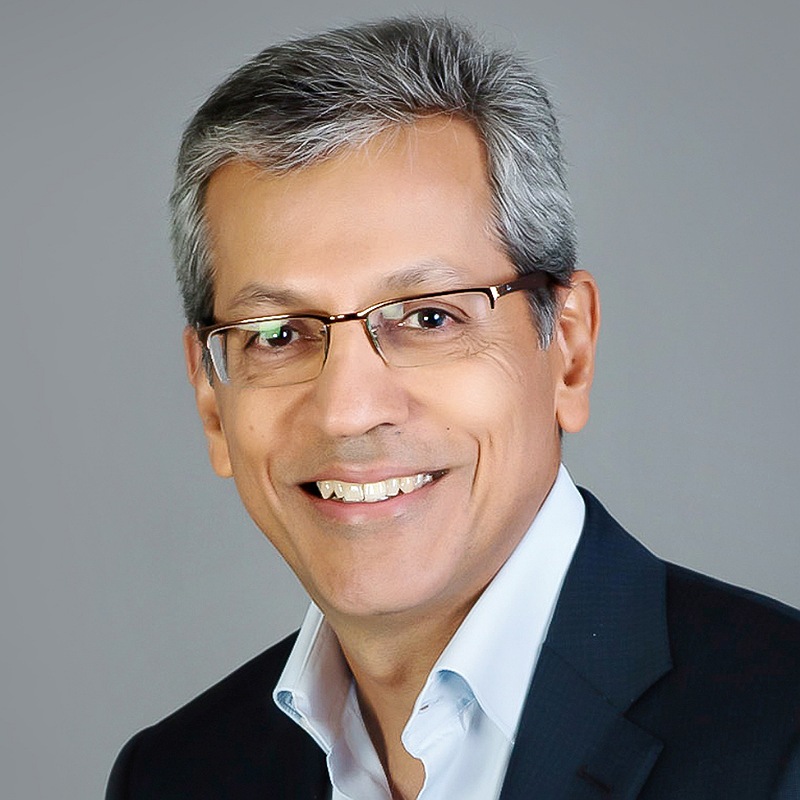
Tag: Tarun Rai

  • Wunderman Thompson South Asia elevates Tarun Rai to ED, strategic initiatives, APAC

    Wunderman Thompson South Asia elevates Tarun Rai to ED, strategic initiatives, APAC

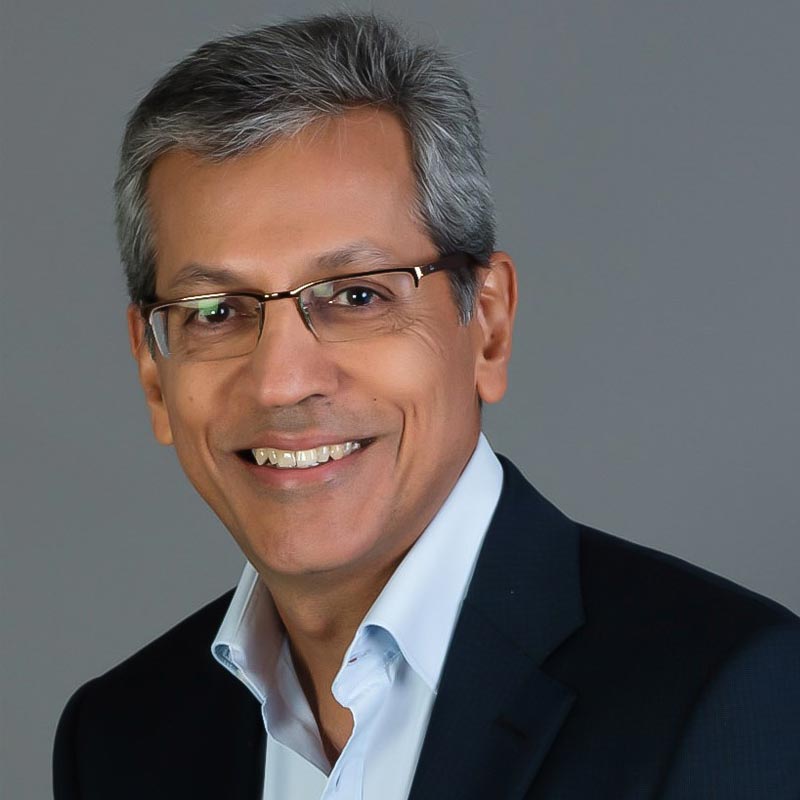
    Mumbai: After an illustrious 25 years in advertising in India, Wunderman Thompson South Asia chairman and group CEO Tarun Rai will move into a new role as executive director (ED) – strategic initiatives, APAC, effective 1 January 2022.

    Rai will report directly to Wunderman Thompson international CEO Ewen Sturgeon. Details on Rai’s successor will be announced shortly, said the agency.

    In the seven years as chairman and CEO, Rai has successfully steered the company through significant changes at an organisational and cultural level – most recently leading the successful and seamless transition to Wunderman Thompson.

    “We would like to thank Tarun for his leadership and efforts as group CEO of South Asia, and are pleased that Tarun will continue his strategic guidance and support for the agency as he moves on to serve as our APAC executive director of strategic initiatives,” said Ewen Sturgeon.

    Previously with JWT, Rai returned to the agency in 2015 after a long stint in media, and quickly put the company back on an aggressive growth path, diversifying the organisation’s capabilities to better serve clients, many of whom have been partners for a long time and remain so. He built an excellent leadership team and has fostered a culture of collaboration across the various group companies. Throughout the pandemic, he has led the organisation with sensitivity and empathy without compromising on the quality of the work, said the cocompany

    “The last seven years have been very exciting and rewarding. The unprecedented changes in these years required nimble leadership,” said Rai. “I also had the opportunity to lead the transition to our new company, Wunderman Thompson, which has a powerful mix of creativity and technology. I am extremely proud of our people and of our leadership team for their fantastic work through these years. We partner with some of the best clients in the industry and I value their friendship and support. I now look forward to stepping into my new role in an expanded geography.”

  • Brands gear up for the festive season 2021

    Brands gear up for the festive season 2021

    Mumbai: It’s September. And, there is palpable anticipation tinged with hope, as the country gears up for yet another festive season in the post-pandemic world. Onam has already kick-started the celebrations in Kerala with brands launching exciting offers. Unsurprisingly, a huge chunk of a brand’s annual marketing budget is spent during this time of the year. So, how’s the buzz this year around? Are the brands and businesses buoyant in their expectations on the festive season, or are they wary about going full throttle, amid a looming threat of the third wave?

    Online retailer Myntra said it has witnessed a rise in the pent-up demand over the last few months. “Overall, the whole e-commerce ecosystem in India lights up during this quarter. We are looking to ride the wave by using this opportunity to serve our customers while focusing on every possible festive shopping occasion starting with Durga Puja and moving on to Navratri and Diwali,” said a Myntra spokesperson. “We expect this festive season to be bigger than last year.”

    According to the fashion e-tailer, the demand peaks during the 30 days leading up to Diwali, and it expects the same to happen this year. In fact, the demand in the two months leading to the festive season is expected to be much more than last time, especially across metros and Tier 2/ Tier 3. The adoption of digital channels for shopping also continues to accelerate.

    According to Modi Naturals, chief marketing officer, Shardul Bist, there is a huge pent-up demand, which will make sure, the upcoming festive season is better than that of 2020. It is also planning a 360-degree media campaign this year. “This is the time when people across the country are looking forward to indulging with their loved ones at home. So definitely, this festive season MNL is going all out to woo consumers,” said Bist, highlighting that the FMCG firm is also entering the ready-to-eat segment this time, with a new sub-brand – Oleev Kitchen, and launching new categories – Pasta and Peanut Butter- to bolster its food division.

    The brands are hopeful of a better festive season in terms of business and sales. The sales for certain categories have already begun to rise, and brands hope, it sustains itself during the next few months. For instance, the two-wheeler tyres demand remains strong with substantial growth in Tier 2 and Tier 3 cities amid increasing preference for private mobility amongst customers.

    “Our expectations are to create impactful visibility at the retail level by focusing on offtakes. We are happy that sales bounce back is happening, and are witnessing balanced volume growth prior to the festive period,” said TVS Srichakra, head-brand marketing Kavitha Ganesan, who expects consumer sentiments to improve with the resumption of IPL and T20 World Cup. “Barring 2020, our category has always seen consistent investments for brand building and advertising. Comparing ad spends with last year may not be prudent as last year was muted for the category with respect to media spends. Considering the buoyancy in the category, we do feel the ad-ex would grow this year.”

    The brands are all set to celebrate the buoyant outlook of this festive season with curated trade and consumer promotions. This is the ‘Lock and the unlock phase’, highlighted Madison Media Ultra COO Jolene Fernandes Solanki. “Brands had started gearing up for the unlock stage much before to reap the benefits of the unlock period. We will observe a surge in spends by the time the festive season approaches since maximum sales for many categories take place during the festive period. The budgets which were not utilised during the lockdown may be also utilised during this period,” said Solanki.

    However, there is are also apprehensions of a fresh wave of Covid cases, and brands and advertisers remain mindful of it. 

    There is an omnious sense of déjà vu when discussing the ‘pent-up demand’ a year later too, for it was this time last year that there was the beginning of lockdown relaxation in many parts of the country shared Wunderman Thompson, South Asia, chairman, and group CEO Tarun Rai. Brands were then focussed on servicing the pent-up demand of all the previous six months, and because of the ‘second wave’, marketers find themselves in a similar situation to last year.

    Nevertheless, Rai does not rule out a promising season for most product categories, with the general mood on the Covid front getting better every day. He also noted that unlike last year, brands are better prepared and the supply-side issues are largely addressed. “So yes, this year the season is again going to be one of huge importance to marketers. This is the time that brands should not hold back,” added Rai.

    Online marketing agency CupShup co-founder Sidharth Singh also drew attention to the supply bottlenecks due to which brands might not be able to fulfil the customer’s demand. “Trade wars, global turmoil impacts the supply much more than we imagine and impact both the availability as well as pricing of the product. Brands are watching it unfold closely and aligning their spending and strategy accordingly,” he said.

    Nonetheless, brands are looking forward to better investments to accelerate growth. According to iProspect senior VP Kaushik Chakraborty, key sectors such as Automobiles, E-Commerce, FMCG, and BFSI are set to increase spends during the season to make up for the impact of the second wave.

    Historically, the festive months of September-December contribute more than 40 per cent of overall ad ex. This year the contribution will increase further with the eight weeks of intense cricket from the upcoming IPL second phase and T20 WC. Also, with leading GEC channels launching big-ticket shows like KBC, India’s Best Dancer, Big Boss, advertisers will definitely utilise this opportunity and expects significant growth in ad ex in comparison to 2020, he added.

    According to a recent report by Dentsu International, adspend is expected to grow by 10.8 per cent in 2021 to reach $9 billion. India’s television, print, and digital advertising revenues are showing signs of revival after declining by almost 20 per cent in 2020. This data, coming on the back of the setback suffered by the industry during the April-June quarter this year, is significant.

    “India is estimated to grow more than 20 per cent in 2021 compared to 2020. Growth in advertising would be led by Digital followed by TV, Print, OOH & Radio. With increased demand, we will also see some rate hikes by the broadcasters to make up for the lack of ad rate growth in the last 18-24 months,” said Havas Media India, managing partner – South, Saurabh Jain adding that the vaccination drive has also uplifted consumer confidence. “This spike in positive sentiments will result in ‘revenge shopping’ this festive season as more people step out for shopping or consumption.”

    In terms of festive ad spend and marketing strategy this time around, Jain said, “Since COVID-19, the campaign duration and planning cycles have become shorter and the shift to digital has accelerated, impacting the overall marketing strategies.”

    Industry executives are, however, not without caution when it comes to the upcoming festive period. “There are a lot of brands with their ears to the ground and they are working with much more alertness and dexterity in their plans. The fear and anxiety associated with Covid third wave are noticeable. So there would always be a plan B and plan C. Brands will stock up on a limited quantity,” said Tiger Advertising partner Pantul Kothari. “Having said that- most businesses believe that it is an opportunity that can’t be missed. And we expect aggressive marketers leading to a huge media noise.”

    Industry executives agree businesses have achieved a new normal or baseline of business after the effect of the pandemic. The aim will be to move forward from that point. Going back to pre-Covid trends and spends is no longer part of the industry’s playbook. Brands are trying to cover up for what is lost by upping their game and leveraging the festive season to connect with their audiences.

  • #Throwback2020: How the pandemic reshaped agency culture

    #Throwback2020: How the pandemic reshaped agency culture

    NEW DELHI: There were a lot many seemingly impossible things that 2020 managed to turn into reality. One such thing was advertising and marketing agencies locking their gates and their employees working remotely for a good chunk of the year. For a business that thrives on human contact and face-to-face interactions, where beer pe charcha has been a trend for the longest time, and where teamwork defines the core strength of the company, it seemed like a herculean task to undertake. However, the year made everyone used to it. In fact, for the industry, it has paved the way for a more relaxed, geo-agnostic, hybrid working model, which will possibly be its future. And not just the technology, but the human connections that have developed this year will help sustain this model. 

    Relationships across the screen 

    The first task for the agencies in the lockdown was to create a system for its teams while working from home to ensure that the output does not drops and their commitment to the clients continues in the same way as before. This was a humungous task as none was prepared for it. They adapted the new techniques of sharing the status of work, deliberating ideas, seeking feedback, team meetings and briefing sessions. Agency folks across the hierarchies took time to adapt but they did and the work went back at the same pace. 

    Earlier in the year, Indiantelevision.com had also reported that the Covid2019 crisis made agencies and clients bond well than ever before. 

    Publicis Worldwide MD Srija Chatterjee had this to say about improved client-agency relationships during one of our virtual roundtables: “We have started understanding each other more. There is much more transparency now. As an agency, we know what the issues are that they face with cash flows and we are trying our best to help them out.”

    Also, Kinnect CEO Rohan Rohan Mehta and COO Chandni Shah in a live virtual chat corroborated that clients, in fact, became very comfortable with presentations and pitches over video calls. And it might be a trend that will continue to stay in the industry for a good long while, though they personally would prefer it to be otherwise. 

    Be it crunching numbers or deliberating on that one great creative idea, all the teams adopted the new normal and started bonding on the screens. They collaborated more and engaged with each other beyond work making work-from-home feel like not a very tough task. 

    Wavemaker South Asia CEO Ajay Gupte told us in a previous interaction, “On the team-level, we have gotten much more closer and understanding of each other. Earlier, our teams in various states could manage to meet once or twice a year, but now we are having at least two meetings every week.” 

    During the lockdown, the agency execs took up participated in team games and sessions like learning cooking, singing. They celebrated festivals online, shared new learnings and developments to create a light atmosphere.

    Embracing a hybrid model

    Advertising is a people's business and at the end of the day, one needs to have boots on the ground to ensure the execution of the ideas at the last mile. This includes production, post-production, art-work, shoots and several other things.  

    While the lockdown restrictions eased, it was not possible for everyone to immediately go back to the office. Havas Media Group MD India Mohit Joshi mentioned in a tete-a-tete with Indiantelevesion.com founder, CEO and editor-in-chief Anil Wanvari a few months back, “Yes, the offices are open but we are not forcing anyone to join. Additionally, we have done extensive joining assessments for the people on grounds like who all are living alone versus who all are living with old parents or young children, who have morbidities associated, etc. So, only those people are being called to the office for whom it is absolutely safe. We are not allowing anyone who travels via public transport to come to the office.” 

    Wunderman Thompson South Asia group CEO and chairman Tarun Rai, while speaking at a Bangalore Advertising Club webinar, insisted that it is high time that agencies embrace the hybrid working model. 

    “I have been passionate about the fact that people should be allowed flexibility at workplaces. We need to be more output-focussed and not input. We can work remotely and deliver the same results,” he said. Rai added that this will help in vapourising the gender bias at the workplace. 

    But more than everything, it will allow agencies to rope in skilled people with hyper-local and targeted capabilities to deliver better solutions to clients. Several industry leaders pointed out that having great talent on-board will not be a function of geography anymore. 

    Several big agencies have reopened the offices. Leadership teams are meeting once or twice every week. Mid-level execs are allowed to come office but are needed to inform in advance. Its HR teams are ensuring that the office does not have over 30 per cent staff at once.  

    What the future looks like

    The industry is positive that hybrid is the way ahead. Freshly appointed PHD India CEO Monaz Todywalla said, “In terms of working models, hybrid working is going to stay. Agencies will collaborate with skilled professionals more. There is also going to be a big focus on in-house skill development.”

    Case in point being most of the young agencies that launched this year – like Syed Amjad Ali’s Catalysts, Saurabh Varma’s WondrLab – are going to be geo-agnostic enterprises. Although nearly all agencies are regularly working with freelance professionals across different geographies to execute projects but this trend will further grow.

    In Rai’s view, traditional agencies also will be moving towards a more free working environment where going to the office would not necessarily mean sitting in a cubicle. It could also mean meeting for a coffee or sitting at a co-working space.

    However, he added that for this to turn into a reality, legacy agencies will have to do a rejig of their entire culture, HR policies, and appraisal systems. He argued that to make all of this function in the real world, people will have to give up the control they are used to exercising on their teams and will have to turn more trusting towards people.

    “In addition to that, we also need to work on our HR policies and appraisal schemes. To this date, we have to punch in our office timings as the system remains input-based. Even with consultants, we are used to asking how many days they will be coming to the office. All this needs to change,” he remarked. 

    For Mehta and Shah, this pandemic has paved the way to a flourishing gig economy in India. Mehta noted that more agencies will be open to outsourcing specialised skills to freelancers and consultants. However, there is a long way to go for standardising the prices and work culture for those who are not on company payrolls.

    He added, “LinkedIn has been a part of the media mix for most advertisers for the past three years now and it has constantly been bringing in new formats to advertise also. The place where LinkedIn lacks a little bit is its expensive pricing. Also, the number of people on the platform is quite limited and you can’t reach a wide audience. I have been waiting for LinkedIn to become more India-centric and viable in terms of pricing. As soon as that happens, a ton of advertisers will flock the place and will be using it way more aggressively.”

  • Limited workforce in office, copy fatigue: Immediate challenges facing ad industry

    Limited workforce in office, copy fatigue: Immediate challenges facing ad industry

    NEW DELHI: The past two months have been nothing short of a rollercoaster for industries across categories and nationalities. With most of the world under a strict lockdown, production halted, supply-chains blocked, and consumer demand shifting to only essentials, the economy went through a whirlwind of issues. Also greatly impacted was the marketing and advertising industry, as a result of the dwindling cash liquidity and many brands going silent in the time of crisis.

    However, things seem to be moving towards the better now. Lockdown restrictions have been eased greatly, green zones are already attracting consumers, and there is a lot of supposed pent-up demand to address. As brands start moving and earning, a lot of benefits will slowly be transferred to the advertising industry.

    Wunderman Thompson South Asia chairman and group CEO Tarun Rai said, “While the crisis in India is still far from over, the relaxation is a sign of hope. It is also a reflection on the strikingly varied impact the crisis has had on different regions of the country. While there are still issues regarding both production and distribution, the clients I have spoken to are finding innovative ways of getting around them. For many categories, this is the time to dust off their marketing campaigns and start getting ready for the beginnings of positive consumer sentiment. Like the crisis came upon us suddenly the rebound may surprise us too. Marketers and brands should be ready.”

    Dentsu One president Harjot Singh Narang added, “Investments in brand and marketing are sadly the first to go in a downturn but luckily come back really fast as soon as the businesses start seeing growth potential coming back. The relaxations are the first steps to inching back for now and so would be welcome by everyone. The real question would be how long before this inching ahead gathers some speed and opportunity to use brand and marketing as business drivers returns.”

     There, however, are still some impending challenges that await the industry. Havas Group CEO Rana Barua argues that the next few months will be more testing. “There will be numerous challenges going forward; going back to work poses more challenges than working from home. We cannot jump the gun and start behaving as normal. We need to collectively behave and act responsibly which will ensure compliance while we are planning to go back to work, safety for all employees, managing both offices and also working from home, balancing client needs and expectations.”

    Madison Media chief analytics officer Nagraj Krishnamurthy noted, “The industry is continuing to find it difficult to ensure supply chain continuity between the designated red, orange and green zones. Latest relaxation has eased the problem but not eliminated it.  It will be at least a quarter before the last mile link to the consumer becomes operational pan India.”

    Putting emphasis on the issues that the advertising industry will have to cater to, he added, “Usually, new copies are rolled out in the first quarter. However, this year, there are no new copies that are ready. Some clients are in a dilemma as to whether they can invest behind older copies. My suggestion to them is that they should unless the message is no more relevant. Analytics has proved that copy fatigue is a very rare phenomenon.”

    “Secondly, the situation on the ground is not uniform across the country. Marketers are wondering whether they should go on mass media like television. If the campaign is to activate top-funnel metrics, they should advertise on TV. However, brands advertising to activate lower-funnel metrics like retail or auto can look at geo-targeted digital approaches.”

    Rai highlighted that the safety and health of the agency’s employees are going to be of paramount importance. “We want to get back to our physical offices but want to be very sure that all the health protocols are in place. We are working effectively  from home but getting back to work will give everyone a sense of normalcy. We will start slow, in one city first, with around 30 per cent of our staff and move forward from there. The other important aspect is going to be when video production is permitted. We are managing even now but it is difficult.”

    Narang added, “Extended work from home, deeper thinking on brand relationships, strategies to navigate the months/full year of acute slowdown, strategies to tackle the adverse P&L impacts, and so many more immediate challenges face all of us in the industry. If change is the only constant then evolution and adaptation are the only necessities. Going ahead relaxations and new rules and ways will affect even more – how things change for the industry. However, the key will be to see how the industry and individual players in it evolve and adapt. In the next 18 months, leadership and thinking that enables pivoting to adapt to new realities will be the biggest need of this industry.”

  • Agencies should allow more flexibility to work remotely

    Agencies should allow more flexibility to work remotely

    NEW DELHI: It will be wiser for advertising agencies not to waste the crisis and plan to adopt the hybrid work cultures where a part of the workforce can work from home once the normal kicks in. The point was raised by BBH India CEO and managing partner Subhash Kamath and Wunderman Thompson South Asia group CEO and chairman Tarun Rai during a webinar discussing the future of advertising workplaces hosted by The Advertising Club Bangalore on Tuesday.

    “I have been passionate about the fact that people should be allowed flexibility at workplaces. We need to be more output-focussed and not input. We can work remotely and deliver the same results,” said Rai as he shared how he has always been open to the idea of certain members of his team working from home in case of emergencies.

    Kamath added: “My wife has been working from home for the past six to seven years now, a decision she took on her own to take care of the kids. I think this flexibility to work remotely should be given to women and also to people with ailing parents any day, irrespective of Covid2019 because family always comes first.”

    Both agreed that making working remotely a norm in advertising agencies will, therefore, also solve the problem of gender bias at offices.

    Rai elaborated, “We have achieved a 50:50 ratio of male-to- female workforce, but there are certain subconscious biases that still exist. People do not want to promote a woman who has recently got married or is planning a family. Working from home ends that issue as a woman who is getting married will be treated the same as a man.”

    They also highlighted that promoting a remote or work-from-home culture will also liberate good talent from geographical boundaries as it will be easier for a good suitable talent positioned in a different city than the client to contribute to a good project.

    Kamath said: “There is a difference between team-building and coalitions. You will find that in agencies people work on pitches in coalitions but then get back to the traditional, hierarchical team mode of linear reporting after that. Going forward, we will have to work together with more coalitions. Geography is history now. (As a good leader), you should be a part of a team that can get people together from across the world to find better solutions for clients.”

    Another benefit highlighted by the duo was the cutting of expenditure on things like travel, entertainment, real estate, etc. They insisted that it will be wiser to put all that extra money into a more valuable resource, i.e., the people.

    “We have moved from a culture of closed offices to open offices. Earlier, people used to sit in these opaque cabins, but with time we have made way to more open spaces where people can work in collaboration. Now we are moving to agile spaces. For example, at our Mumbai office, 20 per cent of the workforce doesn’t come to the office on any given day, that means there are no set cubicles or seats. You come to the office and sit at any place you find vacant,” Rai elaborated.

    He added that soon it could be moved to a no-office module. “No office doesn’t mean that you don’t have a place to go to. It means that instead of going to a cubicle or workstation, you will go to meeting rooms.”

    However, while all of it seems like a utopian dream achieving, this might not be very easy.

    Rai argued that to make all of this function in the real world, people will have to give up the control they are used to exercising on their teams and will have to turn more trusting towards people.

    “In addition to that, we also need to work on our HR policies and appraisal schemes. To this date, we have to punch in our office timings as the system remains input-based. Even with consultants, we are used to asking how many days they will be coming to the office. All this needs to change,” he noted.

    Kamath added that even the compensation structure of clients is heavily reliant on an input-based system, which also needs to change. “Instead of asking how many people you are going to give us for this project, they should be telling us this is what they want to achieve in this amount. Obviously, all of that can be negotiated, but the focus should be on the end result.”

  • Wunderman Thompson South Asia wins creative mandate for Sugarlite

    Wunderman Thompson South Asia wins creative mandate for Sugarlite

    MUMBAI: Following a multi-agency pitch in 2019, Wunderman Thompson South Asia has won the creative mandate for Sugarlite. The agency will be providing strategic and creative services to shape the communication for the brand which will cut across geographies, demographics and mind-sets and deliver differentiated content with incisive insights.

    Sugarlite, which was launched in January 2019 is a premium sugar brand from India’s emerging wellness and health company, Zydus Wellness. A first of its kind sugar, Sugarlite delivers 50% less calories than regular sugar for the same degree of sweetness. The agenda of Sugarlite is to provide a healthy sugar to Indian homemakers and health seekers.

    Commenting on the decision to appoint Wunderman Thompson as their creative agency, Zydus Wellness chief executive officer Tarun Arora said, “We were seeking to partner with an agency that would not only be responsible for communication development but also walk alongside us with strategic inputs on the brand. Hence we decided to extend our partnership with Wunderman Thompson considering the good work that has been done on some of our other brands.”

    On the new business win, Wunderman Thompson, South Asia chairman and group CEO Tarun Rai said, “Zydus Wellness has some amazing brands in their portfolio, and I am very happy that we have deepened our relationship with the Sugarlite win. We will work in close partnership with the Sugarlite team to achieve their ambitious business objectives. With Wunderman Thompson’s capabilities in data, digital and technology, we are in a strong position to offer end-to-end solutions for the brand.”

    Wunderman Thompson, Mumbai SVP and managing partner Kishore Tadepalli said, “We are truly delighted that we could demonstrate our team’s experience and capabilities in offering a multi-discipline integrated offering to win this very prestigious business. Through Sugarlite, we want to redefine the sugar category in India and creative communication plays a crucial role to achieve the same. We now look forward to this partnership to create content that will help to drive the desired impact and achieve business outcomes for Sugarlite.”

  • Wunderman Thompson South Asia logs in 70 new business wins in just six months

    Wunderman Thompson South Asia logs in 70 new business wins in just six months

    MUMBAI: Wunderman Thompson, since its launch in February this year, has been on a new business win spree. It has managed to log in over 70 new mandates across its group companies that include, besides Wunderman Thompson, Contract, Mirum, ADK Fortune and Hungama Digital Services (HDS). This also includes the wins in Sri Lanka and Nepal.

    Some of the recent wins include Godrej Interio, Oppo, Myntra, Shell, Times Internet, Zee 5, Kaya, Linc Pens, HDFC Mutual Funds to name a few. These wins are on top of the earlier wins in the year that included Honda Civic, Yardley, Nutralite, Puma, Sri Lanka Tourism, Tinder, Timex amongst others.

    Commenting on the new business wins Tarun Rai, Chairman & Group CEO, Wunderman Thompson South Asia, said, “This is certainly an impressive performance. We are building a new company, upskilling our staff, creating a new culture… and winning new business. What gives me even more satisfaction is that more than half of these wins have come due to our bringing together a complete end-to-end, integrated solution that is unique to Wunderman Thompson. The seamless and integrated approach has resonated with clients and as we bring in more global capabilities in Data, Content and Ecommerce, I am confident we will win more mandates in the next six months.”

  • Contract Advertising appoints Sagar Mahabaleshwarkar as CCO

    Contract Advertising appoints Sagar Mahabaleshwarkar as CCO

    MUMBAI: Contract Advertising has announced the appointment of Sagar Mahabaleshwarkar as its chief creative officer. With over three decades of experience across leading advertising agencies in India and abroad, Mahabaleshwarkar is a highly feted creative professional with multiple domestic and international awards under his belt. In his long and successful career, he has left his mark on brands like Samsung, Adidas, Grants, Apollo Munich and Jet Airways.

    Contract Advertising CEO Raji Ramaswamy said, “I am delighted to welcome Sagar Mahabaleshwarkar as the chief creative officer responsible for guiding the creative output of Contract in the digital age. He is a seasoned new age creative leader who has the finest art and design sensibilities. He has worked on some of the biggest brands in the country across both traditional and new media platforms and excelled in every one of them. He has a deep understanding of digital and technology with a strong belief that the future lies in the meeting of the two. He has built strong integrated teams in his earlier roles and we are confident that he will take the agency to the next level as an integrated agency of the future with big ambitions”.  

    On his appointment, Mahabaleshwarkar said, “The vision of Contract and the direction that JWT group is taking globally, is to make brands agile and to make brands purposeful. That’s a dynamic shift which is challenging and forward looking. Having worked on a winning note in a highly competitive, tech-first consumer business for the last three years, I am confident the shift is in the right direction.”

    J Walter Thompson chairman and group CEO Tarun Rai said, “We have been in discussions with Sagar for the last few months. And I am very happy that we have him on board, finally. Sagar is an industry stalwart who has built his reputation over the years across many agencies in India and abroad. He is the ideal creative leader to take Contract to the next level and make it a creative powerhouse.”  

    "I would like to thank Ashish Chakravarty for providing Contract with the creative leadership and support and in getting us to where we are today. I would also like to wish him the very best for the future,” Ramaswamy added.

    Contract's erstwhile CCO, Ashish Chakravarty, is moving to McCann Worldgroup.

  • JWT elevates Tista Sen and Priya Shivakumar

    JWT elevates Tista Sen and Priya Shivakumar

    MUMBAI: J Walter Thompson's (JWT) Tista Sen has been elevated as the regional creative director of India with the additional responsibility of JWT Sri Lanka. Sen is currently national creative director (NCD) at the agency.

    In addition to this, Priya Shivakumar, currently the executive creative director of JWT Bangalore, has been promoted to NCD. She will now drive creative excellence for clients across Bangalore, Chennai and Hyderabad.   

    JWT CEO Tarun Rai said; “Both Tista and Priya are exceptional creative professionals and their promotions are richly deserved. They have helped build so many brands and have been true ambassadors of JWT.”  

    “This is surely the sign of things to come as geography becomes history all over again. Tista and Priya are two of our best creative leaders, now empowered to lead from the front and drive creativity across the country and beyond,” added J Walter Thompson CCO Senthil Kumar.  

    Sen has been involved in crafting memorable and well-loved campaigns for some of the most iconic brands in India. Her deep understanding of the advertising landscape empowers her to orchestrate integrated communications that build future-ready brands and businesses. Over the years she has served as jury at several advertising festivals in India and abroad.  

    Shivakumar brings both traditional media and digital media together with her ideas and has led the Bangalore office of JWT successfully for over seven years now as ECD. Her work cuts across categories like fashion, beauty, luxury, travel and technology.

  • Goodknight puts an end to coils with new power chip

    Goodknight puts an end to coils with new power chip

    MUMBAI: Household insecticide brand, Goodknight, has launched its latest innovation ‘Goodknight Power Chip’. Its new television commercial understands the emotions of a mother and her plight to protect her family from the mosquito menace.

    The new TVC opens with a kid inviting his friends over to his house to watch a match. However, his friends have decided to go to the kid’s house whose mother has successfully managed to keep her home mosquito free. The first kid wonders what must be the trick to keep mosquitoes at bay, to which his friend responds that his mother has the power of 100 coils. The mother protects her home with the newly launched Goodknight Power Chip. She is delighted to see her son enjoy with his friends. The mother and the kid twirl their fingers in a playful manner depicting the power of 100 coils.

    Godrej Consumer Products CEO of India and SAARC Sunil Kataria says, “We are very excited about the new launch. Goodknight Power Chip is the new entrant to the Goodknight family. Brand Goodknight has always understood mothers and their struggle to protect their families from the mosquito menace and has always offered an effective solution to address their concerns. The new ad film has captured this emotion aptly.”

    J Walter Thompson South Asia JWT CEO Tarun Rai adds, “Power Chip is a breakthrough innovation created for the semi-urban and rural consumers. Our biggest challenge was to build format relevance for these consumers by upgrading them from the burning formats (coil) to an electric format. Coil is a benchmark of efficacy for these consumers. We strategically referenced coils to establish our new product superiority with the claim of ‘Power of 100 coils’. The communication is created to match the sensibilities of our target group and is delivered through an endearing banter between the kids and acknowledging the Goodknight mom.”