Rated as the best maintained DD kendra in 2002 and the best news channel in 2003, DD Bangalore Kendra employs 430 persons on regular basis while another 200 on job basis. The channel nominated by CBA (Commonwealth Broadcasters Association) won the runners up prize for cost-effective engineering in broadcasting at the 2003 International Broadcasters Conference at Amsterdam.
“Inform Educate and Entertain” is the DD mantra and DD Bangalore Kendra follows it by providing information and news, education, art, cultural and historical programmes. The channel telecasts programmes on investor education, redressal of grievances and promotes minority languages such as Urdu, Tullu, Konkani, Kodavu, Sanskrit and Hindi. DD Bangalore telecasts five hours (3:00 pm to 8:00 pm) on DD1 and the remaining time on DD9 Chandana channel. The programme content is 50 per cent entertainment and 50 per cent public service programmes.
The broadcaster’s revenue for the last fiscal stood at Rs 150 million. The major sources of income for the channel are ads, sponsorships, spot buys and production. For the fiscal 2004 – 2005 DD Bangalore Kendra projects a growth of 20 per cent to Rs.180 million. The channel claims that it has increased productivity from an average of four to five hours to around 11 hours per day in the last two years.
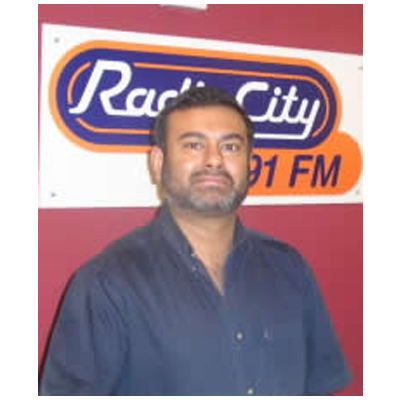
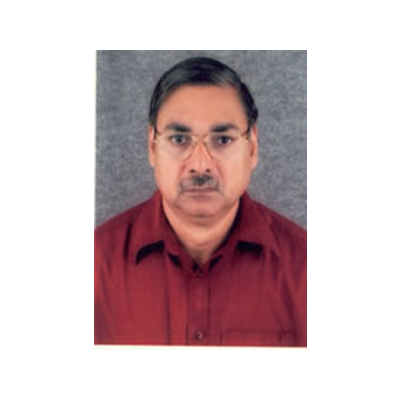
DD Kendra Bangalore director R Venkateswarlu and superintending engineer and director (Engineering) R Lakshminarayan Rao spoke to Indiantelevision.com’s Taro W on the channel’s future plans, programming strategy and the DD DTH service DD Direct+.
Excerpts:
|
You have claimed that DD Bangalore Kendra had increased productivity from an average of four to five hours to around 11 hours per day in the last two years. Tell us more about it:
R Venkateswarlu (RV): We have had to explain to the employees to improve output. We’ve had to get them change their work culture and habits from a laid back type of functioning to that of a corporation. We have tried to get the employees involvement in functioning. The biggest problem has been creating a team spirit. Dr. Ravi Shankar’s Art of Living course has helped us on this. We have even started our popular Chandana channel without any extra staff or expenses. People must be made aware of their responsibilities by placing additional responsibilities on them. This inspires them to perform better.
Some of our colleagues who have joined private broadcasters say that they are able to meet the demands of their new jobs with greater ease as they have a lot less to do as compared to here, though the job security is not there.
|
|
Please offer your comment on the improvements made by the Kendra on the technical front.
R Lakshminarayan Rao (RLR): We found that transmission and production were getting mixed up and hence studio time was wasted, productivity was low. We established a separate transmission unit. We have to shuttle between live to tape. We’ve also adopted digital technology in recording, editing and transmission, which has resulted in improved quality, continuity and productivity.
As opposed to most other broadcasters, our news is telecast live every-time. Most other news channels keep on repeating the same recording again and again. The news that you see on DD Bangalore is broadcast live.
|

|
“We’ve also adopted digital technology in recording, editing and transmission, which has resulted in improved quality, continuity and productivity”
|
|
|
How do you envisage the Kendra’s future? Please comment on the competition prevailing in the broadcast industry?
RV: There is no question of our competing with anybody. Being a public service provider, 50 per cent of our content is focused on public service. Given a free hand, we can generate revenues at par with any other private broadcaster. Compared to the Rs.150 to 200 million that a private broadcaster spends on programming, we spend only about Rs.10 million.
Here in the South, the content has to be mainly films and film-related, with a mixture of soaps, drama and modern music. We have to look at it from the social service perspective mainly. We also telecast live events such as the 10-day Brahmotsava celebrations at Tirupati-Tirumala starting this month on 16th that would go on till 25. We’ll be going live from 9 am to 11 am and from 9:30 pm to 11 pm everyday. We do cover live the important religious happenings in and outside Karnataka live. No private channel would spend extensive airtime the way we do, but as a government organisation we have social obligations to fulfill.
Our 15-minute news programme at 7 pm generally has the highest viewership among all South Indian news channels, private as well as other DD centers as per TAM. Sometimes Asianet, which is a close number two, does get more viewers than us.
On an analysis, we found that our primetime ratings were weak after 7 pm. Prasar Bharati has permitted us to telecast approximately 270 episodes from 5 September 2004 to 3 March 2005. These will be mainly serials, tele-films, tribal dances and history, and documentaries based on reputable Kannada works and the shows will air on Chandana channel. We will telecast the shows on DD1 at 6.30 pm from Sunday to Thursday and on satellite in the primetime band of 8 pm – 9 pm to match the private satellite channels. On Sunday evening we plan a programme on exclusive classical short stories named ‘Katha Sagar’, while ‘Darpana’ that showcase serials and documentaries will air on weekdays. We are also reviving production of our daily serial ‘Adachane Gagi Kshamisi.
Eminent literary and film personalities have been contributing to us. We’ve had some of the top producers such as Girish Kaservili, Dr. Chandrashekhar Kambar, and Dr. Baragam Ramchandra. The late G V Iyer made the top serials such as Kadambiri for us. He also made the documentary ‘Natyarani Shantala’. Prema Karanth has made many programmes and recently a children’s’ documentary.
Nobody can beat us on coverage at present. Also, when you compare the money invested by us and our reach, no one can match such a low cost to the large viewership ratio.
|
| Reportedly, cable operators have not been providing a good signal for the DD channels. What is your take on this?
RLR: Cable operators generally aren’t doing justice to our channels. When we get reports of poor quality transmission, or incorrect transmission, we take up the matter with the government and the police department.
|
|
What is your game plan for the DD DTH service titled ‘DD Direct+?
RLR: We have already installed 1,300 receivers to areas that have poor reception or where the signal is not available at all. Another 200 will be installed by the end of this week. Setting up terrestrial transmitters in the uncovered areas would cost enormously, and the time frame would be 10 to 15 years and also the whole exercise requires good manpower. DTH would cover the rest of the population which do not receive the signal or poor signal quality, and this would be a much cheaper option for them.
The DD Direct+ package is expected to include 30 channels including 13 private channels, 13 AIR channels. Negotiations are on with private broadcasters for their FTA (Free-to-Air) channels to be included, while from the radio segment 20 radio channels are also likely to join. All types of DTH set-top boxes available in India today can receive DTH+.
If all DTH service providers could come on a common DTH platform, the viewer would stand to benefit. This would be subject to availability of satellite transponders and willingness on the part of DTH service providers. High-end set top boxes available in Bangalore support two CAM (Conditional Access Module) for two encrypted DTH services. Access would be through as many viewing cards that authorise receiving of the DTH services. That means if the DTH signals of all the broadcasters could be beamed from one satellite, the viewer would require only one dish and maybe one box to see all the programmes. From a subscriber’s point of view, this would be very cost effective. He or she would not have to spend money for buying multiple equipment and dishes. The scope for this is definitely there if there is a consensus among all the broadcasters and a common satellite could be provided.
|