Tag: tariffs

  • Trump to slap 100 per cent tariff on foreign films?

    Trump to slap 100 per cent tariff on foreign films?

    WASHINGTON: Donald Trump has declared war on foreign-made movies. The American president announced on Monday that he would impose a 100 per cent tariff on all films produced outside the United States, threatening to blow up Hollywood’s international operations. As well as possible revenues that Indian films make in Uncle Sam. 

    The move, posted on Trump’s Truth Social platform, marks an audacious expansion of his protectionist trade agenda into cultural industries. “Our movie making business has been stolen from the United States of America, by other Countries, just like stealing candy from a baby,” he wrote, taking a swipe at California’s “weak and incompetent” governor Gavin Newsom.

    Yet the announcement left crucial questions unanswered. The White House offered no details on the legal authority Trump would invoke or how such tariffs would work in practice. Studio executives are baffled: modern filmmaking splices together production, financing, post-production and visual effects from multiple countries. How would a film shot in New Zealand with British money and American stars be classified?

    Legal experts are equally sceptical. Films are intellectual property traded as services—a category where America typically runs a surplus. That raises doubts about whether tariffs can even be applied. Co-productions with foreign studios have become routine, further muddying the waters.

    Trump first floated the idea in May, calling foreign productions a “national security threat” that imports “messaging and propaganda.” Entertainment executives were flummoxed then and remain so now.

    The industry has increasingly decamped from Hollywood to chase tax breaks in Britain, Australia and New Zealand. California is scrambling to compete: Newsom has pushed to expand the state’s film tax credits. But some productions film abroad simply because their stories demand it. Directors like Denis Villeneuve and Christopher Nolan favour shooting on location rather than on soundstages.

    The major American studios declined to comment to Reuters. Netflix shares, however,  slipped 1.5 per cent in early trading.

    The silence from studios suggests an industry still trying to parse whether Trump’s threat is bluster or genuine policy. Either way, it signals fresh uncertainty for an entertainment business already grappling with streaming upheaval and rising costs.

  • JioHotstar hits 200 million paying subscribers as Uday Shankar eyes domestic growth

    JioHotstar hits 200 million paying subscribers as Uday Shankar eyes domestic growth

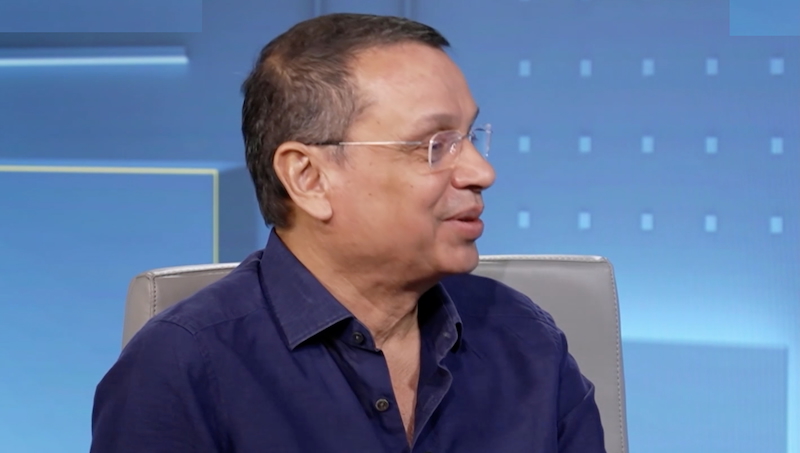
    MUMBAI: JioStar India’s JioHotstar  has reached a milestone of 200 million paying subscribers, making it “one of the biggest streaming services anywhere in the world,” according to vice-chairman Uday Shankar. The rapid subscriber growth since JioStar’s merger validates the company’s belief that “Indians are willing to pay” for content, albeit at “very aggressive” pricing.

    “Our challenge is not to compete with someone. Our challenge is to create a much bigger market,” Shankar said on an interview with BloombergTV’s  Haslinda Amin. “We want to get into every household. We want to be if there is a connected device, we want our content to surface there. We want to be the destination for every Indian who has access to connectivity and data to come in every day for all their requirements of premium content.  “

    The streaming service, backed by billionaire Mukesh Ambani, appears well-positioned to weather global trade tensions. As tariffs roil international markets, JioStar’s “heavily domestic focused” business provides shelter from the storm. “Our consumers are largely Indian. Our content and the driver content, most of it is Indian,” Shankar explained.

    The Indian Premier League (IPL) remains JioStar’s crown jewel, with viewership expected to cross 400-450 million by tournament’s end on  JioHotstar and Star Sports TV channels. However, Shankar views IPL as a “tactical asset” due to its seasonal nature, emphasising the need for year-round content in Indian languages supplemented by Hollywood partnerships.

    While acknowledging potential interest from international investors (read Chelsea club owner Todd Boehly) in IPL teams, Shankar remained coy about JioStar’s future bidding strategy: “We would be very committed to IPL… But then there is a lot of cricket going around, and it finally comes down to the price.”

    Looking ahead, JioStar aims to “consolidate” over the next 12 months by deepening user engagement for its JioHotstar service. “Now that we have got to a sizable number of subscribers, we definitely want to make sure that we get their attention more and more,” said Shankar, though he declined to provide specific subscriber targets beyond the current 200 million. ”Our focus is can we create JioHotstar as an alternative to television as a bouquet, and make sure that we have the attention of everyone every day?”

    With India facing lighter tariff impacts than other nations—26 per cent on some goods, temporarily suspended for 90 days—Shankar expressed optimism about bilateral arrangements between India and the US. Nevertheless, he cautioned that if “global turmoil” continues, “there’ll be impact on consumption, and all of us will be impacted.”

  • Final Hearing matters may be affected till Alam’s successor is found in TDSAT

    Final Hearing matters may be affected till Alam’s successor is found in TDSAT

    NEW DELHI: Justice Aftab Alam, who has chaired the Telecom Disputes Settlement and Appellate Tribunal for the past three years, is laying down office in just under a week – but has made sure that work is not affected till a successor is appointed.

    With the other member Kuldip Singh retired at the end of March, the tribunal now only has Justice Alam who retires on 16 June and member Bipin Behari Srivastava.

    The Telecom Regulatory Authority of India Act 2000 clearly stipulates that the Chairman has to be either a former or sitting Supreme Court judge or a sitting or retired Chief Justice of a High Court.

    The selection of the chairman and a maximum of two members has to be made by the central government, and Department of Telecom sources have confirmed that the process has been initiated by the Communication and Information Technology ministry.

    But perhaps keeping in view the time that may elapse before his successor is found, Justice Aftab Alam had on 26 May issued a notice re-constituting work allocation.

    The chairperson said that with effect from 1 June, there will be two benches in TDSAT: the first will have the chairperson and one member, while Bench Two will have ‘Member/Members’.

    He also made clear that Bench two will deal with matters listed for ‘preliminary hearing, directions, and for orders for passing interim orders only.’  This bench may also dispose of cases where a settlement is arrived at either bilaterally or through the Mediation Centre of the tribunal.

    However, while TDSAT will not come to a standstill and will continue to hear new matters and also pass interim orders, this will affect those cases which have been listed for final arguments. These include cases such as the definition of adjusted gross revenue, the direct-to-home arrears case, and the matter relating to digital cable addressable tariffs for commercial establishments like hotels etc.

    Justice Alam directed that this arrangement – issued by him under Section 14B (4)(b) and 14B(5) read with Section 14-1 of the TRAI Act – will continue until further orders.   

  • Final Hearing matters may be affected till Alam’s successor is found in TDSAT

    Final Hearing matters may be affected till Alam’s successor is found in TDSAT

    NEW DELHI: Justice Aftab Alam, who has chaired the Telecom Disputes Settlement and Appellate Tribunal for the past three years, is laying down office in just under a week – but has made sure that work is not affected till a successor is appointed.

    With the other member Kuldip Singh retired at the end of March, the tribunal now only has Justice Alam who retires on 16 June and member Bipin Behari Srivastava.

    The Telecom Regulatory Authority of India Act 2000 clearly stipulates that the Chairman has to be either a former or sitting Supreme Court judge or a sitting or retired Chief Justice of a High Court.

    The selection of the chairman and a maximum of two members has to be made by the central government, and Department of Telecom sources have confirmed that the process has been initiated by the Communication and Information Technology ministry.

    But perhaps keeping in view the time that may elapse before his successor is found, Justice Aftab Alam had on 26 May issued a notice re-constituting work allocation.

    The chairperson said that with effect from 1 June, there will be two benches in TDSAT: the first will have the chairperson and one member, while Bench Two will have ‘Member/Members’.

    He also made clear that Bench two will deal with matters listed for ‘preliminary hearing, directions, and for orders for passing interim orders only.’  This bench may also dispose of cases where a settlement is arrived at either bilaterally or through the Mediation Centre of the tribunal.

    However, while TDSAT will not come to a standstill and will continue to hear new matters and also pass interim orders, this will affect those cases which have been listed for final arguments. These include cases such as the definition of adjusted gross revenue, the direct-to-home arrears case, and the matter relating to digital cable addressable tariffs for commercial establishments like hotels etc.

    Justice Alam directed that this arrangement – issued by him under Section 14B (4)(b) and 14B(5) read with Section 14-1 of the TRAI Act – will continue until further orders.   

  • TRAI rules against differential pricing for telecom services; imposes penalty of Rs 50,000 per day for offenders

    TRAI rules against differential pricing for telecom services; imposes penalty of Rs 50,000 per day for offenders

    NEW DELHI: In what is clearly a major win for crusaders of net neutrality, the Telecom Regulatory Authority of India (TRAI) has ruled against differential pricing and said no service provider will enter into any arrangement or contract that has the effect of discriminatory tariffs for data services.

    TRAI reserved the right to either ask a service provider to withdraw any discriminatory tariff or impose a penalty of Rs 50,000 per day (subject to a maximum of Rs 50 lakh) for discriminatory tariffs charged by service providers. The decision of the Authority as to whether a service provider is in contravention of this regulation will be final and binding. 

    ‘The Prohibition of Discriminatory Tariffs for Data Services Regulations 2016,’ issued today comes into effect immediately and will be reviewed every two years.

    TRAI said allowing service providers to charge differently for data could compromise the entire architecture of the internet. “Prohibition of discriminatory tariff is necessary to ensure that service providers continue to fulfill obligations in keeping internet open and non-discriminatory,” TRAI said.

    The Regulation has been issued after reviewing the responses received by the regulator to its Consultation Paper on Differential Pricing for Data Services issued on 9 December last year. As was reported earlier by Indiantelevision.com, major broadcasters like Star India, Sony Pictures Networks India and Zee Network submitted their comments to TRAI in favour of net neutrality citing the drawbacks of differential pricing for telecom services.

    TRAI said the paper was issued because two key principles of tariff regulation – non-discrimination and transparency were getting impacted from such practices and required consultation. 

    While almost all the broadcasters opposed differential rates, the telecom and internet service providers felt that this was necessary particularly in view of the deluge of over the top (OTT) services expected to come in.

    The general economic concept of ‘price differentiation’ covers all practices where a seller of goods or provider services charges different prices from different consumers, either for exactly the same goods or service or for slightly different versions of the same goods or service. The ‘service’ being referred to in the context of differential pricing of data services is the units of data or bits that a person consumes in order to access the internet. This understanding is also qualified by the fact that the current regulation refers to a particular category of price differentiation – that is content-specific. 

    While ruling out differential pricing in such cases, TRAI put a proviso: “Provided that this regulation shall not apply to tariffs for data services over closed electronic communications networks, unless such tariffs are offered or charged by the service provider for the purpose of evading the prohibition in this regulation.”

    It also said, “A service provider may reduce tariff for accessing or providing emergency services, or at times of grave public emergency, provided that such tariff shall be reported to the Authority within seven working days from the date of implementation of the reduced tariff and the decision of the Authority as to whether such reduced tariff qualifies under this regulation shall be final and binding.”

    The penalties will be imposed only after the service provider has been given a reasonable opportunity of representing against the contravention of the regulation. The amount payable by way of financial disincentive under these regulations will be remitted to such head of account as may be specified by TRAI.

    The regulator also said, “Nothing contained in these regulations shall affect any packs, plans or vouchers with unexpired validity subscribed by a consumer before the date of commencement of these regulations, provided that no such pack, plan or voucher shall be valid beyond a period of six months from the date of commencement of these regulations.”

    Explaining the rationale for the paper, TRAI said, “Some practices have come to the notice of the Authority wherein differential tariffs were offered based on the content, websites, applications, platforms.”

    It also said the appropriate regulatory response on the issue of differential pricing must necessarily be grounded in a sound understanding of the basic architecture of the internet. Any proposed changes in business models and commercial practices must also be seen in the context of the need to preserve the unique architecture of the Internet as a global communication network.

    The Internet and Mobile Association of India (IAMAI) welcomed the Regulation as a bold and fair move. It said net neutrality would be ensured with TRAI explicitly clarifying its stand in a very clear and transparent ruling about differential tariffs and agreements. The association had taken a ‘no exception standpoint’ against differential pricing.

    “This ruling vindicates the associations stand on the issue. The internet Start-up eco-system and the internet user community are delighted,” IAMAI said. 

    IAMAI has also welcomed the move that TRAI will be the ultimate authority to decide the cases of violations of this ruling and that the decision of the authority will be final and binding. 

    However, the association voiced a concern on the exceptions as to how this will pan out. The association hoped that the exceptions to the rule will not be misused by the TSPs. The exception states “…regulation shall not apply to tariffs for data services over closed electronic communications networks…”

    Meanwhile, the campaigner change.org claimed a massive victory and said “History has been created!” It said nearly 3.75 lakh Change.org users had supported Net Neutrality. 

    The nationwide campaign that unfolded over almost a year was started by Sandeep Pillai, a techie from Kollam in Kerala.

  • TRAI rules against differential pricing for telecom services; imposes penalty of Rs 50,000 per day for offenders

    TRAI rules against differential pricing for telecom services; imposes penalty of Rs 50,000 per day for offenders

    NEW DELHI: In what is clearly a major win for crusaders of net neutrality, the Telecom Regulatory Authority of India (TRAI) has ruled against differential pricing and said no service provider will enter into any arrangement or contract that has the effect of discriminatory tariffs for data services.

    TRAI reserved the right to either ask a service provider to withdraw any discriminatory tariff or impose a penalty of Rs 50,000 per day (subject to a maximum of Rs 50 lakh) for discriminatory tariffs charged by service providers. The decision of the Authority as to whether a service provider is in contravention of this regulation will be final and binding. 

    ‘The Prohibition of Discriminatory Tariffs for Data Services Regulations 2016,’ issued today comes into effect immediately and will be reviewed every two years.

    TRAI said allowing service providers to charge differently for data could compromise the entire architecture of the internet. “Prohibition of discriminatory tariff is necessary to ensure that service providers continue to fulfill obligations in keeping internet open and non-discriminatory,” TRAI said.

    The Regulation has been issued after reviewing the responses received by the regulator to its Consultation Paper on Differential Pricing for Data Services issued on 9 December last year. As was reported earlier by Indiantelevision.com, major broadcasters like Star India, Sony Pictures Networks India and Zee Network submitted their comments to TRAI in favour of net neutrality citing the drawbacks of differential pricing for telecom services.

    TRAI said the paper was issued because two key principles of tariff regulation – non-discrimination and transparency were getting impacted from such practices and required consultation. 

    While almost all the broadcasters opposed differential rates, the telecom and internet service providers felt that this was necessary particularly in view of the deluge of over the top (OTT) services expected to come in.

    The general economic concept of ‘price differentiation’ covers all practices where a seller of goods or provider services charges different prices from different consumers, either for exactly the same goods or service or for slightly different versions of the same goods or service. The ‘service’ being referred to in the context of differential pricing of data services is the units of data or bits that a person consumes in order to access the internet. This understanding is also qualified by the fact that the current regulation refers to a particular category of price differentiation – that is content-specific. 

    While ruling out differential pricing in such cases, TRAI put a proviso: “Provided that this regulation shall not apply to tariffs for data services over closed electronic communications networks, unless such tariffs are offered or charged by the service provider for the purpose of evading the prohibition in this regulation.”

    It also said, “A service provider may reduce tariff for accessing or providing emergency services, or at times of grave public emergency, provided that such tariff shall be reported to the Authority within seven working days from the date of implementation of the reduced tariff and the decision of the Authority as to whether such reduced tariff qualifies under this regulation shall be final and binding.”

    The penalties will be imposed only after the service provider has been given a reasonable opportunity of representing against the contravention of the regulation. The amount payable by way of financial disincentive under these regulations will be remitted to such head of account as may be specified by TRAI.

    The regulator also said, “Nothing contained in these regulations shall affect any packs, plans or vouchers with unexpired validity subscribed by a consumer before the date of commencement of these regulations, provided that no such pack, plan or voucher shall be valid beyond a period of six months from the date of commencement of these regulations.”

    Explaining the rationale for the paper, TRAI said, “Some practices have come to the notice of the Authority wherein differential tariffs were offered based on the content, websites, applications, platforms.”

    It also said the appropriate regulatory response on the issue of differential pricing must necessarily be grounded in a sound understanding of the basic architecture of the internet. Any proposed changes in business models and commercial practices must also be seen in the context of the need to preserve the unique architecture of the Internet as a global communication network.

    The Internet and Mobile Association of India (IAMAI) welcomed the Regulation as a bold and fair move. It said net neutrality would be ensured with TRAI explicitly clarifying its stand in a very clear and transparent ruling about differential tariffs and agreements. The association had taken a ‘no exception standpoint’ against differential pricing.

    “This ruling vindicates the associations stand on the issue. The internet Start-up eco-system and the internet user community are delighted,” IAMAI said. 

    IAMAI has also welcomed the move that TRAI will be the ultimate authority to decide the cases of violations of this ruling and that the decision of the authority will be final and binding. 

    However, the association voiced a concern on the exceptions as to how this will pan out. The association hoped that the exceptions to the rule will not be misused by the TSPs. The exception states “…regulation shall not apply to tariffs for data services over closed electronic communications networks…”

    Meanwhile, the campaigner change.org claimed a massive victory and said “History has been created!” It said nearly 3.75 lakh Change.org users had supported Net Neutrality. 

    The nationwide campaign that unfolded over almost a year was started by Sandeep Pillai, a techie from Kollam in Kerala.